
Review · HISTORICAL TOURS
Where It All Began: Berlin’s Queer & Trans History Tour
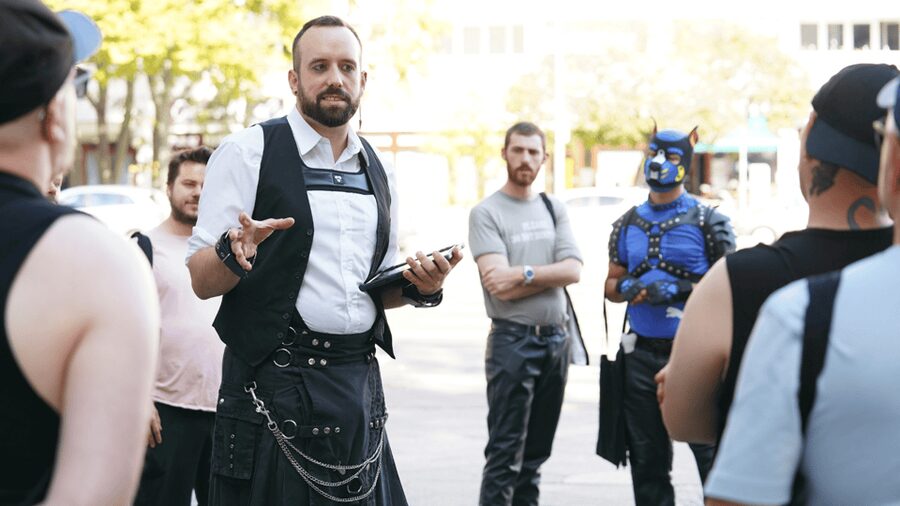
Berlin’s queer story is not tucked into one museum. It is written across street corners, former clubs, police offices, bookshops, memorials, and nightlife venues. This 3.5-hour walk connects those places, from Karl Heinrich Ulrichs’s early rights campaign to today’s Pride marches, fetish festivals, and housing battles.
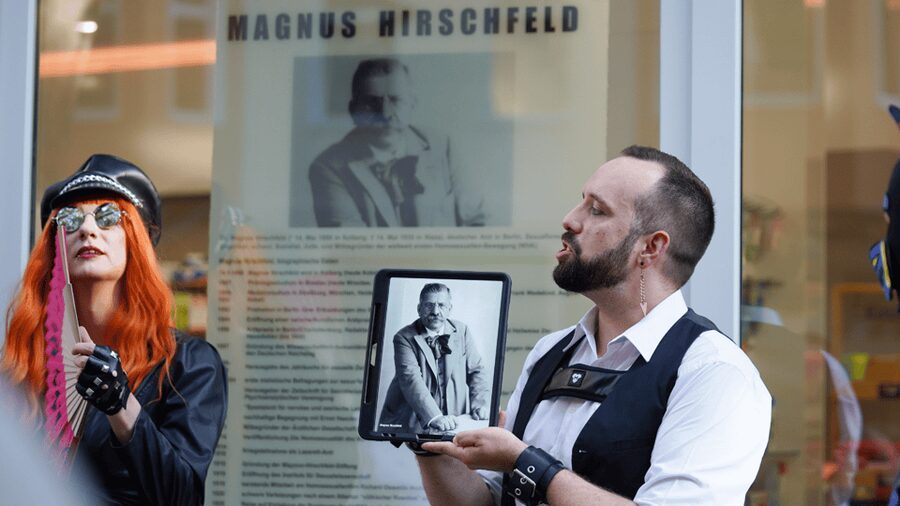
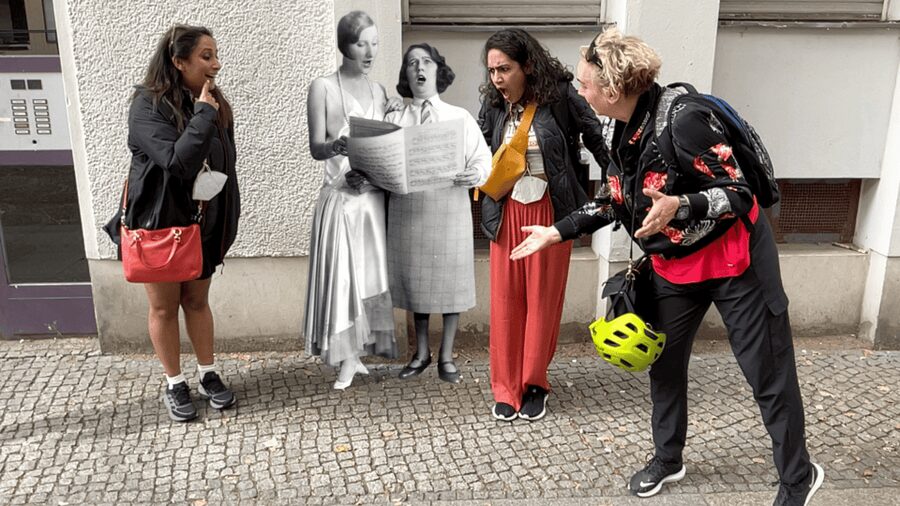
I like the small cap of 10 people, which gives the guide room to explain difficult subjects and answer questions. I also like the iPad-based augmented reality images, especially the clever Mixies that place old photographs and group pictures into the modern streetscape. The main drawback is the price: at $83.13 per person, this is not a casual budget walk, and the emotional subject matter can be heavy.
In This Review
- Key points before you book
- Why this Berlin walk matters
- Karl Heinrich Ulrichs and the first public rights campaign
- Nollendorfplatz and the Nazi persecution of queer people
- Lesbian Berlin at Schwerinstraße 13
- Isherwood, Isherwood’s Berlin, and the police
- Magnus Hirschfeld and a lost center of queer research
- Eldorado and the contradictions of queer nightlife
- Postwar activism, SchwuZ, and Charlotte von Mahlsdorf
- Romy Haag and the trans club revolution
- AIDS, the Wall, and survival in a divided city
- Metropol, Pride, and the fight for Berlin today
- What the $83.13 price buys you
- Timing, meeting point, and practical comfort
- Who should book this experience
- Should you book Berlin’s Queer and Trans History Tour?
- FAQ
- How long is the Berlin Queer and Trans History Tour?
- What language is the tour offered in?
- Where does the tour begin?
- Where does the tour end?
- How many people can join the tour?
- Is the augmented reality equipment included?
- Can I cancel the tour for a full refund?
Key points before you book
- Ten people maximum: A genuinely small group makes personal discussion possible.
- A full 3.5-hour route: You cover ten stops, so wear comfortable shoes and expect a steady walking pace.
- AR brings vanished places back: Historical photos, videos, and archival material appear beside the locations where events happened.
- The story includes trans history: Magnus Hirschfeld, Dora Richter, Lili Elbe, Karl M. Baer, Charlotte von Mahlsdorf, and Romy Haag all have a place here.
- Past and present are linked: The walk moves from Paragraph 175 and Nazi persecution to AIDS activism, Berghain’s roots, Folsom Europe, and gentrification.
- This is a history tour with a nightlife guidebook attached: You get tips on modern queer clubs, events, and local activism.
Why this Berlin walk matters
Many city tours treat LGBTQIA+ history as a quick mention of Christopher Isherwood or a stop outside a famous club. This route gives the subject its own three-and-a-half hours. It also avoids presenting Berlin as a simple story of tolerance followed by persecution. You see political disagreements, social contradictions, brave activism, and the ways queer life survived under pressure.
The route is led by a queer activist and gender scholar. One guide named in the tour’s feedback is Jeff, whose presentation is described as funny, moving, and engaging. The strongest part of this format is the combination of serious historical work with a human voice. You are not just memorizing dates. You are hearing about bars, lovers, performers, refugees, police files, club owners, campaigners, and people trying to build a safe place to meet.
The supplied iPad is more than a gimmick if it is used well. At several stops, you can compare the street in front of you with a historical image of the same location. The tour also includes more than 200 rare photos, videos, and archival items. That matters in Berlin, where many queer spaces disappeared or changed names long ago.
The route is offered in English and begins at 2 pm. It ends at Metropol on Nollendorfplatz, placing you in one of Berlin’s most important queer districts. A café break may be included, but coffee or tea costs extra.
More history walks in Berlin:
- Berlin: Natural History Museum Entrance Ticket
★ 4.6 · 3,382 reviews - Berlin: World Heritage Cruise to Potsdam
★ 4.5 · 1,435 reviews - Berlin Historical Highlights Walking Tour
★ 4.9 · 657 reviews
Karl Heinrich Ulrichs and the first public rights campaign
The opening stop at Karl-Heinrich-Ulrichs-Straße 1 introduces Karl Heinrich Ulrichs, an early public advocate for decriminalizing same-sex relationships. He wrote about queer identity before the modern word homosexual was in common use and tried to give people language for experiences that law and society refused to accept.
This is a short stop, only about five minutes, but it sets up the tour’s central idea: Berlin’s queer story did not begin with modern Pride. People were organizing, writing, loving, performing, and arguing for legal change long before today’s vocabulary existed.
You should pay attention here because the guide is building a timeline, not simply pointing at a street sign. The modest length of the stop also helps keep the route moving. Later sections have more time for discussion.
Nollendorfplatz and the Nazi persecution of queer people
At Nollendorfplatz, the tour takes a darker turn. This district was a center of queer life, but it also became a place to discuss the machinery of persecution under the Nazis.
You hear about Adolf Brand, right-wing gay activists, Ernst Röhm, and the uneasy fact that some openly gay men held power inside the Nazi movement. Röhm’s role is especially important because it shows why a neat victim and villain story can be misleading. His sexuality did not protect him, and his execution during the Night of the Long Knives helped Hitler strengthen his position.
The guide also explains how Nazi persecution targeted LGBTQIA+ people in concentration camps. The pink triangle became a symbol of this persecution, later reclaimed by parts of the gay rights movement. This portion can be painful, but skipping it would leave out a central part of Berlin’s queer past.
Allow yourself time after this stop. The information is not light sightseeing material, and the tour’s serious tone is one reason it feels more substantial than a standard nightlife walk.
Lesbian Berlin at Schwerinstraße 13
At Schwerinstraße 13, the focus shifts to lesbian life in the 1920s. This is one of the route’s most useful corrections to the usual Berlin story, which often gives far more space to gay male writers and clubs.
The former Toppkeller site helps explain how lesbian bars provided meeting places, community, and a degree of safety. These spaces were not simply places to drink. For many women, they were part of a social network that made queer life possible in a city where public acceptance had limits.
The guide also brings in Claire Waldoff, a lesbian cabaret singer whose songs became associated with defiance. Josephine Baker adds another layer as a bisexual performer whose appeal crossed gender lines. Their stories show how music, stage performance, and public image could create room for queer expression even when legal and social systems remained hostile.
This stop lasts about 20 minutes. It is a good example of the tour’s strength: you are learning about specific people and venues rather than hearing only broad statements about the 1920s.
A different side of Berlin on the same trip:
- Berlin: Reichstag, Dome and Government District Guided Tour
★ 4.7 · 18,288 reviews - Berlin: 1-Hour City Tour by Boat with Guaranteed Seating
★ 4.3 · 16,993 reviews - Berlin: Boat Tour Along the River Spree
★ 4.4 · 11,252 reviews - Discover Berlin Half-Day Walking Tour
★ 5.0 · 9,624 reviews
Isherwood, Isherwood’s Berlin, and the police
At Nollendorfstraße 17, the route connects Christopher Isherwood’s Berlin with the police department that dealt specifically with homosexuality. That pairing is revealing. Queer life could be visible enough to inspire literature and theater, yet also be watched and controlled by the state.
Isherwood’s experiences, including his relationship with Heinz Neddermeyer, helped inspire the work that later became associated with Cabaret. Their escape from Nazi Germany as queer refugees adds a personal cost to the glamorous image many people carry of 1920s Berlin.
This stop is useful if you know the musical or film but have not looked closely at the life behind it. Cabaret can make prewar Berlin seem like one long party. The tour places the nightlife beside surveillance, legal danger, and the need to leave the country.
Magnus Hirschfeld and a lost center of queer research
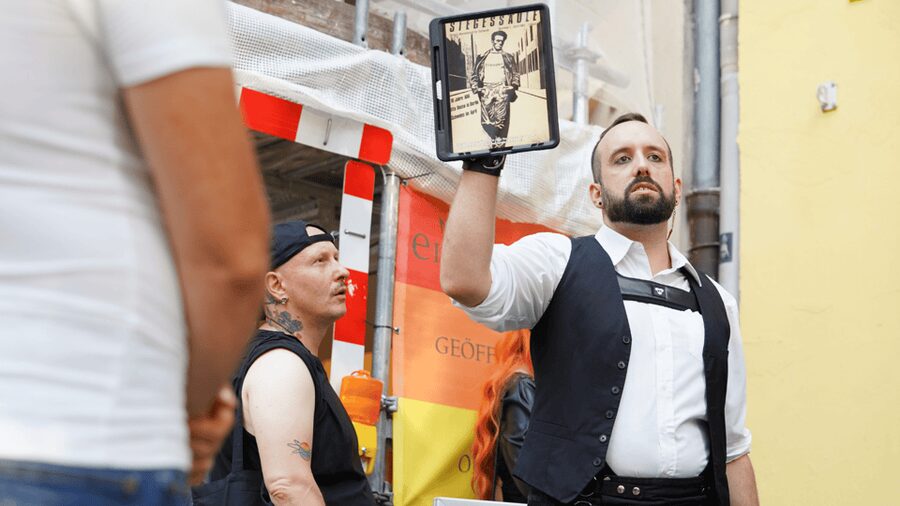
The stop near Magnus-Apotheke covers one of the most important figures on the route: Magnus Hirschfeld. His Scientific-Humanitarian Committee was the world’s first organization devoted to queer rights and gender studies, and his Institute for Sexual Science became a major center for research, counseling, and activism.
You hear about Hirschfeld’s theory of sexual intermediaries and the idea of Berlin’s third gender. The tour also discusses early gender-affirming surgeries involving Dora Richter, Lili Elbe, and Karl M. Baer. These stories need careful presentation, since historical language and medical practice do not always match current terms. A good guide can help you understand both the importance and the limits of the period.
Paragraph 175, the law that criminalized homosexuality, is another key subject. The Nazi destruction of Hirschfeld’s institute was not just an attack on one building. It destroyed books, records, research, and evidence of queer lives that could not easily be replaced.
This is one of the route’s longer 20-minute stops, and rightly so. If you want the intellectual and political foundation of modern LGBTQIA+ rights work, this is the point where the tour makes its case most clearly.
Eldorado and the contradictions of queer nightlife
The modern Denns BioMarkt marks the former site of Eldorado, a famous drag bar of the 1920s. Its story gives you a strong sense of how queer nightlife could be both public and precarious.
Eldorado welcomed drag performers, gender-nonconforming people, and queer patrons. It was also visited by high-profile Nazis such as Ernst Röhm. That contradiction is uncomfortable, but it matters. Personal behavior, political power, and public policy do not always line up neatly.
The stop helps you avoid a common mistake: assuming that a famous club automatically meant full freedom. A place may offer temporary shelter and expression while the wider society remains dangerous. The 20-minute discussion gives the guide room to explain that tension.
Postwar activism, SchwuZ, and Charlotte von Mahlsdorf
At Prinz Eisenherz, the tour moves into postwar activism. You learn about Homosexuelle Aktion West-Berlin, one of the first queer rights groups formed after World War II, and SchwuZ, a club that became a major part of Berlin’s queer social life.
This section is especially valuable because it shows activism as practical community building. Clubs and organizations offered places to meet, organize, share information, and create a public identity. They were not side notes to political history. They were part of how political change became possible.
Charlotte von Mahlsdorf brings the story into East Berlin. As a trans woman, she preserved queer history and created safe spaces in a city divided by both ideology and a physical wall. Her life challenges the idea that queer history belongs only to West Berlin or to the period before 1933.
The stop is shorter, about 15 minutes, so the presentation is necessarily selective. Still, it gives you useful direction if you want to learn more about queer life in East Germany.
Romy Haag and the trans club revolution
At Connection, the focus turns to West Berlin’s trans community in the 1970s and 1980s. The former Chez Romy Haag is presented as a trans-led nightclub that changed the city’s nightlife.
The important point is not simply that a famous performer ran a club. Chez Romy Haag offered gender-diverse people a place where they could appear publicly and shape the atmosphere themselves. That kind of space helped form the club culture for which Berlin is now famous.
The stop lasts about 15 minutes. It works best as part of the larger sequence, linking early drag bars with later clubs and showing how nightlife became a form of social infrastructure. You also begin to see why current Berlin club culture cannot be separated from trans and queer labor.
AIDS, the Wall, and survival in a divided city
At the Internationale Stele GEGEN DAS VERGESSEN, the subject is the AIDS crisis and the very different conditions on either side of the Berlin Wall.
The tour covers how queer communities organized for survival, education, and public awareness. Rita Süssmuth receives special attention as one of the politicians willing to advocate for AIDS awareness. You also hear the striking metaphor of the Berlin Wall as the condom of the GDR, a blunt phrase that points to the sharp differences between East and West approaches to the crisis.
This is another serious section, but it connects personal loss with political action. You are not left with the idea that communities simply waited for governments to respond. Activists worked to spread information and protect one another while public fear and stigma were widespread.
The 20-minute stop gives the subject enough space without turning the entire tour into a memorial walk. Even so, the emotional pace remains demanding. If you prefer light sightseeing, this experience may feel intense.
Metropol, Pride, and the fight for Berlin today
The final stop at Metropol brings the story into the present. You explore the club’s role in early gay life and Berlin’s techno scene, then trace links to Berghain and Lab.Oratory.
The discussion also includes SO36’s queer nights, Folsom Europe, Kreuzberg Pride, and the Dyke March. These events show the range of modern queer Berlin, from public protest and community marches to nightlife and fetish culture.
The route does not present current Berlin as a finished success story. It discusses gentrification and the struggle for an affordable city, including the radical Tuntenhaus squat. That is an important ending. The question is not only whether queer spaces exist, but whether the people and communities that built them can afford to remain.
Finishing at Metropol is practical. You end near Nollendorfplatz, a useful public transport area and a logical place to continue your evening. The guide also offers insider tips on queer nightlife and events, so you can turn the history lesson into a plan for the rest of your stay.
What the $83.13 price buys you
At $83.13, this tour costs more than a basic city walking tour. The value depends on how much you want a specialist guide, a capped group, and visual material that would be difficult to gather alone.
You are paying for about three and a half hours, ten carefully linked locations, a guide with activist and academic experience, an iPad for AR material, and access to more than 200 photos, videos, and archival sources. The small group matters here. In a group of 10, a sensitive question is more likely to receive a proper answer than it would on a large coach-style tour.
The AR photos add value because many of the original clubs, offices, and meeting places no longer look the way they did. Seeing an old image against the present street can make the loss of those spaces easier to understand.
The price is harder to justify if you only want a quick introduction or if you already know Berlin’s queer history well. It is also worth remembering that coffee or tea at the possible café break is not included. Group discounts may help if you are booking with friends.
Timing, meeting point, and practical comfort
The tour starts at 2 pm at Alnatura Super Natur Markt, Else-Lasker-Schüler-Straße 18, 10783 Berlin, and ends at Metropol, Nollendorfpl. 5, 10777 Berlin. The route is near public transportation, but check the starting address carefully because the first historical stop is Karl-Heinrich-Ulrichs-Straße 1.
Plan for a proper walking tour rather than a quick neighborhood stroll. You will be outside for several hours, and the route includes ten stops with discussions lasting from five to 20 minutes. Comfortable shoes and weather-appropriate clothing are sensible choices.
The experience requires good weather. If poor weather cancels the tour, you can choose another date or receive a full refund. You can also cancel for a full refund up to 24 hours before the start time. Service animals are allowed, and most people can participate.
Who should book this experience
I would choose this tour if you want Berlin history told through queer lives, not just through monuments and political leaders. It suits first-time visitors who want a strong introduction, as well as people who already know the city but have not connected its streets to LGBTQIA+ activism.
It is particularly useful for anyone interested in:
- Berlin between the 1920s and the Nazi period
- Lesbian, gay, bisexual, and trans history
- Magnus Hirschfeld and early sexology
- Queer refugees and wartime persecution
- Postwar activism in East and West Berlin
- AIDS organizing and political response
- Clubs, Pride, fetish events, and gentrification
I would not book it if you want a relaxed, purely entertaining walk. Some subjects are painful, and the route asks you to listen closely. The fun AR photos and nightlife tips lighten the pace, but they do not turn the experience into a party tour.
Should you book Berlin’s Queer and Trans History Tour?
Book it if you want a focused, human-scale look at how queer Berlin was created, attacked, rebuilt, and challenged again. The combination of Jeff’s engaging style, rare visual material, and a 10-person limit gives the walk more substance than a quick stop at a famous club.
The best reason to go is the range. In one afternoon, you move from Ulrichs and Hirschfeld to Isherwood, lesbian cabaret, trans-led nightlife, AIDS activism, Folsom Europe, and the fight to keep queer spaces affordable.
The main caution is cost and subject matter. At $83.13, you should be ready to value specialist guidance rather than simply sightseeing. If that sounds right for you, this is a thoughtful way to understand Berlin beyond its nightlife reputation.
FAQ
How long is the Berlin Queer and Trans History Tour?
The tour lasts approximately 3 hours and 30 minutes.
What language is the tour offered in?
The tour is offered in English.
Where does the tour begin?
It begins at Alnatura Super Natur Markt, Else-Lasker-Schüler-Straße 18, 10783 Berlin, Germany.
Where does the tour end?
The tour ends at Metropol, Nollendorfpl. 5, 10777 Berlin, Germany.
How many people can join the tour?
The group is capped at 10 travelers.
Is the augmented reality equipment included?
Yes. An iPad is provided for augmented reality elements, including historical photos, videos, archival material, and Mixies.
Can I cancel the tour for a full refund?
Yes. You can cancel at least 24 hours before the experience start time for a full refund. Changes or cancellations made less than 24 hours before the start time are not accepted for a refund.
Just added around Berlin
- Berlin Highlights in One Day★ 5.0 · 3 reviews
- Private Berlin One Day Tour with a Local: See the City Unscripted★ 3.5 · 3 reviews
- Individual city tour Berlin for max. 8 persons★ 5.0 · 3 reviews
- Transfer from Berlin Schönefeld Airport (SXF) to Berlin city Hotels – ROUND TRIP★ 4.0 · 3 reviews
- Berlin: Museum Island Tour★ 5.0 · 3 reviews
- Private Analogue Photography Experience in Berlin★ 5.0 · 3 reviews
- Berlin: Local Food Tour in Secrets Hidden Gems★ 4.0 · 3 reviews
- Potsdam Highlights – Private sightseeing tour by minibus★ 5.0 · 3 reviews
Historical Tours, compared.

Berlin Private Complete History All Day Walking Tour
Read our review →
Small group Potsdam: A Journey Through History and Palaces
Read our review →Browse the lists this tour appears in