
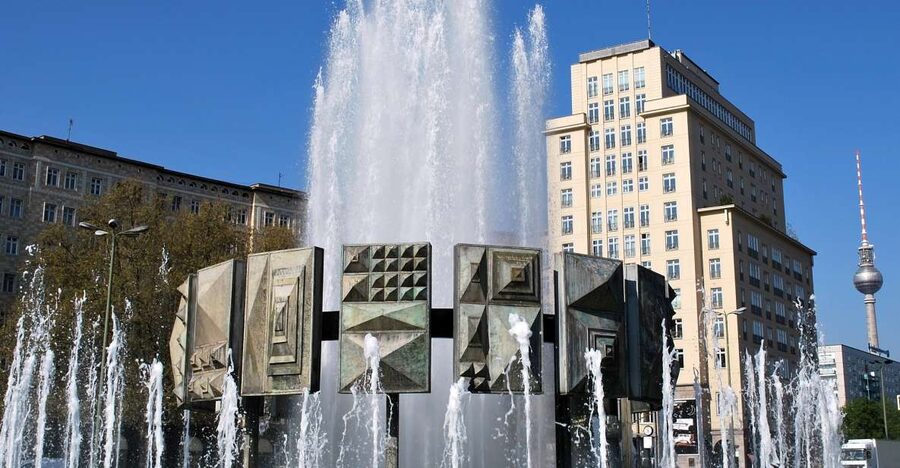
Review · 2-HOUR EXPERIENCES
Berlin: Karl-Marx-Allee 2-Hour Tour
Karl-Marx-Allee is Berlin at its most openly political: a nearly two-kilometer boulevard built to display the power and order of East Germany. On this two-hour walk, you move from grand towers and broad spaces to apartment arcades, a former cinema, a high-rise, and the partial ruins of a church. Architecture here is never just decoration. It tells you what the socialist state wanted Berlin to be.
I like the way this tour connects big urban design with everyday housing, rather than treating the boulevard as a row of impressive façades. I also like the use of historical photos, old posters, and lesser-seen corners, details that can be easy to miss when you walk the route alone. One thing to consider: this is an outdoor walking tour, and the meeting point can vary by booking option, so check the details carefully and dress for Berlin weather.
In This Review
- Key points to know before you book
- Why Karl-Marx-Allee tells Berlin’s postwar story
- Starting with Frankfurter Tor’s famous towers
- Friedrichshain’s arcaded apartment buildings
- The Kosmos cinema and East German modernism
- The Hochhaus an der Weberweise
- The partial ruins of the Church of the Resurrection
- Strausberger Platz, the gateway to the socialist center
- What the guide adds to the buildings
- Is $23 a good value for two hours?
- Timing, meeting point, and what to bring
- Who should take this Karl-Marx-Allee tour?
- My verdict: book it for context, not just photographs
- FAQ
- How long is the Karl-Marx-Allee tour?
- What is the price?
- What languages are available?
- Is hotel pickup included?
- Where does the tour meet?
- What is included in the tour?
- Can I reserve now and pay later?
- Can I cancel for a full refund?
- What sights are included?
Key points to know before you book
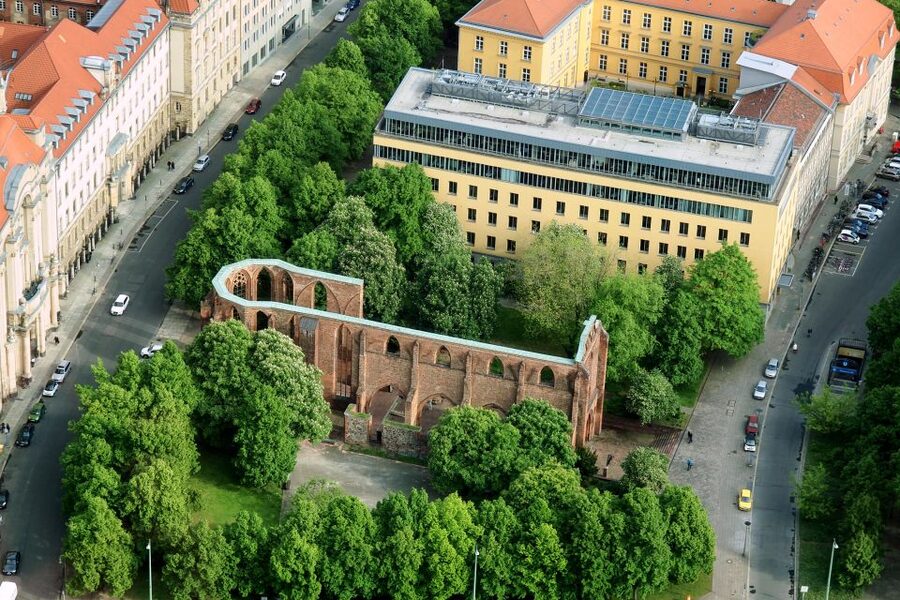
- Frankfurter Tor’s twin towers provide the tour’s grandest architectural moment and a clear sense of the boulevard’s scale.
- Arcaded apartment buildings in Friedrichshain show how socialist planning shaped ordinary city life, not just official monuments.
- The Kosmos cinema adds a cultural stop, with its design by Josef Kaiser offering a different look at East German modernism.
- Strausberger Platz functioned as a gateway to the socialist city center, framed by distinctive high-rise buildings.
- Historical photos, old posters, and hidden details make the guided walk more revealing than a simple stroll down the avenue.
- The $23 price is fair if you want context and interpretation, but less compelling if you only want to see the boulevard from the outside.
Why Karl-Marx-Allee tells Berlin’s postwar story
Karl-Marx-Allee is not simply a long road with unusual buildings. It is a carefully planned statement about power, progress, and the new socialist city.
The boulevard changed names as Berlin’s political life shifted. It began as Frankfurter Allee, became Stalinallee during the Stalin era, and later received the name Karl-Marx-Allee. Those changes are more than labels. They show how public space was used to reflect the values and leadership of the state.
The route is also one of Germany’s key postwar urban projects. You are looking at a large-scale attempt to rebuild a capital city after the Second World War while giving East Berlin its own architectural identity. The almost two-kilometer stretch is described as the largest monument in Berlin, a useful way to understand its size and purpose.
I find the area most rewarding when you look beyond the grand façades. The boulevard was built to project authority, but it also contained homes, shops, cinemas, and spaces for ordinary city life. That mix gives the walk more substance than a tour focused only on political names and official buildings.
A few more Berlin tours worth weighing up
- Berlin: Third Reich and Cold War 2 Hour Walking Tour
★ 4.9 · 6,830 reviews - Berlin’s Best: 2 Hour Walking Tour Third Reich and the Cold War
★ 5.0 · 5,486 reviews - Berlin: 2-Hour Lake Oberhavel Cruise from Tegel
★ 4.4 · 577 reviews
Starting with Frankfurter Tor’s famous towers
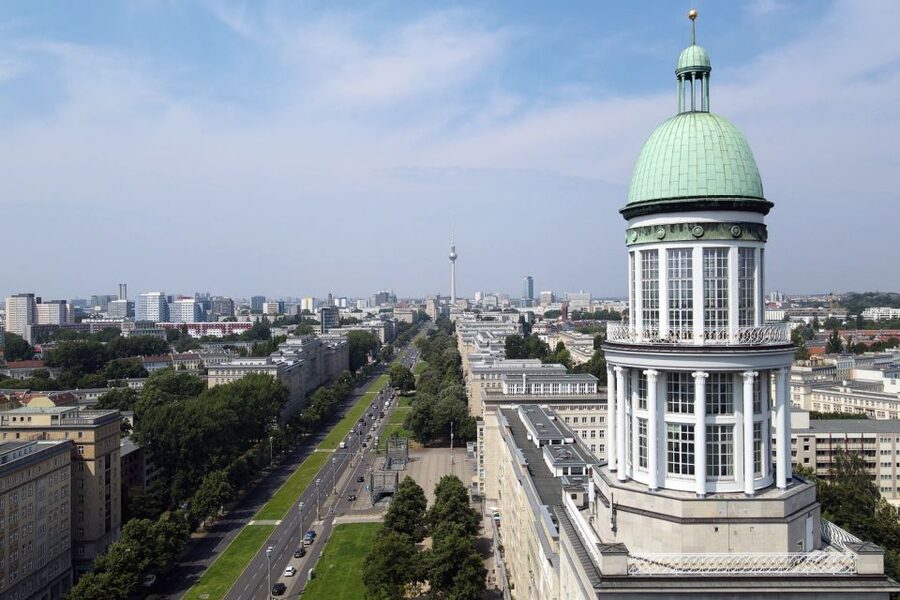
Frankfurter Tor is the visual star of the route. Its distinctive towers rise at one of the boulevard’s major points and give the street a ceremonial finish. Even if you know little about East German architecture, you can see that this was designed to impress.
The towers help you read the street properly. Karl-Marx-Allee is broad, formal, and carefully framed. Its buildings are not scattered by chance. They work together as a planned urban corridor, with repeated forms and strong sightlines.
Your guide can add the meaning behind that design. A self-guided walk will show you the towers, but it may not explain why the buildings were arranged this way or how the boulevard’s name changes fit into Berlin’s political story. That is where the tour earns its fee.
The practical catch is simple: Frankfurter Tor is best appreciated from a little distance, where the full composition becomes clear. If you are hoping to spend most of the tour inside buildings, this is not that kind of experience. The appeal is the street itself, its scale, façades, and relationship to the surrounding neighborhood.
Friedrichshain’s arcaded apartment buildings
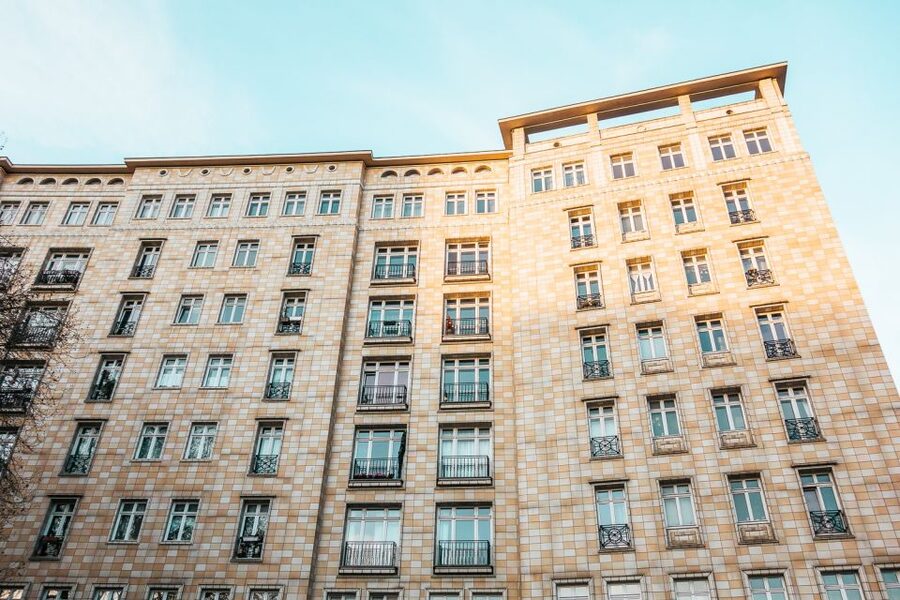
The apartment buildings in Friedrichshain bring the grand plan down to street level. Their arcades give the housing blocks a strong, unified appearance while also creating covered pedestrian areas.
These are not isolated monuments. They were built as part of a larger vision for how people would live along the boulevard. That makes them especially useful stops on the tour. You can consider the difference between architecture designed to impress visitors and housing designed to organize daily life.
I like this section because it adds texture to the political story. The towers and broad avenue may look official, but the arcades remind you that the boulevard was also meant to function as a neighborhood. Look closely at how the buildings meet the sidewalk, how repeated details create order, and how the long blocks shape your view down the street.
The route description does not promise interior visits to the apartments, so expect to study them from outside. That is not a major weakness, but it matters if you are looking for an indoor architecture tour. The guide’s explanations, along with any historical images shown along the way, help fill in what the façades alone cannot tell you.
The Kosmos cinema and East German modernism
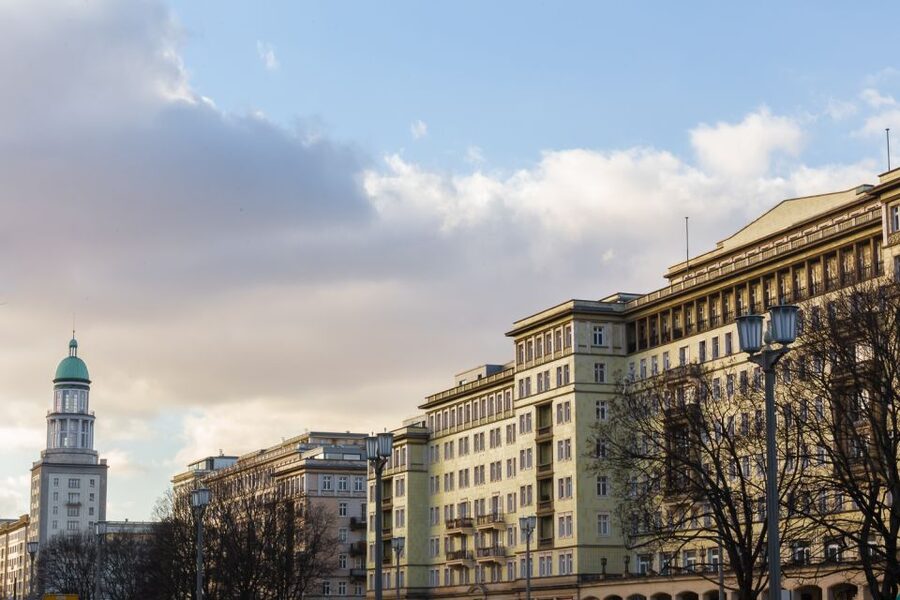
The Kosmos cinema, designed by Josef Kaiser, gives the walk a welcome change of pace. Karl-Marx-Allee is often associated with monumental apartment blocks, but a cinema points to another part of city life: entertainment, public gathering, and modern culture.
Its presence also helps you see that East German architecture was not one single style. The boulevard includes formal, highly planned buildings, but the Kosmos adds a cultural and modern design element. A guide can help you notice how the cinema fits into the wider street rather than treating it as an unrelated stop.
For me, this is the kind of detail that makes a short tour worthwhile. You get a more complete picture of the boulevard when you learn how people were expected to live, meet, and spend their free time there. The stop is especially useful if you are interested in architecture, urban planning, or the cultural life of the socialist era.
There is no information that the tour includes a film screening or interior access. Plan on seeing the building and learning about its design, not attending a cinema program. That keeps the focus on the architecture and the changing purpose of the boulevard.
A different side of Berlin on the same trip:
- Berlin: Reichstag, Dome and Government District Guided Tour
★ 4.7 · 18,288 reviews - Berlin: 1-Hour City Tour by Boat with Guaranteed Seating
★ 4.3 · 16,993 reviews - Berlin: Boat Tour Along the River Spree
★ 4.4 · 11,252 reviews - Discover Berlin Half-Day Walking Tour
★ 5.0 · 9,624 reviews
The Hochhaus an der Weberweise
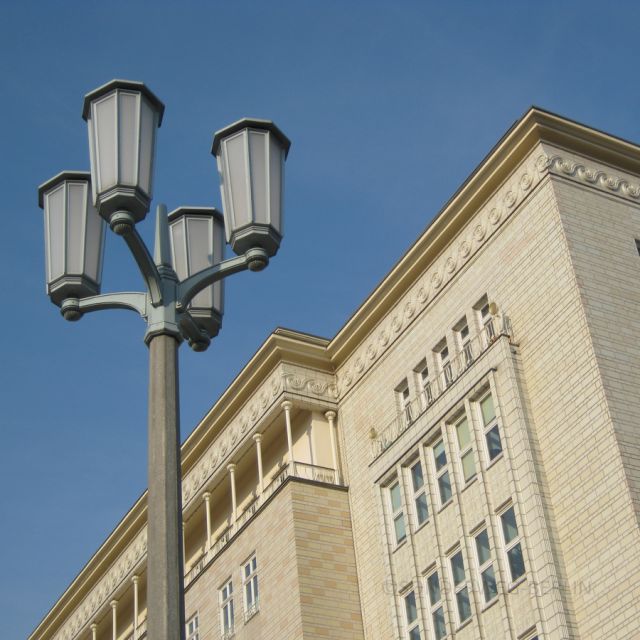
The Hochhaus an der Weberweise offers another architectural marker along the route. The high-rise is important because it shows how planners used height and placement to shape the developing socialist city.
After the long apartment blocks, a high-rise gives your eye a different point of focus. It also helps explain the mix of building types along the route. Karl-Marx-Allee was not made from one repeated block alone. Its design uses apartment buildings, towers, public buildings, and open spaces to create a formal sequence.
This is a stop where a guide’s historical context matters more than a quick photograph. You can see the building on your own, but you may not understand why it belongs in the story of the boulevard. The tour places it within the wider postwar building program, making the structure part of a larger argument about how East Berlin was rebuilt.
The name is worth noting before you go. It may be difficult to remember every architectural term during a two-hour walk, so keep the high-rise in mind as one of the route’s key examples of socialist-era urban planning.
The partial ruins of the Church of the Resurrection
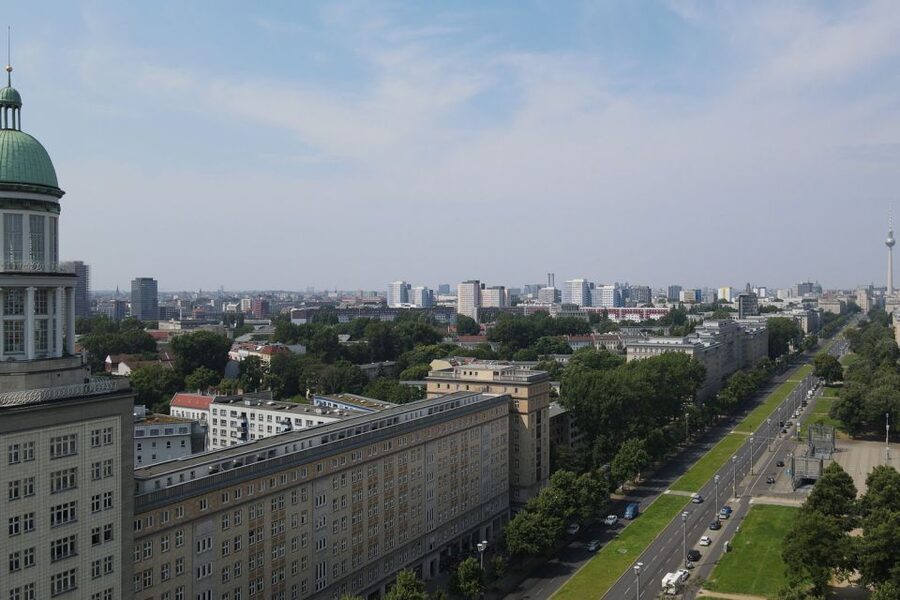
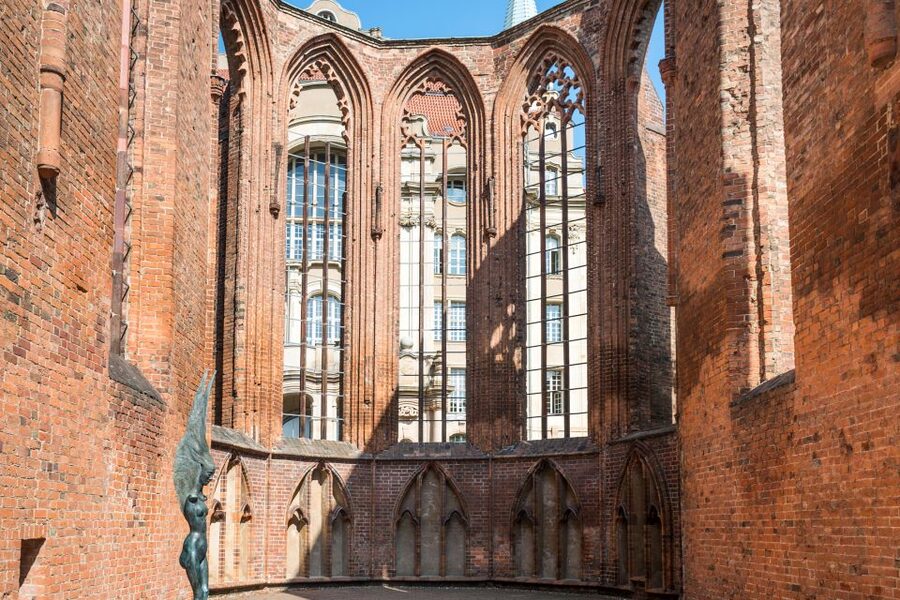
The partial ruins of the Church of the Resurrection introduce a very different mood. After the ordered apartment blocks and ceremonial towers, the remains of a damaged church show the physical scars that survive beneath Berlin’s later political layers.
This stop adds an important contrast. Karl-Marx-Allee can look carefully controlled, almost too complete. The church ruins interrupt that picture and remind you that the city was shaped by war as well as by postwar planning.
I value stops like this because they prevent the tour from becoming a celebration of monumental architecture alone. The boulevard tells a story of construction and official ambition, while the church ruins point to destruction, memory, and what could not simply be rebuilt or removed.
The available information describes the church as partially ruined, but it does not promise a long interior visit or extensive access around the site. Treat it as a brief but meaningful part of the walking route. Your guide’s explanation will likely be central to understanding why the remains matter.
Strausberger Platz, the gateway to the socialist center
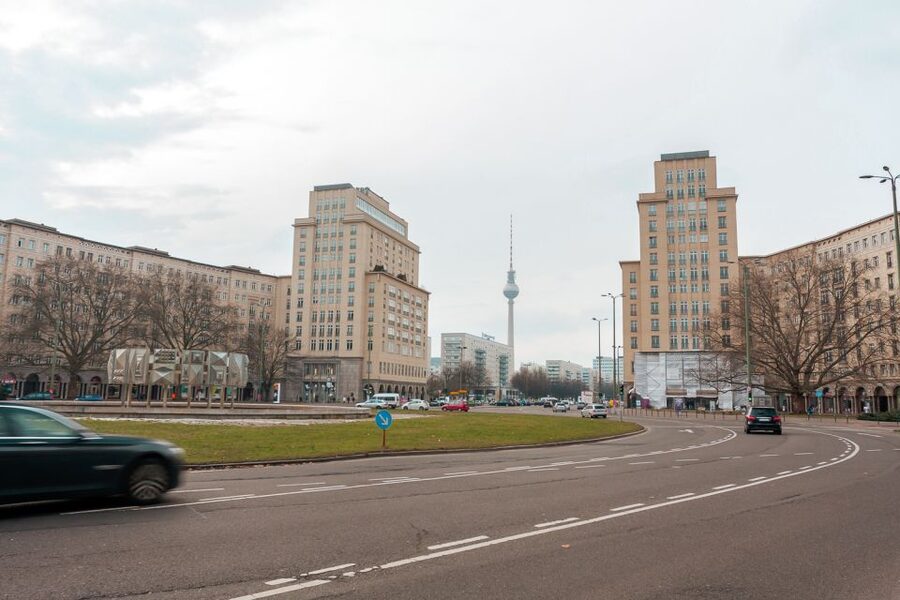
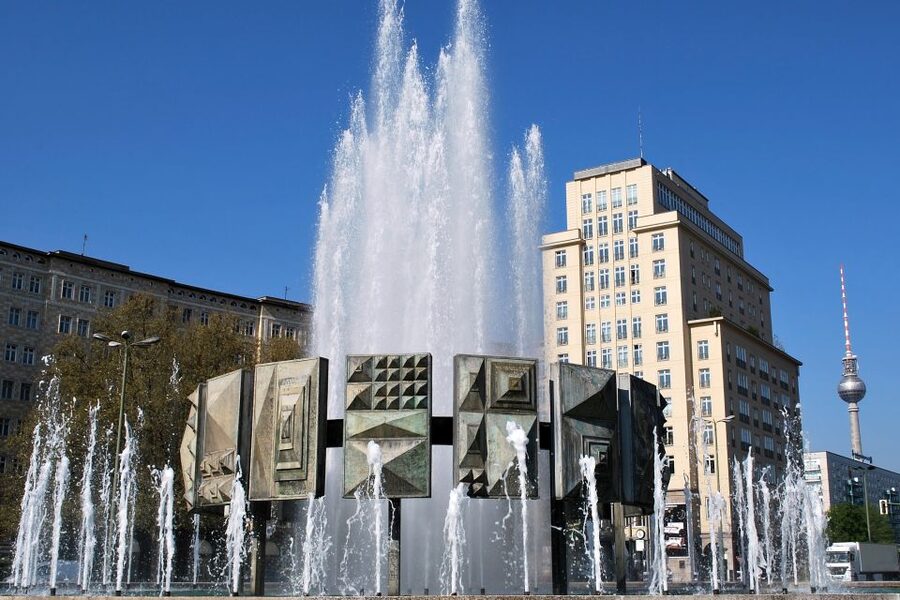
Strausberger Platz is another major visual point. Its distinctive high-rise buildings helped create a gateway to the socialist city center, giving the avenue a clear sense of arrival and direction.
This is where the route’s planning logic comes together. Frankfurter Tor gives you one grand architectural highlight, while Strausberger Platz shows how a major public space could frame movement toward the center. The buildings are not just background. They guide your eye and make the boulevard feel like a designed entrance rather than an ordinary street.
The square also helps you understand how urban planning can shape emotion. Wide spaces and carefully placed high-rises can make you feel that you are approaching somewhere important. That was part of the point. The city was being presented as organized, forward-looking, and politically confident.
You will probably appreciate this stop most if you pause to look back along the route. The tour is only two hours, but the boulevard’s scale rewards a slow glance. Notice how the buildings relate to the street and how the square changes the feeling of the walk.
What the guide adds to the buildings
The guide is the heart of this experience. The tour is offered in German and English, and the strongest feedback points to an engaging, well-informed presentation. Tobias is specifically praised for bringing the area to life, explaining its history clearly, and communicating well with the group.
The use of historical photos and old posters is particularly valuable. They let you compare the boulevard as it looks now with earlier versions of the same street. That can make the name changes, political shifts, and architectural goals easier to grasp.
You may also see artwork and less obvious parts of the area that you would likely pass on a casual walk. This matters because Karl-Marx-Allee is easy to photograph without fully understanding. A guide can point out the small details that support the larger story.
The tone appears to suit people who want history without a dry lecture. The guide is expected to explain, point out, and tell anecdotes while keeping you moving. Since the tour lasts two hours, the route must be selective. You will not get every detail about East Berlin, but you should come away with a clearer way to read this particular boulevard.
Is $23 a good value for two hours?
At $23 per person, this is a reasonably priced specialist walking tour. You are paying for two hours with an expert guide, not for transport, meals, or entry to a ticketed attraction.
The value depends on what you want from Karl-Marx-Allee. If you already know the political background and mainly want to photograph Frankfurter Tor, you can walk parts of the route independently. In that case, the price may feel unnecessary.
I think the cost makes sense if you want the connections between the sites. The guide links the street’s earlier names, postwar construction, socialist planning, apartment design, cinema culture, church ruins, and city-center gateway. Those connections are the real product.
The tour also avoids the cost and time of a longer city excursion. In two hours, you focus on one important part of Berlin instead of racing between unrelated sights. For an architecture-minded visitor or anyone curious about the former East Berlin, $23 is a fair exchange for structure and context.
Timing, meeting point, and what to bring
The walk lasts two hours, with starting times available according to the date you select. The meeting point may vary depending on the option booked, so do not assume every departure begins at the same place.
Hotel pickup and drop-off are not included. You need to make your own way to the meeting point, and the tour ends as a walking experience rather than a transfer back to your hotel.
Because the route is outdoors, comfortable shoes are sensible. Berlin weather can change quickly, so a light waterproof layer is a practical choice. The information provided does not state the group size, the exact route length walked, or interior access at the buildings, so check the selected option if those details matter to you.
The booking terms are flexible: you can reserve now and pay later, and cancellation up to 24 hours before the tour brings a full refund. That is useful when you are arranging several Berlin activities around changing weather or train plans.
Who should take this Karl-Marx-Allee tour?
I would recommend it most strongly to you if you have an interest in:
- Architecture and postwar urban planning
- East German political and social history
- Berlin’s changing identity after the Second World War
- Public housing and the design of city streets
- Guided walks that combine major sights with smaller details
It is also a good choice if you have already seen central Berlin and want a different side of the city. Karl-Marx-Allee is not the usual postcard route, and the tour gives you a focused way to understand Friedrichshain.
Families with older children may find the boulevard’s visual scale and political story interesting, though the value will depend on their patience for a two-hour architecture walk. If your main goal is shopping, food, nightlife, or museum interiors, this is probably not the right use of your time.
The experience is not designed as a general overview of Berlin. It concentrates on one street and its surrounding sites. That narrow focus is a strength for curious walkers, but a limitation if this is your first and only sightseeing activity in the city.
My verdict: book it for context, not just photographs
Book this tour if you want Karl-Marx-Allee to make sense. You will see Frankfurter Tor, the arcaded apartments, the Kosmos cinema, the Hochhaus an der Weberweise, the Church of the Resurrection ruins, and Strausberger Platz, but the real benefit is learning how those places fit together.
I especially like the combination of grand planning and ordinary housing. The historical photos, old posters, and local details should help you see more than you would on a quick self-guided walk. Tobias may lead your departure, and the available feedback points to a passionate, clear guide who brings strong energy to the subject.
Skip it if you want a short photo stop, indoor attractions, or a broad introduction to Berlin. For everyone else, $23 is a sensible price for two focused hours in one of the capital’s most revealing urban districts.
FAQ
How long is the Karl-Marx-Allee tour?
The walking tour lasts two hours.
What is the price?
The price is $23 per person.
What languages are available?
The live guide is available in German and English.
Is hotel pickup included?
No. Hotel pickup and drop-off are not included.
Where does the tour meet?
The meeting point may vary depending on the option you book. Check the selected option for the exact location.
What is included in the tour?
A walking tour and an expert guide are included.
Can I reserve now and pay later?
Yes. The activity allows you to reserve your place and pay later.
Can I cancel for a full refund?
Yes. You can cancel up to 24 hours in advance for a full refund.
What sights are included?
The route includes Karl-Marx-Allee, Frankfurter Tor, the arcaded apartment buildings in Friedrichshain, the Kosmos cinema, the Hochhaus an der Weberweise, the partial ruins of the Church of the Resurrection, and Strausberger Platz.
Just added around Berlin
- Berlin Highlights in One Day★ 5.0 · 3 reviews
- Private Berlin One Day Tour with a Local: See the City Unscripted★ 3.5 · 3 reviews
- Individual city tour Berlin for max. 8 persons★ 5.0 · 3 reviews
- Transfer from Berlin Schönefeld Airport (SXF) to Berlin city Hotels – ROUND TRIP★ 4.0 · 3 reviews
- Berlin: Museum Island Tour★ 5.0 · 3 reviews
- Private Analogue Photography Experience in Berlin★ 5.0 · 3 reviews
- Berlin: Local Food Tour in Secrets Hidden Gems★ 4.0 · 3 reviews
- Berlin & The Third Reich Private Guided Tour★ 5.0 · 3 reviews
2-Hour Experiences, compared.


Berlin’s Best: 2 Hour Walking Tour Third Reich and the Cold War
Read our review →
East Berlin and the Berlin Wall 2-Hour Walking Tour
Read our review →
Browse the lists this tour appears in