
Review · TICKETS
Berlin: Lighthouse of Digital Art Ticket
The main event here is a 27-minute trip through the solar system, built from images linked to NASA and the James Webb Space Telescope. Planets, the Moon, Mars, and distant galaxies fill the room with moving pictures and sound. It is less like looking at framed art and more like sitting inside a carefully timed film.
I like the low $11 price and the chance to choose between German or English narration by picking the right start time. I also like that your ticket includes the Space Gallery and Infinity Room, not just the main show. The main caution is simple: miss the language timing, and you may sit through a German presentation when you wanted English. People with epilepsy should not attend.
In This Review
- Key points
- A Short Trip Through Space in Berlin
- Picking the Right Language and Start Time
- What Happens During The Grand Tour
- The Space Gallery and Infinity Room
- Why The Imagery Matters
- Who Will Get The Most From It
- Wheelchair Access and Practical Comfort
- Is $11 a Fair Price?
- How To Fit It Into A Berlin Day
- Should You Book The Lighthouse Of Digital Art?
- FAQ
- How long does the Lighthouse of Digital Art experience last?
- What language is the show presented in?
- What is included with the ticket?
- What is The Grand Tour?
- Does the show include the Moon and Mars?
- Is the experience wheelchair accessible?
- Is the experience suitable for people with epilepsy?
- Can I cancel my booking for a refund?
Key points
- The Grand Tour lasts 27 minutes and traces a route through the solar system and known galaxies.
- English shows begin on the half hour, while shows on the hour are in German.
- NASA and James Webb imagery gives the presentation a strong science focus, not just colorful effects.
- The Space Gallery and Infinity Room are included with the entry ticket.
- The setting is designed for an emotional response, with sound, color, and room-sized projections working together.
- Wheelchair access is available, but the experience is not suitable for people with epilepsy.
A Short Trip Through Space in Berlin
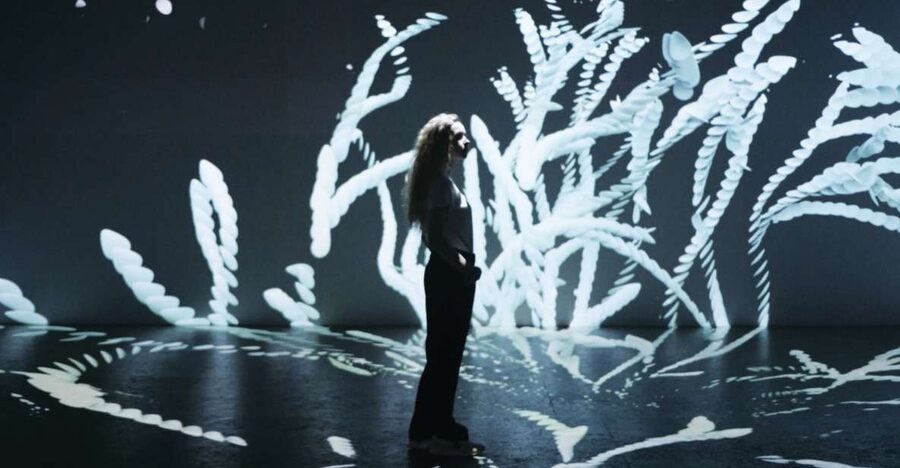
The Lighthouse of Digital Art gives you a compact cultural stop in Berlin, one that asks for only about half an hour but aims for a much larger feeling. The presentation uses projected images, sound, and spoken narration to turn astronomical material into a room-sized event.
The current show is called The Grand Tour. Its subject is familiar: the solar system and the galaxies beyond it. Its scale is not. Instead of seeing a small image of Mars or the Moon on a screen, you see these bodies presented around you in highly detailed digital imagery.
I would think of this as a short art experience rather than a full museum visit. You are not spending hours moving through dozens of rooms. You are entering for one timed presentation, then looking around the included Space Gallery and Infinity Room.
That compact format is useful on a busy Berlin day. You can fit it between larger sights, use it as a rainy-day stop, or choose it when you want something calmer than another historic building. The experience also suits a mixed group, since the subject is easy to grasp even if you know little about digital art or astronomy.
A few more Berlin tours worth weighing up
- Berlin: Jewish Museum Berlin Entrance Ticket
★ 4.5 · 8,393 reviews - Berlin: Berlin Story Bunker Entry Ticket
★ 4.6 · 6,759 reviews - Berlin: Illuseum Berlin Entrance Ticket
★ 4.1 · 3,970 reviews
Picking the Right Language and Start Time
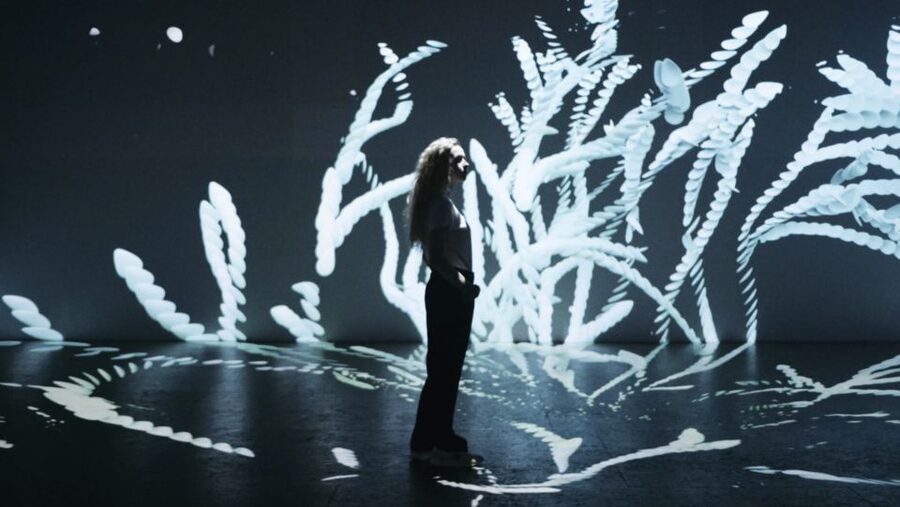
The most important planning detail is the narration schedule. Shows beginning on the hour, such as 2:00 p.m., are in German. Shows beginning on the half hour, such as 2:30 p.m., are in English.
This is not a minor detail. The spoken narration is part of the show, so you should check the start time before booking. If you want English, choose a half-hour departure. If you speak German, the full-hour option gives you the same broad experience in that language.
The timed format also gives the visit a clear shape. You are not simply wandering into projections at an unknown point. You arrive for a presentation that begins and ends as a complete piece. That helps the show feel more like a planned performance than background decoration.
The presentation lasts 27 minutes, while the listed activity duration is about 30 minutes. I would allow a little extra time for entering and seeing the other included rooms, but the core event is short. Do not book this expecting a half-day museum outing.
What Happens During The Grand Tour
The show presents a guided route through our solar system and the known galaxies. You move from familiar nearby bodies to the wider universe, with spoken narration providing context as the images change.
The Moon and Mars receive special attention. The presentation uses what is described as the most accurate mapping available for these bodies, which matters because the show is trying to balance spectacle with recognizable detail. You are not just watching generic colored spheres float by. The material is intended to show surfaces and forms with a close-to-real appearance.
The show also draws on recent imagery from the James Webb Space Telescope, NASA, and other sources. That gives the presentation a useful point of contact with modern astronomy. You can enjoy the color and movement simply as visual art, but the narration and source material give you more to consider.
I like that combination. Digital art can sometimes feel like a wall of effects with little reason behind it. Here, the subject supplies a structure: planets first, then the wider reaches of space. The pictures are meant to create wonder, but the astronomical references keep the program tied to real observation.
The emotional effect is also part of the design. The room uses sound and color to change the mood as the presentation progresses. At its best, that can make you forget the noise of daily life for a short while. The experience is intended to draw a response from you, not simply provide information.
Still, your reaction will depend on how you feel about narrated visual shows. If you prefer to study art quietly at your own pace, the fixed presentation may feel restrictive. You cannot pause the program or skip to a favorite planet. You receive the sequence as created.
The Space Gallery and Infinity Room
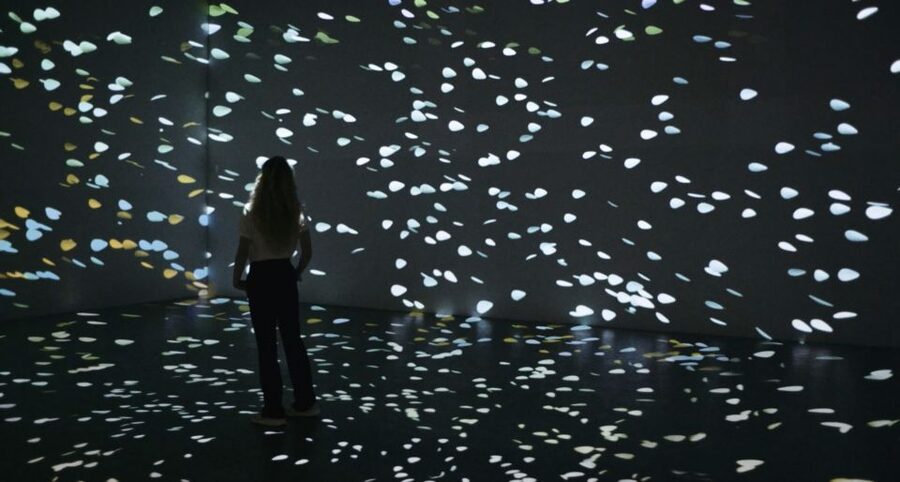
Your ticket includes more than The Grand Tour. You also get access to the Space Gallery and Infinity Room, which add value to the short visit.
The Space Gallery gives you another place to look at digital and new media art. The available information does not specify a full list of works or how often the display changes, so I would treat it as an additional gallery area rather than plan your entire Berlin itinerary around a particular piece.
One practical tip is worth remembering: make sure you find the exhibition area at the back. The layout is not necessarily obvious at first glance, and it would be easy to see the main show and leave without realizing there is more to explore. If staff directions are not immediately clear, ask where the rear exhibition is located.
The Infinity Room is the more room-focused part of the visit. Its purpose is to surround you with a visual setting that feels larger than the physical space. Like the main show, it asks you to respond to the room itself rather than inspect one object from a distance.
These extra areas are important to the value calculation. At $11 per person, the ticket is inexpensive for a short Berlin activity, but 27 minutes alone would make the visit feel brief. The additional rooms give you a reason to arrive a little early and stay after the presentation.
A different side of Berlin on the same trip:
- Berlin: Reichstag, Dome and Government District Guided Tour
★ 4.7 · 18,288 reviews - Berlin: 1-Hour City Tour by Boat with Guaranteed Seating
★ 4.3 · 16,993 reviews - Berlin: Boat Tour Along the River Spree
★ 4.4 · 11,252 reviews - Discover Berlin Half-Day Walking Tour
★ 5.0 · 9,624 reviews
Why The Imagery Matters
The strongest feature here is not simply that the room gets colorful. Plenty of digital displays can do that. The more interesting point is the use of astronomical imagery as the foundation.
The Moon and Mars are close enough to feel familiar, yet distant enough to remain mysterious. Showing them with detailed maps gives you something recognizable to follow. Then the program moves outward to planets and galaxies, changing your sense of scale along the way.
The James Webb Space Telescope connection adds a modern edge. It reminds you that the material is tied to current scientific imaging, not only to old textbook pictures. You are seeing an artistic presentation of real places and objects that scientists continue to study.
I would not treat the show as a substitute for a planetarium lecture or a science museum. The purpose is emotional and visual as much as educational. But the spoken narration can give you new facts while the images hold your attention, which makes the short program more satisfying than a purely decorative projection show.
The visual quality is also likely to appeal to people who want something outside Berlin’s usual museum circuit. This is a contemporary art experience in a trendy Berlin neighborhood, not a palace, church, or historical collection. It offers a different view of the city’s cultural side, one based on technology and new media.
Who Will Get The Most From It
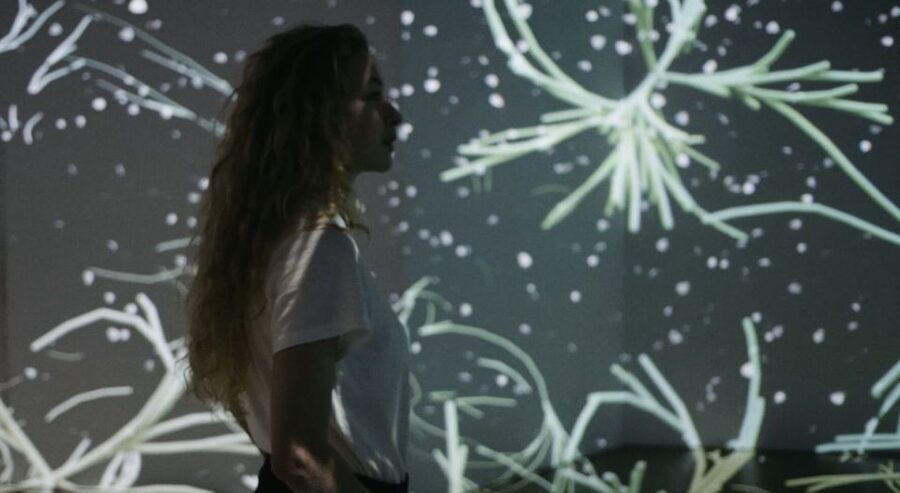
I would recommend this experience to you if you like visual art, astronomy, film, sound design, or unusual city stops. It is especially useful for a couple or small group looking for a short activity with a clear start and finish.
Families may find the planets and galaxies easy to enjoy, though the supplied information does not give an age recommendation. Since the show includes spoken narration and moving images, consider the interests and sensitivities of everyone in your party before booking.
It also suits people who want a quiet mental reset. The combination of darkness, sound, and slow movement can feel calming, and the subject naturally pulls your attention away from phones and daily errands. One especially strong reaction described the experience as calming and almost outside ordinary life. That gives you a fair idea of its intended mood.
I would be more cautious if you dislike sensory displays or prefer hands-on exhibits. There is no indication that you can interact with the planets or control the visuals. The response the room seeks is emotional, not physical.
People with epilepsy should not attend. That warning is important because the show relies on changing projections, color, and light effects.
Wheelchair Access and Practical Comfort
The experience is wheelchair accessible, which makes it a practical option for visitors who need an accessible cultural activity. The available information does not provide further details about seating, toilet facilities, or the exact route through the building, so you may want to confirm those points directly if they matter for your visit.
The timed start is the main comfort issue for everyone. Arrive with enough time to find the entrance and get settled, since the show is not described as an open-entry display. Once it begins, the fixed 27-minute sequence is the part you came to see.
Think of the visit as a focused appointment. It works well when you have a free half hour, but less well if you are rushing from a distant sight with no margin. The ticket can be canceled for a full refund up to 24 hours in advance, and the reserve-now, pay-later option gives you some flexibility while planning your Berlin schedule.
Is $11 a Fair Price?
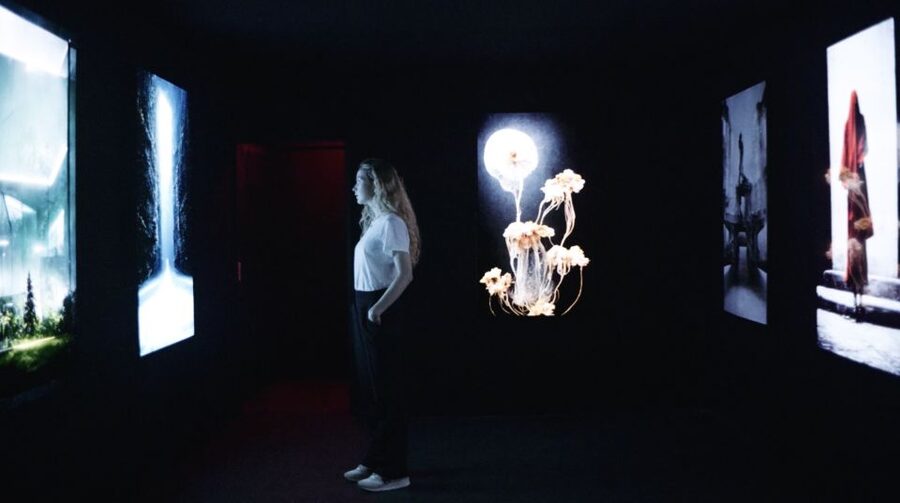
At $11 per person, the Lighthouse of Digital Art is priced like an accessible add-on rather than a major museum ticket. That is a good match for the short duration.
The value is strongest if you see all three parts: The Grand Tour, the Space Gallery, and the Infinity Room. If you arrive only for the 27-minute presentation and leave immediately, the price is still reasonable, but the visit may feel brief. Give yourself time to locate the rear exhibition and look through the additional areas.
The ticket also reduces the risk of spending a large amount on an experience that may not suit your taste. If you enjoy digital art, the low entry price makes it easy to try. If you are unsure, the short running time means you are not committing half a day.
The overall rating is 3.9 from 311 reviews, which suggests a generally positive but not universal response. That feels fair for a highly visual experience. Some people will find it calming and extraordinary. Others may want more art to explore, more explanation, or more control over the pace.
How To Fit It Into A Berlin Day
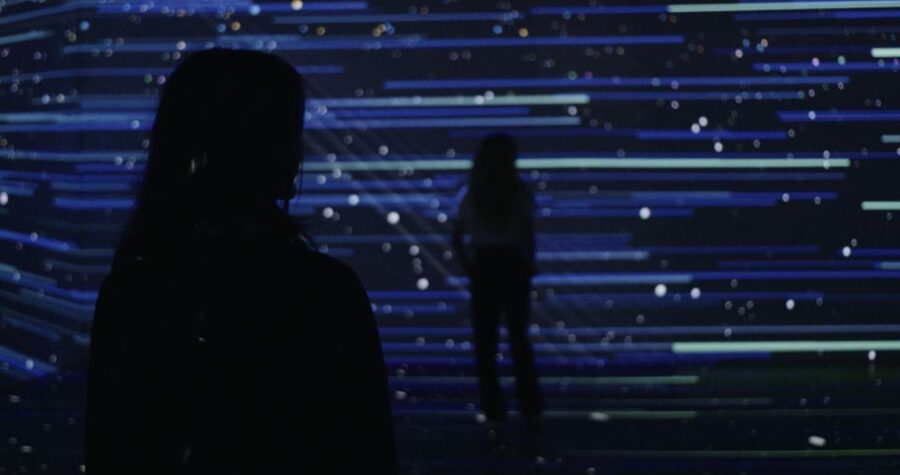
The Lighthouse of Digital Art works best as one piece of a larger day. Its location in a trendy Berlin neighborhood gives you a chance to pair modern digital art with food, shops, or another nearby activity, though no specific neighboring businesses are included in the available details.
Book an English show at the half hour if you want the narration in English. Allow a little breathing room before the start, then stay afterward for the Space Gallery and Infinity Room. Do not assume the back exhibition will announce itself clearly, so actively look for it.
The show can also be a useful change of pace after a day of monuments and historic collections. Berlin has plenty of serious museums and heavy historical subjects. This visit gives you half an hour of color, sound, planets, and galaxies instead.
I would not make it the only cultural activity of your day. It is too short for that, and its appeal depends heavily on your interest in audiovisual art. But as a compact stop, it can add variety without demanding much time or money.
Should You Book The Lighthouse Of Digital Art?
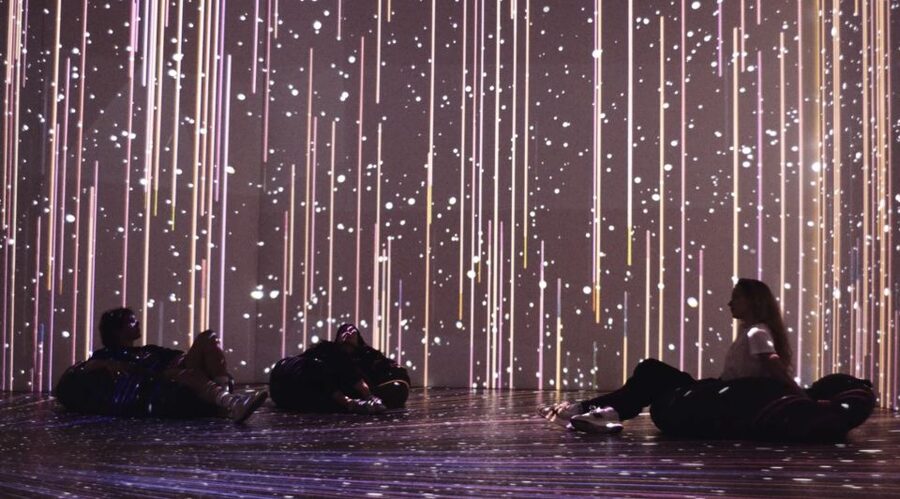
Book it if you want a short, affordable presentation that combines astronomy, new media art, narration, and room-sized projections. The best reasons are the detailed Moon and Mars imagery, the current space-focused subject, and the included Space Gallery and Infinity Room.
Choose your timing carefully. English begins on the half hour, German on the hour. Arrive ready for a fixed 27-minute show, then take time to find the additional exhibition area at the back.
Skip it if you want a traditional museum, a long visit, or a quiet display that you can explore at your own speed. Also skip it if you have epilepsy, since the experience is not suitable.
For the right audience, $11 is an easy Berlin cultural gamble. You may leave with a few new facts about space, a head full of vivid images, and the pleasant feeling that you briefly stepped away from ordinary city life.
FAQ
How long does the Lighthouse of Digital Art experience last?
The listed duration is about 30 minutes. The main presentation, The Grand Tour, lasts 27 minutes.
What language is the show presented in?
Shows beginning on the hour are presented in German. Shows beginning on the half hour are presented in English.
What is included with the ticket?
The ticket includes entry, The Grand Tour show, the Space Gallery, and the Infinity Room.
What is The Grand Tour?
The Grand Tour is a 27-minute audio-visual show about the solar system and known galaxies. It uses imagery from sources including NASA and the James Webb Space Telescope.
Does the show include the Moon and Mars?
Yes. The presentation includes detailed portrayals of the Moon and Mars, using accurate maps of these celestial bodies.
Is the experience wheelchair accessible?
Yes, the activity is wheelchair accessible.
Is the experience suitable for people with epilepsy?
No. The activity is specifically listed as unsuitable for people with epilepsy.
Can I cancel my booking for a refund?
Yes. You can cancel up to 24 hours in advance for a full refund. The reserve-now, pay-later option also lets you book without paying immediately.
Just added around Berlin
- Berlin Highlights in One Day★ 5.0 · 3 reviews
- Private Berlin One Day Tour with a Local: See the City Unscripted★ 3.5 · 3 reviews
- Individual city tour Berlin for max. 8 persons★ 5.0 · 3 reviews
- Transfer from Berlin Schönefeld Airport (SXF) to Berlin city Hotels – ROUND TRIP★ 4.0 · 3 reviews
- Berlin: Museum Island Tour★ 5.0 · 3 reviews
- Private Analogue Photography Experience in Berlin★ 5.0 · 3 reviews
- Berlin: Local Food Tour in Secrets Hidden Gems★ 4.0 · 3 reviews
- Berlin & The Third Reich Private Guided Tour★ 5.0 · 3 reviews
Tickets, compared.






Sanssouci Palace and Prussian Palaces Entry Ticket
Read our review →