
Review · ALTERNATIVE BERLIN TOURS
Berlin Reunited and Revived! 3-Hour Alternative Tour
Berlin’s story is easiest to understand when you leave the grand monuments behind. This private tour crosses Mitte, Prenzlauer Berg, Friedrichshain, and Kreuzberg, showing how a divided capital changed after the Wall fell. You see restored buildings, former industrial spaces, street art, and neighborhoods still arguing over rents and development.
I like the focus on ordinary city life, not just famous sights. I also like the contrast between the refurbished Kulturbrauerei and the politically charged East Side Gallery. Guides such as Tom, Maria, and JJ have been praised for lively, humorous tours, though your guide will depend on the date and language you book.
The main drawback is the schedule: tours run only on Tuesdays and Fridays from April through October. Three hours also gives you a strong introduction, not enough time to explore each district in depth.
In This Review
- Key points about Berlin Reunited and Revived
- Berlin after the Wall, seen neighborhood by neighborhood
- Mitte and the return of Berlin’s historic center
- Prenzlauer Berg and the Kulturbrauerei
- Friedrichshain and Berlin’s alternative side
- The East Side Gallery and the Wall in public view
- Kreuzberg and the Turkish Market by the canal
- What the private format is worth at $352
- Guide style and language options
- Timing, pickup, and practical planning
- Who should book this Berlin tour?
- Should you book Berlin Reunited and Revived?
- FAQ
- How long does the Berlin Reunited and Revived tour last?
- What districts does the tour visit?
- What major places are included?
- Is the tour private?
- How much does the tour cost?
- What languages are available?
- Is hotel pickup included?
- When does the tour operate?
- Can I cancel the tour for a full refund?
Key points about Berlin Reunited and Revived
- Four districts in three hours: Move from restored Mitte to Prenzlauer Berg, Friedrichshain, and Kreuzberg.
- Kulturbrauerei visit: See how an old brewery became a cultural center and arts venue.
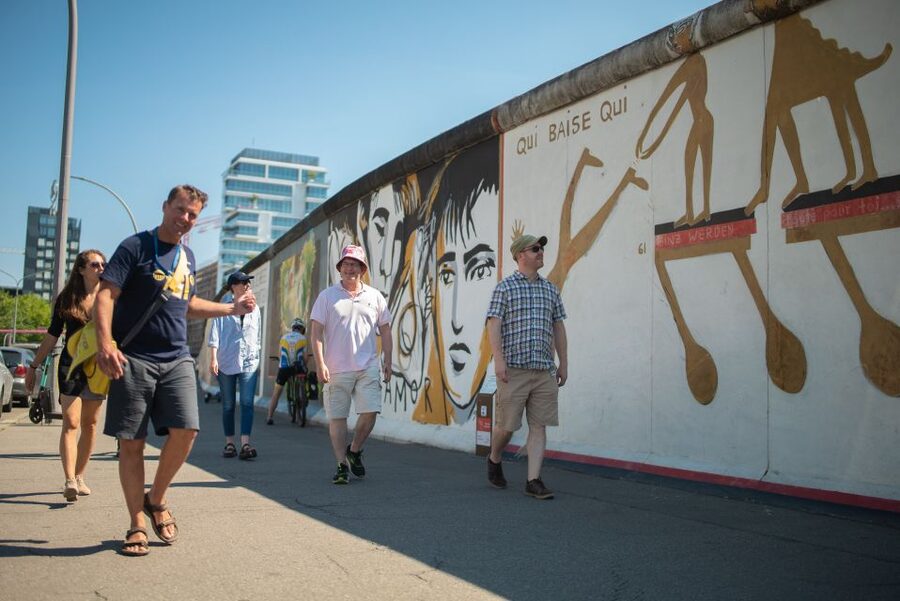
- East Side Gallery: Discuss the Wall, its murals, and the political meaning of Berlin’s street art.
- A closer look at change: Learn how reunification brought restoration, new businesses, gentrification, and higher rents.
- Turkish Market finale: Finish beside the Landwehr Canal with food, fabric, produce, local crafts, and possible live music.
- Private group format: Pay $352 for the group, up to 20 people, with an English or German-speaking guide.
Berlin after the Wall, seen neighborhood by neighborhood
This tour works because Berlin is not one city in the usual sightseeing sense. It is a collection of districts with different moods, political histories, building styles, and ideas about the future.
The route follows that contrast. You do not spend three hours hearing a general lecture about reunification. Instead, you watch the city change as you move from one neighborhood to another. One area shows restoration and rising property values. Another points to alternative culture and anti-corporate politics. The result is a more useful picture of present-day Berlin.
The private format helps here. Your group can be as large as 20 people, but you are not joining a giant public crowd with strangers from several tour companies. You can ask about the buildings and neighborhoods in front of you, and the guide can keep the pace suited to your group.
More alternative Berlin:
- Berlin: Alternative Berlin Walking Tour
★ 4.6 · 1,204 reviews - Berlin: Alternative Bike Tour of Kreuzberg & Friedrichshain
★ 4.7 · 548 reviews - Berlin: Alternative Berlin Bike Tour
★ 4.8 · 359 reviews
Mitte and the return of Berlin’s historic center
The tour begins in Mitte, where neglected buildings were restored after the Berlin Wall fell. That opening gives you a quick lesson in the scale of Berlin’s transformation.
During the Cold War, Berlin was cut into East and West, and many parts of the eastern center suffered from neglect. After reunification, buildings that had lost their place in the city were repaired and brought back into use. That process helped restore Berlin’s central districts, but it also laid the groundwork for new investment and higher prices.
I like beginning here because it keeps reunification tied to real streets and buildings. You can discuss how a once-divided capital tried to recover its identity, rather than treating the Wall as a single isolated attraction.
Mitte is also useful for understanding the city’s changing reputation. Berlin developed a reputation for being inexpensive, creative, and open to unusual ideas. As more businesses and property investors arrived, the center became more polished and more expensive. Your guide can connect those changes to what you see around you.
Do not expect a long interior visit at every stop. This is a walking tour built around neighborhood context, outdoor sights, and conversation. Wear clothing suited to the weather, since much of the experience takes place outside.
Prenzlauer Berg and the Kulturbrauerei
From Mitte, the tour continues to Prenzlauer Berg. In the 1990s, this district became a major artistic center in Berlin. Its later change is one of the clearest examples of how creative neighborhoods can shift once they attract attention.
Prenzlauer Berg now draws young professionals and families. That does not erase its earlier character, but it does change the feel of the streets, the housing market, and the kind of businesses that can afford to operate there.
The stop at Kulturbrauerei gives that story a physical address. This former brewery has been refurbished as a center for culture and the arts. Its reuse reflects a wider pattern in eastern Berlin, where old industrial buildings have found new purposes instead of simply being demolished.
I find this one of the strongest parts of the route because the building itself connects work, industry, culture, and urban renewal. It is not only an attractive old complex. It helps explain how Berlin’s neglected spaces became useful again.
At the same time, the district raises a fair question: what happens when an alternative area becomes desirable? The same changes that repair buildings and bring cafés, studios, and cultural activity can push up rents. Prenzlauer Berg lets you discuss both sides without reducing the issue to a simple good-versus-bad story.
Friedrichshain and Berlin’s alternative side
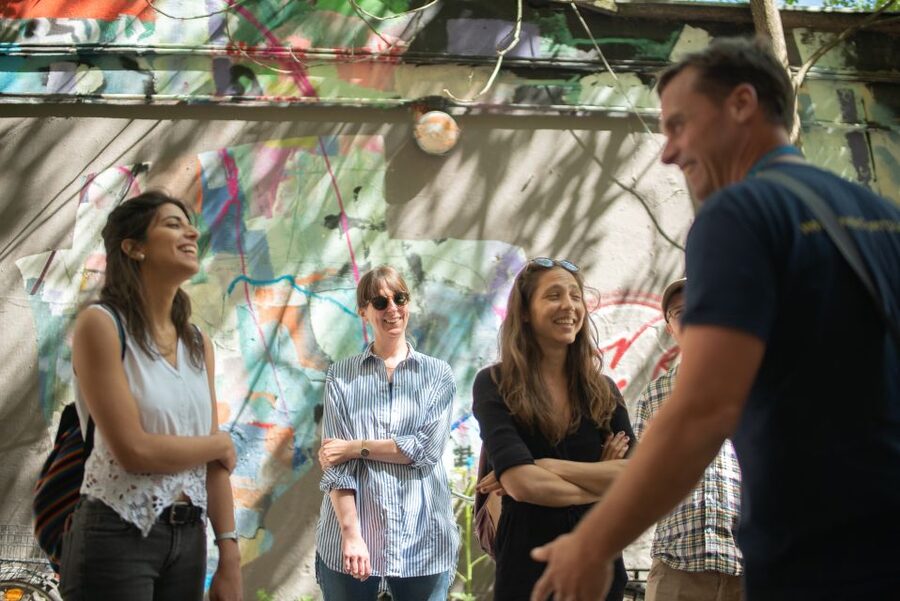
The route then heads to Friedrichshain, one of the districts associated with Berlin’s alternative culture. Here, the discussion turns more directly to politics, corporate development, landlords, and the pressure of rising rents.
The tour presents a city still negotiating its future. Left-wing residents continue to resist corporate expansion and rent increases, while new investment brings money and redevelopment. You learn what these pressures mean for people who want to keep living in the neighborhoods where they built their lives and communities.
That focus is valuable because Berlin’s reputation for freedom and creativity did not appear by accident. It grew from unusual spaces, independent projects, artists, political groups, and residents willing to challenge the normal way of doing things. The tour asks how much of that character can survive as the city becomes more expensive and more corporate.
You may also find that Friedrichshain feels less like a polished sightseeing district than Mitte. That is part of the point. The tour is not designed to show you only the most presentable version of Berlin. It shows a city in argument with itself.
Since the experience lasts three hours, the guide must keep the route moving. If you want long stops inside museums or detailed architectural tours, this will not be the right format. If you want a practical explanation of why a district feels the way it does, the pace makes sense.
A few more Berlin tours worth weighing up
- Berlin Highlights 3-Hour Bike Tour
★ 5.0 · 948 reviews - Berlin Highlights: 3-Hour Bike Tour
★ 4.9 · 809 reviews - Berlin: 3-Hour Street Art Tour
★ 4.7 · 778 reviews - Berlin: 3-Hour Secret Food Tour
★ 4.8 · 269 reviews
The East Side Gallery and the Wall in public view
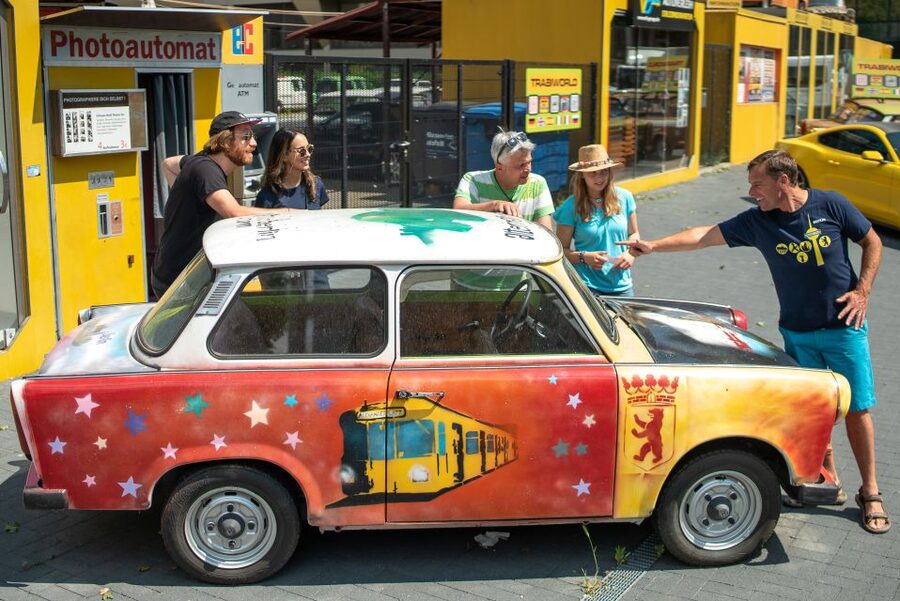
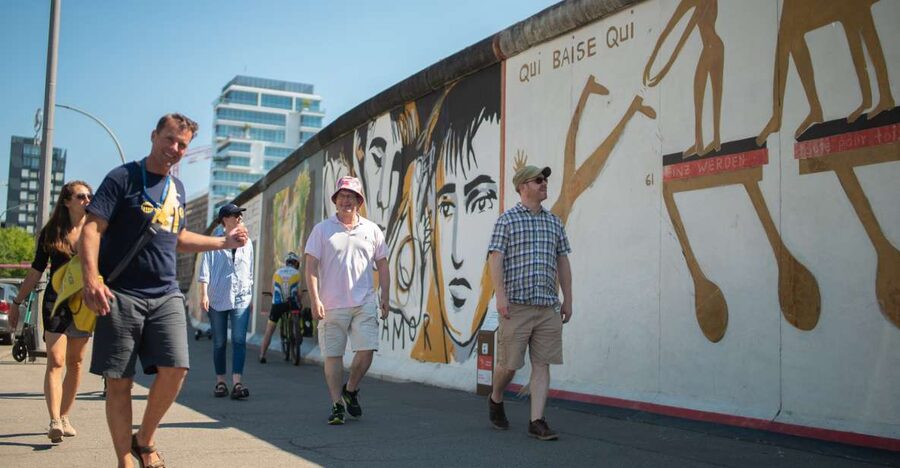
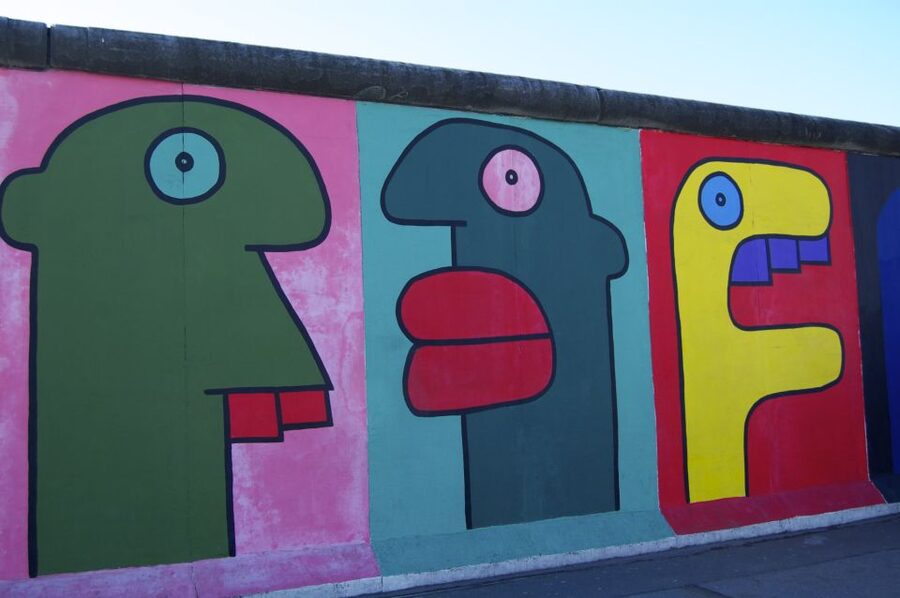
The East Side Gallery provides the tour’s most recognizable landmark. This colorful section of the Berlin Wall has become the world’s largest open-air gallery, with murals painted directly on the remaining Wall.
The art matters for more than its color. The paintings reflect the freedom, hope, anger, humor, and political feeling that surrounded Berlin after the Wall opened. Your guide discusses the origins of Berlin’s street art scene and the political messages behind it.
That context is important. Without it, the East Side Gallery can become a quick photo stop. With it, the murals help you think about who controls public space, how art can challenge authority, and what happens when political work becomes a major tourist attraction.
The Wall itself also brings the history of division into focus. Berlin’s reunification story is often told through dates and official ceremonies, but this surviving section gives you a direct reminder that the border once cut through daily life. The tour links that past to current debates about ownership, development, and public memory.
You should expect an outdoor viewing experience rather than a museum visit. Weather can affect comfort, so bring a coat or rain gear when needed. The activity lists wheelchair accessibility, but the exact comfort of every walking surface and stop can depend on the route used that day.
Kreuzberg and the Turkish Market by the canal
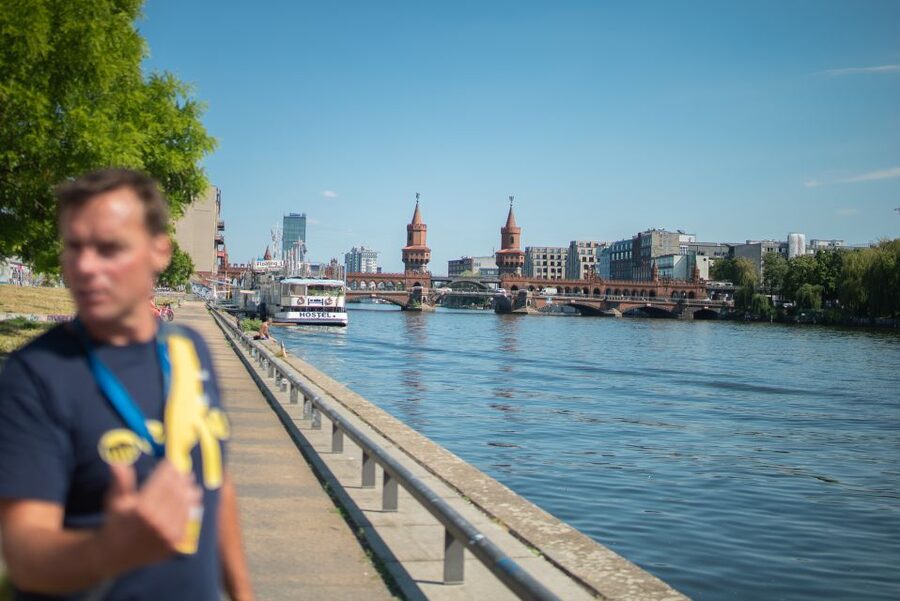
The final district is Kreuzberg, where the tour ends at the Turkish Market beside the Landwehr Canal. This is a fitting finish because it brings together food, migration, small business, art, and everyday city life.
The market began with fresh produce, Turkish cuisine, and brightly patterned fabric. It has grown to include Berlin artisans, local farmers, and occasional impromptu live music. That mix reflects the district’s changing population and its long connection to Turkish culture.
You are not simply looking at a market as a colorful ending. You are seeing how communities shape a neighborhood through food, trade, design, and public space. After the more abstract discussions of gentrification and corporate culture, this stop returns the conversation to people and daily routines.
Food and drinks are not included, so bring money if you want to buy something. The market can also be a useful place to continue exploring after the tour, though the experience itself ends there and does not promise a meal or shopping time.
The canal setting adds a calmer final note. It gives the route a clear finish rather than leaving you at another anonymous street corner. You end with a sense of Berlin as a mixed, changing city, not simply as a former Cold War symbol.
What the private format is worth at $352
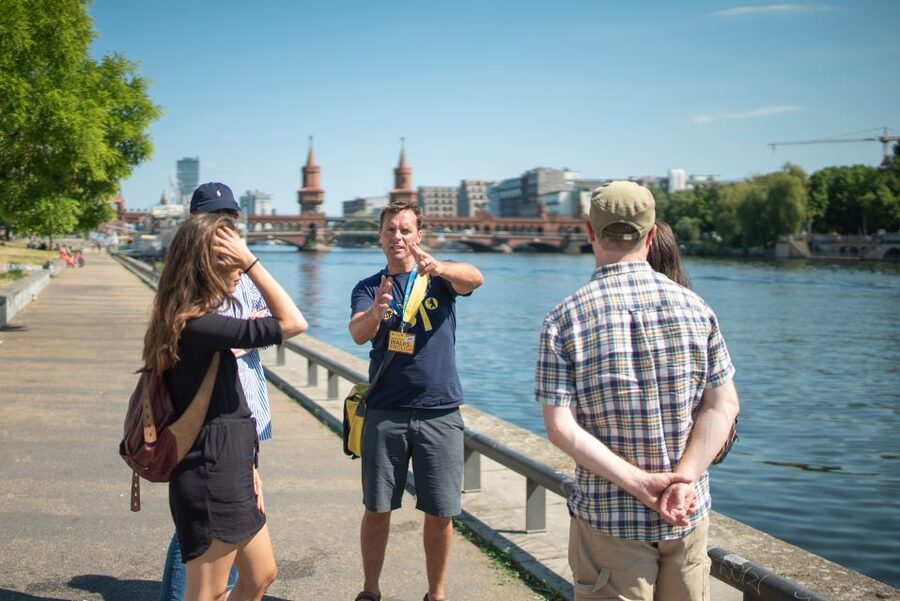
The price is $352 per group of up to 20 people. For one or two people, that is a steep price for three hours. For a larger family or group, the calculation improves quickly because the fee is shared rather than charged separately per person.
At the full group limit, the cost works out to roughly $17.60 per person. A group of four would pay about $88 per person, while a group of eight would pay about $44 per person. The value depends heavily on how many people are in your booking.
You are paying for a private guide, not for entrance tickets, food, or a long list of attractions. The real product is interpretation: a guide who connects four neighborhoods and explains why Berlin looks and feels so different from one street to the next.
I would consider it good value for a family, school group, friends traveling together, or anyone who prefers to ask questions without joining a large public tour. For a couple on a tight budget, a less expensive group walk may make more sense.
The booking terms add flexibility. You can reserve now and pay later, and cancellation is free up to 24 hours before the start time. Those policies do not change the tour’s basic value, but they help if your Berlin plans are still shifting.
Guide style and language options
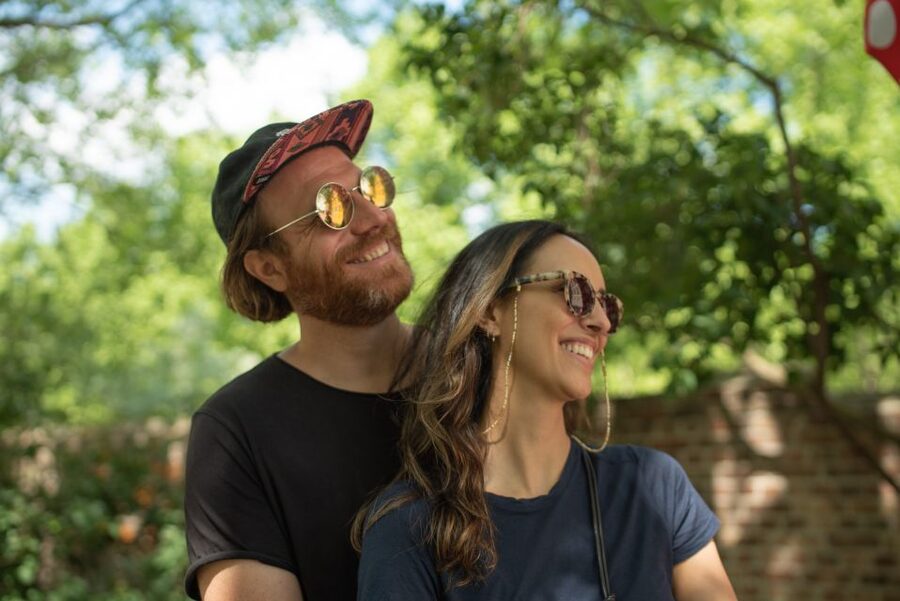
The tour is offered in English or German. The guide is live, which matters on a route based on discussion rather than a fixed audio script.
Past guides have included Tom, Maria, and JJ. Tom was praised for American charm and humor, while Maria was described as lively and interesting. JJ led an enthusiastic English-language tour for a group that included a Chinese exchange student. These details suggest that personality is a major part of the experience.
You should still treat those names as examples, not a guarantee for your date. The guide assigned to your tour may be different. What you can count on from the activity details is an English or German-speaking guide and a private group format.
The comments about humor are worth noting. Berlin’s political and social topics can become heavy, especially when discussing the Wall, displacement, and rent increases. A guide who can explain serious issues without turning the tour into a dry lecture will make a real difference.
Timing, pickup, and practical planning
The tour lasts three hours and runs on Tuesdays and Fridays from April through October. That limited schedule is the biggest planning issue. Check the available start times before building the rest of your Berlin itinerary.
Hotel pickup is included. You should wait in the hotel lobby five minutes before the scheduled pickup time, and your guide will wear a yellow name tag for recognition. This is helpful if you are staying in a busy hotel, but be ready on time so the walking route does not lose part of its short schedule.
The tour is listed as wheelchair accessible. You should still mention any mobility needs when booking, since the route crosses several neighborhoods and includes outdoor public spaces.
Bring weather-appropriate clothing. Berlin’s weather can shift, and the route spends substantial time outdoors. Comfortable shoes are sensible, though the supplied information does not specify an exact distance or walking surface.
Food and drinks are not included. The Turkish Market is the natural place to buy something at the end, but you should not assume that a meal is part of the tour price.
Who should book this Berlin tour?
I would choose this experience if you have already seen the Brandenburg Gate, the Reichstag area, or the main central sights and now want help understanding the city beyond its postcard landmarks.
It suits you especially well if you are interested in:
- The effects of reunification on daily life
- Gentrification and rent disputes
- Berlin’s alternative and street art scenes
- The reuse of old industrial buildings
- Turkish culture and neighborhood markets
- A private route for family or friends
It is less suitable if your main goal is to enter museums, visit many interiors, or see every major monument. The tour uses sights as evidence for a broader story. It does not try to provide a full checklist of Berlin attractions.
The limited Tuesday and Friday schedule may also rule it out for a short visit. If your dates line up, though, the route covers a lot of ground without pretending that Berlin’s changes are simple.
Should you book Berlin Reunited and Revived?
Book it if you want a clear, human explanation of how Berlin moved from division and neglect toward restoration, rising costs, corporate pressure, and new creative life. The strongest features are the four-district route, the Kulturbrauerei, the East Side Gallery, and the final Turkish Market.
The $352 group price makes the most sense when shared among several people. Check the schedule first, wear weather-ready clothing, and arrive prepared for a walking-focused experience rather than a museum tour.
If you want Berlin presented as a living city with unresolved arguments, this is a smart choice. If you want only famous sights and formal historical facts, spend your money elsewhere.
FAQ
How long does the Berlin Reunited and Revived tour last?
The tour lasts three hours.
What districts does the tour visit?
The route includes Mitte, Prenzlauer Berg, Friedrichshain, and Kreuzberg.
What major places are included?
The experience includes the Kulturbrauerei, the East Side Gallery, and the Turkish Market beside the Landwehr Canal.
Is the tour private?
Yes. It is a private group tour for up to 20 people.
How much does the tour cost?
The price is $352 per group of up to 20 people.
What languages are available?
The live tour guide can conduct the experience in English or German.
Is hotel pickup included?
Yes. You should wait in your hotel lobby five minutes before the scheduled pickup time. The guide will wear a yellow name tag.
When does the tour operate?
Tours run on Tuesdays and Fridays from April through October. Starting times depend on availability.
Can I cancel the tour for a full refund?
Yes. You can cancel up to 24 hours in advance for a full refund. You can also reserve now and pay later.
Just added around Berlin
- Berlin Highlights in One Day★ 5.0 · 3 reviews
- Private Berlin One Day Tour with a Local: See the City Unscripted★ 3.5 · 3 reviews
- Individual city tour Berlin for max. 8 persons★ 5.0 · 3 reviews
- Transfer from Berlin Schönefeld Airport (SXF) to Berlin city Hotels – ROUND TRIP★ 4.0 · 3 reviews
- Berlin: Museum Island Tour★ 5.0 · 3 reviews
- Private Analogue Photography Experience in Berlin★ 5.0 · 3 reviews
- Berlin: Local Food Tour in Secrets Hidden Gems★ 4.0 · 3 reviews
- Berlin & The Third Reich Private Guided Tour★ 5.0 · 3 reviews
Alternative Berlin Tours, compared.


Alternative Bike Tour of Kreuzberg & Friedrichshain
Read our review →
Experience the Alternative Kreuzberg on a Bike Tour
Read our review →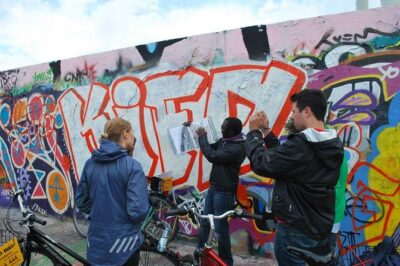
Alternative Berlin Bike Tour – Off the Beaten Tracks in Small Groups
Read our review →

Street Art and Alternative Tour of Berlin in French
Read our review →Browse the lists this tour appears in