
Review · BERLIN SEGWAY TOURS
Berlin Small Group Segway Adventure: Explore in 2 Hours!
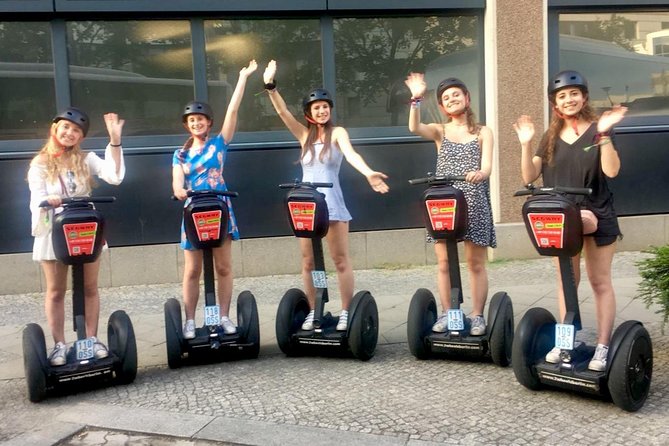
Berlin is a large city, and this tour gives you a quick way to connect its major sights without spending the whole day on foot. You glide from Museum Island and Bebelplatz to the Brandenburg Gate, Tiergarten, Potsdamer Platz, Checkpoint Charlie, and Alexanderplatz, with short stops for photos and commentary.
I like the small-group format, capped at 15 people, and the brief training before you set off. I also like the range of places covered, from the Holocaust Memorial and Reichstag to the Cold War markers at Checkpoint Charlie. The main concern is that the actual ride can vary: some outings have lasted about 90 minutes or less, and one reported tour ran for only 55 minutes.
In This Review
- Key points at a glance
- Why a Segway works well for Berlin’s broad center
- Training, equipment, and the first few minutes
- Museum Island and Bebelplatz: Berlin’s cultural heart
- Brandenburg Gate and the Reichstag in one powerful stretch
- Bellevue Palace and the Victory Column through Tiergarten
- The Holocaust Memorial requires a slower pace
- Potsdamer Platz shows Berlin’s modern face
- Checkpoint Charlie needs context, not just a photograph
- Gendarmenmarkt and Alexanderplatz finish the city sweep
- How much history will you really get?
- Safety, traffic, and the limits of the two-hour promise
- Is $84.68 a fair price?
- Who should book this Berlin ride?
- Should you book the two-hour Segway adventure?
- FAQ
- How long is the Berlin Segway tour?
- What sights are included?
- Does the tour enter the museums?
- Can I enter the Reichstag dome during the tour?
- Is training included?
- What language is the tour offered in?
- How many people can join one booking?
- Where does the tour start and finish?
- Is hotel pickup included?
- Can I cancel for a full refund?
Key points at a glance
- Eleven central Berlin stops: You cover major landmarks from Museum Island to Alexanderplatz in one fast-moving circuit.
- Training comes first: A Segway, helmet, insurance, and practice session are included in the $84.68 price.
- A useful first-day orientation: The route helps you decide where to return for a longer visit.
- Guides shape the experience: Morgan, Nachi, and Nachiket have been praised for safe riding and strong local explanations, though the depth can vary.
- Traffic is part of the deal: Berlin streets, bicycles, pedestrians, and sudden turns demand attention.
- Free cancellation: Cancel at least 24 hours before the start time for a full refund.
Why a Segway works well for Berlin’s broad center
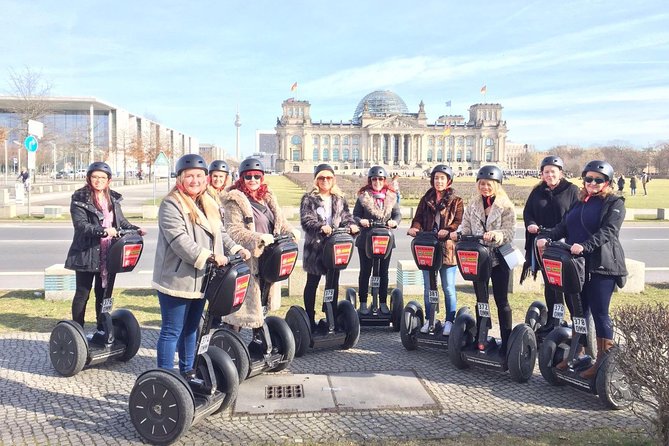
The clever part of this outing is its reach. Berlin’s center is spread across a wide area, so walking from Museum Island to Bellevue Palace, then on to Potsdamer Platz and Alexanderplatz, takes real time and energy. A Segway lets you cross those gaps while still moving at street level.
This is not a quiet glide through one historic quarter. You ride through busy city streets, open squares, parks, and broad avenues. That variety gives you a useful first look at Berlin’s changing character, from grand Prussian buildings to Cold War landmarks and new post-reunification architecture.
The tour is best understood as a moving introduction, not a full history lesson. The stops are generally short, about five minutes each, so you get the essential setting and a chance to take pictures. If one place catches your interest, mark it for a later visit.
More segway rides around Berlin:
- Berlin 2-Hour Segway Tour
★ 4.6 · 238 reviews - Berlin: 2-Hour Premium Segway Tour
★ 4.5 · 157 reviews - 2-Hour Segway Discovery Tour Berlin
★ 5.0 · 154 reviews
Training, equipment, and the first few minutes
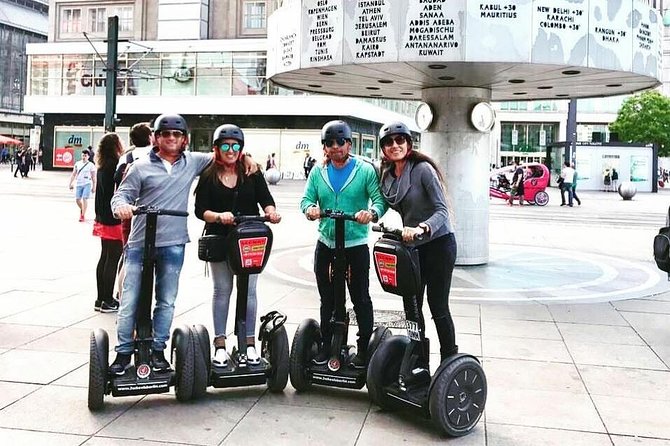
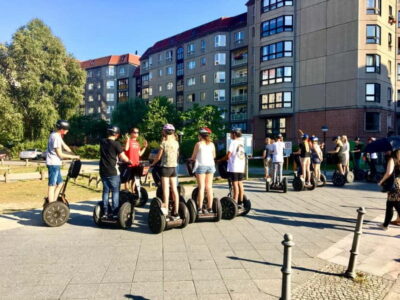
You meet at Claire-Waldoff-Straße 6 in central Berlin and return there at the end. The tour is offered in English, and a professional local guide provides the Segway, helmet, insurance, and instruction.
If you have never used a Segway, allow yourself a few minutes to get comfortable. The included training matters because the machine responds to your weight and balance rather than to a conventional handlebar or pedal system. Past outings have included first-time riders who found the controls easy to learn, but ease is not the same as complete confidence in traffic.
I would wear comfortable clothes and shoes, and bring gloves in cold weather. One rider found the cold severe enough for the outing to finish early. The operator also allows some riders who cannot manage the Segway to use an electric bike instead, though that arrangement is not presented as a standard part of every booking. Ask before setting off if you have concerns.
The stated maximum is 15 people. That is small enough for a guide to keep the group together, but it can still feel busy when riders stop, turn, or pass pedestrians. A much smaller group, including a private outing, may provide a calmer ride and more time for questions.
Museum Island and Bebelplatz: Berlin’s cultural heart
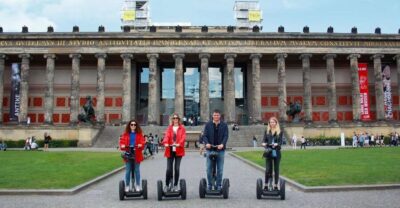
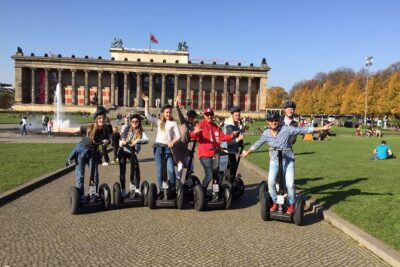
The first stop at Museum Island gives you an outside view of five major museums along the Spree. You do not enter the museums, so this is a look at their architecture and a short explanation of the collections inside. For a first orientation, it is useful, but do not confuse it with a museum visit.
The river setting makes this an appealing photo stop. It also places you in one of Berlin’s key cultural areas before the ride moves into the political center. If you plan to visit the Pergamon Museum site, the Neues Museum, or another institution later, this quick introduction helps you understand where everything sits.
At Bebelplatz, the mood changes. The square is known for the 1933 Nazi book burning, and its underground memorial creates a quiet reminder of what happened there. The guide also points out the surrounding State Opera House and other grand buildings.
Five minutes is enough to understand why the square matters, but not enough for a detailed account of Nazi cultural policy or Berlin’s wartime story. I recommend treating the stop as a prompt to return on foot. The contrast between the elegant architecture and the memorial’s message is one of the most meaningful moments in the route.
Brandenburg Gate and the Reichstag in one powerful stretch
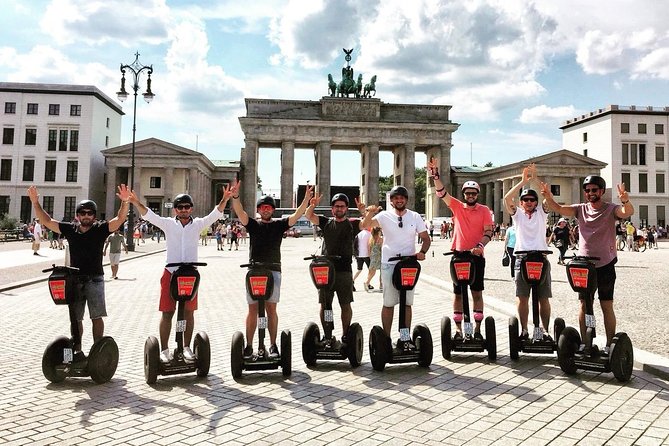
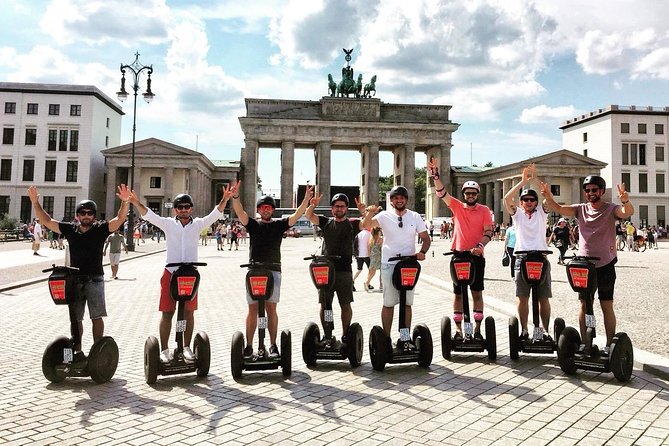
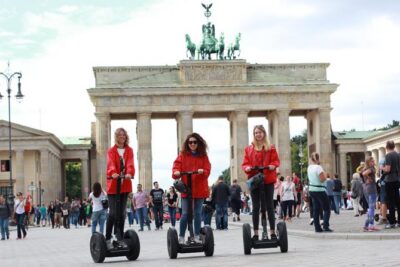
The Brandenburg Gate is the tour’s natural centerpiece. Its neoclassical columns and Quadriga sculpture make it instantly recognizable, but the important point is how its meaning changed over time. The guide places it in the story of Berlin’s division and reunification, then gives you time for photographs.
The gate is also a practical orientation point. From here, you are close to the Reichstag, the Holocaust Memorial, Pariser Platz, and the government district. The tour does not include entry through the gate or access to the Reichstag dome, so you see these places from outside.
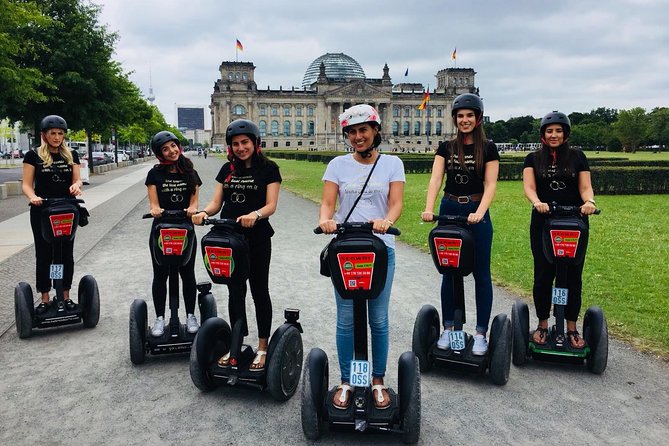
At the Reichstag Building, you hear about the German Parliament, the building’s troubled past, and its place in reunified Germany. The glass dome is an especially useful detail to notice, though an exterior stop does not give you the experience of walking inside it.
The five-minute format keeps the tour moving, but it limits the political context. Some guides have offered detailed background and answered questions well, while other outings have felt closer to a name-and-location introduction. If your main interest is German politics, you will want a separate visit or a more specialized history tour.
A few more Berlin tours worth weighing up
- Berlin: Third Reich and Cold War 2 Hour Walking Tour
★ 4.9 · 6,830 reviews - Berlin’s Best: 2 Hour Walking Tour Third Reich and the Cold War
★ 5.0 · 5,486 reviews - Berlin: 2-Hour Lake Oberhavel Cruise from Tegel
★ 4.4 · 577 reviews - East Berlin and the Berlin Wall 2-Hour Walking Tour
★ 5.0 · 228 reviews
Bellevue Palace and the Victory Column through Tiergarten
Schloss Bellevue, the official residence of the German President, offers a different view of the city. It is less familiar to many first-time visitors than the Brandenburg Gate, and the stop explains the ceremonial role of the presidency and the palace’s setting.
You see the façade and gardens from outside. This is a pleasant pause, but it is not a palace tour. The value lies in connecting the building to present-day Germany rather than in seeing an interior.
The Victory Column follows as a bold reminder of Prussian military power. Its golden figure is easy to spot above the trees, and the monument gives the guide a chance to explain how Berlin has used, questioned, and reinterpreted its imperial symbols.
The surrounding Tiergarten provides a welcome change from stone and traffic. You get a sense of how much open space lies inside central Berlin, along with views toward the city’s main avenues. Riding through this part can feel more relaxed, although you still need to watch the group and obey the guide’s signals.
The Holocaust Memorial requires a slower pace
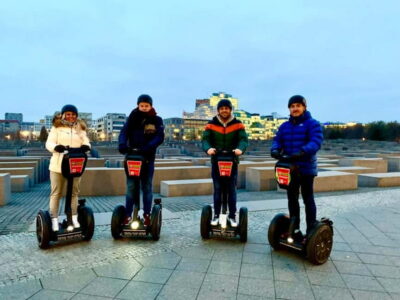
The Memorial to the Murdered Jews of Europe is made of 2,711 concrete slabs arranged across an uneven field. The paths between them create changing sight lines and a serious, unsettled feeling.
A Segway tour can only give this place a brief introduction. The memorial is designed for walking, and five minutes is a short time for a site that rewards quiet attention. You may be asked to dismount or walk through part of it, so listen carefully to the guide and treat the space with respect.
I appreciate that the route includes the memorial, but I would not count it as a full visit. Return later when you can spend more time without a schedule. The same advice applies to several stops on this tour: the ride shows you where to go, then your own walking time supplies the depth.
Potsdamer Platz shows Berlin’s modern face
Potsdamer Platz is one of the clearest examples of Berlin’s post-reunification rebuilding. Once divided by the Wall and damaged by war, it is now filled with offices, shops, restaurants, and large modern structures, including the Sony Center.
The square gives you a quick lesson in how dramatically Berlin changed after reunification. The older historic stops can make the city feel like a museum of European power, while Potsdamer Platz shows a modern business center built around new architecture and commercial life.
The downside is that this stop can feel more like a photo pause than a detailed discussion. If you want the history of the Berlin Wall and reunification, ask direct questions. A good guide can make the contrast between the former border zone and today’s square much clearer.
Checkpoint Charlie needs context, not just a photograph
Checkpoint Charlie is one of Berlin’s most famous Cold War locations, but it is also one of the city’s most commercialized. You see the guardhouse and displays connected with the former crossing between East and West Berlin.
The guide can explain escape attempts, the division between East and West, and the tense events that took place here. You may also receive practical warnings about street scams around the site, including dice games aimed at taking money from passersby.
Five minutes does not allow much room to sort fact from tourist presentation. I would use the stop to note the location, then return later to a museum or exhibit devoted to the Wall if you want a fuller account. The tour supplies the setting and a few stories, but it cannot explain every political and human consequence of the Cold War.
Gendarmenmarkt and Alexanderplatz finish the city sweep
Gendarmenmarkt is one of central Berlin’s most graceful squares. The German Cathedral, French Cathedral, and Concert Hall face one another across the open space, creating a strong architectural view even if you have only a few minutes to stop.
This is an ideal place for photographs, but the square also helps explain Berlin’s European and royal past. Depending on restoration work or local conditions, the appearance and access around the square may vary, so think of it as a brief exterior visit.
Alexanderplatz gives the tour a livelier urban finish. The TV Tower dominates the view, while shops, restaurants, and street performers fill the area. The square has changed from a traditional marketplace into a major modern transport and shopping hub, and the guide can point out that shift.
Ending here gives you a useful sense of Berlin’s size and variety. You have moved from museums and royal buildings to memorials, government offices, Cold War sites, and a busy public square, all in one short ride.
How much history will you really get?
The answer depends heavily on the guide and on the group. Morgan has been praised for looking after less confident riders and for adjusting the timing around bad weather. Nachi and Nachiket have been praised for giving detailed background and answering questions. Other accounts describe brief explanations that amounted to little more than identifying a building.
That difference matters. The tour is built around movement, safety, and covering ground. It is not designed as a seminar on German history. If you want a strong experience, ask questions at each stop rather than waiting for a long lecture.
There is also a practical balance to manage. One guide must watch riders, traffic, bicycles, pedestrians, and the route while explaining Berlin. That makes vivid storytelling harder than it is on a stationary walking tour.
Safety, traffic, and the limits of the two-hour promise
Berlin is not a closed course. You may ride beside traffic and through areas shared with pedestrians and bicycles. One past outing included a collision after a quick change of direction, with bruising but no head injury. That does not mean an accident is likely, but it does mean you should stay alert and leave space between riders.
Teenagers aged 14 and older are permitted to ride Segways in Germany, according to the operator. A mixed-age group can affect the pace, especially if some riders are inexperienced or playful. Tell the guide at the start if you feel uncomfortable with the group’s riding style.
The advertised duration is about two hours, but actual timing has not always matched it. One outing lasted roughly 90 minutes, and another lasted 55 minutes. Cold weather, rider comfort, a drink break, group changes, or an altered route may affect the result.
I would confirm the expected departure and finish time before leaving the office. If seeing every named sight is important to you, make sure you are joining the standard route rather than an alternative guide-led route. One past outing was changed to a more local East Berlin route, which left the riders to visit several advertised sights on their own.
Is $84.68 a fair price?
At $84.68 per person, this is not a cheap way to get from one place to another. The price includes the machine, helmet, insurance, training, and a local English-speaking guide, so you are paying for the equipment and supervision as well as the sightseeing.
The value improves if you are short on time, dislike long walks, or want a broad first look at Berlin. Covering this many central sights by foot in two hours would be unrealistic. The ride can save your legs and help you plan the rest of your stay.
The value drops if the tour runs well under two hours or if you expect detailed historical interpretation at every stop. Food, drinks, and hotel pickup are not included. Since the tour returns to its starting point, you also need to arrange your own way to Claire-Waldoff-Straße 6.
Free cancellation up to 24 hours before the start time gives you some protection when your plans are uncertain. Changes or cancellations inside that 24-hour window are not accepted for a refund.
Who should book this Berlin ride?
I would recommend it to first-time visitors who want a fast orientation, active sightseers who prefer riding to walking, and families or friends looking for a playful way to cross the city. It also suits anyone who wants to identify several places to revisit later.
You should think twice if you are pregnant, have heart problems or another serious medical condition, or dislike riding near traffic. The activity is not recommended for those conditions, and the group setting may not suit someone who wants a slow, quiet visit at memorials and historic sites.
Bring a passport, since a current valid passport is required on the day. Tell the operator your preferred departure time when booking, and consider choosing an early morning outing if traffic and crowds concern you.
Should you book the two-hour Segway adventure?
Book it if your goal is to see a lot of Berlin quickly and enjoy the ride itself. The route covers an impressive set of landmarks, and a strong guide such as Morgan, Nachi, or Nachiket can turn the circuit into a useful, lively introduction.
Do not book it expecting a historian’s full account of Berlin, guaranteed two-hour riding time, or entry into the museums and Reichstag. For the best value, take the tour early in your stay, ask questions, dress for the weather, and return later to the Holocaust Memorial, Museum Island, Checkpoint Charlie, or the Reichstag for a closer look.
FAQ
How long is the Berlin Segway tour?
The stated duration is approximately two hours. Actual outings have varied, with some lasting about 90 minutes and one reported outing lasting 55 minutes.
What sights are included?
The route includes Museum Island, Bebelplatz, Brandenburg Gate, the Reichstag Building, Bellevue Palace, the Victory Column, the Holocaust Memorial, Potsdamer Platz, Checkpoint Charlie, Gendarmenmarkt, and Alexanderplatz.
Does the tour enter the museums?
No. At Museum Island, you admire the outside architecture of the five museums and hear about the collections inside. Admission is not included.
Can I enter the Reichstag dome during the tour?
No. The stop focuses on the exterior of the Reichstag Building, its architecture, and its role as the seat of the German Parliament.
Is training included?
Yes. The booking includes Segway training, a Segway, helmet, and insurance.
What language is the tour offered in?
The experience is offered in English.
How many people can join one booking?
The maximum is 15 people per booking.
Where does the tour start and finish?
It starts at Claire-Waldoff-Straße 6, 10117 Berlin, Germany, and ends back at the same meeting point.
Is hotel pickup included?
No. Hotel pickup and drop-off are not included. Food and drinks are also excluded unless specifically stated.
Can I cancel for a full refund?
Yes. You can receive a full refund if you cancel at least 24 hours before the experience start time. Cancellations or changes made less than 24 hours ahead are not accepted for a refund.
Just added around Berlin
- Berlin Highlights in One Day★ 5.0 · 3 reviews
- Private Berlin One Day Tour with a Local: See the City Unscripted★ 3.5 · 3 reviews
- Individual city tour Berlin for max. 8 persons★ 5.0 · 3 reviews
- Transfer from Berlin Schönefeld Airport (SXF) to Berlin city Hotels – ROUND TRIP★ 4.0 · 3 reviews
- Berlin: Museum Island Tour★ 5.0 · 3 reviews
- Private Analogue Photography Experience in Berlin★ 5.0 · 3 reviews
- Berlin: Local Food Tour in Secrets Hidden Gems★ 4.0 · 3 reviews
- Berlin & The Third Reich Private Guided Tour★ 5.0 · 3 reviews
Berlin Segway Tours, compared.
Browse the lists this tour appears in