Review · TICKETS
Berlin: The Feuerle Collection Guided Tour and Entry Ticket
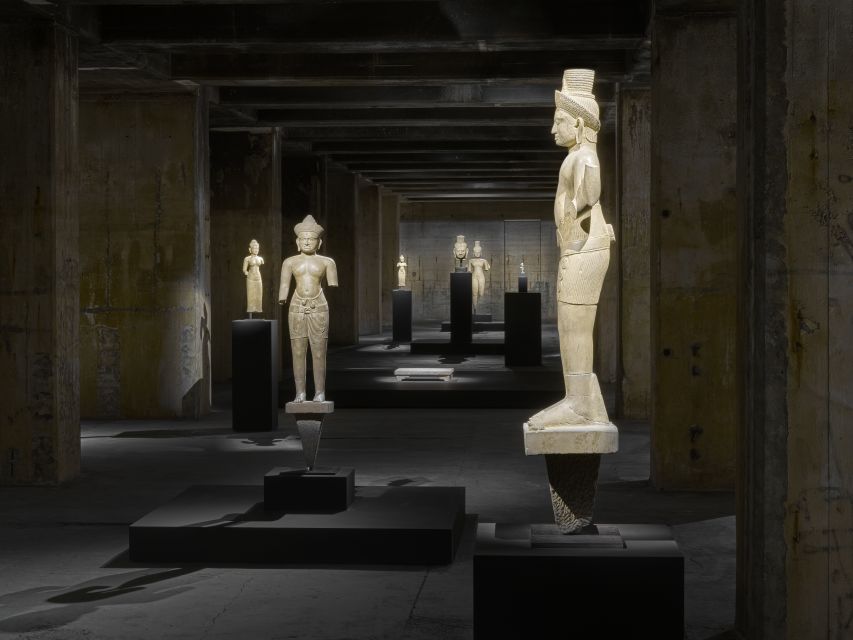
The most striking thing about The Feuerle Collection is its setting: a former World War II telecommunications bunker turned into a quiet, shadowy art space. Inside, ancient Khmer sculpture, Imperial Chinese furniture, and modern photography share the same rooms, creating a conversation across centuries.
I like the way the bunker and John Pawson’s spare design keep your attention on the objects. I also like the unusual underground lake, which forms part of the lighting plan and gives the visit an almost dreamlike calm.
The main drawback is time. The tour is sold as one hour, but some visits have lasted closer to 35 to 40 minutes. At $25, that can still be fair for a rare Berlin experience, though you should not expect a large museum visit.
In This Review
- Key points to know before you go
- Entering a Berlin bunker turned art museum
- Why ancient Khmer sculpture comes first
- Imperial Chinese furniture with an unusual presence
- Contemporary art changes the conversation
- The underground lake and the role of darkness
- What the one-hour guided tour is really like
- Who will enjoy The Feuerle Collection most
- How to fit it into your Berlin day
- Is $25 good value?
- Should you book The Feuerle Collection?
- FAQ
- How long does The Feuerle Collection tour last?
- What language is the guided tour in?
- What does the ticket include?
- Is The Feuerle Collection wheelchair accessible?
- Can I take photographs or use my cellphone inside?
- Are children allowed to join the tour?
Key points to know before you go
- A WWII bunker becomes the museum: John Pawson’s renovation uses darkness, bare surfaces, and controlled light to frame the art.
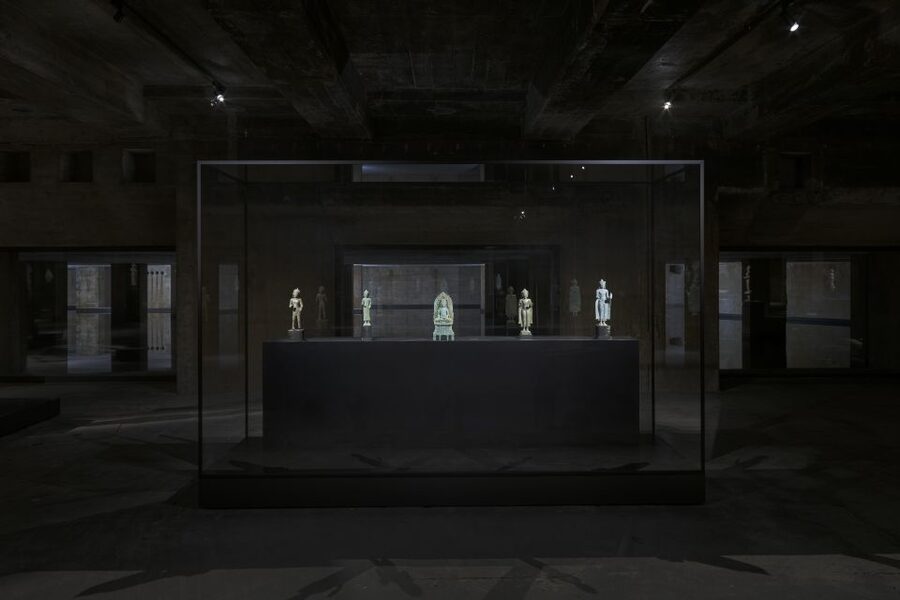
- Ancient and modern works share the same rooms: Khmer stone, bronze, and wood sculpture appear beside Imperial Chinese furniture and contemporary art.
- The underground lake is part of the design: It is not just a background feature, but part of the atmosphere and lighting.
- The English tour lasts about one hour: Some visits may be shorter, so this works best as a focused stop rather than a full afternoon museum outing.
- Silence is part of the experience: Cameras, cellphones, video, food, drinks, and touching the exhibits are not allowed.
- This is for adults and older teenagers: Children under 16 cannot join, and the collection is wheelchair accessible.
Entering a Berlin bunker turned art museum
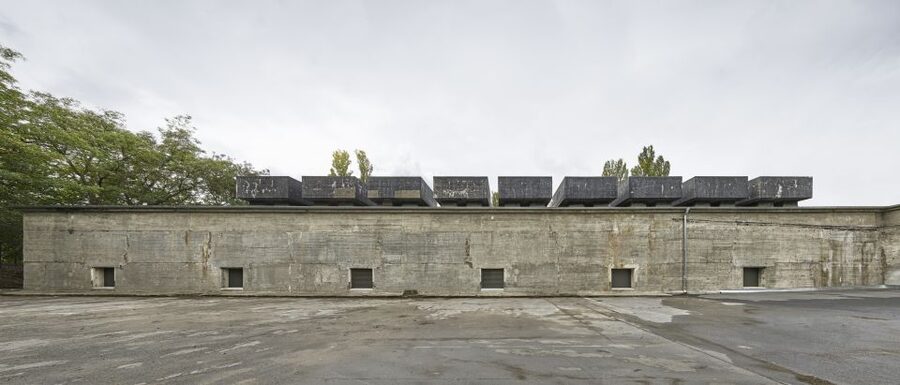
You meet your guide at the entrance to The Feuerle Collection. There is no grand museum lobby to prepare you for what follows. The setting feels more like a controlled passage into another world, with the old bunker structure providing thick walls, low light, and a sense of separation from Berlin outside.
The building was once used for telecommunications during World War II. It has since been renovated by designer John Pawson, whose work favors clean lines and restraint. Here, that restraint matters. The architecture does not compete with the art, and the limited light makes each object feel carefully placed.
I would not come expecting a conventional gallery with bright rooms and long rows of labels. This is a compact, atmospheric presentation. You move through a sequence of spaces where sound, darkness, stone, wood, bronze, and water all help shape your response to the objects.
The quiet is one of the strongest parts of the visit. A January 2026 visitor singled out how peaceful it was, and that makes sense once you understand the design. The museum asks you to slow down and look, rather than rush from one item to the next.
A few more Berlin tours worth weighing up
- Berlin: Jewish Museum Berlin Entrance Ticket
★ 4.5 · 8,393 reviews - Berlin: Berlin Story Bunker Entry Ticket
★ 4.6 · 6,759 reviews - Berlin: Illuseum Berlin Entrance Ticket
★ 4.1 · 3,970 reviews
Why ancient Khmer sculpture comes first
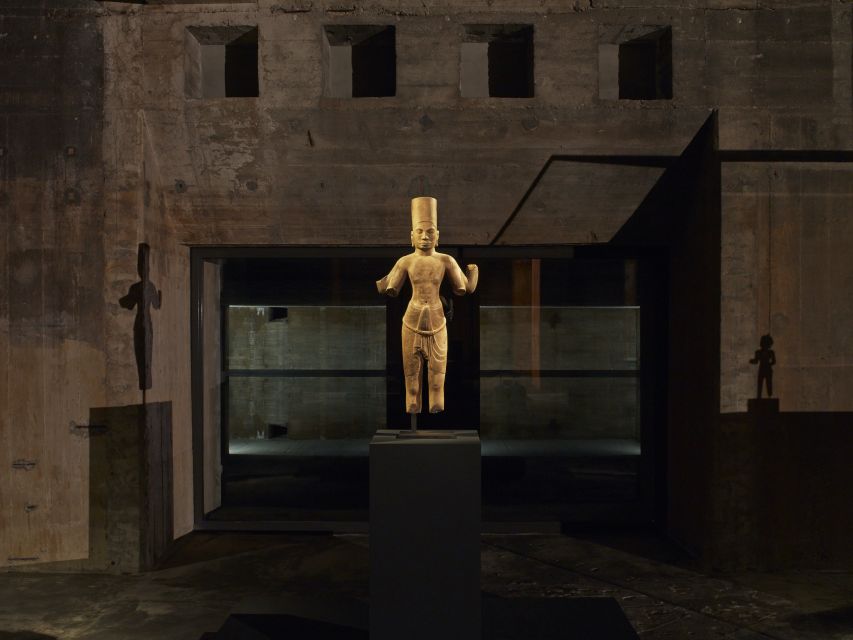
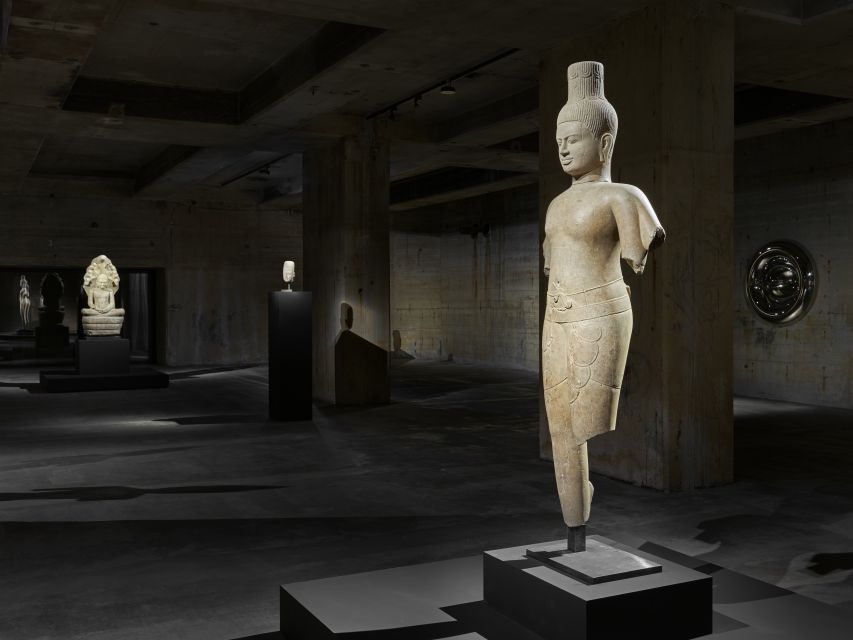
A central part of the collection is its Khmer sculpture from the 7th to the 13th centuries. The works include pieces in stone, bronze, and wood. Even without a long lecture on Southeast Asian history, the change in materials gives you different ways to read the objects.
Stone suggests weight and permanence. Bronze can feel more refined and precise. Wood introduces a warmer, more vulnerable quality. In a dark bunker, those differences become especially clear because the lighting picks out form rather than flooding every surface with equal brightness.
The guided format helps here. You are not left to guess why the objects have been placed together or what Désiré Feuerle saw in them. Feuerle is known for bringing ancient Asian art into contact with contemporary work, a choice that was unusual enough to become central to his reputation as a collector of Asian art.
You may find that the collection rewards looking more than reading. The details of a sculpture can take time to register in low light, so resist the urge to hurry. If the guide pauses at an object, use those extra moments to study its pose, surface, and material.
The limitation is that the tour does not provide unlimited time. If your visit lasts only 35 to 40 minutes, the guide will need to keep the pace moving. That is fine for a first introduction, but it may leave you wishing for longer pauses at the strongest pieces.
Imperial Chinese furniture with an unusual presence
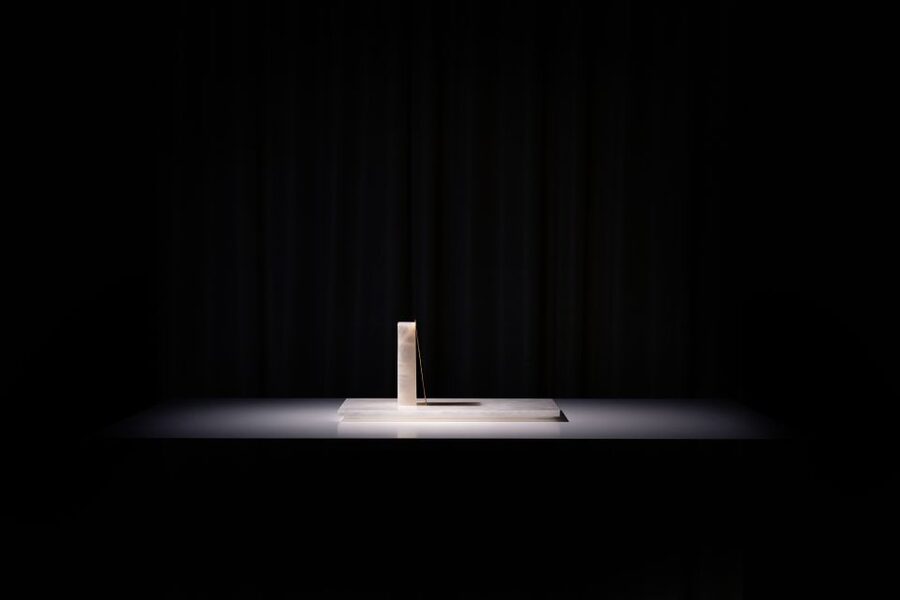
The Imperial Chinese furniture is another major reason to book. The collection includes intricate lacquer and stone furniture, with surfaces and construction that reward close attention.
Furniture can be easy to overlook in a museum, especially when sculpture and photography receive more attention. Here, the pieces are treated as art in their own right. The dark setting brings out the texture of lacquer and the solid character of stone, while the limited number of objects gives each one room to breathe.
I like that the furniture is not presented as a separate historical chapter. Instead, it helps set up the museum’s main idea: objects from different eras can speak to one another through shape, surface, mood, and craftsmanship.
You do not need to be an expert in Chinese art to appreciate the visit. Look for the contrast between useful objects and display objects. Furniture was made for human use, yet these pieces also carry signs of status, skill, and taste. Their placement in a former bunker makes that tension even more noticeable.
The experience is visual first, so do not expect a large amount of text or a traditional museum lesson. The guide provides context, but the strongest moments come from standing in front of the objects and noticing how their forms change under the museum lighting.
Contemporary art changes the conversation
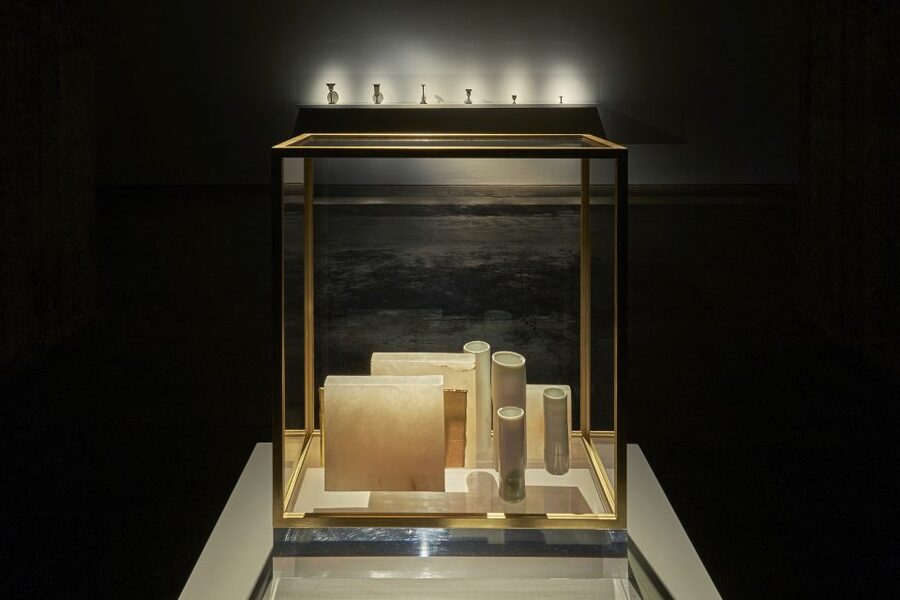
The modern works help prevent the visit from becoming a simple display of antiques. You see contemporary artists such as Nobuyoshi Araki and Adam Fuss alongside the older Asian works.
This is the point of Feuerle’s approach. Rather than separating art by date or region, he places objects together and asks you to notice links between them. A photograph may alter the way you see a sculpture. A piece of furniture may make a modern work feel less isolated. The effect is not always comfortable, and that is useful. You are encouraged to compare rather than simply admire.
Nobuyoshi Araki’s work brings a very different visual language from Khmer sculpture or Chinese furniture. Adam Fuss also adds a contemporary presence that changes the mood of the rooms. The exact impact depends on your own taste, but the contrast is part of the reason this is not a routine antiques display.
Some people will find the pairing thought-provoking. Others may prefer art presented within a clear period or cultural setting. If you want every object to be explained within its original context, this visit may feel selective. If you enjoy connections across time, you will likely find the arrangement more rewarding.
The guide is important because the choices are not always self-explanatory. Without some explanation of Feuerle’s collecting ideas, the room can look like an unusual mixture. With context, the mixture becomes the subject.
A different side of Berlin on the same trip:
- Berlin: Reichstag, Dome and Government District Guided Tour
★ 4.7 · 18,288 reviews - Berlin: 1-Hour City Tour by Boat with Guaranteed Seating
★ 4.3 · 16,993 reviews - Berlin: Boat Tour Along the River Spree
★ 4.4 · 11,252 reviews - Discover Berlin Half-Day Walking Tour
★ 5.0 · 9,624 reviews
The underground lake and the role of darkness
The underground lake is one of the collection’s most memorable features. It fits into the museum’s lighting plan and adds a reflective, almost otherworldly quality to the bunker.
This is not a lake you visit as a separate attraction. It works as part of the entire presentation, along with the low light and the stark architecture. The water helps soften the heavy bunker structure and gives the space a visual pause between artworks.
A scent room may also form part of the overall concept, but it was not available during one recent visit. That is worth keeping in mind if you are booking mainly for the full sensory design. The art and bunker remain the main focus, but not every feature is guaranteed to be operating at every visit.
The darkness is beautiful, but it can also affect how you view the collection. You may not see every small detail as clearly as you would in a brightly lit gallery. That is a deliberate tradeoff. The museum favors mood, concentration, and a slow sense of discovery over easy visibility.
I would treat the lake and the lighting as part of the art experience rather than as extra sights to check off. They are what make this museum feel unlike Berlin’s larger, more conventional institutions.
What the one-hour guided tour is really like
The advertised duration is one hour, with an English-speaking live guide. You begin at the entrance, then follow the guide through the collection as the ancient and modern works are introduced.
The tour should give you a clear framework for the objects, especially the link between Désiré Feuerle’s Asian art collection and his decision to place antiquities beside contemporary artists. You will likely hear more about the reasons for the juxtapositions than you would during a self-guided visit.
Do not plan this as a leisurely half-day outing. The collection is focused and the tour is short. One recent assessment found the actual visit lasted about 35 to 40 minutes, which is a meaningful difference when you are deciding if $25 is good value.
At $25 per person, I think the price is reasonable if you value unusual architecture, a guided explanation, and a small collection presented with care. You are paying for a concentrated experience in a rare setting, not for hours of galleries. If you measure museum value by time inside, the price may feel high when the tour runs short.
The guide also helps protect the atmosphere. This is not a place for people to wander in and out while taking pictures. The rules prohibit cameras, cellphones, video recording, food, drinks, and touching the exhibits. Those limits may feel strict, but they help preserve the quiet that gives the museum much of its character.
Who will enjoy The Feuerle Collection most
I would recommend this tour to you if you enjoy:
- Unusual museum buildings and adaptive reuse
- Asian sculpture and historic furniture
- Contemporary art placed in unexpected settings
- Small, highly focused collections
- Quiet visits with a strong visual mood
- Guided interpretation rather than a large audio-guide institution
It is particularly well suited to adults and older teenagers interested in art, design, architecture, or collecting. Children under 16 are not allowed, so families with younger children will need to choose another Berlin activity.
You do not need specialist knowledge. The guide supplies the basic thread, and the short format makes the visit approachable. Still, you should be open to a museum that values atmosphere and comparison over a long chronological explanation.
If you prefer bright galleries, lots of labels, and plenty of time with each object, you may find the experience too brief or too controlled. The same is true if you want to take photographs. Here, phones and cameras must stay away, so you need to be comfortable remembering the space without recording it.
The collection is wheelchair accessible, which makes the bunker setting easier to consider for visitors with mobility needs. You should still confirm the available starting time when booking, since tours run at set times.
How to fit it into your Berlin day
Because the tour lasts about an hour, it is easy to pair with another Berlin sight. I would schedule it as a deliberate art and architecture stop, not as something to squeeze in between major attractions.
Arrive ready to give the collection your full attention. Food and drinks are not allowed, and the no-phone rule means you should handle messages and photos before entering. Since the meeting point is the entrance, you do not need to search for a separate departure location.
The museum’s calm mood works best when you are not in a hurry. Allow enough time to arrive, meet the guide, and settle into the rules. The tour itself may be short, particularly if the guide moves quickly, so a little extra breathing room before and after will make the visit feel less rushed.
Free cancellation up to 24 hours before the start gives you some flexibility, and you can reserve now while paying later. That is useful if you are building a Berlin schedule around several timed activities.
Is $25 good value?
The answer depends on what you want from a museum visit. For $25, you receive entry and a guided English tour in a building you cannot experience as an ordinary public space. You also see a collection that combines Khmer sculpture, Chinese furniture, and contemporary art in a way most city museums do not.
The value is strongest for anyone who cares about presentation. John Pawson’s renovation, the bunker walls, the underground lake, and the lighting are not separate decorations. They shape how you see the art.
The value is weaker if you want a long visit. A tour lasting 35 to 40 minutes gives you less time per dollar than the full one-hour promise suggests. You should also know that the scent room may be unavailable, so do not book solely for every part of the sensory program.
I would still consider $25 fair for the right audience. It is a compact, distinctive stop, and the guide gives the collection a clear purpose. Think of it as a carefully staged hour, not a large museum day.
Should you book The Feuerle Collection?
Book it if you want a quiet and unusual Berlin art experience, especially one that brings ancient Asian works and modern art into the same conversation. The bunker, the underground lake, and the restrained lighting give the visit a strong identity, while the guide helps explain why the collection was assembled this way.
Skip it if you need a long museum visit, want to take photographs, or prefer art arranged in a clear historical sequence. Also check that no one in your group is under 16.
For most adults who enjoy art, design, and atmospheric spaces, I think this is a worthwhile one-hour addition to a Berlin itinerary. Just keep your expectations precise: the appeal is focus, mood, and unusual pairings, not size or length.
FAQ
How long does The Feuerle Collection tour last?
The stated duration is one hour. Some visits may run closer to 35 to 40 minutes, so plan for a short, focused museum experience.
What language is the guided tour in?
The live guided tour is offered in English.
What does the ticket include?
The ticket includes the guide, the museum tour, and entrance to The Feuerle Collection.
Is The Feuerle Collection wheelchair accessible?
Yes, the activity is listed as wheelchair accessible.
Can I take photographs or use my cellphone inside?
No. Cameras, cellphones, and video recording are not allowed. You also may not touch the exhibits.
Are children allowed to join the tour?
Children under 16 are not allowed to participate. Pets, food, and drinks are also prohibited.
Just added around Berlin
- Berlin Highlights in One Day★ 5.0 · 3 reviews
- Private Berlin One Day Tour with a Local: See the City Unscripted★ 3.5 · 3 reviews
- Individual city tour Berlin for max. 8 persons★ 5.0 · 3 reviews
- Transfer from Berlin Schönefeld Airport (SXF) to Berlin city Hotels – ROUND TRIP★ 4.0 · 3 reviews
- Private Analogue Photography Experience in Berlin★ 5.0 · 3 reviews
- Berlin: Museum Island Tour★ 5.0 · 3 reviews
- Berlin: Local Food Tour in Secrets Hidden Gems★ 4.0 · 3 reviews
- Berlin & The Third Reich Private Guided Tour★ 5.0 · 3 reviews
Tickets, compared.





Sanssouci Palace and Prussian Palaces Entry Ticket
Read our review →