
Review · BERLIN WALL TOURS
Berlin Wall: Small Group Guided Tour
Berlin’s Wall is easiest to understand on foot, where a modern street can suddenly give way to a strip of preserved ground, a memorial, or a line of cherry trees marking where the barrier once ran. This 2.5-hour walk follows that route from Bornholmer Straße toward Mauerpark and the former ghost station at Nordbahnhof.
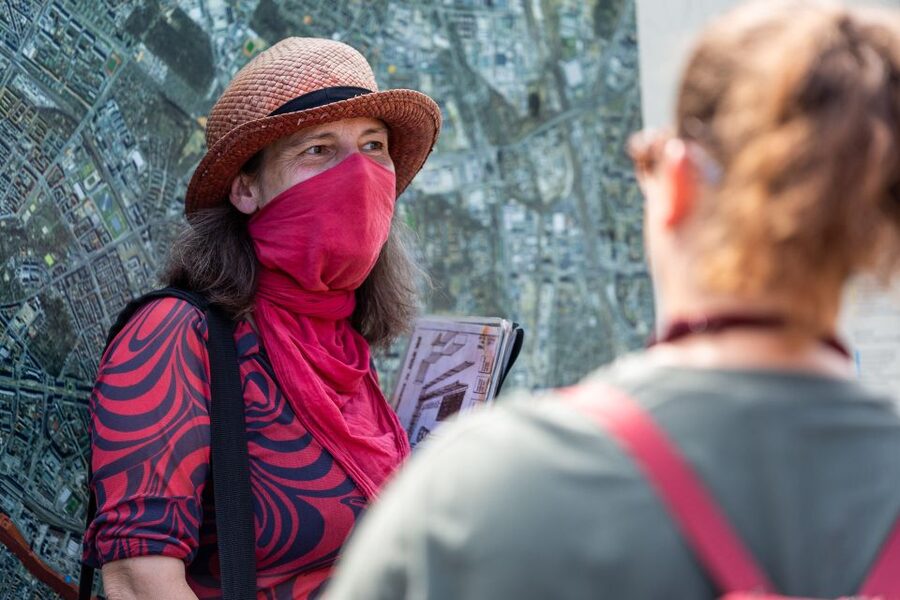
I like the small maximum group of 12, which gives you room to ask questions, and I like the focus on ordinary people separated by the Wall rather than only on political leaders. The personal stories can make the past feel close, especially with guides such as Katrine, who grew up in East Berlin, or Marcus, who has shared his own memories of life before the Wall fell.
The main consideration is language: the tour is conducted in German, and it takes place in all weather. The route also involves several hours on foot, so wear practical shoes and check the exact finishing point before you go.
In This Review
- Key points at a glance
- Starting where the Wall first opened
- Reading the former death strip
- Ulbrichtkurve and the smaller traces
- Crossing Schwedter Steg near Mauerpark
- Gleim Tunnel and the city after the Wall
- Guides who make the walk personal
- What 2.5 hours feels like on foot
- Why the $24 price makes sense
- Who should book this Berlin Wall walk
- Should you book it?
- FAQ
- Where does the Berlin Wall tour begin?
- How do I reach the meeting point by public transport?
- How long does the tour last?
- What language is the tour conducted in?
- How many people can join the group?
- What places does the walking tour include?
- Is food or drink included?
- Does the tour operate in the rain?
- Can I cancel for a full refund?
- Is the tour guaranteed to run?
Key points at a glance
- Bornholmer Straße: Begin at the border crossing where East and West Berliners first celebrated together when the Wall opened.
- Cherry trees on the death strip: See a surprising living reminder of how former border land has been recorded and marked.
- Ulbrichtkurve and Schwedter Steg: Follow lesser-known traces of the Wall around the Mauerpark area.
- Mauerpark and Gleim Tunnel: Connect the former border zone with one of today’s best-known local gathering places.
- Personal German-speaking guidance: Guides including Marcus, Katrine, Markos, and Steffen have brought humor, family stories, and firsthand East Berlin experience to the walk.
- Good value at $24: For a small group and 2.5 hours of guided interpretation, the price is modest, though food and drinks cost extra.
Starting where the Wall first opened
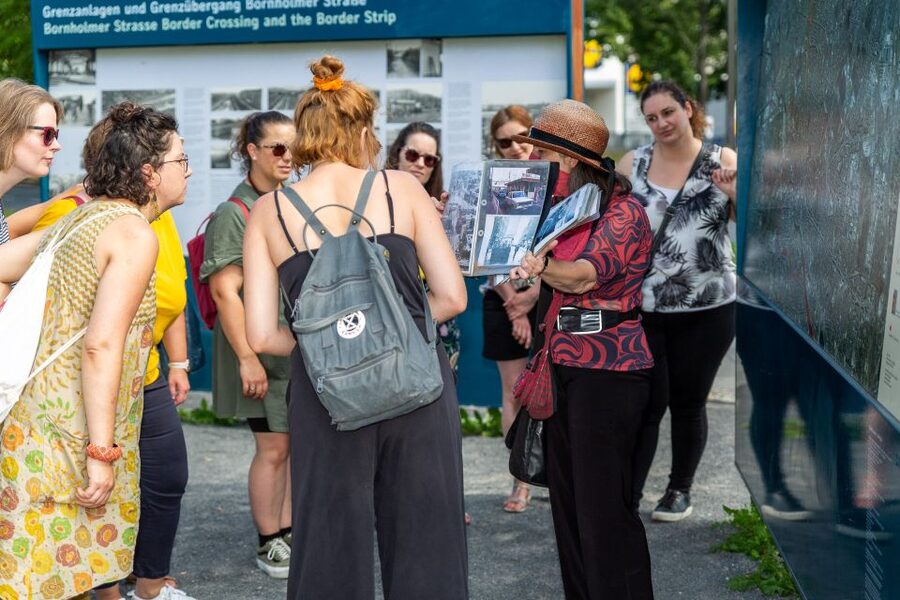
The tour begins near Bornholmer Straße, one of the most important places in the story of the Berlin Wall. On the night of November 9, 1989, this border crossing became the first place where East Berliners were allowed through in large numbers. People from East and West met here, celebrated, and began to grasp that the divided city was changing for good.
That makes Bornholmer Straße a strong starting point. You are not simply meeting at a convenient street corner. You are beginning at a place tied directly to the Wall’s collapse and the first joyful contact between people who had been separated for decades.
The meeting point is the Berlin Bike Tours office. It is about one minute from the Björnsonstraße tram stop, served by M1, M13, and M50. The S-Bahn station Bornholmer Straße is about two minutes away, with S1, S2, S8, S25, and S85 service. If you arrive through Schönhauser Allee, allow about 10 minutes on foot from its S-Bahn and U-Bahn connections.
The route is in northern Berlin, away from the most concentrated sights around the Brandenburg Gate and Museum Island. That is useful if you want to see a different part of the city, but you should plan your day around the starting point rather than assuming the walk begins in central Berlin.
More of the Berlin Wall, end to end:
- Skip-the-Line: Berlin Wall Museum at Checkpoint Charlie
★ 4.1 · 2,041 reviews - Berlin: East Side Gallery Spree Cruise in a Solar Catamaran
★ 4.0 · 1,039 reviews - Cold War, Berlin Wall, Spies and the East Side Gallery
★ 5.0 · 1,024 reviews
Reading the former death strip
From Bornholmer Straße, the guide follows the former Wall route through areas where the physical barrier has often disappeared. This is one of the walk’s strongest features. Berlin does not preserve a continuous wall across the city, so understanding the border often depends on subtle clues.
The former death strip was the controlled zone between the inner and outer barriers. It could include fences, patrol roads, lighting, watchtowers, and open ground designed to expose anyone trying to cross. Today, some sections look surprisingly ordinary. Without an explanation, you could easily walk past and miss what happened there.
A good guide helps you read those traces. The tour also explains how remnants of the Wall and border system are documented, which gives you a better sense of why a patch of paving, a line in the ground, or a change in the street plan can matter.
The cherry trees add an unusual detail. They grew along parts of the former border and have become a distinctive reminder of the Wall’s route. Their story brings a softer, more human image into a setting shaped by fences, armed guards, and attempted escapes. They do not replace the harder facts, but they help you see how the old border has been remembered and marked in daily life.
Ulbrichtkurve and the smaller traces
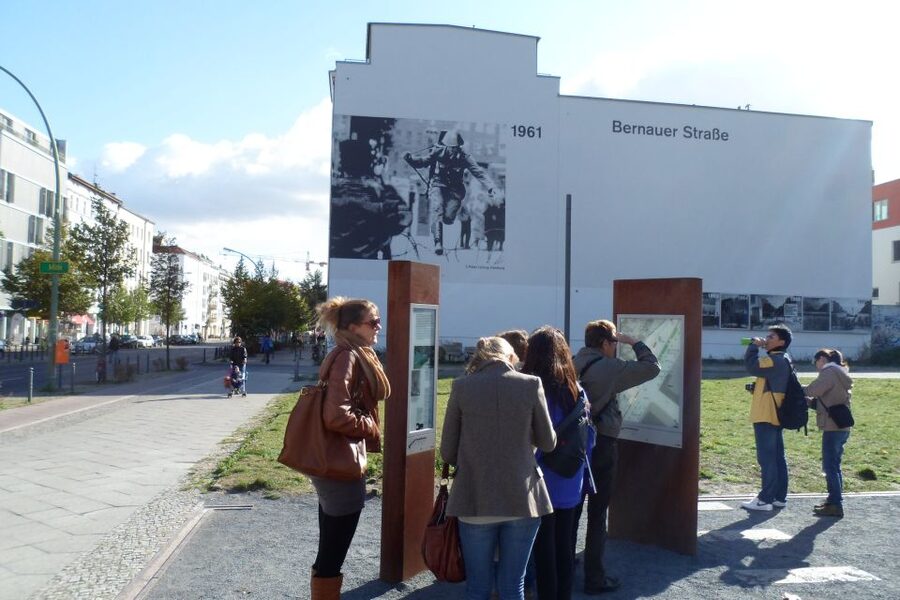
The walk includes the Ulbrichtkurve, a well-known bend in the former Wall route. This stop is valuable because it shows that the border was not always a straight line cutting cleanly through the city. Its shape followed existing streets, rail areas, and property lines, creating awkward turns and pockets of space.
This is the kind of place where a walking tour earns its fee. A map can show the Wall’s general path, but a guide can point out why the route bent, what the surrounding area once represented, and how the city has changed since reunification.
The experience is less about dramatic ruins and more about connecting scattered clues. If you expect long stretches of standing Wall, you may find the route understated. If you enjoy reconstructing a place from what remains, the walk offers a more thoughtful way to see Berlin.
The group size matters here. With no more than 12 people, you should have a better chance of hearing the guide at street-side stops and asking questions about details that catch your eye. One guide, Markos, was also able to keep a 13-year-old engaged for the full walk, which suggests the storytelling can work for families, not only for adults already interested in twentieth-century history.
Crossing Schwedter Steg near Mauerpark
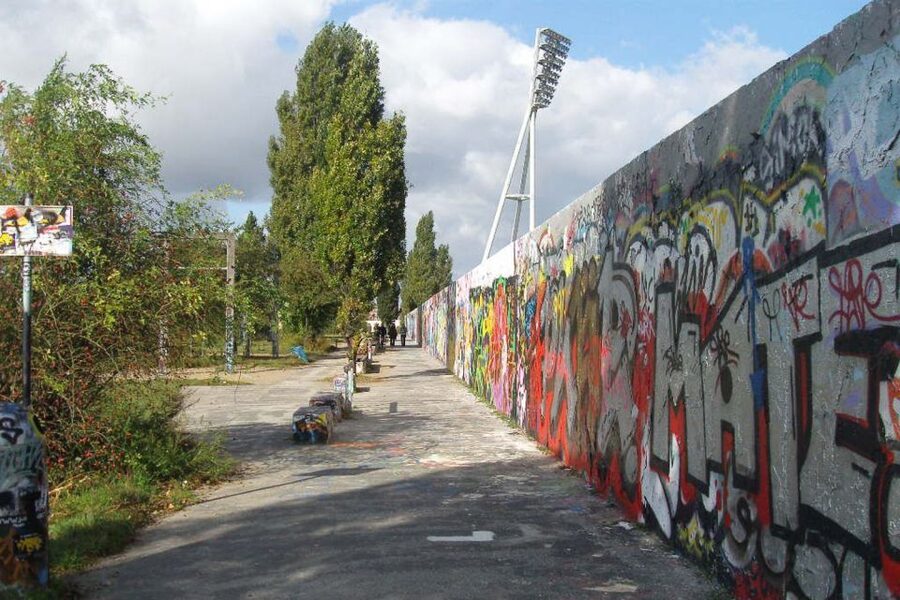
The route continues over the Schwedter Steg Bridge, near Mauerpark. This crossing gives you another way to understand how the border divided neighborhoods and transport links. Bridges and rail corridors were not just background scenery. They could become part of the controlled boundary or leave sections of the city cut off from nearby streets.
Near Mauerpark, the tone changes. The former border area is now one of Berlin’s best-known social and cultural spaces. Its present-day use makes the Wall’s former purpose easier to grasp: the same ground that once restricted movement now draws people together.
I like this contrast because it keeps the tour from becoming a procession of memorials. You see the old border, then you see how Berlin uses the space now. The shift also gives you a break from the heavier parts of the subject.
Mauerpark can be lively, and the route may feel less solemn here than at a dedicated memorial. That is not a weakness, but it is worth knowing. The tour presents the Wall as part of a living city, not as an isolated museum exhibit.
A few more Berlin tours worth weighing up
- Berlin: Reichstag, Dome and Government District Guided Tour
★ 4.7 · 18,288 reviews - Berlin: Government District around the Reichstag Guided Tour
★ 4.7 · 8,447 reviews - Berlin: Hidden Backyards Guided Walking Tour
★ 4.8 · 5,360 reviews - Berlin: 1-Hour Boat Tour with Bilingual Live Guide
★ 4.7 · 3,629 reviews
Gleim Tunnel and the city after the Wall
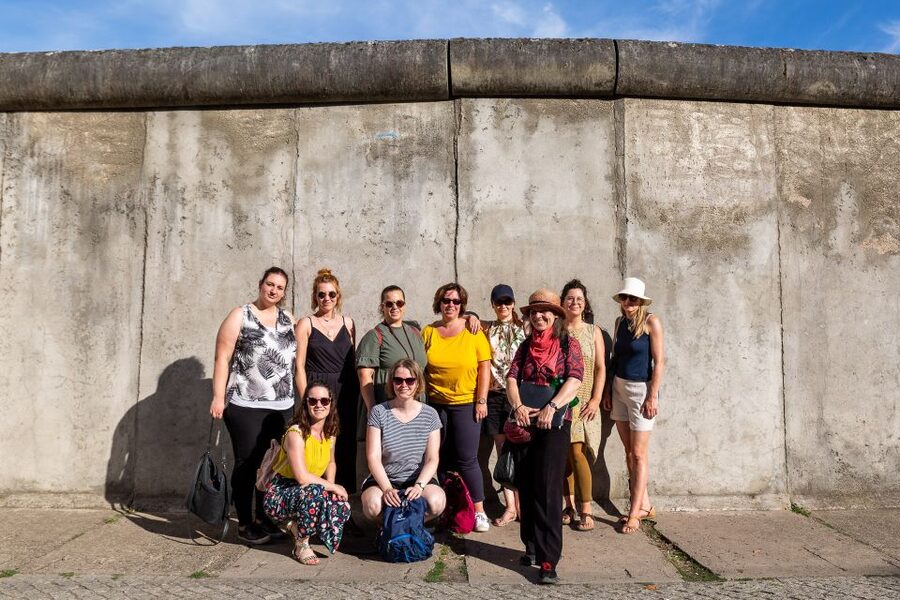
The walk includes the Gleim Tunnel, another place where transportation and the former border came together. The tunnel is also known for a large annual party, an unexpected detail that shows how Berlin’s old dividing lines have taken on new meanings.
This stop can be especially useful if you want more than the standard Wall stops. Many first-time visitors know the East Side Gallery, Checkpoint Charlie, or the Brandenburg Gate. Fewer know how the northern sections around Bornholmer Straße, Schwedter Steg, and Gleim Tunnel fit into the city’s story.
The tour’s path finally leads toward Nordbahnhof, a former ghost station. During the years of division, some Berlin rail stations were closed or sealed because subway and S-Bahn lines crossed beneath or near the border. Trains could pass through without stopping, leaving dark, unused stations below the city.
Nordbahnhof provides a fitting end because it links political division with everyday travel. The Wall was not only a concrete barrier visible above ground. It altered routes, shut stations, separated neighbors, and changed how people moved through their own city.
There is a small logistical wrinkle here. The route description places the final stop at Nordbahnhof, while the meeting information says the activity ends back at the starting point. Confirm the end location when you book, especially if you have a timed museum visit, train, or restaurant reservation afterward.
Guides who make the walk personal
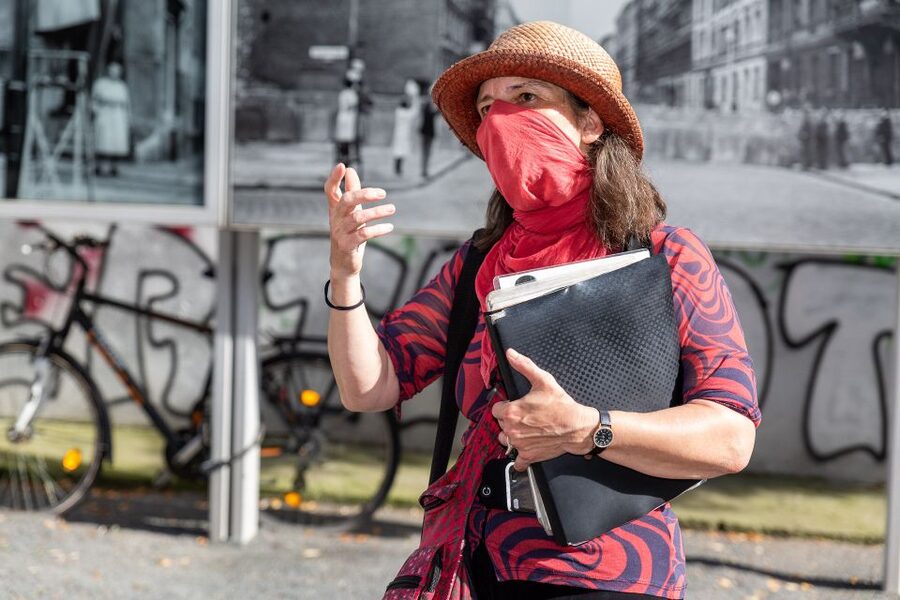
The quality of this experience depends heavily on the guide. The route covers a serious subject, but it is not presented as a dry lecture. Guides have used humor, family stories, and personal memories to help explain what the division meant.
Marcus has been praised for walking from Bornholmer Straße toward Bernauer Straße while answering questions freely. His personal experience of life when the Wall was in place added a direct connection to the subject.
Katrine grew up and socialized in East Berlin before the Wall fell. Her perspective can help you consider parts of daily life and social separation that are easy to miss if you only study the political timeline.
Markos has also proved a strong choice for mixed-age groups, keeping a 13-year-old interested while offering practical suggestions for other things to see in Berlin. Steffen has led longer versions of the walk, around three hours, using humor and stories to keep the group involved.
These names do not guarantee which guide you will receive. The important point is that the tour is designed around a live guide rather than an audio recording or a fixed display. Since the listed language is German, you should be comfortable following a spoken explanation in German before booking.
What 2.5 hours feels like on foot
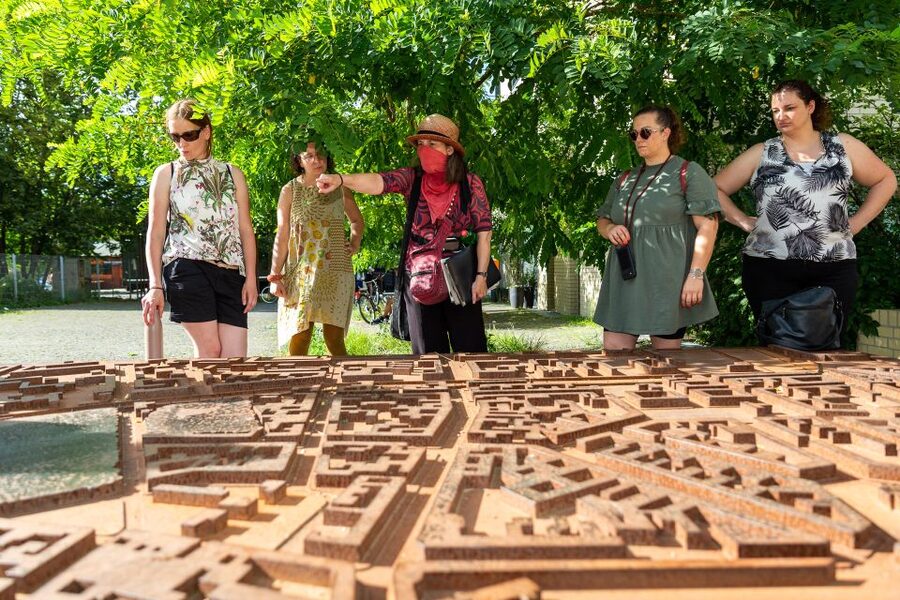
The advertised duration is 2.5 hours, though one outing took closer to three hours. Allow a little flexibility. The route includes several stops, explanations, questions, and a possible coffee break, so it is not a brisk point-to-point walk.
You will be outside for most of the experience. The tour operates in all weather, and rain ponchos are supplied when needed. Still, a poncho does not replace warm layers, comfortable shoes, or protection from cold wind. Berlin’s weather can make a major difference to how enjoyable a walking tour feels.
Food and drinks are not included. The route allows time to relax over coffee, but you should budget separately if you want one. That pause can be welcome, especially on a cold day, and it gives you a chance to talk with the guide or ask follow-up questions.
Because the tour covers several sites rather than one compact memorial, the experience rewards curiosity and stamina. You do not need special equipment, but you should be ready to walk continuously through city streets, parks, and former border areas.
Why the $24 price makes sense
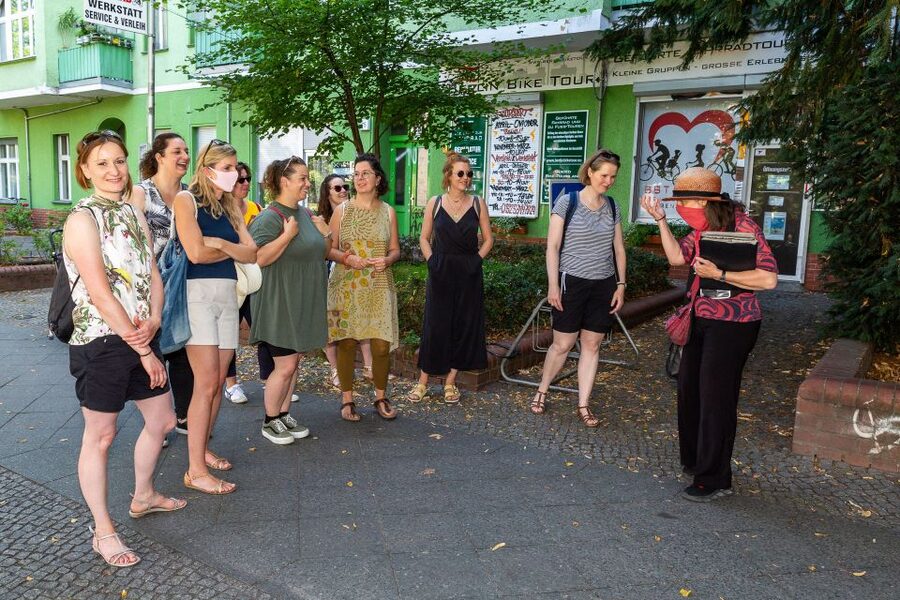
At $24 per person, this is a reasonably priced way to spend half a day with a guide. You are paying for a small-group walking experience, not admission to a major museum or a transport pass. The value comes from interpretation: the guide helps you recognize traces that you might otherwise walk past.
The maximum group of 12 is important. A cheaper large group can make it hard to hear, ask questions, or have a real exchange with the guide. Here, the small size supports the personal side of the tour, particularly when the guide shares memories or responds to questions about East and West Berlin.
The price is less compelling if you already know the Wall’s history well, prefer to explore independently, or cannot follow German. You can visit many public Wall sites without paying an admission fee. In that case, the tour’s value depends on how much you want context and conversation.
Flexible booking helps if your schedule is still taking shape. You can reserve and pay later, and cancellation is generally free up to 24 hours before departure. One important exception is listed for groups of three or more, where the cancellation deadline is three days before the tour. A minimum of two participants is required, and the operator may cancel at short notice if that number is not reached.
Who should book this Berlin Wall walk
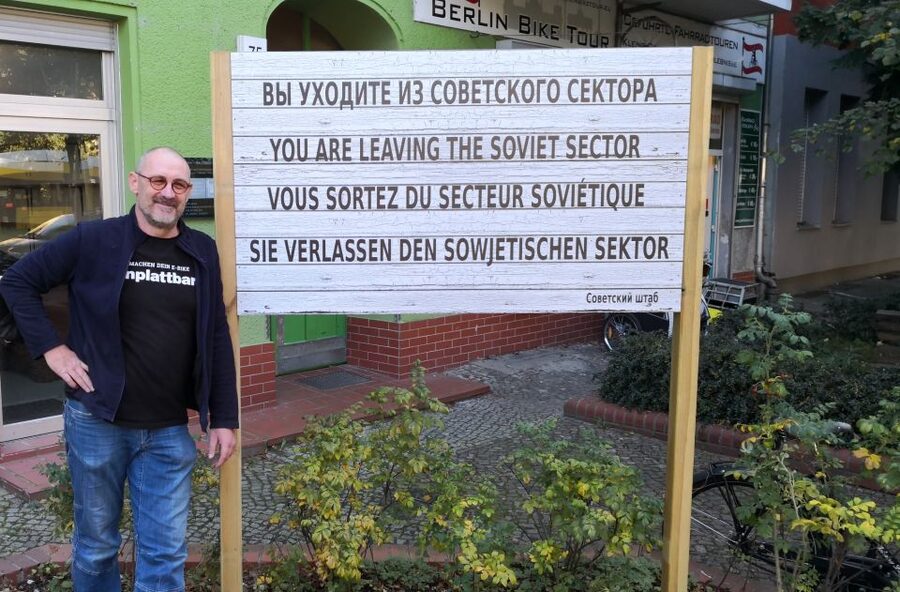
I would choose this tour if you want the Wall explained through specific streets, border traces, and human stories. It suits first-time Berlin visitors who want a clear introduction, as well as repeat visitors who have seen the famous central sights and want to explore a less familiar section.
Families can benefit from the walking format, especially if children or teenagers respond better to stories than to a museum visit. The route has enough variety to keep the subject moving, from border crossings and cherry trees to a bridge, park, tunnel, and former ghost station.
It is also a good choice for anyone interested in East Berlin life before 1989. A guide with personal experience can add useful perspective to the major dates and political events.
I would hesitate if you need an English-language tour, dislike walking in rain or cold, or have a tight schedule after the tour. I would also check the end point carefully because the information gives both Nordbahnhof and the original meeting point as possible endpoints.
Should you book it?
Book this Berlin Wall walking tour if you want the city’s division explained at street level, with a small group and a guide who can connect the physical traces to real lives. Bornholmer Straße, the cherry trees, Ulbrichtkurve, Schwedter Steg, Mauerpark, and Gleim Tunnel make a more varied route than a simple visit to one remaining section of Wall.
At $24, it offers solid value for a 2.5-hour German-speaking tour. Go prepared for all weather, bring money for coffee, wear good shoes, and confirm the exact ending point. If those conditions suit you, this is a thoughtful way to understand how the Wall shaped Berlin and how the city has reclaimed the spaces it once divided.
FAQ
Where does the Berlin Wall tour begin?
Meet your guide at the Berlin Bike Tours office near Bornholmer Straße.
How do I reach the meeting point by public transport?
The office is about one minute from the Björnsonstraße tram stop, served by M1, M13, and M50. It is about two minutes from the Bornholmer Straße S-Bahn station, served by S1, S2, S8, S25, and S85. Schönhauser Allee is about 10 minutes away on foot.
How long does the tour last?
The advertised duration is 2.5 hours. One recorded outing lasted about three hours, so it is sensible to allow extra time.
What language is the tour conducted in?
The live tour guide speaks German. German is the listed tour language.
How many people can join the group?
The group has a maximum of 12 participants.
What places does the walking tour include?
The route includes Bornholmer Straße, the former death strip and its cherry trees, Ulbrichtkurve, Schwedter Steg Bridge, Mauerpark, Gleim Tunnel, and the former ghost station at Nordbahnhof.
Is food or drink included?
No. Food and drinks are not included, although the route allows time to relax over coffee.
Does the tour operate in the rain?
Yes. The tour runs in all weather, and rain ponchos are provided when necessary.
Can I cancel for a full refund?
You can cancel up to 24 hours in advance for a full refund. For groups of three or more people, the stated cancellation deadline is three days before the scheduled tour.
Is the tour guaranteed to run?
A minimum of two participants is required. If that minimum is not reached, the operator may cancel at short notice and will notify you.
Just added around Berlin
- Berlin Highlights in One Day★ 5.0 · 3 reviews
- Private Berlin One Day Tour with a Local: See the City Unscripted★ 3.5 · 3 reviews
- Individual city tour Berlin for max. 8 persons★ 5.0 · 3 reviews
- Transfer from Berlin Schönefeld Airport (SXF) to Berlin city Hotels – ROUND TRIP★ 4.0 · 3 reviews
- Private Analogue Photography Experience in Berlin★ 5.0 · 3 reviews
- Berlin: Museum Island Tour★ 5.0 · 3 reviews
- Berlin: Local Food Tour in Secrets Hidden Gems★ 4.0 · 3 reviews
- Berlin & The Third Reich Private Guided Tour★ 5.0 · 3 reviews
Berlin Wall Tours, compared.

Skip-the-Line: Berlin Wall Museum at Checkpoint Charlie
Read our review →
East Side Gallery Spree Cruise in a Solar Catamaran
Read our review →
Cold War, Berlin Wall, Spies and the East Side Gallery
Read our review →

Guided Bike Tour of the Berlin Wall and Third Reich
Read our review →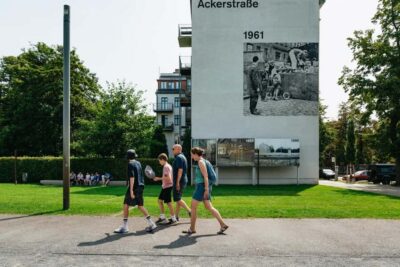

Browse the lists this tour appears in