
Review · CYCLING TOURS
Half-Day Bike Tour of Berlin’s Lesser Known And Historical Sites
Berlin’s famous sights tell only part of the story. This small-group bike tour heads into Prenzlauer Berg, Lichtenberg, and Weissensee, where Cold War housing, old industrial sites, former Stasi buildings, and quiet inner-city lakes reveal a less polished but more revealing side of Berlin.
I like the personal scale, with no more than eight people and the chance for guides such as Katrin, Markus, or Ferenz to adjust the conversation to your interests. I also like the route’s mix of history and green space: you can think about East German daily life, then pedal past lakes and leafy paths a few minutes later.
The main drawback is simple: this is not a greatest-hits tour. You will not spend the morning at the Brandenburg Gate, Reichstag, or Museum Island, and the route covers several districts in about four hours. Book it after seeing Berlin’s central landmarks, not instead of them.
In This Review
- Key points to know before you book
- Why this route tells a different Berlin story
- Prenzlauer Berg and the texture of Cold War life
- Stasi power at the former headquarters and prison
- Ernst-Thälmann-Park and GDR-era planning
- Old slaughterhouses, breweries, and the working city
- The former border station at Platz des 9. November 1989
- Weissensee, Orankesee, and Obersee by bicycle
- A look at Berlin’s athletic past
- What the small group changes
- Price, timing, and what you get
- Who should book this Berlin bike tour?
- Should you book it?
- FAQ
- How long does the bike tour last?
- Where does the tour start?
- What time does the tour begin?
- Where does the tour finish?
- What is included in the price?
- Are food and drinks included?
- Is hotel pickup available?
- How many people can join the tour?
- Can I cancel for a full refund?
Key points to know before you book
- East Berlin beyond the usual sights: Visit former East German housing areas, Stasi sites, a former border station, and old industrial districts.
- A genuinely small group: The tour accepts a maximum of eight people, and it can run with only two participants.
- Guides who shape the experience: Katrin, Markus, and Ferenz are named guides associated with warm, informative, conversational tours.
- A manageable four-hour ride: The route combines regular stops with relaxed cycling through Prenzlauer Berg, Lichtenberg, and Weissensee.
- History with breathing room: Former breweries, slaughterhouse sites, lakes, parks, and athletic facilities keep the outing from feeling like a string of memorials.
- Good value at $36.88: Your fee covers the bicycle and guide, making this a useful way to cover several outlying areas without paying separate admission fees.
Why this route tells a different Berlin story
Berlin is easy to visit in postcard form. You can move from the Brandenburg Gate to the Berlin Wall memorials and then on to Checkpoint Charlie, all within the familiar central circuit. This ride asks you to look farther east, into districts shaped by work, housing, military power, surveillance, and the everyday routines of divided Berlin.
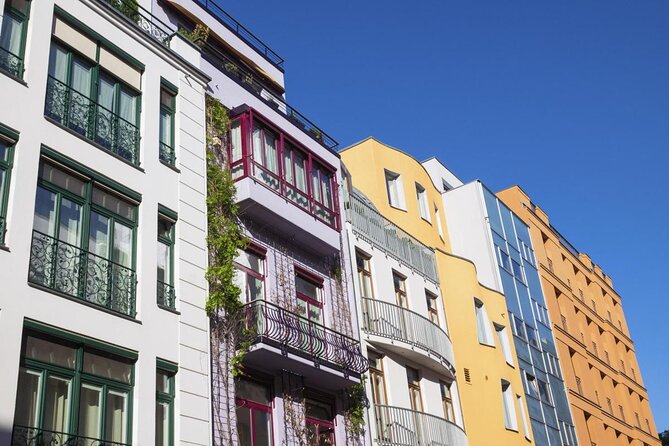
That change of focus matters. Instead of seeing only headline events, you get a sense of where people lived and how the city functioned. The route passes through former East Berlin, including parts of Prenzlauer Berg, Lichtenberg, and Weissensee. These are places where apartment blocks, old industrial ground, parks, and water offer clues that a standard sightseeing bus often misses.
The ride lasts about three and a half to four hours. That gives the guide enough time to explain what you are seeing, while the bicycle lets you cover ground between districts. You should expect a tour built around conversation and observation rather than a long stop inside a museum.
More bike days around Berlin:
- Berlin: Sights and Highlights Bike Tour with a Local Guide
★ 4.8 · 2,698 reviews - Berlin Highlights 3-Hour Bike Tour
★ 5.0 · 948 reviews - Berlin City Bike Tour with Beer Garden Stop
★ 5.0 · 917 reviews
Prenzlauer Berg and the texture of Cold War life
Prenzlauer Berg receives the longest scheduled visit, about an hour, and that is a sensible choice. The district is useful for understanding ordinary life in East Berlin, especially the contrast between well-known historic events and the quieter question of how people lived day to day.
You will see typical communist-era apartment blocks and hear about housing and daily routines during the Cold War. The value here is not one dramatic monument. It is the chance to look at the built environment and connect it to the social system that produced it.
The guide’s role matters most in this part of the ride. A building can look plain until someone explains what it meant to live there, how East Berlin was organized, or how the area changed after reunification. Guides such as Katrin and Markus are described as conversational and good at adapting the discussion when a group already knows Berlin’s major historic sites.
This is also where the tour’s less-touristy promise is clearest. If you have already visited the central Wall sites, Prenzlauer Berg gives you a different angle. You are not simply checking off another memorial. You are learning how the political system appeared in streets and homes.
Stasi power at the former headquarters and prison
The visit connected with the Stasimuseum and former Stasi prison is brief, listed at about five minutes. Do not mistake that for a full museum visit. The tour’s purpose is to show you the scale and importance of the former state security system, then place it within the wider ride.
The former Stasi headquarters and prison point to the network of surveillance that shaped East German society. The Stasi relied on secret police and informers, so the story is not only about an imposing government complex. It is also about mistrust, monitoring, and the pressure created when private life could be reported to the authorities.
If you want to tour the museum interiors at length, plan a separate visit. This bike outing gives you an introduction and a physical sense of the site. That is useful for visitors who want context without spending the whole day indoors.
The short stop also keeps the ride moving. You will not spend four hours standing at memorials. The bike is the thread connecting these places, and the guide can explain how the Stasi site fits into the larger history of East Berlin.
Ernst-Thälmann-Park and GDR-era planning
Ernst-Thälmann-Park brings together a GDR-era park, housing area, and planetarium. The scheduled stop is about ten minutes, so expect an outside look and a short explanation rather than a detailed visit to every feature.
This stop helps show how East German urban planning worked. Housing, public space, and civic facilities were placed together in a planned setting. The result gives you another way to read the city, not through famous monuments but through its neighborhoods.
For me, this kind of stop is one of the tour’s strongest ideas. You can understand a political system more clearly when you see the spaces it created for ordinary residents. The buildings and park may not be conventionally beautiful, but they are meaningful.
The short timing may disappoint you if you want to explore the planetarium or linger in the park. Still, the stop makes sense within a route that covers several districts rather than concentrating on one address.
More history walks in Berlin:
- Berlin: Natural History Museum Entrance Ticket
★ 4.6 · 3,382 reviews - Berlin: World Heritage Cruise to Potsdam
★ 4.5 · 1,435 reviews - Berlin Historical Highlights Walking Tour
★ 4.9 · 657 reviews - Berlin Private Complete History All Day Walking Tour
★ 5.0 · 474 reviews
Old slaughterhouses, breweries, and the working city
The route passes sites connected with former slaughterhouses and breweries. These places add a working-city layer to the Cold War story and keep the tour from becoming only a lesson in government and repression.
Industrial sites explain why these districts developed as they did. Food production, brewing, storage, and transport were part of Berlin’s daily machinery. Even when the original operations are gone, their sites help you picture a city built around labor as much as politics.
You may not find a grand attraction at each former industrial location. That is part of the point. This is a ride for reading traces, listening to the guide, and noticing how old uses survive in the shape of an area.
If your idea of sightseeing requires a major interior or a famous facade every few minutes, this portion may feel too modest. If you enjoy the small clues that explain how a city worked, it adds real value.
The former border station at Platz des 9. November 1989
At Platz des 9. November 1989, the route reaches a former border station and Berlin Wall site. The stop lasts about fifteen minutes, enough for a focused explanation and a look at the place connected with the division of the city.
The date refers to November 9, 1989, the day the Wall opened. Seeing a former border station away from the best-known central locations can make the event feel less like a single famous photograph and more like a change that affected many crossings and neighborhoods.
This is a useful stop if you have already seen the Wall at more heavily visited locations. You get another piece of the border system without the crowds and commercial distractions associated with some central sites.
The information provided does not promise a long memorial visit or interior access, so keep your expectations practical. You are stopping to understand the site, not spending an afternoon at a museum.
Weissensee, Orankesee, and Obersee by bicycle
After the urban history, the route turns toward the lakes around Weissensee. Orankesee and Obersee are both listed as short five-minute stops, while Weissensee receives about forty-five minutes. Strandbad Weissensee adds another ten-minute look at the lake.
This shift is one of the ride’s best features. Berlin’s eastern districts are not only blocks and official buildings. They also include water, parks, and quieter routes that give you a break from dense city streets. The contrast makes the earlier history easier to absorb.
Weissensee is described as surprisingly green, and the route includes less obvious paths through the area. You should not expect a rural cycling trip, but you will see a calmer side of the city than the central sightseeing circuit provides.
The lake stops are also practical rest points. Four hours on a bicycle is easier when the ride has pauses and changes of scenery. The schedule suggests that Weissensee is the place where you will have the most time to look around, while Orankesee and Obersee function as brief points of interest along the way.
A look at Berlin’s athletic past
The tour also passes an athletic facility where famous Olympic athletes trained. This detail adds another thread to the route: Berlin’s sporting life and the public institutions built around physical training.
The stop is not presented as a full stadium tour or a sporting event. Think of it as a point of explanation along the route. The guide can connect the facility to Berlin’s athletic traditions and to the wider story of organized sport in the city.
For families, teenagers, and students, this can provide a welcome change from political history. The route has enough variety to keep the day from feeling like one long lecture, especially when the guide uses personal experience and humor in the conversation.
What the small group changes
The maximum group size is eight, and the tour can operate with only two people. That is a major practical advantage. A small group allows the guide to answer questions, adjust the pace of explanation, and respond when you already know part of Berlin’s history.
Katrin is described as fun, informative, and accommodating. Markus is noted for his pleasant conversation and ability to focus on areas a group has not yet visited. Ferenz is associated with a customer-focused outing that went ahead with just two participants.
Guide quality is important on a route like this because many stops are about interpretation rather than admission tickets. You need someone who can explain why an ordinary apartment block, lake, or former industrial site matters. The available guide names and feedback point to a friendly, personal approach rather than a memorized speech delivered to a large crowd.
The tradeoff is that the exact guide is not guaranteed in the details provided. The experience may feel different depending on whether you ride with Katrin, Markus, Ferenz, or another guide. Still, the small-group format gives each guide more room to tailor the outing.
Price, timing, and what you get
At $36.88 per person, this is a strong value for a four-hour guided activity in Berlin. The price includes the bicycle, a driver-guide, and a local guide. There are no listed admission charges for the stops, and the tour is built around outdoor sites and explanation rather than paid attractions.
You are paying for access to a route that would be difficult to assemble efficiently on your own. Prenzlauer Berg, the former Stasi sites, the border station, and Weissensee are spread across the eastern side of the city. A bicycle connects them far more directly than a series of separate public transport trips.
Food and drinks are not included, so plan for your own refreshment. Hotel pickup and drop-off are also not included. You start at Bornholmer Str. 75A at 10:00 a.m. and finish back at the same meeting point.
The meeting point is near public transportation, which makes the beginning and end easier to manage. Confirmation arrives when you book. Children must be with an adult, and the listed dress code is smart casual. Most people can take part, but you should still be comfortable riding for several hours.
Free cancellation is available up to 24 hours before the start time for a full refund. Changes or cancellations inside that 24-hour window are not accepted for a refund. The tour also requires a minimum number of participants, so if the provider cancels for that reason, you are offered another date or experience, or a full refund.
Who should book this Berlin bike tour?
I would choose this tour after visiting Berlin’s central landmarks, especially if you want to understand the city beyond the Brandenburg Gate and Wall photographs. It suits history-minded visitors who prefer neighborhoods, former institutions, and local context to a checklist of famous attractions.
It is also a good fit for repeat visitors. One guide can adapt the route discussion when you have already seen the major museums and memorials. The ride offers a way to spend a half-day in parts of Berlin that many first-time itineraries leave out.
Families with older children, teenagers, and students may appreciate the balance of movement, stories, parks, lakes, and political history. The route is described as manageable from a cycling point of view, but it still lasts about four hours, so a basic comfort with bicycle riding matters.
I would skip it if your priority is seeing Berlin’s top central sights in one morning, visiting museum interiors, or avoiding a physically active outing. The tour’s appeal lies in the route and the guide’s explanations, not in a long list of ticketed attractions.
Should you book it?
Book this ride if you want ordinary Berlin with historical weight: apartment blocks, former industrial ground, Stasi power, a border station, and lakes where the city slows down. The small group, flexible conversation, and modest price make it a particularly good choice for repeat visitors or anyone who finds central sightseeing too predictable.
Do not book it as your only Berlin tour. Start with the city’s major landmarks, then use this half-day to understand what life and government looked like beyond them. At $36.88, it offers a lot of city coverage and context for the money, provided you are happy to trade famous sights for a more local route.
FAQ
How long does the bike tour last?
The experience lasts approximately four hours, with the guided cycling portion described as about three and a half hours.
Where does the tour start?
The tour starts at Bornholmer Str. 75A, 10439 Berlin, Germany.
What time does the tour begin?
The listed start time is 10:00 a.m.
Where does the tour finish?
The activity ends back at the meeting point.
What is included in the price?
The price includes use of a bicycle, a driver-guide, and a local guide.
Are food and drinks included?
No. Food and drinks are not included.
Is hotel pickup available?
No. Hotel pickup and drop-off are not included.
How many people can join the tour?
The tour has a maximum of eight travelers per booking and a maximum group size of eight. It may also operate with only two participants.
Can I cancel for a full refund?
Yes. You can cancel at least 24 hours before the local start time for a full refund. Cancellations or changes made less than 24 hours before the start time are not accepted for a refund.
More Half-Day in Berlin
- Discover Berlin Half-Day Walking Tour
★ 5.0 · 9,624 reviews - Berlin Third Reich Sites: Half-Day Walking Tour
★ 5.0 · 835 reviews - Potsdam Half-Day Walking Tour from Berlin
★ 4.5 · 398 reviews - Berlin Private Half-Day Walking Tour: Discover the German Capital’s History
★ 5.0 · 244 reviews
Just added around Berlin
- Berlin Highlights in One Day★ 5.0 · 3 reviews
- Private Berlin One Day Tour with a Local: See the City Unscripted★ 3.5 · 3 reviews
- Individual city tour Berlin for max. 8 persons★ 5.0 · 3 reviews
- Transfer from Berlin Schönefeld Airport (SXF) to Berlin city Hotels – ROUND TRIP★ 4.0 · 3 reviews
- Berlin: Museum Island Tour★ 5.0 · 3 reviews
- Private Analogue Photography Experience in Berlin★ 5.0 · 3 reviews
- Berlin: Local Food Tour in Secrets Hidden Gems★ 4.0 · 3 reviews
- Berlin & The Third Reich Private Guided Tour★ 5.0 · 3 reviews
Cycling Tours, compared.
Sights and Highlights Bike Tour with a Local Guide
Read our review →
Berlin Highlights Sightseeing Bike Tour in Small Groups
Read our review →
Alternative Bike Tour of Kreuzberg & Friedrichshain
Read our review →
Guided Bike Tour of the Berlin Wall and Third Reich
Read our review →
Browse the lists this tour appears in