
Review · HISTORICAL TOURS
Historic center of Berlin – Tour in Italian
Berlin is a city where a modern shopping plaza can sit beside a strip of the Berlin Wall, and where a quiet patch of ground marks Hitler’s bunker. This 3.5-hour Italian-language walk connects those sharp contrasts in a single route, from Potsdamer Platz to Museum Island.
I like the clear historical thread, from Nazi dictatorship to the Cold War and reunification. I also like the final location near the Pergamon Museum, since your guide can explain how to plan the rest of your day. The main drawback is the pace: with about 17 stops, most places receive only five to 15 minutes, and the group may include up to 28 people.
In This Review
- Key points to know before booking
- Why this route makes sense for Berlin
- Meeting beside the blue bicycle at Potsdamer Platz
- Potsdamer Platz and the Sony Center: a city rebuilt
- Topography of Terror and the Berlin Wall
- Checkpoint Charlie and the former Aviation Ministry
- The Führerbunker site and the Holocaust Memorial
- Reichstag and Brandenburg Gate
- Unter den Linden and Bebelplatz
- Humboldt University and Neue Wache
- Berlin Cathedral and Museum Island
- What the Italian guidance adds
- Group size, pace, and practical value
- Who should book this walk
- Should you book the Historic Center of Berlin tour in Italian?
- FAQ
- What language is the tour conducted in?
- How long does the tour last?
- What time does the tour start?
- Where does the tour begin?
- How do I find the meeting point?
- Where does the tour finish?
- Is entry to the museums included?
- Does the tour include hotel pickup?
- What happens in bad weather?
- How many people can join the tour?
- Can I cancel for a full refund?
Key points to know before booking
- A full Berlin history lesson on foot: The route links Nazi sites, Cold War landmarks, Prussian monuments, and reunification symbols.
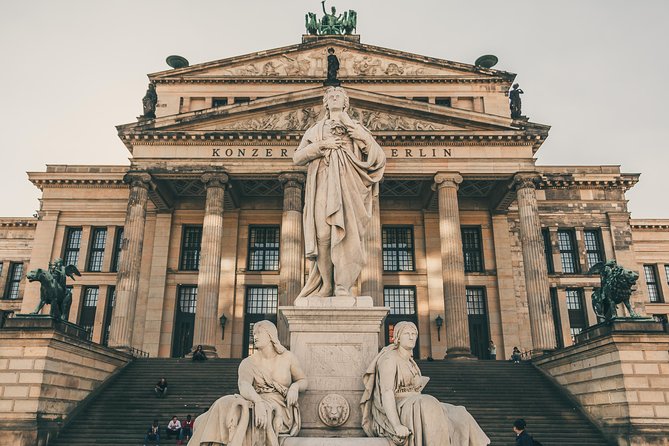
- Italian commentary throughout: Guides named in the feedback include Paolo, Giulia, Fabio, Chiara, Elena, and Daniele.
- Starts at Potsdamer Platz: Meet at 10:00 a.m. beside the blue bicycle and VIVE BERLIN TOURS flag at Potsdamer Platz 10.
- Ends on Museum Island: The walk finishes near the Pergamon Museum, with advice on museum visits and useful next steps.
- No attraction admission is included: This is an outdoor walking tour, so budget separately for museums, food, and drinks.
- Good value at $27.91: For a half-day introduction with a local guide, the price is modest, especially if you want historical context rather than sightseeing alone.
Why this route makes sense for Berlin
Berlin is not a city you understand from monuments alone. Its important sites are spread across a central area, and many of them look surprisingly plain. A sign, a wall fragment, or an empty space may be all that remains.
That is where this tour earns its price. The guide supplies the connections. Potsdamer Platz is not just a modern square. Checkpoint Charlie is not merely a famous photo stop. The Holocaust Memorial is not simply a field of concrete blocks. Each place becomes easier to read when you understand what happened there and how Berlin chose to remember it.
The tour also gives you a useful first look at Mitte, Berlin’s central district. You move through Potsdamer Platz, the former Nazi government quarter, the Brandenburg Gate area, Unter den Linden, Bebelplatz, and Museum Island. You will not enter the major museums or the Reichstag, but you will know which ones deserve a return visit.
More history walks in Berlin:
- Berlin: Natural History Museum Entrance Ticket
★ 4.6 · 3,382 reviews - Berlin: World Heritage Cruise to Potsdam
★ 4.5 · 1,435 reviews - Berlin Historical Highlights Walking Tour
★ 4.9 · 657 reviews
Meeting beside the blue bicycle at Potsdamer Platz
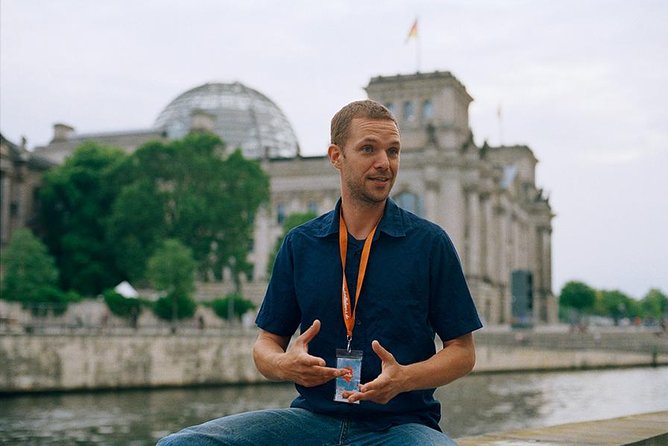
The meeting point is Potsdamer Platz 10, close to the S-Bahn and U-Bahn station. Look for the blue bicycle and the VIVE BERLIN TOURS flag. That detail matters in a large city square where several tour groups may gather at the same time.
The walk begins at 10:00 a.m. and lasts about three and a half hours. You receive a mobile ticket, and confirmation is provided when you book. There is no hotel pickup, so you need to reach Potsdamer Platz on your own by public transportation or another method.
This is an outdoor tour in all weather. Wear shoes you can use comfortably for several hours and bring clothing suited to the forecast. The tour includes long stretches of walking and standing, with no food, drinks, or transportation between stops included.
Potsdamer Platz and the Sony Center: a city rebuilt
Potsdamer Platz is an excellent opening chapter because it shows Berlin’s ability to reinvent itself. The guide introduces the city’s broad story here, including the dramatic changes caused by war, division, and reunification.
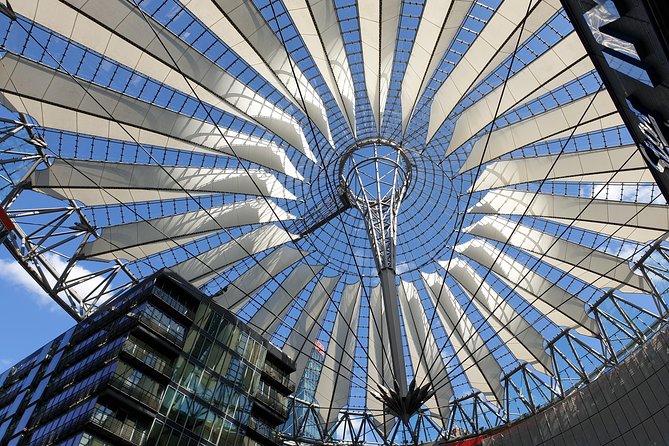
Today, the square is one of Berlin’s most modern areas. The Sony Center adds a different layer, combining contemporary architecture with traces of the older square destroyed during World War II. You will spend about 15 minutes at Potsdamer Platz and another 10 minutes at the Sony Center.
I like this beginning because it avoids starting with a single isolated monument. Instead, you first see how much the city changed physically. The modern buildings are not the whole story, but they make the destruction and rebuilding of Berlin easier to picture.
Topography of Terror and the Berlin Wall
The next section shifts to the Nazi dictatorship. At the Topography of Terror, the guide explains that the site once housed the headquarters of the Gestapo and SS. The location gives the discussion a direct connection to the institutions that carried out Nazi repression.
You can also see the former Nazi Aviation Ministry, the Martin Gropius Bau museum, and an original section of the Berlin Wall from this area. The mix is unsettling: government power, cultural buildings, and a surviving piece of the later border system all appear within the same short stretch.
The stop lasts about 10 minutes, so expect an introduction rather than a full museum visit. The Topography of Terror is an important place to return to if you want more detail, but the outdoor explanation helps you decide how to use your time.
A different side of Berlin on the same trip:
- Berlin: Reichstag, Dome and Government District Guided Tour
★ 4.7 · 18,288 reviews - Berlin: 1-Hour City Tour by Boat with Guaranteed Seating
★ 4.3 · 16,993 reviews - Berlin: Boat Tour Along the River Spree
★ 4.4 · 11,252 reviews - Discover Berlin Half-Day Walking Tour
★ 5.0 · 9,624 reviews
Checkpoint Charlie and the former Aviation Ministry
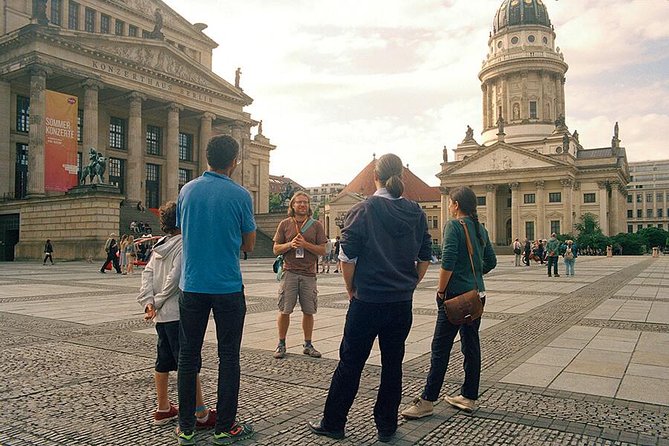
Checkpoint Charlie was once one of the best-known crossing points between East and West Berlin. Here, the guide explains the construction of the Berlin Wall and the way the divided city functioned under communist rule.
The stop is brief, around 10 minutes. Checkpoint Charlie can feel commercialized today, so the historical explanation is especially useful. Without context, you may see a busy street and a popular photo location. With context, you can place it within the Cold War division of the city.
Nearby, the former Aviation Ministry offers a striking lesson in political reuse. Built under the Nazi dictatorship for the Ministry of Aviation led by Hermann Göring, the building later served as the house of ministries under East Germany. It is now used by the government of reunified Germany.
That one building carries three political chapters. The tour spends about 10 minutes there, enough to understand the change in function and the weight of the architecture.
The Führerbunker site and the Holocaust Memorial
The former Führerbunker site is deliberately understated. The guide explains where the bunker was, where Hitler spent his final days, and why the place looks as it does today. You should expect interpretation rather than a visible underground attraction.
That restraint is part of the point. The location does not invite spectacle, and a guide helps you understand the choices made about marking it. This is one of the places where the story matters more than what you can see.
From there, the tour continues to the Memorial to the Murdered Jews of Europe, commonly called the Holocaust Memorial. The guide discusses the Nazi state’s murder of Europe’s Jews and the purpose of this memorial.
You have about 10 minutes here. That is enough to walk among part of the field and hear the explanation, but not enough for a long personal visit. I would note the location and return later if you want time to experience the memorial quietly or visit its information center, although admission details for that center are not included in the tour.
Reichstag and Brandenburg Gate
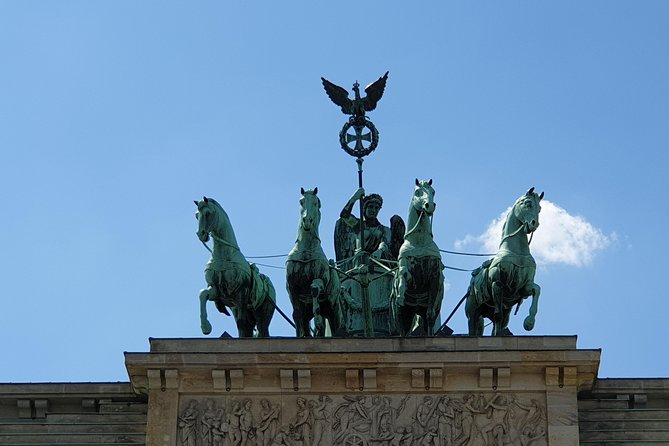
The Reichstag is the seat of Germany’s Parliament. The tour views it from outside, and the guide explains how to book a visit to the building’s dome. This is useful practical advice because the dome visit is a separate activity and is not part of the walking tour.
The Reichstag also fits the tour’s larger theme. It began as an imperial parliament building, survived war and division, and now serves the reunified German state. The exterior visit will not satisfy someone hoping to go inside, but it gives you a clear orientation for a later visit.
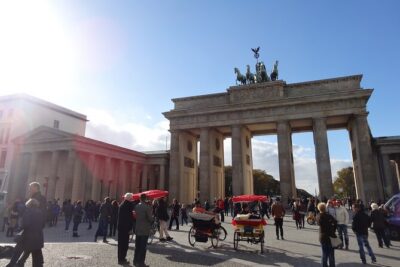
The Brandenburg Gate follows, with about 10 minutes devoted to its story. The gate has served as a symbol of royal power, Cold War division, and German reunification. Few Berlin sights show the city’s political changes so neatly.
The gate is also one of the busiest photo points on the route. A guide helps you look beyond the familiar image and understand why the monument matters at different stages of German history.
Unter den Linden and Bebelplatz
Unter den Linden leads you into an older, more ceremonial Berlin. The broad avenue once provided access to the emperor’s palace. Along the way, your guide points out different periods of construction and signs of wartime damage.
This is a good section for learning how to read Berlin’s buildings. The city does not present one tidy architectural period at a time. Imperial structures, reconstructed buildings, modern repairs, and wartime scars often share the same view.
Bebelplatz adds another difficult chapter. It is associated with the Nazi book burning and also contains Humboldt University and the Catholic Cathedral. The tour spends around 10 minutes in the square before giving another 10 minutes to the book-burning memorial.
The memorial itself is easy to miss if you do not know where to look. The guide explains the propaganda action and the meaning of the monument placed in the center of the square. This is one of the tour’s most valuable short stops because the memorial can seem cryptic without an explanation.
Humboldt University and Neue Wache
Humboldt University receives about five minutes. The guide introduces its history and some of its most famous students. Since the stop is brief, you will get a quick orientation rather than an academic history of the institution.
Nearby, Neue Wache offers a quieter change of mood. The memorial rejects war and its horrors through the image of a mother mourning her son, a soldier killed in battle. You spend about five minutes here.
These short stops work best as part of the walking sequence. They add detail to Unter den Linden without pretending that every site can receive a full lecture. If your main interest is architecture, universities, or memorial design, mark these locations for a slower return.
Berlin Cathedral and Museum Island
The route continues to the Berliner Dom, Berlin Cathedral. The guide explains the imperial idea behind its construction and the ambition to create a church comparable to St. Peter’s for the Lutheran tradition.
You have about 10 minutes at the cathedral. The tour does not include entry, so you will see the building from outside unless you make a separate plan. Even so, the exterior is an important part of the approach to Museum Island.
The final stop is Museum Island, a UNESCO World Heritage Site. The guide finishes near the Pergamon Museum at Bodestraße 1-3 and gives directions for continuing around Berlin.
This ending is practical. The Pergamon Museum is known for major archaeological treasures such as the Ishtar Gate of Babylon and the Pergamon Altar, though admission is not included. The guide can explain how to visit and which tickets are most suitable, but you should confirm current museum access separately before planning your afternoon.
What the Italian guidance adds
The central benefit is not translation alone. A good Italian-speaking guide can make a difficult subject easier to follow in your own language, especially when the tour moves quickly between Nazi history, the Cold War, imperial Berlin, and reunification.
The named guides connected with this experience include Paolo, Giulia, Fabio, Chiara, Elena, and Daniele. The feedback highlights their preparation, courtesy, availability, and ability to add anecdotes to the main historical account. One especially useful pattern is the mix of history and smaller details about churches, theaters, colleges, and city life.
Paolo is praised for showing Berlin through its many sides, while Elena is credited with pointing out places you might not have found alone. Daniele is described as particularly prepared and helpful. You should not assume which guide will lead your departure, but these names give you a sense of the Italian-speaking team associated with the tour.
Group size, pace, and practical value
The maximum group size is 28 people. That is not an intimate private walk, but it is still more manageable than a large sightseeing coach group. A larger group can make it harder to hear at busy intersections, so staying close to the guide matters.
The itinerary lists roughly 17 points over three and a half hours. The timing varies from five to 15 minutes per stop, with most major locations receiving about 10 minutes. Think of this as a city orientation with historical interpretation, not a series of museum visits.
At $27.91 per person, the value is strong if you want to understand Berlin’s central sights quickly. You are paying for the guide, local taxes, and a carefully connected route, not entrance tickets. Add the cost of any museums, food, drinks, or later transportation you choose.
I would take this tour early in a Berlin visit. It can help you choose where to spend more time afterward, especially at the Topography of Terror, the Holocaust Memorial, the Reichstag dome, or Museum Island. It also reduces the risk of spending your first day photographing famous places without understanding their meaning.
Who should book this walk
This tour suits you best if Italian is your preferred language and you want a strong introduction to Berlin’s political history. It is also a good fit for first-time visitors who want the main central sights connected in one morning.
You should book it if you enjoy walking, outdoor explanations, and a guide who can answer questions along the way. The tour is also useful for families and mixed-age groups because most participants can take part, and service animals are allowed.
It may be less suitable if you want museum interiors, a very small private group, or long stretches of free time at each monument. The route is history-heavy, and several stops involve serious subjects. Dress for the weather, allow for steady walking, and do not expect a meal break or hotel transfer.
Free cancellation is available if you cancel at least 24 hours before the 10:00 a.m. start time. Changes or cancellations made later are not accepted for a refund.
Should you book the Historic Center of Berlin tour in Italian?
I would book it if you want Berlin’s main central sights explained in Italian and you have only one morning to get oriented. The route covers the Berlin Wall, Checkpoint Charlie, the Nazi government quarter, the Holocaust Memorial, Brandenburg Gate, Bebelplatz, and Museum Island for a reasonable price.
The key tradeoff is speed. You will see a great deal, but many stops are introductions rather than deep visits. Book this as your historical framework, then return on your own to the places that speak to you most.
FAQ
What language is the tour conducted in?
The tour is conducted with an Italian-speaking guide.
How long does the tour last?
The walking tour lasts approximately three hours and 30 minutes.
What time does the tour start?
The tour starts at 10:00 a.m.
Where does the tour begin?
It begins at Potsdamer Platz 10, 10785 Berlin, Germany, near the Potsdamer Platz S-Bahn and U-Bahn station.
How do I find the meeting point?
Look for the blue bicycle beside the VIVE BERLIN TOURS sign and flag.
Where does the tour finish?
It finishes at the Pergamon Museum on Museum Island, at Bodestraße 1-3, 10178 Berlin.
Is entry to the museums included?
No. Museum admission is not included. The guide can provide directions and advice about visiting the Pergamon Museum and other museums.
Does the tour include hotel pickup?
No. Hotel pickup is not included, and transportation to and from the attractions is also not included.
What happens in bad weather?
The tour operates in all weather conditions, so you should dress appropriately.
How many people can join the tour?
The maximum group size is 28 people.
Can I cancel for a full refund?
Yes. You can receive a full refund if you cancel at least 24 hours before the experience starts. Cancellations or changes made less than 24 hours before the start time are not accepted for a refund.
Just added around Berlin
- Berlin Highlights in One Day★ 5.0 · 3 reviews
- Transfer from Berlin Schönefeld Airport (SXF) to Berlin city Hotels – ROUND TRIP★ 4.0 · 3 reviews
- Private Berlin One Day Tour with a Local: See the City Unscripted★ 3.5 · 3 reviews
- Individual city tour Berlin for max. 8 persons★ 5.0 · 3 reviews
- Berlin: Museum Island Tour★ 5.0 · 3 reviews
- Private Analogue Photography Experience in Berlin★ 5.0 · 3 reviews
- Berlin: Local Food Tour in Secrets Hidden Gems★ 4.0 · 3 reviews
- Berlin & The Third Reich Private Guided Tour★ 5.0 · 3 reviews
Historical Tours, compared.

Berlin Private Complete History All Day Walking Tour
Read our review →


Small group Potsdam: A Journey Through History and Palaces
Read our review →Browse the lists this tour appears in