
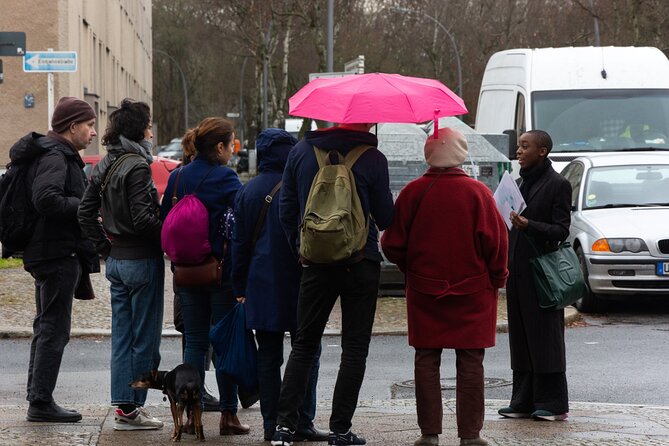
Review · HISTORICAL TOURS
Historical city tour in the African Quarter in Berlin
Berlin’s African Quarter is not a museum behind glass. Its colonial story is written into ordinary street signs, apartment blocks, and public spaces. This two-hour walk uses places such as Swakopmunder Straße and Kongostraße to explain Germany’s ties to Africa and the decisions that shaped the quarter.
I like the tour’s focused route and its change of viewpoint. I also like that it tackles a part of German history that many visitors never encounter. The main consideration is its modest 3.7 rating from six published reviews, so you should book it for serious historical discussion rather than sightseeing spectacle.
In This Review
- Key points to know before booking
- Why Berlin’s African Quarter deserves two hours
- Starting at Swakopmunder Straße
- Anna-Mungunda-Allee and the question of Petersallee
- Manga-Bell-Platz and Gustav Nachtigal
- Kongostraße and the 1884 Congo Conference
- A change of viewpoint, not a standard sightseeing walk
- What the two-hour format means for value
- Route, timing, and practical details
- Who will get the most from this Berlin walk
- Should you book the African Quarter tour?
- FAQ
- How long does the African Quarter tour last?
- How much does the tour cost?
- Where does the tour begin?
- Where does the tour finish?
- Which places are visited?
- What is discussed at Swakopmunder Straße?
- Does the tour discuss the Berlin Conference?
- How many people can join the tour?
- Can I cancel for a full refund?
Key points to know before booking
- Street names become historical evidence: The route examines why African countries, European cities, and colonial officials appear on Berlin’s map.
- Four clearly defined stops: Swakopmunder Straße, Anna-Mungunda-Allee, Manga-Bell-Platz, and Kongostraße each raise a different question.
- The Congo Conference takes center stage: You’ll see how Berlin’s 1884 conference affected Africa, and why no African representatives were present.
- A small walking group: The maximum is 20 people, a useful size for discussion and questions.
- Two hours for $33.57: That works out to about $16.79 per hour, reasonable if this subject is a priority for you.
- Weather and minimum numbers matter: Poor weather or too few bookings can lead to a new date or a full refund.
Why Berlin’s African Quarter deserves two hours
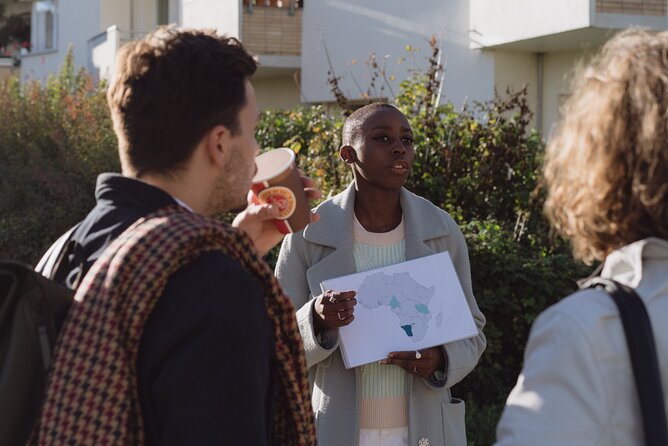
The African Quarter, known in German as the Afrikanisches Viertel, is an area monument made up of 22 streets. The names are the key. They refer to African countries, European cities, and people linked to Germany’s colonial period.
That makes the quarter a useful place to discuss history without relying only on dates and textbook summaries. You move through a normal Berlin neighborhood while asking why certain names were chosen, who received public recognition, and how those choices look today.
The tour focuses on German involvement in Africa during the colonial era. That includes Germany’s role in Namibia, the legacy of figures connected to imperial expansion, and the 1884 Congo Conference held in Berlin.
I like this setting because the questions are tied to real places. A street sign can look harmless until you learn the story behind it. Then the name becomes a prompt for a larger discussion about power, memory, and the way cities decide what to honor.
This is not a general introduction to Berlin. You will not get a broad survey of the Brandenburg Gate, the Berlin Wall, or the city’s famous museums. The appeal is narrower and more serious: you are examining one neighborhood and the colonial ideas attached to it.
More history walks in Berlin:
- Berlin: Natural History Museum Entrance Ticket
★ 4.6 · 3,382 reviews - Berlin: World Heritage Cruise to Potsdam
★ 4.5 · 1,435 reviews - Berlin Historical Highlights Walking Tour
★ 4.9 · 657 reviews
Starting at Swakopmunder Straße
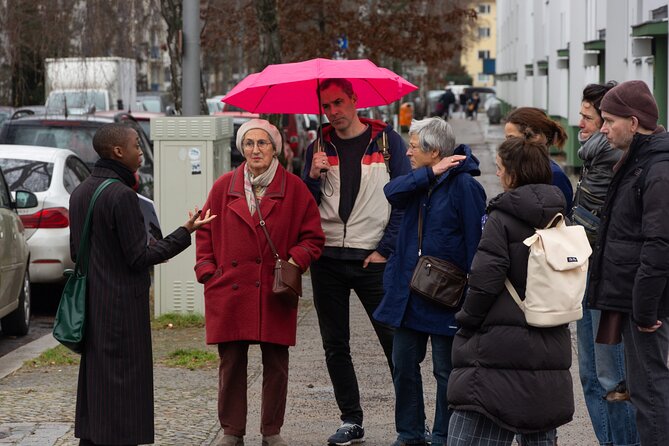
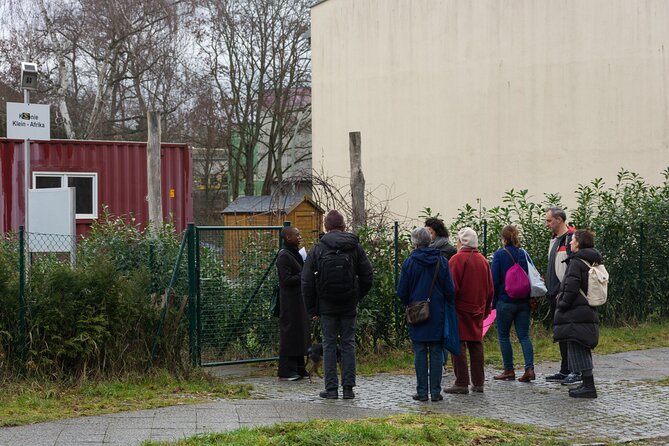
The walk begins at Swakopmunder Straße 44, in postal code 13351. Your first stop asks what Swakopmund has to do with Berlin and what role Germany played in Namibia.
That is a strong opening because it connects a local street to a former German colony. The name is not treated as simple geography. Instead, it becomes a way to discuss how German colonial power operated and how places in Africa were represented in Berlin.
The scheduled stop lasts about five minutes, though the total time spent at any point can depend on the guide’s explanation and questions. Do not expect a long interior visit or an attraction with an admission desk. The street itself is the teaching material, and admission is free at every stop.
For you, the practical point is simple: arrive ready to walk and listen. The meeting point is on Swakopmunder Straße, and the activity is near public transportation. The exact transit connection is not provided, so check your route to the address before setting out.
This first stop also sets the tone. The tour is asking you to look at a familiar urban detail from a different angle. If you enjoy history that begins with a small clue and builds toward a larger issue, the opening should suit you.
Anna-Mungunda-Allee and the question of Petersallee
The second stop is Anna-Mungunda-Allee. Here, the guide explains who Petersallee was named after and asks if the street should be renamed, and why.
This is where the walk moves from colonial geography to public memory. A name on a street sign is not only a label used for directions. It can also honor a person, preserve a political choice, or keep an old view of history in daily use.
The stop is especially useful because it presents renaming as a question rather than a simple instruction. You are encouraged to consider who deserves recognition, how historical responsibility should be shown, and what a city communicates when it keeps or changes a name.
The present name, Anna-Mungunda-Allee, is part of that discussion. Based on the supplied tour details, the guide addresses the earlier name Petersallee and the reasons for the debate. You should expect context rather than a quick photo opportunity.
The stop is listed at about five minutes. That is enough time to introduce the issue, but not enough for a full academic treatment of every argument. If you want a long seminar on German remembrance politics, this walk may feel brisk. If you want a clear starting point tied to a physical place, the format works well.
Manga-Bell-Platz and Gustav Nachtigal
At Manga-Bell-Platz, the focus shifts to Gustav Nachtigal. The guide explains who he was and why this central square in the African Quarter was named after him.
This stop helps show how colonial history entered the design of the neighborhood. Names are not scattered at random. They create a map of political priorities, and the choice of a central square gives a name extra weight.
The tour’s wording points to the colonial period and to the role of people connected with German imperial rule. That distinction matters. You are not simply collecting biographical facts about Nachtigal. You are looking at the reason his name appeared in a Berlin district devoted, in part, to Africa.
Manga-Bell-Platz also gives the walk a useful change of pace. The first stop links Berlin with Namibia. The second asks about renaming. The third looks at a person and a public square. Together, they show how the tour moves between geography, memory, and individual responsibility.
Again, the planned time is around five minutes. That keeps the overall experience within two hours, but it also means you should listen closely. The guide may cover more than the stop labels suggest, yet the walk is designed as a compact introduction rather than a complete history of German colonialism.
A few more Berlin tours worth weighing up
- Berlin: 1-Hour City Tour by Boat with Guaranteed Seating
★ 4.3 · 16,993 reviews - Berlin: City Sightseeing Hop-On Hop-Off Bus Tour
★ 4.1 · 4,233 reviews - Potsdam: City and Castles Tour
★ 4.7 · 3,721 reviews - Berlin: 1-Hour City Sightseeing Cruise
★ 4.4 · 2,210 reviews
Kongostraße and the 1884 Congo Conference
Kongostraße is the tour’s clearest connection to the Berlin Conference of 1884. You will learn what happened in Berlin that year, what the Congo Conference was, and why no one from Africa was present.
This is the point where the neighborhood’s street names connect to a major international event. The guide uses a map to show Africa before and after the conference, giving you a visual way to understand the changes under discussion.
The absence of African representatives is central. It points to the unequal power structure behind decisions made about the continent. You are not just hearing that European states met in Berlin. You are being asked to consider who had authority, who was excluded, and how those decisions affected the borders and political control of African territories.
The map should be one of the most useful teaching tools on the walk. Dates and names can blur together, but a before-and-after comparison gives the subject a shape you can remember. It also helps explain why the conference remains important when discussing European colonialism in Africa.
The listed stop lasts about five minutes, though this subject could easily fill an entire lecture. The benefit of the tour is that it introduces the issue in the exact city where the conference took place. The limitation is that two hours cannot cover every consequence, country, and later development.
If this is your first serious look at Germany’s colonial past, Kongostraße may be the most memorable stop. If you already know the conference well, you may value the local connection more than the basic explanation.
A change of viewpoint, not a standard sightseeing walk
The tour’s central idea is a change of viewpoint. That phrase is useful here because the route does not simply celebrate Berlin’s connection to Africa or list colonial-era names. It asks you to question how the quarter was created and how its memory is handled now.
That approach gives the experience its main strength. The subject is rarely part of a visitor’s first plan for Berlin, yet it helps explain a less familiar part of German history. You are looking at the city not only as a collection of monuments, but also as a place where political choices remain visible in everyday life.
The guide is described as engaging and well informed by the supplied feedback, and the experience provider is Dekoloniale Stadtführung. No individual guide name is provided, so you should not expect to select a particular guide when booking.
The walk’s tone should suit people who prefer clear explanation and discussion to entertainment. You may find it especially useful if you want to understand colonialism as part of German history, rather than treating it as a subject belonging only to Britain, France, Portugal, or Belgium.
Parents should use their own judgment about children. The tour is open to most participants, but the topic includes colonial power, exclusion, and historical injustice. The supplied information does not give a recommended minimum age.
What the two-hour format means for value
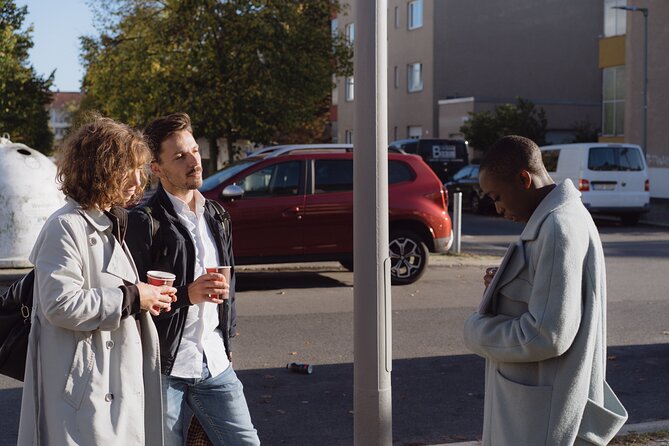
The price is $33.57 per person. For a two-hour guided walk, that is about $16.79 per hour before considering the value of the guide’s preparation and the small group setting.
The group can include up to 20 people. That is large enough to create some energy but small enough that the guide should be able to keep the group together without the feel of a huge city tour. The supplied information does not promise audio equipment, printed material, or refreshments, so your payment is mainly for the guided historical interpretation.
I consider the price fair if this subject matters to you. The tour covers four stops, includes a map-based explanation of the Congo Conference, and addresses questions that are easy to miss when exploring Berlin alone. You are paying for context, not for entrance tickets or major sights.
The value is weaker if you are looking for a broad first-day introduction to Berlin. You will spend two hours in one area and will not cover the city’s main landmarks. A visitor with only one free afternoon may prefer a general city walk, then choose this tour if colonial history is a particular interest.
The booking pattern also gives you a small planning clue: it is booked on average 21 days in advance. That does not guarantee that every date sells out, but it suggests that you should reserve ahead if your Berlin schedule is fixed.
Route, timing, and practical details
The experience lasts about two hours and uses a mobile ticket. You begin at Swakopmunder Str. 44, 13351 Berlin, and finish at Rehberge, 13349 Berlin.
Because the route is a walking tour, wear comfortable shoes and allow time to reach the starting address. The information does not state the walking distance, so I would not assume the route is suitable for anyone who cannot comfortably walk for two hours.
The tour is near public transportation, which makes the start and finish easier to connect with the rest of your day. Since the beginning and end are different, check your onward route before you start. That is particularly useful if you have a timed museum visit or train afterward.
Service animals are allowed, and most participants can take part. The tour requires good weather. If rain or other poor conditions cause a cancellation, you will be offered another date or a full refund.
You can cancel for a full refund up to 24 hours before the start time. Changes or cancellations inside that 24-hour window are not accepted for a refund. The experience also requires a minimum number of participants, so a cancellation for low numbers may lead to another date or a full refund.
Who will get the most from this Berlin walk
I would choose this tour if you want a focused history experience that connects Berlin streets with German colonial rule. It suits visitors who like asking why a place has its name, who selected it, and what that choice says today.
It should also work well for repeat visitors. Once you have seen the main landmarks, a neighborhood walk on a less familiar subject can add depth to your picture of Berlin.
Students, teachers, and anyone studying colonial history may find the four-stop structure useful. Each location presents a different entry point: Namibia, renaming, Gustav Nachtigal, and the Congo Conference.
I would hesitate if you want a fast-moving tour packed with famous sights. The stops are short, and the material is serious. You may spend several minutes discussing a street name when you would rather be taking photographs or moving on to another attraction.
The 3.7 overall rating from six reviews is mixed rather than decisive. One published five-star response calls it a must-do historical tour and praises the guide’s ability to explain the subject and hold attention. That positive reaction supports the tour’s main purpose, but the small number of ratings means you should not treat the score as a firm measure of every guide or date.
Should you book the African Quarter tour?
Book it if you want a compact, thoughtful look at a part of Berlin’s history that is easy to overlook. The best reason to go is not the scenery. It is the chance to read the city’s street names as evidence of Germany’s colonial past and to discuss how those names are remembered now.
At $33.57, the walk offers reasonable value for a two-hour, small-group experience, especially if you care about Namibia, colonial Berlin, public memorials, or the 1884 Congo Conference. Go with comfortable shoes, a charged phone for the mobile ticket, and enough time to reach Swakopmunder Straße 44.
Skip it if your Berlin visit is very short and you want only major landmarks. Choose it if you are ready to spend two hours listening, questioning, and looking at ordinary streets in a less ordinary way.
FAQ
How long does the African Quarter tour last?
The walking tour lasts approximately two hours.
How much does the tour cost?
The listed price is $33.57 per person.
Where does the tour begin?
The meeting point is Swakopmunder Str. 44, 13351 Berlin, Germany.
Where does the tour finish?
The tour ends at Rehberge, 13349 Berlin, Germany.
Which places are visited?
The route includes Swakopmunder Straße, Anna-Mungunda-Allee, Manga-Bell-Platz, and Kongostraße.
What is discussed at Swakopmunder Straße?
The guide explains the connection between Swakopmund and Berlin and Germany’s role in Namibia.
Does the tour discuss the Berlin Conference?
Yes. At Kongostraße, the guide explains the 1884 Congo Conference, including why no African representatives were present, and uses a map of Africa before and after the conference.
How many people can join the tour?
The maximum group size is 20 participants.
Can I cancel for a full refund?
Yes. You can cancel at least 24 hours before the start time for a full refund. Poor weather or failure to meet the minimum number of participants can also lead to another date or a full refund.
Just added around Berlin
- Berlin Highlights in One Day★ 5.0 · 3 reviews
- Private Berlin One Day Tour with a Local: See the City Unscripted★ 3.5 · 3 reviews
- Individual city tour Berlin for max. 8 persons★ 5.0 · 3 reviews
- Transfer from Berlin Schönefeld Airport (SXF) to Berlin city Hotels – ROUND TRIP★ 4.0 · 3 reviews
- Berlin: Museum Island Tour★ 5.0 · 3 reviews
- Private Analogue Photography Experience in Berlin★ 5.0 · 3 reviews
- Berlin: Local Food Tour in Secrets Hidden Gems★ 4.0 · 3 reviews
- Berlin & The Third Reich Private Guided Tour★ 5.0 · 3 reviews
Historical Tours, compared.

Berlin Private Complete History All Day Walking Tour
Read our review →

Small group Potsdam: A Journey Through History and Palaces
Read our review →Browse the lists this tour appears in