Review · GUIDED
The Best Private Berlin Tour with a Car, Tour Guide and Pick up
Berlin’s story comes into sharp focus on this private car-and-walking tour, which links the Brandenburg Gate, Reichstag, Holocaust Memorial, Checkpoint Charlie, Berlin Wall, and Museum Island in one tightly planned outing. You can cover far more ground than on foot alone, while still getting out at the sites that deserve a closer look.
I like the door-to-door pickup and the way a driver lets your guide keep talking instead of studying a map. I also like the flexible length, since a two-hour overview works for a short stop, while three to six hours gives you time for more context and customized stops. The main drawback is price: at $106.93 per person, it makes the most sense for families or small groups who value time and private attention.
In This Review
- Key points to know before booking
- Why a private car works so well in Berlin
- Brandenburg Gate and the Reichstag: Berlin’s main stage
- The Holocaust Memorial and the Nazi government quarter
- Checkpoint Charlie and the Berlin Wall
- Museum Island and Berlin’s older layers
- Bebelplatz and the royal mile
- Gendarmenmarkt and a sweet ending at Rausch
- Two, three, or six hours: choosing your pace
- Guides, drivers, and the human side of the tour
- Practical details, comfort, and value
- Who should book this Berlin tour?
- Final verdict: a strong first look, with one important condition
- FAQ
- How long does the private Berlin tour last?
- Is hotel pickup included?
- Is this a private tour?
- What language is the tour offered in?
- Are entrance fees included?
- Can I cancel for a full refund?
Key points to know before booking
- Brandenburg Gate to Checkpoint Charlie: See the core sights of central Berlin without piecing together several transit routes.
- A strong focus on difficult history: The Holocaust Memorial, Topography of Terror, Fuhrerbunker site, and Berlin Wall receive serious attention.
- Private vehicle and driver: Ride between districts while your guide focuses on the story instead of navigation.
- Flexible two to six-hour format: Choose a compact introduction or allow time for a fuller, customized visit.
- Guide quality matters: Names frequently associated with especially strong tours include Natalie, Nick, Walid, Joana, Scott, Jochen, and Markus.
- A useful family option: The mix of riding, short walks, photos, and clear explanations works well for mixed ages and some travelers with physical limits.
Why a private car works so well in Berlin
Berlin is spread out. The Brandenburg Gate and Reichstag sit close together, but Museum Island, Checkpoint Charlie, the East Side, and the former Nazi government quarter require more time between stops. Public transport is good, yet each connection costs minutes and attention.
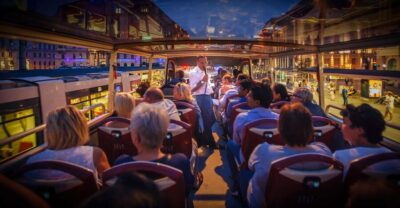
Here, the driver handles those longer stretches. You walk for roughly ten to fifteen minutes at major sites, then return to the vehicle and continue. That rhythm gives you a citywide view without turning the day into a transport exercise.
The private format is especially useful for families, older adults, and anyone with only a day or two in Berlin. One family found that the van made a chilly day comfortable, while another family with several generations valued seeing a lot without asking older members to walk between every sight.
You should still expect some walking. This is not a drive-by tour where you remain in the vehicle at every stop. The best parts happen outside, among the concrete columns of the Holocaust Memorial, at the Berlin Wall remains, and around the grand squares of central Berlin.
A few more Berlin tours worth weighing up
- Berlin: Private Reichstag and Glass Dome Tour
★ 4.8 · 2,226 reviews - Berlin Private Complete History All Day Walking Tour
★ 5.0 · 474 reviews - Private Walking Tour Berlin Third Reich Hitler and World War II
★ 5.0 · 360 reviews
Brandenburg Gate and the Reichstag: Berlin’s main stage
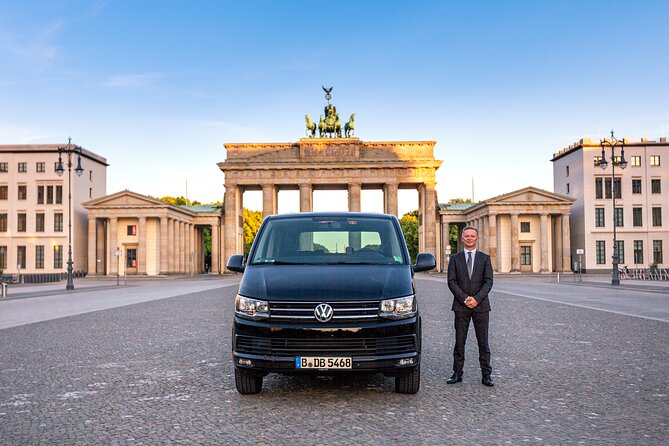
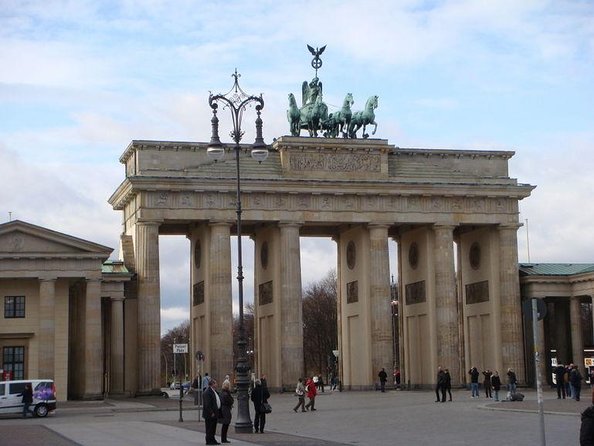
Begin at the Brandenburg Gate, Berlin’s most recognizable monument. Walk through its columns and listen for the political story behind this former city gateway. It has served as a royal entrance, a Nazi-era backdrop, and a symbol of a divided city before becoming an emblem of reunified Germany.
The stop is listed at about 15 minutes, with no admission fee. That is enough for an introduction and photographs, but not a long architectural study. I would treat it as the opening chapter rather than the main event.
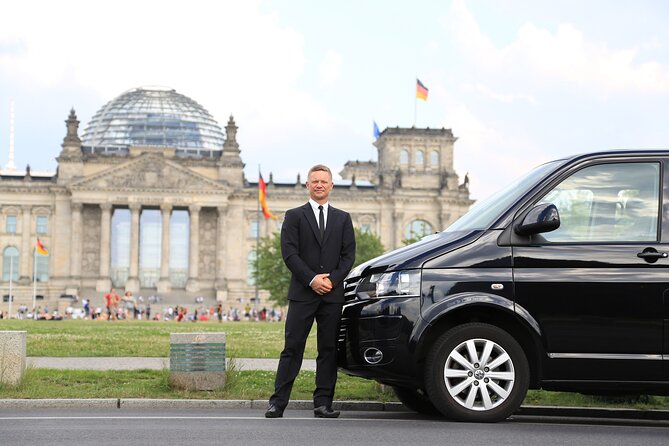
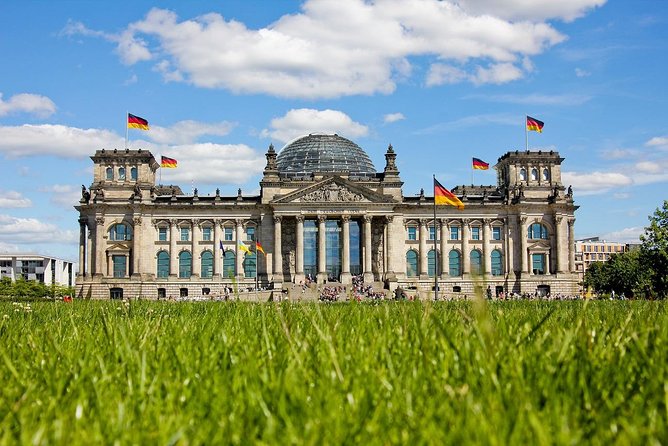
The nearby Reichstag takes about ten minutes. You stand outside the German parliament building and consider its dramatic path from imperial government to the fire after Hitler’s rise, wartime destruction, division, and present role in democratic Germany.
No interior admission is included. If entering the Reichstag is important to you, check arrangements separately rather than assuming this tour includes a visit inside. The value here is the guide’s explanation and the chance to place the building in Berlin’s larger political story.
The Holocaust Memorial and the Nazi government quarter
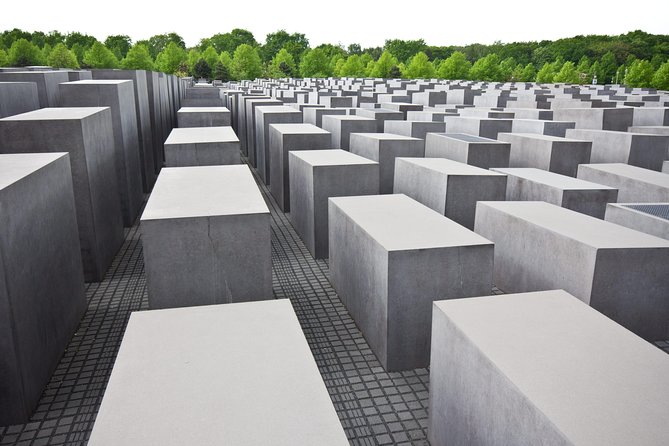
The Memorial to the Murdered Jews of Europe is not a conventional monument. Its 2,711 concrete stelae form a field that changes as you walk through it. The ground rises and falls, sightlines disappear, and the experience becomes personal rather than distant.
The planned visit lasts about 15 minutes and is free. That may feel brief, especially if you want time to walk every path or visit the underground information center. Still, the guide can explain why the memorial looks the way it does and connect it to the persecution of Europe’s Jews.
Nearby, the Fuhrerbunker site is marked by an unassuming information board rather than a grand memorial. That plain setting matters. You are not entering a preserved bunker or seeing an underground room. You are standing above the place where Hitler died at the end of the Second World War, and the guide supplies the context.
The Topography of Terror provides another serious stop. It occupies the former headquarters area of the SS and Gestapo, beside an excavated section of Berlin Wall. The visit combines Nazi terror with the later division of the city, showing how two different dictatorships left their mark in one compact area.
The listed stop takes about 15 minutes, with no required admission fee for the tour. You may want more time at the exhibition itself, but the short visit gives you a clear orientation. Guides such as Nick and Jochen are particularly well suited to travelers who want more than dates and names, since their tours are described as moving from Prussian Berlin through the First World War, the Nazi period, and the Cold War.
One caution is worth making. Much of the tour’s weight falls on Hitler, the Second World War, and the Holocaust. That focus is understandable and necessary, but if you want equal time on art, food, daily life, or modern neighborhoods, tell the guide early. The experience is customizable, and one poor match occurred when the commentary felt too fixed and too centered on Hitler.
Checkpoint Charlie and the Berlin Wall
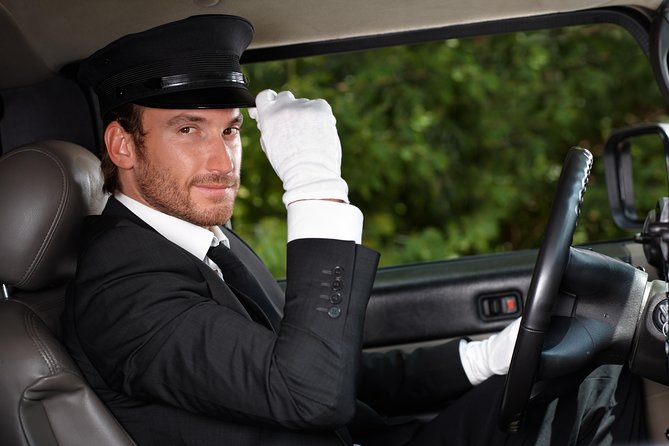
Checkpoint Charlie was the best-known crossing between East and West Berlin during the Cold War. At this stop, you hear about the American and Soviet confrontation, including the tense tank standoff of 1961.
The visit lasts about 15 minutes and is free. Today, the setting is busy with photo opportunities and commercial displays, so do not expect an untouched border post. Its importance comes from what happened here, and a guide helps separate the real history from the modern tourist staging.
The nearby Berlin Wall remains at the Topography of Terror adds useful physical context. Rather than treating the Wall as a single sight, the tour shows how it cut through streets, government districts, homes, and ordinary lives. That is one of the private tour’s strengths: you can ask how the city worked before, during, and after division.
If Cold War history is your priority, say so when booking or at pickup. The guides have covered this subject in detail, and one former East Berlin story involving an acrobat gave a personal close to an otherwise political tour. That kind of human detail can make the Wall easier to understand than a list of dates.
A different side of Berlin on the same trip:
- Berlin: Reichstag, Dome and Government District Guided Tour
★ 4.7 · 18,288 reviews - Berlin: 1-Hour City Tour by Boat with Guaranteed Seating
★ 4.3 · 16,993 reviews - Berlin: Boat Tour Along the River Spree
★ 4.4 · 11,252 reviews - Discover Berlin Half-Day Walking Tour
★ 5.0 · 9,624 reviews
Museum Island and Berlin’s older layers
Museum Island changes the tone. After the heavy twentieth-century subjects, you move into Berlin’s royal and cultural center. The UNESCO-listed island brings together the Old Museum, Berlin Cathedral, the former Berlin City Palace area, and other grand buildings along the Spree.
The scheduled stop is about ten minutes. That is enough to admire the architecture and understand the layout, but not enough to tour a museum. Entrance fees are not included, and the experience does not promise museum entry.
I like this change of pace. Berlin is not only a city of war and division. Its Prussian rulers, museums, churches, and imperial ambitions shaped the city long before the twentieth century. Guides with an archaeology or architecture background can make this section especially useful, since they can explain damaged buildings, rebuilding, and the layers beneath modern Berlin.
Bebelplatz and the royal mile
Bebelplatz gathers several buildings linked to Frederick the Great’s eighteenth-century Berlin: the former Royal Opera House, St. Hedwig’s Cathedral, and the former Royal Library. The square is also remembered for the Nazi book burning of May 10, 1933.
The stop takes about ten minutes and is free. Look down for the underground memorial to the book burning, a room of empty shelves visible through glass. The small memorial is easy to miss without a guide, which is one reason this short stop earns its place.
Between stops, you cruise along Berlin’s important historical boulevard, the royal mile, from the comfort of the private vehicle. This is more than dead time. Your guide can point out how the avenue links monuments, government buildings, and former royal spaces, while you rest your feet.
The pace can feel quick on a two-hour tour. That is the tradeoff for covering so much ground. If Bebelplatz, Museum Island, or the royal boulevard matters more to you than checking every major site, ask for a custom plan.
Gendarmenmarkt and a sweet ending at Rausch
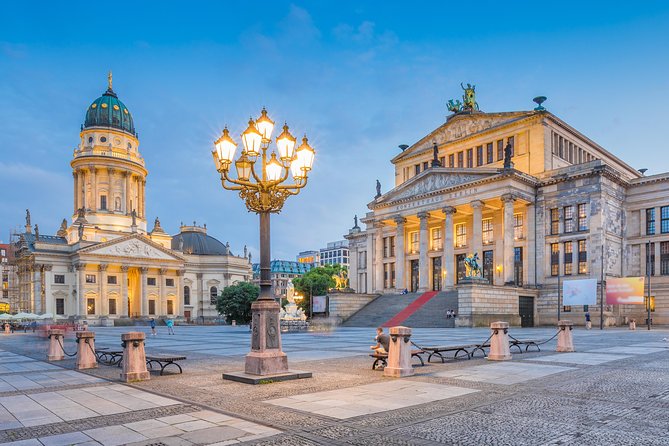
Gendarmenmarkt is often considered Berlin’s most beautiful square. The French Cathedral and German Cathedral face the Konzerthaus, creating a balanced architectural scene that feels very different from the stark Holocaust Memorial or the practical displays at Checkpoint Charlie.
The planned visit lasts about 15 minutes, with no admission fee. You can take in the façades, hear how the square developed, and pause at Rausch Schokoladenhaus, a well-known Berlin chocolatier.
Rausch is a smart finishing point. It adds a small taste of present-day Berlin after a tour heavy with political tragedy and war. One customized three-hour visit ended there, giving the group a chance to enjoy local culture rather than finishing on another memorial.
Do not read the chocolate stop as a full tasting or meal. Food and drink are not included. Think of it as a recommended stop where you can buy something yourself if time allows.
Two, three, or six hours: choosing your pace
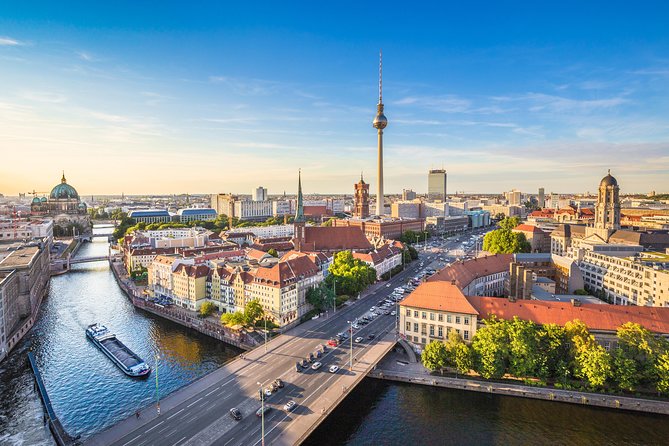
The experience runs from about two to six hours, and the right length depends on your goals.
A two-hour tour works as a fast orientation. You can expect the major central sights, short explanations, and photo stops. It suits a first look, a tight schedule, or a stop between other plans, but each location will receive only a brief treatment.
Three hours is the best middle ground for many people. You can combine driving with walks, hear a clear account of Berlin during and after the Second World War, and still reach sites such as Gendarmenmarkt or Rausch. Several families found that this length gave them a strong introduction without feeling rushed.
Six hours gives the guide room to adjust. You can spend longer at the Holocaust Memorial or Topography of Terror, add more neighborhoods, or request a concentration camp visit such as Sachsenhausen if the guide and schedule permit. That possibility appears in one particularly full private day, but do not assume it is part of the standard route. Confirm any added destination before booking.
The longer option also makes the $106.93 per person price easier to justify. You are paying for a private guide, professional driver, vehicle, pickup, and the ability to set the rhythm. For one or two people, the cost is significant. For a family or group, the per-person price may compare well with several separate taxis, transit fares, and a private guide arranged independently.
Guides, drivers, and the human side of the tour
The experience depends heavily on the person assigned to your group. Strong guide names connected with the tour include Natalie, Nick, Walid, Joana, Scott, Jochen, Jamie, Tal, Joerg, Campbell, and Wally. Drivers such as Markus, Marcus, Arnaud, Ayman, and Marcos are also repeatedly described as punctual, accommodating, and friendly.
Names can vary because this is a private operation, so you cannot assume a particular guide unless the provider confirms it. What you can reasonably expect is a professional local guide and a separate professional driver.
The best guides add photographs, dates, building names, and personal stories. Natalie is praised for animated explanations of architecture, culture, and the Second World War. Nick is a good fit for people who want detailed military and political context. Walid combines a broad city survey with humor, while Jochen connects history to lessons for the present.
That range matters. Berlin rewards questions. Ask about rebuilding, East and West Berlin, Prussian rule, Jewish life, architecture, or modern culture. The guides appear willing to adapt, but you should state your interests rather than wait for the standard script.
Practical details, comfort, and value
Pickup is offered, and the tour can begin from a hotel or another agreed point, including a train station in at least one arrangement. Confirmation normally arrives at booking, but reservations made within nine days of departure may take up to 48 hours and remain subject to availability.
The tour is offered in English. It is a private activity, so only your group participates. The vehicle provides a warm place to regroup on cold days, but you still need shoes suited to short walks over city streets and memorial grounds.
Most people can take part, and the tour is near public transportation. No food or drink is included. No entrance fees are required for the planned stops, though the Reichstag interior and any museum visit are not part of the package.
You can cancel for a full refund up to 24 hours before the start time. Changes or cancellations inside that 24-hour window are not accepted for a refund, using Berlin local time as the cutoff.
Who should book this Berlin tour?
I would choose this for a first visit, a short stay, a multigenerational family, or anyone who wants Berlin’s major sites explained in a connected way. It is also a good fit if you dislike losing time to navigation or need to limit long walks.
I would be more cautious if you prefer slow museum visits, long meals, or wandering without a schedule. This is an overview by design, even at six hours. It shows you where to return later.
Final verdict: a strong first look, with one important condition
Book this tour if you want efficient sightseeing with real historical explanation, especially if Berlin’s twentieth-century past is your main interest. The private car, pickup, adaptable route, and mix of walking and riding make a large city manageable.
Before you commit, decide how much Nazi and Cold War history you want. Tell the provider if you want more Prussian, cultural, architectural, or modern Berlin. With a guide such as Natalie, Nick, Walid, Joana, or Jochen, the experience can become far more personal than a fixed city circuit. If your budget allows the private format, three hours is the sensible starting point, while six hours is the better buy for serious history fans or groups hoping to see Berlin in one concentrated day.
FAQ
How long does the private Berlin tour last?
The tour lasts approximately two to six hours. A shorter option gives you a quick overview, while a longer booking allows more time for walking, explanations, and customization.
Is hotel pickup included?
Pickup is offered as part of the experience. Specific meeting arrangements should be confirmed when booking, since pickup may also be arranged at places such as a train station.
Is this a private tour?
Yes. Only your group participates, with a local guide, private vehicle, and professional driver.
What language is the tour offered in?
The tour is offered in English.
Are entrance fees included?
The planned tour does not require entrance fees. Food and drinks are not included, and admission to places such as the Reichstag interior or museums is not part of the stated package.
Can I cancel for a full refund?
You can cancel up to 24 hours before the experience starts for a full refund. Cancellations or changes made less than 24 hours before the start time are not accepted for a refund.
Just added around Berlin
- Berlin Highlights in One Day★ 5.0 · 3 reviews
- Private Berlin One Day Tour with a Local: See the City Unscripted★ 3.5 · 3 reviews
- Individual city tour Berlin for max. 8 persons★ 5.0 · 3 reviews
- Transfer from Berlin Schönefeld Airport (SXF) to Berlin city Hotels – ROUND TRIP★ 4.0 · 3 reviews
- Private Analogue Photography Experience in Berlin★ 5.0 · 3 reviews
- Berlin: Museum Island Tour★ 5.0 · 3 reviews
- Berlin: Local Food Tour in Secrets Hidden Gems★ 4.0 · 3 reviews
- Berlin & The Third Reich Private Guided Tour★ 5.0 · 3 reviews
Guided, compared.
Reichstag, Dome and Government District Guided Tour
Read our review →

Sights and Highlights Bike Tour with a Local Guide
Read our review →
Solar Powered Sunset Catamaran Cruise & Audio Guide
Read our review →