
Review · FOOD & DRINK
The Real Berlin Walking Tour: Art, Food and Counterculture
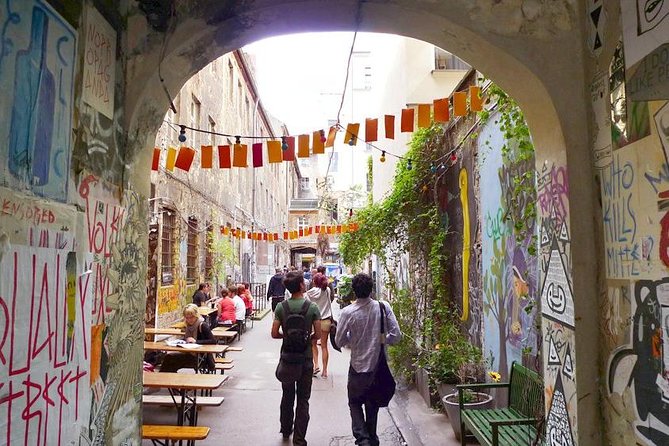
Berlin’s alternative side is the point here. Instead of spending the day only at famous monuments, you move through Kreuzberg, Prenzlauer Berg, Mitte, and Friedrichshain, where street art, immigrant culture, gardens, galleries, and old political movements help explain modern Berlin.
I like the private format, which lets you ask questions and shape the day around your interests. I also like the use of public transport between districts, since it shows how Berlin fits together instead of treating each neighborhood as a sealed-off attraction. The main drawback is that food, drinks, and transport tickets cost extra, and a four-and-a-half-hour walk can feel short for such a wide route.
In This Review
- Key points worth knowing
- Why this Berlin tour takes a different route
- Starting near Alexanderplatz and the TV Tower
- Mitte: Berlin’s center beyond the postcard sights
- Prenzlauer Berg, cafés, gardens, and changing Berlin
- Kreuzberg and the story of Turkish Berlin
- Currywurst and the city’s everyday food culture
- Yaam and Berlin’s multicultural riverfront
- Prater Garten and a well-timed beer break
- What the guides add to the day
- Is $539.22 good value for a private group?
- Who should book this experience?
- My verdict on the Real Berlin Walking Tour
- FAQ
- How long does the walking tour last?
- Where does the tour start?
- Where does the tour end?
- What time does the tour begin?
- Is public transport included?
- Are food and drinks included?
- Is this a private tour?
- What is the cancellation policy?
Key points worth knowing
- Kreuzberg’s Turkish influence: See one of Berlin’s best-known alternative districts and learn how it changed from a poor area into a cultural center.
- Prater Garten Berlin: Visit Berlin’s oldest beer garden, operating beneath chestnut trees from April through September.
- Yaam’s multicultural spirit: Take in the Caribbean and African influence around this arts and beach area beside the Spree.
- Private guiding: Your group has the guide to itself, with room for questions and special requests.
- Public transport is part of the day: You may need an AB ticket to reach some districts, and the guide can help you buy one.
- Strong guide reports: Reese, Jack, Kalum, and Jason are singled out for their history knowledge, relaxed style, and ability to find places you might miss alone.
Why this Berlin tour takes a different route
This is not a greatest-hits walk past the Brandenburg Gate and Museum Island. You begin near the Fernsehturm, Berlin’s TV Tower, close to Alexanderplatz, then head into parts of the city where daily life matters as much as grand architecture.
I like that approach for a second or third day in Berlin, when you have already seen the central sights and want to understand how the city works today. It also suits first-time visitors who prefer neighborhoods, food, and local stories to a long list of monuments.
The tour is private for up to 12 people. That matters. A guide can slow down for a question, adjust the route, or spend more time on art, food, politics, or neighborhood history. You are not trying to hear a guide over 30 other people at a busy corner.
The experience is offered in English, and the start time is 10 a.m. The practical itinerary describes about 4.5 hours of walking and local transport. The duration shown in the booking information appears inconsistent, so I would confirm the exact end time before paying, especially if you have an evening train or dinner reservation.
More walking tours in Berlin:
- Discover Berlin Half-Day Walking Tour
★ 5.0 · 9,624 reviews - Berlin: Third Reich and Cold War 2 Hour Walking Tour
★ 4.9 · 6,830 reviews - Berlin: Discover Berlin Walking Tour
★ 4.9 · 5,998 reviews
Starting near Alexanderplatz and the TV Tower
The listed meeting area is at Vapiano am Alex, on Rathausstraße, near Alexanderplatz and the Fernsehturm. This is a central place to begin, with easy access to public transport and a clear city landmark nearby.
Alexanderplatz gives your guide a useful opening point. Berlin’s center was reshaped by war, division, socialist planning, reunification, and rapid change. From here, the tour can move away from the polished central sights and toward districts where those forces show up in street scenes, cafes, murals, shops, and old industrial spaces.
You should arrive ready to walk. Comfortable shoes matter more than stylish ones, and a small bag is easier than luggage. The tour does not include hotel pickup, so you need to reach the meeting point on your own.
Because some sections use Berlin’s public transport network, bring or buy an AB ticket. The ticket is not included, but your guide can help you purchase the right one. This is a small added cost, yet it also gives you a useful introduction to getting around the city.
Mitte: Berlin’s center beyond the postcard sights
Mitte is the historical heart of Berlin and remains its central district in both a practical and symbolic sense. The tour uses Mitte as part of a wider story, not simply as a stop for famous buildings.
Here, I would expect the guide to connect the old center with the newer creative Berlin around it. You may see galleries, murals, independent spaces, and traces of the city’s changing social life. The value is in the explanation. Street art can look like decoration when you walk past alone, but a good guide can place it within the city’s political and cultural story.
This is also a useful section for visitors who want context before heading into Kreuzberg and Friedrichshain. Berlin’s counterculture did not appear from nowhere. It grew from social pressure, divided-city politics, cheap space, migration, youth movements, and a strong habit of questioning authority.
The exact route is customized, so no two private tours need to follow precisely the same path. Tell your guide early if you care most about galleries, food, urban gardening, political history, or nightlife culture.
Prenzlauer Berg, cafés, gardens, and changing Berlin
Prenzlauer Berg is one of Berlin’s more pleasant residential districts. Compared with Kreuzberg, it can feel calmer and more settled, yet it still offers a useful look at how neighborhoods change.
The area is a good place to discuss the tension between old alternative culture and newer prosperity. The provided route may include organic markets, urban farms, guerrilla gardens, or other community-minded projects. These places help you see Berlin as a city where creative ideas often spill into public space.
The private format works well here because you can ask the guide to explain what is original, what has changed, and what is now simply part of Berlin’s popular image. That distinction matters. A neighborhood may be famous for its rebellious past while its present-day streets are much more polished.
You should not expect every listed feature to appear in one fixed order. This is a customized walk, and the guide may adapt the route based on the day, opening hours, or your interests. The benefit is flexibility. The tradeoff is that you may not visit every single type of place mentioned in the description.
More food tours in Berlin:
- Berlin Center Food Tour with 8+ Authentic Local Tastings
★ 5.0 · 1,227 reviews - Berlin City Bike Tour with Beer Garden Stop
★ 5.0 · 917 reviews - Kreuzberg: Culinary Food Tour
★ 4.5 · 770 reviews - Berlin: BRLO BRWHOUSE Tour and Craft Beer Tasting
★ 4.4 · 654 reviews
Kreuzberg and the story of Turkish Berlin
Kreuzberg is the central act of this experience. The district is famous around the world for alternative culture, but its importance is not just about graffiti and nightlife.
Kreuzberg was once among Berlin’s poorest areas. Its Turkish influence helped shape the food, shops, music, streets, and public life that now make the neighborhood so distinctive. You get a chance to see how migration and local identity changed the district over time.
I especially like this part for visitors who want Berlin to feel like a living city rather than an open-air museum. The guide can explain how Kreuzberg moved from marginal district to cultural favorite, while still showing you the places where its older character survives.
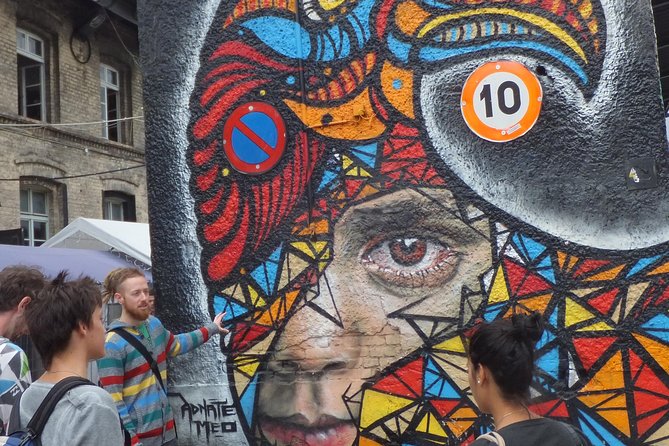
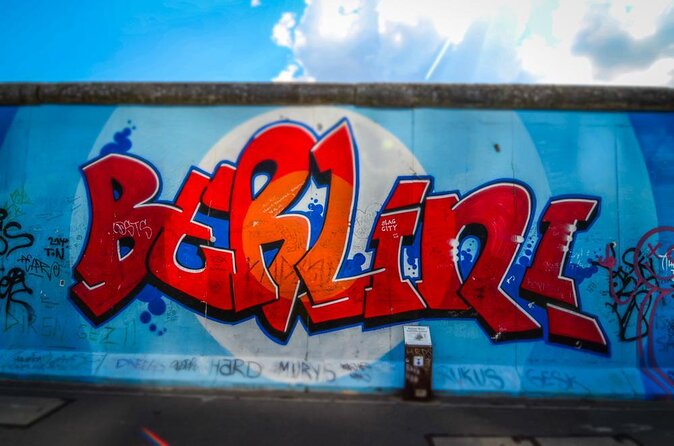
Street art and murals are likely to be a major part of the walk. Berlin’s walls often carry political messages, local humor, and artistic experiments. The route may also include underground galleries and less obvious corners that you would probably miss on a standard central walking tour.
Kreuzberg has also become popular, so it is worth keeping your expectations realistic. You are not entering an untouched counterculture zone. The interesting question is how the neighborhood balances its alternative roots with its fame and rising appeal.
Currywurst and the city’s everyday food culture
Food is part of the story, but it is not included in the price. The tour explains how currywurst, a fried pork sausage served with curry-seasoned ketchup, became a popular Berlin snack.
That detail may sound small, but it gives the tour a practical connection to ordinary city life. Currywurst is quick, informal, and tied to Berlin’s postwar identity. If you want to eat during the walk, budget separately and ask your guide where a stop makes sense.
You should not expect a full food tour or a set tasting menu. Food provides context and possible suggestions, while meals and drinks remain your responsibility. This arrangement keeps the private tour flexible, though some people may prefer a package with tastings included.
The guide can also point you toward organic markets and neighborhood food culture. That gives you more useful ideas for later meals than a single restaurant reservation would.
Yaam and Berlin’s multicultural riverfront
Yaam, short for Young and African Arts Market, offers a different mood from both Mitte and Prenzlauer Berg. The area is associated with African and Caribbean culture, music, art, and a beach-like setting beside the river.
Calling it a Caribbean vibe does not mean you are being transported to the Caribbean. Rather, Yaam shows how Berlin’s multicultural life has created its own local style. It is a good contrast to the more familiar image of Berlin as a city of European monuments and serious museums.
This stop may be especially appealing if you like music, street culture, public art, and spaces that feel informal. It also helps widen the tour’s focus beyond the better-known German and Turkish influences found elsewhere on the route.
As with other stops, the experience can depend on the day and the exact route. The tour is not presented as a fixed attraction schedule, so ask your guide how much time is planned for Yaam if it is a priority for you.
Prater Garten and a well-timed beer break
Prater Garten Berlin is the city’s oldest beer garden. It has operated beneath chestnut trees since 1837 and is open from April through September.
This is one of the tour’s most tangible stops. After several districts and plenty of urban history, a traditional beer garden gives you a simple place to pause and observe Berlin at street level. You can order your own food or drink, but neither is included.
The seasonal schedule is important. If you visit outside April through September, you should not assume the beer garden will be part of the experience in the same way. Ask about the current route when booking if Prater Garten is a major reason for choosing this tour.
A stop here also adds balance. The tour is not all political discussion and spray-painted walls. It includes a long-running local institution, which helps connect Berlin’s countercultural present with older forms of social life.
What the guides add to the day
The guide can make or break a tour built around neighborhoods rather than monuments. The strongest guide qualities described for this experience are enthusiasm, historical knowledge, a relaxed manner, and a willingness to make the walk interactive.
Reese is praised for his enthusiasm for Berlin and his understanding of German history. Jack is described as fun and well informed, while Kalum is noted for explaining both historical events and modern life. Jason is described as laid back and especially good at taking people to places they would not find alone.
Those details point to the kind of guiding you should expect: less formal lecture, more conversation and interpretation. Jason’s use of public transport between districts is particularly useful for first-time visitors because it gives you practice with the city’s system while showing how far apart these neighborhoods really are.
Guide assignments can change, so you should not book solely for one name unless the provider confirms availability. Still, the range of guide feedback suggests that the human side of the experience is one of its strongest assets.
Is $539.22 good value for a private group?
The listed price is $539.22 for a group of up to 12 people. That can look expensive for a walking tour, but the calculation changes if you fill the group. Split among 12 people, it is about $45 per person. For four people, it is about $135 each, and for two people, it becomes a much less attractive deal.
The fee covers a private guide, not food, drinks, or the AB public transport ticket. You are paying for time, route planning, conversation, and the ability to adjust the experience to your group.
I see the best value for families, friend groups, or several couples traveling together. A large group can share the cost while still getting a more personal experience than a standard public tour. Solo visitors and couples should compare the price with a small-group alternative before booking.
The tour is often reserved well ahead of time, around 35 days in advance on average. That suggests you should not wait until the last moment if your dates are fixed, particularly during the warmer months when Prater Garten is open.
Who should book this experience?
I would choose this tour if you want to understand present-day Berlin through neighborhoods, migration, art, food, and counterculture. It is a strong match for repeat visitors, curious first-timers, and anyone who finds standard monument tours too predictable.
It is also a good early-trip choice if you want practical orientation. You will see several districts, use public transport, and receive suggestions for places to explore later. One guide specifically recommends taking it early in your stay, and that makes sense.
I would hesitate if you want a full list of Berlin’s major landmarks, a seated meal, or a tightly timed itinerary. You will need to pay for food and transport separately, walk for much of the experience, and accept that the route may shift with your interests.
Most people can take part, and service animals are allowed. The tour operates near public transport, but it is still wise to mention mobility concerns and route preferences before the day begins.
My verdict on the Real Berlin Walking Tour
Book it if you want Berlin explained from the pavement up, through Turkish Kreuzberg, residential Prenzlauer Berg, central Mitte, Yaam, street art, urban projects, currywurst, and an old beer garden. The private setup and strong guide reports make it more personal than a basic city walk.
Before booking, check the exact duration, confirm which guide is assigned if that matters to you, and budget for an AB ticket plus food and drinks. If you have a group large enough to share the fee, this is a thoughtful way to see Berlin’s less formal side without giving up historical context.
FAQ
How long does the walking tour last?
The practical tour details describe an approximately 4.5-hour experience. The booking information also displays a duration of 1 day 21 hours, so confirm the exact schedule before booking.
Where does the tour start?
The listed starting point is Vapiano am Alex, Rathausstraße 6, 10178 Berlin, near the Fernsehturm TV Tower and Alexanderplatz.
Where does the tour end?
The listed end point is in Berlin-Friedrichshain-Kreuzberg, shown as 10 Berlin-Friedrichshain-Kreuzberg, Germany.
What time does the tour begin?
The start time is 10 a.m.
Is public transport included?
No. You may need an AB public transport ticket for parts of the route. The guide can assist you with purchasing one.
Are food and drinks included?
No. Food and drinks are not included. The tour explains Berlin food culture, including currywurst, and may include places where you can buy something yourself.
Is this a private tour?
Yes. Only your group participates, with a maximum group size of 12 people.
What is the cancellation policy?
You can receive a full refund if you cancel at least three full days before the experience starts. Cancellations or changes made less than three full days in advance are not refunded or accepted.
Just added around Berlin
- Berlin Highlights in One Day★ 5.0 · 3 reviews
- Private Berlin One Day Tour with a Local: See the City Unscripted★ 3.5 · 3 reviews
- Individual city tour Berlin for max. 8 persons★ 5.0 · 3 reviews
- Transfer from Berlin Schönefeld Airport (SXF) to Berlin city Hotels – ROUND TRIP★ 4.0 · 3 reviews
- Berlin: Museum Island Tour★ 5.0 · 3 reviews
- Private Analogue Photography Experience in Berlin★ 5.0 · 3 reviews
- Berlin: Local Food Tour in Secrets Hidden Gems★ 4.0 · 3 reviews
- Berlin & The Third Reich Private Guided Tour★ 5.0 · 3 reviews
Food & Drink, compared.
Berlin Center Food Tour with 8+ Authentic Local Tastings
Read our review →




Berlin’s first original craft beer tour & experience
Read our review →Browse the lists this tour appears in