Review · PRIVATE
Architectural Berlin: Private Tour with a Local Expert
Berlin’s architecture makes its political and cultural story visible in stone, glass, steel, and concrete. This private two-hour walk begins on Museum Island and ends near the Berlin Philharmonie, linking grand old landmarks with newer buildings that changed the city after reunification.
I like the one-to-one format, which lets you ask about whatever catches your eye, and I like the route’s broad sweep from neoclassical museums and a domed cathedral to the Reichstag and modern design. The guide can adjust the pace and emphasis, and Georg earned especially warm praise for being personable and engaging. Rüdiger has also arranged a pickup and a varied route to suit his group.
The main caution is the high price, $639.96 for up to two people, and the uneven guide experience reported for this tour. At that cost, you should confirm that your guide has a strong background in architecture and check which sites can actually be viewed on your date.
In This Review
- Key points at a glance
- From Museum Island to Berlin’s modern skyline
- Berlin Cathedral and the power of the dome
- The TV Tower and Berlin’s divided horizon
- Modern office design and Berlin’s greener ambitions
- The Reichstag’s glass dome and political transparency
- Berlin’s architectural contrasts in one short walk
- Finishing at the Berlin Philharmonie
- What the private format really adds
- Price, value, and who should pay it
- Timing, access, and small practical details
- Should you book this Berlin architecture tour?
- FAQ
- How long is the Architectural Berlin private tour?
- How many people can join the private tour?
- Where does the tour begin?
- Where does the tour end?
- Which major buildings are included?
- Is the Berliner Fernsehturm part of the tour?
- Are museum and monument entry tickets included?
- Can the itinerary be changed?
- What is the cancellation policy?
Key points at a glance
- Museum Island opening: Begin at Bodestraße 1 among Berlin’s grandest museum buildings and neoclassical façades.
- A city told through styles: Compare 19th-century design, Renaissance and Baroque forms, postwar construction, and contemporary eco-focused architecture.
- The Reichstag’s glass dome: Learn how Norman Foster’s modern addition changed the meaning of a historic parliament building.
- A skyline lesson: The Berliner Fernsehturm, or TV Tower, helps explain Berlin’s divided past and changing horizon.
- Private pacing: Only your group participates, and the route can adapt to your interests, walking speed, and weather.
- A costly but focused option: The fee makes the most sense for two people who want personal attention rather than a standard group walk.
From Museum Island to Berlin’s modern skyline
The route starts at Bodestraße 1, 10178 Berlin, at the heart of Museum Island. That is a smart starting point for an architecture tour because the setting gives you several layers of Berlin at once: monumental public buildings, carefully planned open space, religious architecture, and the visible presence of the TV Tower farther across the city.
You begin with a gallery built in the neoclassical style and devoted to 19th-century art. Its importance is not only inside the museum. The building itself shows how Berlin once used classical forms to present culture as a public civic project.
You can ask your guide to focus on columns, symmetry, materials, or the way the building relates to the rest of Museum Island. That flexibility matters. A visitor who enjoys design details may want to discuss façades and proportions, while someone more interested in politics and city planning may prefer the story of how Berlin used major buildings to express national ambitions.
The itinerary does not promise museum entry, and admission is not included. Think of this stop primarily as an architectural and urban-planning introduction unless you separately arrange tickets.
A few more Berlin tours worth weighing up
- Berlin: Private Reichstag and Glass Dome Tour
★ 4.8 · 2,226 reviews - Berlin Private Complete History All Day Walking Tour
★ 5.0 · 474 reviews - Private Walking Tour Berlin Third Reich Hitler and World War II
★ 5.0 · 360 reviews
Berlin Cathedral and the power of the dome
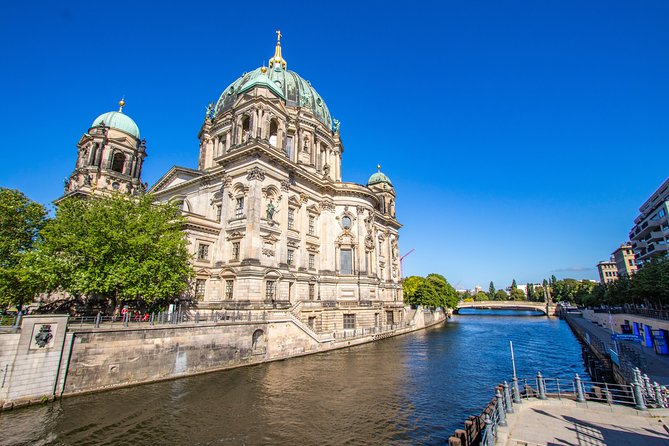
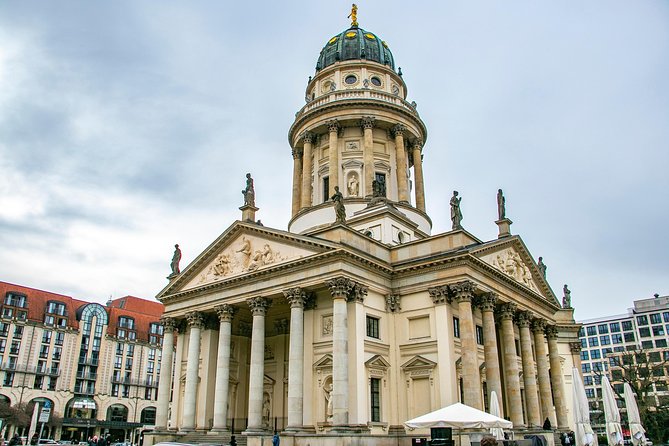
The next major point is the grand church near Lustgarten. Its Renaissance and Baroque elements, along with its huge dome, make it one of the clearest examples of Berlin using scale to project importance.
From the outside, this is a useful contrast with the nearby museum architecture. The church is more theatrical, with a large central form that dominates the surrounding space. Your guide can help you read the building as more than a postcard view by pointing out how the dome, façade, and open park work together.
This is also a good place to discuss Berlin’s habit of rebuilding, reshaping, and reinterpreting its past. The tour description does not promise entry, so you should not assume you will see the interior or climb to any viewpoint. If the church is closed or the weather is poor, the guide may adjust the order or substitute another stop.
The first part of the walk is especially suitable for anyone who wants a clear introduction to Berlin’s monumental center. You get a sense of how museum, church, park, and skyline interact before moving toward buildings with more recent political and technical aims.
The TV Tower and Berlin’s divided horizon
The Berliner Fernsehturm is included as a key part of the skyline discussion. Even if the walk does not take you inside the tower, its presence gives the guide a useful way to explain how Berlin’s horizon changed during the Cold War and after reunification.
The tower is hard to miss, and that is precisely why it works well in an architecture-focused walk. It is not just a tall structure. It is a visual marker of East Berlin, a symbol of state ambition, and an easy reference point when you are trying to understand the city’s broad shape.
Your guide may connect the tower with the older buildings around Museum Island and the newer structures farther west. The value here depends heavily on the guide’s ability to link individual buildings into a clear story. A good guide will help you see why the skyline feels visually divided in some places and newly unified in others.
Because this is a private tour, you can ask for more attention to the TV Tower, postwar urban planning, or the way Berlin’s skyline has changed. If that is your main interest, say so before the walk begins. The advertised itinerary is tailored, but the quality of that tailoring depends on clear communication with the guide.
Modern office design and Berlin’s greener ambitions
One stop is a modern office building known for innovative and eco-friendly design. The exact building name is not provided, so you should confirm it with your guide before setting out.
This stop gives the tour a useful change of pace. Berlin architecture is not only about restored landmarks and famous domes. Contemporary office buildings reveal how the city now thinks about energy use, materials, work space, and urban growth.
I would ask practical questions here. How does the building reduce its environmental impact? Which design choices are visible from the street? Was the building designed as part of a larger redevelopment plan? Those questions can turn a quick look at a modern façade into a better lesson in how cities build for the present.
There is also a limitation. Modern office architecture can be difficult to appreciate without access to the inside or a detailed explanation from the guide. Since the tour does not include entry tickets, this part may be mainly an exterior stop. That is fine if your guide offers useful context, but less satisfying if the explanation stays general.
A different side of Berlin on the same trip:
- Berlin: Reichstag, Dome and Government District Guided Tour
★ 4.7 · 18,288 reviews - Berlin: 1-Hour City Tour by Boat with Guaranteed Seating
★ 4.3 · 16,993 reviews - Berlin: Boat Tour Along the River Spree
★ 4.4 · 11,252 reviews - Discover Berlin Half-Day Walking Tour
★ 5.0 · 9,624 reviews
The Reichstag’s glass dome and political transparency
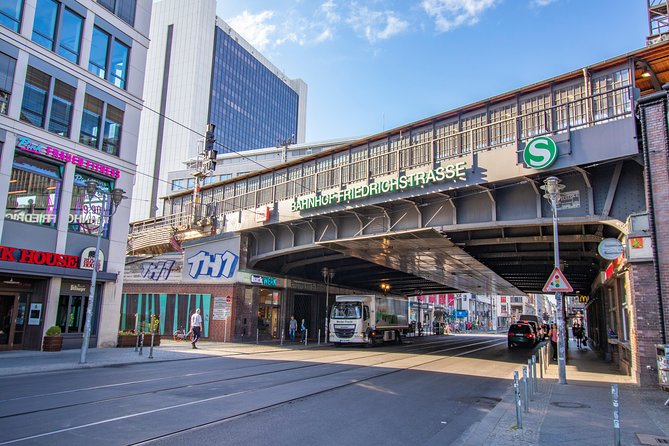
The historic seat of the German parliament is one of the route’s strongest stops. The Reichstag combines an older monumental shell with a glass dome designed by Norman Foster, creating a direct visual link between Germany’s political past and its modern democratic identity.
The dome is not merely decorative. Its openness and transparency were intended to signal a different relationship between government and citizens. That makes the building especially worthwhile on an architecture tour because the design carries a political idea.
From the outside, you can examine the contrast between the historic structure and the later glass addition. Ask your guide how the modern dome changes the building’s appearance and meaning. You can also ask if entry is possible during your visit, but admission is not part of the tour and access may depend on current conditions.
This is one of the places where a private guide can add real value. You have time to pause, ask about Norman Foster’s design, and compare the Reichstag with the earlier buildings seen near Museum Island. In a large group, that sort of conversation often gets cut short. Here, the discussion can follow your interests.
Keep your expectations practical. The tour does not promise a reserved visit inside the dome. If seeing the interior is important to you, treat that as a separate planning task rather than an included feature.
Berlin’s architectural contrasts in one short walk
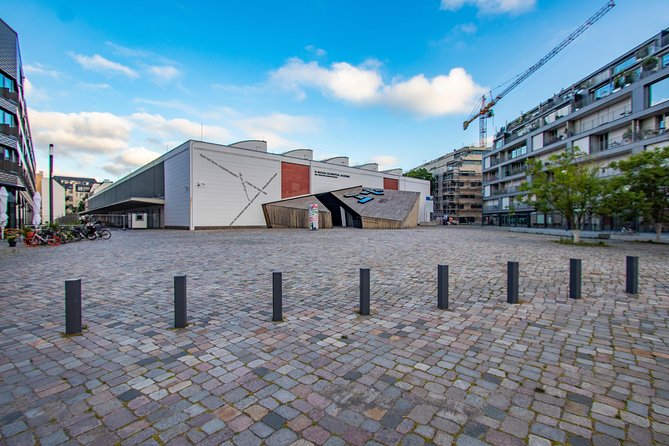
Another stop features a building that blends modern design with the historic setting around it. The building is not identified by name, but its purpose on the route is clear: it shows how Berlin places new construction beside older structures instead of presenting the city as one uniform style.
This is one of the more useful ideas in the entire experience. Berlin can shift quickly from imperial monumentality to postwar plainness to sharp contemporary forms. A private guide can help you notice the points where those styles meet, including disagreements over scale, materials, and the proper way to build near historic sites.
You may find this stop more interesting if you enjoy city planning than if you want a list of famous buildings. It is less about one celebrated landmark and more about the choices made when a modern structure enters an old neighborhood.
Since the itinerary can change with weather and your interests, the exact building or sequence may vary. Ask your guide at the beginning which modern structures you will see. That simple question will help you understand what the tour can realistically cover in two hours.
Finishing at the Berlin Philharmonie
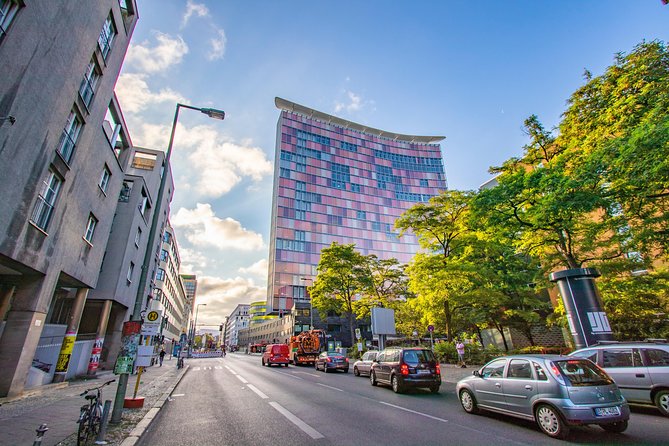
The walk ends at Herbert-von-Karajan-Straße 1, 10785 Berlin, near the Berlin Philharmonie. The building is a major work of modern architecture, with a distinctive tent-like profile and a concert hall designed around strong acoustics.
The Philharmonie makes a fitting final stop because it shows Berlin’s postwar confidence in a completely different way from the Reichstag. Instead of adapting an older shell, the Philharmonie presents an original form built around music and performance.
Its unusual shape is easy to remember, but the acoustic purpose is the more interesting part. The building is associated with the Berlin Philharmonic orchestra and represents the city’s long musical tradition through modern design rather than historic ornament.
The tour ends outside the main starting area, so you should plan for the change in location. The endpoint places you in a different part of central Berlin, and the description does not include a return transfer. Public transportation is nearby, but any transport tickets are your responsibility.
If you want to visit a concert or enter the hall, arrange that separately. The walk offers an architectural introduction, not a performance or guaranteed interior access.
What the private format really adds
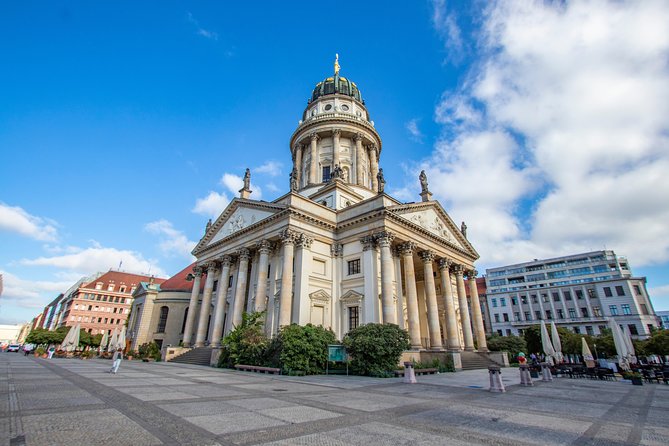
The tour is for only your group, up to two people. That is a major advantage if you want to ask many questions, move slowly, or keep the discussion focused on a particular interest.
The guide can adapt the route to your walking pace. That is useful because the experience connects several parts of central Berlin rather than keeping you in one compact courtyard. The total time is about two hours, so you should expect a brisk overview rather than a complete study of every building.
Rüdiger has been praised for arranging a direct pickup and creating a varied route that included alternative areas. That suggests the private format can feel personal when the guide takes the time to shape the walk around the group.
Georg is another guide associated with especially strong feedback. He was described as personable, engaging, and easy to like, qualities that matter on a short private tour. Architecture can become dry when it is delivered as a list of dates and styles. A guide who can explain ideas clearly and keep the conversation lively makes a real difference.
Still, guide quality is the biggest uncertainty. One reported experience involved a pleasant guide who lacked architecture background and had not checked whether sites were open. That is a serious concern at this price. Ask in advance who will lead your tour and what architectural subjects they specialize in.
Price, value, and who should pay it
The cost is $639.96 per group of up to two, or about $320 per person if two people share it. That places this well above a normal public walking tour.
The fee can make sense if you value privacy, personal scheduling, and a guide who can shape the discussion around your interests. It may also suit a couple who wants an efficient introduction to Berlin’s architecture without spending half a day in a large group.
The value drops if you mainly want a basic list of famous sights. The walk lasts about two hours, entry tickets are excluded, and the exact modern buildings may change. You are paying for access to a private guide and a tailored route, not for a long museum visit or a guaranteed interior tour.
I would book it for a pair with a serious interest in architecture, design, urban planning, or Berlin’s political changes. I would skip it if your budget is tight or if you prefer to explore independently with a guidebook and public transport.
Timing, access, and small practical details
You receive booking confirmation at the time of reservation. Free cancellation is available until 24 hours before the start time. Inside that final 24-hour period, cancellations are not refunded and changes are not accepted.
The walk is near public transportation, and most people can participate. Service animals are allowed. The information specifically notes guests with impaired mobility, but it does not describe the route’s exact surface, distance, or step-free access, so contact the operator before booking if you need detailed mobility information.
The itinerary may change because of weather. That is sensible for a walking tour, but it means you should not treat every listed stop as an absolute guarantee. Museums, monuments, transport, and personal expenses are not included.
Wear comfortable shoes and allow a little flexibility. More important, arrive ready to tell the guide what matters to you. Mention if you want more on the TV Tower, modern eco-design, religious buildings, postwar architecture, or the Reichstag. The private format is most useful when you help direct it.
Should you book this Berlin architecture tour?
Book it if you want a private architectural conversation rather than a standard sightseeing circuit. The route brings together Museum Island, Berlin Cathedral, the TV Tower, modern office design, the Reichstag, and the Philharmonie in a compact two-hour story about how Berlin has changed.
The strongest reasons to book are the private format, flexible pace, and the chance to compare several very different building styles with one guide. Georg and Rüdiger are names worth requesting if available, based on the particularly positive experiences associated with them.
I would not book without asking about the assigned guide’s architecture background. At nearly $640 for two people, the explanation must be strong, the route should be clear, and your expectations about entry should be realistic. If those points are confirmed, this can be a sharp, efficient introduction to Berlin’s built character. If not, the price is hard to justify.
FAQ
How long is the Architectural Berlin private tour?
The tour lasts approximately two hours.
How many people can join the private tour?
The price covers a private group of up to two people. Only your group participates.
Where does the tour begin?
The starting point is Bodestraße 1, 10178 Berlin, Germany.
Where does the tour end?
The tour ends at Herbert-von-Karajan-Straße 1, 10785 Berlin, Germany.
Which major buildings are included?
The route includes a neoclassical gallery on Museum Island, a large historic church near Lustgarten, a modern eco-focused office building, the German parliament building with its glass dome, another modern building beside historic surroundings, and the Berlin Philharmonie.
Is the Berliner Fernsehturm part of the tour?
The Berliner Fernsehturm, or TV Tower, is discussed as an important part of Berlin’s skyline and architectural development.
Are museum and monument entry tickets included?
No. Entry tickets for museums and monuments are excluded. Transportation tickets are also not included.
Can the itinerary be changed?
The itinerary adapts to your interests and walking pace. Stops may also vary because of weather conditions.
What is the cancellation policy?
You can cancel for a full refund up to 24 hours before the experience start time. Cancellations or changes made less than 24 hours before the start are not accepted or refunded.
Just added around Berlin
- Berlin Highlights in One Day★ 5.0 · 3 reviews
- Private Berlin One Day Tour with a Local: See the City Unscripted★ 3.5 · 3 reviews
- Individual city tour Berlin for max. 8 persons★ 5.0 · 3 reviews
- Transfer from Berlin Schönefeld Airport (SXF) to Berlin city Hotels – ROUND TRIP★ 4.0 · 3 reviews
- Private Analogue Photography Experience in Berlin★ 5.0 · 3 reviews
- Berlin: Museum Island Tour★ 5.0 · 3 reviews
- Berlin: Local Food Tour in Secrets Hidden Gems★ 4.0 · 3 reviews
- Berlin & The Third Reich Private Guided Tour★ 5.0 · 3 reviews
Private, compared.

Berlin Private Complete History All Day Walking Tour
Read our review →
Private Walking Tour Berlin Third Reich Hitler and World War II
Read our review →
Private Berlin: Iconic Sights and Hidden Gems Walking Tour
Read our review →
Berlin Private Half-Day Walking Tour: Discover the German Capital’s History
Read our review →
Private Walking Tour: World War 2 and Cold War Sites in Berlin
Read our review →
The History of Berlin: WWII PRIVATE Walking Tour With Locals
Read our review →