
Review · LGBTQ-FRIENDLY
Berlin: BKA Theater “Operetta for two gay tenors”
Berlin’s BKA Theater presents a rare treat: the world’s first queer operetta, a funny and tender show about two men trying to make a shared life work between a country village and Berlin. The music swings from catchy new operetta songs to full-hearted schmaltz waltzes, with titles such as Champagner von Aldi and Mein Fetisch ist die Operette.
I like the show’s unusual subject and old-fashioned musical style, which let it poke fun at stereotypes without losing its human side. I also like the cozy theater setting and the chance to enjoy food and drinks during an evening out. The main caution is timing: one booking record listed an 8 p.m. start when the performance actually began at 7 p.m., so check the BKA Theater’s current start time carefully.
In This Review
- Key points
- Why this queer operetta is different
- Tobi, Jan, and the country dream
- From a shooting festival to a shared home
- Songs with Aldi champagne and Jens Riewa
- The BKA Theater setting
- A 2.5-hour evening, not a quick cabaret stop
- What makes the humor work
- Berlin tradition with a modern point of view
- Value for an evening in Berlin
- Who should book this show
- Should you book Operetta for Two Gay Tenors?
- FAQ
- How long is Operetta for Two Gay Tenors?
- Where does the show take place?
- What is the show about?
- Is this a queer production?
- Who created the show?
- Has the production won an award?
- Can I cancel my booking?
Key points
- A modern queer operetta: The show links present-day gay life with Berlin’s operetta tradition of the 1920s.
- Tobi and Jan at the center: A graphic designer and a nurse face very different ideas about country living.
- Music by Florian Ludewig: Expect jaunty tunes, lavish waltzes, and playful musical numbers.
- Lyrics by Johannes Kram: The writing mixes camp, affection, sex, pride, and self-doubt.
- A 2.5-hour theater evening: You get a complete stage performance rather than a short cabaret set.
- An award-winning production: The show won the 2022 German Musical Theater Prize for Best Lyrics.
Why this queer operetta is different
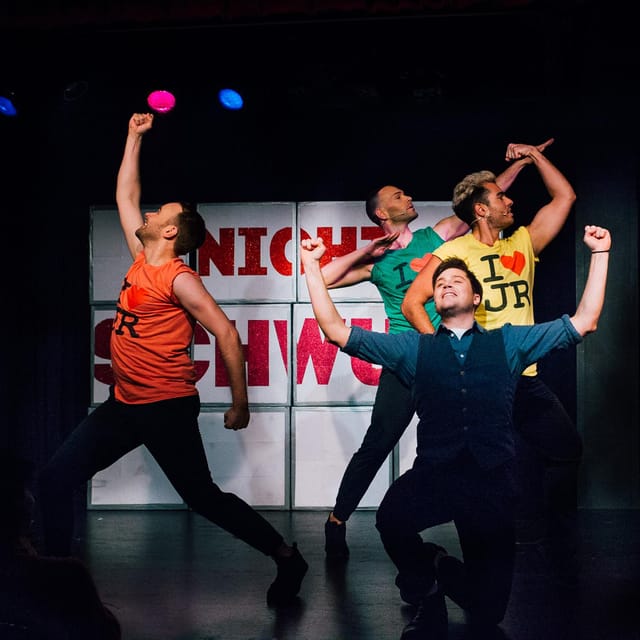
Most Berlin theater visitors expect a concert, cabaret, drama, or a conventional musical. Operetta for Two Gay Tenors offers something less common: a full operetta built around queer characters and modern gay life.
That matters because operetta has always had room for exaggeration, role-playing, romance, and social satire. The production connects itself to Berlin’s 1920s operetta tradition, when stage works could stretch accepted roles and celebrate difference with plenty of flair. Here, that spirit returns in a contemporary story about love, sex, pride, insecurity, and the pressure to live the life other people expect.
You do not need special knowledge of operetta to enjoy the show. The humor is direct, the songs carry the story, and the central conflict is easy to follow. If you like musical theater with a comic edge, you can settle in quickly. If you prefer quiet realism, the broad style may take some getting used to.
A few more Berlin tours worth weighing up
- Berlin: Gay Berlin Out in Schöneberg Walking Tour
★ 4.8 · 281 reviews - Berlin’s Gay, Lesbian, and Queer Scene Small-Group Walking Tour
★ 4.5 · 66 reviews - Street Art & Berlin Gay, Queer, Trans History + Free Gay Map
★ 4.9 · 15 reviews
Tobi, Jan, and the country dream

The story begins with Tobi and Jan living together in the countryside. They have a small house, a garden with fruit trees, homemade jam for breakfast, and friendly neighbors. On paper, it sounds like a perfect escape from city pressure.
Tobi, a graphic designer, left Berlin and its gay scene to build this peaceful life. He sees the village as an idyllic new start. That choice gives the story its first strong question: can a person turn a dream of rural calm into a satisfying daily life?
Jan sees things differently. He is a nurse who has never left his home area, and he can barely tolerate the place Tobi has chosen. This is more than a simple city-versus-country joke. Tobi has made a deliberate break with Berlin, while Jan knows the village from the inside. One romanticizes the setting, and the other feels trapped by it.
I like this setup because it gives the comedy a real emotional base. The countryside is not simply backward, and Berlin is not simply exciting. Each place represents a different idea of freedom, belonging, and self-invention. You watch two partners discover that sharing a home does not mean sharing the same dream.
From a shooting festival to a shared home
The pair met at the annual shooting festival, an especially playful detail for a story about gay life outside the city. That meeting places queer romance in a setting many stage comedies would treat as purely traditional or provincial.
The shooting festival also helps explain how Tobi and Jan came together. Their relationship is not presented as a polished urban romance. It grows from an unexpected encounter and then moves into the familiar work of building a home, handling differences, and deciding what kind of future feels honest.
The house and garden give the show a comic picture of domestic perfection. Fruit trees and homemade jam sound charming, but they also raise practical questions. Who wanted this life? Who is pretending to be happy? What happens when one partner is living inside an idealized picture and the other is not?
These questions keep the production from becoming a string of disconnected jokes. Under the camp and musical sparkle, you get a relationship story with recognizable tensions.
Songs with Aldi champagne and Jens Riewa
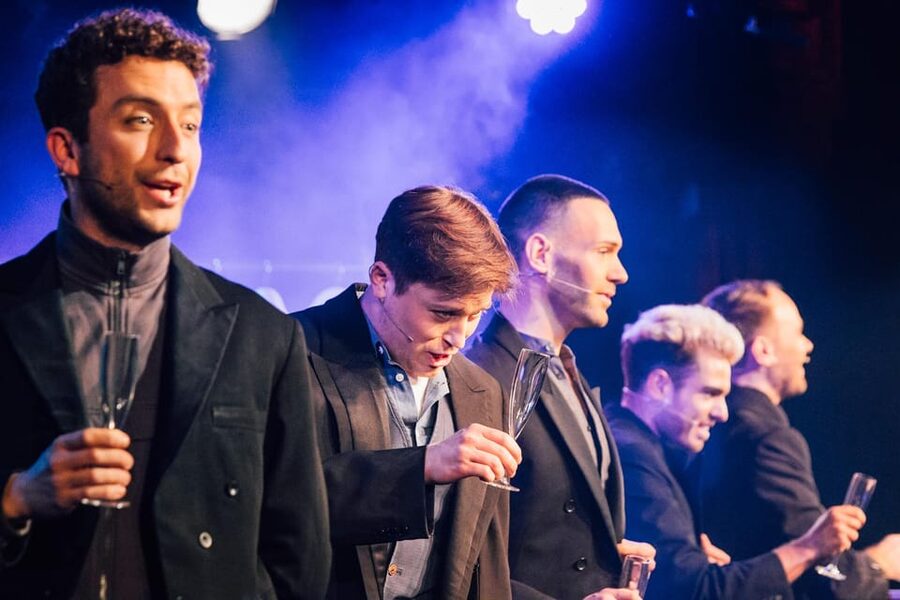
The music is central, not a small decoration between spoken scenes. Florian Ludewig’s score uses familiar operetta tools: lively melodies, grand waltz rhythms, emotional flourishes, and a taste for theatrical excess.
The song titles show the tone clearly. Champagner von Aldi turns an everyday bargain into a comic symbol of glamour on a budget. Mein Fetisch ist die Operette announces the production’s affection for its own genre. Ich steh total auf Jens Riewa adds a specifically German pop-culture flavor.
You can expect a show that enjoys the sound of its own songs. The style is intentionally generous and a little over the top. That is the point. Operetta lets feelings become larger than life, then gives the characters room to laugh at themselves.
Johannes Kram’s lyrics won the 2022 German Musical Theater Prize for Best Lyrics. That award gives you a useful clue about the production’s strength: the words are not filler between melodies. They carry jokes, character details, and social observations while keeping the story moving.
If you understand German, the lyrics are likely to be a major part of the pleasure. The supplied information does not state whether subtitles or translations are available, so you should confirm language support before booking if you are not comfortable following a German-language show.
A different side of Berlin on the same trip:
- Berlin: Reichstag, Dome and Government District Guided Tour
★ 4.7 · 18,288 reviews - Berlin: 1-Hour City Tour by Boat with Guaranteed Seating
★ 4.3 · 16,993 reviews - Berlin: Boat Tour Along the River Spree
★ 4.4 · 11,252 reviews - Discover Berlin Half-Day Walking Tour
★ 5.0 · 9,624 reviews
The BKA Theater setting
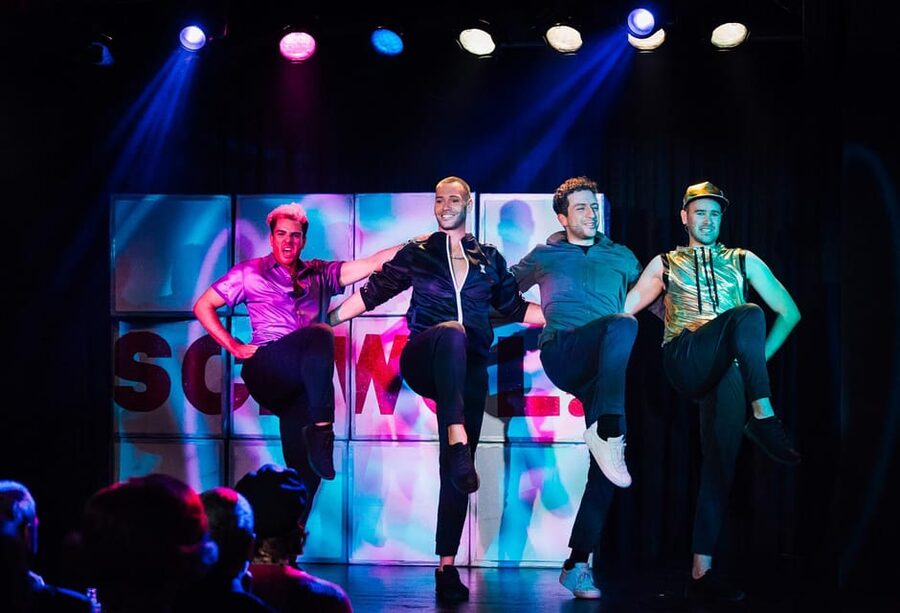
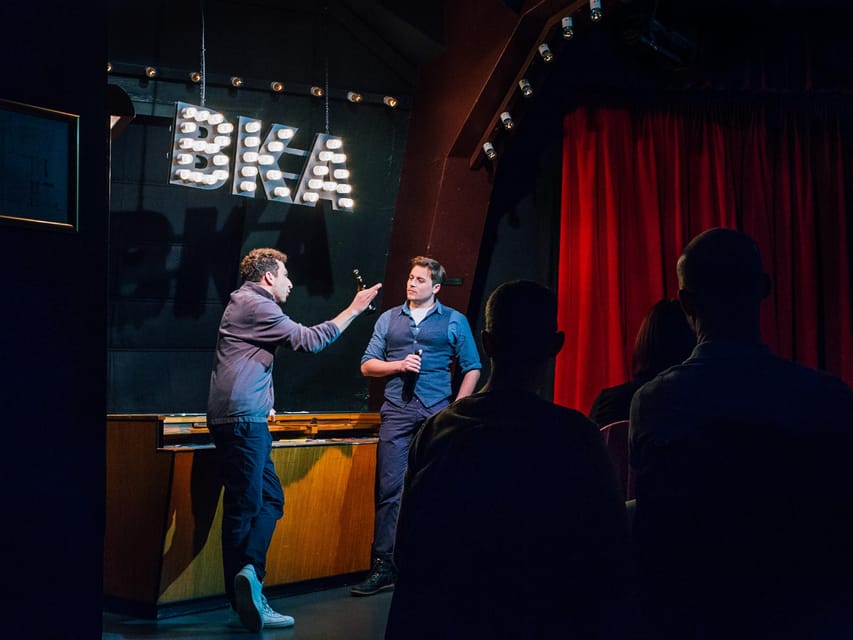
The performance takes place at the BKA Theater in Berlin, a venue known for a cozy atmosphere rather than a huge auditorium feel. That setting suits the material. Operetta can be grand in sound and attitude, but this story depends on intimacy, comic timing, and a close connection between the stage and the audience.
The theater experience is designed as a complete evening. Gastronomy is available, so you can pair the performance with food and drinks rather than treating it as a quick cultural stop. The exact food, drink selection, and service arrangements are not specified, so check current theater details if dining is important to your plans.
I like the combination of a small-scale setting and a deliberately oversized musical style. The contrast gives the jokes extra snap. A huge production might make the show feel like a standard commercial musical. In a cozy room, the personal story remains close at hand.
The theater is wheelchair accessible, according to the activity information. If you need a particular seating arrangement or have detailed access requirements, confirm the current setup directly with the venue before attending.
A 2.5-hour evening, not a quick cabaret stop
Plan for about two and a half hours at the theater. That length gives the production enough room to develop the relationship between Tobi and Jan, build its musical jokes, and let the emotional parts land.
This duration also affects your evening plans. Do not book a tight dinner reservation or another performance immediately afterward. You will want time to arrive, settle in, and enjoy the theater atmosphere without watching the clock.
Start times can vary, and this is the one practical issue I would take most seriously. A booking error once showed an 8 p.m. start even though the show began at 7 p.m., causing one person to miss nearly half the performance. Treat the listed time as something to verify, not something to assume. Check your confirmation and the BKA Theater’s current schedule shortly before the date.
Arriving early is sensible for any theater evening, but here it can protect you from a costly mistake. Once the show has started, missing the opening means losing the setup that explains Tobi’s country dream and Jan’s frustration.
What makes the humor work
The comedy comes from collisions: city and village, fantasy and reality, traditional operetta and modern queer identity, domestic comfort and sexual frankness.
The show can laugh at gay stereotypes, village customs, relationship habits, and operetta itself. That mix works best when you enjoy humor that is theatrical rather than understated. The songs allow the production to say things a straight dramatic scene might handle with a serious speech.
At the same time, the story is described as touching as well as uproarious. That balance is important. Tobi and Jan are not only comic figures built to deliver punchlines. Their self-doubt and conflicting hopes give the production a softer center.
I would choose this show if you want a cultural evening that feels distinctly connected to Berlin’s queer identity but does not present itself as a solemn history lesson. It uses laughter, melody, and exaggeration to talk about belonging.
Berlin tradition with a modern point of view
The production frames itself as part of the rebirth of Berlin operetta. That historical link adds meaning beyond the plot.
Berlin in the 1920s had a reputation for theatrical experimentation and for challenging fixed ideas about identity and behavior. This operetta looks back to that tradition, then updates it for a present-day story about two gay men. The result is not a museum piece. It asks what a once-provocative form can do now.
That connection may appeal to anyone interested in Berlin’s theater culture. You get a show that is openly queer, but also conscious of the older stage traditions it is reviving. The score’s waltzes and melodramatic gestures are part of the argument. Operetta can be playful, sentimental, outrageous, and socially sharp at the same time.
You do not have to know the 1920s background to follow the evening. Still, knowing the context helps you understand why the production leans so fully into old-school theatricality.
Value for an evening in Berlin
No ticket price is provided here, so I cannot judge the exact cost against other Berlin shows. I can tell you what you are paying for: a 2.5-hour award-winning production in a dedicated theater, with original music, a full comic story, and the option to add food and drinks.
That is better value than a short performance if you want your evening centered on live theater. The show also has a clear identity, which makes it more distinctive than a generic musical comedy. You are not simply watching familiar songs in a new setting.
Value depends on your language comfort and your taste for operetta. If you enjoy German-language stage work, camp humor, and musical storytelling, the length and originality make the experience worthwhile. If you mainly want a visual Berlin attraction or a performance with little dialogue, this is a weaker choice.
Flexible booking terms help with planning. You can cancel up to 24 hours before the performance for a full refund, and a reserve-now, pay-later option is available. Those policies are useful when your Berlin schedule is still changing, but they do not replace checking the exact performance time.
Who should book this show
I would recommend Operetta for Two Gay Tenors to:
- Anyone looking for a queer cultural experience in Berlin
- Fans of operetta, musical theater, cabaret, or broad stage comedy
- Couples who enjoy relationship stories with plenty of musical exaggeration
- Visitors interested in Berlin’s connection to 1920s theatrical traditions
- German speakers who want a locally rooted evening performance
- Anyone seeking a cozy theater night with food and drinks available
I would pause before booking if you dislike singing, romantic comedy, camp humor, or stories that mix tenderness with sexual jokes. The show’s title and song names make its tone clear. It is not aiming for subtle chamber drama.
I would also avoid scheduling it on a night when you cannot confirm the start time. The single serious problem in the available feedback was not about the show itself. It was about arriving for the wrong hour and missing much of the performance.
Should you book Operetta for Two Gay Tenors?
Book it if you want a distinctly Berlin theater experience with queer characters, lively original songs, and a warm comic story. Its best qualities are its unusual form, strong lyrics, and willingness to treat gay life as both funny and emotionally real.
The show is especially appealing if you like the idea of old operetta conventions being turned toward modern relationships. You get lavish waltzes, playful song titles, domestic conflict, and a story that moves between country idyll and city identity.
Before paying, confirm the performance language, exact start time, and current theater arrangements. If those details work for you, this is a smart pick for a relaxed Berlin evening with more personality than a standard stage attraction.
FAQ
How long is Operetta for Two Gay Tenors?
The performance lasts about 2.5 hours.
Where does the show take place?
It takes place at the BKA Theater in Berlin, Germany.
What is the show about?
It follows Tobi, a graphic designer, and Jan, a nurse, who live together in the countryside. Tobi wants an idyllic rural life, while Jan is unhappy there and has never left the area.
Is this a queer production?
Yes. It is presented as the world’s first queer operetta and explores gay life, love, sex, pride, and self-doubt.
Who created the show?
Florian Ludewig wrote the music, and Johannes Kram wrote the lyrics.
Has the production won an award?
Yes. In 2022, it won the German Musical Theater Prize for Best Lyrics and was also nominated in the Best Book category.
Can I cancel my booking?
You can cancel up to 24 hours in advance for a full refund. A reserve-now, pay-later option is also available.
Just added around Berlin
- Berlin Highlights in One Day★ 5.0 · 3 reviews
- Private Berlin One Day Tour with a Local: See the City Unscripted★ 3.5 · 3 reviews
- Individual city tour Berlin for max. 8 persons★ 5.0 · 3 reviews
- Transfer from Berlin Schönefeld Airport (SXF) to Berlin city Hotels – ROUND TRIP★ 4.0 · 3 reviews
- Berlin: Museum Island Tour★ 5.0 · 3 reviews
- Private Analogue Photography Experience in Berlin★ 5.0 · 3 reviews
- Berlin: Local Food Tour in Secrets Hidden Gems★ 4.0 · 3 reviews
- Berlin & The Third Reich Private Guided Tour★ 5.0 · 3 reviews
LGBTQ-Friendly, compared.

Berlin’s Gay, Lesbian, and Queer Scene Small-Group Walking Tour
Read our review →
Street Art & Berlin Gay, Queer, Trans History + Free Gay Map
Read our review →
Queer Berlin Tour: Birthplace of LGBTQ+ Movements
Read our review →Browse the lists this tour appears in