
Review · WALKING TOURS
Berlin’s Gay, Lesbian, and Queer Scene Small-Group Walking Tour
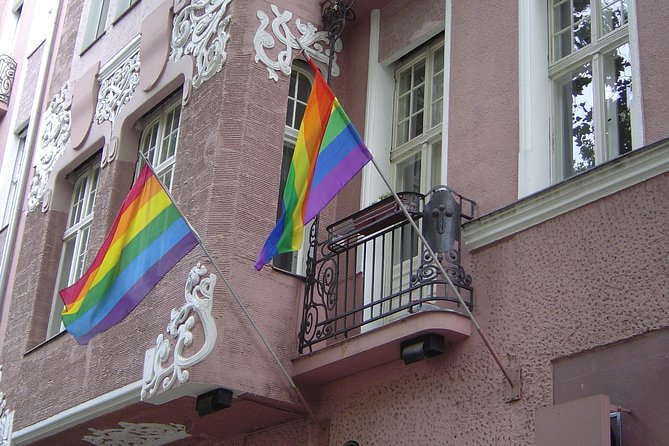
Berlin’s queer story is not confined to one bar district. This 3.5-hour walk links Schöneberg, Kreuzberg, and Tiergarten, showing how gay life, politics, art, repression, and nightlife have shaped the city for more than a century. You’ll hear about figures such as Marlene Dietrich, Christopher Isherwood, and former mayor Klaus Wowereit while seeing places tied to Berlin’s queer past and present.
I like the way the tour connects famous names to actual streets, memorials, bars, and neighborhoods. I also like the small group limit of 15 people, which gives you a better chance to hear the guide and ask questions. The main drawback is that the walk can run longer than the advertised three and a half hours, and the museum portion may not suit everyone.
In This Review
- Key points to know before you book
- Berlin’s queer story begins in the center
- Kreuzberg, alternative Berlin, and Südblock
- From 1990s gay culture to Berlin club mythology
- Schöneberg and the world of Christopher Isherwood
- Marlene Dietrich, Klaus Wowereit, and public identity
- The Gay Museum and the question of time
- Is $24.14 a fair price?
- Who will enjoy this walk most?
- Should you book Berlin’s queer history walk?
- FAQ
- Where does the tour start?
- Where does the tour end?
- What time does the tour begin?
- How long does the tour last?
- Is the tour offered in English?
- Is public transport included?
- Is the Gay Museum part of the experience?
- Can I cancel for a full refund?
Key points to know before you book
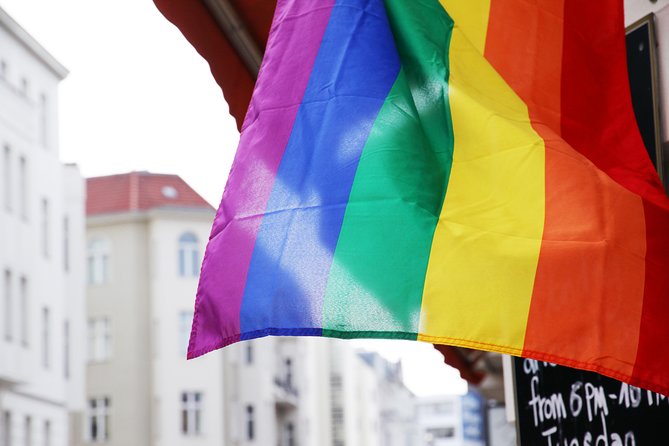
- A citywide queer history lesson: The route links central Berlin, Kreuzberg, Tiergarten, and Schöneberg rather than staying in one neighborhood.
- Guides make the difference: Finn, Mal, Lorna, Tom, and Trevor have all led strong tours, with guides using photos and an iPad to add faces and places to the story.
- Südblock is more than a café: This queer-run bar and restaurant offers a look at how community spaces work in present-day Berlin.
- Club culture gets serious attention: You’ll hear how a major Berlin club grew from the gay scene of the 1990s into a world-famous institution.
- Budget for local transport: The €24.14 tour price does not include the Berlin AB day ticket, which costs about €7.
- Plan ahead: The tour is often booked 39 days ahead, so this is not a last-minute choice in busy seasons.
Berlin’s queer story begins in the center
Meet your English-speaking guide at Neue Promenade 3 at noon. The starting point is in central Berlin, near public transport, and the first section sets the tone: queer culture is not a recent addition to the city. It has been part of Berlin’s social and cultural life for centuries.
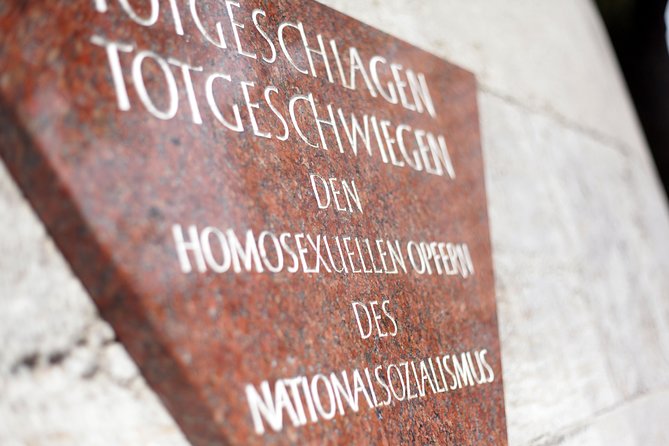
That broad opening matters. You are not getting a simple tour of gay bars or a nightlife checklist. Instead, you’ll see how attitudes toward sexuality have changed over time, and how Berlin could offer freedom in one period and harsh persecution in another.
The guides bring different personalities to the walk. Finn is especially strong at explaining people and places, and has used an iPad to show historical images along the route. Mal has been praised for an enthusiastic approach, while Lorna and Tom have also led engaging tours. The exact guide depends on the date, but the experience clearly benefits from someone who can tell a story rather than simply point at buildings.
One practical warning: the meeting area can host several Berlin walking tours at the same time. Make sure you hear the guide identify the queer tour before leaving the starting point. The tour provider has said guides normally call out the group and explain the subject at the beginning, but it is still smart to confirm that you are following the right person.
More walking tours in Berlin:
- Discover Berlin Half-Day Walking Tour
★ 5.0 · 9,624 reviews - Berlin: Third Reich and Cold War 2 Hour Walking Tour
★ 4.9 · 6,830 reviews - Berlin: Discover Berlin Walking Tour
★ 4.9 · 5,998 reviews
Kreuzberg, alternative Berlin, and Südblock
The route moves into Kreuzberg, one of Berlin’s best-known alternative districts. Here, the tour shifts from historical figures and older neighborhoods to the way queer life functions today.
Kreuzberg can be understood through its community spaces. The point is not only to admire street life, but to consider who has a place in the city, how subcultures find room to grow, and how political and social movements remain visible in everyday settings.
A key stop is Südblock, a queer-run bar and restaurant. It is presented as an important LGBTQ+ community institution, not merely somewhere to grab a drink. You’ll learn how a venue like this can serve as a meeting place, a social anchor, and a public expression of queer identity.
Food and drinks are not included, so you should not treat the stop as a scheduled meal. Still, the location adds something useful to the tour. A museum can explain the past through objects and documents. A working queer venue shows you how community life looks in the present.
If you like tours that connect history to ordinary city life, this is one of the strongest parts. If you prefer a walk focused only on monuments and formal memorials, the stop may feel less structured. The value comes from the explanation your guide provides.
From 1990s gay culture to Berlin club mythology
Another stop covers one of the world’s most famous clubs. The tour explains its roots in Berlin’s gay scene of the 1990s and follows the club’s transformation into an all-hours nightlife institution.
The club is not just a party reference. Its story helps explain how Berlin’s queer spaces influenced the city’s wider nightlife culture. Ideas that began in gay and alternative settings helped shape the image of Berlin as a place where unusual identities, music scenes, and late-night communities could find room.
You should expect context rather than entry to the club. The tour does not include admission, drinks, or a nightlife experience. That makes this section useful during the day, when you can understand the social story without building your plans around getting inside later.
The route may include public transport between sections, which is why you need a Berlin Transport AB ticket. The listed cost is about €7 for a day pass, available from the guide on the day. That extra charge is easy to overlook, so include it when comparing the total cost.
A public transport connection also means this is not a pure point-to-point stroll through one compact neighborhood. You’ll cover more ground and see a wider slice of Berlin, but you should wear comfortable shoes and allow enough time after the tour. One group’s walk lasted about four and a half hours, longer than the advertised estimate.
Schöneberg and the world of Christopher Isherwood
The final neighborhood is Schöneberg, one of Europe’s oldest and best-established LGBTQ+ districts. This is where the tour brings together many of its main ideas: public identity, nightlife, literature, politics, and the changing meaning of tolerance.
Christopher Isherwood is an important part of this section. You’ll learn about his life and connection to Berlin, placing his writing within the city’s queer social world. The subject gives the neighborhood a literary angle, but the guide also connects it to the lives of ordinary people who used these streets and venues.
Schöneberg is valuable because it lets you compare past and present. A district known for queer life today can feel secure and established, yet the tour also addresses the difficult periods that came before. One of the strongest parts of the experience is this refusal to tell only a feel-good story. You’ll hear about acceptance and progress, but also about fear, discrimination, and the need to remain alert.
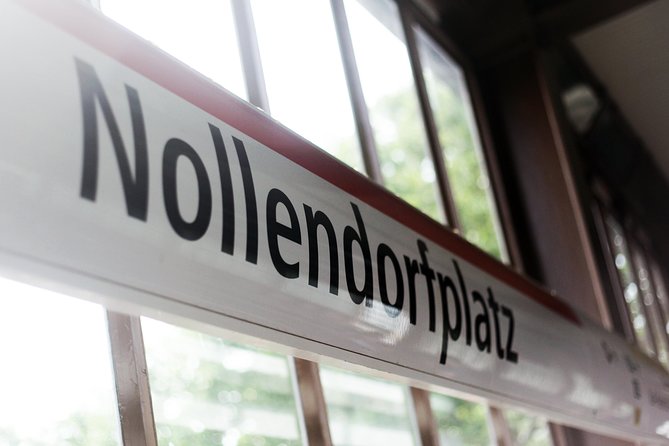
The end point is Nollendorfplatz, 10787 Berlin. That is useful for planning the rest of your day, especially if you want to continue exploring Schöneberg on your own. Hotel pickup and drop-off are not included, so you’ll need to make your own way to the start and from the finish.
A few more Berlin tours worth weighing up
- Berlin: Gay Berlin Out in Schöneberg Walking Tour
★ 4.8 · 281 reviews - Street Art & Berlin Gay, Queer, Trans History + Free Gay Map
★ 4.9 · 15 reviews - Queer Berlin Tour: Birthplace of LGBTQ+ Movements
★ 5.0 · 6 reviews - Berlin: BKA Theater “Operetta for two gay tenors”
★ 4.0 · 4 reviews
Marlene Dietrich, Klaus Wowereit, and public identity
The tour gives attention to major personalities, including Marlene Dietrich and Klaus Wowereit. Their stories help show that Berlin’s queer history is not only about anonymous nightlife or political movements. It is also about performers, elected officials, writers, and public figures who shaped how the city understood identity.
Marlene Dietrich offers a link between celebrity, gender expression, performance, and Berlin’s cultural past. Klaus Wowereit represents a more recent political chapter and the visibility of queer leadership in city government.
I appreciate this mix because it keeps the tour from becoming too narrow. You may already know one or two famous names, but the guide’s job is to place them in the streets and social conditions of their time. Historical photos and images shown on an iPad can make that connection clearer, especially when modern buildings have replaced the original sites.
The tour also works well for anyone who wants more than a nightlife introduction. You do not need to be familiar with Berlin’s queer history before joining. If you have already read a detailed book on the subject, some sections may feel familiar, and you may want to judge the tour mainly on the guide’s storytelling and the value of seeing locations in person.
The Gay Museum and the question of time
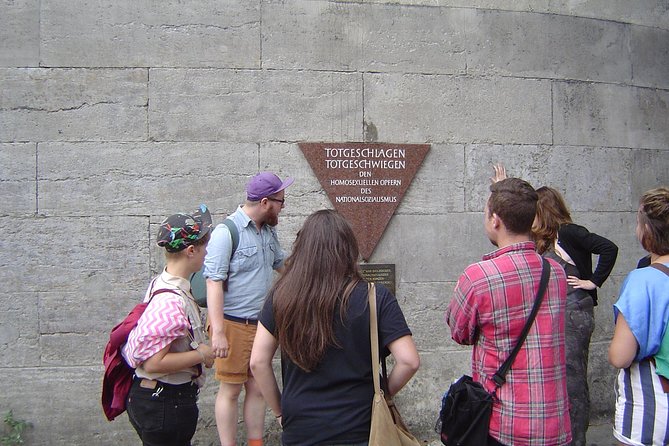
The Gay Museum is included in the tour’s stated highlights as a way to gain a fuller understanding of LGBTQ+ history and culture. Its presence adds a museum-based layer to a route that otherwise depends on streets, neighborhoods, and spoken explanation.
The timing is the one area to clarify before booking. The tour lasts about three and a half hours, yet the museum may not receive equal attention from every group. One guide-led experience treated the museum as less central, with only one participant keen to visit. If the museum is your main reason for booking, ask at the start how much time the group will spend there and whether the visit is part of the day’s actual plan.
That does not make the museum unimportant. It simply means the walk’s main strength is the route and the guide’s interpretation. You are paying for a guided city experience, not a long museum visit followed by a short stroll.
Is $24.14 a fair price?
At $24.14 per person, this is a good-value half-day tour if you want a guided introduction to Berlin’s queer history. You receive a professional guide, a small group capped at 15, several neighborhoods, historical context, and a route that would take effort to piece together on your own.
The price is particularly fair for first-time visitors. A guide can link the city’s people, venues, and political changes in a way that guidebooks often separate into different chapters. You also avoid spending your first day trying to work out which sites still matter and which are simply famous names on a map.
The total cost is higher once you add the Berlin AB day pass, about €7. Food and drinks are extra as well. Even so, the overall expense remains modest for roughly four hours of guiding, especially if the tour runs long.
The best value comes when you participate actively. Ask questions, pay attention to the route, and use the guide’s images to compare old Berlin with the city in front of you. If you already know the subject extremely well, the price may feel less compelling.
Who will enjoy this walk most?
I’d recommend it to LGBTQ+ visitors who want historical context alongside present-day places. It is also a good choice for allies, students, history fans, and anyone curious about how Berlin’s social identity has changed.
You should book it if you want:
- A broad introduction to queer Berlin from the 19th century to today
- A route through several districts rather than one nightlife area
- Stories about Marlene Dietrich, Christopher Isherwood, and Klaus Wowereit
- A guide who can use photos and original locations to clarify the past
- A small group instead of a large city walk
- A thoughtful discussion of both progress and persecution
You may want another activity if you need a short, tightly timed walk, a dedicated museum tour, or a food-and-drink experience. The route can last longer than expected, and its subject matter includes painful chapters as well as celebration.
Dress for the weather. The tour operates in all conditions, and comfortable shoes are sensible. Most people can take part, service animals are allowed, and public transport is nearby. The activity is offered in English.
Should you book Berlin’s queer history walk?
Yes, if you want to understand how queer life has shaped Berlin rather than simply find its nightlife. The strongest element is the guide-led storytelling, especially when historical images, public figures, and actual streets are brought together.
Book early if your dates are fixed, since the tour is commonly reserved well ahead. Confirm the meeting point and the guide’s announcement before leaving central Berlin, carry money or a way to buy the AB ticket, and ask how the Gay Museum fits into your particular departure.
For $24.14, this is a practical and worthwhile introduction for most visitors. I would choose it for its range, its serious treatment of the past, and its connection to living community spaces. I would skip it only if you have already studied the subject closely or need a short activity with no public transport and no chance of running over time.
FAQ
Where does the tour start?
The tour starts at Neue Promenade 3, 10178 Berlin, Germany.
Where does the tour end?
The tour ends at Nollendorfplatz, 10787 Berlin, Germany.
What time does the tour begin?
The scheduled start time is 12:00 pm.
How long does the tour last?
The advertised duration is approximately three hours and 30 minutes. It can run longer, with one experience lasting about four and a half hours.
Is the tour offered in English?
Yes. The experience is offered in English.
Is public transport included?
No. A Berlin Transport AB Zone ticket is not included. The day pass costs approximately €7 and is available from the guide on the day.
Is the Gay Museum part of the experience?
The Gay Museum* is listed among the tour highlights as a way to learn more about LGBTQ+ history and culture. The amount of time spent there may vary, so ask the guide at the beginning if the museum is important to your plans.
Can I cancel for a full refund?
Yes. You can cancel at least 24 hours before the local start time for a full refund. Cancellations or changes made less than 24 hours before the start time are not refunded or accepted.
Just added around Berlin
- Berlin Highlights in One Day★ 5.0 · 3 reviews
- Private Berlin One Day Tour with a Local: See the City Unscripted★ 3.5 · 3 reviews
- Individual city tour Berlin for max. 8 persons★ 5.0 · 3 reviews
- Transfer from Berlin Schönefeld Airport (SXF) to Berlin city Hotels – ROUND TRIP★ 4.0 · 3 reviews
- Berlin: Museum Island Tour★ 5.0 · 3 reviews
- Private Analogue Photography Experience in Berlin★ 5.0 · 3 reviews
- Berlin: Local Food Tour in Secrets Hidden Gems★ 4.0 · 3 reviews
- Berlin & The Third Reich Private Guided Tour★ 5.0 · 3 reviews
Walking Tours, compared.



Berlin’s Best: 2 Hour Walking Tour Third Reich and the Cold War
Read our review →

Third Reich Berlin: Hitler and WWII Walking Tour
Read our review →

Browse the lists this tour appears in