
Review · LGBTQ-FRIENDLY
Queer Berlin Tour: Birthplace of LGBTQ+ Movements
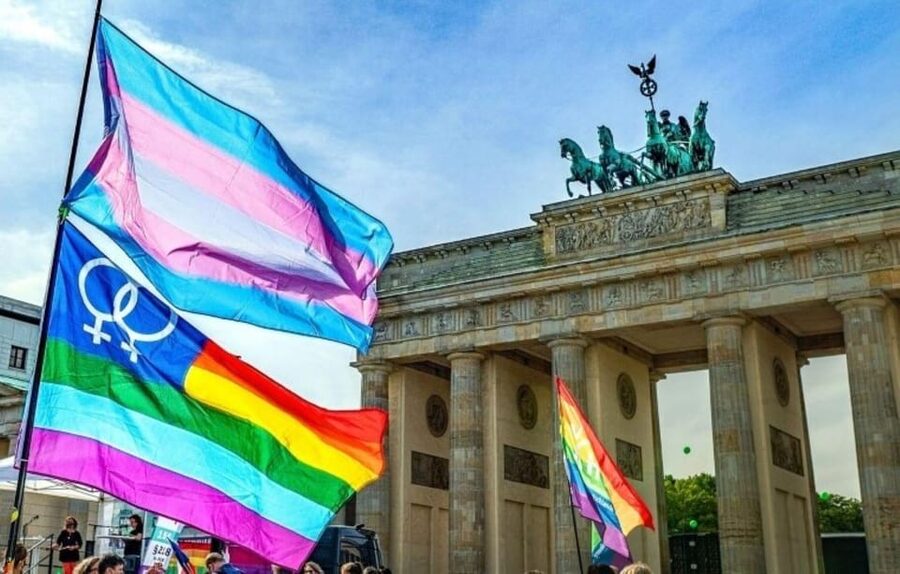
Berlin’s queer past comes alive in Schöneberg, where cabarets, political scandals, artists, scientists, and lovers helped shape modern LGBTQ+ culture. This three-hour walk also connects that neighborhood to the darker years of Nazi rule and Cold War East Berlin, giving you more than a nightlife tour.
I like the focus on Magnus Hirschfeld’s Institute for Sexual Science and the personal storytelling from guides Dan and Justin. I also like the use of photographs and music, which gives the Weimar-era stories a sharper sense of place. The main drawback is distance: this is a long city walk, with metro fare not included and mobility concerns worth raising before booking.
In This Review
- Key points to know before you book
- Why this queer Berlin tour matters
- Nollendorfplatz and the making of queer Schöneberg
- Hirschfeld, science, and the monument in Tiergarten
- The El Dorado, Marlene Dietrich, and the Cabaret years
- Christopher Isherwood’s flat and the everyday city
- Postwar Schöneberg and Chez Romy Haag
- Unter den Linden and famous men who concealed their sexuality
- Alexanderplatz and queer life behind the Iron Curtain
- Walking distance, group size, and practical comfort
- Is $153 a fair price?
- Who should book this walk?
- Should you book the Queer Berlin Tour?
- FAQ
- How long is the Queer Berlin Tour?
- Where does the tour start?
- Which languages are available?
- Is this a private tour?
- Is public transportation included?
- Is this a walking tour?
- Does the tour visit Schöneberg?
- Does the tour cover Magnus Hirschfeld?
- Does the tour discuss Nazi persecution?
- Can I cancel for a full refund?
Key points to know before you book
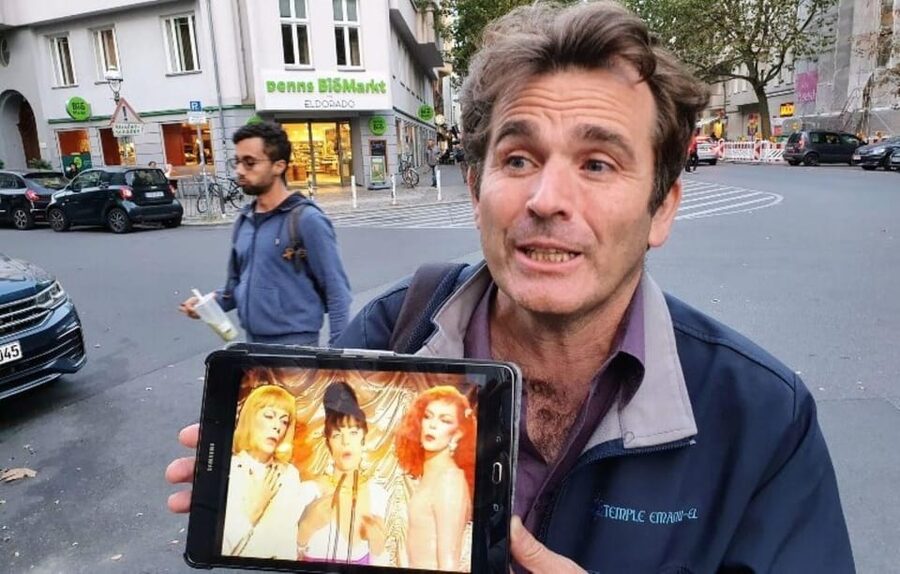
- Schöneberg is the heart of the walk: See the former El Dorado cabaret, Christopher Isherwood’s old flat, legendary nightlife sites, and places linked to the neighborhood’s postwar revival.
- Magnus Hirschfeld gets proper attention: Learn about his pioneering work, the Institute for Sexual Science, and the Nazi destruction of its library.
- The tour covers both freedom and persecution: Stories move from Weimar-era cabaret to Nazi violence and the treatment of gay and lesbian people behind the Iron Curtain.
- Music and images add texture: Dan is known for using a lively soundtrack and visual material with his stories.
- It is available in English or German: Private and small-group formats are offered, with guides including Dan and Justin.
- Plan for a serious walk: The route links several parts of Berlin, and public transport costs are extra.
Why this queer Berlin tour matters
Berlin’s LGBTQ+ story is not confined to one bar, one monument, or one famous person. It reaches from Prussian court life to scientific research, Weimar cabaret, Nazi persecution, postwar nightlife, David Bowie, and the divided city of the Cold War.
That broad reach is the main reason I find this tour useful. You are not simply shown a row of former clubs. You are shown how laws, medicine, art, nightlife, war, and political change affected queer life in Berlin.
The tour begins in the Schöneberg area, widely regarded as the world’s first gay ghetto. The phrase can sound too neat for a complicated place, but it points to a real concentration of queer social life, clubs, bars, and apartments. This was a place where people could find one another, build communities, and live more openly than in many other parts of Europe.
It was never a safe bubble. Berlin’s openness had limits, and those limits changed with political power. That tension is central to the walk.
The tour has earned a strong rating, with particular praise for its storytelling, small-group feel, and focus on the 1920s and 1930s. Dan is described as a gay man with long experience of Berlin, while Justin brings an American perspective and comparisons that can help visitors from the United States place Berlin’s story in a wider context.
A few more Berlin tours worth weighing up
- Berlin: Gay Berlin Out in Schöneberg Walking Tour
★ 4.8 · 281 reviews - Berlin’s Gay, Lesbian, and Queer Scene Small-Group Walking Tour
★ 4.5 · 66 reviews - Street Art & Berlin Gay, Queer, Trans History + Free Gay Map
★ 4.9 · 15 reviews
Nollendorfplatz and the making of queer Schöneberg
Nollendorfplatz is a natural place to begin. It puts you close to the streets where queer Berlin developed a public identity through bars, cabarets, artists, and political organizing.
Your guide uses the neighborhood to explain why Schöneberg became so important. You will hear about lesbian bars as well as gay venues, a useful balance since many city nightlife stories focus too heavily on men.
The value here is not just seeing buildings. Most of the former clubs have changed, disappeared, or continue under different uses. The guide’s job is to point out what is no longer obvious, then connect the street in front of you to the people who once lived and worked there.
This is also where the tour begins to connect private life with public culture. Cabaret was entertainment, but it could also challenge gender roles, mock authority, and create room for people who had few other places to gather.
Hirschfeld, science, and the monument in Tiergarten
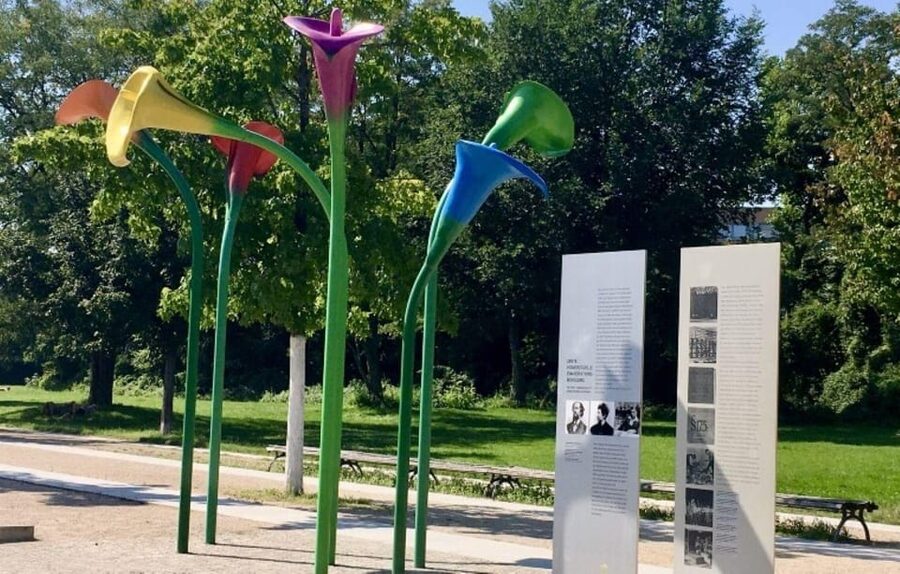
One of the most important stops is the colorful Memorial to the First Homosexual Emancipation Movement. It marks the site of the Institute for Sexual Science, founded by Magnus Hirschfeld.
Hirschfeld was a doctor, sexologist, and campaigner who helped push for gay rights. He also helped develop early research and language around gender and sexuality. The tour explains his work, including his role in co-authoring the 1919 film Anders als die Andern, or Different from the Others, one of the first openly pro-gay films.
This stop gives the walk its intellectual center. Berlin’s queer history was not only made in nightclubs. It was also shaped in clinics, research rooms, political groups, and campaigns against discriminatory laws.
The institute’s destruction is one of the clearest examples of how quickly tolerance could collapse. The Nazis closed it in 1933 and burned its library. You see the site not as a preserved museum, but as a place where absence carries much of the meaning.
The nearby Memorial to the Homosexuals Persecuted Under Nazism adds another layer. Here, the subject turns from cultural freedom to organized persecution, including the suffering of gay men and lesbians under the Nazi regime.
This part of the tour may be emotionally difficult. That is appropriate. A good queer-history tour should not present Berlin’s past as a nonstop party, and this walk does not.
The El Dorado, Marlene Dietrich, and the Cabaret years
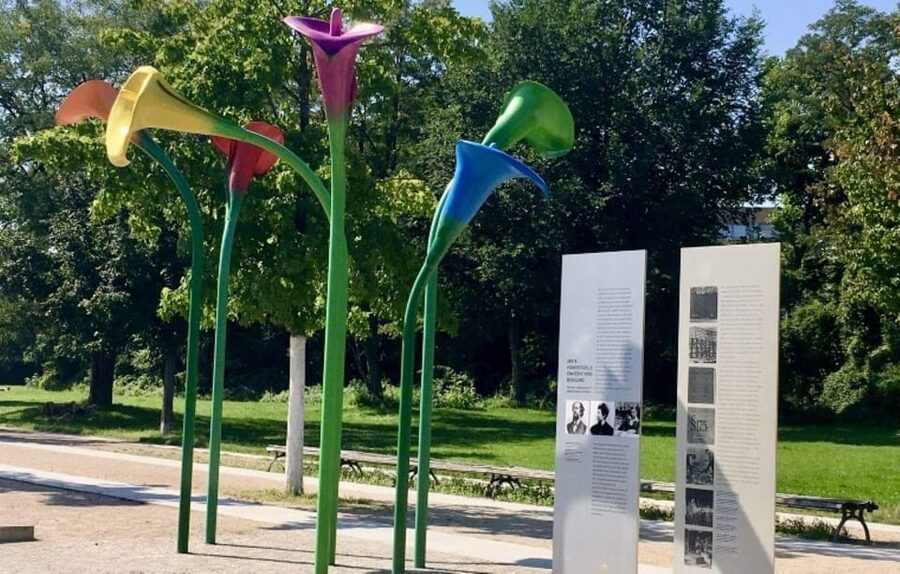
The former El Dorado Cabaret is one of the route’s most colorful addresses. Marlene Dietrich performed there, and the club attracted an unusual mix of artists, celebrities, political figures, and sexual outsiders.
The guide also discusses Ernst Röhm, the openly gay head of the Sturmabteilung, the Nazi Brown Shirts. His presence at El Dorado shows how tangled Berlin’s social and political worlds could be. Röhm was later killed during the 1934 Night of the Long Knives, part of the Nazi regime’s purge.
That story is useful because it avoids a simple division between a free queer Berlin and a uniformly hostile Nazi movement. Individual lives, political power, public image, and private identity did not always line up neatly.
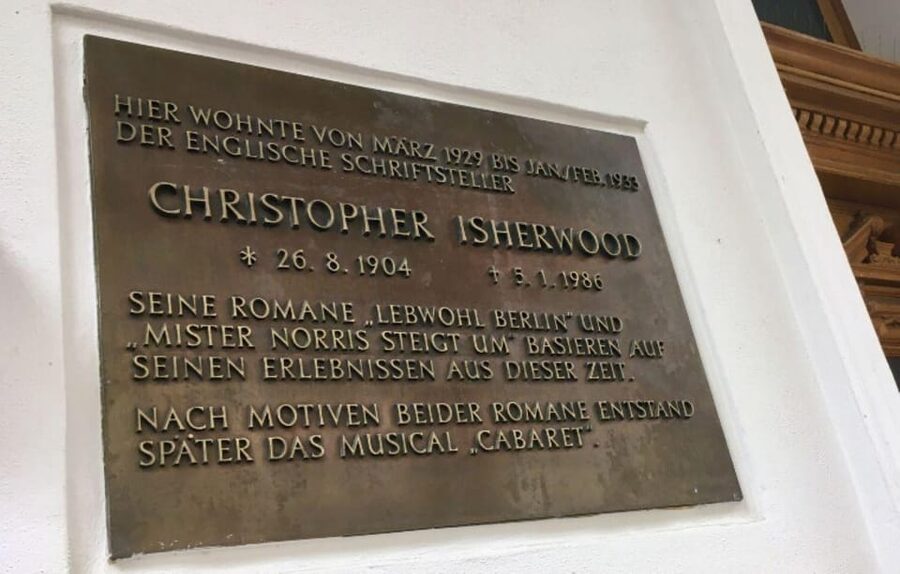
You will also hear about the clubs Christopher Isherwood frequented. Isherwood lived in Berlin during the Weimar era, and his experiences helped inspire the world of Cabaret.
Seeing his former flat makes the literary connection more concrete. It is not a grand attraction with a formal display. You are looking at an ordinary city address and imagining how an ordinary apartment became linked to one of the best-known portrayals of queer and cabaret Berlin.
A different side of Berlin on the same trip:
- Berlin: Reichstag, Dome and Government District Guided Tour
★ 4.7 · 18,288 reviews - Berlin: 1-Hour City Tour by Boat with Guaranteed Seating
★ 4.3 · 16,993 reviews - Berlin: Boat Tour Along the River Spree
★ 4.4 · 11,252 reviews - Discover Berlin Half-Day Walking Tour
★ 5.0 · 9,624 reviews
Christopher Isherwood’s flat and the everyday city
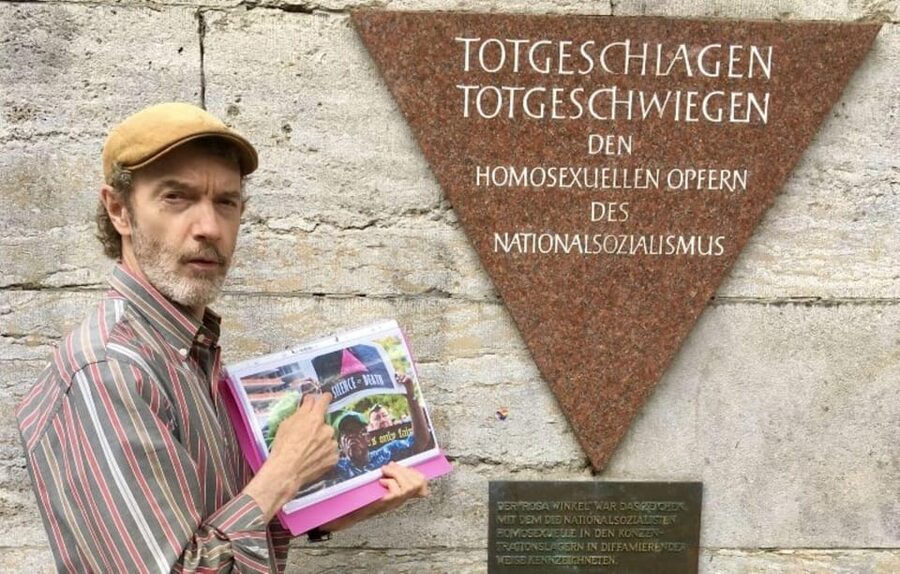
The Isherwood stop works best if you enjoy literary and cultural history. The point is not that the apartment itself is an attraction. The point is that it helps you picture the daily life behind the later stage and film versions of Cabaret.
The tour places Isherwood among the clubs, streets, and people that shaped his writing. You will also pass a rent-boy dive that remains gay-run, according to the tour information. That detail helps connect the earlier world of queer commercial life with the present day.
Do not expect every stop to look as it did in the 1920s. Berlin was heavily damaged by war, rebuilt in stages, and changed again after reunification. Much of the past survives through addresses, street plans, fragments, and storytelling.
That is why the guide matters so much here. Dan’s approach includes pictures and music, while Justin’s storytelling has been praised for its clear links between Berlin and familiar American historical references. In a small group, you should have a better chance to ask questions than on a large city sightseeing walk.
Postwar Schöneberg and Chez Romy Haag
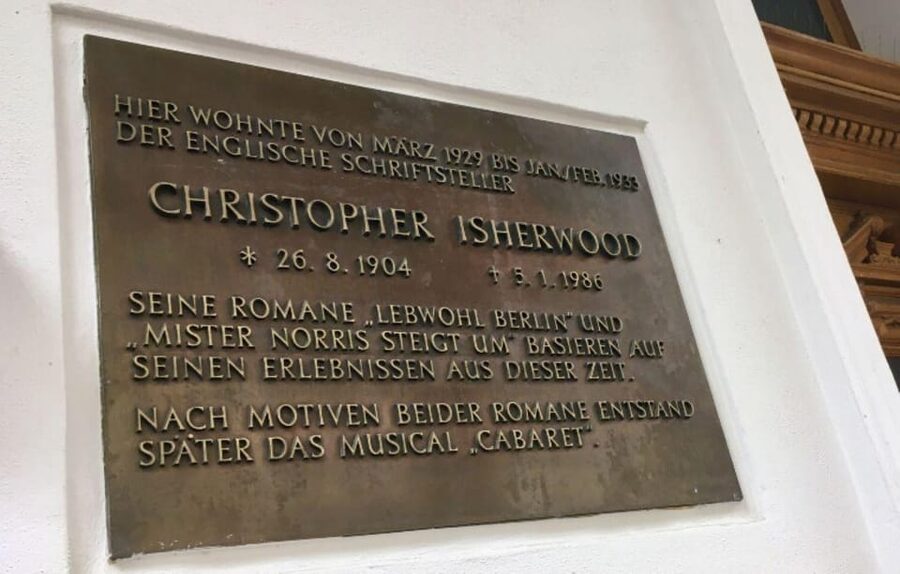
The story does not end in 1933, and it does not jump straight from Nazi persecution to modern Berlin. The walk follows Schöneberg into its postwar revival as the city’s gay center.
A key name is Chez Romy Haag, an iconic nightclub of the 1970s. Romy Haag was a transgender actress, singer, and dancer who performed there. She also had a relationship with David Bowie, and the tour connects that relationship to Bowie’s song Heroes.
This section gives you a sense of how queer nightlife returned after the war, though in a different political and social setting. The venues, performers, and public mood changed, but the need for gathering places remained.
The Bowie connection will appeal to music fans, yet it is not treated as the whole story. The tour uses famous figures as entry points into a wider account of trans performers, nightlife, and changing ideas about identity.
Unter den Linden and famous men who concealed their sexuality

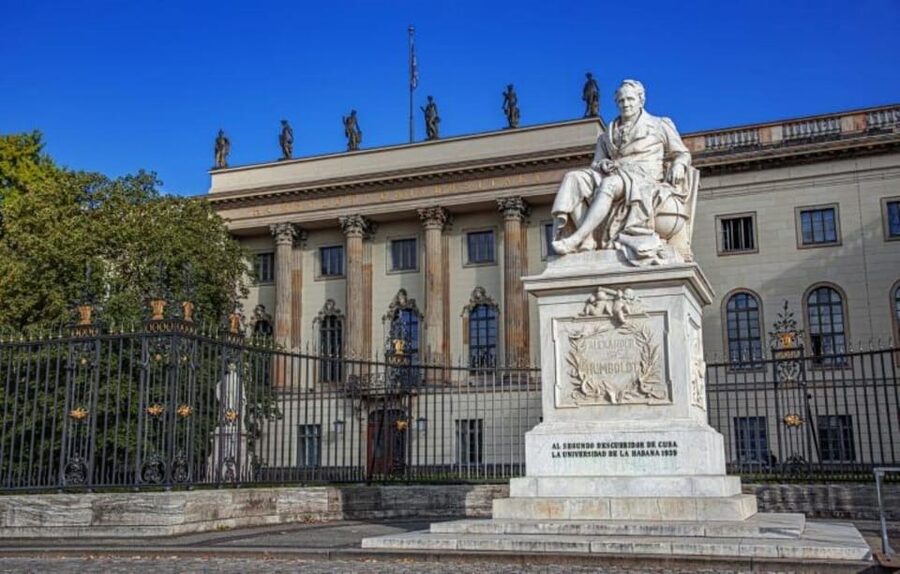
The route later reaches Unter den Linden, one of Berlin’s grand historic boulevards. Here the focus broadens beyond Schöneberg to earlier Berlin figures, including Frederick the Great and Alexander von Humboldt.
The guide explains how these men disguised or managed their sexuality in societies where public disclosure could threaten status, safety, or career. This section helps show that queer Berlin did not begin with 20th-century clubs.
It also raises a useful question: how do we interpret historical figures whose private lives were shaped by very different words and rules? The tour does not simply place modern labels on the past. It explores the ways people protected themselves and created private freedom inside public roles.
The boulevard is also tied to other major Berlin sites, including the square associated with the infamous book burning. That mix of monumental architecture, political memory, and queer history is one of the route’s strengths.
Alexanderplatz and queer life behind the Iron Curtain
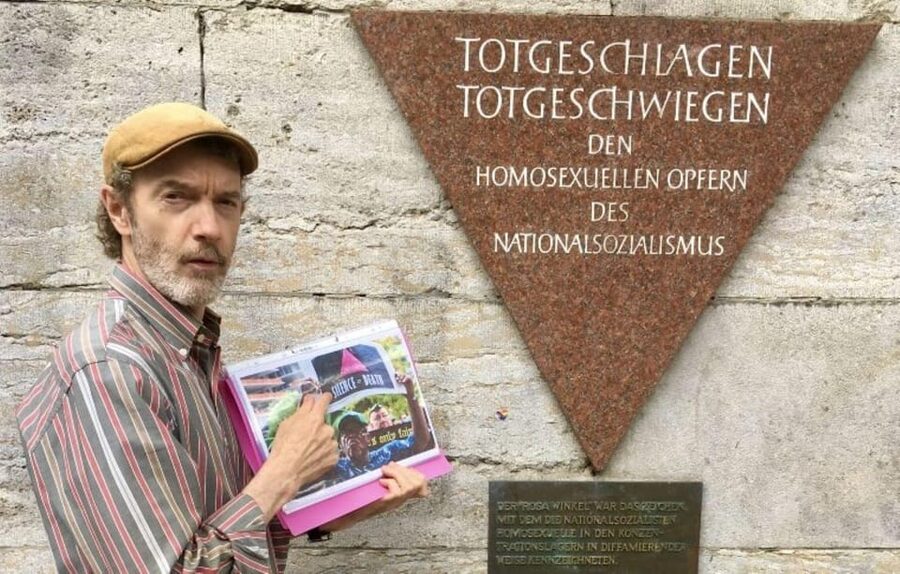
The final major destination is Alexanderplatz, the center of Cold War East Berlin. Here the tour looks at the experience of gay and lesbian people behind the Iron Curtain.
This is an important part of the route because a tour focused only on West Berlin nightlife would leave out half the city’s modern political story. The division of Berlin affected movement, culture, policing, and access to community.
You will hear about the suffering endured by gay and lesbian people in East Berlin and how queer life continued under restrictions. The tour then brings you back to today’s Queer Berlin, linking the divided past to the city you are walking through now.
The ending at Alexanderplatz also changes the mood. Instead of finishing with a famous club or performer, the tour closes with a wider view of political systems and personal survival.
Walking distance, group size, and practical comfort
The experience lasts three hours and is primarily on foot. The route covers Nollendorfplatz, Schöneberg, Tiergarten, Unter den Linden, and Alexanderplatz, so you should wear comfortable shoes and expect a substantial city walk.
The supplied information says to contact the provider about mobility issues or concerns. That is worth doing before you book, since the route links several neighborhoods rather than staying on one compact block.
Metro fare is not included. Depending on the selected starting and ending arrangements, you may need public transport during or after the walk. The listed drop-off points include Berlin and Impala Coffeeshop, and the exact starting location depends on the option you choose.
Guiding is offered in English or German. Private and small-group options are available. A small group should suit you if you want a more personal conversation, while a private format may be best if your interests center on a particular subject, such as Isherwood, Hirschfeld, cabaret, trans history, or Cold War Berlin.
The guides named in the tour material are Dan and Justin. Dan is associated with personal Berlin experience, queer cultural insight, photographs, and music. Justin is described as American-born and able to make useful comparisons with US history. The guide you receive may depend on the date and option selected.
Is $153 a fair price?
At $153 per person, this is not a cheap orientation walk. The value depends on what you want from it.
If you only want a quick look at Schöneberg’s bars and monuments, you can explore the neighborhood on your own for much less. The tour’s price makes more sense if you want the historical connections supplied by a specialist guide: Hirschfeld’s institute, Nazi persecution, Isherwood’s Berlin, the El Dorado, Romy Haag, Bowie, Frederick the Great, Humboldt, and queer life in East Berlin.
You are also paying for a three-hour route across several parts of the city, not just a short neighborhood stroll. Private or small-group guiding can make the cost easier to justify, especially if you value questions and conversation.
Free cancellation up to 24 hours before the tour and the option to reserve now and pay later reduce the risk if your schedule is still changing. They do not change the basic question: book this for interpretation and storytelling, not for a long list of formal museum interiors.
Who should book this walk?
I would recommend it most strongly to visitors who want Berlin’s LGBTQ+ story placed within the city’s wider political history. It suits first-time visitors who want an unusual introduction to Schöneberg, as well as repeat visitors who have already seen the major monuments.
It is especially useful for people interested in:
- Weimar Berlin and cabaret
- Magnus Hirschfeld and early sexology
- Christopher Isherwood and Cabaret
- Nazi persecution of queer people
- Trans performers and postwar nightlife
- David Bowie’s Berlin connections
- Cold War East Berlin and queer life behind the Iron Curtain
You do not need to know the subject in advance. The strongest parts are designed to build a story as you walk.
I would think twice if you dislike long walks, need a fully step-free route, or want a tour centered mainly on current nightlife. This is a history walk with present-day connections, not a bar crawl.
Should you book the Queer Berlin Tour?
Book it if you want to understand why Berlin became such an important center of LGBTQ+ life, and if you value the human stories behind ordinary streets. The mix of Schöneberg addresses, Hirschfeld’s work, Nazi persecution, Isherwood, Romy Haag, Bowie, and Cold War history gives the three hours a strong sense of purpose.
The best reason to choose it is the guide’s storytelling. Dan’s music and images, Justin’s comparisons and historical detail, and the small-group format can turn places that look unremarkable into meaningful stops.
Skip it if you want a short, easy walk or a conventional sightseeing route. For everyone else, especially visitors who want Berlin beyond its usual museums and monuments, the $153 price can be worthwhile when the group is small and the guide matches your interests.
FAQ
How long is the Queer Berlin Tour?
The tour lasts three hours.
Where does the tour start?
The starting location depends on the option selected when you book.
Which languages are available?
The tour is available in English and German.
Is this a private tour?
Private and small-group options are available.
Is public transportation included?
No. Metro fare is not included.
Is this a walking tour?
Yes. It is a three-hour walking tour through several parts of Berlin.
Does the tour visit Schöneberg?
Yes. Schöneberg is a central part of the route, including former nightlife sites and Christopher Isherwood’s former flat.
Does the tour cover Magnus Hirschfeld?
Yes. You learn about Magnus Hirschfeld and visit the site of his former Institute for Sexual Science.
Does the tour discuss Nazi persecution?
Yes. The route includes the Memorial to the Homosexuals Persecuted Under Nazism and discusses the closure and destruction of Hirschfeld’s institute.
Can I cancel for a full refund?
Yes. You can cancel up to 24 hours in advance for a full refund.
Just added around Berlin
- Berlin Highlights in One Day★ 5.0 · 3 reviews
- Private Berlin One Day Tour with a Local: See the City Unscripted★ 3.5 · 3 reviews
- Individual city tour Berlin for max. 8 persons★ 5.0 · 3 reviews
- Transfer from Berlin Schönefeld Airport (SXF) to Berlin city Hotels – ROUND TRIP★ 4.0 · 3 reviews
- Berlin: Museum Island Tour★ 5.0 · 3 reviews
- Private Analogue Photography Experience in Berlin★ 5.0 · 3 reviews
- Berlin: Local Food Tour in Secrets Hidden Gems★ 4.0 · 3 reviews
- Berlin & The Third Reich Private Guided Tour★ 5.0 · 3 reviews
LGBTQ-Friendly, compared.
Berlin’s Gay, Lesbian, and Queer Scene Small-Group Walking Tour
Read our review →
Street Art & Berlin Gay, Queer, Trans History + Free Gay Map
Read our review →
Browse the lists this tour appears in