
Review · STREET ART
Street Art & Berlin Gay, Queer, Trans History + Free Gay Map
Berlin’s street art and queer past meet on this compact walk through Schöneberg, one of the city’s most important LGBTQ+ neighborhoods. With trans woman guide Gali Jaffe, you’ll connect eye-catching murals and graffiti with places tied to Christopher Isherwood, El-Dorado, and Magnus Hirschfeld.
I like the small group of no more than 10, which gives Gali room to shape the talk around your interests. I also like the free Berlin Gay Map, a useful extra if you want to keep exploring after the tour. The main limitation is time: two hours moves quickly, and you’ll need your own public transport ticket for the short rides.
In This Review
- Key points at a glance
- Starting at Wittenbergplatz with Berlin on the edges
- Street art as an introduction to queer Berlin
- The five-minute public transport connection
- Schöneberg and the stories behind the streets
- A short stop at Urban Nation Gallery
- Christopher Isherwood’s house and literary Berlin
- The former El-Dorado location
- Magnus Hirschfeld and the Institute for Sexual Science
- What the two-hour format really gives you
- The guide’s personal approach
- Is $57 a fair price?
- Who should book this walk?
- Practical details before you reserve
- Should you book Street Art and Berlin Gay, Queer, Trans History?
- FAQ
- Where does the tour start?
- Where does the tour end?
- How long does the experience last?
- What language is the tour conducted in?
- Who leads the tour?
- What places are included?
- Is public transport included?
- Is the tour wheelchair accessible?
- Is the tour suitable for children?
- What is included with the tour?
Key points at a glance

- Street art comes first, offering a colorful introduction to Berlin away from its best-known sights.
- Gali Jaffe is a trans woman guide, bringing a personal and focused viewpoint to queer and trans history.
- Urban Nation Gallery adds a short art stop to the walking route.
- Schöneberg sites include Christopher Isherwood’s house and the former El-Dorado location.
- Magnus Hirschfeld’s Institute for Sexual Science provides an important historical thread.
- A free Berlin Gay Map helps you continue beyond the two-hour tour.
Starting at Wittenbergplatz with Berlin on the edges

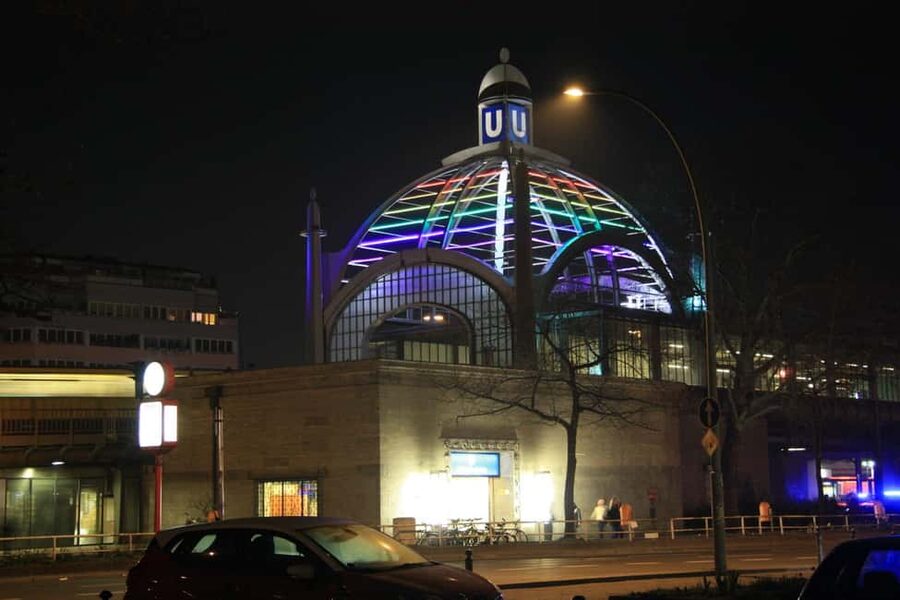
Meet Gali at the entrance to Wittenbergplatz Underground Station, in front of the KaDeWe department store. This is a practical meeting point in central Berlin, but give yourself enough time to find the correct station entrance. The tour ends at the same place, so you do not need to work out a new route at the end of the afternoon.
The experience begins with street art rather than a long historical introduction. That is a smart choice. Berlin can feel like a museum without walls, and its painted walls, pasted images, and graffiti offer a quick sense of the city’s creative character.
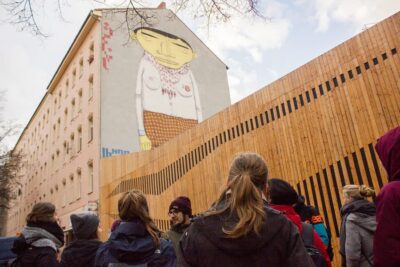
I like that the art is found in areas that are less commonly included in standard sightseeing routes. You are not simply being led from one famous landmark to another. Instead, the street art acts as a doorway into the neighborhoods and communities that shaped this part of Berlin.
The exact artworks can change over time. That is part of the nature of street art, where pieces are painted over, weather away, or appear without notice. You should come ready to look closely rather than expecting a fixed outdoor gallery.
More street art in Berlin:
- Berlin: City Street Art Guided Walking Tour
★ 4.8 · 886 reviews - Berlin: 3-Hour Street Art Tour
★ 4.7 · 778 reviews - Berlin Street Art Walking Tour – Off The Grid
★ 5.0 · 270 reviews
Street art as an introduction to queer Berlin
The first section sets the tone for the whole experience. You will see colorful street art and graffiti before moving toward buildings and sites connected with Berlin’s gay, queer, and trans communities.
I find this combination more useful than a history talk that stays indoors or relies only on dates. The art gives you something immediate to see, while Gali’s commentary adds the social and political context behind the streets.
The tour is conducted in English, and the small group makes it easier to ask questions. Gali can tailor the experience to the people present, an especially helpful feature when some members of the group already know Berlin while others are seeing Schöneberg for the first time.
The setting also makes this feel personal rather than formal. You are walking through an active neighborhood, not simply viewing old photographs in a gallery. That means the pace includes regular walking and short pauses, so comfortable shoes are a sensible choice.
The five-minute public transport connection
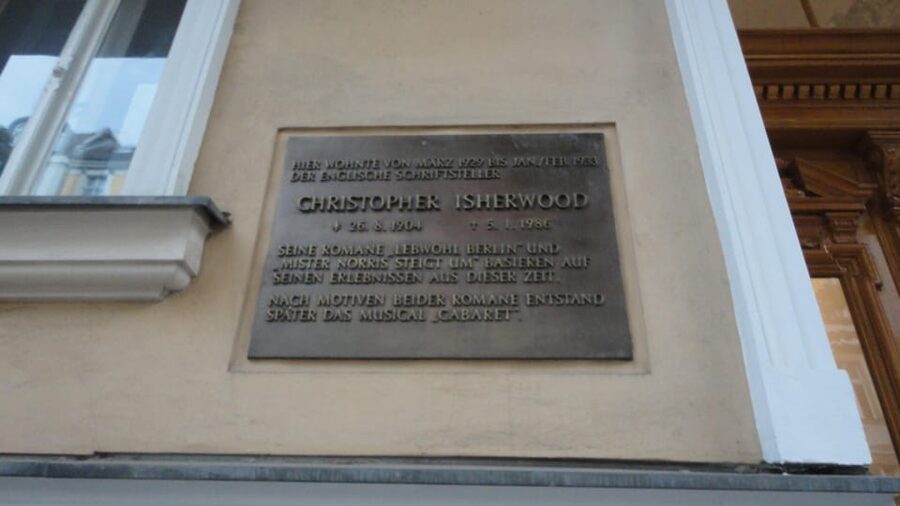
One part of the route uses public transport for about five minutes. You must bring a valid public transport ticket, since it is not included in the price.
This is a small but important practical detail. Berlin’s transport system makes it easy to connect areas that would take much longer on foot, but you should sort out your ticket before the tour begins. A short ride also means the experience is not entirely a walking loop from Wittenbergplatz.
For visitors who prefer a gentler route, the listed activity is wheelchair accessible. Still, because the tour includes street art, neighborhood walks, public transport, and outdoor stops, you may want to confirm the precise route details when booking if you have particular mobility needs.
Schöneberg and the stories behind the streets

The main guided section in Schöneberg lasts about 40 minutes. Here, the tour shifts from visual art toward the people and places connected to Berlin’s queer past.
Schöneberg is central to the story, but the experience is not just a tour of bars and nightlife. You will hear about the wider communities that lived, worked, gathered, and organized in the area. Gali’s perspective as a trans woman guide gives the subject a direct human focus, rather than treating queer and trans history as a side note to general Berlin history.
This is one of the strongest reasons to choose the walk. If you already know the city’s major attractions, the tour gives you a different way to read the streets. If you are new to Berlin, it provides context that you will not necessarily get from a standard city-center sightseeing route.
The history also reaches beyond one period. The route discusses Magnus Hirschfeld and his Institute for the Science of Sexuality, described as the first of its kind and world famous in its time. That subject brings science, identity, research, and public life into the story.
You should expect a guided overview rather than an academic seminar. The two-hour format allows for a useful introduction, but it cannot cover every person, institution, and turning point in Berlin’s queer and trans past.
More history walks in Berlin:
- Berlin: Natural History Museum Entrance Ticket
★ 4.6 · 3,382 reviews - Berlin: World Heritage Cruise to Potsdam
★ 4.5 · 1,435 reviews - Berlin Historical Highlights Walking Tour
★ 4.9 · 657 reviews - Berlin Private Complete History All Day Walking Tour
★ 5.0 · 474 reviews
A short stop at Urban Nation Gallery
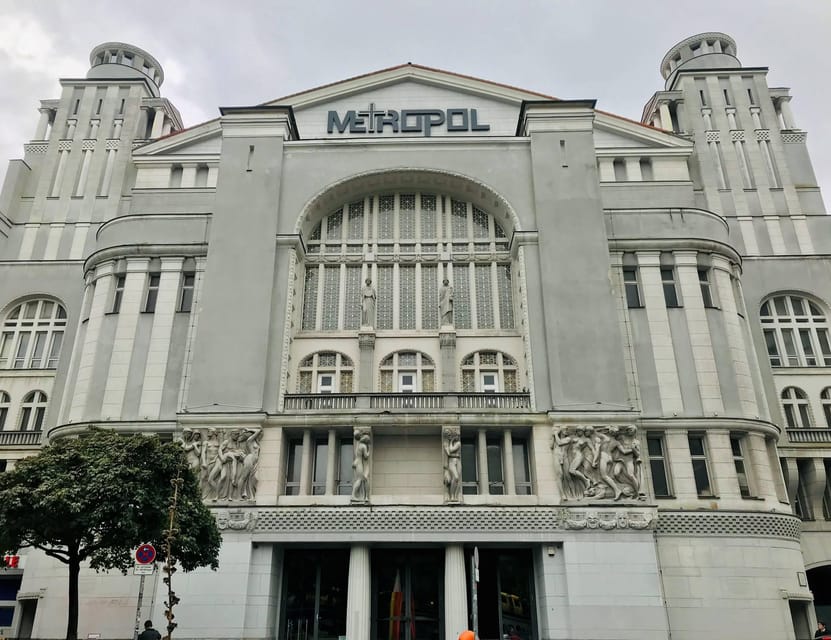
The tour includes about 20 minutes at Urban Nation Gallery. You will have guided time there, along with some free time to look around.
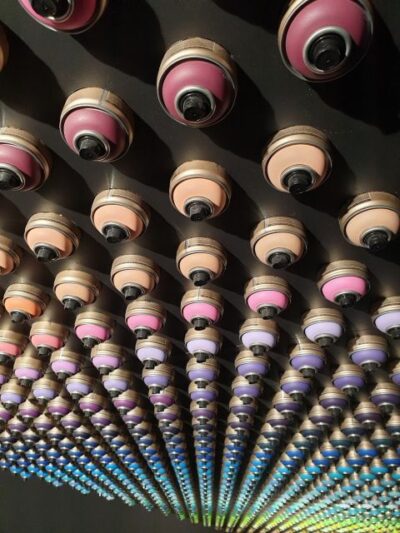
This stop breaks up the walking and gives the street art section a more formal setting. Outdoor murals and graffiti can be temporary and unpredictable, while a gallery lets you pause over art in a more controlled space.
I like the balance here. The gallery does not replace the street art, and the street art does not make the gallery feel disconnected from the neighborhood. Together, they show two sides of Berlin’s art scene: work encountered in public and work presented inside an institution.
Twenty minutes is enough for a short visit, not a full gallery session. If you enjoy spending a long time with individual works, you may wish the stop were longer. On the other hand, the limited time keeps the tour moving toward the Schöneberg history that forms its main focus.
Christopher Isherwood’s house and literary Berlin
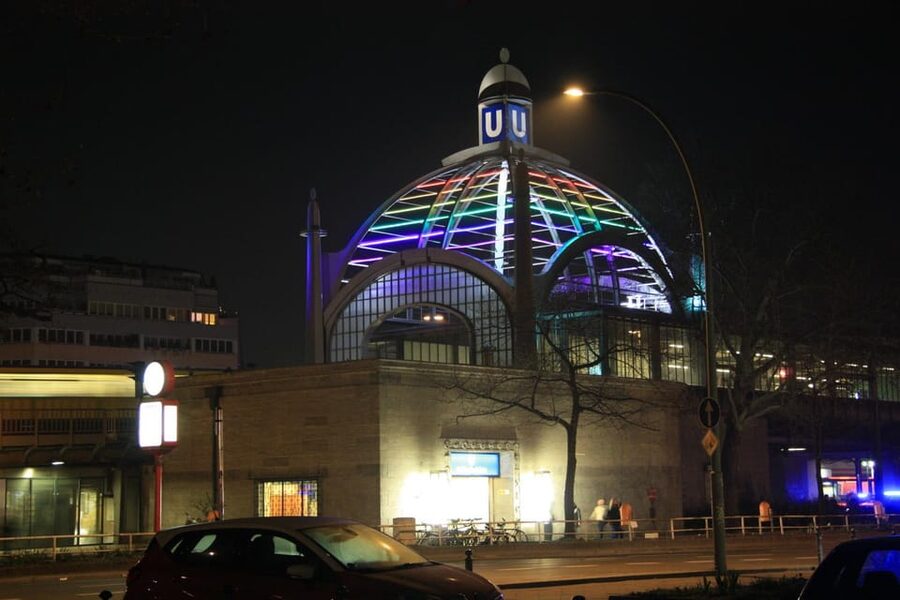
After Urban Nation, the route continues through Nollendorf and nearby Schöneberg. One stop is the house connected with Christopher Isherwood.
Isherwood’s connection gives the tour a literary angle. His Berlin writing helped bring the city’s nightlife and social world to a wider audience, and the house provides a physical point for discussing that period.
The value is in the connection between a real address and a larger story. You are not only hearing about a writer in the abstract. You are standing in the neighborhood linked to his time in Berlin and considering how a place can shape the work created there.
Do not expect to enter the house. The experience is a guided neighborhood walk, so the address functions as a place to view and discuss rather than a private interior visit. That is typical of city history tours, and it is worth knowing so you arrive with the right expectations.
The former El-Dorado location

The walk also points out the location of the famous El-Dorado club. This adds nightlife history to the route and helps you picture the social world that once made this part of Berlin such a significant meeting place.
The stop works best when Gali explains how the club fits into the broader story of queer Berlin. A former club site can look ordinary today, especially if little of the original building remains. The historical explanation is what gives the location meaning.
This is another reason to pay attention to the guide rather than expecting a major preserved attraction at every stop. The tour is about memory, place, and changing neighborhoods. Some of the most interesting points may be marked by a building or street corner rather than a grand museum display.
Magnus Hirschfeld and the Institute for Sexual Science
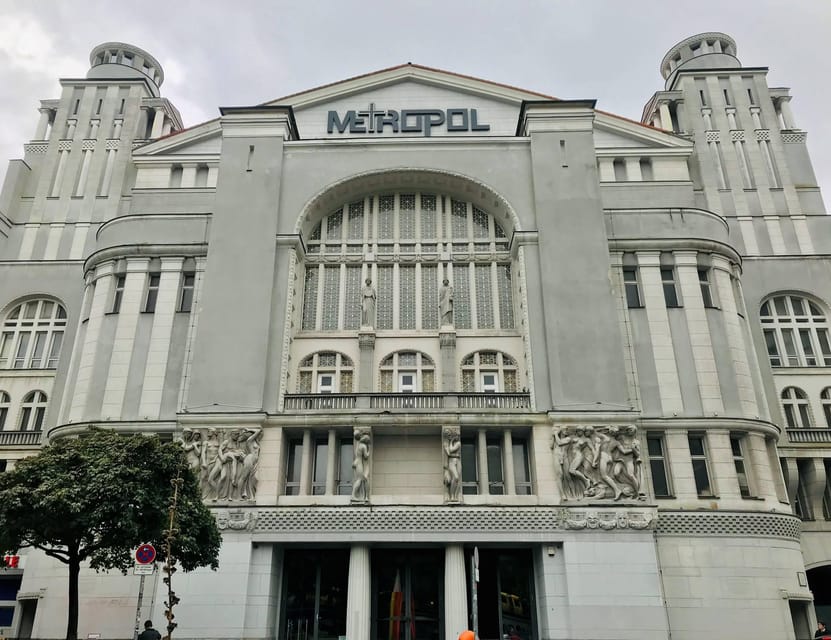
The discussion of Magnus Hirschfeld is one of the most important historical sections. You will learn about his Institute for the Science of Sexuality, an early institution devoted to the study of sexuality and associated with a groundbreaking approach for its time.
This subject widens the tour beyond nightlife and popular culture. It shows that Berlin’s queer and trans story includes research, public education, advocacy, and organized efforts to understand human sexuality.
For me, this is the kind of context that makes the walk worthwhile. You are not simply collecting colorful anecdotes. You are learning how ideas about sexuality and gender were discussed, studied, and challenged in Berlin.
The tour cannot provide a full account of Hirschfeld’s life or the institute in two hours. But it gives you a clear thread to follow, and the free Berlin Gay Map may help you find related places and continue learning on your own.
What the two-hour format really gives you

The schedule is tightly arranged:
- About 40 minutes of guided touring in Schöneberg
- About 20 minutes at Urban Nation, including free time
- About 30 minutes of walking and sightseeing around Schöneberg and Nollendorf
- Two short public transport sections of about five minutes each
The listed times suggest a brisk but manageable route. You will see several different elements without giving the whole day to one activity. That makes it easy to fit into a larger Berlin plan.
The tradeoff is depth. You will receive a focused introduction, not an exhaustive survey. If you want long gallery visits, extended photography stops, or detailed archival discussion, this may feel short. If you want an efficient first look at queer Berlin with street art included, the format makes good sense.
Weather can affect the mood of the outdoor sections. One person enjoyed the added atmosphere of snow during the walk, but you should still dress for Berlin conditions and expect to spend time outside. The tour is not designed as an indoor-only activity.
The guide’s personal approach
Gali Jaffe leads the tour through Archaeology Online. Her role is not limited to pointing out locations. She brings together art, neighborhood history, queer culture, and trans history in a single route.
The personal format is especially useful for a subject that can easily become dry or overly broad. Gali has been described as warm, friendly, insightful, and able to adjust the experience to the group. I would value that flexibility because visitors arrive with very different levels of familiarity and different reasons for booking.
You might be part of the queer community, interested in Berlin’s social history, traveling with an older teenager, or simply looking for an unusual art walk. The tour can speak to all of those interests, though it is not suitable for children under 16.
The age rule matters for families. A 16-year-old may take part, but younger children cannot. The themes also concern sexuality, gender, nightlife, and historical discrimination, so parents should decide if the subject fits their teenager.
Is $57 a fair price?
At $57 per person, this is not the cheapest way to see Berlin’s street art. The price makes more sense when you consider what is bundled into the two hours: a live English-speaking guide, a small group capped at 10, street art, an art gallery stop, a neighborhood walk, queer and trans history, and a free Berlin Gay Map.
The small group is the key value point. With only 10 people, you are more likely to hear the guide clearly and ask questions than you would on a large city tour. The personal focus also means you are paying for interpretation, not just transport between sights.
Public transport is not included, so add the cost of your ticket. The gallery stop is included in the stated experience, but the information provided does not specify any separate admission detail, so check the booking information if that affects your budget.
I think the price is reasonable for someone who wants a focused, specialist tour. It is less compelling if you only want to photograph street art or take a general walk through Schöneberg, since you can explore public streets independently. The value comes from Gali’s links between the visual art and the people, places, and ideas behind the neighborhood.
Who should book this walk?
I would recommend it most strongly to:
- Visitors who want LGBTQ+ history included in their Berlin plans
- Queer and trans travelers looking for a more focused introduction to the city
- Art lovers who prefer street art and local neighborhoods to major monuments
- Repeat visitors who have already seen central Berlin’s standard sights
- Anyone who values a small group and a guide-led conversation
- Older teenagers aged 16 and above traveling with an adult
It may be less suitable if you want a long museum visit, a purely historical lecture, or a tour with no public transport. It may also feel too short if your main goal is a detailed study of Berlin’s entire queer past.
The route is listed as wheelchair accessible, which is helpful, but the combination of outdoor walking and public transport means you should confirm any route-specific needs in advance.
Practical details before you reserve
The tour lasts two hours and runs at several possible starting times, depending on availability. Since the exact departure time is not fixed in the information provided, check the calendar carefully before planning other activities around it.
Meet at Wittenbergplatz Underground Station, at the entrance in front of KaDeWe. The tour returns to this same meeting point, which makes the start and finish simple.
Bring:
- A public transport ticket
- Comfortable walking shoes
- Clothing suitable for outdoor weather
The tour is in English. You can cancel up to 24 hours before the start for a full refund, and the reserve-now, pay-later option lets you hold a place without paying immediately.
Should you book Street Art and Berlin Gay, Queer, Trans History?
Book it if you want Berlin explained through both public art and personal history. Gali Jaffe’s trans perspective, the small group, and the stops connected with Isherwood, El-Dorado, and Hirschfeld give the walk a clear identity.
I would choose it early in a Berlin visit if you want a useful introduction to Schöneberg, or later if you already know the city and want a more specialized route. Just remember that two hours only allows a compact overview, and you need to arrange your own transport ticket.
For $57, the strongest value is not the number of stops. It is the chance to see less-touristed street art while learning how this part of Berlin became connected with gay, queer, and trans life. The free Gay Map gives you a practical way to keep going after the guide says goodbye.
FAQ
Where does the tour start?
It starts at the entrance to Wittenbergplatz Underground Station, in front of the KaDeWe department store.
Where does the tour end?
The tour ends back at the Wittenbergplatz meeting point.
How long does the experience last?
The tour lasts two hours.
What language is the tour conducted in?
The live tour is conducted in English.
Who leads the tour?
The guide is Gali Jaffe, a trans woman who leads the street art and Berlin gay, queer, and trans history experience.
What places are included?
The route includes street art, Schöneberg, Urban Nation Gallery, Nollendorf, Christopher Isherwood’s house, the location of the El-Dorado club, and discussion of Magnus Hirschfeld and his Institute for the Science of Sexuality.
Is public transport included?
No. You need to bring your own public transport ticket for the short rides included in the route.
Is the tour wheelchair accessible?
Yes, the activity is listed as wheelchair accessible.
Is the tour suitable for children?
No. It is not suitable for children under 16 years old.
What is included with the tour?
The experience includes the street art, graffiti, church, art gallery, gay quarter, and a free Berlin Gay Map.
More LGBTQ-Friendly in Berlin
- Berlin: Gay Berlin Out in Schöneberg Walking Tour
★ 4.8 · 281 reviews - Berlin’s Gay, Lesbian, and Queer Scene Small-Group Walking Tour
★ 4.5 · 66 reviews - Queer Berlin Tour: Birthplace of LGBTQ+ Movements
★ 5.0 · 6 reviews - Berlin: BKA Theater “Operetta for two gay tenors”
★ 4.0 · 4 reviews
Just added around Berlin
- Berlin Highlights in One Day★ 5.0 · 3 reviews
- Individual city tour Berlin for max. 8 persons★ 5.0 · 3 reviews
- Transfer from Berlin Schönefeld Airport (SXF) to Berlin city Hotels – ROUND TRIP★ 4.0 · 3 reviews
- Private Berlin One Day Tour with a Local: See the City Unscripted★ 3.5 · 3 reviews
- Berlin: Museum Island Tour★ 5.0 · 3 reviews
- Private Analogue Photography Experience in Berlin★ 5.0 · 3 reviews
- Berlin: Local Food Tour in Secrets Hidden Gems★ 4.0 · 3 reviews
- Berlin & The Third Reich Private Guided Tour★ 5.0 · 3 reviews
Street Art, compared.

East Meets West: Berlin Food Culture & Street Art
Read our review →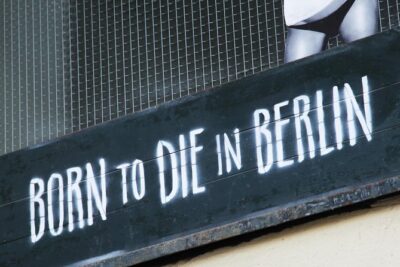

Street Art and Alternative Tour of Berlin in French
Read our review →Browse the lists this tour appears in