
Review · STREET ART
Berlin Street Art Walking Tour – Off The Grid
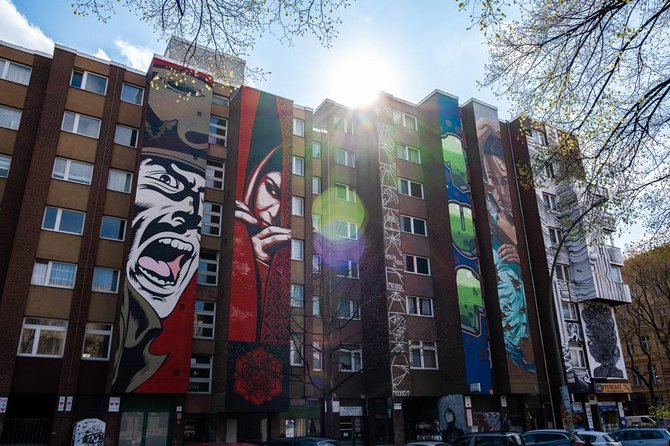
Berlin’s street art is not confined to one famous wall or a single gallery. It spills across Friedrichshain and Kreuzberg in layers of murals, tags, pasted posters, stencils, and political messages. This tour helps you read that visual language, with guides such as Rob, Ben, and Antonio bringing personal experience as working or former street artists.
I like two things right away: the route gets you away from the usual sightseeing crowds, and the guide explains the difference between graffiti and commissioned street art rather than treating every painted wall as the same. The main consideration is practical: you walk for about three hours, use public transport during the tour, and may encounter stairs or chilly, wet weather.
In This Review
- Key Points Before You Book
- What This Tour Actually Teaches You
- Starting at Warschauer Strasse
- Reading Friedrichshain’s Walls
- The Gallery Contrast
- Crossing Into Kreuzberg and Wrangelkiez
- Why the Guides Matter So Much
- The Walking, Transport, and Weather Reality
- Is $24.20 Good Value?
- Who Will Enjoy This Most
- Book It If You Want to See Berlin Differently
- FAQ
- Where does the Berlin Street Art Walking Tour begin?
- What time does the tour start?
- How long does the tour last?
- Where does the tour finish?
- Which neighborhoods does the route visit?
- Is public transport used during the tour?
- Is public transport included in the tour price?
- Is the tour offered in English?
- What should I bring?
- How many people can join the tour?
- Can I cancel for a full refund?
- What happens if bad weather cancels the tour?
Key Points Before You Book
- Artist-led explanations: Guides including Rob, Ben, and Antonio speak from direct experience of Berlin’s graffiti scene.
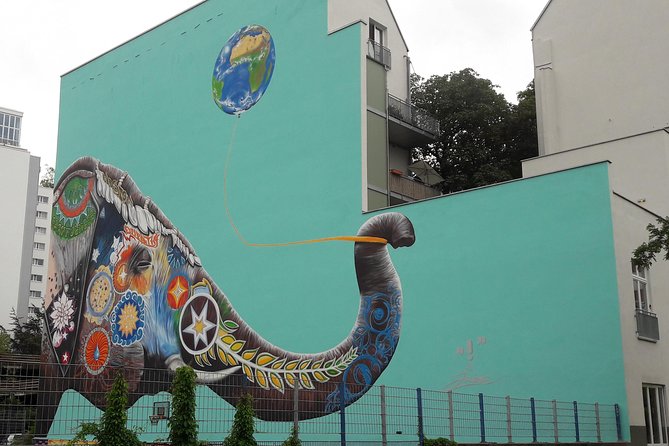
- Friedrichshain to Kreuzberg route: You explore creative neighborhoods rather than only visiting the East Side Gallery.
- A street-art gallery stop: Commissioned urban work gives you a useful contrast with illegal or unsanctioned pieces.
- Politics and technique: Expect discussion of messages, materials, risk, local artists, and the legal side of painting in public.
- Public transport is part of the plan: Bring a valid metro ticket, and be ready for a changing route.
- Small enough for questions: The group can reach up to 20 people, with a three-hour afternoon schedule.
What This Tour Actually Teaches You
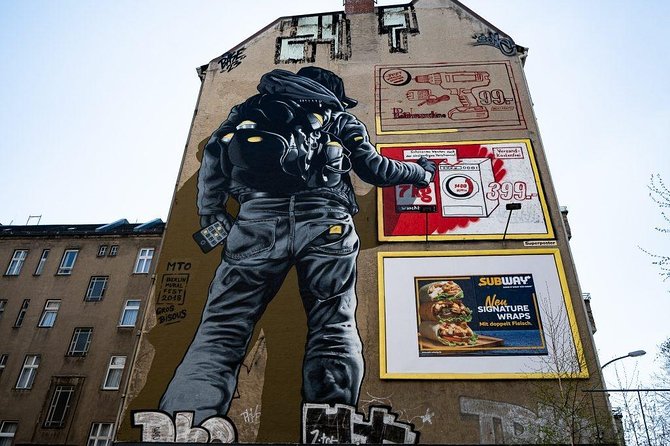
At first glance, Berlin street art can look like visual noise. One wall may carry a polished mural, a quick signature, a political slogan, and several layers of older work. Without context, it is easy to admire the colors and miss the rules, rivalries, risks, and ideas underneath.
That is where this tour earns its price. The guide explains how artists work, how pieces are made, why some images last while others disappear, and how graffiti culture differs from commissioned urban art. You will hear about techniques and the practical logistics of putting up a piece, not just a short backstory attached to a mural.
The legal context matters, too. Berlin’s street art scene includes sanctioned projects, privately commissioned walls, temporary works, and paintings made without permission. The tour does not ask you to approve of property damage. Instead, it gives you the tools to understand why many artists see graffiti as a serious art form, a form of identity, or a way to make political ideas visible.
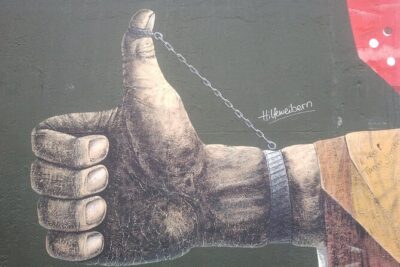
I especially like the attention given to smaller works. Large murals are easy to spot, but the little pieces tucked between them often reveal more about neighborhood habits and individual artists. The guide points out those details so you can keep recognizing them after the tour ends.
More street art in Berlin:
- Berlin: City Street Art Guided Walking Tour
★ 4.8 · 886 reviews - Berlin: 3-Hour Street Art Tour
★ 4.7 · 778 reviews - East Meets West: Berlin Food Culture & Street Art
★ 5.0 · 157 reviews
Starting at Warschauer Strasse
The tour begins at 1:00 pm near Warschauer Strasse, at Warschauer Str. 53 in Berlin. This is a practical starting point for a route through Friedrichshain and onward toward Kreuzberg, with public transport used during the afternoon.
Do not arrive expecting a standard monument-to-monument walk. The point is to begin in an area where Berlin’s urban art appears in many forms, then follow the current route to works that make sense together. Street art changes constantly, so the exact selection can shift.
That flexibility is a strength. A fixed checklist would quickly become dated when paintings are covered, damaged, or replaced. It also means you should not treat the route as a promise of specific murals. You are booking an introduction to the scene, not a guaranteed collection of permanent sights.
The starting area is well connected to public transport. Still, bring your ticket before the tour begins if possible. The instructions say public transport is used throughout, and the transport cost is not included. One practical account also noted train rides and stairs, so this is not a completely flat, uninterrupted pavement walk.
Reading Friedrichshain’s Walls
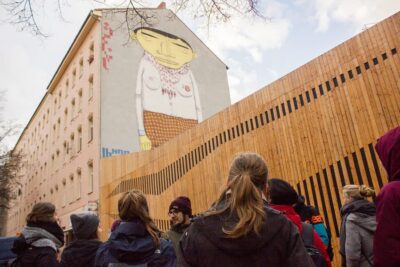
The Friedrichshain section gives you a feel for how street art functions as part of daily city life. You may see large-scale pieces designed to be viewed from a distance, quick graffiti tags, and smaller works that reward a closer look.
The guide’s job here is more than identifying names. You learn to notice style, lettering, placement, scale, and the difference between a carefully planned mural and a fast piece made under pressure. The conversation also covers the way artists mark territory, build reputations, and respond to one another.
Guides who are active in the scene can add the kind of detail a general city guide may not have. Rob is praised for mixing personal anecdotes with a broad understanding of graffiti’s development. Ben is also described as an artist with a strong feel for the local scene, while Antonio has been appreciated for explaining the people, politics, and legal issues behind the work.
The tone appears to be relaxed and funny, but the content is serious. You might hear a story about an artist or a particular technique, then move into a discussion of why a piece was made or how it fits into Berlin’s wider culture. That combination helps the three hours pass quickly.
You are given time to stop, look, and take pictures. This is important because street art is not best viewed while marching behind a guide. At each pause, you can study the work for yourself before the group moves on.
The Gallery Contrast
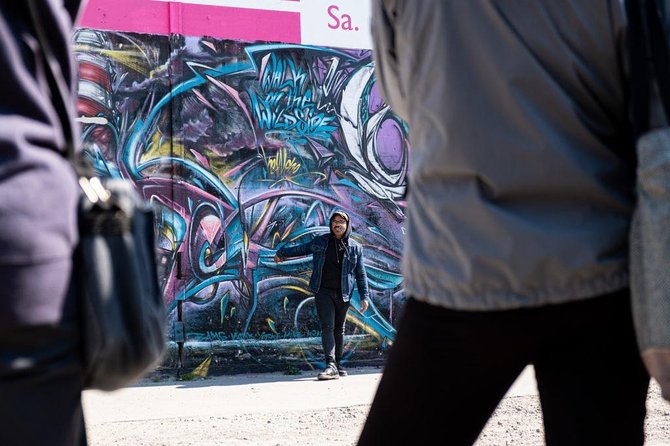
A stop at a street art gallery adds an indoor comparison to the outdoor work. Here, you see examples of commissioned urban art, which helps clarify how a piece changes when the artist has more control over the wall, the setting, the time, and the permission process.
That distinction is useful for anyone new to the subject. Outdoor work may be made quickly and placed in a difficult or risky spot. A commissioned piece may involve planning, agreements, scaffolding, and a client. Both can have artistic value, but they belong to different parts of the culture.
The gallery also gives you a break from the weather and the pavement. The tour runs in the afternoon and can take place in cold or wet conditions, so an indoor stop is welcome. Bring an umbrella if rain is in the forecast, and wear shoes that can handle several hours on foot.
Do not expect this to become a conventional museum visit. The gallery is one part of a street-based experience, not the main event. Its value is the comparison: you see how urban art works outdoors and how commissioned pieces are presented in a more controlled setting.
More walking tours in Berlin:
- Discover Berlin Half-Day Walking Tour
★ 5.0 · 9,624 reviews - Berlin: Third Reich and Cold War 2 Hour Walking Tour
★ 4.9 · 6,830 reviews - Berlin: Discover Berlin Walking Tour
★ 4.9 · 5,998 reviews - Berlin’s Best: 2 Hour Walking Tour Third Reich and the Cold War
★ 5.0 · 5,486 reviews
Crossing Into Kreuzberg and Wrangelkiez
The route finishes in Kreuzberg, around Wrangelkiez, close to the U1 line. This ending works well if you want to continue exploring the neighborhood, find a meal, or return by metro without crossing the city again.
Kreuzberg brings another set of stories and visual cues. The guide discusses political messaging and the way street art can comment on housing, power, identity, social change, and the city itself. Not every work will offer a clear explanation, and part of the pleasure is learning to look for clues rather than waiting for a simple answer.
You may also notice the tension between independent art and corporate involvement. As large companies commission more major walls, the scene keeps changing. A polished mural can attract attention and bring skillful work into public view, but it can also raise questions about who controls the message and who benefits from the image.
That makes Kreuzberg a fitting final section. The art is not presented as frozen heritage. It is part of an active culture that shifts with the neighborhood, the artists, property owners, politics, and commercial interests.
Why the Guides Matter So Much
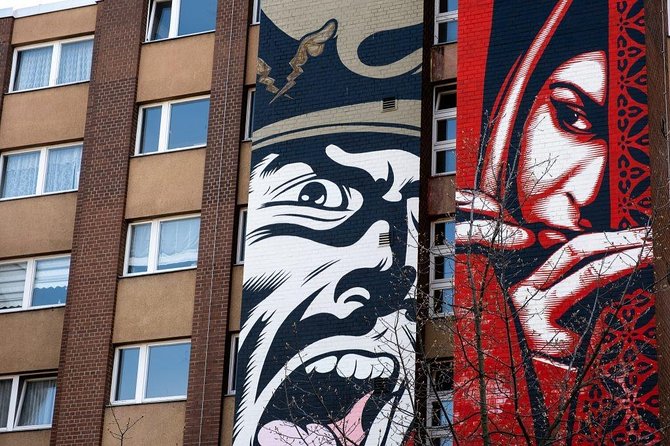
The strongest feature of this experience is the person leading it. The guide shapes whether you see a wall full of paint or a set of choices made by artists working within a particular culture.
Rob is repeatedly praised for his humor, energy, and passion. He has been especially effective with mixed-age groups, including parents and older teenagers. His delivery keeps the material accessible without reducing it to a collection of amusing facts.
Ben brings an artist’s viewpoint as well. His explanations cover local artists, subculture rules, the skill involved, and the risks of putting up certain pieces. Antonio has also led the tour, offering insight into the local people, politics, and legal side of street art.
Because guide assignments can vary, you should not book on the assumption that one named person will definitely lead your date. The useful point is that the tour is built around guides with direct links to the subject, not a generic script read beside a wall.
One note of balance: a long, repeated route can sometimes feel practiced, and one participant found the delivery a little rehearsed. That is a fair possibility with any regularly scheduled tour. If you prefer free-form conversation, ask questions and use the photo stops to make the experience your own.
The Walking, Transport, and Weather Reality
The tour lasts about three hours, but it is not three hours of nonstop walking. You stop often to discuss pieces, take photos, and look around. There is also a café break where you can buy coffee, hot chocolate, or a snack and use the restroom.
Even so, good walking shoes are essential. The route crosses city streets and includes public transport. Stairs may be involved, and you need to stay alert when the group is moving through stations or crossing roads.
Bring an AB zone transport ticket. The tour price does not include public transport, and the route may require more than one ride. If you do not have the correct ticket, the guide can help explain the ticket machine, but it is simpler to arrange this before meeting the group.
Weather can shape the experience. Street art is outdoors, and the activity requires suitable conditions. In poor weather, the tour may be canceled and you will be offered another date or a full refund. For a normal booking, you can cancel up to 24 hours before the 1:00 pm start for a full refund. Changes or cancellations inside that window are not accepted for a refund.
Is $24.20 Good Value?
At $24.20 per person, this is a reasonable price for an English-language tour lasting about three hours. You are paying for a local guide, an organized route, interpretation of the art, a gallery visit, and help making sense of a scene that is hard to understand on your own.
The value is strongest if you are curious about process and culture. You could walk through Friedrichshain and Kreuzberg for free, but you would likely miss the background behind the lettering, the legal questions, the artist connections, and the smaller works between the major murals.
The price does not cover your metro ticket, café purchases, or any food. Those extra costs are modest, but you should include them in your planning. The group size can reach 20 people, which is still manageable, though a larger group may make it harder to hear beside busy roads or stations.
For a first look at Berlin’s street art, the cost makes sense. If you already know the artists and have spent days following graffiti across the city, you may prefer exploring alone. For most first-time visitors with a serious interest in urban art, the guide adds enough context to justify the fee.
Who Will Enjoy This Most
I would recommend this tour to anyone who likes art but wants more than a museum label. It suits people interested in Berlin’s politics, city culture, photography, design, and social change.
It also works well for families with older children and teenagers. The material is visual, the route is active, and the guide’s humor helps hold attention. A 15-year-old art lover can find plenty to enjoy, while adults get a fuller explanation of the cultural background.
You do not need to be a graffiti expert. In fact, beginners may gain the most because the guide starts with basic distinctions and builds toward more complex ideas about technique, permission, authorship, and public space.
This is less suitable if you have difficulty walking for several hours, managing stairs, or using public transport. The experience is not described as wheelchair accessible, and the changing route means you should ask the provider about your specific needs before booking.
Book It If You Want to See Berlin Differently
Book this tour if you want Berlin’s street art explained by someone close to the scene, not just photographed as colorful decoration. You will leave with a better eye for lettering, stencils, murals, political symbols, and the quiet little works that are easy to miss.
Skip it if you only want the East Side Gallery or a short, fixed sightseeing walk. This route goes through Friedrichshain and Kreuzberg, finishes near the U1 line, and depends on walking, public transport, and outdoor conditions.
For most people seeking an authentic introduction to Berlin’s urban art, the strongest reason to go is the guide. Rob, Ben, and Antonio have each brought the humor, personal experience, and cultural context that make the walls worth a closer look.
FAQ
Where does the Berlin Street Art Walking Tour begin?
The tour begins at Warschauer Str. 53, 10243 Berlin, Germany.
What time does the tour start?
The scheduled start time is 1:00 pm.
How long does the tour last?
The experience lasts approximately three hours.
Where does the tour finish?
The tour finishes in Wrangelkiez in Kreuzberg, near the U1 line.
Which neighborhoods does the route visit?
The route explores Friedrichshain and Kreuzberg.
Is public transport used during the tour?
Yes. Public transport is used throughout the tour, and you should bring a suitable metro ticket.
Is public transport included in the tour price?
No. Depending on the route, you may need an AB zone transport ticket, which is not included.
Is the tour offered in English?
Yes. The tour is offered in English.
What should I bring?
Bring good walking shoes and an umbrella if rain is expected. You should also have your public transport ticket.
How many people can join the tour?
The maximum group size is 20 participants.
Can I cancel for a full refund?
Yes. You can cancel at least 24 hours before the local start time for a full refund. Cancellations or changes made less than 24 hours before the start are not refunded.
What happens if bad weather cancels the tour?
You will be offered another date or a full refund if poor weather causes the tour to be canceled.
Just added around Berlin
- Berlin Highlights in One Day★ 5.0 · 3 reviews
- Private Berlin One Day Tour with a Local: See the City Unscripted★ 3.5 · 3 reviews
- Individual city tour Berlin for max. 8 persons★ 5.0 · 3 reviews
- Transfer from Berlin Schönefeld Airport (SXF) to Berlin city Hotels – ROUND TRIP★ 4.0 · 3 reviews
- Berlin: Museum Island Tour★ 5.0 · 3 reviews
- Private Analogue Photography Experience in Berlin★ 5.0 · 3 reviews
- Berlin: Local Food Tour in Secrets Hidden Gems★ 4.0 · 3 reviews
- Berlin & The Third Reich Private Guided Tour★ 5.0 · 3 reviews
Street Art, compared.

East Meets West: Berlin Food Culture & Street Art
Read our review →
Street Art and Alternative Tour of Berlin in French
Read our review →
Browse the lists this tour appears in