
Review · SACHSENHAUSEN MEMORIAL TOURS
Berlin: Sachsenhausen Concentration Camp Guided Tour
Sachsenhausen is not a sightseeing stop in the usual sense. It is a place for careful attention, where the layout of the camp, the surviving buildings, and the guide’s explanation help you grasp how Nazi persecution worked day by day. The tour traces both the machinery of terror and the lives of prisoners caught inside it.
I like the small group of up to seven, which gives you room to ask questions, and I like the full historical arc, including the camp’s later use as a Soviet special camp. The main consideration is time: five hours covers a great deal, but one visitor reasonably wished for six or seven hours to see more of the indoor exhibits.
In This Review
- Key points to know before you go
- Why Sachsenhausen requires a guided visit
- Meeting at Alexanderplatz and the ride north
- The SS administration and the camp design
- Roll call, forced routine, and the shoe-testing track
- The Jewish sector and prisoner living conditions
- The cell block and prisoners held apart
- The camp kitchen, drawings, and a needed pause
- Special Camp No. 7 and the postwar story
- Station Z, the infirmary, and the hardest part of the visit
- Is five hours enough for Sachsenhausen?
- Price, group size, and practical value
- Who should book this tour?
- Should you book the Sachsenhausen tour?
- FAQ
- Where does the tour start?
- How long does the tour last?
- What language is the tour conducted in?
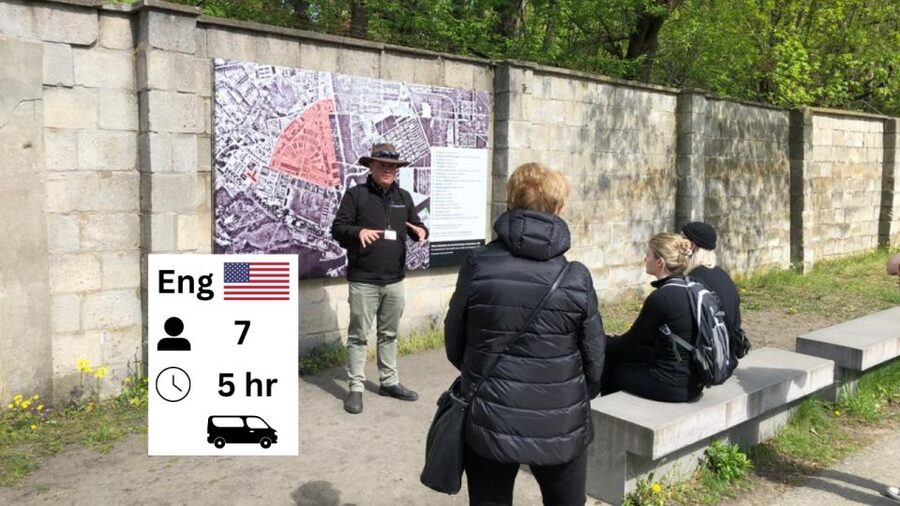
- How large is the group?
- Is transportation included?
- What should I bring?
- Does the tour run in bad weather?
Key points to know before you go
- Tower A and the camp entrance: Walk beneath the infamous Arbeit Macht Frei gate and hear why Sachsenhausen was designed as a model for the Nazi camp system.
- A full five-hour outing: Allow about 30 minutes each way by van and four hours at the memorial.
- Small-group format: With no more than seven people, you can ask questions and keep close to the guide.
- Station Z: Visit the execution site, gas chamber area, and crematorium, the most difficult section of the tour.
- More than Nazi-era history: Learn how the Soviet Union later held prisoners at Special Camp No. 7.
- Prepare for the weather: The tour runs rain or shine, and comfortable shoes and snacks are important.
Why Sachsenhausen requires a guided visit
Sachsenhausen can be visited independently, but the site is spread out and its meaning is not always obvious from the buildings alone. A guide gives you the structure you need: how the camp operated, where prisoners lived, how the SS managed it, and how individual places fit into the wider Nazi system.
The tour begins with the idea of Sachsenhausen as a prototype camp. Its design and administration helped shape the system used at later concentration camps. That context matters, because the visit is not only about one location near Berlin. You are also learning how a state organized imprisonment, forced labor, punishment, medical abuse, and mass murder.
This is difficult material. A good guide must be precise without turning the subject into a performance. The strongest guides on this tour, including Tom, Matt, Jorg, and others named by guests, are praised for combining clear historical explanation with a respectful tone. That balance is especially useful here. You need facts, but you also need time to absorb what those facts mean.
More Sachsenhausen memorial visits:
- Berlin: Sachsenhausen Concentration Camp Tour in English
★ 5.0 · 5,711 reviews - Berlin: Sachsenhausen Concentration Camp Memorial Tour
★ 4.7 · 3,716 reviews - Sachsenhausen Concentration Camp Bus Tour in English from Berlin
★ 5.0 · 1,962 reviews
Meeting at Alexanderplatz and the ride north
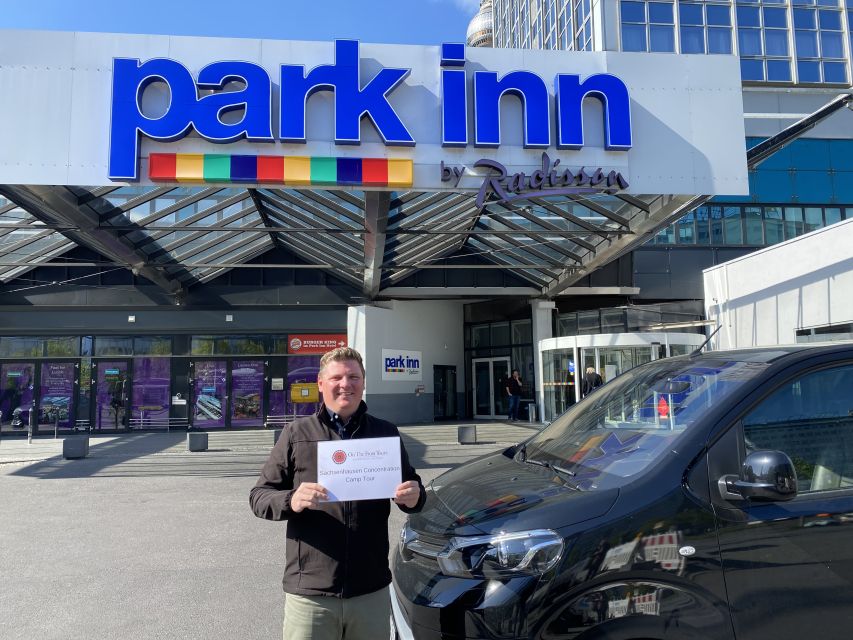
The meeting point is the main entrance of the Park Inn by Radisson Berlin Alexanderplatz, at the taxi pickup and drop-off area. This is a practical central location, but do not simply wait anywhere around the hotel. Go to the main entrance and look for the pickup at that point.
The ride to Sachsenhausen takes about 30 minutes by van. That short journey is put to good use. Your guide introduces the Nazi concentration camp system and explains why Sachsenhausen became a model camp. It is a helpful start because you reach the memorial with a basic framework instead of trying to piece together the story from scattered displays.
Transport is included in the $115 price, as is the return ride, a bottle of water, and the guide. The van also avoids the need to arrange your own route to the memorial. With a group capped at seven, this is a more personal setup than a large coach excursion.
The small vehicle may feel close if you prefer to travel alone, but the benefit is easy conversation. You can ask a question during the ride, clarify a term, or discuss something you have just heard. The tour is conducted in English.
The SS administration and the camp design
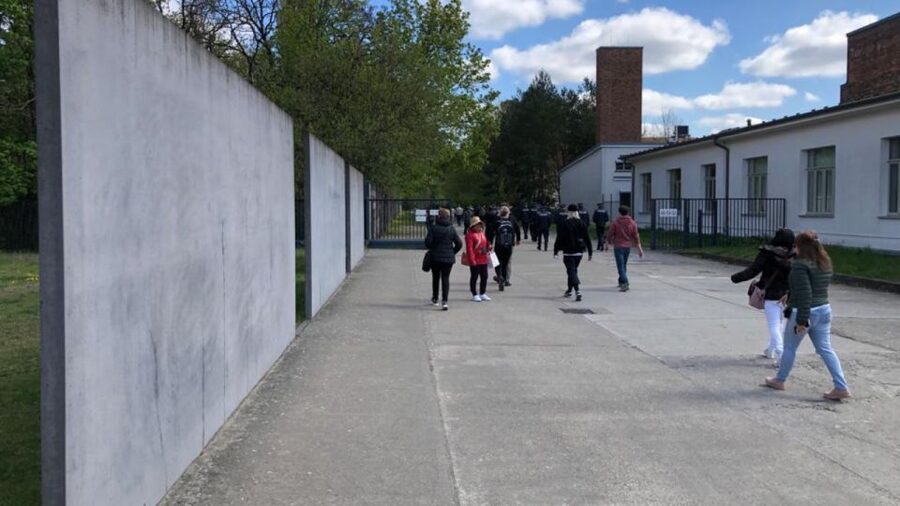
One of the first important stops is the former SS Concentration Camps Inspectorate. This was the administrative and managerial authority for the concentration camp system of the Third Reich. Seeing this part of the site helps connect individual cruelty with the larger bureaucracy that organized it.
That distinction is worth your attention. Sachsenhausen was not simply a prison run by a few brutal guards. It was part of a structured system with administrators, orders, records, rules, work details, punishment, and a chain of command. The tour explains how those pieces worked together.
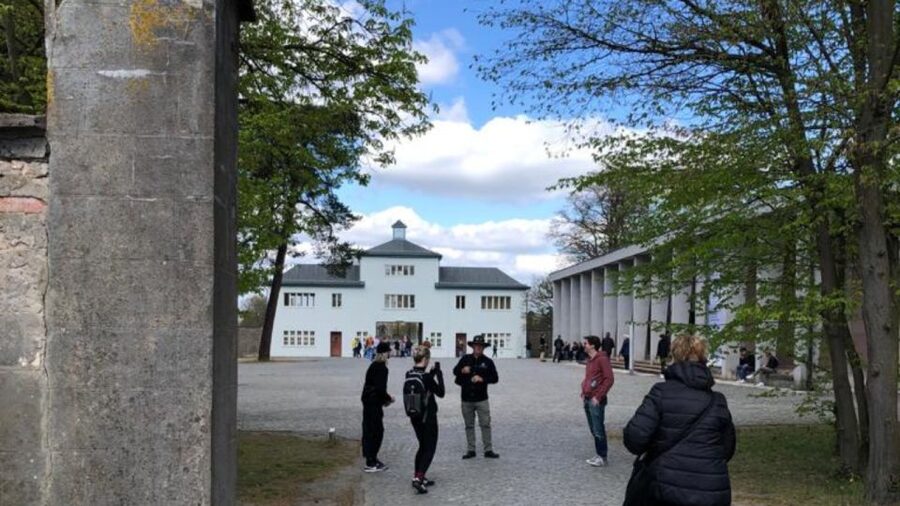
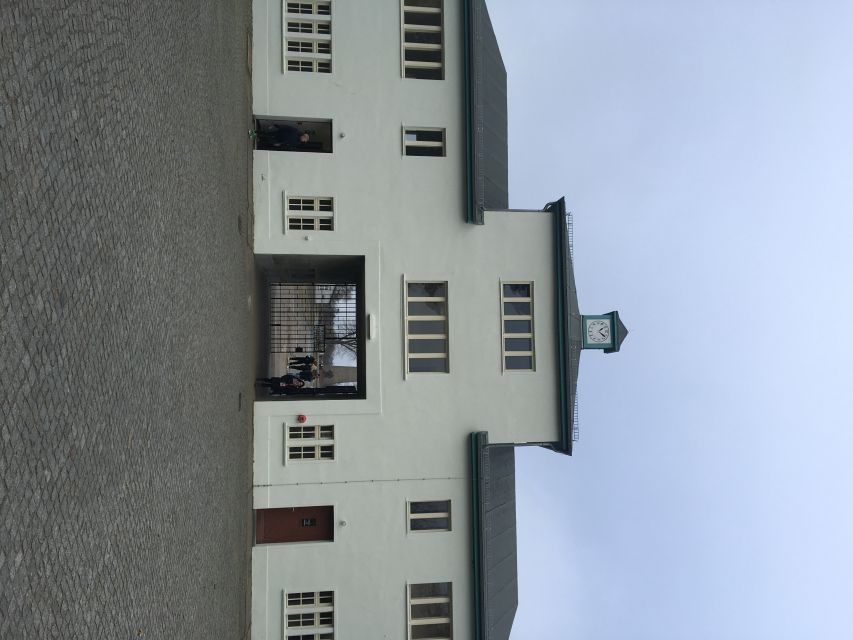
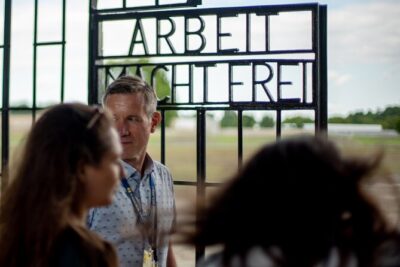
Your guide then leads you toward the main entrance. Passing through Tower A beneath Arbeit Macht Frei is one of the most recognizable moments of the visit, but it should not be treated as a photo opportunity. The words were part of the deception and intimidation used at the camp entrance. Your guide gives the phrase its proper setting, along with the reality that awaited prisoners beyond the gate.
Roll call, forced routine, and the shoe-testing track
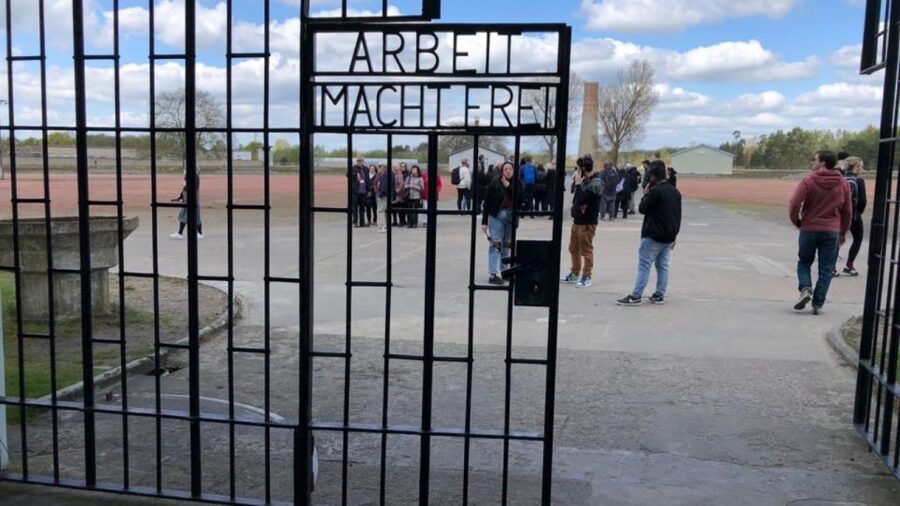
Inside the camp, the tour turns to the daily routine of prisoners. The morning roll call was a dreaded part of the day, and the guide explains how the camp schedule controlled movement, labor, rest, and punishment.
The shoe-testing track is another important stop. Prisoners were forced to test footwear by marching around the track for long periods. This detail shows how even an ordinary object such as a shoe could be folded into a system of forced labor and physical exhaustion.
I find this part especially useful because it moves the history away from broad numbers alone. You begin to picture the repeated, grinding routine that shaped prisoners’ days. The experience does not reduce the camp to one shocking scene. It shows how suffering was built into ordinary procedures and repeated until the body gave out.
A few more Berlin tours worth weighing up
- Berlin: Reichstag, Dome and Government District Guided Tour
★ 4.7 · 18,288 reviews - Berlin: Government District around the Reichstag Guided Tour
★ 4.7 · 8,447 reviews - Berlin: Hidden Backyards Guided Walking Tour
★ 4.8 · 5,360 reviews - Berlin: 1-Hour Boat Tour with Bilingual Live Guide
★ 4.7 · 3,629 reviews
The Jewish sector and prisoner living conditions
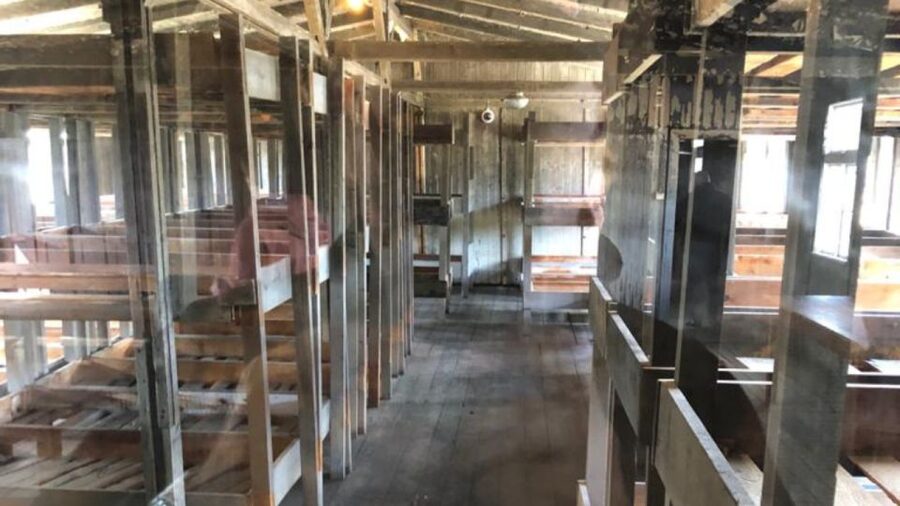
The Jewish sector includes the former barracks and offers a closer look at overcrowding and living conditions. The tour explains how prisoners were housed and what daily life looked like inside the barracks.
The buildings and remains cannot recreate the full reality of the camp, and you should not expect them to. Their value is in giving scale and place to the explanation. You can see how confined the living areas were and consider the lack of privacy, comfort, and personal control.
The guide also discusses the struggles faced by prisoners beyond the physical space itself. The point is not to present suffering as an abstract story, but to explain how food, work, discipline, disease, fear, and uncertainty shaped everyday life. This is where the tour’s focus on prisoner resilience becomes important. You learn about people as more than victims of a system, while never losing sight of the system’s violence.
The cell block and prisoners held apart
The former cell block was a place of secrecy and severe mistreatment. British prisoners of war and special inmates, including Stalin’s son, were held there. This stop adds another layer to the camp’s story by showing that not all prisoners experienced the site in exactly the same way.
Your guide can help explain the distinctions between prisoner groups and the reasons some people were held separately. The cell block also makes clear how imprisonment could be used for isolation, coercion, and punishment rather than simply confinement.
The subject matter is heavy, and the pace here matters. You are walking through several emotionally demanding sections in succession. The guide’s role is to keep the story understandable and grounded, rather than rushing from one grim fact to the next.
The camp kitchen, drawings, and a needed pause
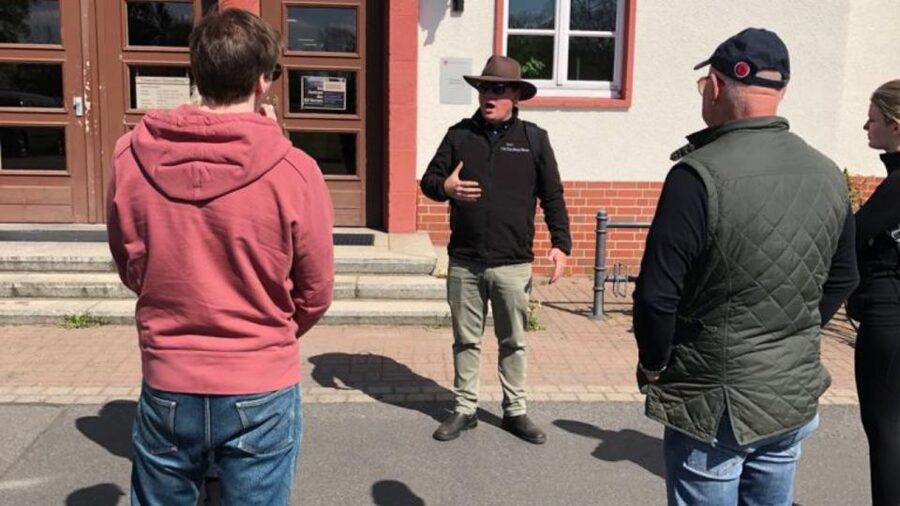
The camp kitchen is a practical mid-tour pause. You can use the restrooms, have a short break, and examine an exhibition of camp objects. Prisoner drawings remain visible on the walls, giving a rare glimpse of personal expression within a place designed to strip people of identity and control.
Bring a snack. Food is not listed as part of the tour, and five hours is a long stretch, especially when much of it involves walking and sustained concentration. A bottle of water is included, but you may still want your own drink and something small to eat.
The break also helps set the right pace. This is not an attraction you should rush through. If you want extra time with exhibits, tell your guide early and keep your expectations realistic. The schedule includes many major locations, so the indoor displays may receive less time than you would prefer.
Special Camp No. 7 and the postwar story
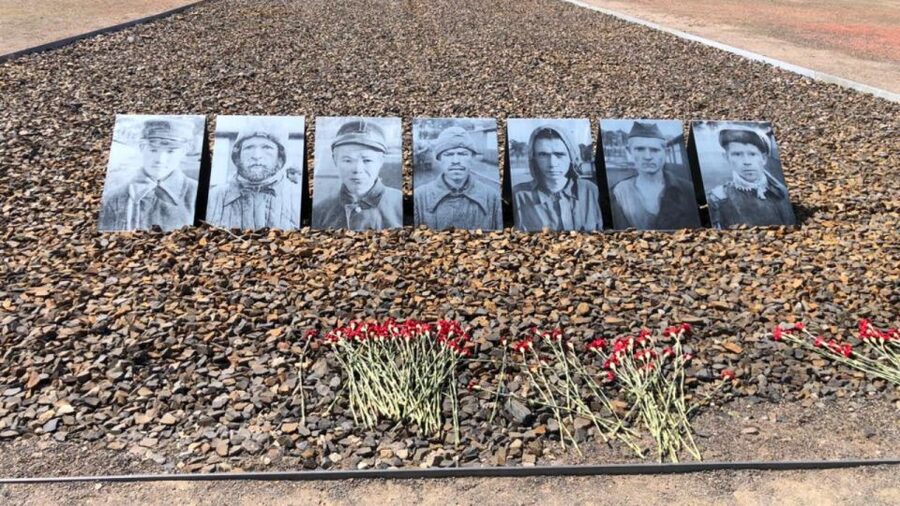
A major strength of this outing is that it does not stop in 1945. After the Nazi period, the Soviet Union used Sachsenhausen as Special Camp No. 7. The camp held around 60,000 prisoners, including German prisoners of war, convicted war criminals, and political prisoners.
The tour discusses continued mistreatment, later conservation work, and the site’s effect on modern Germany. This section matters because it prevents an easy ending. Liberation did not erase the place’s function as a prison, nor did it make the site’s history simple.
You also gain a clearer sense of why memorial work can be difficult. Preserving a former camp involves deciding what to protect, how to explain different periods, and how to honor victims without blurring the differences between Nazi terror and the Soviet camp that followed. The price includes a contribution to the memorial, which supports the care of this important historical place.
Station Z, the infirmary, and the hardest part of the visit
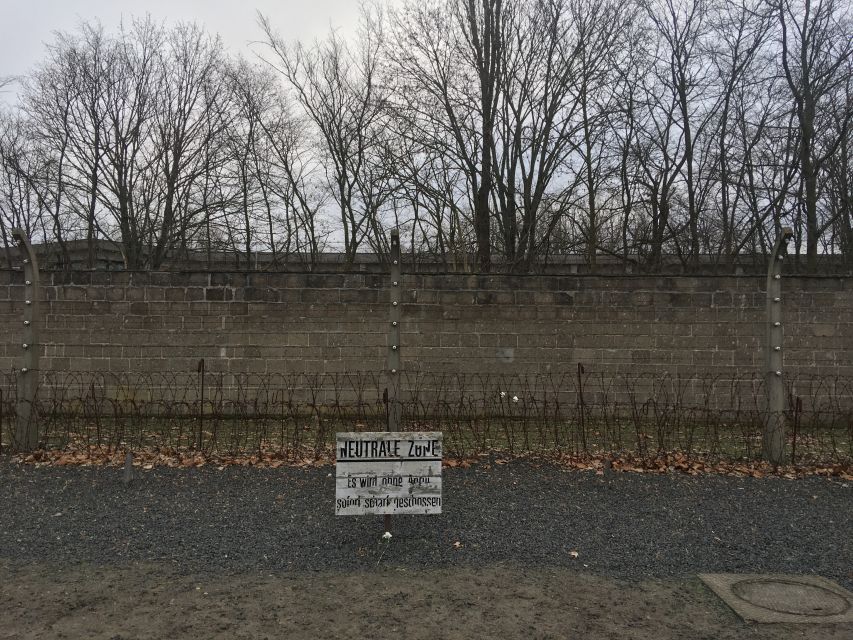
Station Z was the execution area, gas chamber site, and crematorium. This is where the tour addresses the Final Solution and the systematic murder of prisoners. It is likely to be the most emotionally severe portion of the day.
Your guide should give you room to take in the site without unnecessary drama. The importance of Station Z comes from its place in the organized process of murder. The tour explains how the location functioned and how it fits into the wider Nazi campaign against Jewish people and other targeted groups.
Before leaving, the tour passes through the camp infirmary, where prisoners were subjected to medical experiments. This final stop adds another form of abuse to the story. It also shows how medical language and institutional authority could be used to harm people who were already imprisoned and powerless.
You may find the final hour draining. That is not a flaw in the experience, but it is something to plan for. Avoid scheduling another demanding activity immediately afterward if you can.
Is five hours enough for Sachsenhausen?
The advertised duration is five hours: about 30 minutes to the memorial, four hours at the site, and 30 minutes back to Alexanderplatz. That is enough to cover the major sections with a guide, but it is not enough for an unhurried examination of every exhibit.
I see the time as a tradeoff. The tour gives you transport, a clear explanation, a broad route, and a small group in one half-day. You do not need to handle the logistics yourself, and you receive a full narrative from the Nazi camp system through the Soviet period.
If your priority is a guided overview, five hours is sensible. If you want to read every panel, spend long periods in the exhibition spaces, or reflect quietly at each location, you may wish this were a six or seven-hour outing. One practical approach is to stay focused during the guided route and use any available free time at the camp kitchen or exhibits for the displays that matter most to you.
Price, group size, and practical value
At $115 per person, this is not the cheapest way to reach Sachsenhausen. I think the price makes more sense if you value the included van service, the English-speaking guide, the small group, and the contribution to the memorial.
A group limit of seven is the strongest value feature. On a subject this complex, you can ask about terms, prisoner groups, the camp layout, or the postwar period without trying to catch a guide’s attention across a crowd. The personal format also allows a guide such as Matt, Tom, or Jorg to adjust explanations and answer follow-up questions.
The high transport rating, with 86 percent of ratings at the top score, supports the practical side of the arrangement. The overall rating is 4.9 from 42 ratings, and the most praised features are the guides’ command of the subject, compassion, clear explanations, and willingness to answer questions. I would give those qualities more weight here than polished transport alone.
Free cancellation is available up to 24 hours before departure, and you can reserve now and pay later. The tour is wheelchair accessible. It runs in rain or shine, so wear comfortable shoes and bring clothing suited to the forecast. Drones, alcohol, drugs, alcoholic drinks in the vehicle, and bare feet are not allowed.
Who should book this tour?
I would choose this tour if you want a serious introduction to Sachsenhausen and prefer to have the site explained in context. It suits anyone studying World War II, the Holocaust, Nazi Germany, or modern German memory, as well as visitors who want to understand more than the broad outline of what happened.
The small group is a good fit if you value conversation. Guides such as Tom and Matt are praised for being patient, accurate, sensitive, and engaging, while Jorg is noted for offering wider insight into Berlin and its wartime history. Those qualities can make a major difference on a site where a rushed or casual tone would feel out of place.
I would hesitate only if you have very limited time, dislike long walks in changing weather, or want to spend most of the day reading exhibits on your own. In that case, the fixed five-hour format may feel tight.
Should you book the Sachsenhausen tour?
Book it if you want a respectful, well-organized visit with a clear explanation of how the camp operated, how prisoners lived, and how the site was used after the war. The combination of a maximum seven-person group, included transport, a memorial contribution, and guides praised for their care and subject knowledge gives the $115 price a reasonable basis.
Go in prepared for difficult material and a demanding day. Wear good shoes, bring a snack, and leave room afterward to process what you have seen. If you want a complete first visit from Berlin, this tour offers a strong balance of structure, access, and human context, even if independent-minded visitors may wish for more time inside the exhibitions.
FAQ
Where does the tour start?
The meeting point is at the main entrance of the Park Inn by Radisson Berlin Alexanderplatz, at the taxi pickup and drop-off area.
How long does the tour last?
The full experience lasts five hours. The van ride takes about 30 minutes each way, with about four hours at Sachsenhausen Memorial.
What language is the tour conducted in?
The live tour guide conducts the experience in English.
How large is the group?
The tour is limited to seven participants.
Is transportation included?
Yes. Pickup and drop-off from the central meeting point are included in the van transfer.
What should I bring?
Bring comfortable shoes and snacks. A bottle of water is included.
Does the tour run in bad weather?
Yes. The tour takes place rain or shine, so you should dress for the forecast.
Just added around Berlin
- Berlin Highlights in One Day★ 5.0 · 3 reviews
- Private Berlin One Day Tour with a Local: See the City Unscripted★ 3.5 · 3 reviews
- Individual city tour Berlin for max. 8 persons★ 5.0 · 3 reviews
- Transfer from Berlin Schönefeld Airport (SXF) to Berlin city Hotels – ROUND TRIP★ 4.0 · 3 reviews
- Berlin: Museum Island Tour★ 5.0 · 3 reviews
- Private Analogue Photography Experience in Berlin★ 5.0 · 3 reviews
- Berlin: Local Food Tour in Secrets Hidden Gems★ 4.0 · 3 reviews
- Potsdam Highlights – Private sightseeing tour by minibus★ 5.0 · 3 reviews
Sachsenhausen Memorial Tours, compared.
Sachsenhausen Concentration Camp Tour in English
Read our review →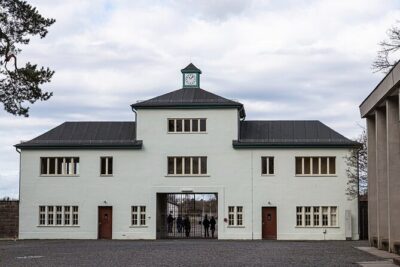
Sachsenhausen Concentration Camp Memorial Tour
Read our review →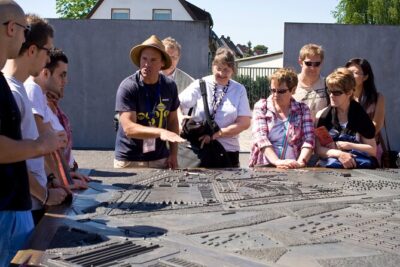
Sachsenhausen Concentration Camp Bus Tour in English from Berlin
Read our review →Sachsenhausen Concentration Camp Tour in English
Read our review →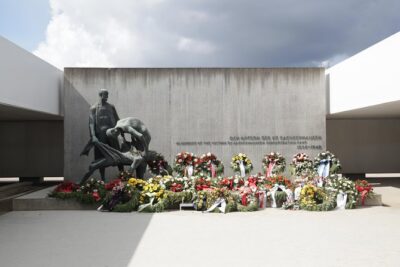
Sachsenhausen Concentration Camp Memorial Tour (Max. 15 Guests)
Read our review →
Sachsenhausen Concentration Camp and Potsdam Tour
Read our review →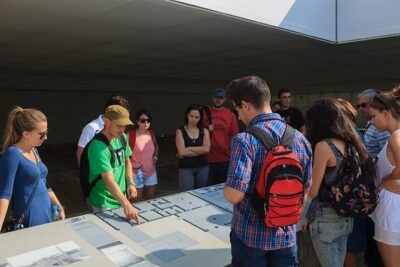
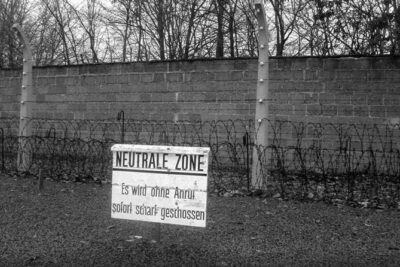
Visita en español al campo de concentración Sachsenhausen
Read our review →Browse the lists this tour appears in