
Review · SACHSENHAUSEN MEMORIAL TOURS
Berlin: Sachsenhausen Concentration Camp Memorial Tour
Sachsenhausen is not a museum you simply walk through and leave behind. It is a place where the layout, surviving buildings, and memorials force you to think about how Nazi persecution was organized. The visit begins with a train ride from Alexanderplatz, then moves through the former camp with a guide who explains what you are seeing and why it matters.
I like the guided train journey, which gives you historical context before you arrive, and I like the choice at the end: return to Berlin with the group or stay longer on your own. Guides such as Peter, Walid, Richard, and Felipe are often praised for clear explanations, careful group management, and respectful answers to difficult questions.
The main drawback is practical and emotional. You will spend much of the day outdoors, walking across a large memorial site, and the subject is painful. In winter, the cold can be severe, while the site is not suitable for wheelchair users or people with mobility impairments.
In This Review
- Key points to know before you go
- Why Sachsenhausen belongs on a Berlin itinerary
- Meeting at Alexanderplatz and taking the train north
- Tower A and the first view of the camp
- Barracks 38 and 39: cramped lives on display
- Punishment cells and the machinery of control
- The infirmary, morgue, and medical crimes
- The prisoner kitchen as a museum
- Station Z and the final memorial areas
- How long the visit feels in practice
- Staying longer or returning with the guide
- The $21 price and what you still need to pay
- Who should book this Sachsenhausen tour
- Final verdict: a serious and worthwhile Berlin day trip
- FAQ
- Where does the Sachsenhausen tour meet?
- How long does the experience last?
- Is the train ticket included?
- Is the Sachsenhausen entrance fee included?
- Which languages are available?
- What places do you visit at Sachsenhausen?
- Can I stay at the memorial after the guided tour?
- What should I bring?
- Is the tour suitable for wheelchair users?
- Can I cancel the booking?
Key points to know before you go
- Start at Alexanderplatz: Meet beside the World Time Clock, then travel by train with your guide to the memorial.
- See more than the famous gate: The route includes Barracks 38 and 39, punishment cells, the infirmary and morgue, the prisoner kitchen, Station Z, and the Soviet memorial.
- The train ticket is extra: You need an ABC zone ticket before the tour begins. The €3 memorial entrance fee is included in the tour price.
- Expect a serious, detailed visit: The guide explains the camp’s purpose, notable prisoners, medical crimes, executions, and later Soviet use of the site.
- You may stay after the guided visit: The guide can help you return to Berlin, or you can continue exploring the memorial at your own pace.
- Choose your language carefully: Tours are offered in English, Spanish, German, French, and Italian.
Why Sachsenhausen belongs on a Berlin itinerary
Berlin has many places connected with Nazi Germany, but Sachsenhausen shows how persecution worked beyond the city center. Here, the system is visible in the camp’s design, surviving structures, displays, and memorials.
Sachsenhausen was built in 1936 and was treated by the Nazis as a model concentration camp. That does not make the place easier to visit. It makes the site especially important for understanding the planned nature of the camp system and the way prisoners were controlled.
I find a guided visit useful because the memorial contains several layers of meaning. Nazi buildings and ruins sit alongside later memorials, including the large Soviet monument built in 1961. Those memorials were created at different times and for different political purposes, so the site cannot be understood by looking at one building in isolation.
The tour gives you a framework before you enter. That matters. Without context, a barracks may look like an old structure and a ruin may look like little more than broken concrete. With an explanation of who was held there and what happened in each area, the physical remains become much easier to understand.
More Sachsenhausen memorial visits:
- Berlin: Sachsenhausen Concentration Camp Tour in English
★ 5.0 · 5,711 reviews - Sachsenhausen Concentration Camp Bus Tour in English from Berlin
★ 5.0 · 1,962 reviews - Berlin: Sachsenhausen Concentration Camp Tour in English
★ 4.8 · 1,889 reviews
Meeting at Alexanderplatz and taking the train north
The meeting point is beside the World Time Clock at Alexanderplatz. Look for a guide wearing Buendía accreditation. Alexanderplatz is a busy transport hub, so arriving with enough time to find the clock is wise.
The train ride is not just a transfer. Your guide accompanies the group from Berlin and explains the camp’s origins, its role in the Nazi system, and the reason it was considered a model camp. This early briefing helps you prepare for the memorial instead of arriving without any sense of what you are about to see.
You need to buy an ABC zone train ticket before the activity. It is not included in the $21 tour price. You can purchase one from a station ticket machine or through the Berliner Verkehrsbetriebe website.
This is an important detail. Some guides check that everyone has the correct ticket before the train leaves, and they help the group with trains at the end. That support is useful, especially if you are unfamiliar with Berlin’s fare zones or if the return journey changes because of delays or cancellations.
The train route also adds a sobering layer to the visit. The journey connects Berlin with the former camp, and the route is part of the setting you are being asked to consider. It is not a theatrical reenactment, and the guide should keep the focus on history rather than drama. The best guides reported for this tour, including Peter, Walid, Richard, and Felipe, are praised for doing exactly that.
Tower A and the first view of the camp
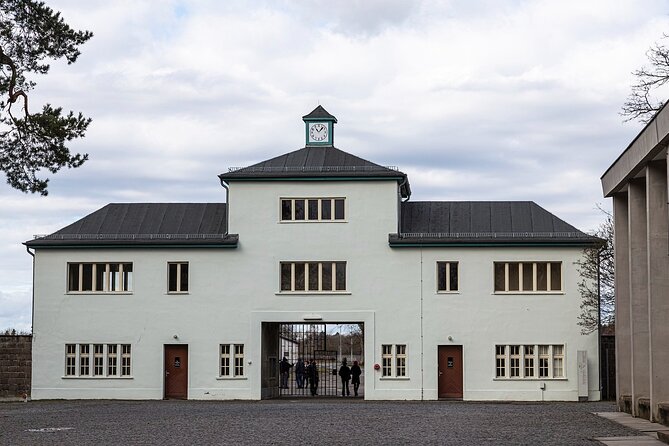
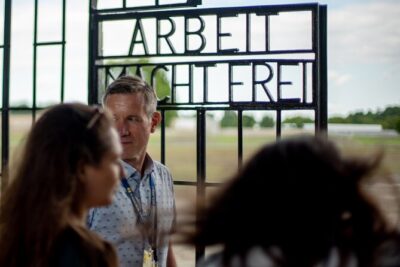
At Sachsenhausen, the tour begins at Tower A, the main entrance. The gate carries the infamous Arbeit macht Frei sign, a phrase that became one of the most recognizable symbols of Nazi concentration camps.
This first stop can be difficult because the entrance looks controlled and orderly. That appearance is part of what makes it so disturbing. The tour begins by showing how the camp presented itself physically, then explains the violence and forced labor that existed behind that orderly design.
Your guide will help you read the site rather than simply point at buildings. You will hear about the camp’s function, the people imprisoned there, and the way the Nazi system used rules, punishment, deprivation, and terror to control prisoners.
The atmosphere is quiet and serious. Do not expect a light sightseeing stop or a fast collection of photo opportunities. A respectful approach is required, and the guides make a point of treating the subject and the victims with care.
Barracks 38 and 39: cramped lives on display
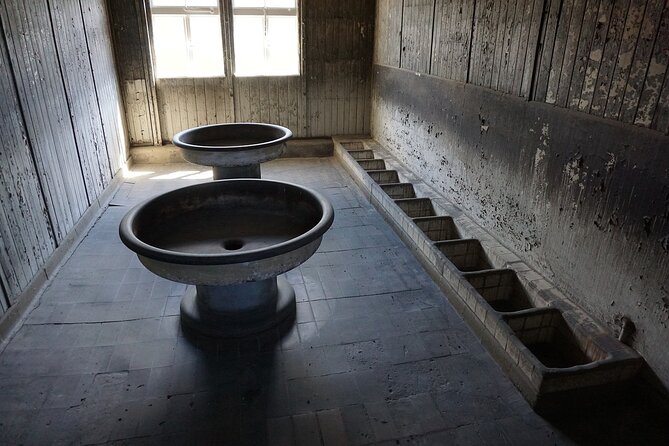
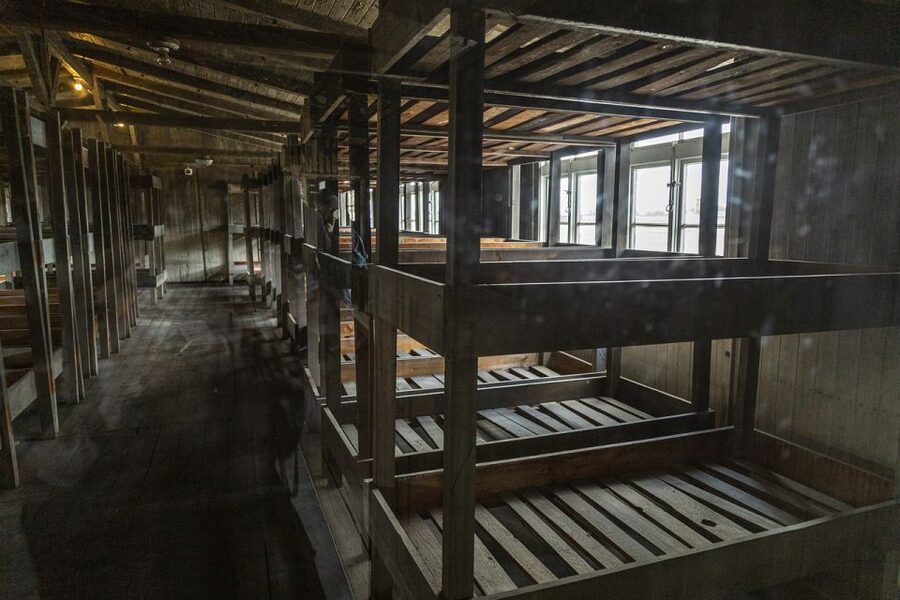
Barracks 38 and 39 were used to hold Jewish prisoners. The buildings and their displays help you understand the physical conditions of daily life inside the camp.
Barracks 38 now houses a museum. The focus is not only on major political events, but also on the confined routines of prisoners. The cramped conditions are central to the experience. You can begin to understand how overcrowding, limited privacy, and constant control shaped ordinary life.
This is one of the tour’s most valuable stops because it brings the story down to a human scale. Large numbers can become hard to grasp. A barracks, by contrast, helps you think about individuals sharing a restricted space under a system designed to remove dignity and freedom.
The guide’s role matters here. A good explanation can connect the display to the wider history without turning personal suffering into a spectacle. Several guides, including Amelia and Roshana, are praised for explaining difficult facts clearly and taking time to answer questions.
The tour is offered in English, Spanish, German, French, and Italian. Check the language when booking, since the quality of the explanation depends on your ability to follow the details.
A different side of Berlin on the same trip:
- Berlin: Reichstag, Dome and Government District Guided Tour
★ 4.7 · 18,288 reviews - Berlin: 1-Hour City Tour by Boat with Guaranteed Seating
★ 4.3 · 16,993 reviews - Berlin: Boat Tour Along the River Spree
★ 4.4 · 11,252 reviews - Discover Berlin Half-Day Walking Tour
★ 5.0 · 9,624 reviews
Punishment cells and the machinery of control
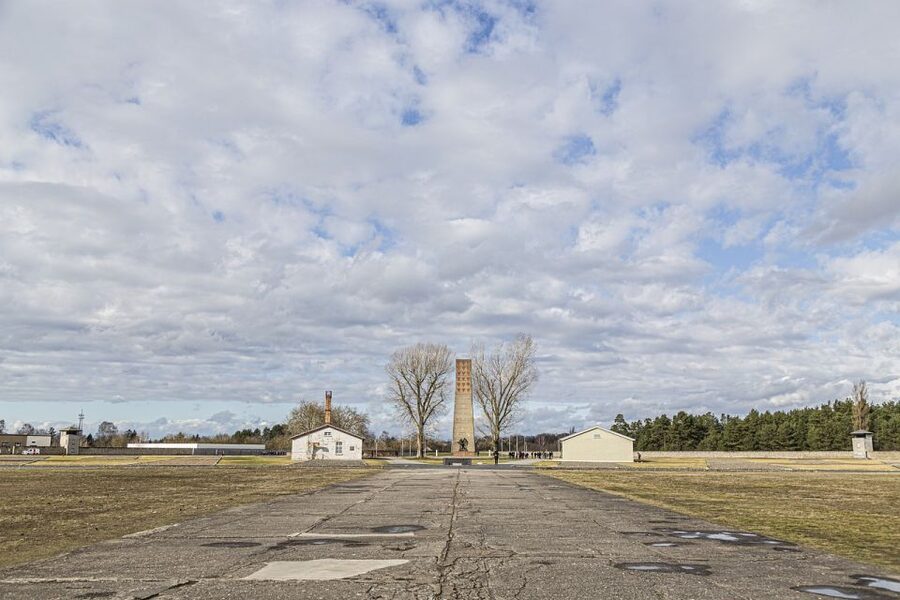
The former punishment cells show how minor offenses could lead to detention. This stop helps explain that camp discipline was not limited to major crimes or formal trials. Prisoners lived under a system where rules could be used to create fear and reinforce obedience.
You will hear how these cells were used and why they formed part of the camp’s control system. The spaces are stark, and the lack of comfort is part of the message. The tour does not need exaggerated storytelling here. The plain facts are enough.
I appreciate that the experience gives attention to these less famous areas. Many people arrive knowing about the entrance sign or the cremation facilities, but punishment cells reveal another part of daily life: the constant threat of punishment and the power held by the camp authorities.
This section can also help correct simplistic ideas about concentration camps. The camp was not only a place where people were killed. It was also a system of imprisonment, forced labor, abuse, punishment, medical cruelty, and organized terror. That wider explanation is one reason a guide adds real value.
The infirmary, morgue, and medical crimes
The tour includes the infirmary and morgue, where you learn about cruel medical experiments carried out on prisoners. This is among the hardest parts of the visit.
You should expect disturbing material. The guide’s tone is especially important here. The strongest approach is factual and respectful, allowing the evidence to speak without making the visit feel like a horror show.
This stop makes clear that medical spaces inside the camp were not automatically places of care. Under the Nazi system, prisoners could be treated as objects for experimentation rather than as people with rights.
You may find the material emotionally heavy, even if you have studied the period before. Give yourself time to process it. The five-hour schedule includes the journey and the memorial visit, but the guide is not trying to rush you through a checklist. The aim is to explain the main areas in a logical order.
The prisoner kitchen as a museum
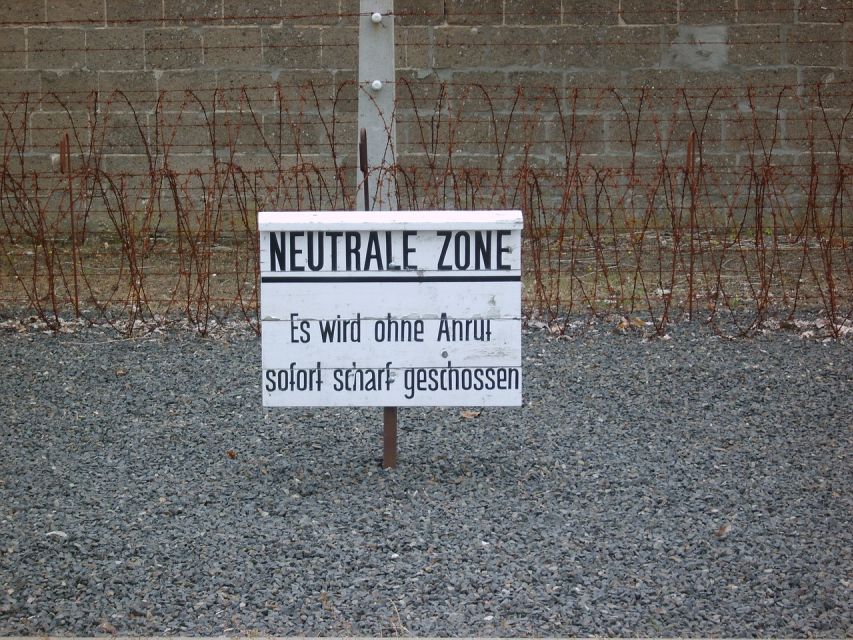
The former prisoner kitchen now serves as a museum. It offers another way to understand the camp’s operation and history through displays and key events.
A kitchen may sound less dramatic than an execution site, but it is useful precisely because it relates to daily survival. Food, hunger, work, and control were part of the prisoner experience, and the kitchen helps place those issues within the wider system.
I like the balance in the itinerary. You see buildings tied to administration and punishment, but also spaces connected with daily life. This prevents the visit from becoming only a tour of ruins. It shows how the camp operated as a complete environment.
Your guide will connect the kitchen displays with the timeline of Sachsenhausen. That broader explanation is helpful if you do not already know the history of the camp or Nazi Germany.
Station Z and the final memorial areas
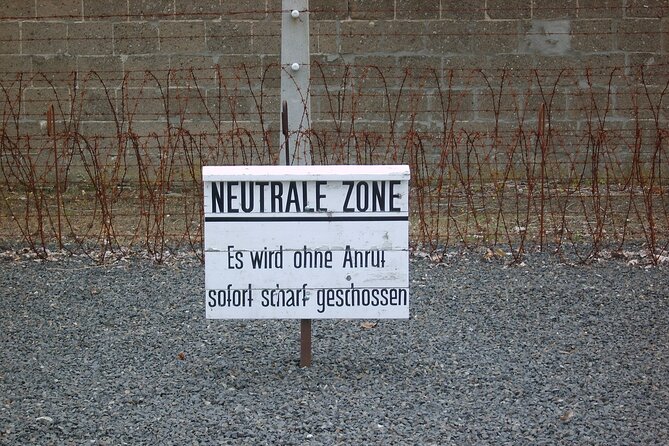
Station Z is the name given to the area where many executions took place. The remains are stark and difficult to see. This is one of the places where you may want to pause rather than move quickly to the next stop.
The name itself reflects the camp’s brutal logic. Tower A marked the entrance, while Station Z represented the end. The tour explains the site’s purpose and the events connected with it without turning the area into a dramatic set piece.
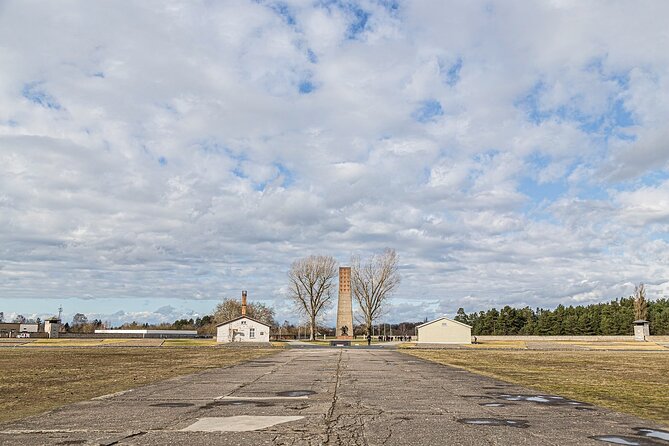
The route then includes the Soviet memorial built in 1961. This later monument reflects the camp’s history after World War II and adds another layer to the memorial site.
That contrast is important. Sachsenhausen was used by the Nazis, but its history did not end in 1945. The Soviet memorial shows how the site was interpreted and presented in the postwar period. Your guide explains the different monuments and the ideologies behind them, helping you understand why the memorial looks the way it does today.
This is an area where an unguided visit can leave you with questions. The buildings, ruins, and monuments were created or preserved at different times. A guide helps separate the Nazi period from the later Soviet memorial period and explains how both relate to the place.
How long the visit feels in practice
The full activity lasts about five hours. That includes the train journey from Berlin, the guided visit, and the return journey or time to remain at the site.
A substantial part of the visit is spent at the memorial. One detailed account describes roughly three hours at Sachsenhausen, which is enough time to cover the principal areas without making the day feel rushed.
You will be walking between buildings and memorials, often outdoors. Wear comfortable shoes and bring snacks. There is practical advice worth remembering too: take a restroom break when the opportunity comes, since the memorial is a large site and the schedule is organized around the route.
Weather changes the experience. In cold weather, the open spaces can feel bitterly cold. In one winter account, the guide kept the outside explanations efficient because the group was freezing. Bring suitable clothing, especially if you visit between late autumn and early spring.
The memorial is not suitable for wheelchair users or people with mobility impairments. The walking, outdoor sections, and site layout make this a poor choice if you need step-free or highly accessible conditions.
Staying longer or returning with the guide
At the end, you can return to Berlin by train with help from the guide. This is the easiest option if you want a clear finish to the day or do not feel comfortable navigating the rail system alone.
You can also stay longer and explore Sachsenhausen at your own pace. I like this flexibility. The guided route gives you the main historical structure, then you can decide if you want more time with the museum displays and memorials.
Staying longer may suit you if you prefer a quiet visit after the group has moved on. On the other hand, the site is emotionally demanding, so returning to Berlin with the group may be the better choice if you feel ready to leave.
Guides often help with directions beyond the tour as well. Several accounts describe assistance with trains and suggestions for other Berlin sights. That is a useful bonus, though the main value remains the historical guidance at Sachsenhausen.
The $21 price and what you still need to pay
At $21 per person, the tour is priced well for a five-hour experience with a professional guide, transport assistance, memorial admission, and a guided route through the major areas.
The $3 entrance fee to the Sachsenhausen Memorial is included. Your train ticket is not, and you must buy an ABC zone ticket before departure. That extra cost is easy to overlook, so include it in your budget.
I consider the price good value if you want historical explanation and help with the journey. You could visit the memorial independently, but then you would need to manage the train route, ticket zones, site layout, and historical context yourself.
The tour also reduces the risk of wasting time. Guides check the group’s transport arrangements, organize the route, and explain what you are looking at. The value is less about luxury and more about clarity, structure, and support.
Who should book this Sachsenhausen tour
I would recommend it to you if Berlin’s 20th-century history is an important reason for your visit. It also suits students, history-focused families with older children, and anyone who wants a serious memorial visit with clear guidance.
You should be ready for upsetting subject matter. This is not a casual half-day excursion, and humor should never be the main attraction. Some guides are described as friendly or lightly humorous during the journey, but the tone at the memorial remains respectful.
The experience is especially useful if you are uncertain about visiting a concentration camp memorial. A guide such as Peter, Walid, Richard, or Felipe can provide structure, explain what you are seeing, and help you move through the site without feeling lost.
I would think twice if you dislike group tours, need extensive free time, or have difficulty walking. You can stay after the guided portion, but the main visit follows a set route and includes substantial time on foot.
Final verdict: a serious and worthwhile Berlin day trip
Book this tour if you want to understand Sachsenhausen rather than simply see it. The guide-led train ride, clear explanations, major memorial areas, and choice to stay longer make it a practical way to visit from Berlin.
The strongest part is the guide support. Names such as Peter, Walid, Richard, Felipe, Amelia, and Roshana recur in the experience, with particular praise for clear historical explanations, respectful delivery, language skills, and help with transport.
Bring warm clothes, solid shoes, snacks, and an open mind. The visit will not be easy, but it can give you a clearer understanding of how Nazi persecution operated and why remembrance sites still matter.
FAQ
Where does the Sachsenhausen tour meet?
The meeting point is next to the World Time Clock at Alexanderplatz in Berlin. The guide will wear Buendía accreditation.
How long does the experience last?
The full activity lasts five hours. This includes the train journey from Berlin, the guided visit to the memorial, and the return journey or time to remain at the site.
Is the train ticket included?
No. You must purchase an ABC zone train ticket before the activity. Tickets are available from station machines or through the Berliner Verkehrsbetriebe website.
Is the Sachsenhausen entrance fee included?
Yes. The €3 entrance fee to the Sachsenhausen Concentration Camp Memorial is included.
Which languages are available?
The tour is offered in Spanish, English, German, French, and Italian.
What places do you visit at Sachsenhausen?
The route includes Tower A, Barracks 38 and 39, the punishment cells, the infirmary and morgue, the former prisoner kitchen, Station Z, and the Soviet memorial built in 1961.
Can I stay at the memorial after the guided tour?
Yes. You can remain at Sachsenhausen to explore independently, or return to Berlin with help from the guide.
What should I bring?
Wear comfortable shoes and bring snacks. Warm clothing is also sensible because much of the visit takes place outdoors.
Is the tour suitable for wheelchair users?
No. The activity is not suitable for wheelchair users or people with mobility impairments.
Can I cancel the booking?
Yes. You can cancel up to 24 hours before the activity for a full refund. You can also reserve now and pay later.
Just added around Berlin
- Berlin Highlights in One Day★ 5.0 · 3 reviews
- Private Berlin One Day Tour with a Local: See the City Unscripted★ 3.5 · 3 reviews
- Individual city tour Berlin for max. 8 persons★ 5.0 · 3 reviews
- Transfer from Berlin Schönefeld Airport (SXF) to Berlin city Hotels – ROUND TRIP★ 4.0 · 3 reviews
- Berlin: Museum Island Tour★ 5.0 · 3 reviews
- Private Analogue Photography Experience in Berlin★ 5.0 · 3 reviews
- Berlin: Local Food Tour in Secrets Hidden Gems★ 4.0 · 3 reviews
- Berlin & The Third Reich Private Guided Tour★ 5.0 · 3 reviews
Sachsenhausen Memorial Tours, compared.
Sachsenhausen Concentration Camp Tour in English
Read our review →
Sachsenhausen Concentration Camp Bus Tour in English from Berlin
Read our review →Sachsenhausen Concentration Camp Tour in English
Read our review →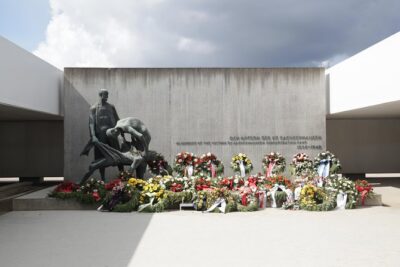
Sachsenhausen Concentration Camp Memorial Tour (Max. 15 Guests)
Read our review →
Sachsenhausen Concentration Camp and Potsdam Tour
Read our review →
Visita en español al campo de concentración Sachsenhausen
Read our review →
Sachsenhausen Concentration Camp Bus Tour in English
Read our review →Browse the lists this tour appears in