
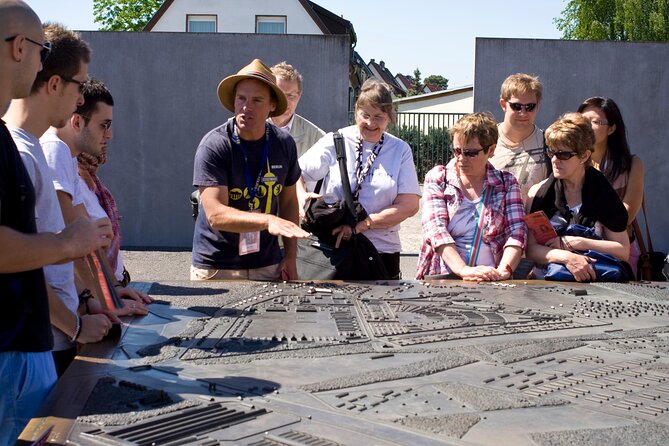
Review · SACHSENHAUSEN MEMORIAL TOURS
Sachsenhausen Concentration Camp Bus Tour in English from Berlin
Sachsenhausen is not a sightseeing stop in the usual sense. It is a place of hard facts, empty barracks, and uncomfortable questions. This four-hour tour takes you from central Berlin to the memorial by coach, then helps you understand what happened here under the Nazi regime and after the war.
I like the direct bus transfer and the fact that a licensed guide leads the visit rather than leaving you to piece together the site alone. I also like the small-group format, capped at 28 people, and the thoughtful historical background given on the ride to Oranienburg.
The main drawback is time. Four hours is enough for the major areas and a clear overview, but it may feel rushed if you want to read every personal account in the museum displays. For a slower, more detailed visit, independent travel by train may suit you better.
In This Review
- Key points to know before you book
- Why Sachsenhausen matters in Berlin
- The ride from Friedrichstraße to Oranienburg
- Entering through Tower A and the camp gate
- The commandant’s house and the machinery of the camp
- Infirmary barracks and the personal cost of imprisonment
- The Soviet special camp from 1945 to 1950
- How the four-hour schedule feels
- What the $68.77 price buys you
- The guides and the tone of the visit
- Practical details for a respectful visit
- Who should book this Sachsenhausen tour
- Should you book it?
- FAQ
- Where does the Sachsenhausen tour start?
- What time should I arrive?
- How long does the experience last?
- Is transportation included?
- Is admission to Sachsenhausen included?
- Is food provided?
- Is the tour suitable for people with limited mobility?
Key points to know before you book
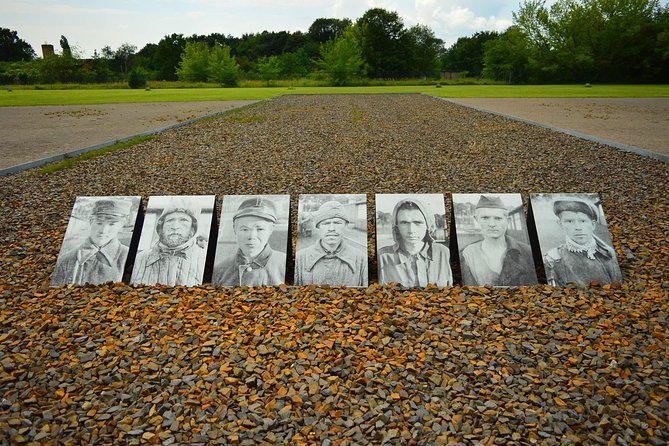
- Sachsenhausen records two periods of suffering: about 35,000 people died under the Nazi camp system from 1936 to 1945, followed by about 12,500 deaths in the Soviet special camp from 1945 to 1950.
- The coach leaves from central Berlin: Meet at Reichstagufer 17, near Friedrichstraße station, 15 minutes before the 10 a.m. departure.
- The tour covers the major landmarks: You see Tower A and its gate, the commandant’s house, infirmary barracks, and the camp interior.
- Guide quality is a major strength: Guides including Hannah, Rebecca, Ariel, Joseph, Maria, Paul, and Mikhail are praised for clear explanations and a respectful manner.
- Bring water and a snack: Food and drinks are not included, and the memorial visit involves substantial walking.
- It is a serious, active visit: The tour is not recommended for people with limited mobility or walking impairments.
Why Sachsenhausen matters in Berlin
Berlin has no shortage of museums about the Nazi period, but Sachsenhausen gives you a physical sense of the system beyond the city center. The former camp was built at Oranienburg in 1936, and its layout was designed as a model for a modern, expandable concentration camp.
That word, modern, is part of the horror. The site was planned, organized, and built to serve a brutal political system. Its broad geometry and controlled entrances were not accidental. The camp was intended to make surveillance and punishment efficient.
The approach from Berlin also has value. On the coach, your guide introduces the camp before you arrive and points out places in Oranienburg connected with inmate labor. You also hear about what local people knew, or could have known, about the vast camp network around them.
That context matters because Sachsenhausen was not an isolated prison hidden in a remote wilderness. It operated within a town and within a wider society. The journey gives you time to absorb that setting before you begin walking through the memorial.
More Sachsenhausen memorial visits:
- Berlin: Sachsenhausen Concentration Camp Tour in English
★ 5.0 · 5,711 reviews - Berlin: Sachsenhausen Concentration Camp Memorial Tour
★ 4.7 · 3,716 reviews - Berlin: Sachsenhausen Concentration Camp Tour in English
★ 4.8 · 1,889 reviews
The ride from Friedrichstraße to Oranienburg
The meeting point is at Reichstagufer 17, close to Friedrichstraße station. You need to arrive at least 15 minutes before departure, which is especially important here because the coach leaves at 10 a.m. and the group cannot wait indefinitely for late arrivals.
The air-conditioned vehicle handles both outward and return transport. That saves you from working out the train connection to Oranienburg and then finding your way from the station to the memorial. For a first visit to Berlin, that simplicity is worth something.
The ride also gives the guide a useful opening. Instead of beginning with a pile of dates at the gate, you get an explanation of how Sachsenhausen fit into the Nazi camp system. Guides such as Ariel, Hannah, Rebecca, and Joseph have been especially praised for making this background clear and personal without losing sight of the facts.
Do not expect a scenic tour in the usual sense, though the countryside and town can look pleasant in winter. The value of the ride is preparation. You are moving from present-day Berlin into a place that requires attention and emotional readiness.
Entering through Tower A and the camp gate
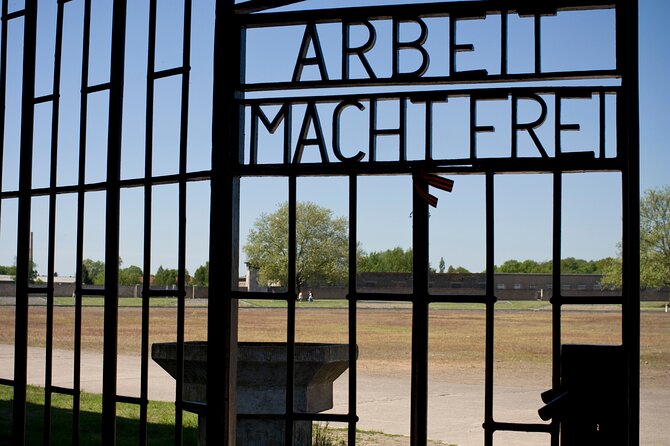
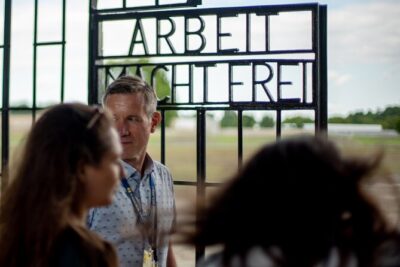
The first major moment comes at Tower A, the main entrance. The words Arbeit Macht Frei remain above the gate. Seeing them in place is stark, but the guide’s explanation is more important than the photograph.
A good guide helps you understand how language was used to disguise violence. The slogan suggested that work could bring freedom, while the camp system used forced labor, hunger, disease, terror, and murder. The gate was both a physical entrance and a message of control.
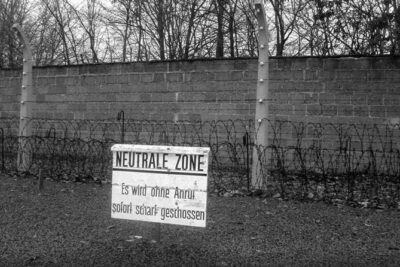
From here, you walk into the former camp area. The site is large and open in places, with surviving structures and marked foundations helping you understand its former scale. You will be outdoors for much of the visit, so cold weather can make the experience more physically demanding. One account described the snow and cold as making the site feel even more severe, though weather naturally varies.
The pace is steady. You are not simply dropped at the entrance and told to explore. Your guide leads the group between key points, explains what stood there, and answers questions along the way. That structure is useful at a place where it would be easy to miss what you are looking at.
The commandant’s house and the machinery of the camp
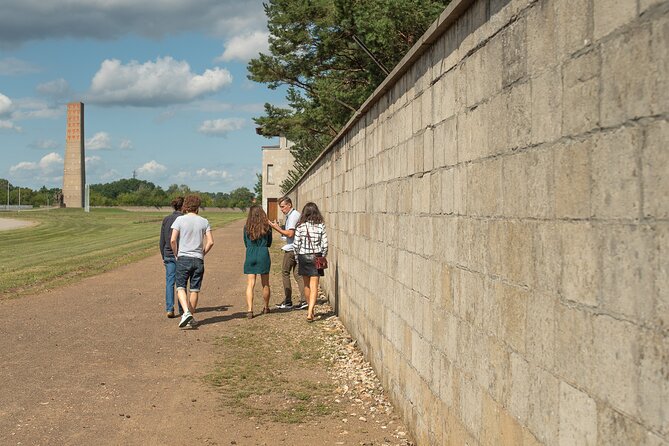
The commandant’s house is one of the places where the human scale of the camp becomes difficult to ignore. It helps show the contrast between the people who administered the camp and those who were imprisoned there.
The tour also explains Sachsenhausen as a place of administration and training within the wider concentration camp system. You learn how the camp was organized, how inmates were forced to work, and how the system grew over time.
This is where the guide’s skill matters most. The subject needs more than dates, but it also needs more than dramatic storytelling. The strongest guides, including Rebecca, Paul, Mikhail, and Campbell, are praised for presenting difficult material with clarity and restraint, while adding lesser-known details and answering questions directly.
You may hear personal or family connections from some guides. Hannah, for example, has shared a story about her grandparents escaping Nazi Germany. That kind of detail can give historical context a human voice, but the tour remains focused on Sachsenhausen and its victims rather than on the guide.
A different side of Berlin on the same trip:
- Berlin: Reichstag, Dome and Government District Guided Tour
★ 4.7 · 18,288 reviews - Berlin: 1-Hour City Tour by Boat with Guaranteed Seating
★ 4.3 · 16,993 reviews - Berlin: Boat Tour Along the River Spree
★ 4.4 · 11,252 reviews - Discover Berlin Half-Day Walking Tour
★ 5.0 · 9,624 reviews
Infirmary barracks and the personal cost of imprisonment
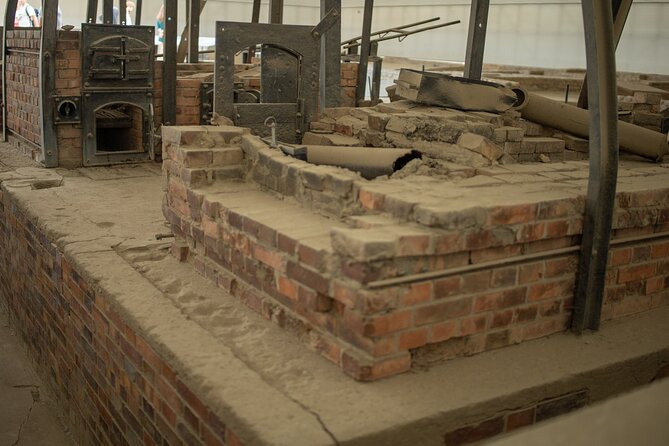
The infirmary barracks are among the most disturbing areas because they show that medical spaces were also used for experimentation during the war. This is not a section to rush through emotionally, even though the schedule may require the group to keep moving.
The camp’s buildings and displays connect broad history with individual lives. Names, testimonies, and personal accounts can make the numbers more understandable. This is also the section where the time limit is most noticeable.
A four-hour excursion includes transport in both directions, so the memorial visit itself cannot give you unlimited time. You will see the main points and receive explanations, but you may not have enough time to read every story in the museum rooms at length.
I would treat the guided portion as a strong introduction rather than the final word. If one testimony or exhibit catches your attention, make a note of it and return independently later if your Berlin schedule allows. The tour gives you the framework. A longer second visit can give you the quiet time for individual stories.
The Soviet special camp from 1945 to 1950
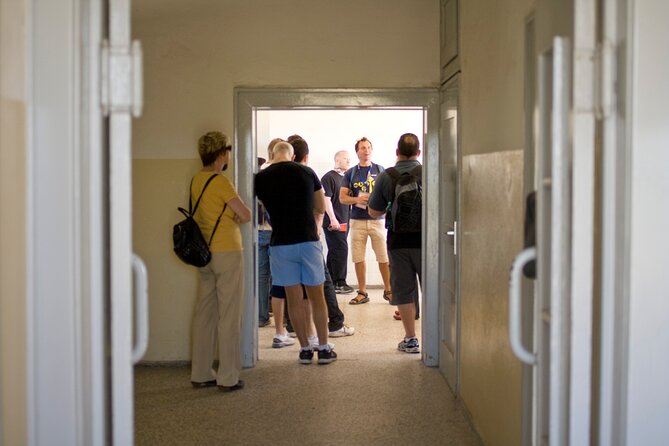
Sachsenhausen’s history did not end in 1945. After the war, the Soviet authorities reused the site as a special camp, operating there from 1945 to 1950. About 12,500 people died during this later period.
Including this chapter is one of the tour’s most useful features. It prevents a simple ending in which the camp’s story stops with the defeat of Nazi Germany. The site continued to be used as a place of imprisonment, and the later history raises difficult questions about power, justice, and memory in postwar Europe.
Your guide explains what life was like for inmates during those years and how the memorial presents the two periods. The Soviet camp is not merely an appendix to the Nazi history. It is part of the site’s full record, and understanding it gives you a more accurate picture of Sachsenhausen.
How the four-hour schedule feels
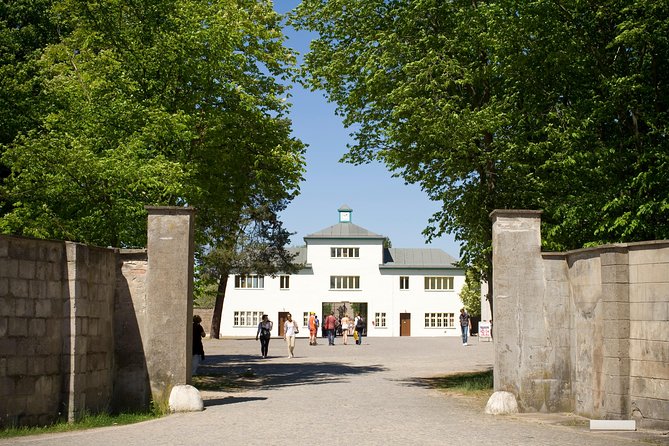
The advertised duration is about four hours, including the journey from central Berlin and the return trip. That makes this an efficient option if you want a serious historical visit without giving up an entire day.
You should expect a moderate level of walking. The surface and weather may affect how comfortable you feel, and the visit is not recommended for people with limited mobility or walking impairments. Wear practical shoes and dress for the forecast, since much of the memorial is outside.
The group maximum is 28 people. That is not a private tour, but it is more manageable than a large sightseeing crowd. You can generally hear the guide more easily, and questions are more practical in a group of this size.
Still, group tours have a fixed rhythm. You cannot always stop for as long as you wish, and the guide must keep the whole group together. The tour works best if you want the main story explained in a clear order. It is less suited to someone who prefers to spend an hour with each display.
What the $68.77 price buys you
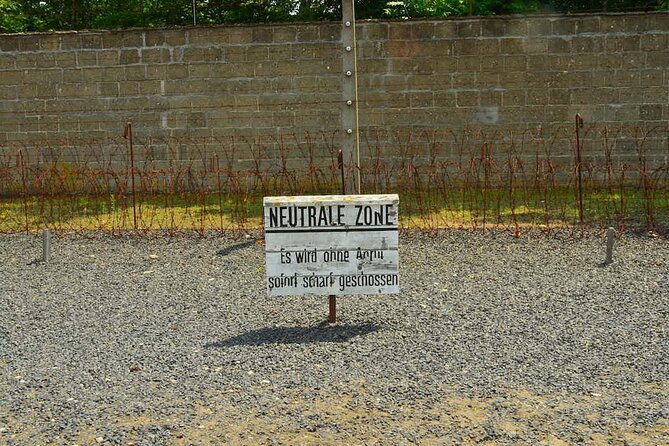
At $68.77 per person, the price is not simply an entrance ticket. It includes the air-conditioned coach, driver, licensed guide trained by the memorial authority, admission to Sachsenhausen, the guided group visit, return transport, and a €3 donation to the memorial.
That package is fairly easy to value. You are paying for transport, planning, and interpretation as well as entry. The coach is particularly helpful because it takes away the small logistical chores that can eat into a morning, especially if you are unfamiliar with Oranienburg.
The price is less attractive if you want a long, self-directed museum visit. Independent travel by train should cost less, though you would need to arrange the route and manage the visit yourself. You would also lose the guide’s explanations on the way there and between the camp buildings.
For me, the tour earns its price when you want structure and context. A site this serious can be hard to approach alone. A good guide helps you notice what you are seeing and keeps the historical record in focus.
The guides and the tone of the visit
The most consistent strength is the guiding. Names associated with particularly strong experiences include Hannah, Rebecca, Ariel, Joseph, Maria, Irish Paul, Mikhail, Jamie S., Klaus, Georgia, and Campbell. Your assigned guide can vary, so you should not book on the assumption that one particular person will lead your group.
The best guiding here is calm, direct, and respectful. Rebecca has been praised for answering questions thoroughly and speaking with care. Ariel is known for a steady pace and clear explanations. Joseph connects the camp with the social and political conditions in Berlin before the war, while Paul is praised for handling the subject with sensitivity.
That last point matters. Sachsenhausen is not a place for theatrical performance. You need facts, context, and room to think. Most accounts describe the guides as friendly and well prepared, but one experience felt too rushed, with too much attention on the limited schedule and not enough time for the site itself.
That criticism is worth taking seriously. Ask questions when you can, but understand that the guide must maintain the timetable. If you need silence and long pauses, an independent visit may be better.
Practical details for a respectful visit
Bring a drink and a snack because neither food nor beverages are included. You may also want a small notebook if you expect to return to Berlin and read more about a particular person or part of the camp.
The mobile ticket is convenient, and confirmation is normally issued when you book. If you reserve within one day of departure, confirmation arrives as soon as possible and depends on availability.
The tour begins and ends at the central meeting point near Friedrichstraße. Hotel pickup and drop-off are not included, so allow time to reach Reichstagufer 17 before the 10 a.m. start.
Free cancellation is available until 24 hours before the experience begins. Cancellations or changes made within that final 24-hour period are not refunded or accepted.
At the end of the return ride, the guide may be able to suggest places to eat or other things to see in Berlin. This is a small but useful extra, especially if you are still planning the rest of your day.
Who should book this Sachsenhausen tour
I would choose this tour if you want a guided introduction to Nazi Germany and the camp system, and if you value an easy trip from central Berlin. It suits first-time visitors who want the major history explained in a thoughtful order.
It is also a good fit for families or groups with mixed levels of historical interest. A guide can provide enough context for someone new to the subject while still answering more detailed questions from people who have already read about the period.
I would think twice if you have limited mobility, dislike outdoor walking, or want to examine every museum display at your own speed. The schedule is fixed, and the memorial can be physically and emotionally tiring.
Should you book it?
Book this Sachsenhausen bus tour if you want efficient transport, a licensed English-speaking guide, and a clear account of both the Nazi and Soviet periods. The price is reasonable for the coach, entry, donation, and several hours of guided interpretation.
Skip it in favor of an independent visit if your main goal is extended reading and quiet reflection at each exhibit. For most people with one Berlin morning to spare, though, this is a strong and carefully handled way to meet one of Germany’s most important memorial sites.
FAQ
Where does the Sachsenhausen tour start?
The tour starts at Reichstagufer 17, 10117 Berlin, near Friedrichstraße station.
What time should I arrive?
The tour departs at 10 a.m. You should be at the meeting point 15 minutes before departure.
How long does the experience last?
The experience lasts about four hours, including the journey to Sachsenhausen and the return to central Berlin.
Is transportation included?
Yes. An air-conditioned coach takes you from central Berlin to Oranienburg and returns you to the meeting point afterward.
Is admission to Sachsenhausen included?
Yes. Entry to the Sachsenhausen Memorial is included, along with a €3 donation per person to the memorial.
Is food provided?
No. Food and drinks are not included, so bring a snack and something to drink.
Is the tour suitable for people with limited mobility?
The tour requires a moderate level of physical fitness and is not recommended for people with limited mobility or walking impairments.
Just added around Berlin
- Berlin Highlights in One Day★ 5.0 · 3 reviews
- Private Berlin One Day Tour with a Local: See the City Unscripted★ 3.5 · 3 reviews
- Individual city tour Berlin for max. 8 persons★ 5.0 · 3 reviews
- Transfer from Berlin Schönefeld Airport (SXF) to Berlin city Hotels – ROUND TRIP★ 4.0 · 3 reviews
- Berlin: Museum Island Tour★ 5.0 · 3 reviews
- Private Analogue Photography Experience in Berlin★ 5.0 · 3 reviews
- Berlin: Local Food Tour in Secrets Hidden Gems★ 4.0 · 3 reviews
- Berlin & The Third Reich Private Guided Tour★ 5.0 · 3 reviews
Sachsenhausen Memorial Tours, compared.
Sachsenhausen Concentration Camp Tour in English
Read our review →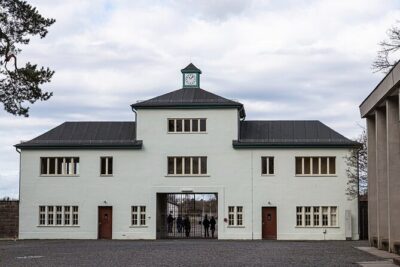
Sachsenhausen Concentration Camp Memorial Tour
Read our review →Sachsenhausen Concentration Camp Tour in English
Read our review →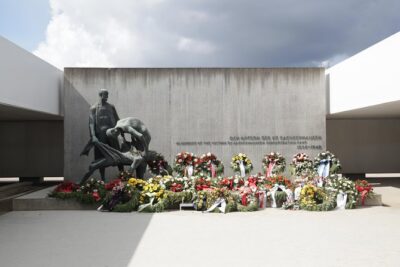
Sachsenhausen Concentration Camp Memorial Tour (Max. 15 Guests)
Read our review →
Sachsenhausen Concentration Camp and Potsdam Tour
Read our review →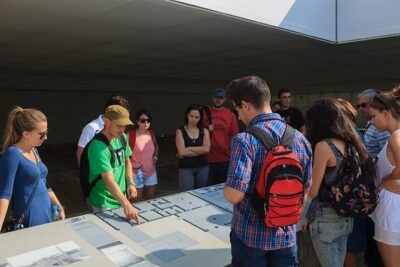
Visita en español al campo de concentración Sachsenhausen
Read our review →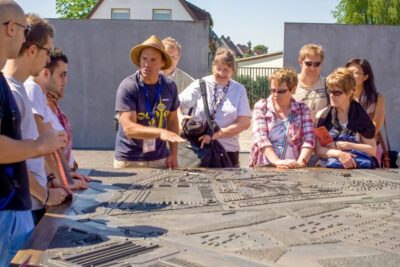
Sachsenhausen Concentration Camp Bus Tour in English
Read our review →Browse the lists this tour appears in