
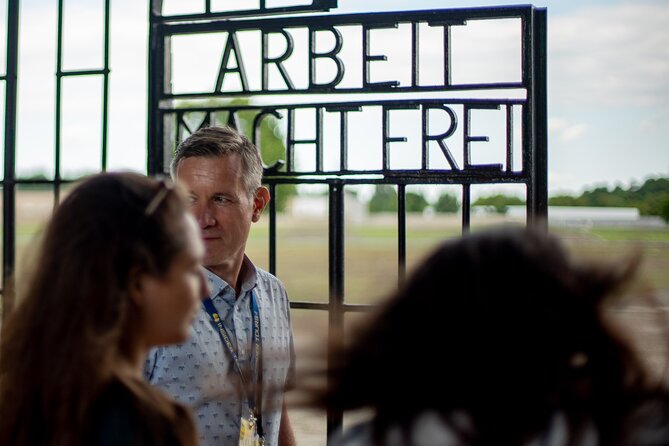
Review · SACHSENHAUSEN MEMORIAL TOURS
Berlin: Sachsenhausen Concentration Camp Tour in English
Sachsenhausen is not a sightseeing stop in the usual sense. It is a place of cold facts, empty spaces, and names that deserve to be remembered. This tour takes you from central Berlin to the memorial by train, then guides you through the former camp’s barracks, punishment cells, infirmary, gallows, and the killing site known as Station Z.
I like two things right away. First, the guide stays with you from Berlin to Berlin, so you do not have to work out the train route or find the memorial entrance alone. Second, the tour explains the camp before, during, and after the Nazi period, including its later use by the Soviet Union. The main drawback is the amount of walking and standing outdoors. In cold, wet, or windy weather, the six-hour day can feel long.
In This Review
- Key points to know before booking
- Why Sachsenhausen matters
- Meeting at Friedrichstraße and taking the train
- Walking from Oranienburg to the memorial
- Starting at the Camp Administration Center
- Barracks, prisoner life, and resistance
- Station Z and the sites of murder
- Punishment cells, pathology, and the infirmary
- The Soviet special camp after 1945
- How good is the $22 value?
- Group size, guide style, and the human side
- Practical advice for a difficult outdoor day
- Should you book the Sachsenhausen tour?
- FAQ
- Where does the Sachsenhausen tour meet?
- How long does the tour take?
- Is public transport included in the price?
- Is the tour wheelchair accessible?
- What should I bring?
- Can I book a private tour with hotel pickup?
Key points to know before booking
- A 20-minute walk leads from Oranienburg station to the memorial, with much of the tour taking place outside.
- The three-hour guided visit covers major camp sites, including Station Z, the Jewish barracks, punishment cells, the pathology laboratory, and the gallows.
- You need an ABC public transport ticket, which is not included in the $22 tour price.
- The guide adds structure and context that can be hard to get from a self-guided visit, especially when the site feels vast and fragmented.
- Small-group and private options are available, but even a private tour uses public transport rather than a private vehicle.
- The subject is disturbing and emotionally heavy, so plan this as a serious history day, not a casual outing.
Why Sachsenhausen matters
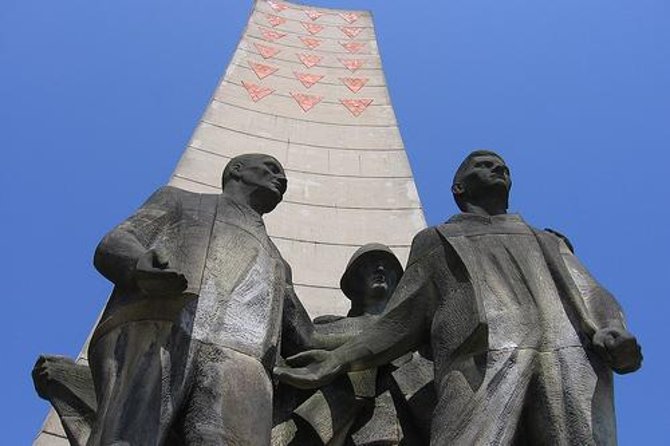
The SS built Sachsenhausen in 1936 near Oranienburg, north of Berlin. It was first intended to hold people viewed as political opponents of the Nazi regime. Its purpose soon widened, and the camp imprisoned many groups that the Nazi state branded dangerous, undesirable, or racially inferior.
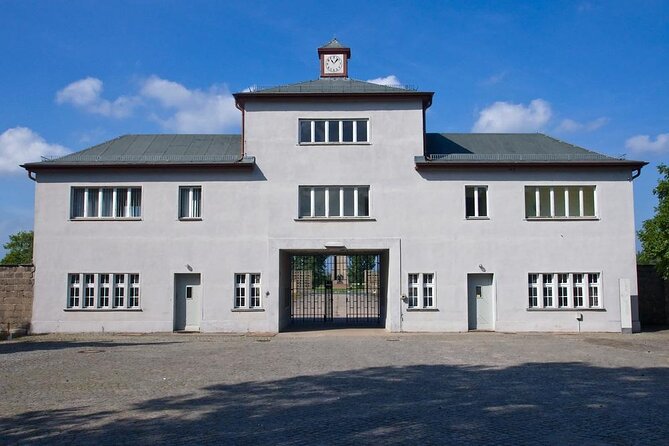
The camp also became an administrative center for the concentration camp system. The Camp Administration Center, now an on-site museum, once housed the Concentration Camps Inspectorate. From here, the SS oversaw the Third Reich’s 32 main camps and more than 1,000 satellite camps.
That detail changes how you read the site. Sachsenhausen was not only a prison surrounded by fences. It was also part of a large administrative machine. The buildings, records, orders, and staff structures helped turn persecution into a system that could be managed from offices.
Your guide’s job is to connect those broad facts with the physical place. A barracks is no longer just a low building on a field. A punishment cell is not merely a room. The guide explains how each part fit into daily control, forced labor, hunger, disease, punishment, and murder.
More Sachsenhausen memorial visits:
- Berlin: Sachsenhausen Concentration Camp Tour in English
★ 5.0 · 5,711 reviews - Berlin: Sachsenhausen Concentration Camp Memorial Tour
★ 4.7 · 3,716 reviews - Sachsenhausen Concentration Camp Bus Tour in English from Berlin
★ 5.0 · 1,962 reviews
Meeting at Friedrichstraße and taking the train
The tour begins outside Friedrichstraße train station, on the square beside the Tränenpalast, also called the Palace of Tears. Look for guides carrying yellow umbrellas. The meeting point is central and easy to reach, but allow a little extra time to get out of the station and locate the square.
Your guide helps arrange the public transport part of the trip. You need an ABC zone ticket for the journey to Sachsenhausen Memorial and the return to Berlin. The ticket is separate from the tour price, but staff can help you buy it on the day.
The ride to Oranienburg takes roughly 25 to 35 minutes in the supplied schedule and description. The return journey is listed as about 45 minutes. These train rides are useful, not wasted time. The guide begins setting the historical scene and explains what you will see, while also keeping the group together and helping with the route.
This is one of the strongest practical reasons to book a guided visit. You are not simply dropped at a suburban station with directions to follow. Guides such as Daniel, Irish Paul, Xavier, Georgia, Ariel, and Rebecca have been praised for giving background on the train, answering questions, and making the public transport connection feel manageable.
Still, public transport requires patience. This is not a coach tour with a reserved seat and a quick step from vehicle to entrance. You will use regular trains, walk through Oranienburg, and keep to the group schedule. That trade-off keeps the cost low and gives the trip a more direct connection with the area, but it may not suit anyone who wants door-to-door comfort.
Walking from Oranienburg to the memorial
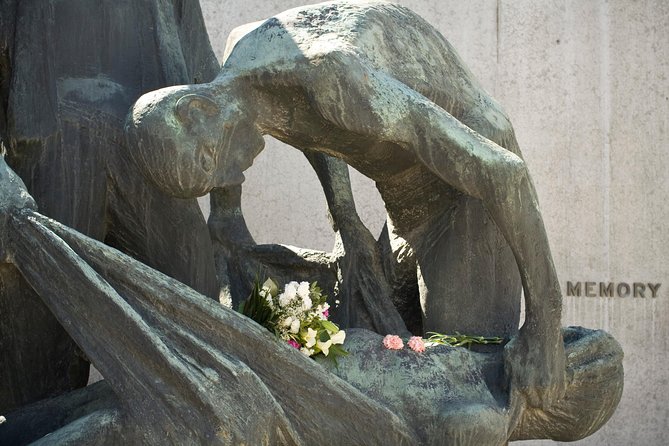
From Oranienburg station, expect about a 20-minute walk to the Sachsenhausen Memorial Site. This approach matters. The route follows the final stretch toward the camp on foot, rather than reducing the visit to a distant view from a bus window.
The walk is not presented as a dramatic performance. It is simply part of reaching the site, and your guide keeps the group moving in the right direction. Still, it adds to the physical demands of the day. Wear comfortable shoes, bring water, and pack a snack. There is no meal included, and a good breakfast is sensible if you do not want to wait until late lunch.
The tour operates in all weather. On a bright day, the wide open grounds may make the scale of the former camp easier to understand. On a gray winter day, the exposed site can feel especially stark. Dress for wind and rain rather than relying on the weather you had in central Berlin.
Starting at the Camp Administration Center
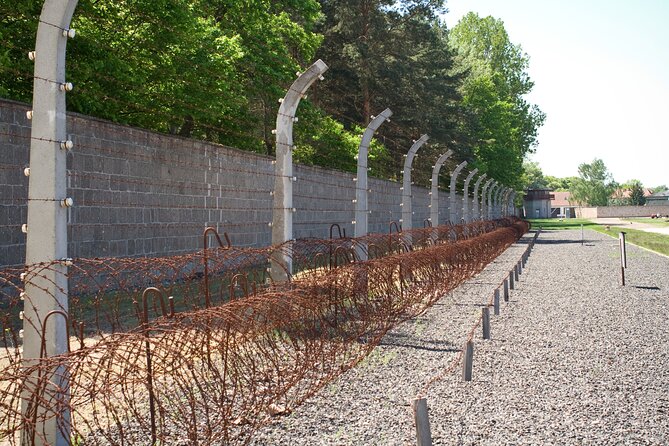
The guided visit begins at the Camp Administration Center, now a museum. This is a useful opening point because it places Sachsenhausen within the wider concentration camp network before you move into the prisoner areas.
The building once served as the headquarters of the Concentration Camps Inspectorate. Your guide explains how the SS organized the camp system and how Sachsenhausen functioned within it. This administrative context helps prevent a common misunderstanding: the camp was not an isolated place where cruelty happened without planning. It was built and operated through rules, staff, records, orders, and deliberate choices.
The opening section also helps you understand the difference between the memorial site and a preserved prison operating exactly as it once did. Parts of the camp survive, while other areas are marked by foundations, reconstructed buildings, exhibits, and memorials. A good guide explains what you are seeing and what has changed.
This is where the guide’s tone matters. The most praised guides, including Daniel, Chris, Georgia, Xavier, and Paul, have been described as clear, respectful, and able to handle questions without turning the subject into a lecture or a spectacle. You should expect a serious presentation, but not a silent walk with no explanation.
A different side of Berlin on the same trip:
- Berlin: Reichstag, Dome and Government District Guided Tour
★ 4.7 · 18,288 reviews - Berlin: 1-Hour City Tour by Boat with Guaranteed Seating
★ 4.3 · 16,993 reviews - Berlin: Boat Tour Along the River Spree
★ 4.4 · 11,252 reviews - Discover Berlin Half-Day Walking Tour
★ 5.0 · 9,624 reviews
Barracks, prisoner life, and resistance
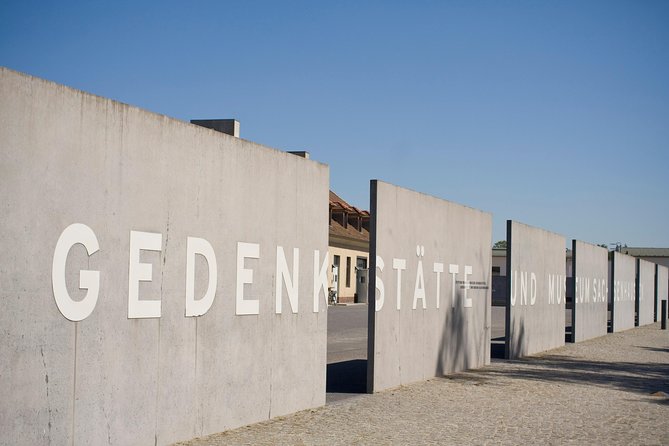
The former barracks show the conditions imposed on inmates. Your guide discusses overcrowding, harsh discipline, forced labor, and the day-to-day structure of camp life. The buildings and empty ground cannot reproduce the suffering, but they give physical scale to the system.
You also hear about the different groups held at Sachsenhausen and the different ways they were treated. The Nazi authorities categorized prisoners according to their political views, nationality, religion, race, and other labels. The tour includes stories of Jewish prisoners, Soviet and Polish prisoners, British prisoners of war, political opponents, and other groups.
The emphasis on resistance is especially worthwhile. The tour covers a Jewish prisoner revolt in 1942, defiance by British POWs, and acts of sabotage by Soviet and Polish prisoners. These stories do not soften the brutality of the camp, but they keep prisoners from being presented only as passive victims. They show people making choices and taking risks under extreme conditions.
You also learn about notable prisoners, including Stalin’s son. Personal stories can make the site easier to understand, but they should not overshadow the thousands of ordinary people who passed through Sachsenhausen. The best part of this tour is the balance between individual lives and the larger system.
Station Z and the sites of murder
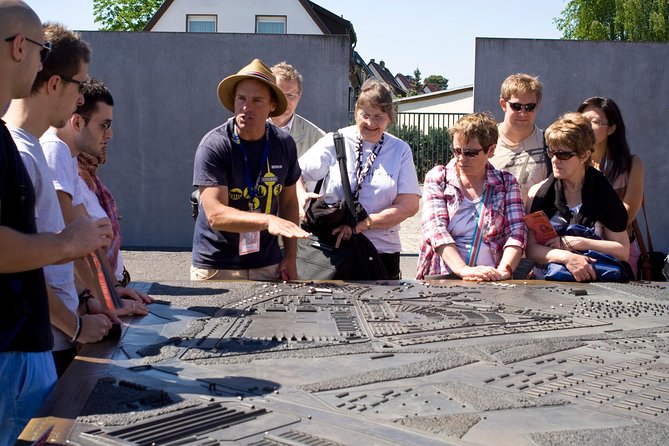
Station Z is one of the hardest places on the route. It was the site of mass murder, and the tour explains its role in the killing process. The visit also covers the gas chamber and other locations connected with murder and execution.
This portion requires emotional preparation. The details are difficult, and the physical remains cannot tell the whole story on their own. You will rely heavily on your guide to explain what happened, what is known, and how the site should be understood.
The tour also visits the gallows. These stops are not rushed past as a checklist, but the exact pace can depend on the group, the weather, and the guide. Guides such as Chris and Gregor have been praised for approaching painful material with empathy and care, while still explaining the facts plainly.
Give yourself permission to be quiet here. You do not need to fill every pause with a question or photograph. This is a memorial site, and respectful behavior matters. Pets, alcohol, and drugs are not allowed, and the wider setting calls for the same restraint even where no formal rule is posted.
Punishment cells, pathology, and the infirmary
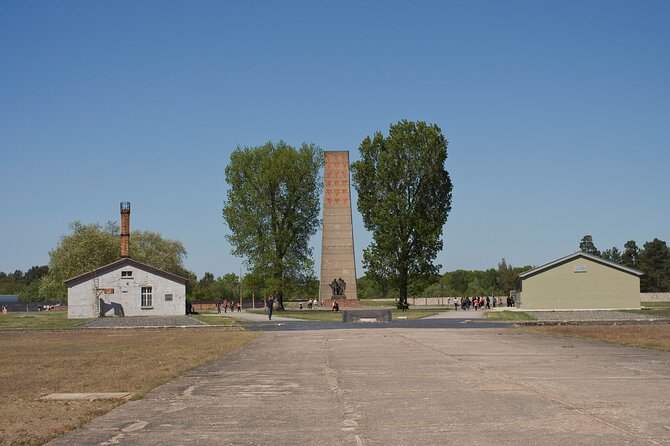
The punishment cells show another side of camp control. These spaces were used to isolate and punish prisoners. Your guide explains how discipline operated and how punishment fitted into the wider system of intimidation.
The pathology laboratory and infirmary add a medical dimension to the visit. The tour identifies locations where experiments took place and discusses the abuse carried out under the cover of medicine. These buildings can be difficult to process because their original purpose sounds connected with care, while the camp reality was often the opposite.
Here, asking questions can help. If you have studied Nazi Germany before, you may already know the broad story but still find the local details unfamiliar. If your background is limited, the guide can explain the terms and sequence without assuming prior knowledge. That adaptability has been one of the most consistent strengths of the guiding team.
The Soviet special camp after 1945
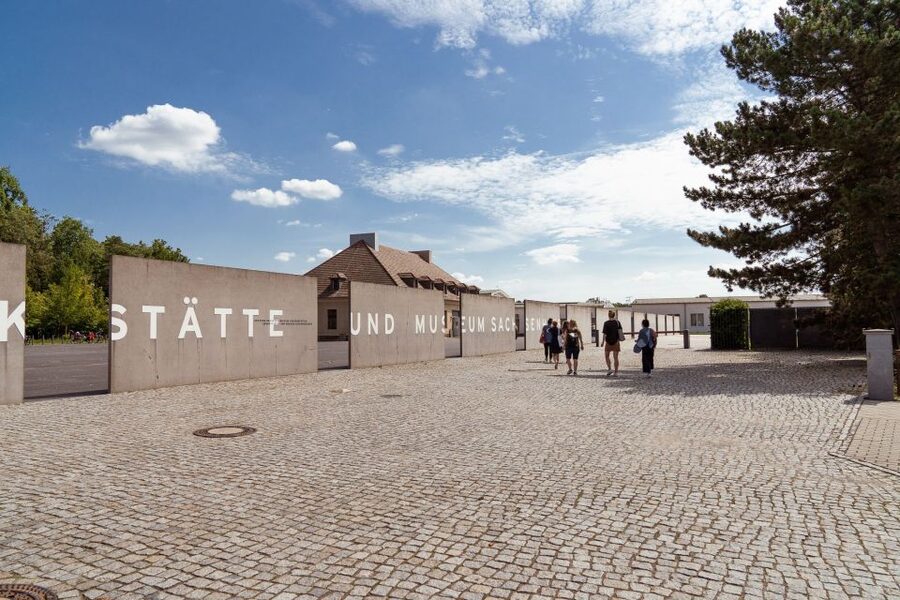
Sachsenhausen did not simply disappear when the Nazi camp was liberated in 1945. The Soviet authorities later used part of the site as Special Camp 1/7. The tour visits this area and explains how Sachsenhausen was repurposed after the war.
This section is important because it prevents the story from ending too neatly. The memorial deals with different periods of imprisonment and political control, and the Soviet use of the camp forms part of that later history. You receive a fuller account of what happened to the site after the fall of the Nazi regime.
The tour also includes the SS Training Camp. This helps show that the surrounding area was linked to the training and operation of the SS, not only to the prisoner compound. The wider site therefore includes both the places of confinement and the structures that supported the guards and administrators.
How good is the $22 value?
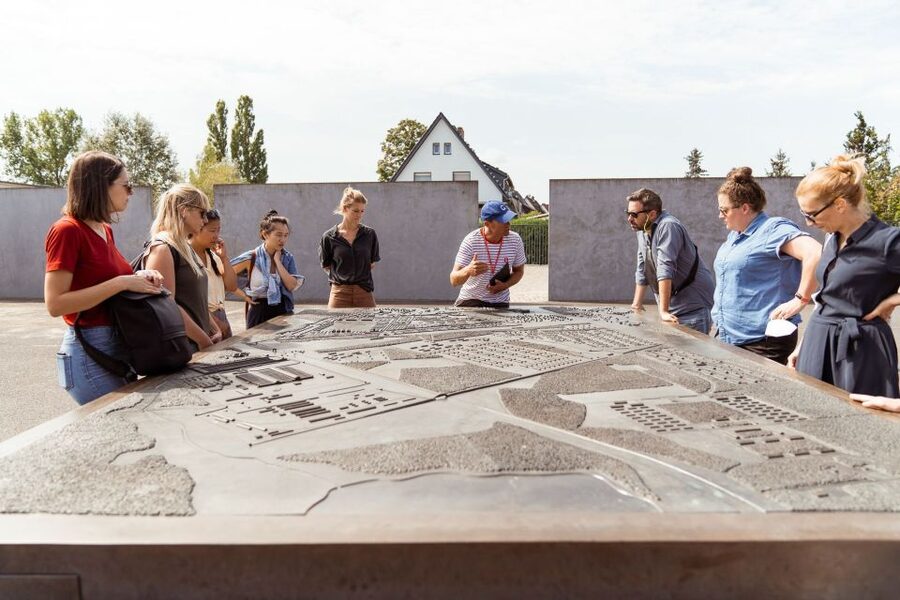
At $22 per person, this is a strong-value tour if you want a guided visit rather than a self-guided day. The price includes an English-speaking licensed guide, the guided camp tour, and a €3 donation to the memorial. It does not include your ABC transport ticket, food, or hotel transfers.
The low price comes with a clear trade-off: you travel by public transport. If you compare this with a private vehicle transfer, it is inexpensive, but you give up some comfort and flexibility. A private option is available, yet even then your guide accompanies you on public transport rather than driving you in a private car.
The value is mainly in the interpretation. Sachsenhausen covers a large area, and the meaning of the barracks, administration buildings, killing sites, and postwar sections is not always obvious from signs alone. A guide gives you a route, a timeline, and human stories, while also handling the train connection.
The tour lasts about 5.5 to 6 hours, with roughly three hours at the memorial itself. That is enough time for a serious introduction without requiring you to plan every stop. After returning to Berlin, two drop-off locations are listed, including Reichstagufer 17. A private booking can include pickup from your hotel or preferred location five minutes before the start, but no private vehicle is provided.
Group size, guide style, and the human side
Private and small-group options are available. In larger departures, the group may be divided into smaller units at the memorial, which makes it easier to hear the guide and ask questions. The exact guide varies, so you cannot assume you will receive a particular person.
Several guides receive especially strong praise for the qualities that matter on this subject. Daniel is described as energetic, organized, and good at using photographs to add human detail. Irish Paul is praised for his historical explanations, humor used carefully, and attention to group safety in bad weather. Xavier, Rebecca, Georgia, Chris, Ariel, and Gregor are also noted for clear explanations and respectful handling of painful material.
Do not read keeps the mood light as meaning the tour is casual. It means some guides use warmth and gentle humor between sections so the group can stay focused during a long day. The topic remains serious from start to finish.
Practical advice for a difficult outdoor day
Wear shoes you can walk in for several hours. The route includes the station walk, movement around a broad memorial site, and periods of standing while the guide speaks.
Bring water, snacks, and comfortable clothing. The tour runs in all weather, and winter conditions can be especially demanding. One guide has been praised for placing the group out of the wind during explanations, but you should still prepare for exposure rather than depend on a sheltered setting.
The memorial is not wheelchair accessible, and the activity is not recommended for people with limited mobility or walking impairments. If you have mild walking difficulty, contact the operator before booking and explain your needs. A past participant with walking difficulties received patient assistance, but the official conditions still warn that the tour may not be suitable.
Book with the subject in mind. This is a place for listening, reflection, and respectful conduct. It is not a good choice if you want a light half-day away from Berlin or if you find extended discussion of mass murder too distressing.
Should you book the Sachsenhausen tour?
I would book this tour if you want a guided, historically grounded visit and are comfortable with public transport, outdoor walking, and a heavy subject. The $22 price is fair because you receive help with the journey, a three-hour guided visit, and a donation to the memorial.
I would choose a small-group option if available, especially if you expect to ask questions. Bring food, check the weather, buy the ABC ticket at the meeting point, and leave room in your day for the emotional weight of the visit.
Skip it if you need step-free access, private vehicle transport, or a shorter and less demanding outing. For everyone else, this is a serious and useful addition to a Berlin history program. It helps you see Sachsenhausen not as a distant name in a textbook, but as a real place tied to the machinery of Nazi persecution, prisoner resistance, murder, and the difficult years that followed.
FAQ
Where does the Sachsenhausen tour meet?
Meet your guide outside Friedrichstraße train station on the square beside the Tränenpalast, also known as the Palace of Tears. Look for the yellow umbrellas.
How long does the tour take?
The full experience lasts about 5.5 to 6 hours. The guided visit at Sachsenhausen takes about three hours, with train travel and walking before and after the memorial visit.
Is public transport included in the price?
No. You need an ABC public transport ticket for the trip to Sachsenhausen Memorial and the return to Berlin. The ticket can be purchased at the meeting point with help from on-site staff.
Is the tour wheelchair accessible?
No. The activity is not wheelchair accessible and is not recommended for people with limited mobility or walking impairments.
What should I bring?
Bring comfortable shoes, water, snacks, comfortable clothing, and your public transport ticket. Dress for all weather because the tour operates in rain, cold, and other conditions.
Can I book a private tour with hotel pickup?
Private tours can include a guide meeting you five minutes before the scheduled start at your hotel or another preferred location. The private option still uses public transport and does not include a private vehicle.
Just added around Berlin
- Berlin Highlights in One Day★ 5.0 · 3 reviews
- Private Berlin One Day Tour with a Local: See the City Unscripted★ 3.5 · 3 reviews
- Individual city tour Berlin for max. 8 persons★ 5.0 · 3 reviews
- Transfer from Berlin Schönefeld Airport (SXF) to Berlin city Hotels – ROUND TRIP★ 4.0 · 3 reviews
- Berlin: Museum Island Tour★ 5.0 · 3 reviews
- Private Analogue Photography Experience in Berlin★ 5.0 · 3 reviews
- Berlin: Local Food Tour in Secrets Hidden Gems★ 4.0 · 3 reviews
- Berlin & The Third Reich Private Guided Tour★ 5.0 · 3 reviews
Sachsenhausen Memorial Tours, compared.
Sachsenhausen Concentration Camp Tour in English
Read our review →
Sachsenhausen Concentration Camp Memorial Tour
Read our review →
Sachsenhausen Concentration Camp Bus Tour in English from Berlin
Read our review →
Sachsenhausen Concentration Camp Memorial Tour (Max. 15 Guests)
Read our review →
Sachsenhausen Concentration Camp and Potsdam Tour
Read our review →
Visita en español al campo de concentración Sachsenhausen
Read our review →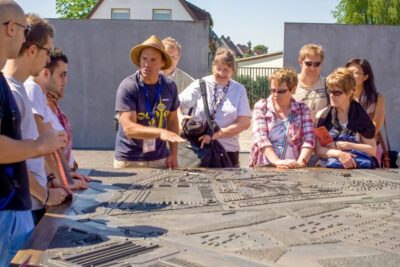
Sachsenhausen Concentration Camp Bus Tour in English
Read our review →Browse the lists this tour appears in