
Review · SACHSENHAUSEN MEMORIAL TOURS
Berlin: Sachsenhausen Memorial 6-Hour Tour in Spanish
Sachsenhausen is not a casual day trip. It is a serious visit to a former concentration camp where Station Z and the roll-call area known as the A Tower bring Nazi crimes into sharp focus. The site also tells the later story of Soviet imprisonment, so you leave with a wider view of what happened after 1945.
I like two things right away: the tour explains the camp through survivor accounts, photographs, and official documents, and it is conducted in Spanish from start to finish. The main consideration is the weather and the emotional weight. You spend much of the day outside, and there is no shop at the memorial, so bring food, water, and suitable clothing.
In This Review
- Key points to know before booking
- Why Sachsenhausen deserves a full day
- Meeting at Alexanderplatz and taking the train north
- Entering through the A Tower
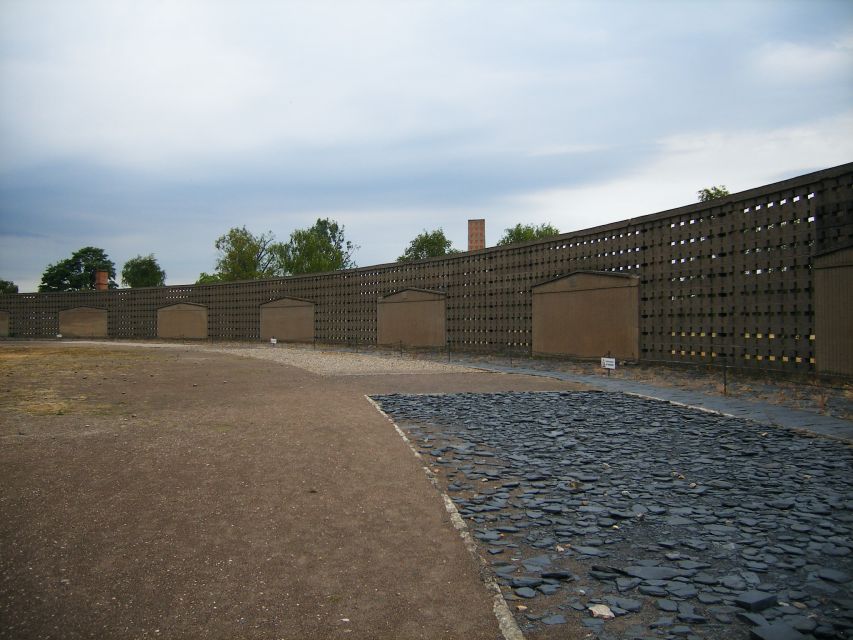
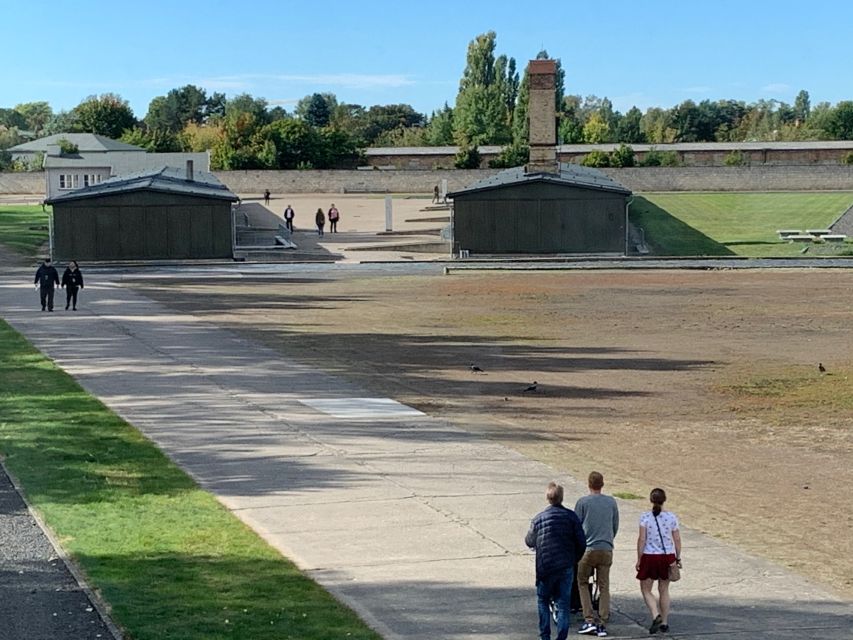
- Station Z and the hardest part of the visit
- Museums, documents, and daily prisoner life
- The Soviet special camp and the GDR memorial
- What the $41 price covers
- Spanish guides and the tone of the experience
- Practical planning for six demanding hours
- Who should book this Sachsenhausen tour
- Should you book it?
- FAQ
- Where does the Sachsenhausen tour meet in Berlin?
- How long does the tour last?
- Is the tour conducted in Spanish?
- Is public transportation included?
- What does the $41 price include?
- Should I bring food and drinks?
- Can I cancel the booking?
Key points to know before booking
- Station Z is the most sobering stop: The 1942 killing facility was built to murder prisoners quickly and clinically.
- The A Tower frames the visit: This was the camp’s roll-call entrance and a key point for understanding its layout.
- You also learn the Soviet-era story: Sachsenhausen became a Soviet special camp after the fall of Hitler.
- Spanish guidance adds vital context: Guides such as Héctor and Helena explain the camp’s operation, legal structure, and human cost in clear Spanish.
- Plan for a full six hours: The journey from Alexanderplatz takes about 50 minutes by train each way.
- Budget for public transport: A zone ABC ticket is required and is not included in the $41 tour price.
Why Sachsenhausen deserves a full day
Sachsenhausen was built close to Berlin and was intended to serve as a model concentration camp. It was also the administrative center for the Nazi concentration camp system, which gives the site importance beyond its own fences and barracks.
More than 200,000 people passed through Sachsenhausen. At least 50,000 died. Those numbers are hard to grasp on their own, but the memorial’s documents, photographs, and personal accounts put human detail around them.
I would not choose this tour because it sounds easy or entertaining. I would choose it because a guide can explain how the camp functioned, who was imprisoned there, what work prisoners performed, and how the Nazi system operated. Without that explanation, a large memorial site can leave you with fragments. In Spanish, the guide can give you the full setting and answer questions as you go.
The site also has a second chapter. After Nazi Germany fell, the Soviet authorities used Sachsenhausen as a special camp, or gulag, for their own prisoners. The memorial therefore deals with two oppressive systems, while keeping the crimes of each period distinct. That added history makes the visit more demanding, but also more useful.
More Sachsenhausen memorial visits:
- Berlin: Sachsenhausen Concentration Camp Tour in English
★ 5.0 · 5,711 reviews - Berlin: Sachsenhausen Concentration Camp Memorial Tour
★ 4.7 · 3,716 reviews - Sachsenhausen Concentration Camp Bus Tour in English from Berlin
★ 5.0 · 1,962 reviews
Meeting at Alexanderplatz and taking the train north
The meeting point is beside the only entrance to the Alexanderplatz TV Tower, between the tower and Alexanderplatz train station. Look for a green flag marked tours en español, next to Espresso House.
This is a busy part of central Berlin, so I would arrive early enough to find the flag without rushing. The meeting point is specific, but Alexanderplatz has several entrances, platforms, and large buildings competing for your attention. The green flag is your main landmark.
From here, the group takes a train toward the northern outskirts of Berlin. The ride lasts about 50 minutes. The public transport ticket is not included, and you need a ticket covering zones ABC. That cost is separate from the $41 tour price, so factor it into your day’s budget.
I like the train connection because it places Sachsenhausen in the setting of modern Berlin. You leave a central square filled with shops, traffic, and city life, then head toward the memorial outside the center. The journey takes time, though, and the six-hour duration includes the travel. If you want a short museum visit, this is not the right format.
Entering through the A Tower
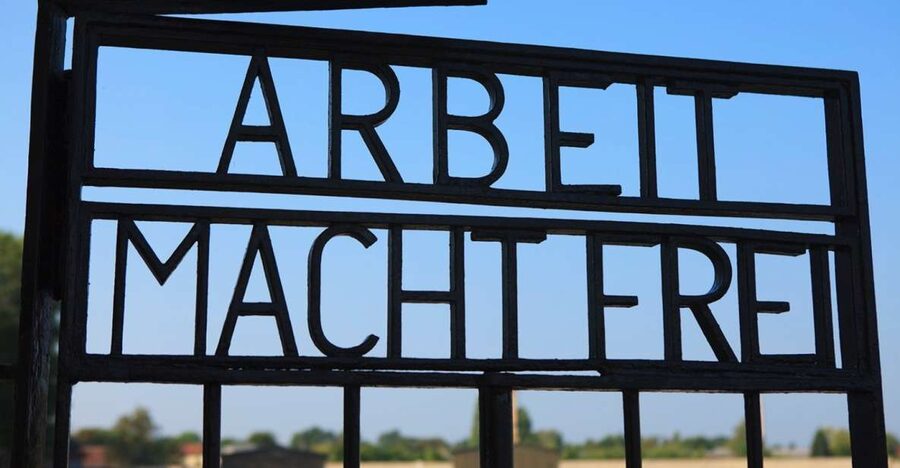
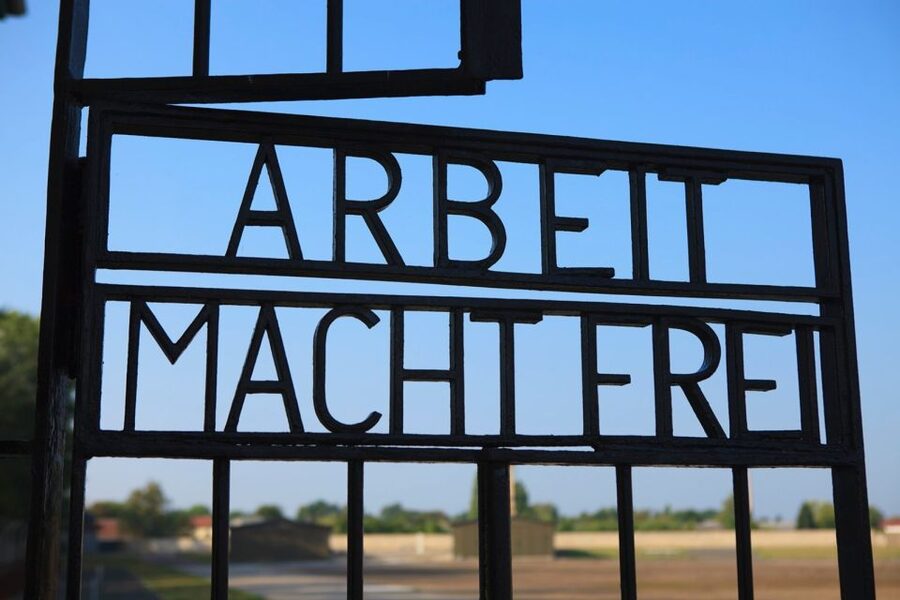
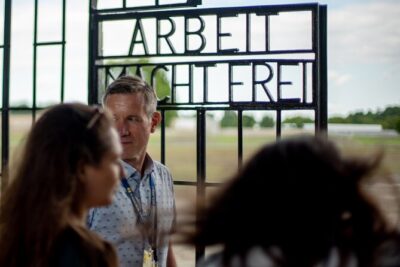
The A Tower was the camp’s roll-call location. It is an important first point because the camp was organized around control, counting, discipline, and forced labor. The guide uses this area to explain what prisoners faced and how the camp operated day after day.
Roll call was not just an administrative task. It was part of the system of control. The guide’s explanation helps you connect the physical entrance with the routines imposed on prisoners, rather than seeing it as only another preserved building.
The camp was designed as a model facility, and Sachsenhausen later became the center for administering other Nazi concentration camps. That makes the opening section especially valuable. You are not only learning what happened at this one place. You are learning how the wider system was organized.
The review information points to one useful difference between guides. Héctor is praised for explaining the history without softening it, while another booking describes the guide’s help in understanding the camp from a legal point of view. That suggests the tour is not limited to dates and names. It also covers the rules, structures, and official machinery behind the abuse.
Station Z and the hardest part of the visit
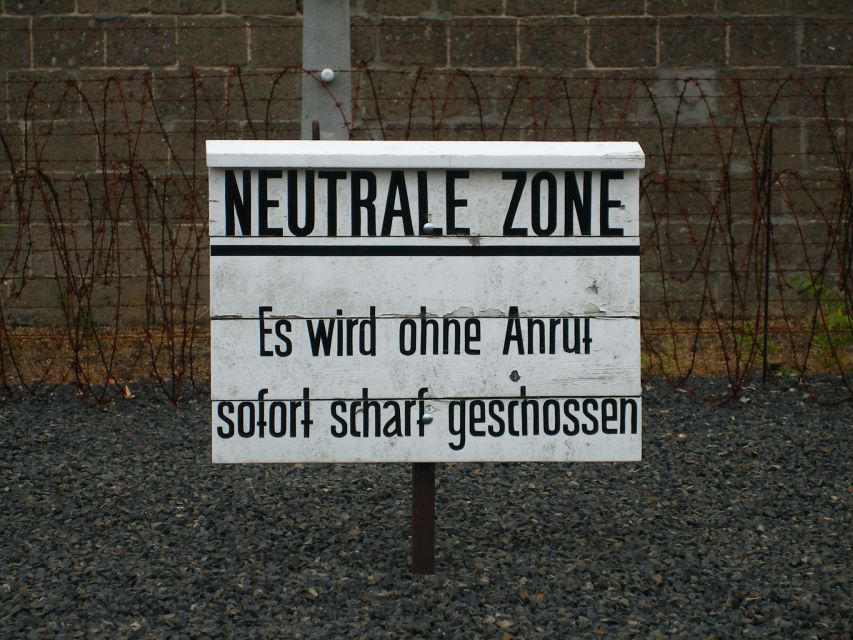
Station Z was added in 1942 to kill victims quickly and clinically. It is one of the key stops, and it is also the point most likely to affect you emotionally.
I would not rush this section. The value is not in checking off a notorious location, but in understanding what it represented within the camp. The guide can place Station Z in the wider history of mass murder and explain its purpose without leaving you to make sense of the site alone.
This is also where the tour’s tone matters. Héctor is described as direct and unsparing, and that approach will suit people who want the history presented plainly. It may feel too forceful for anyone hoping for a gentle or highly polished sightseeing experience. Sachsenhausen itself is a place where an easy tone would feel out of place.
Cold and wind can make Station Z and the outdoor parts even harder. A December booking described very cold, windy conditions, and that is a useful warning for anyone visiting in winter. The memorial is not a warm indoor attraction from beginning to end. Wear layers and comfortable shoes, and expect the weather to affect your concentration.
A different side of Berlin on the same trip:
- Berlin: Reichstag, Dome and Government District Guided Tour
★ 4.7 · 18,288 reviews - Berlin: 1-Hour City Tour by Boat with Guaranteed Seating
★ 4.3 · 16,993 reviews - Berlin: Boat Tour Along the River Spree
★ 4.4 · 11,252 reviews - Discover Berlin Half-Day Walking Tour
★ 5.0 · 9,624 reviews
Museums, documents, and daily prisoner life
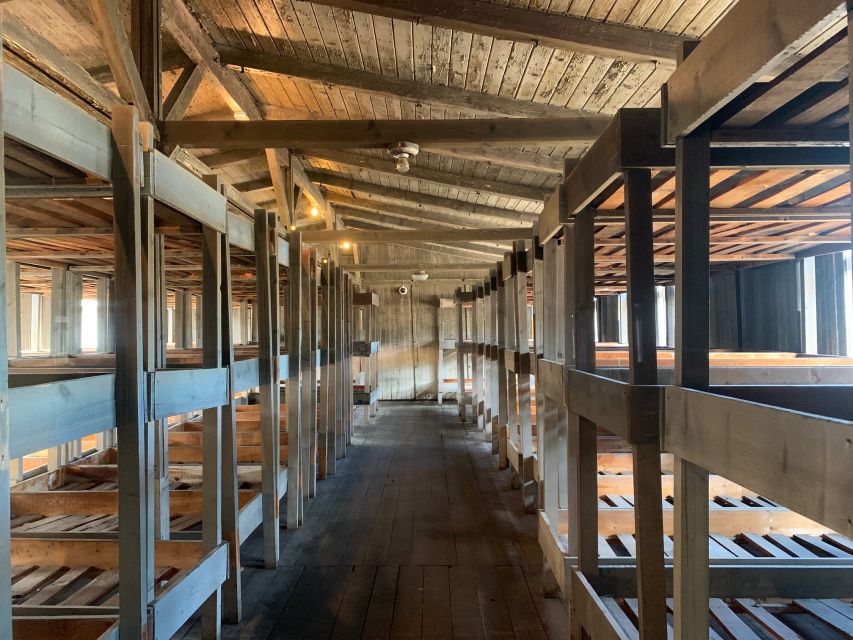
The memorial includes a museum and several exhibits. These give the visit its human and documentary center. You can study survivor accounts, photographs, and official documents rather than relying only on the guide’s spoken explanation.
The tour explores the camp’s origins, the conditions prisoners faced, and the work they were forced to perform. That broadens the visit beyond the killing sites. You learn about the ordinary routines that made imprisonment possible, including the way the camp was organized and how prisoners were used for labor.
I especially value this part because it helps you understand that concentration camps were not only places of isolated violence. They were functioning institutions, built around orders, administration, labor, punishment, and death. The documents show how the system was recorded and managed, while survivor accounts show what those structures meant to actual people.
The amount of information can be heavy. A six-hour guided visit gives you more context than a quick independent stop, but it also asks for sustained attention. If you prefer to move quickly between exhibits, the guide-led format may feel slow. If you want the facts explained in Spanish, the extra time is a fair trade.
The Soviet special camp and the GDR memorial
Sachsenhausen did not stop being a place of imprisonment in 1945. After Hitler’s fall, Soviet authorities turned it into a special camp for their own prisoners. The memorial preserves this later history alongside the Nazi camp story.
That second period is important, but it can also confuse people if it is presented carelessly. The guide helps separate the two eras and shows how the site changed under Soviet control. You are not asked to treat the systems as identical. Instead, you learn how the same place was used by different authorities for political imprisonment.
The GDR memorial is another part of the site’s later memory. It shows how East Germany remembered and presented Sachsenhausen before reunification. For me, this adds a useful layer because memorials are also historical documents. The way a country marks a place tells you something about its politics and public memory.
This is one reason I recommend the guided option for anyone unfamiliar with German and Soviet history. The physical site alone cannot explain every period clearly. A Spanish-speaking guide can connect the camp, the Soviet special camp, and the GDR memorial in one continuous account.
What the $41 price covers
The listed price is $41 per person. It includes the full Sachsenhausen tour with a Spanish-speaking guide and the €3 surcharge charged by the Concentration Camp Foundation.
You still need to buy the public transport ticket covering zones ABC. Food and drinks are also your responsibility. That means the real cost is slightly above the headline price, but the tour provides more than entry directions. It gives you a six-hour structure, a guide in Spanish, and historical explanation at a site where context matters.
I see good value here for Spanish-speaking visitors who would otherwise have to read the memorial’s material alone or depend on limited language support. The guide also removes the work of planning the train route and deciding which parts of the large site matter most.
The value is weaker if you already know Sachsenhausen well, speak German comfortably, or prefer to set your own pace. In that case, the fixed six-hour schedule may not offer enough freedom. For a first visit, though, the combination of transport organization, a live guide, documents, and the main memorial areas makes the cost reasonable.
Spanish guides and the tone of the experience
The tour is offered in Spanish, and the guide remains the key part of the experience. Recent guide names include Héctor and Helena. The praise for Héctor centers on his direct delivery and strong command of the subject, while Helena is also singled out warmly.
One particularly useful detail is the explanation of the camp’s legal and administrative side. Many visits focus only on the crimes and the suffering. Understanding how laws, orders, registration, labor, and camp administration supported the system can make the history clearer and more disturbing in an honest way.
You should expect a serious tone, not a theatrical performance. A guide who speaks plainly can help you face difficult material, but personal reactions will vary. I would book this for adults and older students who want history explained without euphemisms.
The tour has a high rating of 4.8 from 549 ratings, and the repeated praise is aimed at the guides’ delivery and historical explanations. That is the strongest reason to choose this particular format over simply making the journey alone.
Practical planning for six demanding hours
Bring snacks and drinks. There is no shop at Sachsenhausen, and the tour lasts six hours, including the trip from Berlin and back. You may not want to search for food during a memorial visit, so pack something before meeting the group.
Wear comfortable shoes. The experience includes outdoor areas and walking between significant parts of the site. In winter, add warm layers and protection from wind. A very cold day can make an already difficult visit more tiring.
The tour is listed as wheelchair accessible. You still need the ABC transport ticket, and it is sensible to confirm any personal mobility needs when booking. The provided information confirms accessibility, but it does not give a detailed route description for every surface or transport connection.
The activity allows free cancellation up to 24 hours before the start time, and you can reserve now and pay later. Those terms help if your Berlin schedule is still changing, but the main planning issue remains the day itself. Six hours is a substantial block, so avoid pairing it with another major attraction.
Who should book this Sachsenhausen tour
I would choose this tour if you want a serious, guided introduction to Sachsenhausen in Spanish. It suits anyone who wants the camp’s Nazi history explained alongside its Soviet-era use and GDR memorial, rather than seeing only one part of the story.
It is also a strong choice if German is not comfortable for you. The reviews include a first-time visitor to Germany who found the experience especially useful while dealing with the local language. A Spanish-speaking guide can make the documents, locations, and explanations easier to follow.
I would think twice if you have limited time in Berlin, dislike organized group visits, or want a light day outside the city. The train ride takes 50 minutes, the site is emotionally intense, and the weather may be rough. This is a memorial visit first, not a sightseeing break.
Should you book it?
Book it if you want a carefully explained, Spanish-language visit to one of Germany’s most important memorial sites. The strongest features are the direct guides, the attention to Station Z and the A Tower, and the effort to explain both Nazi and Soviet imprisonment.
Bring your own food, buy the ABC transport ticket, dress for the forecast, and leave room afterward to process what you have seen. If those conditions suit you, the $41 tour offers a clear and serious way to understand Sachsenhausen without facing the site’s history alone.
FAQ
Where does the Sachsenhausen tour meet in Berlin?
Meet beside the only entrance to the Alexanderplatz TV Tower, between the TV tower and Alexanderplatz train station. Look for a green flag marked tours en español, next to Espresso House.
How long does the tour last?
The tour lasts six hours. The train journey from Berlin to the northern outskirts takes about 50 minutes.
Is the tour conducted in Spanish?
Yes. The activity includes a live Spanish-speaking guide. Guides named in the available information include Héctor and Helena.
Is public transportation included?
No. You need to buy a public transport ticket covering zones ABC. That ticket is not included in the tour price.
What does the $41 price include?
The price includes the full Sachsenhausen tour with a Spanish-speaking guide and the €3 Concentration Camp Foundation surcharge.
Should I bring food and drinks?
Yes. There is no shop at Sachsenhausen, so bring snacks and drinks for the six-hour experience.
Can I cancel the booking?
You can cancel up to 24 hours in advance for a full refund. Reserve now and pay later is also available.
Just added around Berlin
- Berlin Highlights in One Day★ 5.0 · 3 reviews
- Transfer from Berlin Schönefeld Airport (SXF) to Berlin city Hotels – ROUND TRIP★ 4.0 · 3 reviews
- Private Berlin One Day Tour with a Local: See the City Unscripted★ 3.5 · 3 reviews
- Individual city tour Berlin for max. 8 persons★ 5.0 · 3 reviews
- Berlin: Museum Island Tour★ 5.0 · 3 reviews
- Private Analogue Photography Experience in Berlin★ 5.0 · 3 reviews
- Berlin: Local Food Tour in Secrets Hidden Gems★ 4.0 · 3 reviews
- Berlin & The Third Reich Private Guided Tour★ 5.0 · 3 reviews
Sachsenhausen Memorial Tours, compared.
Sachsenhausen Concentration Camp Tour in English
Read our review →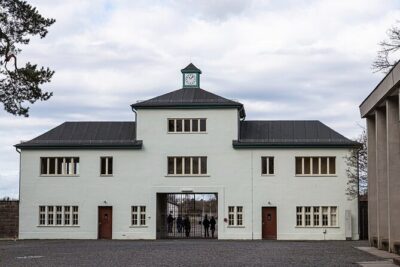
Sachsenhausen Concentration Camp Memorial Tour
Read our review →
Sachsenhausen Concentration Camp Bus Tour in English from Berlin
Read our review →Sachsenhausen Concentration Camp Tour in English
Read our review →
Sachsenhausen Concentration Camp Memorial Tour (Max. 15 Guests)
Read our review →
Sachsenhausen Concentration Camp and Potsdam Tour
Read our review →
Visita en español al campo de concentración Sachsenhausen
Read our review →Browse the lists this tour appears in