
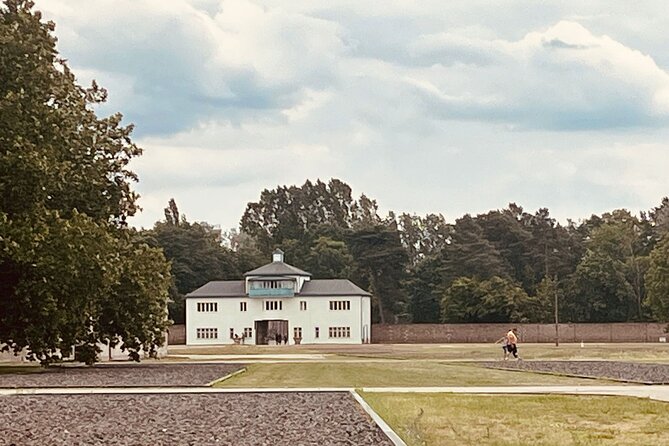
Review · SACHSENHAUSEN MEMORIAL TOURS
Never Again Sachsenhausen Concentration Camp
Sachsenhausen is not a quick photo stop. It is a place built to control, punish, and destroy human beings, and this four-hour visit gives you time to face that history with care. The tour also examines how the site was later used as a Soviet special camp and as an anti-fascist propaganda setting.
I like the small maximum group of 15, which gives the guide room to answer hard questions. I also like the way Siobhán brings a feminist and present-day political lens to the visit, including racism, eugenics, control over women’s bodies, and the rise of the AfD. The main consideration is that this is emotionally heavy, and its progressive viewpoint may not suit everyone.
In This Review
- Key points to know before booking
- Why Sachsenhausen Requires More Than a Quick Visit
- The Visitors’ Center Explains the Machinery of Control
- Walking Through the Barracks and Camp Kitchen
- The Infirmary and the Abuse of Medical Power
- Nazi Camp, Soviet Special Camp, and Propaganda Site
- A Four-Hour Schedule from Potsdamer Platz
- Is the $31.29 Price Good Value?
- Who Will Get the Most From This Experience?
- Booking Details Worth Knowing
- Should You Book Never Again Sachsenhausen?
- FAQ
- Where does the Sachsenhausen tour begin?
- Where does the tour end?
- How long does the experience last?
- Is public transportation included?
- What language is the tour offered in?
- Is admission to the memorial included?
- How large is the group?
- Can I cancel for a full refund?
Key points to know before booking
- A serious four-hour memorial visit: Expect time at the visitors’ center, prisoners’ barracks, camp kitchen, and infirmary.
- Guide Siobhán sets a respectful tone: Her explanations connect Nazi crimes with later Soviet use of the camp and current far-right politics.
- The tour begins at Potsdamer Platz: You travel by public transport to Sachsenhausen, and you must buy your own ABC-zone ticket.
- A small group matters here: The maximum is 15 people, a useful size for questions and quiet discussion.
- The approach is political as well as historical: Feminism, racism, eugenics, antisemitism, and the AfD are part of the discussion.
- The $31.29 price includes a memorial donation: Snacks, bottled water, and public transport are extra.
Why Sachsenhausen Requires More Than a Quick Visit
Sachsenhausen was designed as a model concentration camp. That word can sound orderly, but the order here served terror. The camp layout, buildings, and controlled movement of prisoners all helped the SS enforce its system of superiority and punishment.
The visit begins with a walk from the train station to the visitors’ center. That approach matters. You do not simply step off a bus beside a monument and leave again. You have time to shift from Berlin sightseeing to the difficult subject ahead.
At the visitors’ center, models explain how the camp was arranged. These are useful because much of the original site is open, altered, or incomplete. A model helps you understand the physical system: where prisoners lived, where control was imposed, and how the camp was built to make domination feel permanent.
You also confront an unsettling present-day detail. The former SS training camp has become a Brandenburg police academy. That contrast does not erase the past, and it can make the site feel even more complicated. The location is not frozen in 1945. Modern institutions now operate beside places shaped by Nazi violence.
More Sachsenhausen memorial visits:
- Berlin: Sachsenhausen Concentration Camp Tour in English
★ 5.0 · 5,711 reviews - Berlin: Sachsenhausen Concentration Camp Memorial Tour
★ 4.7 · 3,716 reviews - Sachsenhausen Concentration Camp Bus Tour in English from Berlin
★ 5.0 · 1,962 reviews
The Visitors’ Center Explains the Machinery of Control
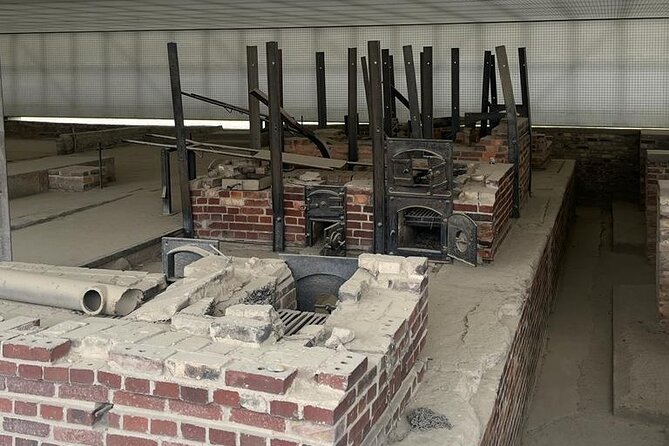
The first part of the visit is less about individual objects and more about structure. You learn how architecture supported ideology. The camp was not an accidental collection of buildings. It was planned around surveillance, authority, and the idea that prisoners could be managed as an inferior population.
This is where a live guide adds value over an audio guide. A recorded program can tell you dates and names, but Siobhán can respond to your questions and adjust the pace. One French-speaking review described the visit as more alive than an audio guide, which is a fair way to understand the benefit of a small guided group.
The tour is not presented as a dense academic lecture. That may suit you if you want clear explanations without being buried in statistics. If you want a specialist seminar with every institutional detail, this may feel lighter than expected.
For most people, the balance works. The guide gives enough context to make the buildings understandable, then allows the place itself to do some of the talking.
Walking Through the Barracks and Camp Kitchen
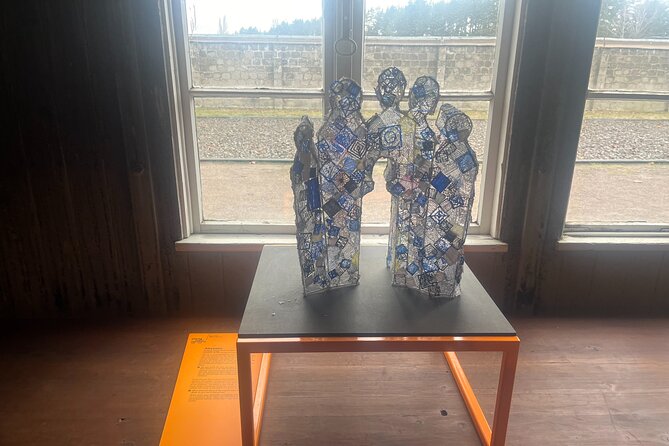
The prisoners’ barracks are among the most important stops because they bring the camp’s system down to human scale. Here, the subject is not only what the SS intended, but what daily life meant for people held under brutal conditions.
The visit is partly self-guided once you reach the prisoner areas. You can explore the barracks and camp kitchen while Siobhán provides explanations and context. This gives you some quiet space, which is important at a memorial. You are not forced to listen every second, yet you are not left without guidance.
The camp kitchen also carries a disturbing modern connection. Neo-Nazis denying the Holocaust have attacked parts of the site. That fact shows why memorials are not only about the past. They are also places where historical truth is defended in the present.
The discussion extends to the AfD, a German far-right political group. The tour does not treat Sachsenhausen as a sealed historical box. Instead, it asks you to consider how racism, denial, and authoritarian ideas can return in new forms.
That political framing is one of the tour’s defining features. I find it useful because it explains why the site still matters, not just why it is historically important. At the same time, you should know what you are booking. This is not a politically neutral, date-by-date overview. It uses a progressive, feminist perspective, and that viewpoint is made clear through the subjects chosen and the connections drawn.
The Infirmary and the Abuse of Medical Power
The infirmary is one of the hardest stops. It covers racism, eugenics, and the control of women’s bodies, along with medical experiments carried out on prisoners.
The central lesson is especially grim: doctors used prisoners as laboratory subjects while seeking professional advancement. Medicine, which should protect the vulnerable, became another tool of Nazi control. The infirmary helps you see that the camp’s crimes were not limited to guards, violence, and forced labor. They also involved institutions and professionals who used science to support racial ideology.
This section can be upsetting, particularly because it deals with bodily control and experimentation in direct terms. Siobhán’s role is important here. The tone is described as respectful and sensitive to the suffering at the site, while still allowing small moments of appropriate levity. That does not make the subject cheerful. It simply gives you enough breathing room to keep listening.
I appreciate that balance. A memorial visit should not turn suffering into entertainment, but a guide also needs to help a group remain attentive during several hours of painful material. You should expect to leave educated, but not necessarily lighthearted.
A different side of Berlin on the same trip:
- Berlin: Reichstag, Dome and Government District Guided Tour
★ 4.7 · 18,288 reviews - Berlin: 1-Hour City Tour by Boat with Guaranteed Seating
★ 4.3 · 16,993 reviews - Berlin: Boat Tour Along the River Spree
★ 4.4 · 11,252 reviews - Discover Berlin Half-Day Walking Tour
★ 5.0 · 9,624 reviews
Nazi Camp, Soviet Special Camp, and Propaganda Site
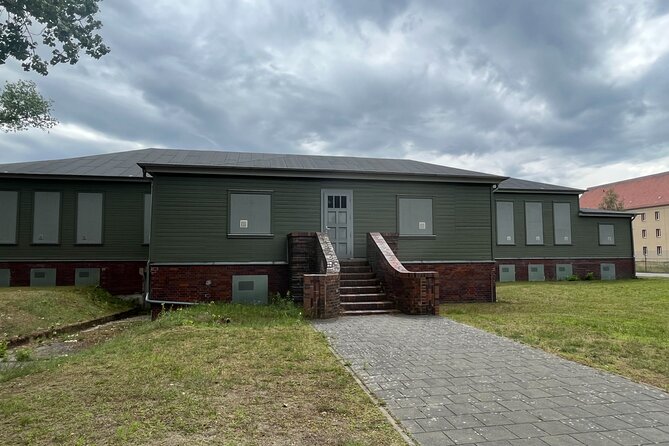
Sachsenhausen’s story did not end with the defeat of Nazi Germany. The site later became a Soviet special camp, and it was also used as a pro-communist, anti-fascist propaganda tool.
That wider timeline is a major strength of the experience. It prevents you from seeing the memorial as a single-period site with a neat beginning and end. The buildings were part of different political systems, each presenting the camp through its own purpose and message.
The tour’s explanation of these changes also helps you think about how memorials are shaped by governments. A site can preserve evidence, honor victims, and still be used to promote a political narrative. Understanding that tension makes the visit more honest.
You will not leave with the idea that one label explains everything. Instead, you get a more difficult picture of how the location was used, remembered, and politically presented over time.
A Four-Hour Schedule from Potsdamer Platz
The meeting point is at Potsdamer Platz 10 in central Berlin. From there, the group travels toward Sachsenhausen by public transport and walks from the station to the memorial. The activity lasts about four hours and ends back at the original meeting point.
You need an ABC-zone public transport ticket, and it is not included. This is an easy cost to overlook, so plan for it before meeting the group. Snacks and bottled water are also your responsibility.
The walking and outdoor portions mean you should wear practical shoes and be ready for a moderate level of physical activity. The information does not promise a private vehicle or door-to-door transport. If you want the simplest possible transfer from your hotel, this is not that kind of outing.
The public transport route does have one advantage: it makes Sachsenhausen feel connected to Berlin rather than like a separate attraction. You see how a memorial visit fits into the wider city and its suburbs. Still, allow yourself enough time to reach Potsdamer Platz and avoid arriving at the last moment.
Travel snags can happen. The operator has been described as patient and communicative when participants had problems getting to the meeting point, which is reassuring, though you should still contact the provider promptly if your plans change.
Is the $31.29 Price Good Value?
At $31.29 per person, this is reasonably priced for a four-hour guided memorial visit. The fee includes a donation to the memorial, which gives the cost more purpose than a standard sightseeing admission.
You are paying for more than entry. The value comes from the route, the explanations, the group discussion, and the effort to connect the camp’s history to current political questions. A self-guided visit may cost less in guiding fees, but you would need to build your own context and decide how to approach the separate parts of the site.
The maximum group size of 15 also supports the price. A smaller group allows questions and makes it easier to hear sensitive explanations. It should feel more personal than a large coach tour, though the exact group size on your date can vary up to that limit.
The extras are modest but real. Add the ABC-zone transport ticket, and bring water and something to eat if needed. Since the tour lasts about four hours, those details matter more than they would on a short museum visit.
Who Will Get the Most From This Experience?
I would choose this tour if you want a serious, guided introduction to Sachsenhausen and prefer a human voice over an audio device. It suits adults, older teenagers, and families able to handle a difficult subject. A French review specifically described a mixed group of teenagers and adults responding well to the guide’s explanations and answers.
It is also a good fit if you want history linked to present-day politics. The discussion of far-right movements, Holocaust denial, and the AfD gives the visit a clear modern purpose.
You may want a different option if you prefer a strictly neutral presentation, a highly academic lecture, or a lighter tourist activity. This is not a casual half-day escape from Berlin. The material includes mass suffering, medical abuse, racism, eugenics, and political extremism.
Give yourself some quiet time after the visit if possible. The four-hour length is useful because it avoids rushing, but it also means you will spend a sustained period with painful subjects.
Booking Details Worth Knowing
The tour is offered in English and confirmation is provided when you book. Service animals are allowed, and the meeting point is near public transport.
Free cancellation is available if you cancel at least 24 hours before the start time. Changes or cancellations made inside that period are not accepted for a refund. The activity also requires a minimum number of participants. If the provider cancels because that minimum is not reached, you will be offered another date or experience, or a full refund.
The tour is often booked about 17 days ahead. That does not guarantee it will sell out, but it is a useful sign that booking early is sensible, especially if you have only a few days in Berlin.
Should You Book Never Again Sachsenhausen?
Book it if you want a careful, politically aware visit that explains the site rather than simply showing you its buildings. The small group, memorial donation, live discussion, and guide Siobhán’s sensitive approach give this experience real value.
Before booking, be honest about what you want from Sachsenhausen. You will encounter Nazi persecution, Soviet detention, medical crimes, Holocaust denial, and current far-right politics. If that direct approach fits you, this is a worthwhile way to visit. If you want a less interpretive or less emotionally demanding tour, choose another format.
FAQ
Where does the Sachsenhausen tour begin?
The tour begins at Potsdamer Platz 10, 10785 Berlin, Germany.
Where does the tour end?
The activity ends back at the meeting point in Potsdamer Platz.
How long does the experience last?
The visit lasts approximately four hours.
Is public transportation included?
No. You need to buy your own public transport ticket for the ABC zone.
What language is the tour offered in?
The tour is offered in English.
Is admission to the memorial included?
A donation for the memorial is included. Snacks and bottled water are not included.
How large is the group?
The activity has a maximum of 15 travelers.
Can I cancel for a full refund?
Yes, if you cancel at least 24 hours before the experience start time. Cancellations made less than 24 hours before the start are not refunded.
Just added around Berlin
- Berlin Highlights in One Day★ 5.0 · 3 reviews
- Private Berlin One Day Tour with a Local: See the City Unscripted★ 3.5 · 3 reviews
- Individual city tour Berlin for max. 8 persons★ 5.0 · 3 reviews
- Transfer from Berlin Schönefeld Airport (SXF) to Berlin city Hotels – ROUND TRIP★ 4.0 · 3 reviews
- Berlin: Museum Island Tour★ 5.0 · 3 reviews
- Private Analogue Photography Experience in Berlin★ 5.0 · 3 reviews
- Berlin: Local Food Tour in Secrets Hidden Gems★ 4.0 · 3 reviews
- Berlin & The Third Reich Private Guided Tour★ 5.0 · 3 reviews
Sachsenhausen Memorial Tours, compared.
Sachsenhausen Concentration Camp Tour in English
Read our review →
Sachsenhausen Concentration Camp Memorial Tour
Read our review →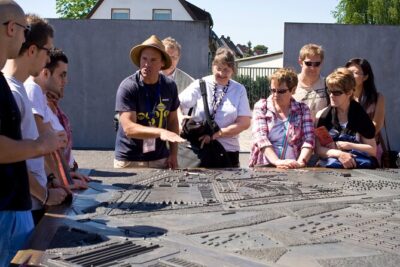
Sachsenhausen Concentration Camp Bus Tour in English from Berlin
Read our review →Sachsenhausen Concentration Camp Tour in English
Read our review →
Sachsenhausen Concentration Camp Memorial Tour (Max. 15 Guests)
Read our review →
Sachsenhausen Concentration Camp and Potsdam Tour
Read our review →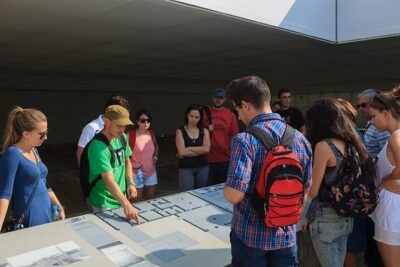
Visita en español al campo de concentración Sachsenhausen
Read our review →Browse the lists this tour appears in