
Review · ALTERNATIVE BERLIN TOURS
Alternative tour, History off the beaten path
Berlin’s past is not confined to Checkpoint Charlie or the Brandenburg Gate. This small-group walking tour uses football, neighborhood stories, former squats, Berlin Wall traces, and unusual urban corners to show you a less polished, more personal side of the city. Guide Annabelle leads the walk with plenty of energy and a clear affection for Berlin.
I like two things right away: the group is capped at 10 people, and the route reaches places you are unlikely to find on a standard first-time Berlin itinerary. The mix of architecture, local stories, and Cold War history gives the walk a human scale. The main caution is price: at $100.93 per person for about three hours, it is expensive for a walking tour, and you should budget extra for the drink at the end.
In This Review
- Key points to know before booking
- Why this Berlin walk feels different
- Starting at Ostbahnhof
- YAAM and the alternative side of Berlin
- Football, community, and Berlin identity
- Following the Berlin Wall beyond the postcard stops
- Architecture, anecdotes, and the human scale
- Finishing near Mariannenplatz
- Is the $100.93 price fair?
- Practical details for the three-hour walk
- Who should book this experience?
- Should you book the Berlinade Tours walk?
- FAQ
- Where does the tour start?
- Where does the tour finish?
- How long does the experience last?
- What language is the tour offered in?
- How many people can join the tour?
- Is food or a drink included?
- What happens if the weather is poor?
Key points to know before booking
- A football-themed way to see Berlin: The tour uses football as part of its approach to the city, rather than offering only a conventional monument-by-monument history lesson.
- Annabelle is the central strength: She brings history, street anecdotes, and local community knowledge together in a lively, personal way.
- YAAM is an early taste of the route: The short passage through this Berlin cultural spot helps set the tone for a walk focused on alternative city life.
- Berlin Wall stories away from the main stops: You can hear about no-man’s-land areas, green space, and places connected with the Wall without following the usual tourist circuit.
- A small group matters: With no more than 10 people, it is easier to hear the guide and ask questions.
- Plan for a social finish: The walk ends at Mariannenplatz, with a drink or meal possible afterward, but refreshments cost extra.
Why this Berlin walk feels different
The best reason to book this experience is its angle. Berlin has an enormous amount of history, but the familiar version can become a procession of grand memorials and famous photographs. This walk looks at how the city’s past shaped streets, communities, squats, football culture, and areas that were once divided or neglected.
That makes the tour especially useful if you have already seen the Reichstag and Brandenburg Gate, or if you prefer stories attached to ordinary streets. You are not simply collecting landmarks. You are hearing why certain corners mattered and how Berlin’s changing identity can still be read in its buildings and open spaces.
Annabelle is an important part of that appeal. The tour depends on a guide who can connect facts with place, and she is described as personable, enthusiastic, and able to move between major historical events and small street-level details. The experience is not presented as a memorized script. That matters in a city where the most interesting questions often come from what you notice along the way.
The tone also seems friendly rather than academic. You get history and architecture, but the walk is intended to remain easy to follow and enjoyable. If you like a guide who talks with you instead of delivering a lecture at you, this format should suit you.
More alternative Berlin:
- Berlin: Alternative Berlin Walking Tour
★ 4.6 · 1,204 reviews - Berlin: Alternative Bike Tour of Kreuzberg & Friedrichshain
★ 4.7 · 548 reviews - Berlin: Alternative Berlin Bike Tour
★ 4.8 · 359 reviews
Starting at Ostbahnhof
The walk begins at Ostbahnhof, at Koppenstraße 3 in Berlin. This is a practical starting point on the eastern side of the city, and you can reach Ostbahnhof by S-Bahn lines S3, S5, S7, and S9.
Starting here places you in a part of Berlin that fits the tour’s subject well. The eastern districts are closely tied to the city’s division, postwar change, alternative culture, and continuing redevelopment. You will want to arrive ready to walk, since the experience is built around moving through neighborhoods rather than sitting in one place.
The meeting point is worth checking carefully before you leave. The route finishes at Mariannenplatz in the Friedrichshain-Kreuzberg district, not back at Ostbahnhof. That is useful because you can continue exploring Kreuzberg afterward, but it also means you should not plan to return immediately to your starting point.
The end point is near Kottbusser Tor, served by the U8. This gives you a straightforward way to continue by public transport after the walk. The experience is listed as being near public transportation, so you do not need a private car or taxi to make the arrangements work.
YAAM and the alternative side of Berlin
One named stop is YAAM, reached by a short passage of about 10 minutes. That is not a long visit, so you should not book this expecting an extended tour of the venue. Instead, YAAM works as a quick introduction to the type of Berlin the walk wants you to notice: creative, unconventional, community-minded, and more connected to local culture than to grand sightseeing.
The brief stop also tells you something about the pace. This is a moving city walk, not a series of long indoor visits. You will probably spend more time hearing stories while walking through streets and open areas than receiving formal presentations at attractions.
That approach can be rewarding, but it requires the right expectations. If you want guaranteed entry to several museums, detailed architectural tours of individual buildings, or long photo stops, this is not the best match. If you enjoy seeing how a district feels and learning why it developed that way, the short YAAM passage should fit the experience well.
Football, community, and Berlin identity
The tour is built around exploring Berlin on football. The available details do not spell out a match, stadium visit, or specific club program, so you should not assume that football means attending a game. Here, it appears to be a way of connecting the city’s neighborhoods and social life with its history.
That is a useful approach because football is not just a sport in Berlin. It can point you toward questions of belonging, local identity, migration, class, and community. The experience combines that theme with architectural discovery and stories about the people who shaped the streets.
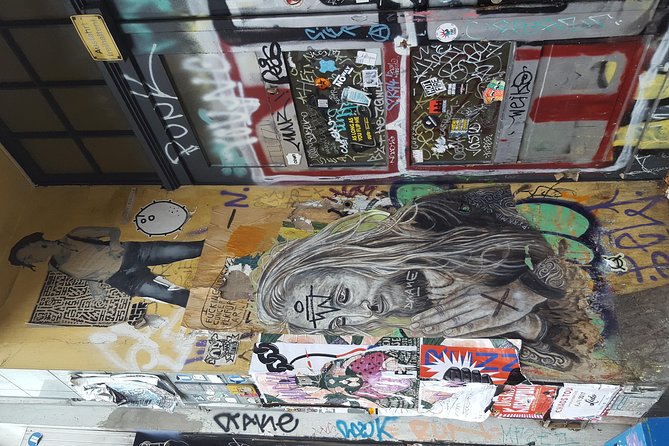
You may also hear about the history of squats and how those communities became part of Berlin’s urban story. This is one of the most unusual elements of the route. Squats are not simply colorful background for photographs. They reflect conflict over housing, ownership, political ideals, and the right to shape a neighborhood.
Annabelle’s strength, based on the details available about the tour, is making those subjects approachable. You are given context without being buried in dates. That is particularly helpful if you want to understand why Berlin feels different from many European capitals, but do not want a formal political history seminar.
More history walks in Berlin:
- Berlin: Natural History Museum Entrance Ticket
★ 4.6 · 3,382 reviews - Berlin: World Heritage Cruise to Potsdam
★ 4.5 · 1,435 reviews - Berlin Historical Highlights Walking Tour
★ 4.9 · 657 reviews - Berlin Private Complete History All Day Walking Tour
★ 5.0 · 474 reviews
Following the Berlin Wall beyond the postcard stops
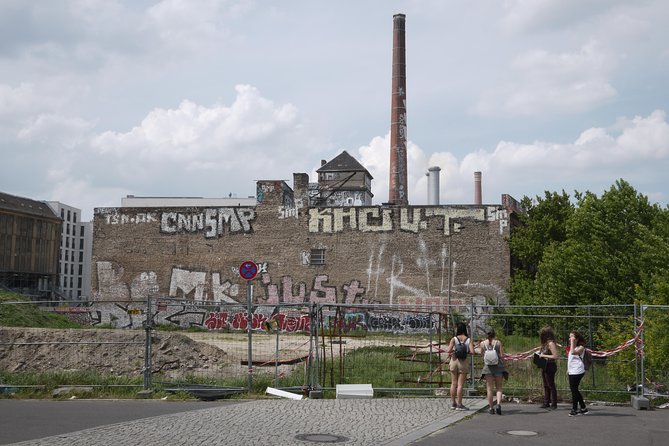
The Wall is another major thread. Berlin has excellent official memorial sites, but the city’s division also left behind less obvious traces. This walk takes a different route, with stories connected to no-man’s-land areas and a green corridor that developed where the border once cut through the city.
That contrast is powerful. The Wall is often presented through concrete fragments, watchtowers, and memorial signs. A former border strip that has become open green space gives you another way to think about the division. You can picture the barrier not only as a structure, but as a zone that controlled movement, separated communities, and changed the shape of daily life.
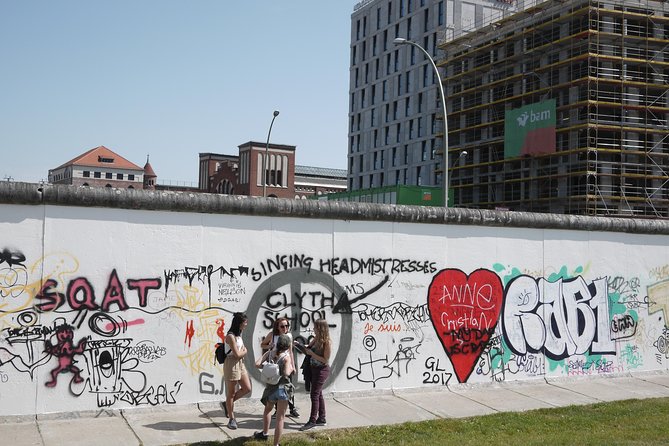
The route may be especially useful if you have already visited the East Side Gallery. The famous mural section is worth seeing, but it offers only one part of the story. Here, you get a more local account of places that were not designed as major tourist attractions.
Do keep in mind that urban history walks depend on the guide’s storytelling. The significance of a vacant lot, side street, or patch of green may not be obvious without explanation. That is why Annabelle’s role matters so much. The value is less about ticking off visible monuments and more about learning how to read the city.
Architecture, anecdotes, and the human scale
Along the route, the focus is not limited to political history. You also get architectural observations and anecdotes tied to particular streets and corners. This combination makes the walk more varied than a single-subject tour.
I like this kind of structure because Berlin can feel confusing at first. Buildings from different eras sit side by side, and abrupt changes in street design can be hard to interpret. A guide can help you see that these contrasts are not random. They reflect war, division, rebuilding, protest, migration, and rapid redevelopment.
The walk also appears to leave room for stories that are not found on a standard information panel. Those smaller details can be memorable, especially when they explain how a neighborhood was used rather than simply when a building was constructed.
Still, a three-hour tour cannot cover every part of Berlin’s alternative culture or Wall history. You will receive a selection of places and stories, not a complete survey. That is a fair trade if you want a focused introduction, but you may need another day for museums and formal memorial sites.
Finishing near Mariannenplatz
The experience ends at Mariannenplatz in Friedrichshain-Kreuzberg. This is a useful finish because you can continue exploring the area on your own, and the route does not leave you at an isolated attraction.
The social ending is part of the charm. You can expect the possibility of gathering for a drink, and the supplied details also point to a meal and beer as an enjoyable way to close the experience. This is not included in the $100.93 price, so bring extra money if you want to join in.
That final drink is more than a refreshment stop. A small group walk can feel formal at first, especially when everyone is meeting for the first time. Ending informally gives you a chance to ask one last question, compare impressions, and continue the conversation with the guide and other people in the group.
You should not treat the drink as a guaranteed included service. Snacks are not included, and the cost of refreshments is your responsibility. The walk itself is the paid experience.
Is the $100.93 price fair?
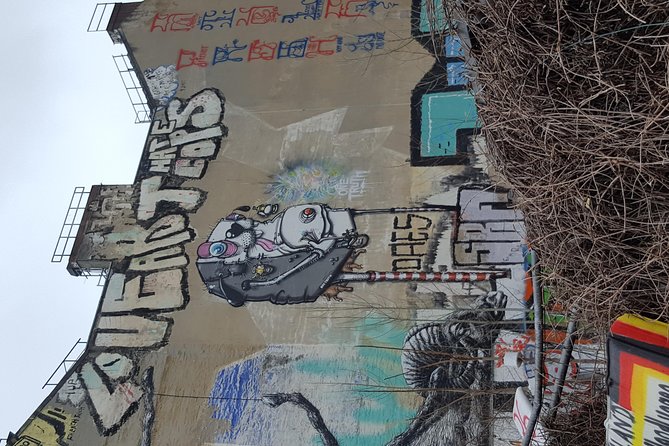
At $100.93 per person, this tour sits at the high end for a three-hour city walk. The price makes the most sense for someone who values a personal guide, a group of no more than 10, and a route that avoids the usual major attractions.
You are paying for interpretation and access to a particular point of view, not for expensive admissions. The only stated stop with an included admission ticket is the short passage to YAAM, and GST is included. There is no mention of a museum entry, meal, snack, or drink being covered.
For a first visit, you might find the cost hard to justify if your main goal is to see Berlin’s iconic sights. You can visit many central landmarks independently and spend less. But if you have limited interest in standard sightseeing, or you want a guide to make sense of Berlin’s alternative neighborhoods and Wall remnants, the smaller group and specialist route may offer better value.
I would also consider timing. Take the walk early in your stay if you want ideas for what to explore next. It works as an introduction to one side of Berlin, though the price is easier to accept when you plan to follow up by spending time in the neighborhoods afterward.
Practical details for the three-hour walk
The tour lasts about three hours and is offered in English. A mobile ticket is provided, which keeps the booking simple.
The group maximum is 10 people. That is small enough for a more direct exchange with Annabelle, while still allowing for a little group energy. The experience is listed as suitable for most people, and service animals are allowed.
Good weather is required. If poor weather causes cancellation, you are offered another date or a full refund. Since the route is outdoors and includes walking through neighborhoods, this is a real practical concern, not a minor footnote. Check the forecast and wear comfortable shoes.
Free cancellation is available up to 24 hours before the start time. Cancellations or changes made less than 24 hours ahead are not accepted for a refund. Cutoff times follow Berlin local time, so pay attention if you are booking from another country.
Who should book this experience?
You should consider it if you want:
- A less conventional introduction to Berlin
- Stories about the Wall away from the best-known memorials
- A guide-led look at squats, football, architecture, and local communities
- A small group rather than a large coach tour
- A social ending near Mariannenplatz
- A lively guide with a strong personal connection to Berlin
It may not suit you if you want a low-cost overview, guaranteed museum access, or a tightly documented list of famous monuments. The route is unusual by design, and some of its appeal depends on enjoying places that may look ordinary until the guide explains their past.
Should you book the Berlinade Tours walk?
Book this tour if you want Berlin to make sense through its side streets, community stories, former border zones, and alternative culture. Annabelle’s enthusiasm appears to be the experience’s strongest asset, and the small group gives her room to make the history conversational.
The price is the main barrier. At $100.93, I would choose it for a strong interest in local history and unusual neighborhoods, not as a general sightseeing bargain. If that sounds like your style, this is a thoughtful way to see a Berlin that most standard tours skip. Bring good shoes, check the weather, and keep a little money aside for the final drink.
FAQ
Where does the tour start?
The tour starts at Ostbahnhof, at Koppenstraße 3, 10243 Berlin, Germany.
Where does the tour finish?
The walk finishes at Mariannenplatz, 10997 Berlin, in the Friedrichshain-Kreuzberg district.
How long does the experience last?
The experience lasts approximately three hours.
What language is the tour offered in?
The tour is offered in English.
How many people can join the tour?
The maximum group size is 10 people.
Is food or a drink included?
No. Snacks are not included, and you should expect to pay extra if you want a drink at the end. The final gathering may also continue with a meal at your own cost.
What happens if the weather is poor?
The experience requires good weather. If it is canceled because of poor weather, you will be offered a different date or a full refund.
Just added around Berlin
- Berlin Highlights in One Day★ 5.0 · 3 reviews
- Private Berlin One Day Tour with a Local: See the City Unscripted★ 3.5 · 3 reviews
- Individual city tour Berlin for max. 8 persons★ 5.0 · 3 reviews
- Transfer from Berlin Schönefeld Airport (SXF) to Berlin city Hotels – ROUND TRIP★ 4.0 · 3 reviews
- Berlin: Museum Island Tour★ 5.0 · 3 reviews
- Private Analogue Photography Experience in Berlin★ 5.0 · 3 reviews
- Berlin: Local Food Tour in Secrets Hidden Gems★ 4.0 · 3 reviews
- Berlin & The Third Reich Private Guided Tour★ 5.0 · 3 reviews
Alternative Berlin Tours, compared.


Alternative Bike Tour of Kreuzberg & Friedrichshain
Read our review →
Experience the Alternative Kreuzberg on a Bike Tour
Read our review →
Alternative Berlin Bike Tour – Off the Beaten Tracks in Small Groups
Read our review →


Street Art and Alternative Tour of Berlin in French
Read our review →Browse the lists this tour appears in