
Review · HISTORICAL TOURS
Berlin: Charité Hospital History Walking Tour
Charité’s story begins with a plague house and leads through bloodletting, medical breakthroughs, Nazi crimes, women’s rights, and East Berlin’s political divisions. That is a lot to fit into two hours, but the tour gives Berlin’s oldest hospital a human scale by tying major events to buildings, doctors, and patients.
I like the Veterinary Anatomy Theatre, an 18th-century building where the ailments of livestock and cavalry horses were studied. I also like the way the tour connects famous names such as Robert Koch and Rudolf Virchow with the less familiar story of Rachel Hirsch, the first woman to hold a medical professorship in Prussia. The main drawback is practical: much of the tour takes place outside, so cold weather, standing, and two hours on foot can test your patience.
In This Review
- Key points to know
- Why Charité tells Berlin’s story so well
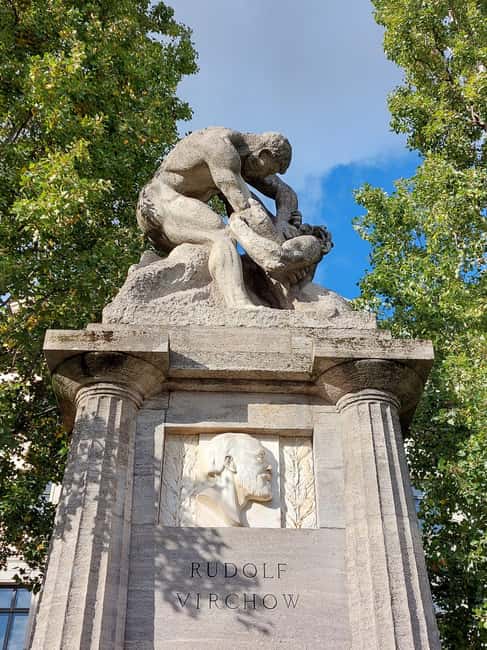
- Starting beside Robert Koch at Robert-Koch-Platz
- The Veterinary Anatomy Theatre and its 18th-century lessons
- Walking the neo-Gothic Charité campus
- Rachel Hirsch and the slow change for women in medicine
- Charité under the Nazi regime
- East Germany, divided windows, and political memory
- How the television series fits in
- What the two-hour format gives you
- Is $28 a fair price?
- Who should book this walk?
- Practical details before you reserve
- My call: book it for focused Berlin history
- FAQ
- Where does the Charité Hospital History Walking Tour start?
- Where does the tour finish?
- How long does the tour last?
- What languages are available?
- Is admission to the Veterinary Anatomy Theatre included?
- Can I enter the hospital buildings?
- Is the tour suitable for children?
- Is the tour wheelchair accessible?
- What should I bring?
- Can the Veterinary Anatomy Theatre be closed?
- What is the cancellation policy?
Key points to know
- Start at Robert-Koch-Platz: Meet by the Robert Koch statue and look for the guide with an orange umbrella.
- Enter the Veterinary Anatomy Theatre: The visit adds a rare indoor stop and a look at 18th-century medical teaching.
- Follow Charité through three political eras: The tour covers the Nazi regime, medical crimes, and East Germany’s divided identity.
- Meet medical pioneers and social reformers: Robert Koch, Rudolf Virchow, and Rachel Hirsch all help shape the story.
- Expect an outdoor walking tour: Wear warm clothing, comfortable shoes, and bring water.
- Pay $28 for a focused history tour: That is fair value if you want context and storytelling rather than a general Berlin walk.
Why Charité tells Berlin’s story so well

Charité is not simply an old hospital with handsome buildings. It is a place where medicine, politics, class, gender, and state power repeatedly collided.
The hospital began in 1710 as a simple plague house, built to protect Berlin from an approaching epidemic. Early treatment was far removed from modern medicine. Bloodletting, mercury, and amputations were common tools, and the results could be grim.
That opening gives you a useful frame for the whole tour. You are not just looking at old walls. You are following the change from fear and guesswork toward scientific medicine, while also seeing how medical institutions can be used for humane progress or terrible abuse.
The tour is particularly strong for anyone who likes history with a human face. Robert Koch and Rudolf Virchow are not presented as isolated names from a textbook. Their work belongs to a living institution, one that also struggled with prejudice, bureaucracy, and political pressure.
More walking tours in Berlin:
- Discover Berlin Half-Day Walking Tour
★ 5.0 · 9,624 reviews - Berlin: Third Reich and Cold War 2 Hour Walking Tour
★ 4.9 · 6,830 reviews - Berlin: Discover Berlin Walking Tour
★ 4.9 · 5,998 reviews
Starting beside Robert Koch at Robert-Koch-Platz

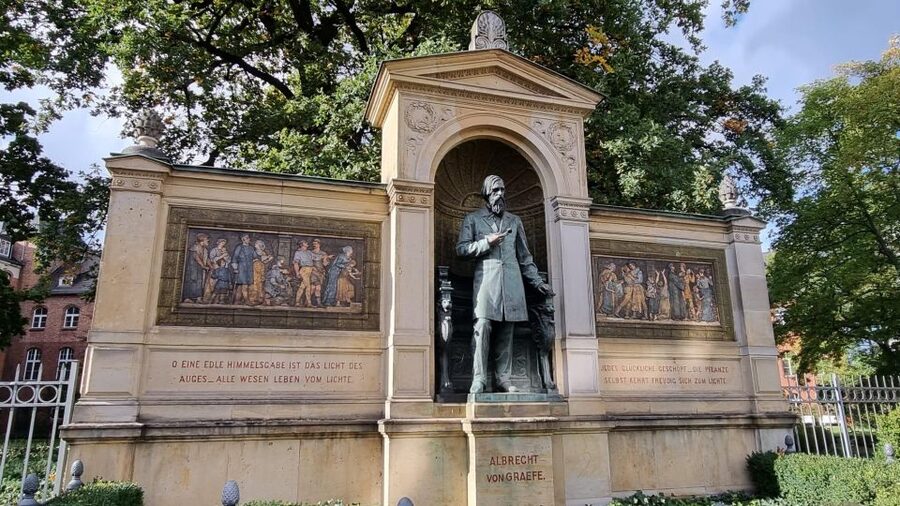
The meeting point is Robert-Koch-Platz, by the statue of Robert Koch. Look for the guide holding an orange umbrella, a helpful marker in a busy city.
Starting beside Koch’s statue is more than a convenient meeting arrangement. It puts one of Charité’s best-known medical figures at the front of the story. The tour then uses the hospital grounds and surrounding buildings to explain how Charité developed and why its doctors mattered far beyond Berlin.
Your guide leads in English or German. Martina is one guide associated with this experience, and her tours have been described as lively, well planned, and full of useful supporting material. You should not assume that Martina will lead every departure, but the feedback gives you a good idea of the tone to expect: clear explanations, strong preparation, and plenty of historical detail.
The beginning also establishes the pace. This is not a quick photo stop followed by a bus ride. You will walk and stand for about two hours, with several guided stops around the campus.
The Veterinary Anatomy Theatre and its 18th-century lessons
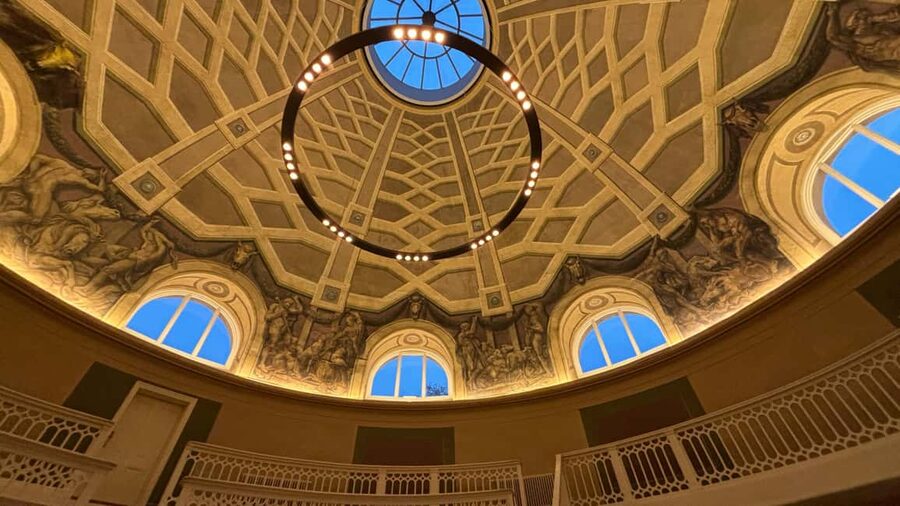
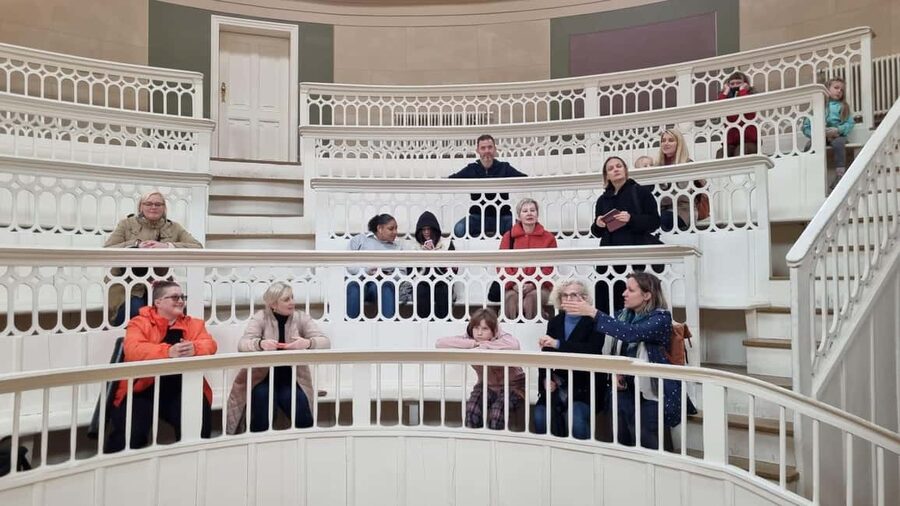
The Veterinary Anatomy Theatre is the tour’s most distinctive stop. It is Berlin’s oldest surviving academic building, and admission is included in the $28 price.
The building takes you back to a time when medical study depended on close observation of animals, bodies, and visible disease. Here, doctors and researchers examined ailments affecting livestock and cavalry horses. That may sound like a side story, but it reveals how closely medicine was tied to agriculture, transport, military power, and city life.
The theatre also gives the tour a change of rhythm. Much of the experience is outside, so this indoor visit offers a chance to look carefully at an important building rather than simply hearing about it while walking past.
The scheduled visit lasts about 15 minutes. That is enough for an introduction and some context, but not a long museum visit. If you want to study every architectural detail or read extensive displays at your own pace, you may find the time short.
The theatre can occasionally close because of internal events or public holidays. Since it is one of the tour’s main attractions, check the date carefully if seeing the interior is especially important to you.
Walking the neo-Gothic Charité campus
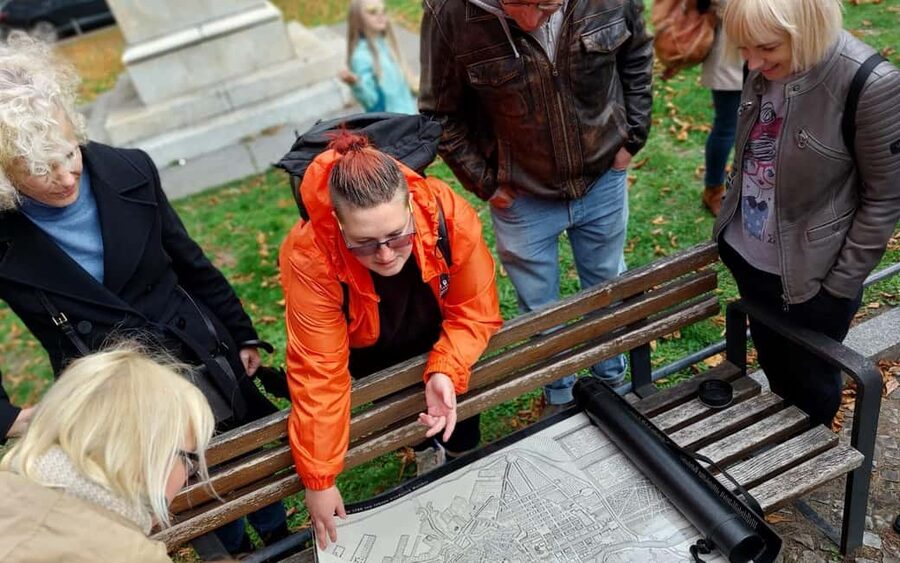
After the theatre, the route circles the historic Charité campus. The neo-Gothic architecture gives the tour a strong visual setting, especially for visitors who enjoy old institutional buildings more than standard city monuments.
The walk helps you understand Charité as a working place rather than a preserved shell. Some buildings remain tied to hospital or university activity, and the tour does not include entry to buildings where those activities take place. Certain parts of the campus are also restricted for guided visits.
That limitation matters. You will see the historical setting and hear the stories connected to it, but you should not expect an inside tour of every hospital building. You can explore some areas independently after the guided walk, within the access rules in place at the time.
The campus is also where the tour moves from architecture to medical science. Robert Koch and Rudolf Virchow made major discoveries connected with Charité, and their work helps explain the institution’s international reputation.
Virchow is especially useful to the story because Charité’s history is not only about laboratory progress. It also touches social conditions and the wider responsibilities of medicine. The guide uses the campus to show how scientific work and public life were linked.
More history walks in Berlin:
- Berlin: Natural History Museum Entrance Ticket
★ 4.6 · 3,382 reviews - Berlin: World Heritage Cruise to Potsdam
★ 4.5 · 1,435 reviews - Berlin Historical Highlights Walking Tour
★ 4.9 · 657 reviews - Berlin Private Complete History All Day Walking Tour
★ 5.0 · 474 reviews
Rachel Hirsch and the slow change for women in medicine

One of the most valuable parts of the tour is the story of Rachel Hirsch. In 1913, she became the first woman to hold a medical professorship in Prussia.
That appointment marked a major step for women in medicine, but it was not an easy victory. Hirsch faced resistance inside the institution, which keeps the story from becoming a simple tale of progress. Charité could open doors while still making advancement difficult for the people pushing through them.
I appreciate this part because it broadens the usual list of famous male scientists. You get a better picture of medical history when it includes the people who had to fight for access to the profession itself.
The story also fits Berlin well. The city is often presented through kings, wars, walls, and political movements. Hirsch adds another form of change, the slow shift in who was allowed to teach, research, and hold authority.
If you are especially interested in women’s history, education, or social reform, this may be one of the tour’s most memorable sections.
Charité under the Nazi regime
The tour does not avoid Charité’s darkest period. Under the Nazi regime, medical ethics were pushed aside and racial hygiene was imposed with brutal force.
Some doctors remained silent. Others actively helped organize the extermination of psychiatric patients. This is difficult material, and it should be. A hospital’s reputation for scientific achievement does not excuse its role in crimes carried out in the name of medicine.
The value of discussing this history at Charité is the direct connection between professional institutions and political power. The story shows how doctors, researchers, and administrators can become part of state violence when human beings are reduced to categories and policies.
You should expect a serious change in tone during this section. This is not a light sightseeing walk, and the subject may not suit very young children. The tour recommends it for ages 14 and up, with all minors accompanied by an adult.
For me, this is one reason the experience works better than a simple parade of medical achievements. It asks you to consider not just what doctors discovered, but how medicine was practiced and who was harmed.
East Germany, divided windows, and political memory
After the Nazi period, Charité continued under East Germany. The hospital became a source of pride for the socialist state, which pointed to its medical successes as evidence of national achievement.
At the same time, the institution was shaped by Berlin’s division. Windows facing the capitalist West were bricked up, a small but striking detail that turns political geography into something physical. The Cold War was not only a matter of speeches and checkpoints. It could alter the very appearance of a hospital.
This section gives the tour a useful link to the rest of Berlin. If you have already visited places connected with the Wall or East German government, Charité adds another angle. You see how ideology affected science, buildings, public memory, and daily work.
The tour’s political history is compact rather than exhaustive. In two hours, you will not get a full account of East German medicine or every stage of Charité’s development. Instead, you receive a focused set of examples that make the larger story easier to grasp.
How the television series fits in
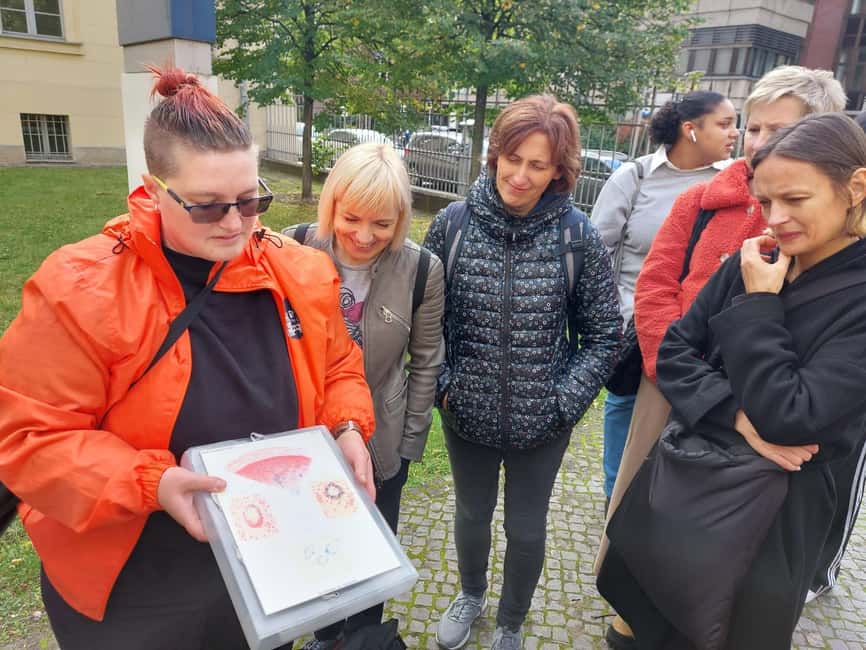
The tour also covers the real-life stories behind the Charité television series. This can be a nice bonus if you have watched the show or plan to watch it after visiting Berlin.
The connection works best when treated as an entry point, not the main purpose of the walk. The tour remains centered on the hospital’s actual history, medical figures, and political setting. The television link helps you separate dramatized storytelling from the events and people that inspired it.
If you have not seen the series, you will still be able to follow the tour. You do not need prior knowledge to understand the buildings or the historical periods.
What the two-hour format gives you
Two hours is a sensible length for this subject. It gives the guide enough time to move from the plague house to modern Charité without turning the experience into an all-day academic lecture.
The route includes the Veterinary Anatomy Theatre and several guided sections around the campus. The stops are short, often about 15 minutes, so expect a steady flow of explanation rather than long periods inside one building.
That format suits you if you like a guide to connect separate facts into one story. It may be less satisfying if you prefer long museum visits, quiet architectural study, or time to take many photographs.
You should also be comfortable walking and standing for roughly two hours. The tour is wheelchair accessible, but the outdoor nature of the route means you may still want to confirm any particular access needs before booking.
Wear comfortable shoes and bring water. In cold weather, dress more warmly than you think you need. The architecture may look grand, but it will not keep you warm while you are standing outside listening to the guide.
Is $28 a fair price?
At $28 per person, this is reasonably priced for a specialist walking tour with an expert local guide and free admission to the Veterinary Anatomy Theatre.
The value depends on what you want from a Berlin tour. You are paying for a carefully connected story, not a large number of paid attractions. The included theatre visit is important, but the guide’s interpretation is the real product.
I consider the price fair if you are interested in medical history, difficult German history, or the way institutions change under different governments. It is also good value if you have already seen Berlin’s major landmarks and want a more focused subject.
It may feel less worthwhile if you want a broad introduction to Berlin. This tour does not cover the Brandenburg Gate, the Reichstag, Museum Island, or the Berlin Wall in a general way. Charité is the subject, and the experience stays close to it.
Free cancellation up to 24 hours before the tour and the option to reserve now and pay later make it easier to fit into a changing schedule. Those are useful protections, especially if cold weather could affect your plans.
Who should book this walk?
I would choose this tour for adults, older teenagers, medical students, history fans, and anyone who enjoys seeing Berlin through an unusual institution.
It is especially suitable for you if you like:
- The history of medicine and science
- Stories about how politics shapes hospitals and universities
- Berlin’s Nazi and East German past
- Architecture with a clear historical purpose
- Guided walks that provide context rather than just photo stops
- The Charité television series and its real-life background
I would think twice if you dislike standing outdoors, find medical subjects uncomfortable, or want a relaxed stroll with little serious discussion. The tour includes harsh material about psychiatric patient extermination and the abuse of medical authority.
The experience also works well early in a Berlin visit because it can give you a useful sense of the city’s political layers. Its listed finish near Alexanderufer and Berlin Central Station makes it convenient for continuing elsewhere in the city. The supplied meeting information also describes the activity as ending back at the meeting point, so confirm the exact finish arrangement when you book.
Practical details before you reserve
Meet at the Robert Koch statue in Robert-Koch-Platz. The orange umbrella should make the guide easy to spot.
Tours are offered in English and German. The activity lasts two hours, but starting times vary, so check availability for your date.
The tour includes the Veterinary Anatomy Theatre, but not entry to hospital or university buildings still used for medical or academic work. Some campus areas are restricted during the guided visit, though you may be able to explore parts of them independently afterward.
The theatre may close on public holidays or during internal events. If that happens, the visit inside may not be possible.
Children under 14 are not considered a good fit for the content. Minors must be accompanied by an adult. Bring comfortable shoes and water, and plan for outdoor conditions.
My call: book it for focused Berlin history
Book this Charité walk if you want a serious, well-shaped story about medicine and Berlin rather than another general sightseeing circuit. The Veterinary Anatomy Theatre, Rachel Hirsch’s career, the Nazi medical crimes, and the bricked-up East-facing windows give the tour plenty of memorable detail.
I would not book it as your only Berlin tour, since it assumes you want one institution examined closely. But as a two-hour addition to a wider city visit, it offers strong value and an unusual view of Berlin’s past. Choose a mild day if possible, bring a warm layer, and give the subject your full attention.
FAQ
Where does the Charité Hospital History Walking Tour start?
The tour starts at Robert-Koch-Platz, by the Robert Koch statue. Look for the guide holding an orange umbrella.
Where does the tour finish?
The route information places the finish at Alexanderufer, near Berlin Central Station. The meeting information also describes the activity as ending back at the meeting point, so confirm the exact finish arrangement when booking.
How long does the tour last?
The walking tour lasts two hours. Starting times vary by date, so check availability before reserving.
What languages are available?
The tour is offered in English and German.
Is admission to the Veterinary Anatomy Theatre included?
Yes. Admission to the Veterinary Anatomy Theatre is included in the tour price.
Can I enter the hospital buildings?
No. Entry to buildings where hospital or university activities take place is not included. Some campus areas are restricted during guided tours.
Is the tour suitable for children?
The tour is recommended for ages 14 and up because of its historical subject matter. All minors must be accompanied by an adult.
Is the tour wheelchair accessible?
Yes, the activity is listed as wheelchair accessible. Since much of the tour takes place outside and includes walking and standing, confirm any specific access needs before booking.
What should I bring?
Bring comfortable shoes and water. Dress warmly in cold weather because most of the tour takes place outdoors.
Can the Veterinary Anatomy Theatre be closed?
Yes. The theatre may occasionally close because of internal events or public holidays.
What is the cancellation policy?
You can cancel up to 24 hours in advance for a full refund. You can also reserve now and pay later.
Just added around Berlin
- Berlin Highlights in One Day★ 5.0 · 3 reviews
- Private Berlin One Day Tour with a Local: See the City Unscripted★ 3.5 · 3 reviews
- Individual city tour Berlin for max. 8 persons★ 5.0 · 3 reviews
- Transfer from Berlin Schönefeld Airport (SXF) to Berlin city Hotels – ROUND TRIP★ 4.0 · 3 reviews
- Berlin: Museum Island Tour★ 5.0 · 3 reviews
- Private Analogue Photography Experience in Berlin★ 5.0 · 3 reviews
- Berlin: Local Food Tour in Secrets Hidden Gems★ 4.0 · 3 reviews
- Berlin & The Third Reich Private Guided Tour★ 5.0 · 3 reviews
Historical Tours, compared.




Berlin Private Complete History All Day Walking Tour
Read our review →



Small group Potsdam: A Journey Through History and Palaces
Read our review →Browse the lists this tour appears in