
Review · DDR & EAST BERLIN TOURS
Berlin: Muro,Guerra Fría y Museo de la Stasi
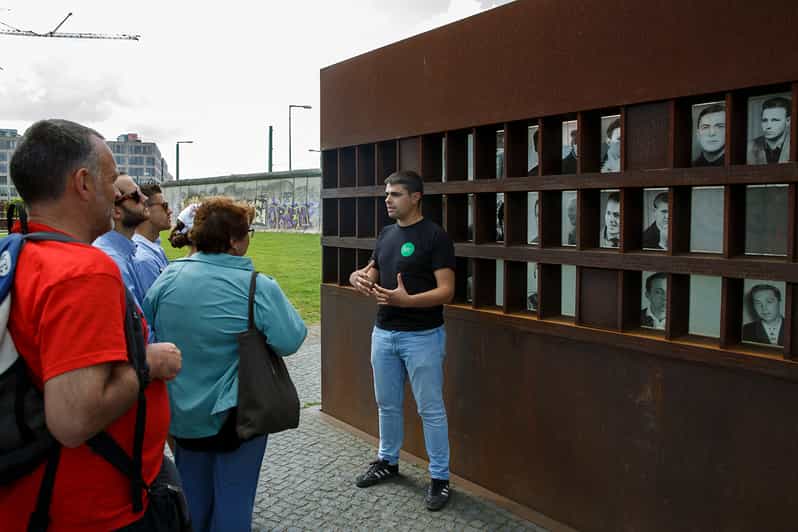
Berlin’s Cold War story becomes far more powerful when you see it on the ground. This four-hour Spanish-language tour links the Berlin Wall and Death Strip with Bernauer Strasse, former ghost stations, Frankfurter Allee, and the Stasi Museum, giving you both the physical remains and the human cost of division.
I like the way the tour combines outdoor sites with the Stasi Museum, since you get a sense of the city itself before seeing how East Germany monitored its people. I also like that the guide-led history fills in the gaps between scattered locations. The main drawback is practical: you must buy your own Berlin AB day ticket, and the museum visit is not clearly presented as a guided tour inside the museum.
In This Review
- Key points to know before booking
- Why this tour helps you understand Cold War Berlin
- Alexanderplatz meeting point and the first practical step
- The Berlin Wall and the Death Strip
- Bernauer Strasse, where the Wall split a neighborhood
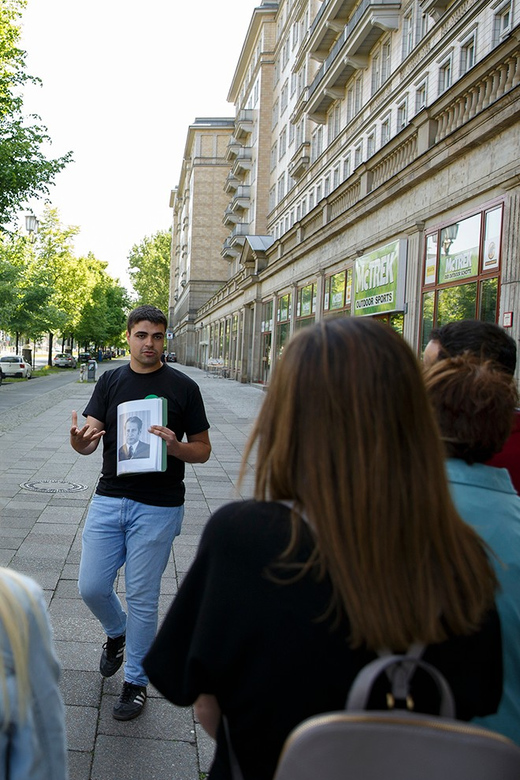
- Frankfurter Allee and the East Berlin city experience
- The former ghost stations and Berlin beneath the border
- The Stasi Museum and the machinery of surveillance
- What $41 buys you, and what it does not
- Who will get the most from this four-hour route
- Should you book the Berlin Cold War and Stasi tour?
- FAQ
- What language is the tour conducted in?
- How long does the tour last?
- Where does the tour meet?
- Do I need a public transport ticket?
- Is the Stasi Museum included?
- Is the tour wheelchair accessible?
- Can I cancel the booking?
Key points to know before booking
- Four hours of Cold War history: The tour covers several important Berlin sites without requiring you to plan separate visits.
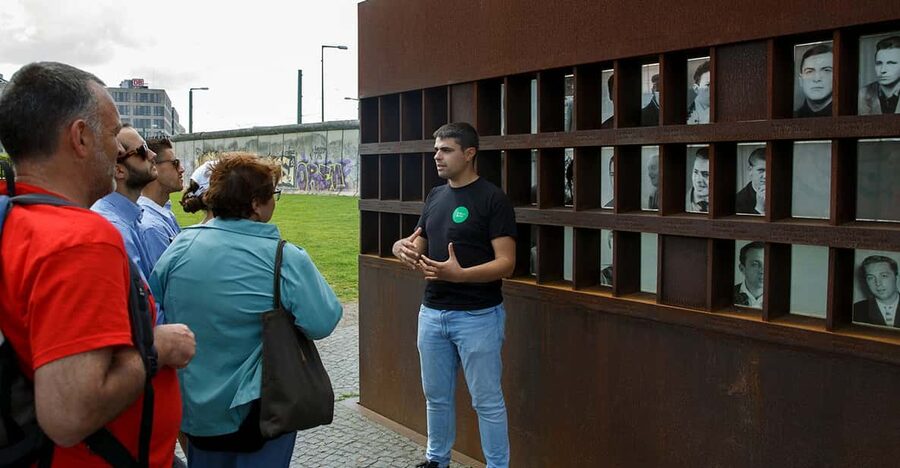
- Spanish-speaking guidance: Guides including Jordi and Constantino have been praised for detailed explanations, enthusiasm, and a clear command of the subject.
- Bernauer Strasse is a major stop: You see one of the best-known surviving sections of the Wall and learn about escape attempts and the Death Strip.
- The Stasi Museum adds an indoor look at control: Its exhibits help explain how the East German secret service watched and pressured the population.
- Public transport is part of the day: A Berlin AB transport card is required and is not included in the $41 price.
- The subject is serious, not light sightseeing: Expect a thoughtful history tour about division, surveillance, escape, and reunification.
Why this tour helps you understand Cold War Berlin
Berlin’s Cold War story can be confusing if you only visit a few famous pieces of wall. The remains are scattered, the city has changed quickly, and many important locations now sit among ordinary streets, shops, and transport lines.
This tour gives those places a common thread. You follow the story of a divided city, learn why the Wall was built, see what it physically looked like, and hear about the ways people tried to cross it. The final part of the story explains why the Wall came down and how Berlin changed afterward.
That structure matters. You are not simply looking at a concrete barrier and taking a photograph. You are learning how a political border affected homes, streets, rail lines, families, and daily movement.
The guide is especially important here. A good explanation can turn a bare patch of pavement or a surviving section of wall into a place with meaning. The strongest guide feedback centers on passion, detail, and the ability to discuss Berlin’s history clearly. Jordi, who has led the tour, is described as competent and engaged, while Constantino is praised for his enthusiasm and the many anecdotes woven into his explanations.
The tour is offered in Spanish. That makes it a strong choice if you want complex history explained in your first language, especially when the subject includes political systems, surveillance, escape attempts, and the changing lives of Berliners.
More East Berlin and DDR history:
- Berlin: DDR Museum Tickets
★ 4.3 · 3,443 reviews - Berlin: 75-minute Trabi Safari
★ 4.8 · 2,854 reviews - Berlin: East and West Hop-On Hop-Off Bus Tour
★ 4.2 · 2,195 reviews
Alexanderplatz meeting point and the first practical step
You meet beside the single entrance to the Fernsehturm, Berlin’s television tower, at Alexanderplatz. Look for a green flag marked tours en español, beside Espresso House and between the television tower and Alexanderplatz railway station.
This is a busy part of Berlin, so arrive with enough time to locate the flag. The meeting point is specific, but Alexanderplatz is large and can feel confusing if you come out of the station at the wrong side.
Bring or buy a Berlin AB day ticket before the tour begins. Public transport is needed during the outing, and that ticket is not included in the $41 price. This is an important cost to add when comparing the tour with a self-guided day.
The ticket requirement is not just a minor detail. Berlin’s Cold War sites are spread across the city, and public transport makes it possible to connect them within four hours. The tour would be less useful if you had to spend much of the time finding your own way between locations.
The Berlin Wall and the Death Strip
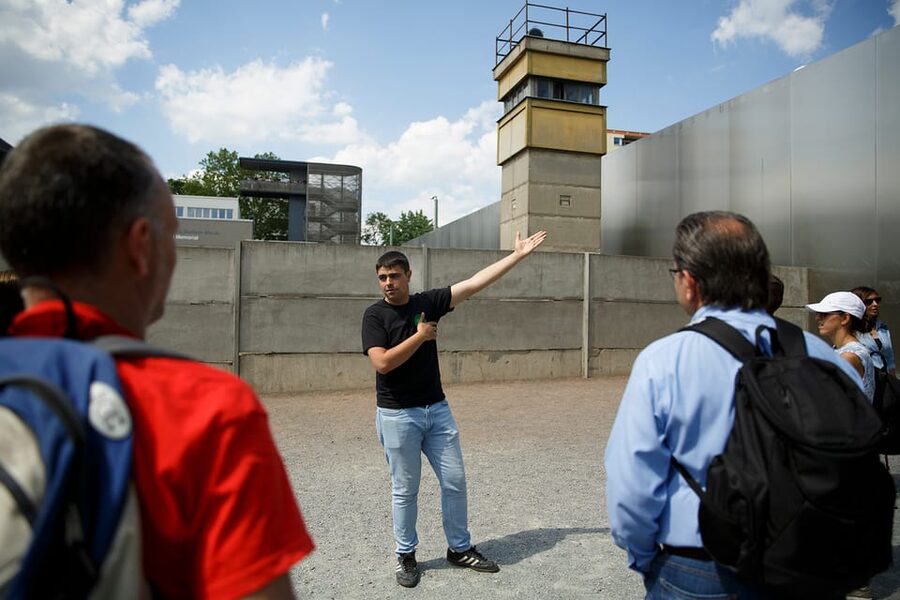
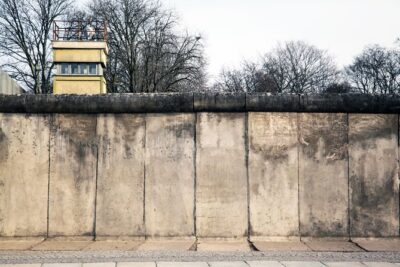
One of the central parts of the tour is seeing what remains of the Berlin Wall and the area once known as the Death Strip. The Wall was not simply a single concrete structure. It was part of a controlled border system that divided East and West Berlin and made ordinary movement extremely difficult.
At the surviving sections, your guide explains why the Wall was built and what it meant for people living on either side. You also hear about the inventive ways some Berliners tried to cross it.
That human angle is what makes this stop valuable. A wall can look simple after the surrounding city has been rebuilt, but the stories of escape attempts show how much effort and risk were involved. You begin to see the border not as an old political symbol, but as something that shaped personal decisions and family life.
Do not expect every part of the original border to survive. Berlin has changed considerably, and many Cold War traces have disappeared or been absorbed into modern streets. A guided visit helps you recognize the remaining pieces and understand what is no longer visible.
The subject is also sobering. This is not a quick stop for colorful wall art or a cheerful photo. The focus is on separation, control, danger, and the choices people made under pressure.
Bernauer Strasse, where the Wall split a neighborhood
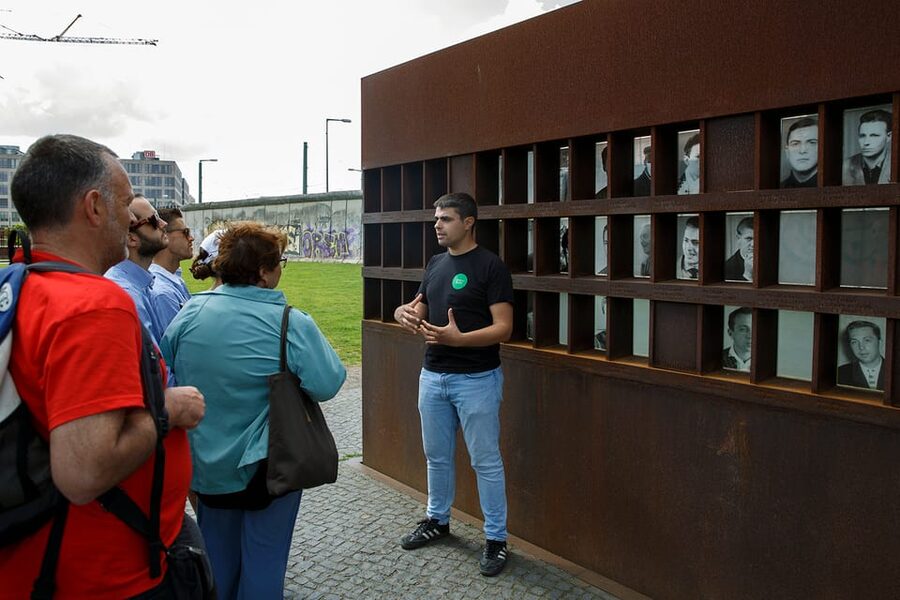
Bernauer Strasse Wall Memorial is one of the most meaningful stops on the route. It is especially useful because the Wall’s impact can be understood at street level. Here, the story is tied to buildings, homes, and the physical division of a neighborhood.
The memorial helps you picture what it was like to live beside a border that could suddenly change the route to work, school, or nearby relatives. Your guide also places the Death Strip and escape attempts into the setting, rather than treating them as abstract subjects.
I would give this stop your full attention. It is easy to rush through a Wall memorial, take a photograph, and move on. The better approach is to listen for the details that explain how Berliners adapted to an imposed division and how the border changed the character of the area.
The tour’s Spanish explanations are useful here because the memorial contains several layers of information. You are not only looking at a surviving Wall section. You are learning why this location mattered and how the city has developed since the border disappeared.
For many people, Bernauer Strasse will be the emotional center of the four hours. It connects large political events to ordinary streets and makes clear that the Cold War was lived day by day.
A different side of Berlin on the same trip:
- Berlin: Reichstag, Dome and Government District Guided Tour
★ 4.7 · 18,288 reviews - Berlin: 1-Hour City Tour by Boat with Guaranteed Seating
★ 4.3 · 16,993 reviews - Berlin: Boat Tour Along the River Spree
★ 4.4 · 11,252 reviews - Discover Berlin Half-Day Walking Tour
★ 5.0 · 9,624 reviews
Frankfurter Allee and the East Berlin city experience
The itinerary also includes Frankfurter Allee, an important East Berlin avenue. This stop broadens the tour beyond the Wall itself.
The avenue helps you consider the city behind the border. East Berlin was not only a restricted zone beside a concrete barrier. It was a functioning city where people lived, worked, traveled, and dealt with a state system that controlled many parts of public life.
Your guide uses the location to explain the wider setting of Cold War Berlin. You may find this part less immediately dramatic than a Wall memorial, but it adds useful balance. The tour is not limited to escape stories or famous border images. It also looks at the urban side of life in East Berlin.
This is one reason the four-hour format works well. You move from physical border remains to the streets and transport system that helped define everyday life. The city becomes easier to read once you understand that different locations served different roles in the divided capital.
Because the itinerary covers several areas, the time at each site may feel measured rather than leisurely. If you want long periods for independent photography or close museum reading, a self-guided visit may suit you better. If you want the connections explained as you go, the pace is a fair trade.
The former ghost stations and Berlin beneath the border
The tour also explores the story of Berlin’s former ghost stations. These underground stations were linked to lines that passed through restricted areas during the division of the city.
The name alone sounds mysterious, but the real value is historical rather than theatrical. The stations show how the Cold War affected transport as well as streets and buildings. A railway system that should have joined the city instead became part of the division.
You learn about the underground lines and what it meant for some stations to be closed or bypassed. This gives you another way to understand the border. The Wall was visible above ground, while the transport system carried its own signs of separation below ground.
Expect this part to be more of an explained stop than a conventional attraction with a large exhibit. The information comes through the route and the guide’s interpretation. If you are interested in how politics affects ordinary infrastructure, this will be one of the more unusual parts of the tour.
You should also remember that the required AB transport ticket serves a practical purpose here. Public transport is not an extra nuisance added to the experience. It is part of how you move through the same city system that once reflected Berlin’s division.
The Stasi Museum and the machinery of surveillance

The Stasi Museum brings the tour indoors and shifts the focus from the border to state control. Here, you learn about the methods used by the East German secret service to monitor and control the population of East Berlin.
This visit is valuable because the Wall explains how movement was restricted, while the museum explains how the state tried to control people inside its own society. The two parts belong together. One concerns the boundary between East and West, and the other concerns pressure within East Germany.
The museum gives you a chance to think about surveillance, secrecy, and the effect of living under suspicion. It also helps explain why the history of the Cold War cannot be reduced to military confrontation between two sides. For Berliners, the issue reached into daily choices and personal relationships.
Allow time to listen carefully to the guide before exploring the displays on your own. The tour information includes entrance to the Stasi Museum, but one past booking comment raised an important point: do not assume that the entire museum visit is a guided museum tour. The guide-led portion and the time you spend examining the exhibits may be separate.
That distinction matters if you want detailed help with every display. If your main goal is a structured introduction to the Stasi and its methods, the stop fits well. If you expect a guide to escort you through every room, confirm the arrangement before booking.
What $41 buys you, and what it does not

At $41 per person, the tour is reasonably priced for a four-hour guided route that links several parts of Berlin. You are paying for a Spanish-speaking guide, route planning, historical context, and the chance to see places that would take more effort to connect independently.
The value is strongest if you are new to Cold War Berlin. Without a guide, you could visit a Wall memorial and a museum, but you might miss the connection between the Wall, the transport lines, East Berlin’s streets, and the Stasi system.
The price is less attractive if you already know the subject well or prefer to read at your own pace. You also need to add the Berlin AB day ticket and budget for your own food and drinks. Those are not included.
There is no meal stop listed, so eat before the tour or carry something if you need food during the four hours. The subject is demanding, and staying comfortable will help you focus.
The flexible booking terms add practical value. You can cancel up to 24 hours before the start for a full refund, and the reserve-now, pay-later option lets you hold a place without paying immediately. These policies are useful if your Berlin schedule is still shifting.
Who will get the most from this four-hour route
I would recommend this tour to you if you want the Cold War explained in Spanish and prefer a connected story over a list of isolated attractions. It suits first-time Berlin visitors, history fans, and anyone who wants to understand why the city looks the way it does today.
It is also a good fit if you are curious about more than the best-known pieces of the Wall. The ghost stations and Frankfurter Allee add subjects you might not include in a short independent visit.
The tour may suit families with older children, but the material is serious. Stories about surveillance, escape attempts, and life under division require attention and some historical maturity.
You should think twice if you want a relaxed sightseeing walk with plenty of free time. Four hours is a substantial block, and the route is built around information. The tour is wheelchair accessible, but you may still want to confirm the exact transport arrangements and site access when booking, since the route uses public transport.
The quality of the day will depend heavily on the guide. The feedback connected with Jordi and Constantino points to guides who explain the subject with energy and detail. The provider is cultourberlin by cultour-incoming, and the advertised language is Spanish.
Should you book the Berlin Cold War and Stasi tour?
Book it if you want a serious, well-connected introduction to divided Berlin, especially in Spanish. The combination of Wall remains, Bernauer Strasse, Frankfurter Allee, ghost stations, and the Stasi Museum gives you a broader picture than a simple Wall walk.
The strongest reasons to choose it are the guide’s role and the range of locations. Jordi and Constantino are names associated with especially engaged explanations, though the guide on your date may be someone else. You also get a useful balance between outdoor history and an indoor museum visit.
Skip it if you want a slow, self-paced museum day, or if you already have a detailed plan for these sites. Remember to buy the AB day ticket, and clarify how much of the Stasi Museum visit is guided.
For most first-time visitors interested in Berlin’s divided past, $41 plus transport is a fair price for four hours of context and movement across the city. Come ready to listen, not just photograph, and the tour can give you a much clearer sense of what Cold War Berlin meant to the people who lived there.
FAQ
What language is the tour conducted in?
The live tour guide speaks Spanish, and the activity is offered in Spanish.
How long does the tour last?
The tour lasts four hours. Starting times vary, so you should check availability for your chosen date.
Where does the tour meet?
Meet beside the green flag marked tours en español, next to the only entrance to the Fernsehturm at Alexanderplatz. It is between the television tower and Alexanderplatz railway station, beside Espresso House.
Do I need a public transport ticket?
Yes. You need a Berlin AB transport card, specifically a one-day ticket for the tour. Public transport is not included in the tour price.
Is the Stasi Museum included?
Entrance to the Stasi Museum is included in the experience. However, you should not assume that the entire museum visit is guided inside, so confirm this detail if it is important to you.
Is the tour wheelchair accessible?
Yes, the activity is listed as wheelchair accessible. You should still check the transport and route details for your specific booking.
Can I cancel the booking?
You can cancel up to 24 hours in advance for a full refund. The reserve-now, pay-later option also allows you to hold your place without paying at the time of booking.
Just added around Berlin
- Berlin Highlights in One Day★ 5.0 · 3 reviews
- Private Berlin One Day Tour with a Local: See the City Unscripted★ 3.5 · 3 reviews
- Individual city tour Berlin for max. 8 persons★ 5.0 · 3 reviews
- Transfer from Berlin Schönefeld Airport (SXF) to Berlin city Hotels – ROUND TRIP★ 4.0 · 3 reviews
- Berlin: Museum Island Tour★ 5.0 · 3 reviews
- Private Analogue Photography Experience in Berlin★ 5.0 · 3 reviews
- Berlin: Local Food Tour in Secrets Hidden Gems★ 4.0 · 3 reviews
- Berlin & The Third Reich Private Guided Tour★ 5.0 · 3 reviews
DDR & East Berlin Tours, compared.






East Berlin and the Berlin Wall 2-Hour Walking Tour
Read our review →
East Berlin Food & History Tour with Eating Europe
Read our review →Browse the lists this tour appears in