
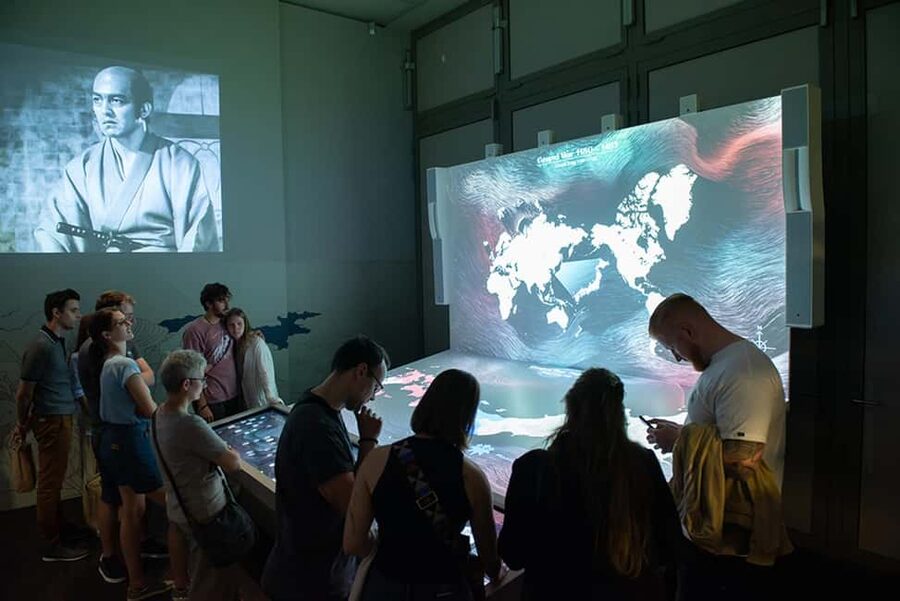
Review · MUSEUMS
Berlin: Samurai Museum Entry Ticket
Berlin’s Samurai Museum turns a private collection of Japanese armor, weapons, and art into a hands-on cultural visit. You’ll see about 900 historical objects, then use projections, touchscreens, holograms, and an AI fox called Kitsune to learn about samurai, ninja, yokai, tea, and sword-making. I like the 17th-century Matsudaira armor and the Japanese-built Noh theater most. I also like the flexible ticket, which lets you choose your visit within a 1 to 14-day window.
The museum is a stronger fit for families and curious first-time visitors than for anyone seeking a quiet, traditional gallery. The technology adds fun and context, but it can also compete with the objects themselves. At $15, though, you get a lot for the price, especially if you take time with the interactive displays rather than rushing through.
In This Review
- Key points
- A Samurai Collection in the Heart of Berlin
- Armor and Swords: The Museum’s Main Attraction
- Samurai, Ninja, Yokai, and Kitsune
- A Noh Theater Built in Japan
- The Tea House and the Ritual of Tea
- Holographic Drums and High-Tech Storytelling
- How Long to Spend and How the Ticket Works
- Getting to Auguststraße in Berlin-Mitte
- Who Will Get the Most from This Visit
- Should You Buy the $15 Ticket?
- FAQ
- Where is the Samurai Museum Berlin?
- How much does museum entry cost?
- How long is the ticket valid?
- Can I choose my visiting time later?
- What does the ticket include?
- Is the museum wheelchair accessible?
- How do I use the ticket at the entrance?
- How do I reach the museum by public transportation?
- Are pets, food, drinks, or large bags allowed?
Key points
- 900 objects on display: See armor, weapons, tea utensils, art, and other pieces from the 6th through 19th centuries.
- A real Japanese-built tea house and Noh theater: Traditional materials and methods give the museum a physical link to Japanese culture.
- Interactive learning: Touchscreens, projections, holograms, and the Kitsune fox guide make the collection easy to approach.
- Strong family appeal: Children can answer Kitsune’s questions and explore displays about samurai, ninja, and yokai.
- Flexible entry: The ticket is valid for 1 to 14 days, with the exact visiting time selected through availability.
- Easy Mitte location: Reach Auguststraße by U-Bahn, S-Bahn, tram, or bus, then pair the visit with Museum Island or Alexanderplatz.
A Samurai Collection in the Heart of Berlin
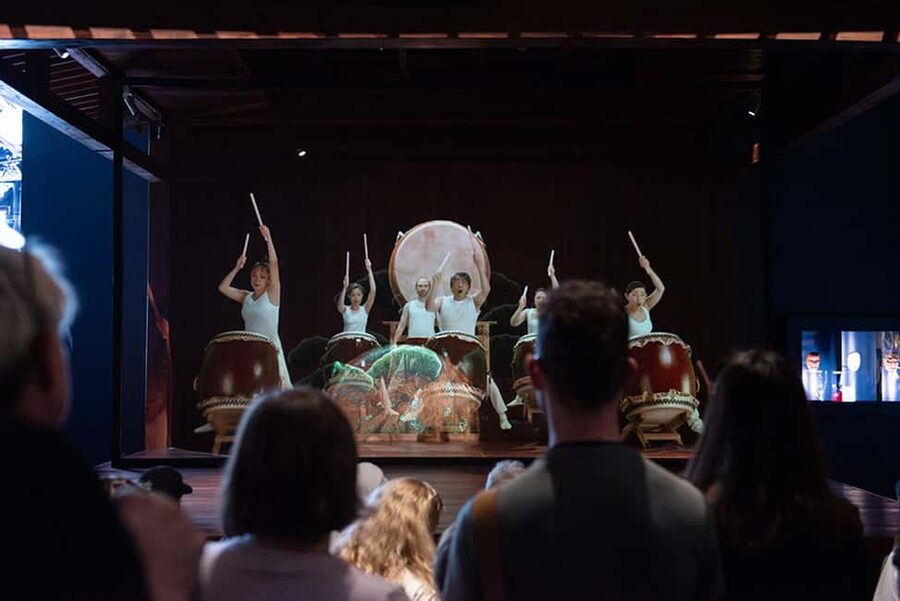
The Samurai Museum sits on Auguststraße in Berlin-Mitte, a handy part of town for sightseeing. Alexanderplatz, Museum Island, cafés, restaurants, and shopping are all nearby, so you can fit the museum into a full day rather than make a special cross-city trip just for it.
The collection began with a flea-market find in Berlin and grew into the Peter Janssen Collection, now containing more than 4,000 objects. About 900 are presented in the exhibition. That scale matters: this is not simply a small display of swords and costumes. You get a broad look at samurai culture, craftsmanship, religion, ceremony, performance, and daily life.
The objects date from the late Kofun period through the early Meiji period, roughly the 6th to 19th centuries. You can see how Japanese design and military equipment changed over a long span of time. The collection includes an 18th-century palanquin, a 17th-century suit of armor linked to the Matsudaira clan, and tea utensils associated with the period of Sen no Rikyū, who lived from 1522 to 1591.
That historical range is one of the museum’s best features. You are not looking at a single period frozen in place. Instead, the displays show how samurai culture connected with art, ceremony, theater, and skilled handwork over many centuries.
More museums in Berlin:
- Berlin: Jewish Museum Berlin Entrance Ticket
★ 4.5 · 8,393 reviews - Berlin: DDR Museum Tickets
★ 4.3 · 3,443 reviews - Berlin: Natural History Museum Entrance Ticket
★ 4.6 · 3,382 reviews
Armor and Swords: The Museum’s Main Attraction
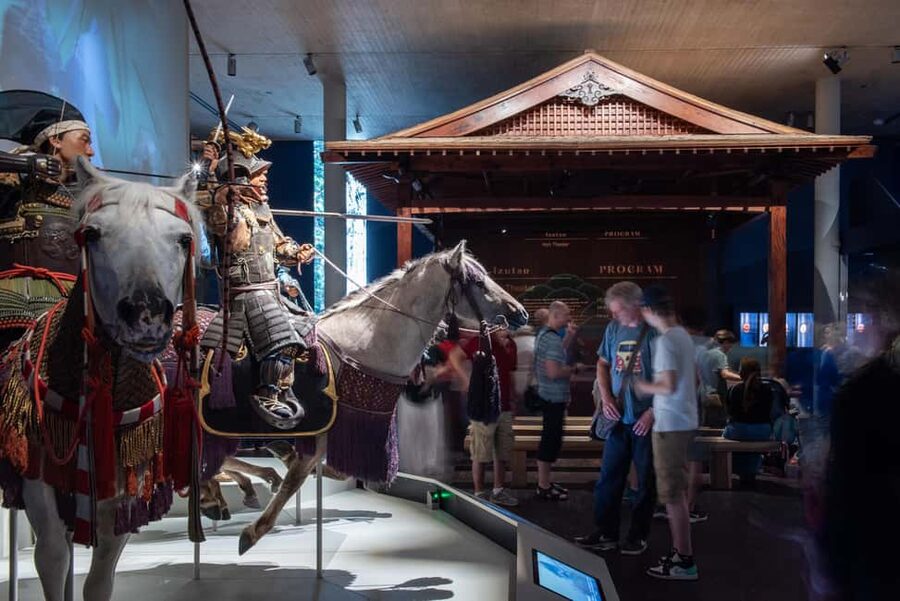
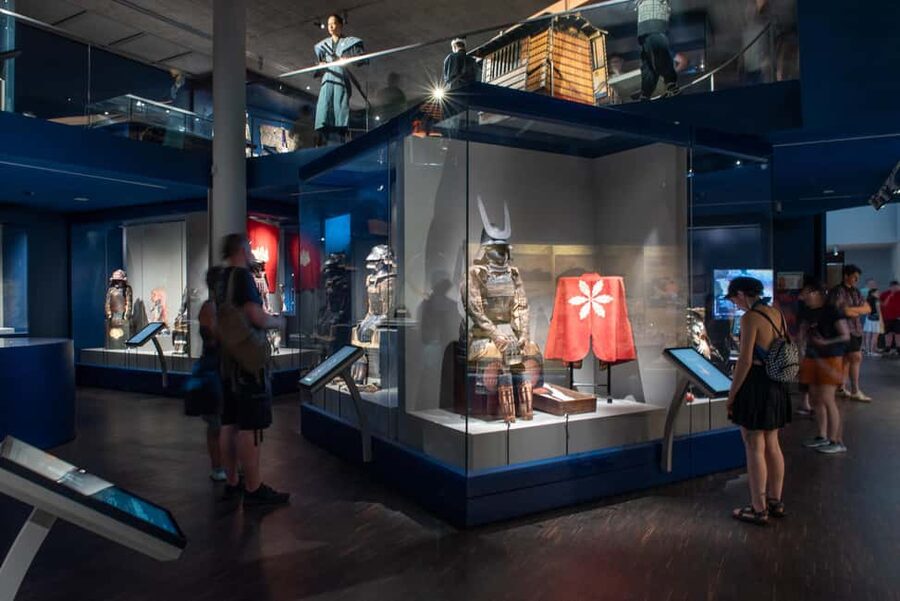
For many people, the armor and weapons will be the reason to come. The museum lets you see these objects up close, with interactive material explaining the work behind them. You can learn about swordsmithing and the making of legendary blades, rather than simply looking at swords behind glass.
The sword displays are especially useful if you are interested in craft. A Japanese sword is more than a weapon in this setting. Its shape, finish, fittings, and production all reflect specialized skills. The museum’s digital features help explain those skills in a way that a standard label often cannot.
The armor offers a different kind of interest. You can study the details of construction, decoration, and clan identity, including the 17th-century Matsudaira armor. The ability to look closely at such pieces gives the visit real value for anyone interested in military history, costume, design, or metalwork.
Still, keep your expectations measured. This is an exhibition built for interaction, not a silent study room. Projections and touchscreens are part of the experience, and the presentation aims to entertain as well as inform. If you prefer to spend ten minutes examining one object without digital activity nearby, you may find the style a little busy.
Samurai, Ninja, Yokai, and Kitsune
The museum reaches beyond the familiar samurai image. Displays also introduce ninja and yokai, the supernatural beings of Japanese folklore. That wider subject range makes the visit easier for families, since children may be drawn to the mysterious figures and interactive challenges as much as to the historical armor.
The fox Kitsune acts as a playful digital guide. You can answer Kitsune’s questions as you move through the exhibition, turning the visit into a kind of informal quiz. This feature gives children a reason to pay attention, and it may help younger visitors connect separate displays into a larger story.
One review described the fox as resembling Kurama, the nine-tailed fox from the anime Naruto. That comparison is useful if you are visiting with an anime fan, though the museum’s subject is Japanese culture and history rather than anime itself.
The digital guide also helps if you do not usually visit museums. Instead of relying only on long wall texts, you can learn through images, questions, and moving presentations. German and English language options are available for the interactive material, which makes the exhibition more practical for international visitors.
A Noh Theater Built in Japan
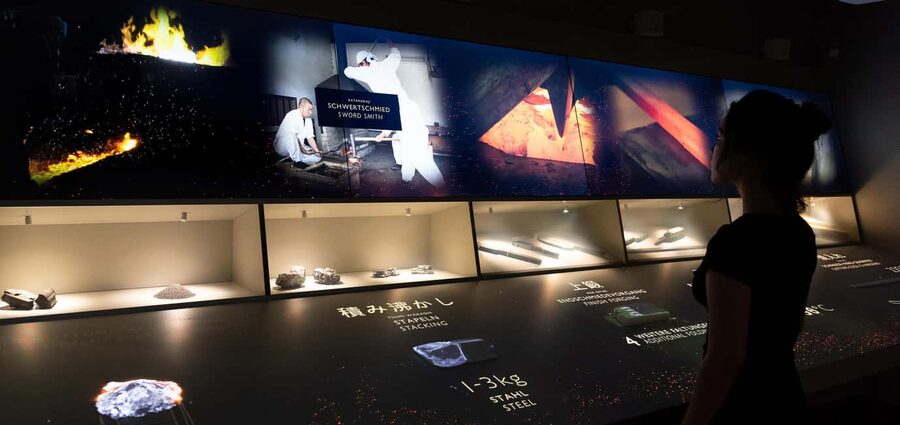
One of the museum’s most unusual features is its Noh theater. The structure was built in Japan with traditional materials and techniques, then taken apart and erected in Berlin. It gives the museum a physical centerpiece that feels quite different from a normal gallery installation.
Noh theater is closely tied to Japanese cultural traditions that developed over centuries. At the museum, realistic projections help explain those connections and bring the theater space into the broader exhibition. You may also see unique performances presented through the digital setup.
I like this part of the museum because it gets you beyond the usual samurai symbols. Armor and swords are visually striking, but the Noh theater shows how samurai-era culture also touched performance, ritual, and artistic expression.
The theater is not presented as a full live theater evening. It is part of the museum’s exhibition system, using projections and other technology to provide context. That makes it accessible during a normal museum visit, but you should not expect the length or atmosphere of a standalone Noh performance.
A few more Berlin tours worth weighing up
- Berlin: Berlin Story Bunker Entry Ticket
★ 4.6 · 6,759 reviews - Berlin: Illuseum Berlin Entrance Ticket
★ 4.1 · 3,970 reviews - Berlin: Madame Tussauds Admission Ticket
★ 4.6 · 3,941 reviews - Berlin: Neues Museum Entry Ticket
★ 4.6 · 3,261 reviews
The Tea House and the Ritual of Tea
The museum’s tea house was also built in Japan using traditional materials and methods before being reconstructed in Berlin. Like the Noh theater, it gives you something substantial to look at, not just a screen explaining an old custom.
Inside or near the tea-house display, you can learn about the process of the centuries-old tea ceremony. Tea utensils from the period associated with Sen no Rikyū add historical weight to this section. The objects connect the ceremony’s careful movements and simple materials with the wider culture of the samurai.
This is a useful stop if you want to understand that samurai culture was not only about warfare. Tea, theater, craftsmanship, and formal behavior all played important roles in Japanese cultural life. The tea house gives that idea a clear physical form.
The visit does not appear to be a complete hands-on tea ceremony for every ticket holder. Think of it as an introduction to the process and setting. If you want a formal tea experience, you would need to seek that separately.
Holographic Drums and High-Tech Storytelling
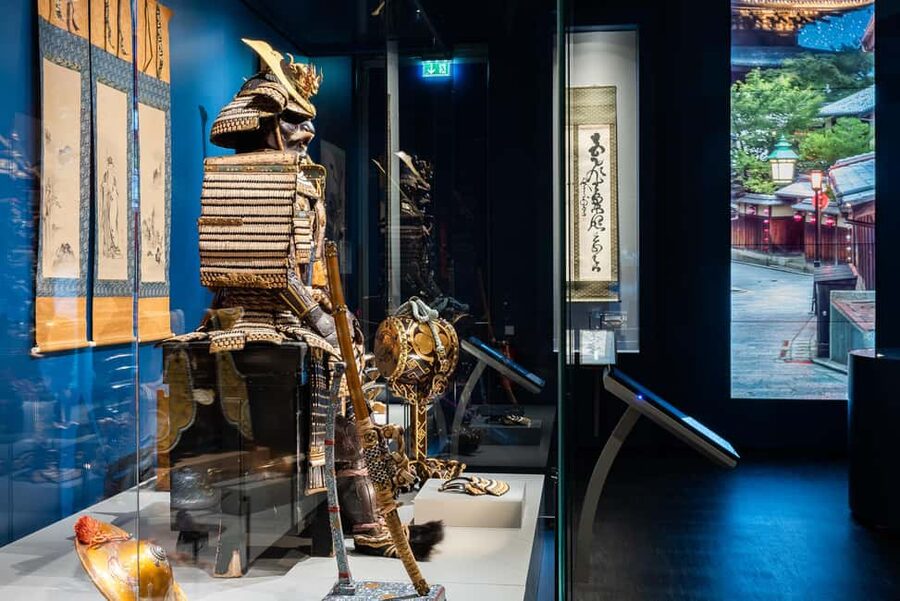
The museum uses technology throughout the exhibition. Projections guide you from one subject to another, while touchscreens provide extra information. A holographic drum performance adds a theatrical moment, and other installations show techniques linked to ninja training and sword production.
This approach works best when you use the technology as a tool rather than the whole point of the visit. Start with the actual armor, weapons, and art. Then use the screens and projections to answer the questions that naturally come up: How was this made? What was it used for? What did it mean in its original setting?
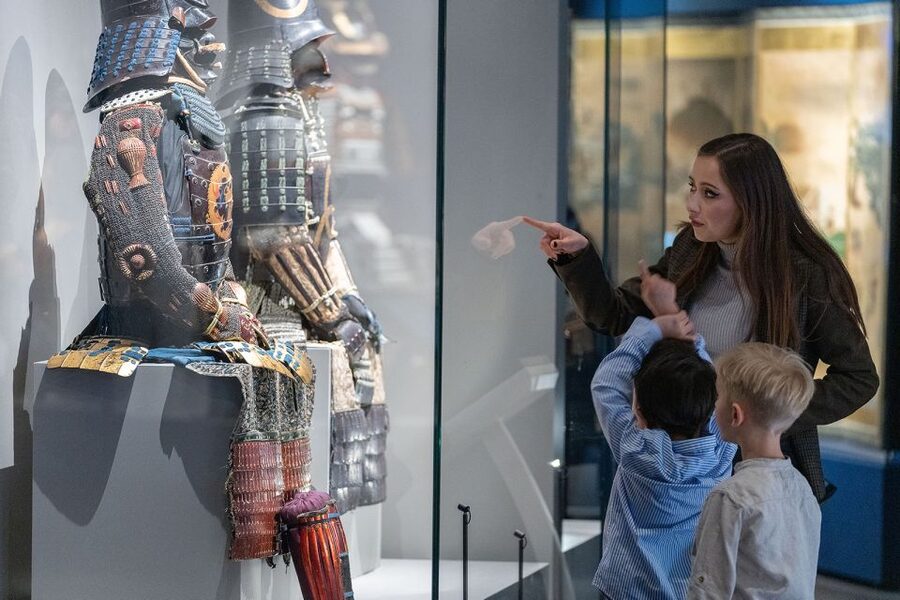
The interactive format received especially strong praise from families. Children have tasks to complete, while adults can focus on the historical and artistic detail. Language support in German and English helps keep the information clear for a mixed-language group.
The tradeoff is atmosphere. A traditional museum can feel calm and contemplative. This one is more active and theatrical. If you want a quiet collection with minimal digital presentation, you should know that the high-tech layer is central to the experience, not an occasional extra.
How Long to Spend and How the Ticket Works
The ticket costs $15 per person, which is a fair price for a central Berlin museum with this amount of material and several custom-built displays. The value improves if you take your time with the sword, armor, tea, theater, and interactive sections instead of treating the visit as a quick photo stop.
The ticket is valid for 1 to 14 days, and you choose the available visiting day and time through the booking system. That flexibility is useful if your Berlin schedule is still shifting. You can reserve now and pay later, and cancellation is allowed up to 24 hours before the visit for a full refund.
At the entrance, use the ticket on your smartphone and go directly to the barrier. The ticket includes museum entry and skips the ticket line. An exhibition catalog is not included, so plan to buy one separately if you want a printed record of the collection.
There is no guided tour included with this ticket. You explore independently, using the museum’s digital installations for explanation. Exclusive guided tours are offered by the museum as a separate option, but you should not expect a personal guide with the standard entry ticket.
Getting to Auguststraße in Berlin-Mitte
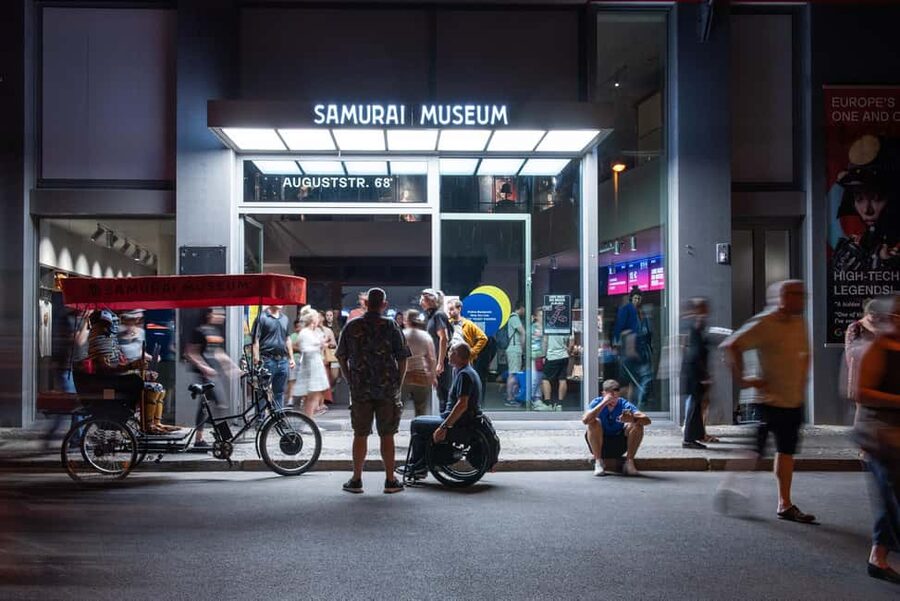
The museum is easy to reach by public transportation. The nearest listed U-Bahn options are Oranienburger Tor on the U6 and Rosenthaler Platz on the U8. For S-Bahn service, use Oranienburger Straße on the S1, S2, S25, or S26.
Trams M1 and M5 stop at Oranienburger Straße, while M8 stops at Rosenthaler Platz. Bus options include the 142 at Tucholskystraße and the M41 at Abgeordnetenhaus.
Because the museum is near Museum Island and Alexanderplatz, I would place it beside another Mitte activity. You can visit the museum, stop at a nearby café, then continue toward the city’s major sights. The surrounding streets also give you room to adjust your plan if the museum takes longer than expected.
The museum is wheelchair accessible. Pets, food, drinks, luggage, and large bags are not allowed, so avoid arriving with a large suitcase or an overfilled day bag. These rules are worth noting if you are coming straight from a train station or airport connection.
Who Will Get the Most from This Visit
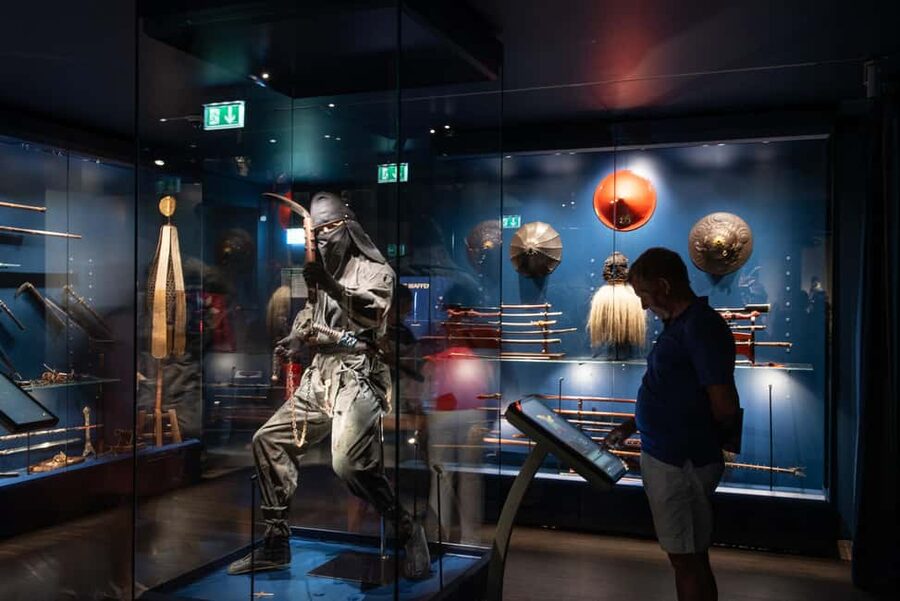
I would recommend the museum to families, first-time visitors to Japanese culture, and anyone who likes history presented with a bit of theater. The Kitsune questions, ninja displays, holographic music, and touchscreens give children something active to do, while the collection provides enough substance for adults.
It also suits visitors who want a cultural stop that does not require an entire day. The flexible ticket makes it easy to fit around Berlin’s other sights, and the Mitte location keeps transport simple.
History buffs should find plenty to examine in the collection’s dates and objects, especially the Matsudaira armor, palanquin, sword displays, and tea utensils. Art and design enthusiasts may prefer the tea house, Noh theater, and swordsmithing material.
I would hesitate to recommend it to someone seeking only a traditional museum experience. The technology is not a small side feature. It shapes how you learn, and the tone is playful in places. Some visitors will find that lively presentation helpful, while others may prefer more space for quiet observation.
Should You Buy the $15 Ticket?

Buy it if you want an accessible introduction to samurai culture with real historical objects and strong visual presentation. The combination of armor, swords, a Japanese-built Noh theater, a tea house, and digital storytelling gives you more variety than the price suggests.
It is an especially good choice for families, mixed-age groups, and visitors already planning to spend time in Mitte. Use the flexible 1 to 14-day validity to fit it into your schedule, and allow enough time to try the interactive features rather than simply walking past them.
Skip it only if your interest is limited to a quiet, object-focused collection or if you have no room for another indoor attraction. For most visitors who want something unusual, the $15 entry offers a lively and worthwhile look at Japanese craftsmanship and samurai culture.
FAQ
Where is the Samurai Museum Berlin?
The museum is on Auguststraße in Berlin-Mitte, near Alexanderplatz and Museum Island.
How much does museum entry cost?
The listed price is $15 per person.
How long is the ticket valid?
The ticket is valid for a period of 1 to 14 days. Check availability to select the day and starting time for your visit.
Can I choose my visiting time later?
The Samurai Flex Ticket lets you choose your day and time spontaneously within the available options.
What does the ticket include?
It includes entry to the Samurai Museum. An exhibition catalog is not included.
Is the museum wheelchair accessible?
Yes. The activity information states that the museum is wheelchair accessible.
How do I use the ticket at the entrance?
Show the ticket on your smartphone and go directly to the entrance barrier.
How do I reach the museum by public transportation?
You can use U6 to Oranienburger Tor, U8 to Rosenthaler Platz, or S-Bahn lines S1, S2, S25, and S26 to Oranienburger Straße. Trams and buses also serve nearby stops.
Are pets, food, drinks, or large bags allowed?
No. Pets, food, drinks, luggage, and large bags are not allowed inside.
Just added around Berlin
- Berlin Highlights in One Day★ 5.0 · 3 reviews
- Private Berlin One Day Tour with a Local: See the City Unscripted★ 3.5 · 3 reviews
- Individual city tour Berlin for max. 8 persons★ 5.0 · 3 reviews
- Transfer from Berlin Schönefeld Airport (SXF) to Berlin city Hotels – ROUND TRIP★ 4.0 · 3 reviews
- Berlin: Museum Island Tour★ 5.0 · 3 reviews
- Private Analogue Photography Experience in Berlin★ 5.0 · 3 reviews
- Berlin: Local Food Tour in Secrets Hidden Gems★ 4.0 · 3 reviews
- Berlin & The Third Reich Private Guided Tour★ 5.0 · 3 reviews
Museums, compared.




Skip-the-Line: Berlin Wall Museum at Checkpoint Charlie
Read our review →

“Pergamonmuseum. The Panorama” Exhibition Tickets
Read our review →Browse the lists this tour appears in