
Review · HISTORICAL TOURS
Berlin Sightseeing Musical-Historical Walking Tour
Berlin is often easiest to understand when you connect its buildings with the sounds of the people who lived through its changes. This three-hour music-history walk links grand museums, Nazi and Cold War sites, reunification-era architecture, and modern Berlin with an audio track that moves from classical oratorios to hip-hop.
I like the route’s wide sweep of central Berlin and the way music gives familiar sights a fresh angle. I also like that headphones are supplied, so you can hear the soundtrack and guide without straining to catch every word in city traffic. The main caution is that this is partly an audio-guide experience. The live guide leads the group and points out places, but one participant found the human guide more like a signpost than a traditional storyteller, and a technical problem caused some frustration.
In This Review
- Key points to know
- Berlin’s story told through its soundtrack
- Starting at the Alte Nationalgalerie
- Museum Island and the Berliner Dom
- Humboldt University and the sounds of learning
- Gendarmenmarkt and monumental Berlin
- The Trabi Museum and Berlin’s divided past
- Potsdamer Platz and modern Berlin
- The Holocaust Memorial and a necessary change of tone
- Brandenburg Gate and the city’s symbols
- The Reichstag and the final stretch
- What the headphones add, and where they fall short
- Pace, comfort, and practical planning
- Is $40 a fair price?
- Who should book this walk?
- Should you book the Berlin musical-history walk?
- FAQ
- Where does the tour start?
- How early should I arrive?
- How long does the tour last?
- Which languages are available?
- Are headphones included?
- What sights are included?
- Does the price include food or drinks?
- What should I bring?
- Is the tour suitable for wheelchair users?
Key points to know
- Music shapes the route: Hear music tied to Berlin from the 18th century through the 21st century.
- Nine major stops: The walk includes Museum Island, Gendarmenmarkt, Checkpoint Charlie near the Trabi Museum area, Potsdamer Platz, the Holocaust Memorial, Brandenburg Gate, and the Reichstag.
- Headphones are included: Expect spoken commentary mixed with music in English, German, or Russian.
- Three hours on foot: Wear comfortable shoes and expect a short break during the walk.
- A broad central-Berlin route: You see many headline sights in one outing, but the pace leaves little time for entering attractions.
- Best for independent-minded visitors: You get structure and context without a long, traditional lecture at every stop.
Berlin’s story told through its soundtrack
This tour takes a simple idea and applies it across the city: music can show how Berlin changed, what its people feared, and how they expressed themselves. You are not only looking at a cathedral or government building. You are hearing a selected piece of Berlin’s cultural life while standing in front of it.
The musical range is unusually broad. The experience reaches from 18th-century classical oratorios to 21st-century hip-hop. That span matters because Berlin has never had one single cultural voice. Royal power, war, dictatorship, division, protest, reunification, and youth culture all left different sounds behind.
You should think of this as a guided walking route with an audio soundtrack, not as a concert or a museum visit. The headphones mix the recorded audio and music, while the live guide helps keep the group moving and identifies the sights. If you prefer a guide who speaks continuously at every stop, this format may feel light on personal commentary.
More walking tours in Berlin:
- Discover Berlin Half-Day Walking Tour
★ 5.0 · 9,624 reviews - Berlin: Third Reich and Cold War 2 Hour Walking Tour
★ 4.9 · 6,830 reviews - Berlin: Discover Berlin Walking Tour
★ 4.9 · 5,998 reviews
Starting at the Alte Nationalgalerie
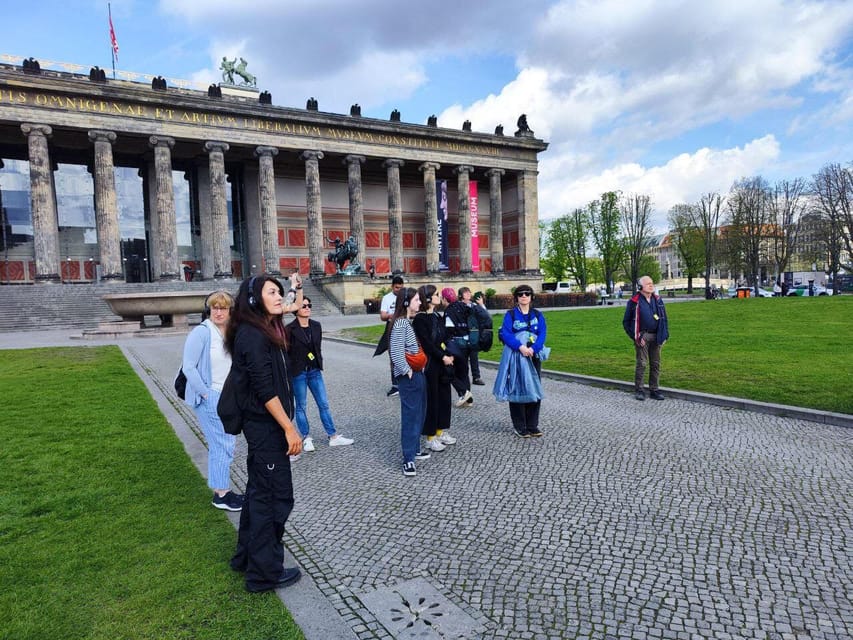
The meeting point is in front of the entrance to the Alte Nationalgalerie on Museum Island. Arrive 10 to 15 minutes early, with your ticket ready on your phone or printed. The guide will hold a headphone sign, which should make the meeting place easier to spot.
The Alte Nationalgalerie is a useful starting point because the tour begins among Berlin’s major museums, rather than in a generic plaza. You begin with the city’s artistic and royal past close at hand, then walk toward places shaped by government, war, division, and modern redevelopment.
The route is urban and public. You should not expect admission to the museums or other buildings along the way. The value comes from seeing the sites in sequence and hearing how their meaning changes as the walk moves across the city.
Museum Island and the Berliner Dom
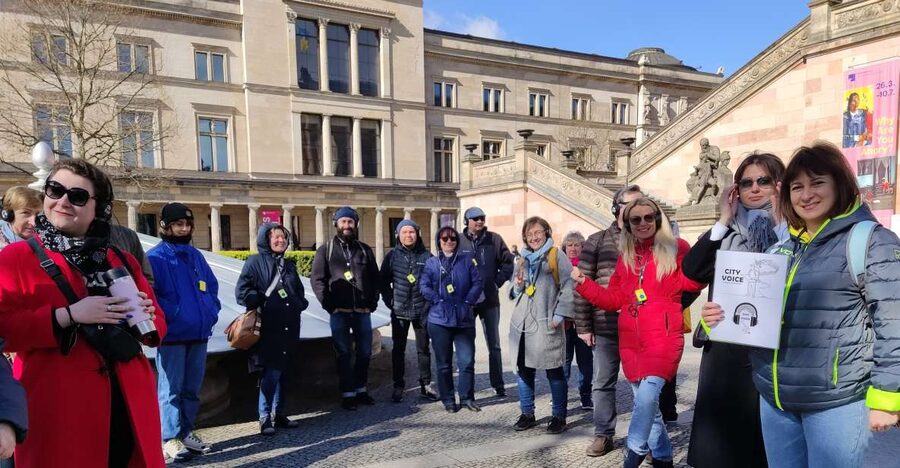
The first guided stop is Museum Island, with about 20 minutes set aside for walking and sightseeing. The area brings together several of Berlin’s most important cultural buildings, including the Berliner Dom.
This is a strong opening because it places Berlin’s cultural identity right beside its political one. The monumental architecture can feel formal and imposing, but the music track is meant to make the setting more personal. You hear Berlin through the eyes of a music lover rather than through a standard list of dates and building names.
You will have time to look and listen, but not to tour the museums inside. If you want to visit the Berliner Dom or one of the museums, plan that separately on another part of your day. Trying to combine a full interior visit with this walk would make the schedule tight.
Humboldt University and the sounds of learning
The route continues to Humboldt University of Berlin, again with about 20 minutes for guided sightseeing and walking. This stop shifts the mood from museum collections to education, debate, and the intellectual life of the city.
The university is near several central landmarks, so the walk gives you a useful sense of how close Berlin’s cultural and political centers are to one another. The soundtrack adds an artistic thread to a place that can otherwise seem like a grand facade with a famous name.
The tour does not list an interior visit, so treat this as an exterior stop. The experience works best if you are happy to take in the setting, listen to the commentary, and keep moving rather than waiting for a long lecture.
More history walks in Berlin:
- Berlin: Natural History Museum Entrance Ticket
★ 4.6 · 3,382 reviews - Berlin: World Heritage Cruise to Potsdam
★ 4.5 · 1,435 reviews - Berlin Historical Highlights Walking Tour
★ 4.9 · 657 reviews - Berlin Private Complete History All Day Walking Tour
★ 5.0 · 474 reviews
Gendarmenmarkt and monumental Berlin
Gendarmenmarkt receives the longest listed stop, about 30 minutes. This square is one of the tour’s best places to pause because its scale and architecture make Berlin’s former imperial ambitions easy to read.
Here, the walk’s musical idea has room to breathe. You can look across the square while the audio connects the city’s grand public spaces with the eras that shaped them. Classical music makes natural sense in a setting like this, but the tour’s larger story is that Berlin’s sound did not stop with courtly or formal music.
A 30-minute segment is helpful, though it is still not a full architectural tour. Use the time to notice the relationship between the buildings, take photographs, and listen without rushing. This is also a good point to check your shoes, water, and headphone comfort before the route moves on.
The Trabi Museum and Berlin’s divided past
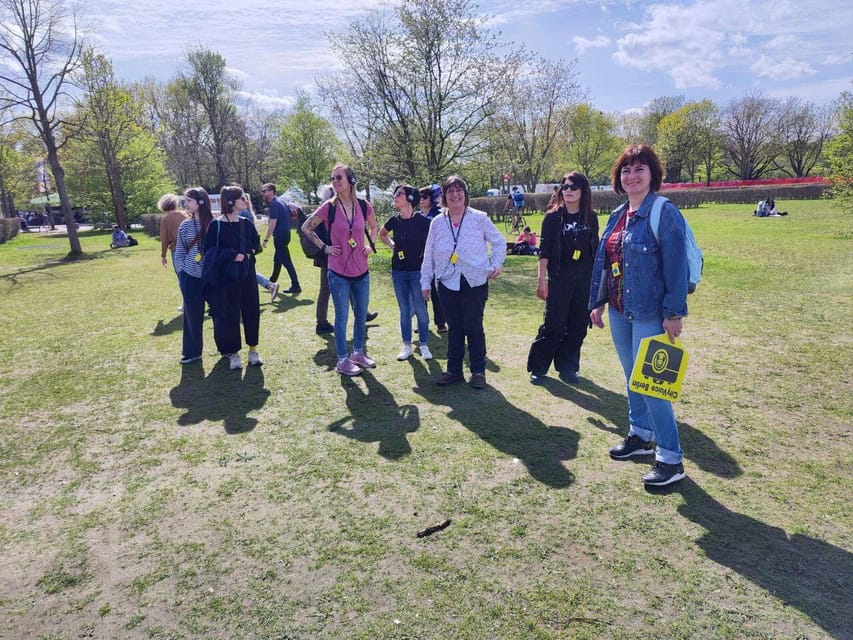
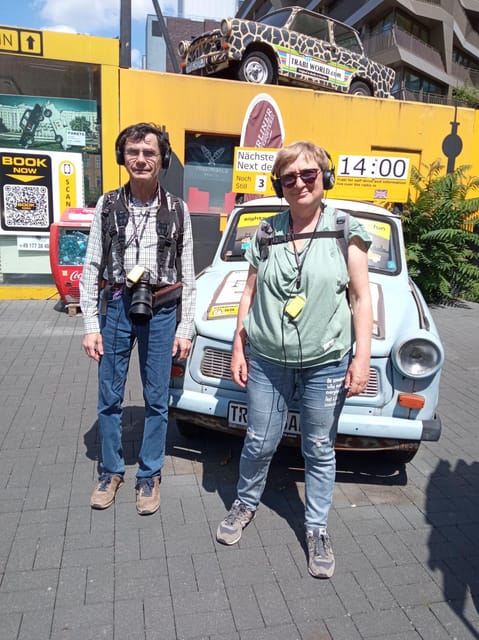
The next stop is the Trabi Museum, with about 20 minutes of walking and sightseeing. The Trabant, often called the Trabi, is one of the most recognizable objects associated with East Germany.
This stop gives the tour a welcome change of scale. After grand museums, university buildings, and a formal square, the small East German car becomes a physical reminder of everyday life behind the Berlin Wall. It helps bring Cold War history down from the level of governments to the level of ordinary transport and daily routines.
The supplied information identifies the Trabi Museum as a stop but does not include admission. You should therefore view it as part of the outdoor route unless your booking details say otherwise. The tour is designed to keep moving, so do not count on a detailed museum visit during the allotted time.
Potsdamer Platz and modern Berlin
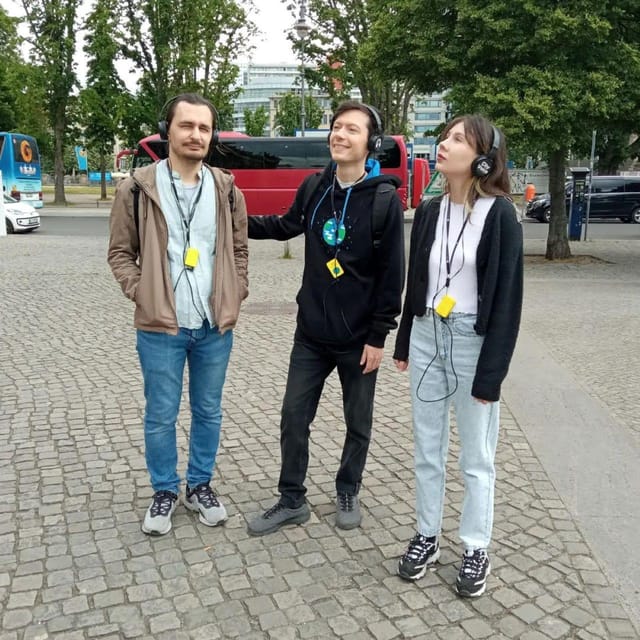
Potsdamer Platz offers a sharp contrast to the older parts of the route. Its modern architecture and large public spaces show how much central Berlin changed after reunification.
This is where the musical timeline can make its biggest jump. The tour moves from classical traditions and Cold War memories toward more recent urban culture, including hip-hop. You get a sense of Berlin as a city that keeps rewriting itself rather than simply preserving one old image.
Some people find Potsdamer Platz less emotionally direct than the memorial sites later in the route. That is part of its value here. It gives you a pause from heavy historical subjects and lets you see the physical results of a changed city.
The stop lasts about 20 minutes. That is enough for an introduction and a look around, but not enough for a full exploration of the surrounding buildings or attractions.
The Holocaust Memorial and a necessary change of tone
The route then reaches the Memorial to the Murdered Jews of Europe, commonly known as the Holocaust Memorial. The listed stop allows about 20 minutes.
This is a place where you should give the audio your full attention and keep your behavior quiet and respectful. The field of concrete stelae is deliberately unsettling, and the memorial asks you to think about the scale of the Holocaust without reducing it to a simple story.
The music-based format may feel less obvious here than at Gendarmenmarkt or Potsdamer Platz. That contrast is important. Berlin’s history is not only a sequence of cultural achievements. It also includes state violence, persecution, and the damage left behind. The walk’s soundtrack and commentary attempt to place those painful chapters within the city’s wider story.
Twenty minutes is enough for an introduction, but you may want to return later if you want more time at the memorial or its underground information center. This tour gives you a first encounter, not a complete study of the Holocaust.
Brandenburg Gate and the city’s symbols

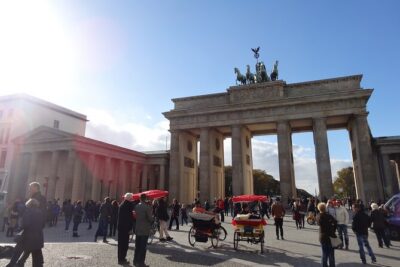
Brandenburg Gate follows, with another 20-minute sightseeing segment. Few places in Berlin carry more political weight. The gate has been used as a symbol of royal power, national identity, division, and reunification.
The musical framing works well here because the building’s meaning changed as the city changed. The same landmark could represent authority in one era and a divided frontier in another. Today, it is one of Berlin’s most photographed sights, but the route encourages you to see beyond the familiar picture.
The gate is also a practical orientation point. By this stage, you should have a clearer sense of how Museum Island, the government quarter, the memorials, and Potsdamer Platz fit together. A regular sightseeing tour might connect these places by map. This one tries to connect them by mood and sound.
The Reichstag and the final stretch
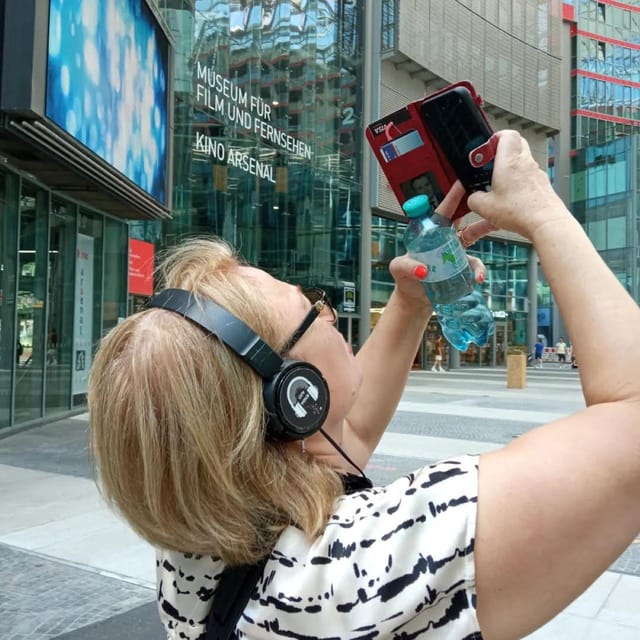
The walk continues to the Reichstag, with about 20 minutes for guided sightseeing. The building represents Germany’s parliamentary government and is one of the clearest links between Berlin’s past and present.
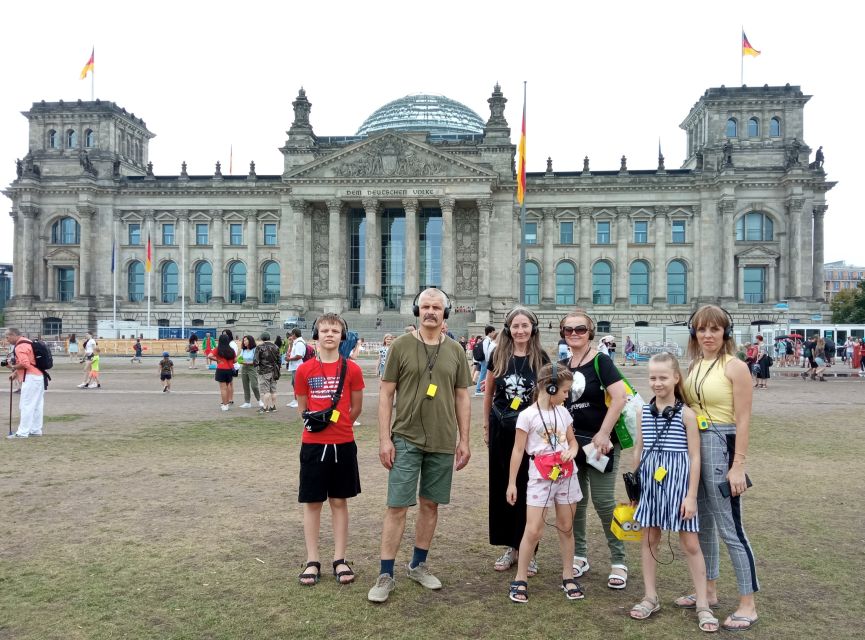
The stop is about the exterior setting and historical context. No interior visit or dome entry is included, so you should not expect to go inside as part of the experience. If the Reichstag is high on your list, arrange a separate visit and check its entry requirements independently.
The listed finish is at White Crosses. The supplied meeting information also says the activity ends back at the meeting point, so check the exact end details when you book. In either case, plan for the walk to occupy the full three hours and avoid scheduling a tight appointment immediately afterward.
What the headphones add, and where they fall short
The headphones are more than a simple translation aid. They carry a mix of spoken audio and music, giving the tour its main character. You can stand in front of a landmark and hear a piece chosen to match its time, mood, or political meaning.
This can be especially useful in a busy city. Instead of trying to hear a guide over traffic and passing groups, you receive the audio directly. The format also makes it easier to focus on the buildings while the story continues.
The tradeoff is reduced personal contact. One review rated the experience three out of five and described the live guide as mainly a signpost, while also noting a technical problem that caused discontent in the group. That is a useful warning, not a reason to dismiss the tour. Just book it expecting a structured audio walk with live assistance, rather than an intimate conversation with a local historian.
Technical problems can happen with any headphone-based experience. If the sound drops out, tell the guide promptly. You may miss part of the tour if you stay silent and try to fix it yourself.
Pace, comfort, and practical planning
The route lasts three hours and includes a small break, but it remains a walking activity from start to finish. Wear comfortable shoes and clothing suited to the weather. The tour runs rain or shine, and some locations can be weather-dependent.
Berlin’s central sights are spread across a sizeable area. Even when each individual segment is listed as 20 minutes, the total includes repeated walking between stops. You should be ready for steady movement, outdoor listening, and limited time to sit.
The experience is not suitable for wheelchair users or people over 70, according to the supplied activity information. That is a significant planning point, especially because the route covers several hours on foot and may involve uneven or tiring city conditions.
The tour is offered in English, German, and Russian. The audio guide is available in those same languages. When booking, select the language that will let you follow both the historical explanation and the music-related comments without effort.
Is $40 a fair price?
At $40 per person, the value depends on what you want from a city tour. You are paying for three hours of route planning, a live guide, headphones, and a music-based interpretation of many major sights. You are not paying for food, drinks, museum admission, transport, or hotel pickup.
That makes the price reasonable if you want a single introduction to central Berlin and like the idea of learning through music. The route covers enough ground that arranging all these stops on your own would take planning, even though you would still need to research the history and build your own soundtrack.
The value is weaker if you want long explanations, interior visits, or a small personal tour. You can see most of the listed sights from public streets without paying an entry fee, and the experience does not promise extended time at any one place.
For many visitors, the best use of the tour is on an early day in Berlin. It helps you get your bearings, introduces the city’s major historical themes, and shows you places you can revisit later with more time.
Who should book this walk?
I would choose this experience if you like music, want a broad introduction to Berlin, and prefer a moving tour to a long indoor presentation. It also suits you if you already know the basic landmarks but want a different way to connect them.
It may work well for solo visitors or couples who want a planned route without committing to a full day. The audio format gives you a clear structure, while the live guide prevents the group from losing its way.
I would think twice if you need accessible travel arrangements, dislike wearing headphones, or want a guide who talks at length at every stop. Families should also consider the three-hour walking pace and the serious tone of the Holocaust Memorial.
The current rating is 4.6 from 10 reviews, which suggests a generally positive response but is still a small sample. The technical issue and the criticism of the guide’s limited spoken role are the most useful cautions to keep in mind.
Should you book the Berlin musical-history walk?
Book it if the phrase Berlin through music genuinely interests you. The route covers an impressive set of central landmarks, and the soundtrack can make familiar places feel connected rather than scattered across a map.
Skip it if your priority is museum interiors, detailed architectural analysis, or a highly personal guide. At $40, this is best viewed as a themed orientation walk with audio support, not a private historical seminar.
Bring comfortable shoes, arrive early at the Alte Nationalgalerie, and leave room in your schedule afterward. If you accept the audio-led format and want to hear Berlin as well as see it, this three-hour route offers a thoughtful way to begin.
FAQ
Where does the tour start?
The tour starts in front of the entrance to the Alte Nationalgalerie on Museum Island. The guide will hold a headphone sign.
How early should I arrive?
Arrive 10 to 15 minutes before the activity starts. Have your ticket ready on your phone or printed.
How long does the tour last?
The tour lasts three hours. Starting times vary, so check availability when booking.
Which languages are available?
The live tour guide and audio guide are available in English, German, and Russian.
Are headphones included?
Yes. Headphones are included, and they play an audio guide mixed with music.
What sights are included?
The route includes Museum Island, Humboldt University, Gendarmenmarkt, the Trabi Museum, Potsdamer Platz, the Holocaust Memorial, Brandenburg Gate, the Reichstag, and the listed finish at White Crosses.
Does the price include food or drinks?
No. Food and drinks are not included.
What should I bring?
Bring comfortable shoes and comfortable clothing. The tour takes place outdoors and runs rain or shine.
Is the tour suitable for wheelchair users?
No. The activity is listed as not suitable for wheelchair users or people over 70 years old.
Just added around Berlin
- Berlin Highlights in One Day★ 5.0 · 3 reviews
- Private Berlin One Day Tour with a Local: See the City Unscripted★ 3.5 · 3 reviews
- Individual city tour Berlin for max. 8 persons★ 5.0 · 3 reviews
- Transfer from Berlin Schönefeld Airport (SXF) to Berlin city Hotels – ROUND TRIP★ 4.0 · 3 reviews
- Berlin: Museum Island Tour★ 5.0 · 3 reviews
- Private Analogue Photography Experience in Berlin★ 5.0 · 3 reviews
- Berlin: Local Food Tour in Secrets Hidden Gems★ 4.0 · 3 reviews
- Berlin & The Third Reich Private Guided Tour★ 5.0 · 3 reviews
Historical Tours, compared.



Berlin Private Complete History All Day Walking Tour
Read our review →


Small group Potsdam: A Journey Through History and Palaces
Read our review →Browse the lists this tour appears in