
Review · HISTORICAL TOURS
Charité Hospital Walking Tour: Exploring Berlin’s Medical History
Charité is not just a hospital. It is a record of how medicine changed, sometimes for the better and sometimes in deeply troubling ways. On this two-hour walking tour, you move from Robert Koch’s scientific breakthroughs to the moral failures of doctors under the Third Reich, then on to socialist-era hospital life and escape attempts across the Berlin canal.
I like the small maximum group of 15, which gives the guide room to tell stories instead of shouting facts into a crowd. I also like the compact route: six stops, all close to Charité, with no long museum visit or complicated transport between them. The main drawback is clear: you do not go inside buildings where medical or university work takes place, so this is an outdoor history walk rather than a hospital tour.
In This Review
- Key points to know before booking
- Why Charité makes such a strong Berlin walking tour
- Robert Koch and the hospital’s 18th-century beginnings
- Tieranatomisches Theater and medicine before modern science
- Rudolf Virchow and the idea that society affects health
- Albrecht von Graefe and the rise of eye surgery
- Charité Campus Mitte and medicine under dictatorship
- Humboldthafen and the risks of crossing Berlin
- What you get for $30.12
- Who should book this Charité walk?
- Final call: a focused tour with real substance
- FAQ
- How long does the Charité Hospital Walking Tour last?
- What language is the tour offered in?
- Where does the tour begin?
- Where does the tour end?
- Does the tour enter Charité hospital buildings?
- How many people can join the tour?
- Is the tour suitable for most participants?
- What happens if bad weather cancels the tour?
Key points to know before booking
- Robert Koch’s monument opens the story, including his role in identifying the causes of tuberculosis, anthrax, and cholera.
- Tieranatomisches Theater is Berlin’s oldest surviving academic building, an unusual stop that shows how animal disease was studied before modern medical science.
- Rudolf Virchow and Albrecht von Graefe add two very different medical stories, one focused on pathology and social medicine, the other on eye care.
- Charité Campus Mitte brings difficult wartime history into view, including doctors who abused medicine and others who helped people under Nazi rule.
- The final stop reaches the Humboldthafen canal, where East Berliners attempted to swim to the West.
- The tour costs $30.12 and lasts about two hours, making it a reasonable choice if your Berlin schedule is tight.
Why Charité makes such a strong Berlin walking tour
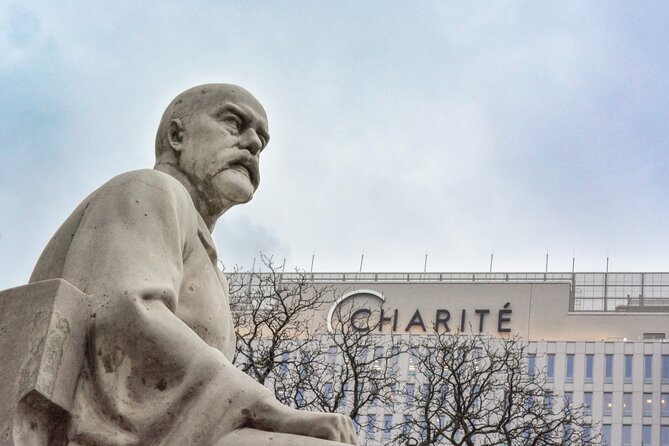
Many Berlin tours focus on kings, war, walls, or grand architecture. Charité gives you another way into the city. Its story follows the growth of hospitals, laboratories, pathology, public health, and medical ethics. You are not simply looking at old facades. You are asking what doctors knew, what they got wrong, and how politics shaped treatment.
Charité was established in the 18th century and is regarded as Berlin’s oldest hospital. That long timeline gives the guide plenty to work with, but the walk keeps the subject manageable. Each stop takes about 20 minutes, so you get a clear chapter before moving on.
The English-speaking guide supplies the thread that links the monuments together. This matters because several stops are simply statues or exterior buildings. Without explanation, you might pass them in seconds. With context, Robert Koch’s monument becomes part of a story about laboratory science, Rudolf Virchow’s memorial points toward social medicine, and a canal becomes a place connected to Cold War escape attempts.
The tone is not purely celebratory. Medicine at Charité produced major breakthroughs, but doctors also took part in abuse during the Third Reich. The guide also covers people who refused to treat patients according to political rules and continued helping others until the final days of World War II. That balance gives the tour more weight than a simple parade of famous scientists.
More walking tours in Berlin:
- Discover Berlin Half-Day Walking Tour
★ 5.0 · 9,624 reviews - Berlin: Third Reich and Cold War 2 Hour Walking Tour
★ 4.9 · 6,830 reviews - Berlin: Discover Berlin Walking Tour
★ 4.9 · 5,998 reviews
Robert Koch and the hospital’s 18th-century beginnings
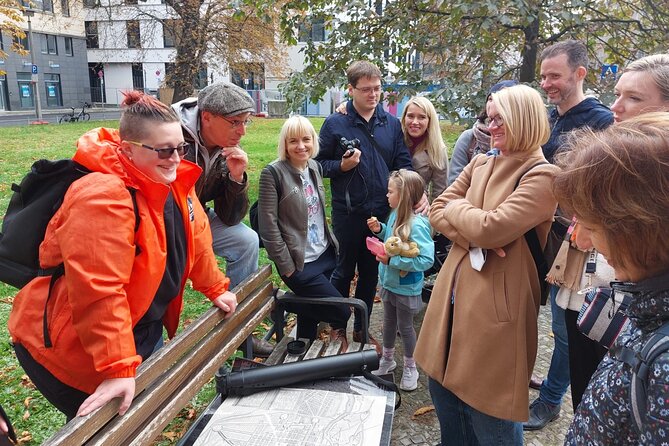
The walk starts at Robert-Koch-Platz, where you see the monument to Robert Koch. This is a useful opening because Koch connects Charité to the moment when medicine began to rely more heavily on laboratory evidence.
Koch discovered the causes of tuberculosis, anthrax, and cholera. Those achievements changed how doctors understood infectious disease. Instead of treating illness as a vague mystery, scientists could identify specific organisms and trace how disease spread.
The guide also covers a less comfortable part of Koch’s story: his role in the first pharmaceutical scandal in medical history. That detail keeps the stop from becoming a simple celebration of a Nobel Prize winner. Scientific progress can save lives, but confidence in a new treatment can also cause harm when evidence is weak or rushed.
You also learn why Charité was established in the 18th century. The hospital’s beginnings reflect a period when Berlin needed organized medical care and a stronger response to disease. This first stop gives you the basic timeline before the tour turns to buildings, statues, and personal stories.
The monument itself is outdoors, and the admission cost is included because the walk uses public spaces. Bring your attention to the guide rather than expecting a formal exhibition. The value here comes from the explanation, not from spending time inside a display hall.
Tieranatomisches Theater and medicine before modern science
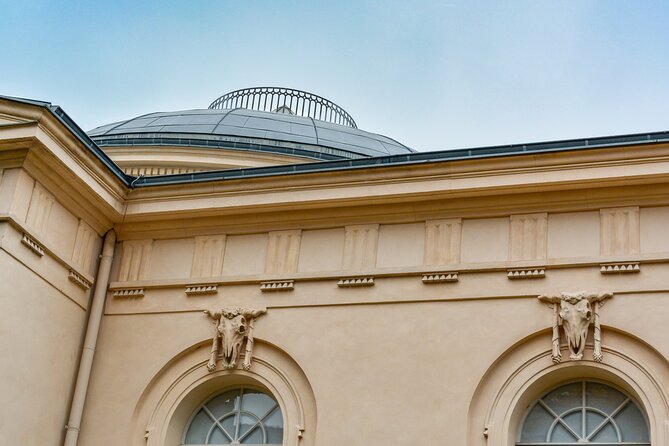
The second stop, Tieranatomisches Theater, changes the subject from human medicine to animal disease. It is the oldest surviving academic building in Berlin and an 18th-century neoclassical structure.
The name can sound theatrical, and the building’s purpose makes it unusual. Veterinarians studied animal anatomy and disease here. The guide explains how illness was treated before medicine had the scientific tools that later transformed diagnosis.
This stop helps you picture a time when doctors and veterinarians worked with limited understanding of infection, anatomy, and disease transmission. Treatment was often based on tradition, observation, or theories that later proved wrong. You do not need specialist medical knowledge to follow the story. The guide’s job is to connect the building to the practical problems faced by earlier physicians.
The exterior setting also keeps the pace brisk. You spend around 20 minutes here, enough time to understand the building’s role without turning the tour into a technical lecture. If historic architecture interests you, this is one of the more visually distinctive stops. If your main interest is modern Berlin politics, it may feel less urgent, but it provides important background for the later medical stories.
Rudolf Virchow and the idea that society affects health
At the monument to Rudolf Virchow, the tour moves from laboratory science toward the wider causes of illness. Virchow is presented as the father of modern pathology and the founder of social medicine.
Pathology examines disease through changes in the body. Social medicine looks beyond the individual patient and asks how living conditions, poverty, work, housing, and public policy affect health. That makes Virchow an important figure for understanding medicine as a public concern rather than a private service offered only in a treatment room.
This is one of the stops where the guide’s storytelling matters most. A statue alone cannot explain why Virchow’s work changed medical thinking. The guide places him within the development of modern medicine and shows how his ideas reached beyond the laboratory.
The stop also gives the walk a useful question to carry forward: Can doctors treat illness effectively if they ignore the conditions that cause it? You do not need to agree with every historical figure on the tour, but you will come away with a broader idea of what medicine includes.
Again, expect roughly 20 minutes outdoors. The tour is designed for people who can walk between nearby locations, and most people can take part. Service animals are allowed, and the route is near public transportation.
More history walks in Berlin:
- Berlin: Natural History Museum Entrance Ticket
★ 4.6 · 3,382 reviews - Berlin: World Heritage Cruise to Potsdam
★ 4.5 · 1,435 reviews - Berlin Historical Highlights Walking Tour
★ 4.9 · 657 reviews - Berlin Private Complete History All Day Walking Tour
★ 5.0 · 474 reviews
Albrecht von Graefe and the rise of eye surgery
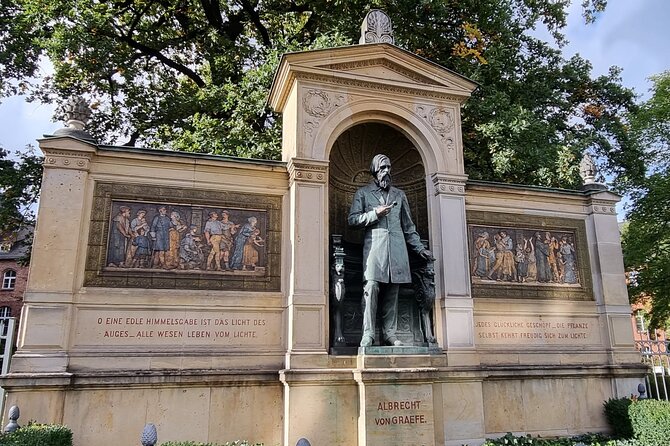
The monument to Albrecht von Graefe introduces another side of medical progress. Von Graefe was a pioneering ophthalmologist, and this was the first monument in Berlin dedicated to a scientist.
That fact gives the stop two layers. First, you hear about the development of eye medicine through von Graefe’s work. Second, you see how Berlin began honoring scientists in public spaces. Statues were not reserved only for rulers, generals, or political leaders. A doctor could also become part of the city’s public memory.
The story is more focused than the Virchow stop. It gives you a sense of how a particular medical specialty developed and why von Graefe mattered. The guide may also use the monument to explain how scientific achievement changed the way Berlin viewed medicine and its leading figures.
At about 20 minutes, the stop fits the tour’s steady rhythm. You are not asked to master a long list of dates or procedures. Instead, you get a short account that connects a person, a medical field, and the city around you.
Charité Campus Mitte and medicine under dictatorship
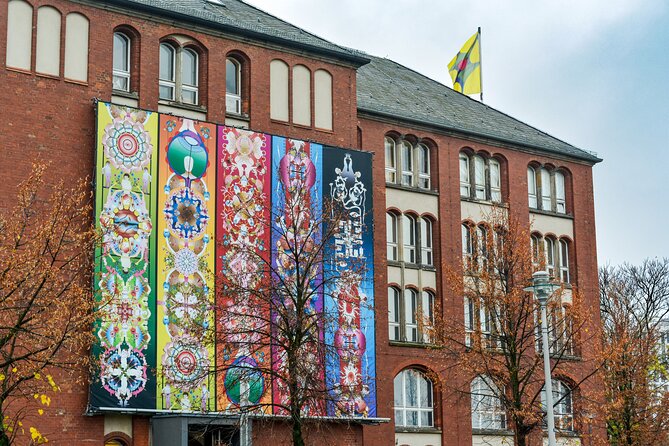
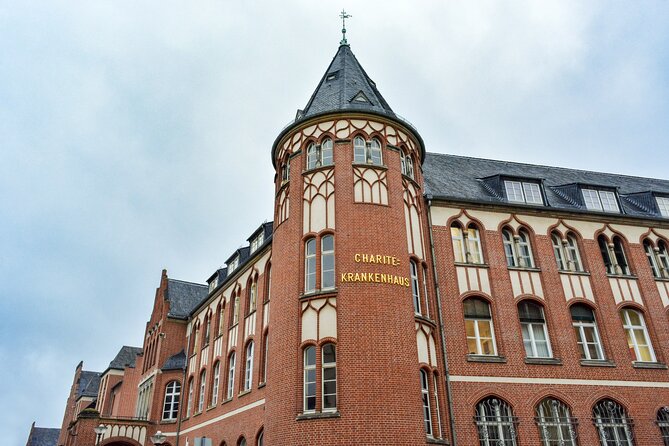
Charité Campus Mitte is likely the most serious section of the walk. The campus has beautiful neo-Gothic red-brick buildings, but the architecture is only the surface. The guide discusses how some doctors abused medicine during the Third Reich.
That subject requires care. Medical institutions were not separate from Nazi politics, and doctors could use professional authority to harm people. The tour does not present Charité as a place untouched by the crimes of the period. At the same time, it also tells the story of doctors who helped everyone indiscriminately until the last days of World War II.
I value that contrast. It shows that institutions are made up of individuals who face choices, even under terrible pressure. You hear about complicity, courage, and the limits of professional ethics without reducing the past to a tidy moral lesson.
The campus is also one of the better places to understand why an outdoor tour can work here. You can see the red-brick setting while the guide explains what happened around it. Still, remember the restriction: you do not enter buildings where clinical or university operations take place. If you want hospital interiors, medical instruments, or exhibits, you will need a different attraction.
For many people, this will be the emotional center of the walk. It is also the section where a clear, thoughtful guide makes the greatest difference. The presentation needs to connect medical facts with human decisions, and this tour is built around that kind of context.
Humboldthafen and the risks of crossing Berlin
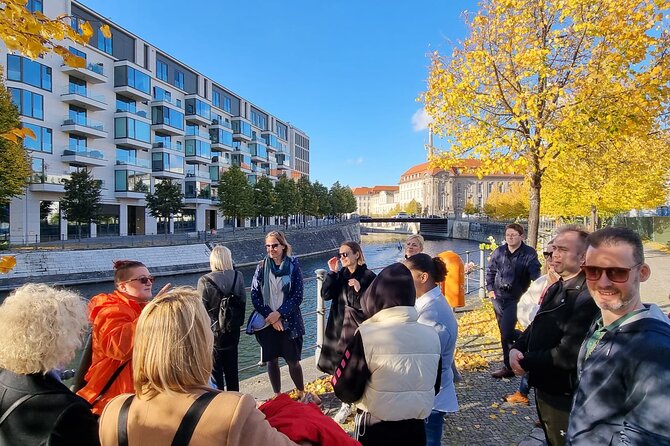
The final stop takes you to Alexanderufer, by the Humboldthafen canal. From here, you hear about several East Berliners who tried to escape to the West by swimming across the canal just outside the Charité campus.
This ending shifts the focus from doctors and patients to ordinary people living under socialism and the division of Berlin. The canal is not just scenery. It becomes a reminder that the Cold War border reached into daily life and that escape could involve water, danger, and a place near a major hospital.
The guide also discusses life at the hospital during the socialist era and after the Berlin Wall fell. That gives Charité a modern political chapter. The institution did not stop changing after the Nazi period. It continued to operate through East Germany, reunification, and the years that followed.
The route ends about a 10-minute walk from Berlin Central Station. That is useful if you are planning your day around rail connections, though you should note that the tour does not begin and end at the same place. Starting at Robert-Koch-Platz and finishing by the canal makes the walk feel like a point-to-point route rather than a loop.
What you get for $30.12
At $30.12 per person, the tour is priced as a short guided history experience rather than a full museum visit. The fee includes the guide and all taxes and fees. There is no separate admission charge at the listed stops.
I think the price makes the most sense if you want interpretation. The statues and outdoor buildings are free to see on your own, but the guide supplies the connections between them. You are paying for the selection of stops, the order of the story, and the explanation of complicated subjects.
The two-hour length also helps the value. Berlin has many long walking tours that can consume half a day. This one gives you a focused look at medical history, wartime ethics, socialism, and the Berlin Wall without taking over your schedule.
The limit of 15 people is another practical benefit. A smaller group can make it easier to hear at street-side stops and ask questions. It does not guarantee a private tour, and the experience may still feel group-based, but it should be more personal than a large coach excursion.
The tour is offered in English and uses a mobile ticket. Confirmation arrives when you book. Free cancellation is available up to 24 hours before the start time, but changes or cancellations inside that period are not accepted. Since the walk requires good weather, a cancellation caused by poor conditions results in either another date or a full refund.
Who should book this Charité walk?
I would choose this tour if you enjoy Berlin’s less obvious stories and want medicine treated as part of social and political history. It suits adults, students, history fans, and anyone curious about how hospitals respond to war, dictatorship, public health crises, and political change.
It is also a good fit if you have only a short window in Berlin. The route lasts about two hours and stays near Charité, with an ending close to Central Station. You can fit it between other plans more easily than a full-day museum visit.
You may want to skip it if you mainly want to see hospital interiors or medical collections. The tour does not include entry to buildings used for clinical or university work. You should also think twice about booking if rain or poor weather is likely, since the experience depends on outdoor walking.
The subject matter includes disease, medical abuse, World War II, socialism, and dangerous escape attempts. That makes it more serious than a light sightseeing stroll. The guide brings stories and context, but the content is not designed as simple entertainment.
Final call: a focused tour with real substance
Book the Charité Hospital Walking Tour if you want a compact, well-organized look at Berlin through medicine. The strongest parts are the range of subjects and the way the route moves from Robert Koch and early science to Virchow, von Graefe, Nazi-era medicine, East German life, and the Berlin Wall.
The two-hour format, English guide, mobile ticket, and 15-person maximum make it easy to fit into a Berlin visit. At $30.12, I find it worthwhile for the stories and interpretation, especially since most of the locations are free but would be easy to overlook without guidance.
Skip it only if you need indoor access or prefer a lighter tour. For everyone else, this is a thoughtful way to see a side of Berlin that most visitors miss.
FAQ
How long does the Charité Hospital Walking Tour last?
The tour lasts approximately two hours. Each of the six listed stops takes about 20 minutes.
What language is the tour offered in?
The tour is offered in English.
Where does the tour begin?
The meeting point is Robert-Koch-Platz, 10115 Berlin, Germany.
Where does the tour end?
The walk ends at Alexanderufer, 10117 Berlin, by the Humboldthafen canal. The endpoint is about a 10-minute walk from Berlin Central Station.
Does the tour enter Charité hospital buildings?
No. The tour does not include visits inside buildings where clinical or university operations take place.
How many people can join the tour?
The maximum group size is 15 people.
Is the tour suitable for most participants?
Yes. Most people can participate, and service animals are allowed. The tour takes place outdoors and involves walking between the stops.
What happens if bad weather cancels the tour?
If poor weather causes the tour to be canceled, you will be offered a different date or a full refund. You can also cancel up to 24 hours before the start time for a full refund.
Just added around Berlin
- Berlin Highlights in One Day★ 5.0 · 3 reviews
- Transfer from Berlin Schönefeld Airport (SXF) to Berlin city Hotels – ROUND TRIP★ 4.0 · 3 reviews
- Private Berlin One Day Tour with a Local: See the City Unscripted★ 3.5 · 3 reviews
- Individual city tour Berlin for max. 8 persons★ 5.0 · 3 reviews
- Berlin: Museum Island Tour★ 5.0 · 3 reviews
- Private Analogue Photography Experience in Berlin★ 5.0 · 3 reviews
- Berlin: Local Food Tour in Secrets Hidden Gems★ 4.0 · 3 reviews
- Berlin & The Third Reich Private Guided Tour★ 5.0 · 3 reviews
Historical Tours, compared.

Berlin Private Complete History All Day Walking Tour
Read our review →


Small group Potsdam: A Journey Through History and Palaces
Read our review →Browse the lists this tour appears in