
Review · BERLIN WALL TOURS
Cold War and Berlin Wall Tour in Italian
Berlin’s Cold War story makes the most sense when you walk through the places where it happened. This Italian-language tour links ghost stations, escape routes, GDR architecture, Alexanderplatz, and the Berlin Wall in one carefully timed route.
I like the way the tour combines the serious Berlin Wall Memorial with the colorful East Side Gallery. I also like the guide-led route, which saves you from piecing together scattered sites on your own. The main drawback is that transportation between stops is not included, and the walk uses public transport connections, so you should be ready for a long morning on your feet.
In This Review
- Key points at a glance
- Why this route works for Berlin’s Cold War story
- Meeting at Potsdamer Platz
- Nordbahnhof and Berlin’s ghost stations
- The Berlin Wall Memorial and the human cost of the border
- Alexanderplatz and the events of 1989
- The Berlin TV Tower from the outside
- Karl-Marx-Allee and the GDR’s first image
- Finishing at the East Side Gallery
- What the $27.87 price really buys you
- The Italian guide makes the difference
- Who should book this walking tour?
- Should you book the Cold War and Berlin Wall Tour in Italian?
- FAQ
- What language is the tour conducted in?
- How long does the tour last?
- What time does the tour start?
- Where does the tour begin?
- How do I recognize the meeting point?
- Where does the tour end?
- Is transportation included?
- Is the Berlin TV Tower visited inside?
- What is included in the price?
- What is the cancellation policy?
Key points at a glance
- Ghost stations at Nordbahnhof: Learn how Berlin’s divided subway system created sealed stations beneath East Berlin.
- Berlin Wall Memorial: Spend the longest stop here, with time for escape stories, Wall construction, and victims of the border.
- Alexanderplatz in 1989: Connect GDR architecture with the mass demonstration that helped bring down the Wall.
- Karl-Marx-Allee: See grand Stalinist-era buildings and learn how the young GDR presented itself to the public.
- East Side Gallery finish: End at the longest surviving Wall section, now covered with murals about freedom.
- Italian guidance for up to 25 people: The format suits visitors who want historical explanation without joining a large bus group.
Why this route works for Berlin’s Cold War story
Berlin’s Cold War sights are spread across the city. A single monument rarely explains the full picture. This tour gives you a chain of places, each adding a different piece: underground division, border controls, daily life in East Berlin, public protest, and the Wall’s later transformation into an art site.
The route lasts about three and a half hours, beginning at 10:00 a.m. at Potsdamer Platz and ending at the East Side Gallery. That timing gives you a full morning, but it also means you should wear comfortable shoes and keep your schedule afterward flexible.
The guide speaks Italian throughout. That matters for a subject filled with political terms, dates, personal stories, and details about escape systems. If Italian is your strongest language, you can focus on the story instead of translating while walking.
The group can include up to 25 people. That is smaller and more personal than a large sightseeing coach, though it is not a private tour. At a busy site, you may need to stay close to the guide to hear every detail.
More of the Berlin Wall, end to end:
- Skip-the-Line: Berlin Wall Museum at Checkpoint Charlie
★ 4.1 · 2,041 reviews - Berlin: East Side Gallery Spree Cruise in a Solar Catamaran
★ 4.0 · 1,039 reviews - Cold War, Berlin Wall, Spies and the East Side Gallery
★ 5.0 · 1,024 reviews
Meeting at Potsdamer Platz
The starting point is Potsdamer Platz 10, near the Potsdamer Platz S-Bahn and U-Bahn station. Look for the blue bicycle and the VIVE BERLIN TOURS flag. This is a useful meeting point because Potsdamer Platz is easy to reach by public transportation and was itself divided by the Wall during the Cold War.
The first ten minutes are set aside for meeting the Italian guide and organizing the group. Bring your mobile ticket, which is accepted as part of the booking process. Hotel pickup is not provided, so plan your own route to Potsdamer Platz.
The tour finishes at East Side Gallery, not back at the starting point. This one-way design is practical because it avoids retracing the route, but it also means you should think ahead about your next stop. At the end, the guide can advise you on public transportation.
Nordbahnhof and Berlin’s ghost stations
One of the most unusual stops comes early, at Berlin-Nordbahnhof. The guide explains the city’s ghost stations, a strange result of Berlin’s division.
Some subway and train lines crossed from West Berlin through East Berlin. During the Cold War, several stations were closed to East Berlin residents, even though trains continued to pass through them. The platforms were sealed and watched, turning ordinary underground stops into forbidden spaces.
This is a strong opening because it shows that the Wall was not only a concrete barrier above ground. Division also reached into the transport system, separating neighborhoods and making everyday movement political.
The stop lasts about ten minutes. That is enough for an explanation, but not enough for a long station visit or an extended museum-style presentation. You are mainly here to listen, picture the sealed platforms, and understand how the city functioned beneath the streets.
Transportation is one practical point to watch. The tour does not include fares or transportation between attractions, so you may need to use Berlin’s public network as the group moves between sites. Check that you have the right ticket before the tour begins.
The Berlin Wall Memorial and the human cost of the border
The Berlin Wall Memorial receives about 50 minutes, the longest stop on the route. That is the right choice. This is the place where the Wall becomes more than a political symbol.
The guide explains how the border was built and how the system changed over time. You learn about the barriers, the controlled zones, and the methods people used to escape. The subject is not treated as a simple story of two walls facing each other. It becomes a system designed to stop movement.
The memorial also focuses on people who died trying to cross. That human detail gives the history its proper weight. Berlin has plenty of Cold War architecture, but the Wall Memorial helps you understand the cost behind it.
I especially like this part of the route for visitors who have seen Wall fragments elsewhere but want a clearer explanation of how the border worked. The East Side Gallery is more famous, but the memorial is the more serious historical stop.
Keep your attention on the guide here. The site contains a lot to see, and the group may move between different points. Fifty minutes passes quickly, especially if you want photographs as well as historical context.
More Cold War Berlin:
- Berlin: Third Reich and Cold War 2 Hour Walking Tour
★ 4.9 · 6,830 reviews - Berlin’s Best: 2 Hour Walking Tour Third Reich and the Cold War
★ 5.0 · 5,486 reviews - Berlin: Cold War Walking Tour on Berlin Wall Route
★ 4.8 · 437 reviews - Berlin: Cold War Era History Guided Bike Tour
★ 4.8 · 413 reviews
Alexanderplatz and the events of 1989
At Alexanderplatz, the focus shifts from the Wall itself to East German society and public protest. The guide introduces the German Democratic Republic and points out its typical architecture.
Alexanderplatz is especially important because of the large public demonstration held there in 1989. The protest became one of the major public moments leading toward the fall of the Berlin Wall. Here, the story moves from government control to organized public pressure.
The stop lasts about 15 minutes. You will not have a long independent visit, but the guide’s explanation helps you read the square as more than a transport hub and shopping area. Look up at the surrounding buildings and consider how public architecture was used to express the identity of the GDR.
This is also where the tour connects political events with ordinary city space. Demonstrations did not happen in an abstract setting. They happened in a familiar square used by residents for daily errands, meetings, and travel.
The Berlin TV Tower from the outside
The Berlin TV Tower is a short stop of about ten minutes, and the visit is outside only. The tower was the most impressive building of the GDR and remains Berlin’s tallest structure.
Its role was practical and symbolic. It broadcast television signals, but it also projected modernity and technological confidence. The guide uses the tower to explain how the East German state presented itself to its own population and to the outside world.
Do not book this tour expecting a tower visit, elevator ride, or panoramic view. The structure is a visual reference point on the walking route, not an included attraction. That distinction matters if you want to go up the tower later. You would need to arrange that separately.
Karl-Marx-Allee and the GDR’s first image
Karl-Marx-Allee offers a change of scale. Instead of a single monument, you see a long boulevard lined with imposing buildings from the Stalinist era.
The guide discusses the early years of the GDR and the political ideas behind this style of construction. The broad avenue and grand facades were meant to communicate order, strength, and a new socialist society.
This stop lasts about 20 minutes. It is a good place to slow down and look at the architecture rather than simply pass through it. The buildings help explain how the GDR wanted East Berlin to appear: modern, disciplined, and publicly confident.
For many visitors, this is one of the less familiar parts of Berlin’s Cold War story. The Berlin Wall gets the attention, but Karl-Marx-Allee shows how ideology shaped whole streets. You see the state’s message in stone, not just in signs or speeches.
The drawback is that architectural history can feel less immediate than stories about escape attempts or the events of 1989. If you prefer personal accounts to urban design, listen for the guide’s historical context. It is what gives the boulevard its meaning.
Finishing at the East Side Gallery
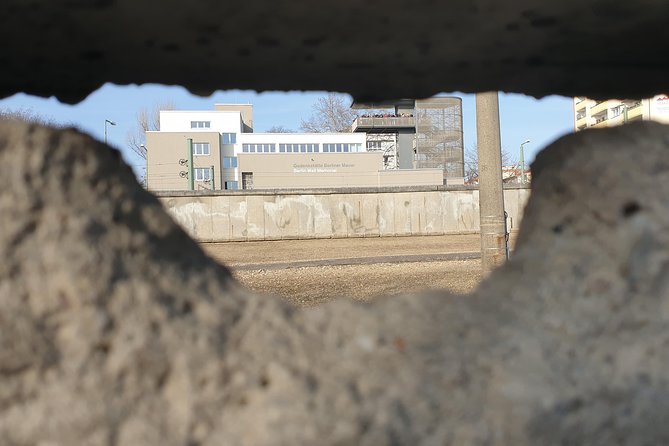
The final stop is the East Side Gallery, where the tour ends. This is the longest remaining section of the Berlin Wall and the best-known because of its murals.
The paintings turned a former instrument of division into a public art site associated with freedom. The contrast is striking. The Wall once stopped people from crossing, while the murals now invite people to stop, look, and think about what the barrier meant.
The tour allows about 20 minutes here. That gives you time to see the famous painted sections and take photographs, but it is not a long art walk. If you want to study every mural or explore the surrounding area at a slow pace, plan to remain after the tour ends.
I like ending here because the route closes on a more open, hopeful note. You first learn about sealed stations, escape attempts, and deaths at the border. You then finish with art painted on the surviving Wall. The sequence makes the East Side Gallery more meaningful than it would be as a quick photo stop.
Since the endpoint is at East Side Gallery, the guide can suggest which public transportation to take next. You are responsible for your own onward travel.
What the $27.87 price really buys you
At $27.87 per person, this is a reasonable price for a three-and-a-half-hour guided history walk in Italian. You are paying mainly for the guide’s route planning and explanations, not for entrance tickets. The listed stops do not require admission fees, and no museum or tower entry is included.
The value is strongest if you want a clear narrative. On your own, you can visit the Wall Memorial, Alexanderplatz, Karl-Marx-Allee, and East Side Gallery, but you will need to research the connections and work out the order. This tour handles that structure for you.
The price is less attractive if you already know Berlin’s Cold War history well or prefer to explore at your own pace. You will follow a fixed route, spend limited time at each stop, and pay separately for public transportation, food, and drinks.
The tour is often booked about 24 days ahead, which suggests that planning early is sensible if your dates are fixed. Since the group may reach 25 people, booking early can also help you secure a place on your preferred day.
The Italian guide makes the difference
The strongest part of a tour like this is the guide. The subject involves difficult names, dates, and political changes, so a clear Italian explanation can make the morning far more useful than reading short plaques at each site.
Antonella is one guide associated with the experience. Her approach is described as bringing the emotions of 1989 to life, which fits the tour’s focus on the demonstrations at Alexanderplatz and the Wall’s fall. Another strong point is preparation: the guide is expected to explain the key events of this painful period in a clear way.
Guide quality can vary by departure, since Antonella may not lead every date. Still, the format gives you something a self-guided route cannot: a person who can connect a ghost station to the Wall, the Wall to GDR control, and public protest to the events of November 1989.
Who should book this walking tour?
I would recommend it to Italian-speaking visitors who want a focused introduction to Berlin’s Cold War past. It is also a good fit for first-time visitors who want to cover several major sites without spending hours researching maps and historical background.
The tour suits adults, families with older children, and anyone comfortable walking for most of a morning. Most people can participate, and service animals are allowed. The experience is near public transportation, but it is not a hotel pickup tour and does not include meals.
You should think twice if you want a relaxed pace, lots of time for photographs, or entry inside the Berlin TV Tower. You should also be prepared for the emotional weight of the Wall Memorial. This is not only an architecture walk or a sightseeing loop. It deals with deaths, failed escapes, state control, and a divided city.
Free cancellation is available if you cancel at least 24 hours before the 10:00 a.m. start time. Cancellations or changes made within 24 hours are not refunded, so keep that deadline in mind.
Should you book the Cold War and Berlin Wall Tour in Italian?
Book it if you want Berlin’s Cold War story explained in Italian and prefer a route with a clear beginning, middle, and end. The mix of ghost stations, the Wall Memorial, GDR architecture, Alexanderplatz, Karl-Marx-Allee, and East Side Gallery gives you more than a single Wall photo stop.
The best reason to choose it is the historical connection between sites. The main caution is practical: you will walk, use public transportation, pay your own fares, and have only a short time at several stops.
At $27.87, I find it good value for an Italian-speaking guide and three and a half hours of focused sightseeing. Wear good shoes, arrive at the blue bicycle at Potsdamer Platz, and leave room in your day to continue exploring after the East Side Gallery.
FAQ
What language is the tour conducted in?
The tour is conducted in Italian with an Italian-speaking guide.
How long does the tour last?
The tour lasts approximately three hours and 30 minutes.
What time does the tour start?
The tour starts at 10:00 a.m.
Where does the tour begin?
The meeting point is Potsdamer Platz 10, 10785 Berlin, Germany, near the Potsdamer Platz S-Bahn and U-Bahn station.
How do I recognize the meeting point?
Look for the blue bicycle and the VIVE BERLIN TOURS flag with the company logo.
Where does the tour end?
The tour ends at the East Side Gallery in Berlin.
Is transportation included?
No. Transportation to and from the attractions is not included. The guide can advise you about public transportation at the end.
Is the Berlin TV Tower visited inside?
No. The tour visits the Berlin TV Tower from the outside only.
What is included in the price?
An Italian-speaking guide is included. Food, drinks, hotel pickup, hotel drop-off, and transportation are not included.
What is the cancellation policy?
You can cancel at least 24 hours before the start time for a full refund. Cancellations or changes made less than 24 hours before the start time are not refunded or accepted.
Just added around Berlin
- Berlin Highlights in One Day★ 5.0 · 3 reviews
- Private Berlin One Day Tour with a Local: See the City Unscripted★ 3.5 · 3 reviews
- Individual city tour Berlin for max. 8 persons★ 5.0 · 3 reviews
- Transfer from Berlin Schönefeld Airport (SXF) to Berlin city Hotels – ROUND TRIP★ 4.0 · 3 reviews
- Berlin: Museum Island Tour★ 5.0 · 3 reviews
- Private Analogue Photography Experience in Berlin★ 5.0 · 3 reviews
- Berlin: Local Food Tour in Secrets Hidden Gems★ 4.0 · 3 reviews
- Berlin & The Third Reich Private Guided Tour★ 5.0 · 3 reviews
Berlin Wall Tours, compared.

Skip-the-Line: Berlin Wall Museum at Checkpoint Charlie
Read our review →
East Side Gallery Spree Cruise in a Solar Catamaran
Read our review →
Cold War, Berlin Wall, Spies and the East Side Gallery
Read our review →

Guided Bike Tour of the Berlin Wall and Third Reich
Read our review →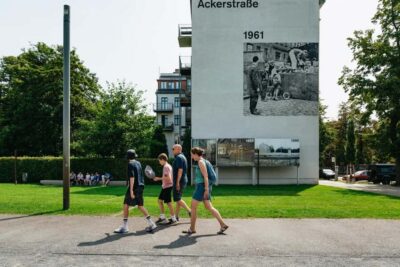

Browse the lists this tour appears in