
Review · DDR & EAST BERLIN TOURS
Karl-Marx-Allee Tour: Life and Architecture in East Berlin
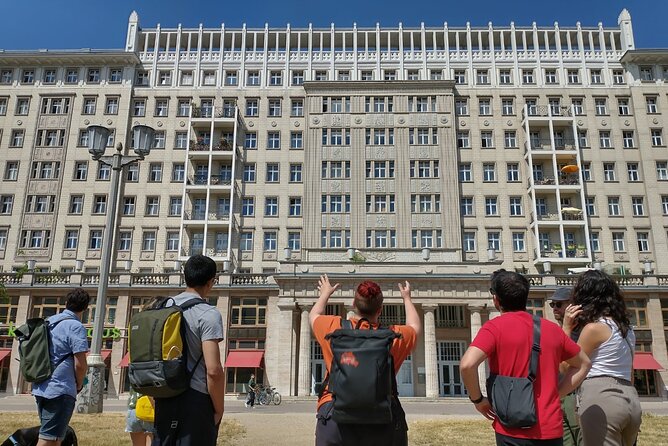
Karl-Marx-Allee is more than a broad avenue lined with grand buildings. It is a long political story told in stone, from East Germany’s early socialist ambitions to the workers’ uprising of 1953 and the quieter changes that followed the Berlin Wall’s fall. This tour connects the buildings with the people and ideas behind them.
I like the small group of no more than 15, which makes it easier to ask questions and hear the guide. I also like the route’s mix of architecture and daily life, especially the contrast between Hans Scharoun’s postwar modernism and Hermann Henselmann’s monumental socialist style. The main drawback is that this is an outdoor walking tour, so bad weather can affect the experience and the tour requires a full two hours on foot.
In This Review
- Key things to know before walking Karl-Marx-Allee
- Why Karl-Marx-Allee makes an excellent history walk
- Frankfurter Tor and the first socialist street
- Laubenganghäuser and a rejected modernist future
- Hochhaus an der Weberwiese, where comfort became propaganda
- The June 17, 1953 workers’ uprising
- Café Sibylle and the everyday side of East Berlin
- The Karl Marx bust and ideology in daily life
- Strausberger Platz and the avenue after 1989
- The guides and the feel of the experience
- Price, timing, and practical value
- Who should book this Karl-Marx-Allee walk
- Should you book the Karl-Marx-Allee Tour?
- FAQ
- Where does the Karl-Marx-Allee Tour begin?
- Where does the tour end?
- How far is the ending from Alexanderplatz?
- How long does the tour last?
- What language is the tour offered in?
- How large is the tour group?
- What is included in the price?
- Is the tour suitable for most people?
- Are service animals allowed?
- What is the cancellation policy?
Key things to know before walking Karl-Marx-Allee
- Frankfurter Tor opens the story: Begin beneath Hermann Henselmann’s symmetrical towers and learn how East Germany planned its first socialist street.
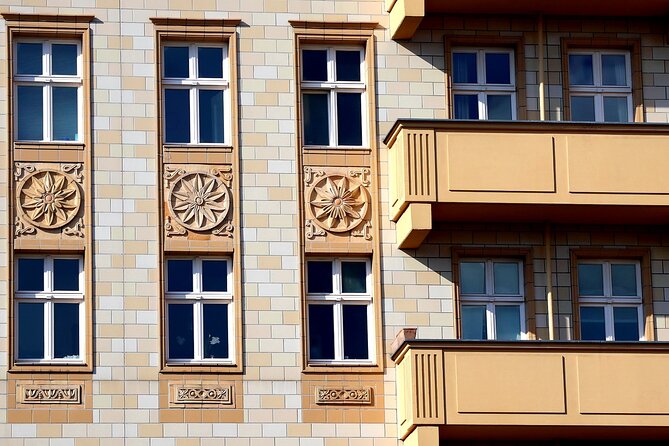
- The architecture changes as you walk: Hans Scharoun’s modernist Laubenganghäuser offer a sharp contrast to the grand Stalin-era buildings farther along the avenue.
- The Hochhaus an der Weberwiese was a prototype: This early tower offered its first residents unusual comfort and helped turn construction into a major propaganda project.
- The 1953 uprising gives the route its human weight: The workers’ memorial marks the place where an economic protest became a serious challenge to East Germany’s government.
- Café Sibylle links politics with ordinary city life: Its story reaches back to the statue of Joseph Stalin that once stood nearby.
- The tour ends at Strausberger Platz: You finish with another major Henselmann design and a look at how the avenue changed after reunification.
Why Karl-Marx-Allee makes an excellent history walk
If you explore Karl-Marx-Allee alone, you can admire its scale but miss much of its meaning. The avenue was designed to make a political statement, and the tour explains how architecture served that purpose without reducing the place to a row of impressive façades.
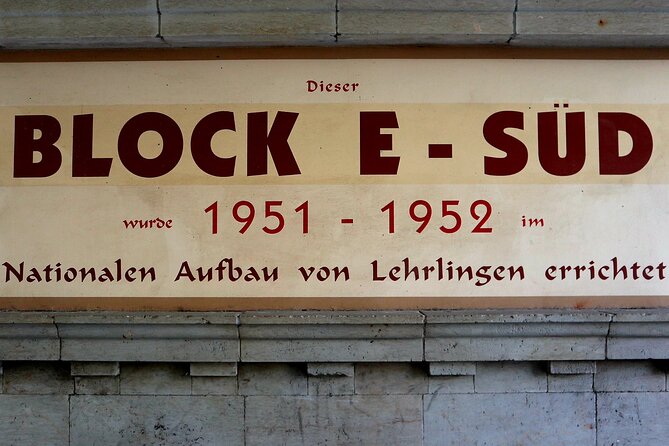
You will hear about the early 1950s rebuilding program and the thousands of volunteers who helped restore a city badly damaged by war. That context matters. The boulevard was not simply a construction project. It was meant to show that East Germany could create a new society through collective work.
The guide also places the architecture in the wider political setting. Buildings here reflect changing ideas about modern life, state power, workers, comfort, and public display. The result is a more useful way to read Berlin: not just by dates and events, but by asking who designed these spaces, who lived in them, and what the government wanted you to believe.
The English-language tour takes about two hours and moves through seven stops. That is long enough to build a clear narrative but short enough to fit into a busy Berlin day. I would choose it early in your visit if you want a better sense of East Berlin before seeing other former East German sites.
More East Berlin and DDR history:
- Berlin: DDR Museum Tickets
★ 4.3 · 3,443 reviews - Berlin: 75-minute Trabi Safari
★ 4.8 · 2,854 reviews - Berlin: East and West Hop-On Hop-Off Bus Tour
★ 4.2 · 2,195 reviews
Frankfurter Tor and the first socialist street
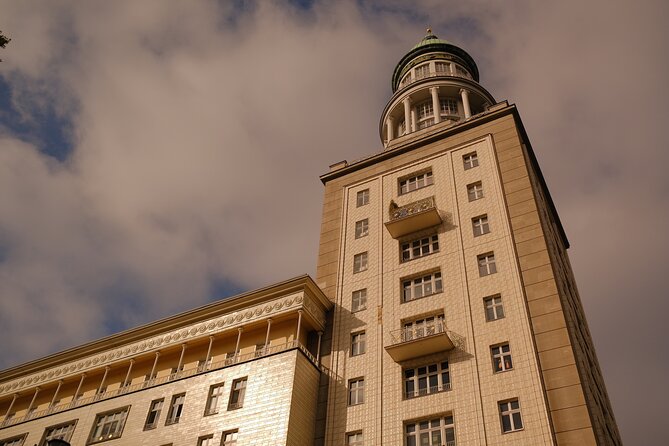
The tour begins at U Frankfurter Tor, where the two towers provide an immediate lesson in East German ambition. Hermann Henselmann designed the towers with strong symmetry and a ceremonial scale. They frame the eastern end of the route and make clear that this was intended to be more than an ordinary residential street.
You will learn how plans for Germany’s first socialist street took shape in the early 1950s. The rebuilding effort relied on a large volunteer workforce, and its success became part of the state’s public message. The government wanted the avenue to show that reconstruction, shared effort, and socialist planning could produce a better future.
This first stop lasts about 20 minutes. It is a good place to pay attention to proportion and repetition. The buildings were designed to be read from a distance, so the effect is strongest when you look down the avenue rather than focus on one doorway or window.
The grand scale can also feel impersonal. That is part of the point, and the guide helps explain it. You are not simply looking at decorative towers. You are looking at architecture used to shape public feeling.
Laubenganghäuser and a rejected modernist future
The Laubenganghäuser introduce a very different architectural language. These buildings date from the immediate postwar years and reflect Hans Scharoun’s modernist ideas. Scharoun imagined a more open, humane form of city planning for the ruins of Berlin.
His approach was not accepted by the new East German regime for long. The contrast is useful because it shows that postwar Berlin did not begin with one fixed architectural plan. There were competing visions for how people should live, how neighborhoods should be arranged, and what the rebuilt city should express.
You will spend about 15 minutes here. This is one of the route’s most valuable stops if you care about architecture, since it gives you a direct comparison with the more monumental buildings that follow.
The Laubenganghäuser may not deliver the same instant drama as Frankfurter Tor. Their importance comes from the ideas behind them. Listen for the difference between an architect’s utopian plan and a government’s need for a clear political style.
Hochhaus an der Weberwiese, where comfort became propaganda
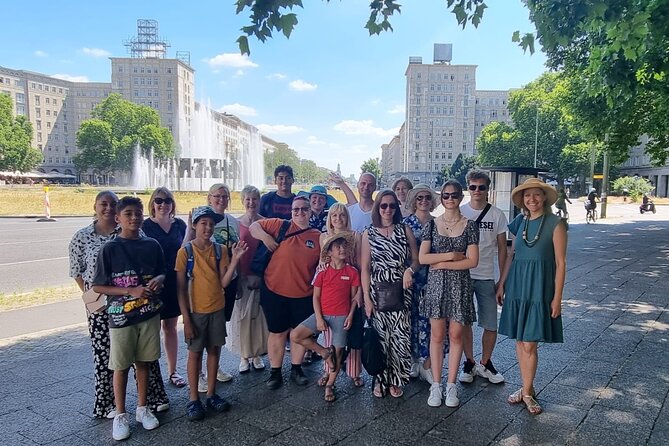
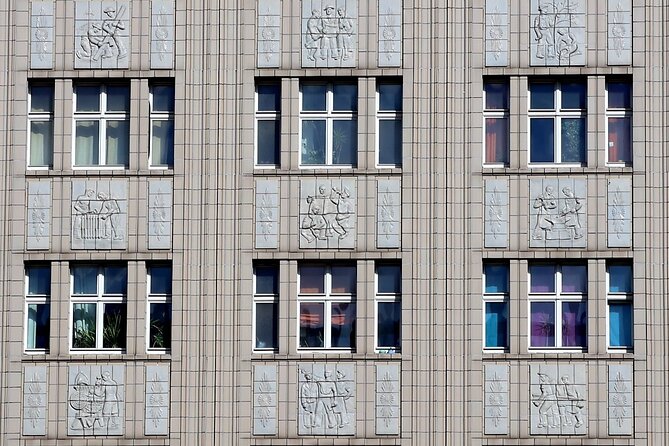
The Hochhaus an der Weberwiese served as a prototype for the later Karl-Marx-Allee buildings. Its first residents received a level of comfort that was unusual at the time, which helped make the building a showcase for East Germany’s social goals.
The project soon became a propaganda tool. It also drew the attention of Western architects, giving the building importance beyond its immediate neighborhood. The guide explains how a residential block could become a symbol in the competition between East and West.
This stop lasts about 20 minutes, and it gives the route a practical human angle. Grand boulevards can make politics feel abstract. A discussion of kitchens, apartments, and the experience of becoming one of the first residents brings the story closer to everyday life.
The useful question here is not only whether the building looked impressive. Ask what its residents received, what the state wanted to prove through that comfort, and how many people could realistically expect to live in such housing. The tour is strongest when it holds those two sides together: genuine improvement for some people and carefully managed public messaging.
A different side of Berlin on the same trip:
- Berlin: Reichstag, Dome and Government District Guided Tour
★ 4.7 · 18,288 reviews - Berlin: 1-Hour City Tour by Boat with Guaranteed Seating
★ 4.3 · 16,993 reviews - Berlin: Boat Tour Along the River Spree
★ 4.4 · 11,252 reviews - Discover Berlin Half-Day Walking Tour
★ 5.0 · 9,624 reviews
The June 17, 1953 workers’ uprising
At the Gedenkstätte Arbeiteraufstand 17 Juni 1953, the tour turns from architecture to open political conflict. This is where dissatisfied workers began a mass uprising in June 1953. The protest grew serious enough to threaten East Germany’s socialist government.
You will see the controversial monument dedicated to the uprising and hear how the event challenged the official image of a government built for workers. The stop gives the avenue a human scale once again. Behind the grand plans and public ceremonies were people who could reject the system’s demands.
About 20 minutes are devoted to this site. That time allows the guide to explain both the event and the debate around its memorial. Monuments do not simply preserve memory. They also reflect choices about whose version of the past should be visible.
This is likely the most politically weighty part of the walk. If you prefer a tour devoted only to façades, it may feel like a change of pace. I think that change is essential. Without the uprising, the avenue could be mistaken for a story of successful planning alone.
Café Sibylle and the everyday side of East Berlin
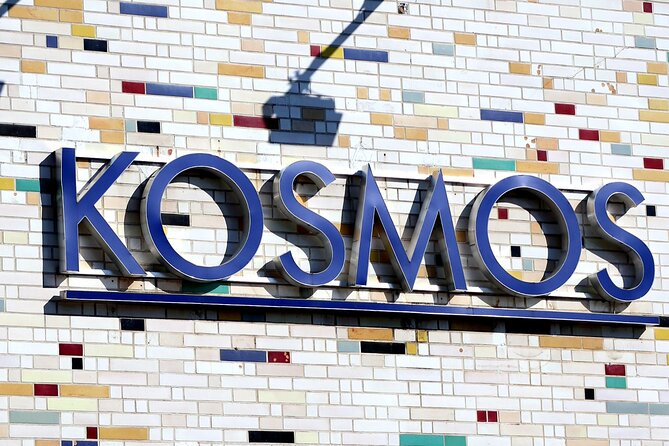
Café Sibylle brings the discussion into a more social setting. It was once one of the most exclusive cafés on Karl-Marx-Allee, and its story is tied to the statue of Joseph Stalin that stood nearby until 1961.
That connection gives the café more meaning than its name might suggest. It helps you see how Soviet influence entered daily life through public art, names, meeting places, and urban rituals. The avenue was not only a stage for official parades. It was also a place where people met, relaxed, and built ordinary routines.
The stop lasts about 15 minutes. You will hear how the café related to the surrounding political symbolism and how the removal of Stalin’s statue changed the area’s meaning.
I like this part of the tour because it keeps the story from becoming a procession of government buildings. A café can tell you a great deal about social status, public life, and the gap between official ideals and personal experience.
The Karl Marx bust and ideology in daily life
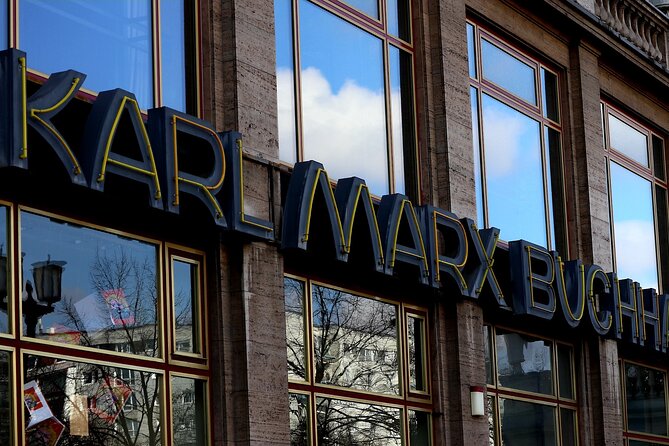
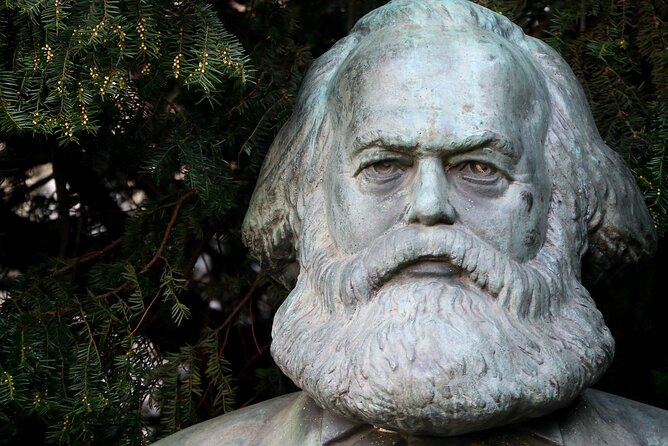
At the Karl Marx bust monument, the tour turns directly to the man whose name the avenue carries. Marx was the author of The Communist Manifesto, and his ideas shaped the language and goals of East German socialism.
The guide uses the monument to discuss how socialist ideology affected everyday life in East Berlin. That may include the way public spaces were named and presented, as well as the broader expectations placed on citizens. The value here is the connection between a famous political thinker and the practical world of housing, work, education, and public identity.
This stop takes about 15 minutes. It is brief, but it helps tie together the earlier discussions of architecture and government. The avenue was built not just to house people. It was meant to teach a political story every time residents or visitors passed through it.
You do not need a specialist background in Marx to follow this part. The guide’s job is to connect the monument to the city around it, rather than turn the stop into a lecture on theory.
Strausberger Platz and the avenue after 1989
The final stop is Strausberger Platz, another major example of Hermann Henselmann’s style. The broad roundabout gives the tour a strong ending and lets you compare it with Frankfurter Tor at the beginning.
Here you will hear about life on Karl-Marx-Allee after the Berlin Wall fell and about the avenue today. That final shift matters. The buildings did not disappear when the political system changed, and the meaning of the neighborhood did not remain fixed.
The tour ends on the eastern side of the Strausberger Platz roundabout, about a 10-minute walk from Alexanderplatz. This is convenient if you plan to continue into central Berlin afterward. It also means you are not returned to the starting point, so keep the end location in mind when arranging your next activity.
The closing discussion gives you a chance to think about the full route: early modernist hopes, socialist monumentality, state control, resistance, and post-Wall change. The avenue becomes a record of several failed or altered plans for Berlin, rather than a single frozen period.
The guides and the feel of the experience
The tour is led in English by a local guide. Martina receives especially strong praise for her preparation, humor, memory, and ability to explain difficult political subjects in a clear way. Her approach appears to combine careful research with personal insight into parts of life under East German communism.
That personal connection can matter on a tour about recent history. It helps move the subject away from textbook dates and toward the choices people faced in real places. Martina is also described as organized and attentive to the group, useful qualities when the route includes several stops and a large open boulevard.
The provider is Beyond and Beneath Tours. The group is capped at 15 people, which is small enough for a more direct exchange with the guide. The tour has also been praised for original demonstration material and a serious amount of preparation.
Guide assignments can vary, so you should not assume Martina will lead every departure. Still, the experience is designed around a guide who can link architecture, politics, and daily life rather than simply point out buildings.
Price, timing, and practical value
At $30.01 per person, this is a fair price for a two-hour guided walk, especially if East German history or architecture is high on your list. There are no admission charges at the stops, so you are paying mainly for interpretation, structure, and access to a clear narrative.
You could walk Karl-Marx-Allee for free. The question is whether you would understand what you are seeing. For most people, the guide adds the most value at the less obvious places: the Laubenganghäuser, the Hochhaus an der Weberwiese, the workers’ uprising memorial, and Café Sibylle.
The tour is often booked about 18 days ahead on average. That is useful planning information if your Berlin dates are fixed, especially because the group is limited to 15 people.
Wear comfortable shoes and allow the full two hours. The tour requires good weather, and poor conditions can lead to a different date or a full refund. You can cancel for a full refund up to 24 hours before the start time, but cancellations or changes made later are not refunded or accepted.
The meeting point is at U Frankfurter Tor, making public transport a practical way to arrive. The route ends at Strausberger Platz, and the finish is about a 10-minute walk from Alexanderplatz. A mobile ticket is provided, and service animals are allowed.
Who should book this Karl-Marx-Allee walk
I would recommend this tour to anyone who enjoys architecture with a political story attached. It is also a good fit if you have already seen Berlin’s best-known Wall sites and want to understand how daily life and public design worked in East Berlin.
The route suits a short Berlin visit because it delivers a focused subject in two hours. A 17-year-old with an interest in history could follow it, especially because the guide’s storytelling and humor help keep the subject moving.
You may want to skip it if you dislike outdoor walking, have little interest in postwar politics, or want an interior-focused architecture tour. Most of the value comes from what the guide explains while you look at the buildings and public spaces.
Should you book the Karl-Marx-Allee Tour?
Book it if you want more than a quick photo of East Berlin’s monumental avenue. The best reason to go is the way the route connects architecture, propaganda, protest, and ordinary life in one compact walk.
I would place it high on the list for history and design-minded visitors, particularly those who appreciate a guide with humor and a personal connection to the subject. At $30.01, the tour offers good value when you want the meaning behind the buildings, not just their names.
FAQ
Where does the Karl-Marx-Allee Tour begin?
The tour begins at U Frankfurter Tor in Berlin, Germany.
Where does the tour end?
It ends at Strausberger Platz, on the eastern side of the roundabout.
How far is the ending from Alexanderplatz?
The ending point is about a 10-minute walk from Alexanderplatz.
How long does the tour last?
The walking tour lasts approximately two hours.
What language is the tour offered in?
The tour is offered in English.
How large is the tour group?
The maximum group size is 15 people.
What is included in the price?
An expert local guide is included. Admission tickets are free at each listed stop.
Is the tour suitable for most people?
Most people can participate, and the tour is near public transportation. It is an outdoor walking experience that requires good weather.
Are service animals allowed?
Yes, service animals are allowed.
What is the cancellation policy?
You can cancel up to 24 hours before the start time for a full refund. Cancellations or changes made less than 24 hours before the start are not accepted or refunded. If poor weather cancels the tour, you will be offered another date or a full refund.
Just added around Berlin
- Berlin Highlights in One Day★ 5.0 · 3 reviews
- Private Berlin One Day Tour with a Local: See the City Unscripted★ 3.5 · 3 reviews
- Individual city tour Berlin for max. 8 persons★ 5.0 · 3 reviews
- Transfer from Berlin Schönefeld Airport (SXF) to Berlin city Hotels – ROUND TRIP★ 4.0 · 3 reviews
- Berlin: Museum Island Tour★ 5.0 · 3 reviews
- Private Analogue Photography Experience in Berlin★ 5.0 · 3 reviews
- Berlin: Local Food Tour in Secrets Hidden Gems★ 4.0 · 3 reviews
- Berlin & The Third Reich Private Guided Tour★ 5.0 · 3 reviews
DDR & East Berlin Tours, compared.



East Berlin and the Berlin Wall 2-Hour Walking Tour
Read our review →
East Berlin Food & History Tour with Eating Europe
Read our review →Browse the lists this tour appears in