
Review · ALTERNATIVE BERLIN TOURS
Private Alternative Berlin Tour -Murals, Graffiti and Squats
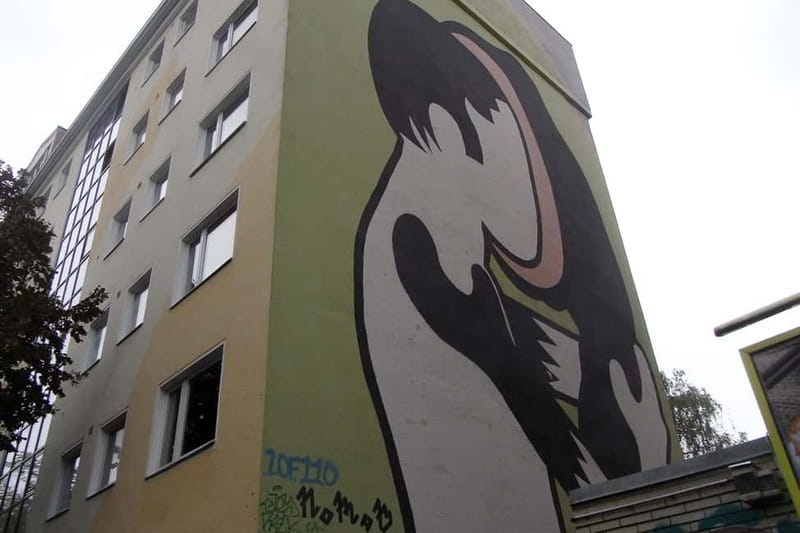
Berlin’s alternative culture is best understood on foot and by train, moving between murals, squats, punk spaces, and former Wall sites. This private tour connects those pieces, showing how cheap postwar buildings and empty East German properties gave artists room to create. I especially like the flexible format and the guides’ ability to adjust the pace. Nadav is a strong storyteller, while Jacob is praised for an easy, personal approach.
I also like that hotel pickup is included and that you get WhatsApp help before and after the tour for advice about Berlin. The main consideration is cost: $302 for up to six people is good value for a full private group, but expensive for one or two people. You also pay separately for public transport and any food or coffee.
In This Review
- Key points at a glance
- Berlin’s alternative story begins with empty space
- A private guide changes the pace
- Potsdamer Platz shows Berlin’s sharpest contrast
- Public transport is part of the Berlin lesson
- Dead Chicken Alley delivers the handmade side of Berlin
- Alexanderplatz adds a public city setting
- East Side Gallery brings art and Wall history together
- Friedrichshain and Oberbaumbrücke finish the route
- What the $302 group price really means
- Practical planning for a smooth 2.5 hours
- Who will get the most from this tour
- Should you book the Berlin alternative art tour?
- FAQ
- How long does the tour last?
- How much does the private tour cost?
- Is hotel pickup included?
- Is public transport included in the price?
- Is food included?
- What language is the tour conducted in?
- Which places does the tour visit?
- Is the tour physically difficult?
- Can I cancel the booking?
Key points at a glance
- A private route through Berlin’s alternative districts: You travel with your own guide rather than a large group.
- Nadav or Jacob can personalize the experience: The route can give extra attention to art, history, music, squats, or particular neighborhoods.
- Dead Chicken Alley and Haus Schwarzenberg offer the most concentrated street art: These stops show Berlin’s handmade, changing side better than a standard city tour.
- East Side Gallery links graffiti with Wall history: You get 45 minutes here, the longest stop on the route.
- Public transport is part of the experience: Allow €4 to €10 for tickets and wear comfortable shoes.
- The tour works best for curious first-time visitors: It gives you context for Berlin’s alternative culture without requiring strenuous walking.
Berlin’s alternative story begins with empty space
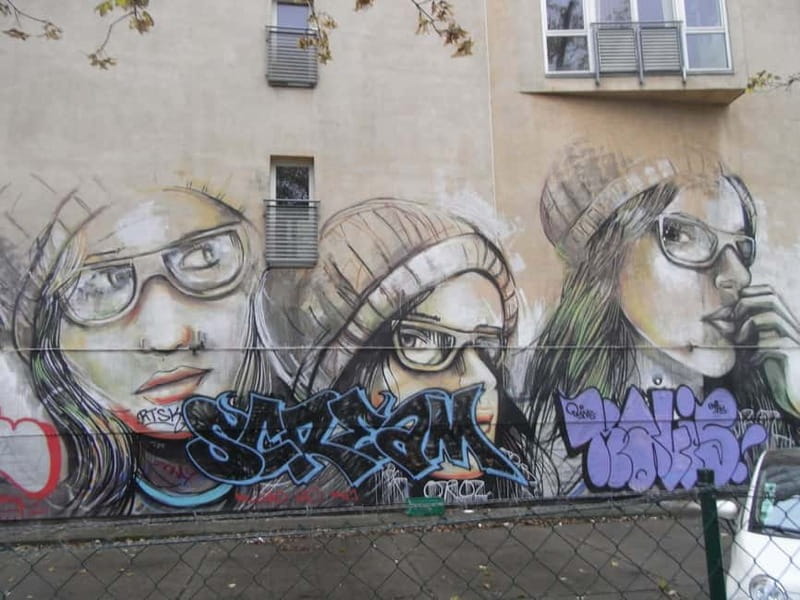
The story behind Berlin’s graffiti is also a story about rent, war, political change, and buildings left without a clear future. Before and after the Berlin Wall fell, the city was cheap by comparison with many major European capitals. Artists, hippies, punks, musicians, and people seeking a less conventional life moved into damaged postwar buildings and deserted properties in the former East Berlin.
That freedom helped produce house projects, squats, galleries, clubs, and informal communities. The tour explains this setting rather than treating street art as decoration. I find that useful because a mural means more when you understand the city conditions that allowed it to appear.
Berlin has changed. Gentrification has pushed up costs and altered many old alternative districts, yet the city remains a major gathering place for artists and independent-minded people. This tour focuses on both sides of that story: the past culture of squats and punk houses, and the art that still survives or changes around them.
More alternative Berlin:
- Berlin: Alternative Berlin Walking Tour
★ 4.6 · 1,204 reviews - Berlin: Alternative Bike Tour of Kreuzberg & Friedrichshain
★ 4.7 · 548 reviews - Berlin: Alternative Berlin Bike Tour
★ 4.8 · 359 reviews
A private guide changes the pace
The tour lasts about 2.5 hours and is limited to your private group of up to six people. That setup matters here. Alternative Berlin is not a single monument with a fixed explanation. It is a collection of streets, courtyards, wall paintings, former projects, and neighborhoods that make more sense when you can stop and ask questions.
Nadav is described as an especially strong storyteller who can connect past events with the places around you. His background appears broad enough to support questions beyond graffiti, including Berlin’s political changes and alternative communities. Jacob brings a similarly personal style, with flexibility about the start time, pickup point, and what you want to see.
You should tell the guide early if you care most about punk history, political art, graffiti technique, abandoned buildings, or modern gentrification. The route already includes a lot, but a private format gives you a better chance to spend extra time on the subjects that interest you.
Hotel pickup is included, either from your hotel reception or another location you specify. That saves you the small hassle of finding a meeting point, especially if you are still learning Berlin’s public transport system.
Potsdamer Platz shows Berlin’s sharpest contrast
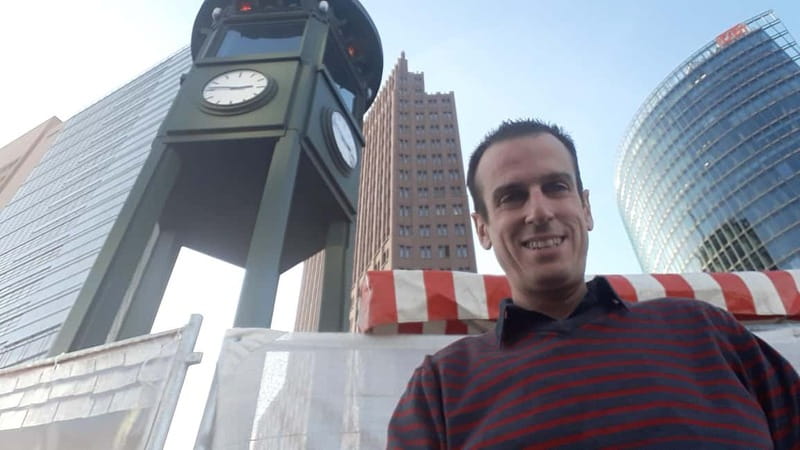
The first major stop is Potsdamer Platz, with about 30 minutes of guided time. This is not the scruffy Berlin many people picture when they hear about squats and street art. It is a useful opening because it shows how dramatically the city has rebuilt and changed.
Potsdamer Platz has a strong connection to Berlin’s divided past and its post-Wall redevelopment. Here, the guide can set up the contrast between the city’s former empty zones and its modern commercial districts. I like beginning with that contrast because it prevents the alternative scene from becoming a romantic story about ruins alone.
A nearby viewpoint adds another 10 minutes. The exact viewpoint is not specified, so you should think of this as a short orientation stop rather than a major lookout attraction. It gives you a chance to place Berlin’s changing districts in relation to one another before continuing by public transport.
Public transport is part of the Berlin lesson
The route includes several short public transport rides, including legs of roughly 15, 10, and 10 minutes. Your ticket is not included, and the expected total cost is about €4 to €10. Ask the guide which ticket you need before buying one, since the correct choice depends on the route and local transport rules.
I see the transit sections as a plus, not dead time. Berlin’s alternative districts are spread out, and riding with a local guide gives you a practical look at how the city fits together. You are not simply being driven from attraction to attraction in a private vehicle.
Still, the transport adds a little uncertainty. Trains, trams, and buses can affect the pace, and the tour has many stops packed into 2.5 hours. Keep the group ready to move, and do not plan a heavy meal during the main route.
A few more Berlin tours worth weighing up
- Berlin: Private Reichstag and Glass Dome Tour
★ 4.8 · 2,226 reviews - Berlin Private Complete History All Day Walking Tour
★ 5.0 · 474 reviews - Private Walking Tour Berlin Third Reich Hitler and World War II
★ 5.0 · 360 reviews - Private Berlin: Iconic Sights and Hidden Gems Walking Tour
★ 5.0 · 292 reviews
Dead Chicken Alley delivers the handmade side of Berlin
Dead Chicken Alley, also known as Haus Schwarzenberg’s courtyard area, is one of the most distinctive stops. The tour gives it about 10 minutes, followed by another 20 minutes at Haus Schwarzenberg itself. The short time at the alley means you should expect a focused explanation, not a long period to inspect every painted surface.
This is the kind of place that helps explain Berlin’s alternative identity. Its art feels tied to independent spaces, improvised culture, and a willingness to use neglected corners. The work is not presented as a polished outdoor gallery with a neat beginning and end. It is part of a living setting that may change over time.
Haus Schwarzenberg gives the guide room to explain the relationship between street art, galleries, and alternative projects. I would pay close attention here if you want to understand how Berlin’s art scene operates outside major museums. You might also want to take notes on names or places to revisit later, since 10 or 20 minutes passes quickly.
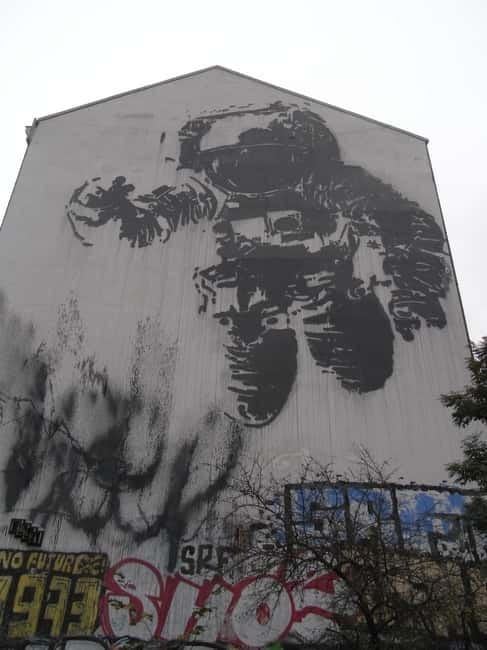
The condition of street art is always a practical issue. Murals can be painted over, damaged, or replaced. That is part of the nature of this scene, but it also means you should focus on the guide’s context rather than expecting every image to look exactly as pictured elsewhere.
Alexanderplatz adds a public city setting
Alexanderplatz receives about 20 minutes of guided attention. This is a major public space, so it gives the tour a different frame from the smaller art courtyards. The guide can help connect the official city center with the informal culture found in side streets and former industrial or residential districts.
I like this stop because it keeps the tour from becoming a simple hunt for colorful walls. Berlin’s alternative culture developed in relation to the wider city, including central public spaces and the changes brought by reunification. Alexanderplatz helps show the scale of those changes.
Do not expect Alexanderplatz itself to feel like a squat or an underground art space. Its value is the comparison. If your main goal is to photograph murals, the Dead Chicken Alley, Haus Schwarzenberg, and East Side Gallery sections are likely to feel more directly relevant.
East Side Gallery brings art and Wall history together
The longest stop is East Side Gallery, with about 45 minutes. That generous timing is important because this section combines Berlin Wall history with some of the city’s best-known public murals.
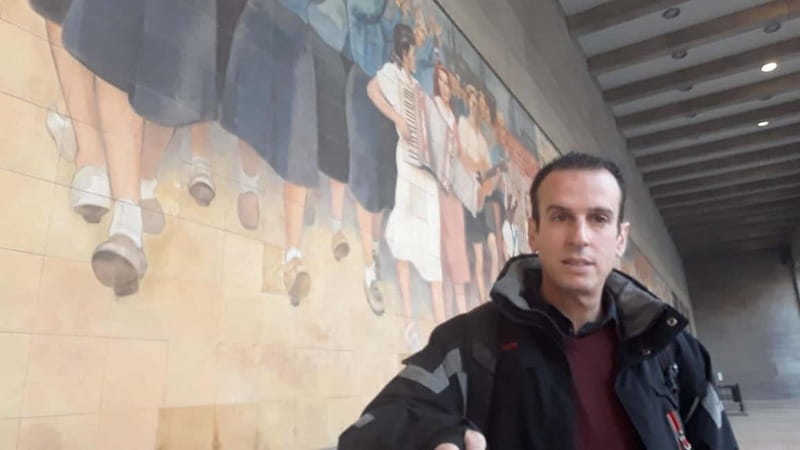
The East Side Gallery is a long stretch of Wall covered with paintings by artists from different places. The guide can help you read the work in relation to the Wall’s former purpose and the changes that followed its fall. You get more than a quick photo stop. You have time to look at individual murals, ask questions, and consider how political art changes when it becomes a major city attraction.
There is also a useful tension here. East Side Gallery is famous and heavily visited, so it is not an untouched alternative space. Its value is precisely that art, memory, tourism, and preservation meet in one place. I would listen for the difference between art made during an open-ended period of change and art now viewed as part of Berlin’s public identity.
The 45-minute visit also gives the tour room to slow down after several shorter stops and transport connections. If you want strong photographs, this is one of the places where you will appreciate not being rushed through in a large group.
Friedrichshain and Oberbaumbrücke finish the route
The tour then moves through Friedrichshain and Kreuzberg, with about 15 minutes of guided time. These districts are central to Berlin’s alternative image, and the guide can place the earlier art stops into a wider neighborhood setting.
The available details do not specify a particular building or mural in this section, so you should treat it as a district-level walk and explanation. That can be valuable if you want to understand how alternative culture appears across a neighborhood rather than at one famous address.
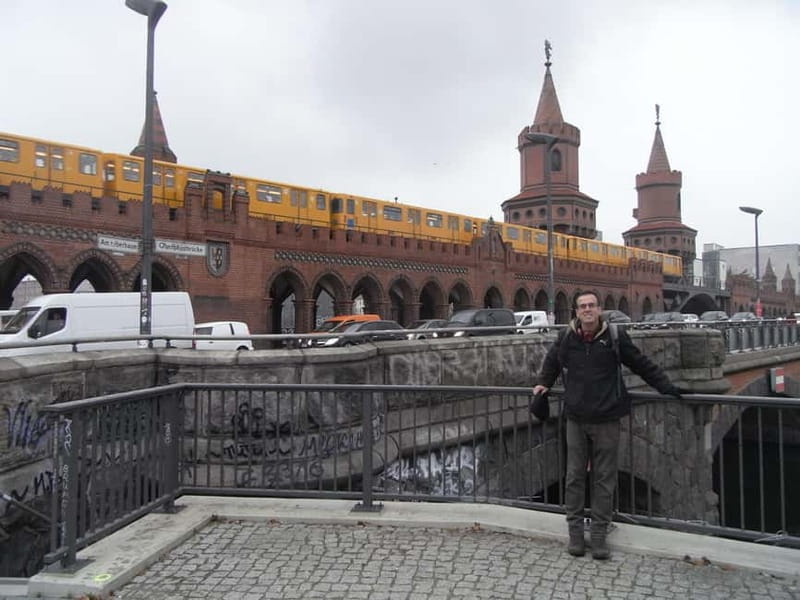
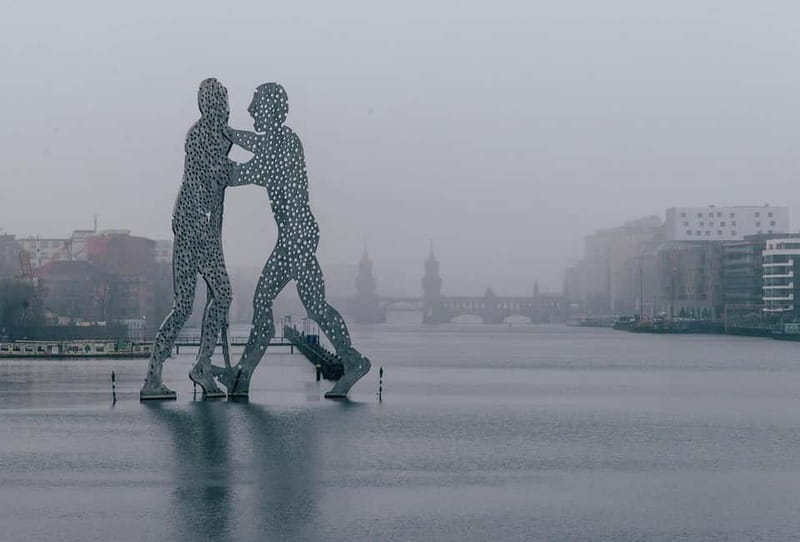
The final stop is Oberbaumbrücke, with about 10 minutes. This striking bridge connects Friedrichshain and Kreuzberg and provides a fitting end to a route about division, reunification, movement, and cultural change. The short stop is likely best for a final explanation and photographs, not an extended bridge visit.
Because the tour covers so many areas, the ending may feel brisk. That is the tradeoff for seeing Potsdamer Platz, central Berlin, street-art courtyards, East Side Gallery, and the eastern districts in one outing.
What the $302 group price really means
The price is $302 per private group of up to six people. For six people, that works out to about $50 per person before transport and snacks. For four people, it is about $76 each. For two, it is $151 each, and for a solo visitor it is the full $302.
That makes this much easier to justify for families or friends traveling together. You are paying for a private guide, hotel pickup, a custom conversation, and advice before and after the tour, not just for a walk between murals. The picture folder with interactive explanations also gives you something to refer to after the outing.
For one or two people, the price is harder to defend unless personal attention is very important to you. A private tour can be worthwhile if you want to ask detailed questions or shape the route around a particular interest, but you should compare it with a group tour before booking.
Budget another €4 to €10 for public transport and €5 to €15 for coffee, food, or snacks during the break. The total remains predictable, but the extras are not built into the advertised group price.
Practical planning for a smooth 2.5 hours
Wear comfortable shoes. The tour is described as easy walking combined with public transport, with no special physical requirements. Even so, you will be moving between stops, boarding trains or buses, and standing while listening, so shoes that handle a city day are the sensible choice.
The tour is in English and includes a live guide. Since starting times are based on availability, check the schedule before fixing the rest of your day. Hotel pickup makes the beginning simple, but give the guide a clear pickup address or hotel reception point.
The included WhatsApp availability is useful beyond the tour itself. You can ask for suggestions about where to go and what to see before or after the route. That matters in Berlin, where a local recommendation can help you decide how to spend the rest of the day, particularly if you want more art, music, or alternative culture.
You can cancel up to 24 hours ahead for a full refund, and the reserve-now, pay-later option keeps your plans flexible. Those terms are helpful if your Berlin schedule is still changing.
Who will get the most from this tour
I would choose this tour if you want Berlin explained through culture and personal stories, not only through famous monuments. It suits people interested in graffiti, murals, punk, hippie communities, squats, post-Wall change, and the uneasy link between creative freedom and rising property prices.
It is also a good fit if you are new to Berlin and want an orientation to districts that do not always fit neatly into a standard sightseeing route. The hotel pickup and private format reduce the friction of getting started.
You may want something else if you prefer museums, architecture, or a slow single-neighborhood walk. The tour moves quickly and covers a lot of ground. It also cannot guarantee that every artwork will remain unchanged, since street art is temporary by nature.
Should you book the Berlin alternative art tour?
Book it if you have at least three people in your group, want a private English-speaking guide, and care about the story behind Berlin’s murals and alternative communities. Nadav’s storytelling style and Jacob’s flexible approach make the personal format especially useful for questions and follow-up discussion.
Think twice if you are alone, watching every euro, or hoping for a long photography session at each stop. For the right group, though, the tour offers a smart way to connect Potsdamer Platz, Dead Chicken Alley, Haus Schwarzenberg, East Side Gallery, Friedrichshain, Kreuzberg, and Oberbaumbrücke in one compact outing.
FAQ
How long does the tour last?
The tour lasts 2.5 hours.
How much does the private tour cost?
The price is $302 for a private group of up to six people.
Is hotel pickup included?
Yes. Pickup is included from your hotel reception or another location you specify.
Is public transport included in the price?
No. Public transport tickets are separate and are expected to cost about €4 to €10.
Is food included?
No. Food, coffee, and snacks are not included. A break may cost about €5 to €15.
What language is the tour conducted in?
The live tour guide speaks English.
Which places does the tour visit?
The route includes Potsdamer Platz, a viewpoint, Dead Chicken Alley, Alexanderplatz, Haus Schwarzenberg, East Side Gallery, Friedrichshain-Kreuzberg, and Oberbaumbrücke.
Is the tour physically difficult?
No. It is described as easy walking combined with public transport, with no special requirements. Comfortable shoes are recommended.
Can I cancel the booking?
Yes. You can cancel up to 24 hours in advance for a full refund. The reserve-now, pay-later option is also available.
Just added around Berlin
- Berlin Highlights in One Day★ 5.0 · 3 reviews
- Private Berlin One Day Tour with a Local: See the City Unscripted★ 3.5 · 3 reviews
- Individual city tour Berlin for max. 8 persons★ 5.0 · 3 reviews
- Transfer from Berlin Schönefeld Airport (SXF) to Berlin city Hotels – ROUND TRIP★ 4.0 · 3 reviews
- Berlin: Museum Island Tour★ 5.0 · 3 reviews
- Private Analogue Photography Experience in Berlin★ 5.0 · 3 reviews
- Berlin: Local Food Tour in Secrets Hidden Gems★ 4.0 · 3 reviews
- Berlin & The Third Reich Private Guided Tour★ 5.0 · 3 reviews
Alternative Berlin Tours, compared.


Alternative Bike Tour of Kreuzberg & Friedrichshain
Read our review →
Experience the Alternative Kreuzberg on a Bike Tour
Read our review →
Alternative Berlin Bike Tour – Off the Beaten Tracks in Small Groups
Read our review →

Street Art and Alternative Tour of Berlin in French
Read our review →Browse the lists this tour appears in