
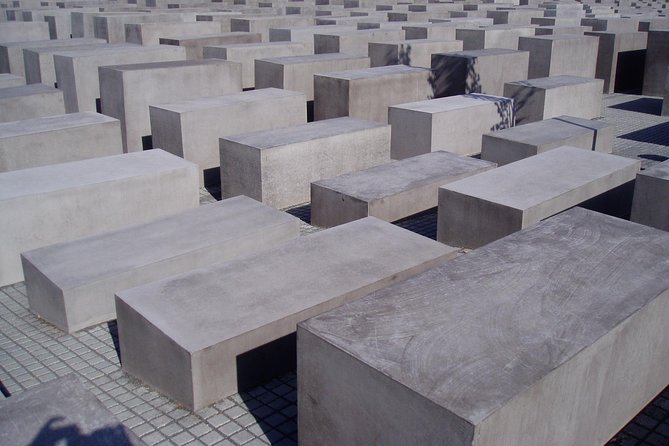
Review · BERLIN WALL TOURS
Private Walking Tour: Behind the Iron Curtain and Berlin Wall
Berlin’s Cold War story becomes far more powerful when you walk the actual route of the former death strip. On this private four-hour tour, you connect the Berlin Wall Memorial, Bernauer Strasse, Gethsemane Church, Bornholmer Strasse, the East Side Gallery, and Alexanderplatz into one clear story.
I like the private format, since your guide can adjust the pace and spend more time on the parts that catch your interest. I also like the focus on ordinary life in East Germany, not just generals and superpower politics. The main drawback is practical: you need a Berlin public transport day pass for zones AB, and four hours of walking and transit calls for decent fitness.
In This Review
- Key points at a glance
- Why Berlin is the right place to study the Cold War
- Bernauer Strasse and the Wall Memorial
- Gethsemane Church and peaceful opposition
- Bornholmer Strasse and the night the border opened
- East Side Gallery and the changing meaning of the Wall
- Alexanderplatz and the protest movement
- What a private four-hour walk feels like
- The guides and the value of expert explanation
- Is $166.52 per person a fair price?
- Who should book this Berlin Wall tour?
- Should you book it?
- FAQ
- How long does the private Berlin Wall tour last?
- Is hotel pickup included?
- Do I need a public transport pass?
- Is this a private activity?
- What locations are included?
- Can I cancel for a full refund?
Key points at a glance
- Walk the former border at Bernauer Strasse: See remaining Wall structures and learn about escape attempts along one of Berlin’s most revealing Cold War sites.
- Connect politics with daily life: The tour explains what it meant to live in the heavily policed GDR, not just how the United States and Soviet Union competed.
- Visit protest sites: Gethsemane Church and Alexanderplatz help show how public pressure grew in the late 1980s.
- See Bornholmer Strasse: This former border crossing played a major part in the events that led to the Wall opening.
- Travel as a private group: Only your party takes part, with hotel pickup available if you are staying centrally.
- Expect a strong guide-led experience: Rachel Wells, Alex, and Philippa have each been praised for clear explanations, route choices, and adapting the walk to the group.
Why Berlin is the right place to study the Cold War
After World War II, Berlin was no longer simply Germany’s capital. It became a city divided among the victorious powers and a testing ground for the struggle between the Soviet Union and the Western powers.
That division shaped streets, families, workplaces, churches, schools, and escape routes. The Berlin Wall was not a distant political line. It cut through neighborhoods and separated people who could sometimes see one another across the barriers.
I find this tour useful because it begins with that larger story, then brings you down to street level. You are not only told that Berlin was divided. You see where the division ran and learn how residents dealt with it.
Your guide also places the Cold War within a longer timeline, from Berlin’s founding through World War II, the postwar occupation, the rise of the GDR, the Wall years, and reunification. That wider frame matters. Without it, the Wall can seem like an isolated monument rather than the result of decades of pressure.
More of the Berlin Wall, end to end:
- Skip-the-Line: Berlin Wall Museum at Checkpoint Charlie
★ 4.1 · 2,041 reviews - Berlin: East Side Gallery Spree Cruise in a Solar Catamaran
★ 4.0 · 1,039 reviews - Cold War, Berlin Wall, Spies and the East Side Gallery
★ 5.0 · 1,024 reviews
Bernauer Strasse and the Wall Memorial
Bernauer Strasse is one of the strongest stops on the route. The street became famous because the border ran directly along it, creating an unusual situation. In some cases, the front doors of buildings were in East Berlin while the pavement outside belonged to West Berlin.
The area became known for escape attempts. Some people fled through tunnels, while others made desperate jumps from buildings before the authorities sealed the border more firmly. Your guide uses the surviving traces and memorial displays to explain how quickly an everyday street turned into a dangerous frontier.
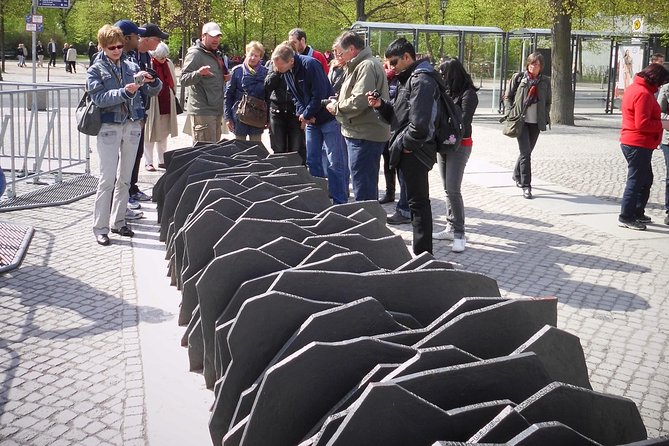
The Berlin Wall Memorial gives you a better sense of the border system than a single painted section of concrete can. You can learn about the Wall, the cleared zone beside it, the watch systems, and the human cost of trying to cross.
This is a stop where you should slow down and listen. Photographs show what happened, but the physical arrangement of the site helps you understand why escape was so difficult. You also get a clearer picture of the difference between the visible Wall and the wider security area behind it.
A possible limitation is that memorial sites require attention. This is not a quick photo stop. If you prefer a tour built mostly around famous landmarks and easy sightseeing, the detail here may feel heavy. For anyone trying to understand Berlin rather than simply photograph it, Bernauer Strasse earns the time.
Gethsemane Church and peaceful opposition
Gethsemane Church in Prenzlauer Berg shows another side of the story. It became a meeting place for civil rights activists in the late 1980s, when opposition to the East German government was becoming more public.
Churches provided space for discussion and prayer when open political opposition could bring serious consequences. At Gethsemane, people gathered during a period of rising tension and protest.
I like this stop because it shifts the focus from border guards and escape tunnels to organized civilian action. The collapse of the Wall did not happen only because of decisions made in Moscow or East Berlin. Pressure also grew from people who gathered, spoke out, and demanded change.
The church also helps explain why the late 1980s felt different from earlier years. The tour looks at the protests and the wider movement that challenged the GDR. Your guide can connect this site with the events at Alexanderplatz and the border crossings.
Do not expect a large museum-style attraction here based on the information provided. Its importance comes from the events connected to the place and from the guide’s explanation. That makes the quality of the guide especially important.
Bornholmer Strasse and the night the border opened
Bornholmer Strasse was one of the crossings between East and West Berlin. It is included because of its role in the dramatic events surrounding the Wall’s opening in November 1989.
The border did not simply disappear after a carefully staged ceremony. Confusion, public pressure, official announcements, and crowds all played a part. Bornholmer Strasse became one of the first crossings where people were allowed through.
This stop helps correct a common misunderstanding. The Wall’s fall was not a single theatrical moment at one famous gate. It was a fast-moving breakdown of control, shaped by months of protest and a government that could no longer contain public demands.
Your guide can also explain how a border crossing worked and what it meant for people on both sides. That practical angle is valuable. A checkpoint was not only a slab of concrete. It was a system of permits, guards, inspections, restrictions, and fear.
More walking tours in Berlin:
- Discover Berlin Half-Day Walking Tour
★ 5.0 · 9,624 reviews - Berlin: Third Reich and Cold War 2 Hour Walking Tour
★ 4.9 · 6,830 reviews - Berlin: Discover Berlin Walking Tour
★ 4.9 · 5,998 reviews - Berlin’s Best: 2 Hour Walking Tour Third Reich and the Cold War
★ 5.0 · 5,486 reviews
East Side Gallery and the changing meaning of the Wall
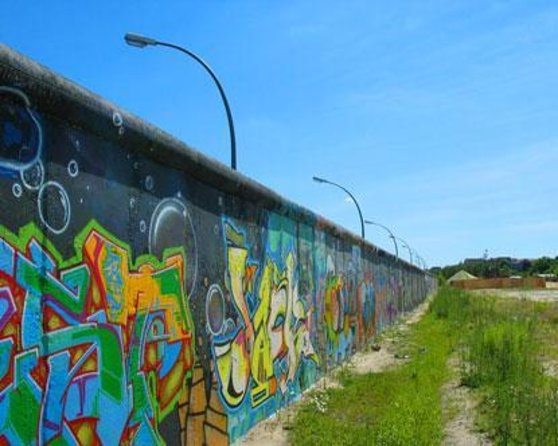
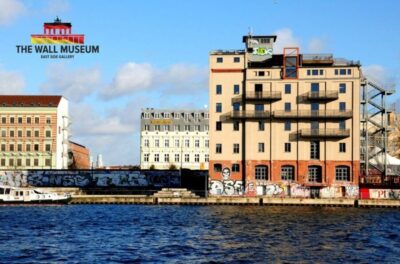
The East Side Gallery presents a very different view of the former border. It is a long surviving section of the Wall covered with murals created after the division ended.
The artwork gives the concrete a new public role, turning a barrier into an outdoor gallery. It is visually striking, but it can also make the Wall feel more like an art site than a former instrument of control.
That is why the historical explanation matters here. Your guide can place the artwork beside the original purpose of the Wall and help you understand the difference between remembering oppression and celebrating its end.
The route does not treat every surviving Wall section as identical. Bernauer Strasse offers a more detailed look at the border system and escape attempts, while the East Side Gallery shows how Berlin has reused the Wall as a symbol.
The tour may not spend equal time at every stop. Four hours is enough for a well-planned route, but not for an exhaustive study of every Cold War location in Berlin. If you want a full museum visit or extensive time at each mural, plan a separate visit.
Alexanderplatz and the protest movement
The tour ends at Alexanderplatz, a major square and transport hub in central Mitte. This is a fitting final stop because the square became a key location for public protest in East Berlin.
By ending here, the walk moves from the physical border to the civic pressure that helped break the system. You can see how the story of the Wall connects with larger demands for rights, freedom of movement, and political change.
Alexanderplatz also makes the end of the tour easy to manage. Since it is a central transport point, you can continue sightseeing, return to your hotel, or stop for food after the guide leaves.
The ending is more than a convenient finish. It gives the tour a clear arc: the Wall as a physical barrier, the people who challenged it, and the public movement that helped bring it down.
What a private four-hour walk feels like
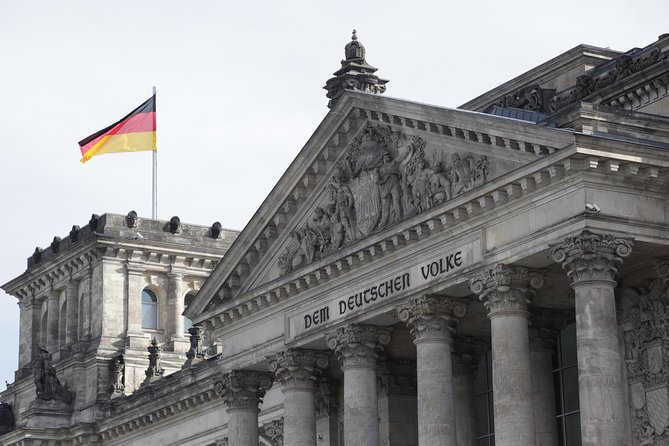
The tour lasts about four hours and can begin in the morning or afternoon. You meet an expert historian guide in central Berlin, with hotel pickup available if your accommodation is centrally located.
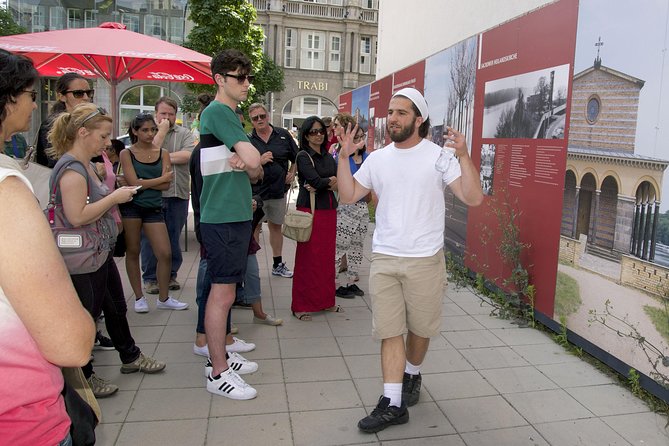
Because the activity is private, only your group participates. That gives you room to ask questions and request more detail on particular subjects. A family might want more explanation of everyday life in the GDR, while a history-focused group might spend longer on escape attempts or the fall of the Wall.
The private setup also matters for pace. Walking routes can feel rushed when a large group has to stop, regroup, and wait for everyone. Here, the guide can respond to your group’s energy, though you still need to cover several locations in half a day.
The experience includes walking and public transport. A zone AB day pass is required but is not included in the price. Buy or arrange that separately before the tour so you are not spending valuable time sorting it out at the start.
Wear comfortable shoes and expect a moderate level of physical activity. The tour is not presented as suitable only for athletes, but four hours on foot, with stops and transit, can be tiring. Hotel pickup is helpful, but it does not remove the walking involved.
The guides and the value of expert explanation
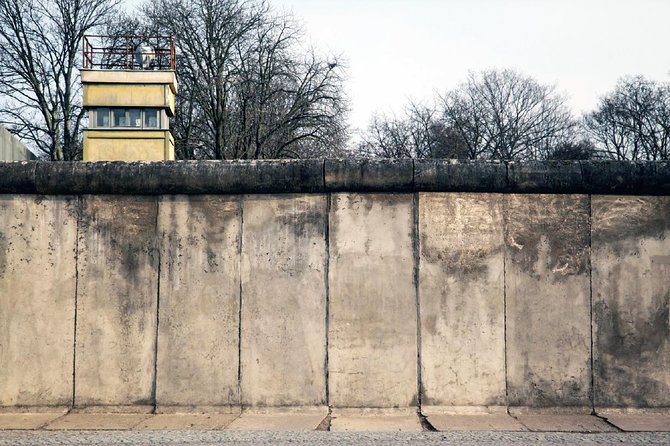
The guide is the heart of this experience. Rachel Wells is praised for combining historical facts with visits to actual sites. Alex is noted for a strong grasp of the DDR era and reunification, along with thoughtful route choices through former Wall areas. Philippa is praised for adapting a private tour to the group’s needs and making four hours enjoyable.
You may not receive one of these exact guides, so I would not treat a specific name as a guarantee. Their strengths point to what you should expect from the best version of the tour: clear historical context, strong site selection, and an ability to explain difficult subjects without turning the walk into a lecture.
This is particularly important in Berlin, where many Cold War traces are easy to miss. A blank stretch of pavement, a former crossing, or a church entrance may not mean much without context. A good guide turns those places into evidence.
The published rating is 5 out of 5 from 10 ratings, with 100 percent recommending the experience. That is a small sample, so I would treat it as encouraging rather than final proof. Still, the praise is consistent in the areas that matter most for this type of tour: guide quality, historical detail, route selection, and personal attention.
Is $166.52 per person a fair price?
At $166.52 per person, this is not a budget walking tour. The price makes the most sense for couples, families, or small groups that want a private guide rather than a large shared outing.
The value comes from the depth and flexibility. You are paying for a guide focused only on your party, a carefully connected route, and explanations that tie multiple sites together. If your group has several people, group discounts may improve the cost.
You should also add the price of the required public transport day pass for zones AB, plus any food or drinks. Those items are not included.
For someone with only one day in Berlin, the price can be justified if the Cold War is a major interest. You get a structured introduction to several key locations instead of trying to connect them alone. If you already know Berlin’s twentieth-century history well, you might find a general city walk or a self-guided visit better value.
Who should book this Berlin Wall tour?
I would recommend it most strongly to first-time visitors who want to understand Berlin’s division beyond the usual photographs. It also suits students, families with older children, and anyone interested in the GDR, Soviet history, reunification, or civil rights movements.
The private format is useful for groups with specific questions. If one person wants more political background and another wants stories of escape and protest, the guide can shape the conversation.
You should think twice if you dislike walking, have only a short time for each site, or want a tour focused on art and architecture rather than political history. The subject is often grim, and the route asks you to pay attention.
Book at least several days ahead if possible. The experience is booked on average 12 days in advance, suggesting that popular dates may fill before your trip. Confirmation is normally issued at booking, though reservations made within seven days of travel can take up to 48 hours and remain subject to availability.
Should you book it?
Book this private Berlin Wall tour if you want a serious, site-based explanation of the Cold War and prefer the freedom of a private group. Bernauer Strasse, Gethsemane Church, Bornholmer Strasse, the East Side Gallery, and Alexanderplatz each show a different part of Berlin’s divided past.
I especially like the way the route joins physical border remains with peaceful protest and the final collapse of the Wall. Just remember to arrange the AB transport pass, wear good walking shoes, and allow four hours for a thoughtful rather than rushed experience.
If the price fits your budget and Berlin’s twentieth-century history is high on your list, this is a strong choice. If you want only a quick Wall photo and a light city stroll, spend your money elsewhere.
FAQ
How long does the private Berlin Wall tour last?
The tour lasts approximately four hours and is offered in the morning or afternoon.
Is hotel pickup included?
Pickup is included for hotels that are centrally located. The tour also begins in central Berlin.
Do I need a public transport pass?
Yes. You need a public transport day pass covering zones AB, and it is not included in the tour price.
Is this a private activity?
Yes. Only your group participates in the activity.
What locations are included?
The tour includes the Berlin Wall Memorial at Bernauer Strasse, Gethsemane Church, Bornholmer Strasse, the East Side Gallery, Alexanderplatz, and other relevant Cold War sites.
Can I cancel for a full refund?
Yes. You can cancel up to 24 hours before the experience start time for a full refund. Cancellations or changes made less than 24 hours before the start time are not accepted for a refund.
Just added around Berlin
- Berlin Highlights in One Day★ 5.0 · 3 reviews
- Transfer from Berlin Schönefeld Airport (SXF) to Berlin city Hotels – ROUND TRIP★ 4.0 · 3 reviews
- Private Berlin One Day Tour with a Local: See the City Unscripted★ 3.5 · 3 reviews
- Individual city tour Berlin for max. 8 persons★ 5.0 · 3 reviews
- Berlin: Museum Island Tour★ 5.0 · 3 reviews
- Private Analogue Photography Experience in Berlin★ 5.0 · 3 reviews
- Berlin: Local Food Tour in Secrets Hidden Gems★ 4.0 · 3 reviews
- Berlin & The Third Reich Private Guided Tour★ 5.0 · 3 reviews
Berlin Wall Tours, compared.

Skip-the-Line: Berlin Wall Museum at Checkpoint Charlie
Read our review →
East Side Gallery Spree Cruise in a Solar Catamaran
Read our review →
Cold War, Berlin Wall, Spies and the East Side Gallery
Read our review →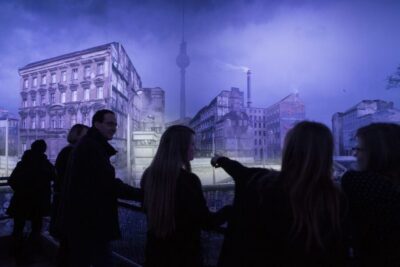

Guided Bike Tour of the Berlin Wall and Third Reich
Read our review →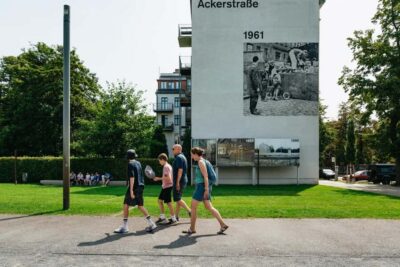

Browse the lists this tour appears in