
Review · SACHSENHAUSEN MEMORIAL TOURS
The Memorial Tour: Visit to Sachsenhausen Concentration Camp (licensed guide)
Sachsenhausen is not a sightseeing stop in the usual sense. It is a place where original camp structures and carefully presented exhibits force you to face how the concentration-camp system worked. I like the way this tour connects the site to the wider history of Nazi Germany, and I like the small group size, which gives you room to ask questions and pause when needed. The tour costs $41.12, though your public-transport ticket and bus fare are extra.
The main thing to prepare for is the emotional and physical weight of the visit. You will spend about three hours at the memorial, with plenty of walking and standing, and the subject matter is grim. The journey from Berlin also takes time, but guides such as Paul, Aaron, and Stephen have been praised for making the travel useful by explaining the history before you arrive.
In This Review
- Key details before you reserve
- Why Sachsenhausen deserves a full morning
- Meeting outside Brandenburg Gate at 10:00
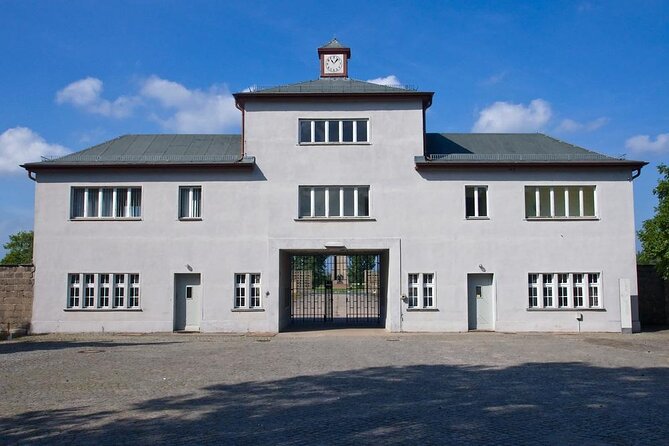
- Tower A and the camp entrance
- The roll-call area and prisoner barracks
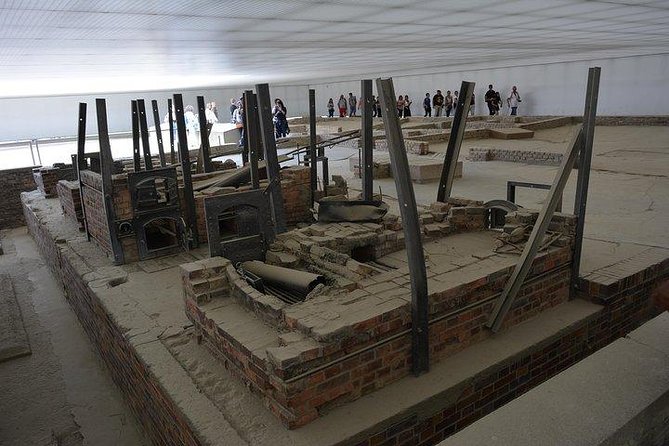
- Station Z and the killing facilities
- The infirmary, pathology building, and mortuary cellar
- The former camp kitchen exhibition
- The SS and Gestapo prison
- Three hours on site, with time to stop
- Is $41.12 good value?
- Who should choose this memorial tour?
- Booking, cancellation, and final advice
- Should you book the Sachsenhausen tour?
- FAQ
- Where does the Sachsenhausen tour start?
- Where does the tour finish?
- How long does the experience last?
- Is admission to Sachsenhausen included?
- Do I need a public-transport ticket?
- Is the tour offered in English?
- How many people can join the tour?
- What areas of Sachsenhausen are visited?
- Is the tour suitable for people with limited mobility?
- What is the cancellation policy?
Key details before you reserve
- The tour begins beside Brandenburg Gate: Meet outside Hopfingerbrau at Ebertstraße 24, near Birchys Berlin Tours.
- The site is about 30 kilometers north of Berlin: Reaching Oranienburg requires public transport, and you need an ABC ticket, listed at €4.70 if you do not already have a valid pass.
- You spend about three hours inside the memorial: The route includes Tower A, the roll-call area, Station Z, the prison, infirmary buildings, former barracks, and the camp kitchen exhibition.
- Groups are capped at 15 people: That is small enough for direct questions without making the visit feel like a private tour.
- The tour is offered in English: A German-language booking was reportedly handled in English, so confirm the language you need before paying.
- Wear good walking shoes: The approach from Oranienburg station can involve a lengthy walk, and the memorial itself requires several hours on foot.
Why Sachsenhausen deserves a full morning
Sachsenhausen was built by the Nazi regime north of Berlin, on the edge of Oranienburg. Its location makes it practical to visit from the capital, but this is not a quick city excursion. The round trip and the time at the memorial use most of a day.
I think that time is justified. The site helps you understand concentration camps as a system of control, imprisonment, forced labor, punishment, and murder. It was not designed solely as an extermination camp, but that distinction should not make the place seem less serious. The buildings and exhibits show how cruelty operated through rules, guards, administration, deprivation, and targeted killing.
A guided visit is especially useful here because the camp’s surviving structures do not explain themselves. Some areas are open spaces, foundations, or reconstructed sections. Without context, you could miss why a particular building mattered or how separate parts of the camp worked together.
Your guide also helps place Sachsenhausen within the wider story of prewar Germany, the Third Reich, and the persecution of prisoners. Paul has been singled out for giving historical background during the journey and for answering questions throughout the walk. Aaron is described as careful, factual, and attentive to how people were coping with the subject. Stephen is praised for explaining the site clearly while keeping the group moving at a sensible pace.
Guide assignments can change, so you should not book on the assumption that one named guide will lead your group. Still, the repeated praise for Paul, along with positive comments about Aaron and Stephen, points to the tour’s strongest feature: human explanation delivered with care.
More Sachsenhausen memorial visits:
- Berlin: Sachsenhausen Concentration Camp Tour in English
★ 5.0 · 5,711 reviews - Berlin: Sachsenhausen Concentration Camp Memorial Tour
★ 4.7 · 3,716 reviews - Sachsenhausen Concentration Camp Bus Tour in English from Berlin
★ 5.0 · 1,962 reviews
Meeting outside Brandenburg Gate at 10:00
The tour starts at 10:00 am outside Hopfingerbrau, Ebertstraße 24, 10117 Berlin. This is next to Brandenburg Gate, an easy landmark in central Berlin, but give yourself enough time to find the exact spot. The activity ends back at the meeting point.
A small practical detail matters here: one guide was described as dressed quite casually and difficult to identify. Because of that, look for the Birchys Berlin Tours meeting point and confirm the guide’s name rather than relying only on clothing.
The company helps with the required public-transport ticket if you need one. The ABC ticket is listed separately at €4.70 per person, and bus fare is also not included. You may already have a suitable Berlin transport pass, but check that it covers the ABC zones before setting out.
The journey to Oranienburg is part of the experience rather than dead time. One account describes taking the RE5 train from central Berlin, followed by a walk from the station to the memorial. The journey has been described as roughly an hour, though the exact timing can vary with connections and walking. Your guide may use the ride to explain Nazi Germany and prepare you for what you will see.
That is one of the tour’s better choices. Historical background is easier to absorb before entering the memorial than in a rushed speech at the gate.
Tower A and the camp entrance
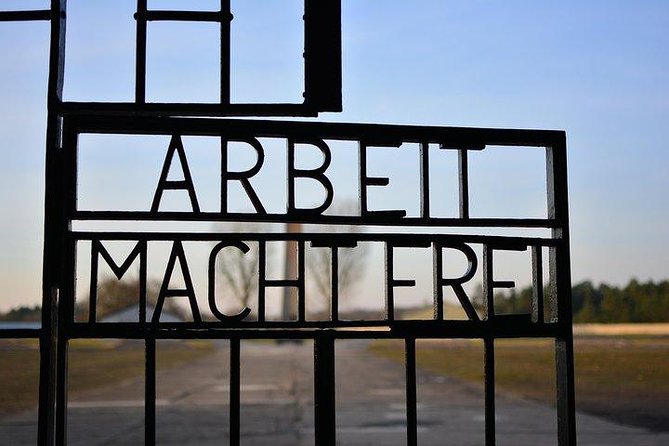
Tower A was the entrance into the main camp compound. It is an important first stop because it establishes the controlled, intimidating design of the site.
The gate was not simply a way in and out. It marked the boundary between ordinary life and the rigid world of the camp. As you pass through, the tour begins to show how architecture, surveillance, order, and fear were used together.
Your guide’s commentary matters here. The entrance itself may look straightforward, but the surrounding layout becomes easier to read once you understand the camp’s purpose and structure. Expect the guide to stop often, explain what stood where, and answer questions rather than rush you through.
The roll-call area and prisoner barracks
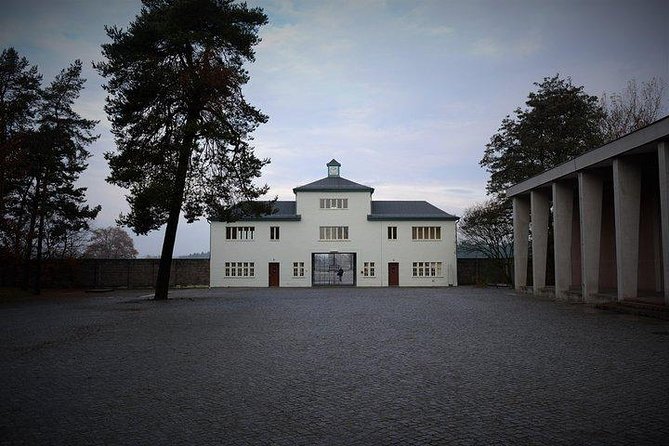
The roll-call area was used to assemble prisoners for counting and control. It is also one of the spaces where the scale and routine of imprisonment become easier to grasp. The point is not only what happened in a single dramatic event, but how the camp reduced people to numbers and repeated procedures.
The former prisoner barrack block gives you a more direct sense of daily life inside the camp. You will see how cramped, controlled living conditions fitted into the wider system. Some parts of Sachsenhausen consist of original structures, while other sections are presented through memorial displays and remains. Your guide helps separate what survives from what must be understood through documentation and exhibits.
Plan on moving at a measured pace. The tour is not a race from one landmark to the next. Paul, in particular, has been praised for allowing time to look around, take photographs where appropriate, rest, and ask questions. That flexibility is useful because people respond differently to a place like this.
A few more Berlin tours worth weighing up
- Berlin: Reichstag, Dome and Government District Guided Tour
★ 4.7 · 18,288 reviews - Berlin: Government District around the Reichstag Guided Tour
★ 4.7 · 8,447 reviews - Berlin: Hidden Backyards Guided Walking Tour
★ 4.8 · 5,360 reviews - Berlin: 1-Hour Boat Tour with Bilingual Live Guide
★ 4.7 · 3,629 reviews
Station Z and the killing facilities
Station Z was the purpose-built execution facility. It is among the most difficult parts of the memorial, and the guide approaches it as a place of remembrance rather than a spectacle.
You should expect a serious explanation of how the facility was used and why it was created. This is a point where clear historical language matters. A good guide does not soften the facts, but also does not turn suffering into a dramatic performance.
The site can bring out heavy emotions, and you may prefer to spend a quiet moment here rather than immediately move on. The small group limit helps, since a group of no more than 15 is easier to manage respectfully than a large crowd.
Photography needs judgment throughout the memorial. The tour information allows time for photos, but the setting calls for restraint. Follow posted rules and your guide’s direction, and remember that this is a memorial to people who were imprisoned and killed, not simply an old building complex.
The infirmary, pathology building, and mortuary cellar
The pathology building, infirmary buildings, and mortuary cellar reveal the institutional side of the camp. These areas can be hard to process because they show how medical and administrative spaces were tied to imprisonment and death.
This part of the route rewards careful listening. A guide can explain what each building was used for and how it fitted into the camp’s machinery. Without that explanation, you might see a room, a cellar, or a corridor without understanding its place in the history.
The subject is disturbing, but the tour is designed to be factual and respectful. Aaron has been praised for answering questions while also checking that people were comfortable. That is a useful quality on a visit where you may need a short pause or a moment away from the group.
The former camp kitchen exhibition
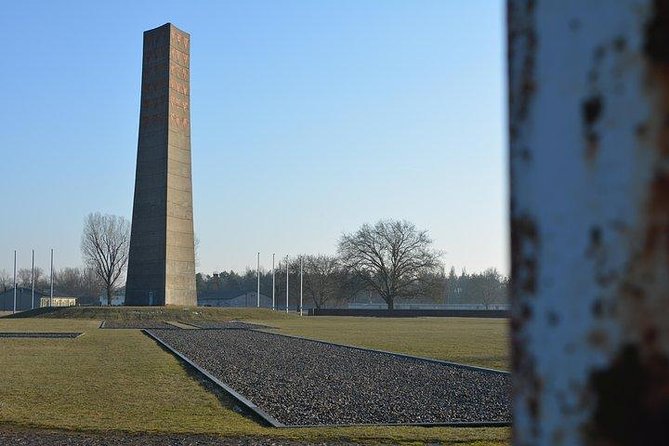
The exhibition in the former camp kitchen adds documentary material to the physical remains. Exhibits are valuable because they provide names, dates, records, and explanations that buildings alone cannot convey.
You may find that this is one of the more information-heavy parts of the visit. If you tried to read every display in detail, you would need far longer than the scheduled time. The guide therefore helps identify the key material and keeps the visit focused.
I like this balance. You get a guided route through the major sections, but there is still enough time to look closely and form your own response. If you want a slow museum visit with every panel read from start to finish, a self-guided return visit may suit you better.
The SS and Gestapo prison
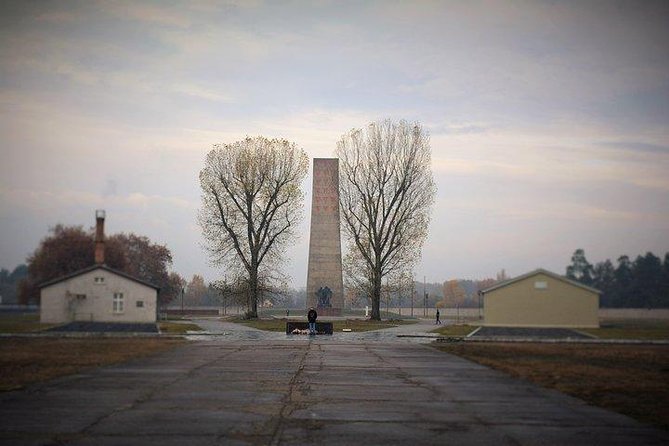
The former SS and Gestapo prison is another essential stop. It illustrates how the camp system was used not only for mass detention, but also for punishment, intimidation, and political repression.
The prison helps broaden your understanding of Sachsenhausen beyond the barracks. The camp held different groups of prisoners, and the guide’s role is to explain the system rather than reduce the site to one story. This is where an informed guide can answer questions about the Nazi regime, the purpose of the prison, and the way authority operated inside the camp.
The building may feel quieter than the open roll-call area, but do not mistake quiet for ease. The enclosed spaces can make this stop especially intense.
Three hours on site, with time to stop
The planned visit at the memorial lasts about three hours. That is long enough to cover the principal buildings and exhibitions without turning the tour into a rushed checklist.
You should expect a mix of walking, standing, listening, and looking. Bathroom breaks and rest pauses are possible, and guides have made room for people who need to slow down. Even so, the day demands reasonable mobility. Wear comfortable shoes and dress for changing weather. One account describes a cold wind making the visit physically uncomfortable, while another mentions sunny, cool conditions. Open areas can feel exposed.
The route from the Oranienburg station can also add walking. If you miss the bus, one account puts the walk to the memorial at about 20 minutes, followed by a similar walk back toward the station. Since the bus fare is not included, keep the transport arrangements in mind.
The activity information says the tour is accessible for people with limited mobility and that most people can participate. Because the site and approach involve walking, contact the operator if you have specific mobility needs. Pets are allowed, according to the supplied details, though a memorial visit may not be comfortable for every animal.
Is $41.12 good value?
At $41.12 per person, the tour is reasonably priced for a five-hour guided outing, especially since admission is included and the group is limited to 15. You are paying for the guide’s time, historical explanation, organization, and help with the public-transport journey, not just entry to the memorial.
The extra ABC ticket, listed at €4.70 if you do not already have the right pass, raises the actual cost. Bus fare and food are also separate. There is no suggestion that meals are part of the tour, so eat beforehand or bring something suitable for the journey.
The value depends on how you like to visit serious historical sites. If you prefer to read every display privately and set your own pace, the additional cost of a guide may not be necessary. If you want help understanding the buildings, an English explanation, and an organized route from central Berlin, the price makes sense.
The tour receives a five-star rating from 95 reviews, with 100 percent recommending it. Those figures do not remove the practical drawbacks, but they match the strongest pattern in the feedback: the guides are praised for clear storytelling, sensitivity, patience, and their ability to answer questions.
Who should choose this memorial tour?
I would choose this tour if you have limited time in Berlin and want a structured visit to Sachsenhausen rather than figuring out the route and historical context alone. It suits adults and older children who can handle the subject matter and walk for several hours.
It is also a good fit if you are unsure how to approach a concentration-camp memorial. The guide sets the historical frame, identifies the major areas, and gives you a chance to ask direct questions. That support can help you stay focused on remembrance and understanding.
You should think twice if you want a light half-day outing, dislike group schedules, or find discussions of Nazi persecution and mass murder too distressing. This is not an attraction to squeeze in between casual sightseeing stops. Give yourself quiet time afterward.
The tour is offered in English. One German-language booking was reportedly conducted in English, with an audio guide used alongside the group. If you need German, verify the language before booking rather than assuming it is guaranteed.
Booking, cancellation, and final advice
Confirmation is provided when you book. The tour is usually reserved well ahead, with an average booking lead time of 36 days, so do not leave it until the last minute if your Berlin dates are fixed.
Free cancellation is available up to 24 hours before the start time for a full refund. Changes or cancellations inside that 24-hour window are not accepted for a refund. The company also requires a minimum number of people, so an operator cancellation can result in another date, another experience, or a full refund.
One administrative problem has been reported: a booking was cancelled the night before, which is particularly inconvenient when your Berlin schedule is tight. I would avoid placing this tour on the morning of an important flight or train departure.
Should you book the Sachsenhausen tour?
Yes, if you want a serious, guided introduction to one of Germany’s most important memorial sites. The strongest reasons are the small group, the included admission, the organized trip from central Berlin, and the guides’ repeated praise for clear and respectful explanations.
Book it with the right expectations. You will pay extra for transport, walk a lot, and spend several hours with painful history. Bring good shoes, allow extra time for the journey, and leave room in your day afterward. For a first visit to Sachsenhausen, this is a thoughtful and practical choice.
FAQ
Where does the Sachsenhausen tour start?
It starts at 10:00 am outside Hopfingerbrau, Ebertstraße 24, 10117 Berlin, next to Brandenburg Gate.
Where does the tour finish?
The activity ends back at the original meeting point in central Berlin.
How long does the experience last?
The full activity lasts approximately five hours, including travel between Berlin and Sachsenhausen. About three hours are spent at the memorial.
Is admission to Sachsenhausen included?
Yes. The entry or admission fee is included in the tour price.
Do I need a public-transport ticket?
Yes, unless you already have a suitable travel pass. An ABC ticket is listed at €4.70 per person. Bus fare is not included.
Is the tour offered in English?
Yes, the experience is offered in English. If you need another language, confirm it before booking.
How many people can join the tour?
The group has a maximum of 15 people.
What areas of Sachsenhausen are visited?
The route includes Tower A, the roll-call area, the pathology building, infirmary buildings, mortuary cellar, Station Z, the former camp kitchen exhibition, the SS and Gestapo prison, and a former prisoner barrack block.
Is the tour suitable for people with limited mobility?
The activity is listed as accessible for people with limited mobility, and most people can participate. Because the visit involves walking at the memorial and may include a walk from Oranienburg station, contact the provider about your specific needs.
What is the cancellation policy?
You can cancel up to 24 hours before the start time for a full refund. Cancellations or changes made less than 24 hours before the experience are not refunded or accepted.
Just added around Berlin
- Berlin Highlights in One Day★ 5.0 · 3 reviews
- Private Berlin One Day Tour with a Local: See the City Unscripted★ 3.5 · 3 reviews
- Individual city tour Berlin for max. 8 persons★ 5.0 · 3 reviews
- Transfer from Berlin Schönefeld Airport (SXF) to Berlin city Hotels – ROUND TRIP★ 4.0 · 3 reviews
- Berlin: Museum Island Tour★ 5.0 · 3 reviews
- Private Analogue Photography Experience in Berlin★ 5.0 · 3 reviews
- Berlin: Local Food Tour in Secrets Hidden Gems★ 4.0 · 3 reviews
- Berlin & The Third Reich Private Guided Tour★ 5.0 · 3 reviews
Sachsenhausen Memorial Tours, compared.
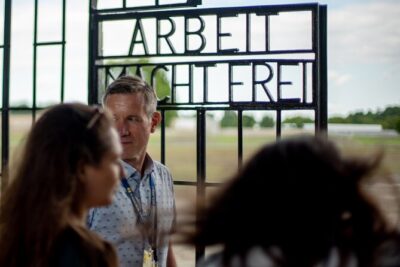
Sachsenhausen Concentration Camp Tour in English
Read our review →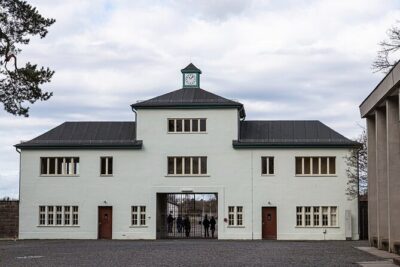
Sachsenhausen Concentration Camp Memorial Tour
Read our review →
Sachsenhausen Concentration Camp Bus Tour in English from Berlin
Read our review →Sachsenhausen Concentration Camp Tour in English
Read our review →
Sachsenhausen Concentration Camp Memorial Tour (Max. 15 Guests)
Read our review →
Sachsenhausen Concentration Camp and Potsdam Tour
Read our review →
Visita en español al campo de concentración Sachsenhausen
Read our review →Browse the lists this tour appears in