
Review · THIRD REICH & WWII SITES
Berlin during Nazism – Tour in Italian
Berlin’s Nazi past is easiest to understand when you connect the sites rather than view them as isolated memorials. This three-hour Italian-language tour links resistance, persecution, deportation, and Jewish life, ending near Hackescher Markt after a route through central Berlin.
I like the small maximum of 20 people, which gives you a better chance to ask questions than on a large city walk. I also like the range of stops, especially the less obvious T4 memorial and the ruins of Anhalter Bahnhof, not just the familiar Nazi-era sights.
The main drawback is practical: you walk and use Berlin public transport between widely spaced locations, and the tour does not include transport. Buy a Berlin AB day pass, wear good shoes, and dress for the weather.
In This Review
- Key points to know before booking
- Why this route gives Nazi Berlin more meaning
- The German Resistance Memorial Center and Operation Valkyrie
- The T4 memorial and the origins of mass murder
- Anhalter Bahnhof and the memory of deportation
- Scheunenviertel and Berlin’s Jewish institutions
- Otto Weidt’s workshop and practical courage
- The New Synagogue and the Old Jewish Cemetery
- What the $27.87 price really covers
- Pace, weather, and who should choose it
- Should you book Berlin during Nazism in Italian?
- FAQ
- Where does the tour start?
- What time does the tour begin?
- Where does the tour end?
- How long does the experience last?
- Is the tour conducted in Italian?
- How large is the group?
- Is public transportation included?
- Are admission tickets included?
- What happens if I need to cancel?
Key points to know before booking
- A serious three-hour route: Follow the Nazi period from Hitler’s rise in 1933 through resistance, racial persecution, deportation, and the war’s aftermath.
- The tour is conducted in Italian: Guides who have led this experience include Lorenzo, Fabio, Vita, Paolo, Silvio, Federica, and others from the Vive Berlin Tours team.
- Several sites are easy to miss: The T4 memorial and Otto Weidt Museum add human stories that many standard Berlin tours skip.
- The Jewish Quarter receives substantial attention: You spend about 45 minutes around Scheunenviertel, the New Synagogue, and related Jewish institutions.
- No attraction admission is included because the listed stops are free: Your main extra cost is public transportation, food, and an optional tip.
- The route ends at Hackescher Markt: This is useful for continuing into Mitte after the tour.
Why this route gives Nazi Berlin more meaning
A tour about Nazism can easily become a parade of grim locations and dates. This route has a better structure. It begins with the machinery of dictatorship, then moves toward the choices made by individuals and institutions, the targeting of disabled people and Jews, and the physical traces left by war.
You are not simply shown where something happened. You are given several ways to think about the period. The German Resistance Memorial Center asks how people opposed the dictatorship. The T4 memorial shows that mass murder did not begin with the extermination camps. The Jewish Quarter stops reveal what Nazi persecution destroyed, while Otto Weidt’s former workshop focuses on one person who tried to protect those in his care.
That variety matters. I find Berlin easier to understand when the story includes both government policy and individual action. You should still expect difficult material, but the route is not built around shock value. It is a historical walk with a clear educational purpose.
The tour starts at 10 a.m. at Potsdamer Platz 10. Look for the blue Vive Berlin Tours bicycle and the company flag. Potsdamer Platz is served by the S-Bahn and U-Bahn, so it is a straightforward starting point if you are already in central Berlin.
More Third Reich sites in Berlin:
- Berlin: Third Reich and Cold War 2 Hour Walking Tour
★ 4.9 · 6,830 reviews - Berlin: Berlin Story Bunker Entry Ticket
★ 4.6 · 6,759 reviews - Berlin’s Best: 2 Hour Walking Tour Third Reich and the Cold War
★ 5.0 · 5,486 reviews
The German Resistance Memorial Center and Operation Valkyrie
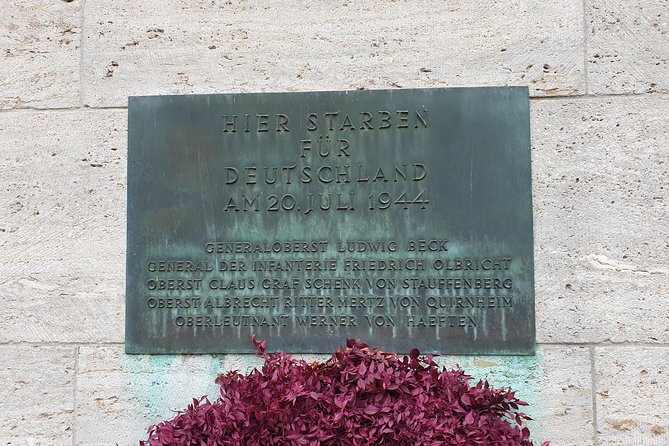
The first major stop is the German Resistance Memorial Center, where the failed Operation Valkyrie was directed. The center examines people and groups who opposed National Socialism between 1933 and 1945.
The value of this stop is that it broadens the story beyond Hitler and the Nazi leadership. You learn that resistance took different forms, involving individuals and organized groups rather than one single movement. The memorial is also a useful place to discuss the difficult question of why opposition was limited, dangerous, and often unsuccessful.
The scheduled visit lasts about 25 minutes. That is enough for an introduction and explanation, but not enough for a full museum visit. If you want to read every display in detail, plan a separate return visit. During the tour, pay attention to the guide’s explanation of the location itself and its connection to the July 20 plot.
This is one of the strongest stops for anyone who wants a more complete picture of German society under dictatorship. It also helps keep the tour from presenting Germans only as passive victims or willing supporters. The choices people made, and the risks they faced, are part of the story too.
The T4 memorial and the origins of mass murder
The T4 memorial on Tiergartenstrasse remembers about 300,000 people murdered under the Nazi euthanasia program because of mental or physical disabilities or chronic illness. The name T4 comes from the address of the office that directed the program, Tiergartenstrasse 4.
You spend about 15 minutes here. The memorial itself is modest, so the guide’s explanation is especially important. This is not a grand monument with a long indoor visit. It is a place where a short stop can carry a great deal of weight.
The historical connection to the Holocaust is central. The T4 program is considered a precursor to the later extermination system, and the tour gives you a chance to understand how state language, bureaucracy, medical authority, and organized killing came together.
I like the inclusion of this site because many visitors know about the murder of Europe’s Jews but know less about the Nazi killing of disabled people. You should be ready for a sober stop, particularly if you are traveling with children or teenagers. The route can be educational for older children, but the subject requires a mature explanation.
Anhalter Bahnhof and the memory of deportation
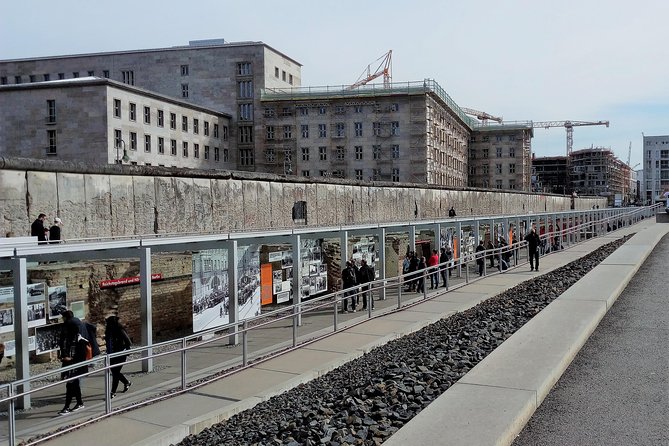
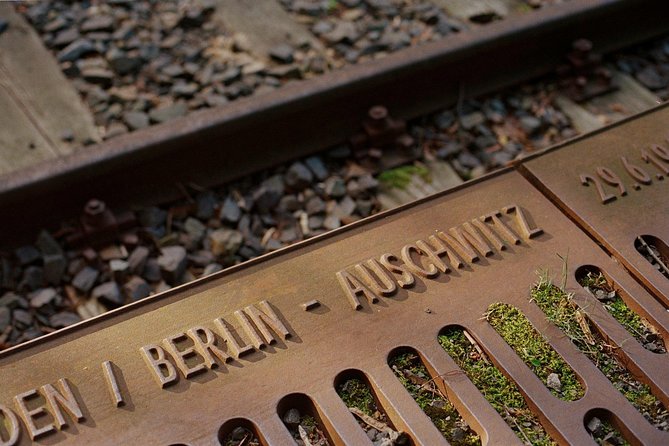
At Anhalter Bahnhof, only the remains of what was once one of Europe’s largest railway stations survive. The station was badly damaged during World War II, and between 1942 and 1945 trains carrying people to death camps departed from here.
The scheduled stop is about 10 minutes. The ruins are visually striking, but the important part is the contrast between the station’s former importance and what happened there during the Nazi years. A busy transport building became part of the system of deportation.
This stop also helps you understand that deportation did not happen in some distant, abstract place. It relied on ordinary infrastructure, timetables, stations, offices, and trains. Berlin’s wartime destruction is visible in the remaining structure, but the guide’s historical framing connects the ruins to the people who were forced onto those trains.
Because the visit is short, you may want to ask your guide about how this station fit into Berlin’s wider transport network and the deportation system. The experience does not include an indoor museum visit here, so the quality of the explanation matters more than the amount of time spent on site.
A different side of Berlin on the same trip:
- Berlin: Reichstag, Dome and Government District Guided Tour
★ 4.7 · 18,288 reviews - Berlin: 1-Hour City Tour by Boat with Guaranteed Seating
★ 4.3 · 16,993 reviews - Berlin: Boat Tour Along the River Spree
★ 4.4 · 11,252 reviews - Discover Berlin Half-Day Walking Tour
★ 5.0 · 9,624 reviews
Scheunenviertel and Berlin’s Jewish institutions
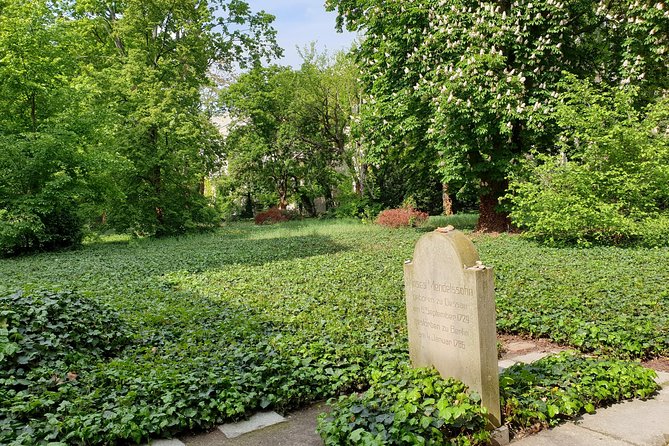
The longest portion of the route, about 45 minutes, takes place in Scheunenviertel, part of Mitte often called Berlin’s Jewish Quarter. The guide introduces important Jewish institutions, including the New Synagogue and the school founded by Moses Mendelssohn, the Enlightenment philosopher and modernizer of Judaism.
This section gives the tour needed context. It is easier to understand the destruction of Jewish life when you first see evidence of the community’s institutions, education, worship, and public presence. The story is not only about persecution. It is also about a Jewish community that had shaped Berlin long before the Nazi period.
The area is a good place to slow down and ask questions. You might find that the guide spends more time explaining the development of Jewish life in Berlin than you expected from a tour titled around the Third Reich. That is a strength, not a detour. It makes the losses more personal and more concrete.
The route includes several outdoor stops, and the pace can vary depending on the group and the guide. Italian-speaking guides named in connection with this experience include Lorenzo, Fabio, Vita, Paolo, Silvio, and Federica. Accounts of their work particularly emphasize clear explanations, historical preparation, warmth, and the ability to keep a group engaged during difficult material.
Otto Weidt’s workshop and practical courage
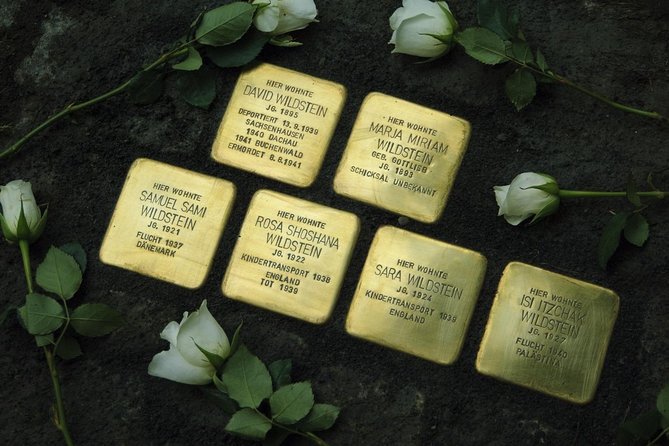
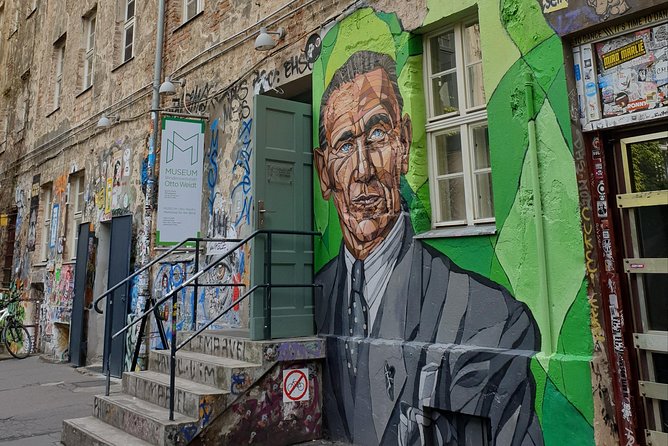
The Museum Blindenwerkstatt Otto Weidt occupies the original location of Otto Weidt’s workshop. Weidt employed Jewish workers, including blind and disabled people, and tried to protect them from deportation to Nazi extermination camps. He is sometimes called the Schindler of Berlin.
You spend about 15 minutes here. The short visit means you should not expect a long museum session, but the original setting gives the story unusual force. Instead of hearing only about laws and institutions, you focus on a workplace and the relationships formed there.
I find this stop especially useful because it shows that rescue was not always a grand political act. Sometimes it involved hiring someone, arguing with an office, hiding a person, or using one’s position to delay a deportation. The story does not make the period feel less terrible, but it gives you a specific example of courage and responsibility.
The museum may be the most intimate stop on the route. It also works well for families with older children because a workplace and a named individual can make an overwhelming subject easier to grasp. Keep in mind that the tour’s time is limited, so return independently if you want a fuller museum visit.
The New Synagogue and the Old Jewish Cemetery
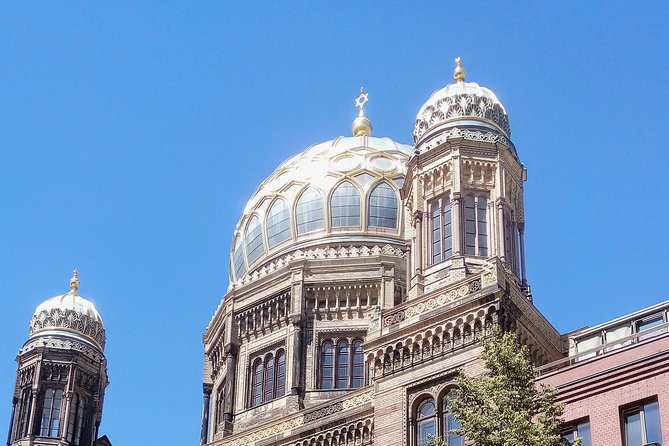
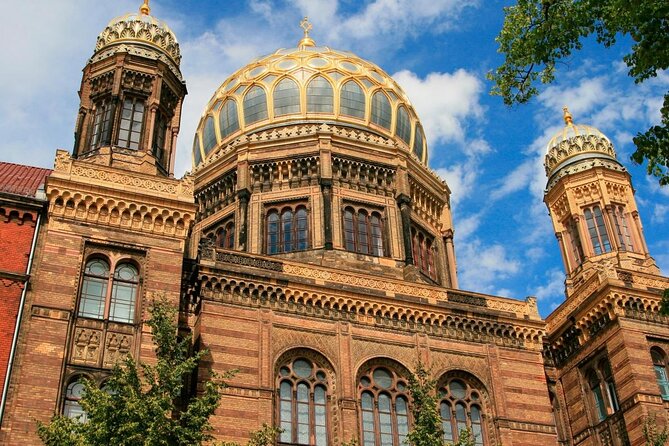
The New Synagogue is one of Berlin’s best-known Jewish landmarks. Built in 1866, it could seat 3,200 people and was the largest Jewish place of worship in Germany. Its size reflected the strength and importance of Berlin’s Jewish community before the Nazi era.
The scheduled stop here is about 10 minutes. You may have time for an exterior explanation and historical context rather than a full visit inside. The building’s history is central to the tour because it represents both Jewish public life and the destruction that followed.
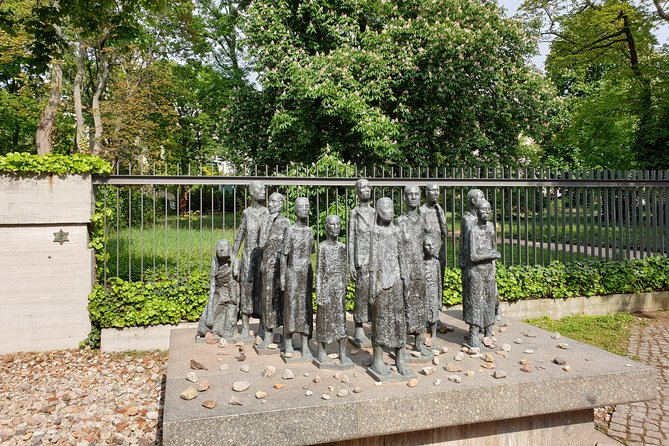
The final listed stop is the Old Jewish Cemetery on Hamburger Strasse. It once held the remains of prominent members of Berlin’s Jewish community and is now the oldest recognizable cemetery in the inner city. Very little of the original cemetery survives because it was destroyed during the Nazi period by the Gestapo.
Together, these two sites make a strong pair. The synagogue shows a community’s public presence, while the cemetery shows how even the memory and physical remains of that community were attacked. The brief time at each site may feel rushed if you want architectural or religious detail, but the route’s purpose is to connect them to the broader Nazi-era story.
The tour ends at Hackescher Markt, giving you an easy place to continue exploring Mitte, find food, or visit nearby sights on your own.
What the $27.87 price really covers
At $27.87 per person, the tour is reasonably priced for a three-hour guided experience in central Berlin. The price includes a professional local guide, Italian-language guiding, and local taxes. The listed sites do not require an admission charge as part of this route.
The price does not include public transportation, food, drinks, or a tip. You should buy a Berlin public transport day card for zones AB before or at the start of the tour. That extra step matters because the itinerary covers more ground than a simple walk from one nearby monument to another.
The value depends on what you want. If you already know Berlin’s Nazi history well and prefer to read museum panels at your own pace, you may find the scheduled stops too brief. If you want a clear Italian explanation that links several difficult sites, the cost is modest for the amount of guidance provided.
The experience is booked an average of 56 days in advance, so an early reservation makes sense for a fixed Berlin itinerary. The group can reach 20 people. That is still small enough for a guide to answer questions, though it is not a private tour unless you book a private option separately.
Pace, weather, and who should choose it
This is an outdoor-heavy experience with several short stops. You need comfortable shoes, and you should plan for rain, cold, or heat because the tour operates in all weather conditions. A waterproof layer and a day bag are more useful than dressy clothes.
The tour suits adults, history enthusiasts, Italian-speaking visitors, and families with older teenagers. One account describes a family with children aged 10 and 17 finding the subject useful and memorable, but the Nazi euthanasia program and deportation sites are serious material. Parents should decide how much detail is right for their children.
You do not need to be an expert. The guide’s role is to explain the setting and connect the events. The strongest feedback centers on guides who are prepared, passionate, approachable, and good at answering questions. Lorenzo receives repeated praise for his ability to explain and involve the group, while Fabio, Vita, Paolo, Silvio, and Federica are also singled out for their preparation and engaging style.
The tour is listed as suitable for most participants, and service animals are allowed. It runs near public transportation. Still, the combination of walking, transfers, and outdoor waiting means you should consider your own comfort and stamina before booking.
Free cancellation is available if you cancel at least 24 hours before the local start time. Cancellations or changes made within that period are not eligible for a refund.
Should you book Berlin during Nazism in Italian?
I would choose this tour if you want to understand Nazi Berlin through places that include resistance, Jewish life, disability persecution, deportation, and survival. Its best feature is the balance between famous landmarks and quieter sites such as the T4 memorial, Anhalter Bahnhof, and Otto Weidt’s workshop.
You should skip it if you want a relaxed sightseeing walk with little walking, or if you prefer a full museum visit at every stop. The itinerary is serious, the outdoor portions are substantial, and the short time at some locations favors explanation over independent study.
For Italian speakers, the language is the decisive advantage. Book early, budget for an AB transport pass, wear comfortable shoes, and ask for a guide such as Lorenzo, Fabio, Vita, or Paolo if the booking system allows you to select one. At $27.87, this is a useful, focused way to put Berlin’s most painful history into a connected story.
FAQ
Where does the tour start?
The tour starts at Potsdamer Platz 10, 10785 Berlin, near the S-Bahn and U-Bahn station Potsdamer Platz. Look for the blue Vive Berlin Tours bicycle and the company flag.
What time does the tour begin?
The stated start time is 10 a.m.
Where does the tour end?
The tour ends at Hackescher Markt, 10178 Berlin.
How long does the experience last?
The tour lasts approximately three hours.
Is the tour conducted in Italian?
Yes. A professional guide leads the experience in Italian.
How large is the group?
The maximum group size is 20 people.
Is public transportation included?
No. Transportation to and from the attractions is not included. You are advised to buy a Berlin public transportation day card for zones AB.
Are admission tickets included?
The listed stops have free admission, and no separate attraction admission is included in the tour price.
What happens if I need to cancel?
You can receive a full refund if you cancel at least 24 hours before the experience starts. Cancellations or changes made less than 24 hours before the start time are not accepted for a refund.
Just added around Berlin
- Berlin Highlights in One Day★ 5.0 · 3 reviews
- Private Berlin One Day Tour with a Local: See the City Unscripted★ 3.5 · 3 reviews
- Individual city tour Berlin for max. 8 persons★ 5.0 · 3 reviews
- Transfer from Berlin Schönefeld Airport (SXF) to Berlin city Hotels – ROUND TRIP★ 4.0 · 3 reviews
- Berlin: Museum Island Tour★ 5.0 · 3 reviews
- Private Analogue Photography Experience in Berlin★ 5.0 · 3 reviews
- Berlin: Local Food Tour in Secrets Hidden Gems★ 4.0 · 3 reviews
- Berlin & The Third Reich Private Guided Tour★ 5.0 · 3 reviews
Third Reich & WWII Sites, compared.



Berlin’s Best: 2 Hour Walking Tour Third Reich and the Cold War
Read our review →
Third Reich Berlin: Hitler and WWII Walking Tour
Read our review →

Berlin Third Reich Sites: Half-Day Walking Tour
Read our review →
Guided Bike Tour of the Berlin Wall and Third Reich
Read our review →
Hitler’s Germany: Berlin During the Third Reich & WWII
Read our review →Browse the lists this tour appears in