
Review · THIRD REICH & WWII SITES
Clash of Titans: Battle for Seelow Heights WW2 tour
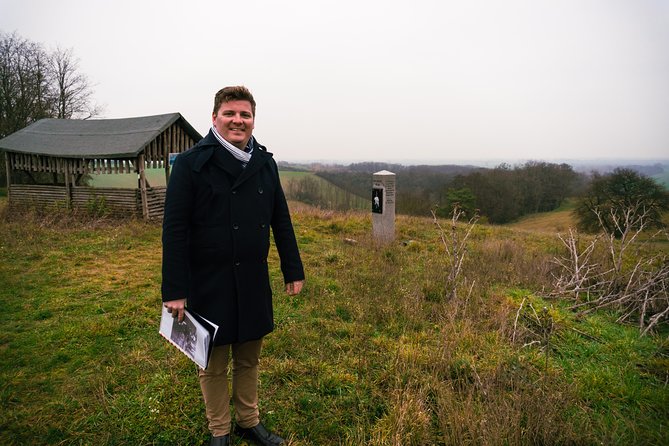
The most striking part of this tour is that Seelow Heights still feels like a real battlefield, not just a name on a museum panel. You walk through forest trenches, look across the ground attacked by Soviet and Polish forces, and follow the route toward Berlin where the final battles of the war unfolded.
I like the small maximum group of seven, which gives Matt or Steve time to answer detailed questions and adjust the pace. I also like the careful route: museum first, then the actual terrain, command positions, graves, and final defensive sites. The main drawback is the long day outside Berlin, with rough paths and uneven ground. Bring sturdy footwear, and remember that lunch is not included.
In This Review
- Key details before you book
- Why Seelow Heights matters
- Start at Alexanderplatz and head east
- The Seelow Heights memorial museum
- Reitwein and the Soviet starting point
- Walking to Zhukov’s bunker and trenches
- Dolgelin station and the German shooting gallery
- Lietzen cemetery and the road toward Berlin
- Jahnsfelde and the final defensive stand
- Lunch, timing, and the real cost
- Who will get the most from this tour
- Booking, weather, and cancellation
- Should you book the Seelow Heights tour?
- FAQ
- Where does the Seelow Heights tour start?
- How long does the tour last?
- Is lunch included?
- How many people can join the tour?
- Is museum admission included?
- What should I wear?
- What happens if the weather is poor?
Key details before you book
- The tour follows the battle in sequence: You begin with the Soviet plan, then visit the attack routes, trenches, command positions, German defenses, and withdrawal route.
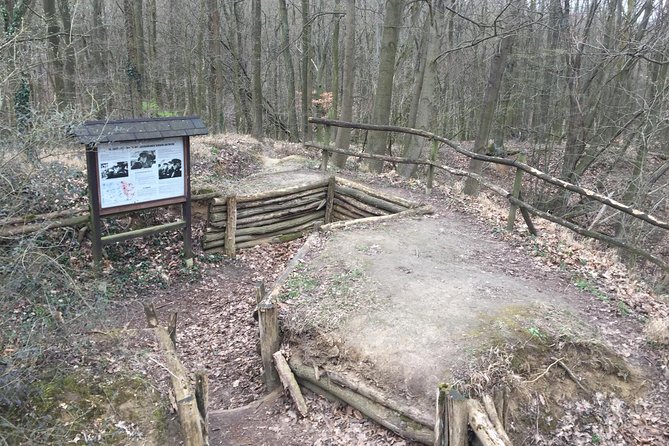
- The forest walk is genuine battlefield terrain: Expect a short walk off the main road to see remnants of trenches and bunker positions.
- Maps make the scale easier to grasp: Matt and Steve use large maps and visual aids to explain troop movements and distances.
- You travel in an air-conditioned vehicle: This matters because the sites are spread across several small towns and rural areas.
- Lunch costs extra: The schedule may include a traditional German restaurant stop, but food is not part of the $167.74 price.
- Plan ahead: The tour is often booked about 59 days ahead, and the maximum group is seven people.
Why Seelow Heights matters
Seelow Heights was the last major German defensive line east of Berlin. In April 1945, the Soviet 1st Belorussian Front attacked these positions as part of the drive on the German capital.
The numbers alone explain why this battle deserves more attention. The Soviet and Polish force included 768,000 infantry, 3,059 tanks, 16,934 artillery pieces and mortars, and 3,279 combat aircraft. Facing them were German forces dug into high ground, waterways, roads, villages, and prepared firing positions.
This was not a neat, quick final push. The attack met flooded ground, heavy artillery, steep approaches, trenches, bunkers, and intense German fire. The German defense could not stop the Soviet advance forever, but it delayed the march on Berlin and caused enormous losses on both sides.
I find the site valuable because it gives physical meaning to those figures. A map can show arrows and lines. Standing above the approaches lets you see why the high ground mattered, and why soldiers crossing the open ground below faced such a grim task.
The tour also adds a needed Eastern Front focus to a Berlin visit. Berlin has plenty of sites connected with the Nazi regime, the Cold War, and the division of Germany. Seelow takes you outside the city and into the final campaign from the Soviet point of view, while still examining the German defense and the human cost of the fighting.
More Third Reich sites in Berlin:
- Berlin: Third Reich and Cold War 2 Hour Walking Tour
★ 4.9 · 6,830 reviews - Berlin: Berlin Story Bunker Entry Ticket
★ 4.6 · 6,759 reviews - Berlin’s Best: 2 Hour Walking Tour Third Reich and the Cold War
★ 5.0 · 5,486 reviews
Start at Alexanderplatz and head east
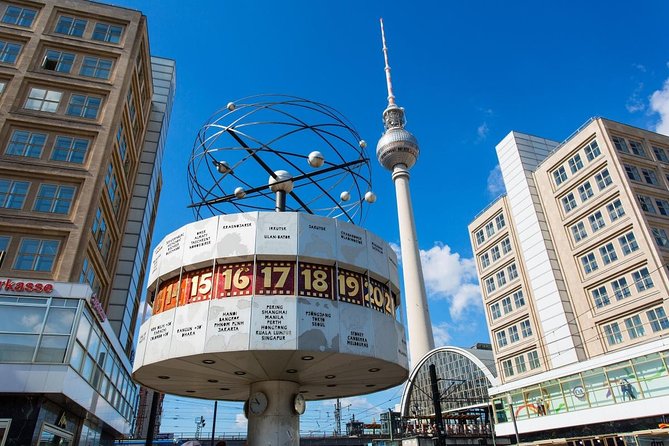
The listed meeting point is at Dircksenstraße 2 near Alexanderplatz, with a 9:15 am start. The tour lasts about seven hours, though some days may run closer to seven or eight hours depending on the pace and lunch arrangements.
The drive is an important part of the experience. These battlefield sites are scattered across rural Brandenburg, so an organized vehicle saves you from piecing together infrequent local transport and trying to locate unmarked remains on your own.
An air-conditioned vehicle, Wi-Fi, and a small bottle of water are included. The small group format also makes the drive more useful than it might be on a large coach tour. Your guide can explain the battle as you move from Berlin toward the Oder River and Seelow Heights, rather than saving every fact for a single museum stop.
Hotel transfers require a little care. The published meeting point is Alexanderplatz, while the tour description also refers to two-way hotel transfers. One booking arrangement may include or offer a hotel pickup, and a past booking involved an extra charge for this service. Confirm the exact pickup plan before paying so you know where to begin and end the day.
The Seelow Heights memorial museum
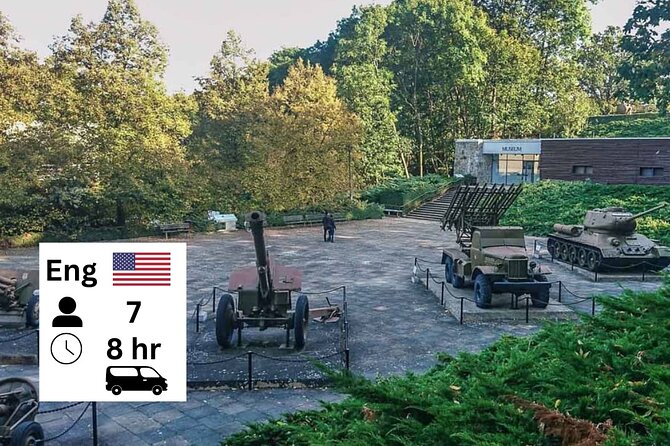
Your first main stop is the Gedenkstätte Seelower Höhen, the memorial and museum dedicated to the battle. Admission is included, and you have about 40 minutes there.
The guide begins with an explanation of the Berlin-Seelow offensive. This introduction is useful because the museum becomes much easier to read once you understand the basic plan. You are not simply looking at weapons and photographs. You are learning what the Soviet commanders hoped to do, where the German defenses lay, and how the coming stops fit together.
One especially useful display is a 3D model of the Soviet 1st Belorussian Front bunker and trench network. The model gives you a clear preview of what you will see later in the forest. That order is smart. First you get the clean, overhead view. Then you walk through the remaining earthworks and try to match the model to the actual ground.
Forty minutes is enough for an introduction, though it is not enough for a slow reading of every panel. If you are the sort of person who wants to examine each photograph and document, you may wish for more museum time. The tradeoff is that this tour spends much of the day outside at the actual sites.
Reitwein and the Soviet starting point
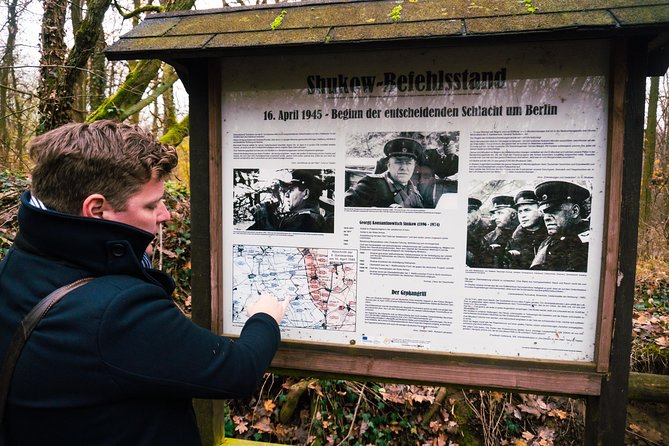
After the museum, the vehicle takes you to Reitwein, a small town with a major military role. The town itself may look ordinary today, which is part of the lesson. Important wartime positions are often found beside quiet roads, farm fields, and wooded tracks, not behind dramatic gates.
At Reitwein, your guide explains how the Soviet assault began and how the 1st Belorussian Front assembled for the attack on Seelow Heights and the advance toward Berlin. This is where the huge force numbers begin to feel connected to a real place.
The stop lasts about 20 minutes. You will not spend the whole time examining a large monument or indoor display. Instead, listen carefully to the explanation of the ground and the opening phase of the offensive.
A different side of Berlin on the same trip:
- Berlin: Reichstag, Dome and Government District Guided Tour
★ 4.7 · 18,288 reviews - Berlin: 1-Hour City Tour by Boat with Guaranteed Seating
★ 4.3 · 16,993 reviews - Berlin: Boat Tour Along the River Spree
★ 4.4 · 11,252 reviews - Discover Berlin Half-Day Walking Tour
★ 5.0 · 9,624 reviews
Walking to Zhukov’s bunker and trenches
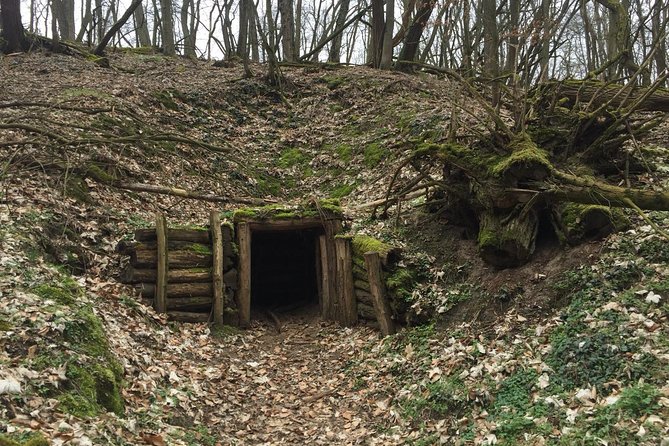
A short walk from Reitwein leads into the forest, where remnants of the bunker and trench systems can still be seen. This is one of the strongest parts of the day.
The path is not presented as a polished attraction. You are walking through woodland to find earthworks and wartime remains. That makes the site feel more direct, but it also means you need sensible shoes. One past participant specifically advised wearing sturdy footwear, and that is practical advice. Expect uneven ground and an off-the-beaten-path walk.
The remains include Marshal Georgy Zhukov’s command bunker and observation point. From here, he directed the battle. Standing at a command position gives you a better sense of how the offensive was managed, and your guide can relate the position to the trench network and the German defensive line.
This is where the guide’s preparation matters most. Matt is repeatedly singled out for his command of the battle, his use of large maps, and his ability to explain the action without losing people who are new to military history. Steve is also praised for his enthusiasm and willingness to answer detailed questions. The company may assign either guide, so check the current guide arrangement if a particular person matters to you.
The tour is especially good for mixed groups. A serious World War II reader can ask about formations, artillery, and command decisions, while someone who knows little about the Eastern Front can follow the story through maps and clear explanations.
Dolgelin station and the German shooting gallery
The next stop is Dolgelin Railway Station, listed under the name Kita Dolgeliner Zwerge. Here, Colonel Scheunemann, commander of the 303rd Infantry Division, established a command post for the German defense.
The railway station helps show how ordinary infrastructure became part of the military system. Roads, rail lines, villages, and rises in the ground all shaped the battle. Your guide explains the German positions and the danger faced by Soviet and Polish forces as they crossed the area known as a shooting gallery.
The stop lasts about 20 minutes. It is brief, but it adds balance to the tour. Seelow was not only a story of Soviet strength. German defenders used prepared positions and favorable ground to make the advance painfully slow.
That balance is one reason I would not treat this as a simple victory tour. The route looks at the operation from both sides, while keeping attention on the destruction and the people caught in it.
Lietzen cemetery and the road toward Berlin
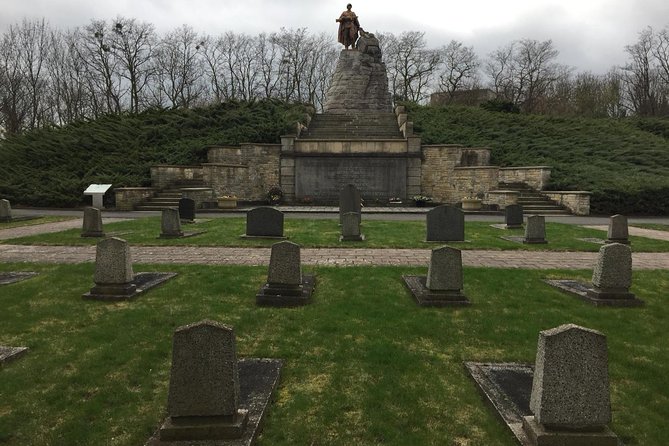
From Dolgelin, the vehicle follows the original direction of the Soviet advance back toward Berlin. In Lietzen, you pause at a German field cemetery for about 30 minutes.
This is a quiet stop, and it changes the tone of the day. The cemetery has been expanded since German reunification as additional wartime remains are found and added to the graves. That detail makes the conflict feel less finished than a textbook timeline suggests. The dead continue to be identified and placed in marked ground decades later.
Lietzen also contains older architectural sights, including what is said to be Germany’s oldest barn and a manor house linked to the Knights Templar, dating to 1252. These details are not the main reason to book a Seelow battlefield tour, but they give the village a wider setting beyond the events of 1945.
I appreciate the stop because it prevents the day from becoming a string of military positions. You see how the war cut through places with centuries of earlier life, and how the same roads and villages carried armies in the final weeks of the conflict.
Jahnsfelde and the final defensive stand
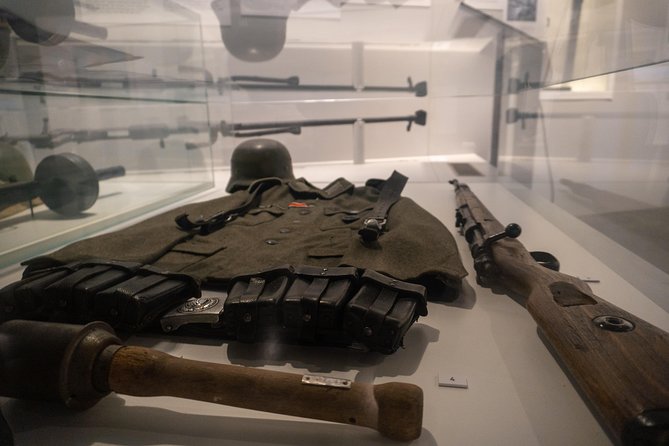
The final battlefield stop is Jahnsfelde, at the Schlosskirche area, for about 20 minutes. A sports field now occupies the site of a former German field hospital.
The story here is particularly grim. The hospital was attacked by Soviet aircraft despite its Red Cross markings. Nearby, the 3rd Battalion of Artillery Regiment 18 made a desperate stand as Soviet armored forces advanced during the German withdrawal.
The battalion reportedly destroyed about 100 tanks, but the cost was severe: eight officers and more than 160 others were killed, more than two-thirds of the battalion were wounded, and every gun was lost. The figures describe a military action, but the location forces you to think about the wounded, the medical staff, and soldiers trying to form a defense while their own army was retreating.
This stop underlines the collapse and desperation of the German position. It does not turn the defenders into heroes without context. The larger war was an aggressive German war that had brought immense suffering across Europe, yet the final fighting still involved individual courage, fear, and terrible loss. A good battlefield tour can hold both facts at once.
Lunch, timing, and the real cost
Lunch is not included in the $167.74 price. The schedule may include a stop at a traditional German restaurant, and several visitors considered the meal a highlight, but you should budget separately for it.
The food stop also gives the day a needed pause. Seven hours of driving, walking, and concentrated explanation is a lot, even for someone who loves military history. A flexible guide may also adjust the schedule for food or bathroom breaks, but do not treat that as a guarantee. Ask when booking if you have strict dietary or timing needs.
At first glance, the cost is higher than a simple Berlin walking tour. The value comes from the transport, museum admission, small group, specialist guiding, maps, and access to scattered battlefield locations that would be difficult to connect independently.
You are also paying for time. The guide has to drive you beyond Berlin, place each stop in sequence, and explain how the sites relate to one another. For a first visit to Seelow, that structure is far more useful than arriving at the museum alone and trying to reconstruct the battle afterward.
Who will get the most from this tour
You do not need to be a military historian. The explanations are designed to be approachable, and the guide can build a timeline at each stop. If you have a relative or companion who is not interested in World War II, the mix of villages, older buildings, woodland walks, and battlefield stories may help keep the day varied.
The tour is best for you if:
- You want to understand the Eastern Front and the final campaign for Berlin.
- You prefer real sites and terrain to a city museum alone.
- You enjoy asking questions and discussing history in a small group.
- You are comfortable with a full day outside Berlin.
- You can walk on uneven forest paths and wear sturdy shoes.
It is less suitable if you want a relaxed half-day outing, dislike military history, or need every stop to be fully paved and formal. The battlefield is spread out, and the emotional subject matter is heavy.
The maximum group of seven is a real advantage. Matt is praised for including everyone, keeping the group moving, and taking care with the slowest walker. That said, the pace still has to cover six stops and a long return drive, so tell the guide early if you need a slower walking speed.
Booking, weather, and cancellation
The experience is offered in English and accepts mobile tickets. Confirmation arrives at booking, and service animals are allowed. The tour is near public transport at its starting point, and most people can participate, but the forest section deserves attention if you have mobility concerns.
Free cancellation is available up to 24 hours before the 9:15 am start. Changes or cancellations inside that window are not accepted for a refund. Poor weather can also cancel the experience, in which case you are offered another date or a full refund. A minimum group size is required as well, with a different date, another experience, or a refund offered if the tour cannot run.
Because the tour is often reserved around 59 days ahead, I would not leave it until the last day of a short Berlin visit. Give yourself some flexibility in case the weather affects the date.
Should you book the Seelow Heights tour?
I would book this if you want a serious, well-organized battlefield day rather than another central Berlin sightseeing loop. The strongest features are the small group, the clear sequence of sites, the remaining trenches and command positions, and guides such as Matt and Steve who can make a difficult subject understandable.
The price is fair when you count the vehicle, museum entry, specialist guiding, and the trouble saved by visiting widely separated places in one day. Bring boots, water beyond the included small bottle if you prefer, money for lunch, and patience for the long rural drive.
Skip it if you want an easy urban excursion or have little interest in the final weeks of World War II. Book it if you want to stand where the battle was directed, walk through surviving defenses, and leave Berlin with a clearer sense of how the Soviet advance reached the capital.
FAQ
Where does the Seelow Heights tour start?
The listed meeting point is Alexanderplatz at Dircksenstraße 2, 10179 Berlin. The scheduled start time is 9:15 am.
How long does the tour last?
The tour lasts about seven hours. Some days may run closer to seven or eight hours depending on the schedule.
Is lunch included?
No. Lunch is not included in the tour price. A restaurant stop may be part of the day, so bring money for your meal.
How many people can join the tour?
The maximum group size is seven people. This allows more direct contact with the guide than a large coach tour.
Is museum admission included?
Yes. Admission to the Gedenkstätte Seelower Höhen museum is included.
What should I wear?
Wear sturdy footwear. Part of the tour includes a short walk through woodland to surviving trenches and bunker remains, with uneven ground away from the main road.
What happens if the weather is poor?
The tour requires good weather. If it is canceled because of poor weather, you are offered another date or a full refund.
Just added around Berlin
- Berlin Highlights in One Day★ 5.0 · 3 reviews
- Private Berlin One Day Tour with a Local: See the City Unscripted★ 3.5 · 3 reviews
- Individual city tour Berlin for max. 8 persons★ 5.0 · 3 reviews
- Transfer from Berlin Schönefeld Airport (SXF) to Berlin city Hotels – ROUND TRIP★ 4.0 · 3 reviews
- Berlin: Museum Island Tour★ 5.0 · 3 reviews
- Private Analogue Photography Experience in Berlin★ 5.0 · 3 reviews
- Berlin: Local Food Tour in Secrets Hidden Gems★ 4.0 · 3 reviews
- Berlin & The Third Reich Private Guided Tour★ 5.0 · 3 reviews
Third Reich & WWII Sites, compared.



Berlin’s Best: 2 Hour Walking Tour Third Reich and the Cold War
Read our review →
Third Reich Berlin: Hitler and WWII Walking Tour
Read our review →

Berlin Third Reich Sites: Half-Day Walking Tour
Read our review →
Guided Bike Tour of the Berlin Wall and Third Reich
Read our review →
Hitler’s Germany: Berlin During the Third Reich & WWII
Read our review →Browse the lists this tour appears in