
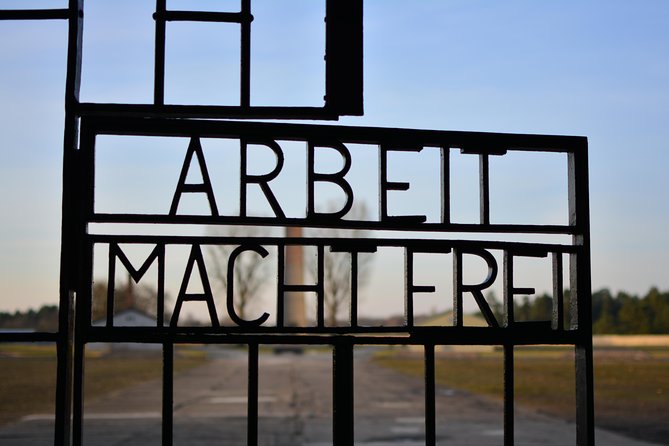
Review · SACHSENHAUSEN MEMORIAL TOURS
Private Sachsenhausen Concentration Camp Memorial Tour
Sachsenhausen is not a sightseeing stop you breeze through. It was the first purpose-built concentration camp in Nazi Germany, and this private tour gives you time to understand both the site and the system behind it. You’ll walk through Tower A, the former prisoner barracks, the infirmary, Station Z, and the camp kitchen with a licensed guide trained by the memorial foundation.
I like the private format, which lets your group ask hard questions and spend more time where you need it. I also like the guides’ broader historical framing. Aaron, Paul, and Julian are praised for linking the camp to Nazi politics, the Second World War, and later German history. The main drawback is practical: public transport tickets and private transportation are not included, so you must reach Sachsenhausen yourself with the guide’s help.
In This Review
- Key points to know
- Why Sachsenhausen needs more than a quick visit
- Starting at Pariser Platz in central Berlin
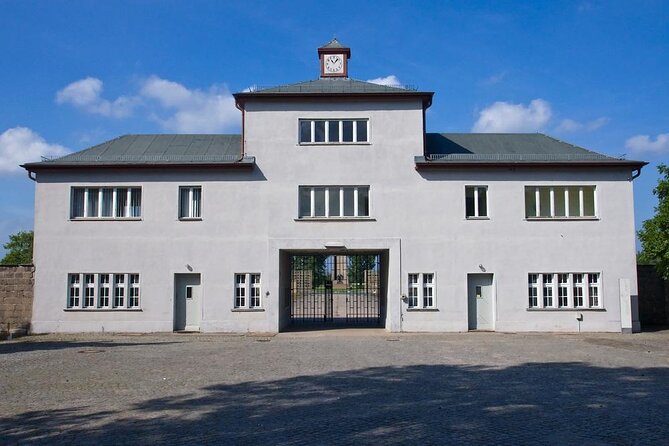
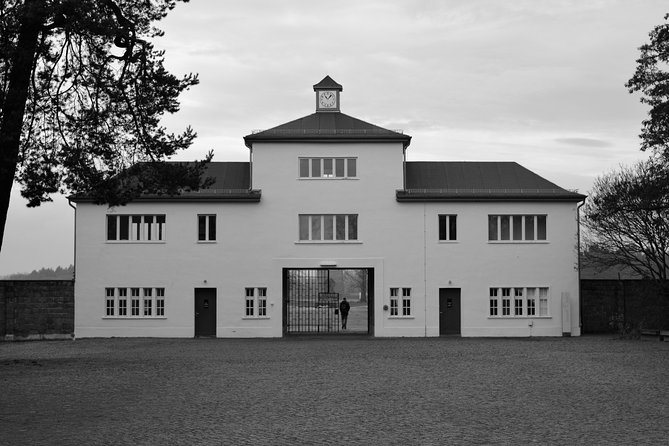
- Tower A sets the tone
- The former prisoner barracks show daily control
- Station Z confronts the camp’s killing machinery
- The infirmary and pathology building add another layer
- The former camp kitchen explains the system behind the site
- The SS and Gestapo Prison reveals punishment inside the camp
- The private format makes a difficult subject more manageable
- Is $390.50 good value for up to five people?
- Who will get the most from this experience?
- Booking advice and cancellation terms
- Should you book the private Sachsenhausen tour?
- FAQ
- Where does the Sachsenhausen tour start?
- Where does the tour end?
- How long does the experience last?
- How many people can join the private tour?
- Is the tour offered in English?
- Is admission to Sachsenhausen included?
- Are public transport tickets included?
- Is private transportation provided?
- Can I cancel for a full refund?
Key points to know
- A six-hour Berlin day trip with about three hours spent inside the Sachsenhausen Memorial and Museum.
- Licensed memorial guide trained by the camp foundation, with guides named Aaron, Paul, and Julian praised for clear, adaptable explanations.
- Private group of up to five, useful for personal questions, a flexible pace, and time alone at selected parts of the site.
- Major camp areas included, from Tower A and the barracks to Station Z, the infirmary, prison, and former kitchen.
- Meeting point in central Berlin, at the Academy of Arts on Pariser Platz, with the tour ending back there.
- Strong value for a small group, especially when five people share the $390.50 price.
Why Sachsenhausen needs more than a quick visit
The memorial is not simply a collection of ruins and signs. Its buildings and open grounds show how a concentration camp worked, how control was organized, and how the prisoner population changed as Nazi rule grew more violent.
That wider setting is one of the best reasons to take a guide. You can read dates and names on your own, but it is harder to connect the camp’s development with the political changes of the 1930s and the pressure of the Second World War. A good guide helps you follow that timeline without turning the visit into a lecture detached from the place.
The tour is also emotionally demanding. You will see sites tied to imprisonment, forced labor, medical abuse, and murder. The private arrangement gives you room to ask questions or pause, but it does not make the subject easy. I would plan this as a serious half-day, not as one more item squeezed between shopping and dinner.
More Sachsenhausen memorial visits:
- Berlin: Sachsenhausen Concentration Camp Tour in English
★ 5.0 · 5,711 reviews - Berlin: Sachsenhausen Concentration Camp Memorial Tour
★ 4.7 · 3,716 reviews - Sachsenhausen Concentration Camp Bus Tour in English from Berlin
★ 5.0 · 1,962 reviews
Starting at Pariser Platz in central Berlin
The stated meeting point is the Academy of Arts at Pariser Platz 4, near the Brandenburg Gate. This is a practical starting place for visitors staying in central Berlin, though the camp itself is outside the city center.
The tour lasts about six hours in total. Around three hours are listed for the memorial grounds, with the rest taken up by travel and the movement between Berlin and Sachsenhausen. Public transport tickets are not included, and private transportation is not provided.
That arrangement may sound less convenient than a tour with a private vehicle, but it has one useful feature: the guide can walk you through the public transport route. One family specifically found it reassuring to have the guide explain the various transport steps on the way there and back. If you are not comfortable navigating Berlin’s system, this support matters.
You should budget enough time for the full outing. The memorial is not a place where you want to rush because your next appointment is close. The tour ends back at the same central meeting point, which makes it easier to plan an evening activity afterward.
Tower A sets the tone
Your visit begins with Tower A, the camp’s main entrance. This is an important first stop because it introduces the structure of the site and the way entry into the camp was controlled.
The entrance is also where the scale of the system begins to sink in. Your guide can explain how Sachsenhausen came into being, how its role changed, and how the prisoner population grew and shifted over time. The point is not just to memorize what stood here. You are learning how an organized system of persecution took shape.
This is where the private format earns its keep. You can ask your guide to explain unfamiliar terms, dates, or groups without worrying about holding up a large party. Aaron is especially praised for building a clear political timeline, while Paul is described as comfortable adjusting the visit to the interests of the group.
The former prisoner barracks show daily control
The former prisoner barrack blocks are among the most important places on the route. They help you picture the camp as a controlled living environment rather than only a site of executions.
Your guide will place the barracks within the wider camp system and explain how prisoner numbers and nationalities changed. Those changes reflected the spread of Nazi rule and the war, so this stop helps connect individual lives with larger events across Europe.
Much of the value here comes from explanation. Without context, a reconstructed or partial building can feel abstract. With a guide, the barracks become part of a system that governed where people slept, how they moved, and how their identities were classified.
The site can be difficult for younger visitors, but one family found that the guide was able to explain the history clearly to two teenagers. If you are bringing children, you know their maturity best. This is an educational visit, but the material is severe and should be presented honestly.
A few more Berlin tours worth weighing up
- Berlin: Private Reichstag and Glass Dome Tour
★ 4.8 · 2,226 reviews - Berlin Private Complete History All Day Walking Tour
★ 5.0 · 474 reviews - Private Walking Tour Berlin Third Reich Hitler and World War II
★ 5.0 · 360 reviews - Private Berlin: Iconic Sights and Hidden Gems Walking Tour
★ 5.0 · 292 reviews
Station Z confronts the camp’s killing machinery
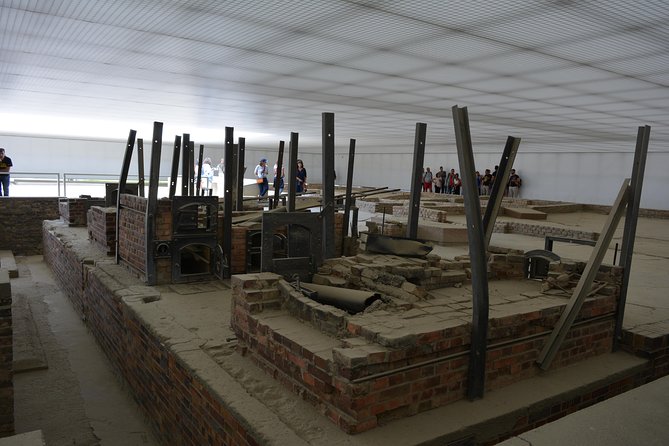
Station Z was the purpose-built execution facility. It is one of the most sobering stops and a major reason to choose a guide who can provide careful historical context.
The building and grounds require more than a quick explanation. Your guide can show how this facility fitted into the camp’s wider structure and explain what its existence tells you about the planned nature of Nazi violence.
You should expect this part of the visit to be quiet and unsettling. It is not a place for casual conversation or fast photography. The private group can move at a pace that suits you, and one guide gave the group time alone at parts of the camp after explaining what they were seeing.
That balance is useful. Some people want to keep asking questions. Others need a few minutes without commentary. A private guide can respond to both needs better than a fixed large-group schedule.
The infirmary and pathology building add another layer
The camp infirmary and pathology building reveal the role of medicine and medical administration inside the camp system. This stop is not just about illness. It opens questions about how prisoners were treated, recorded, examined, and controlled.
The pathology building can be particularly hard to process because it brings the camp’s violence into a medical setting. Your guide’s job here is to explain the function of the buildings and their place in the camp’s history without sensationalizing them.
This is another section where questions are useful. You can ask for clarification about how the buildings were used or how they relate to the broader operation of Sachsenhausen. The guide is there to help you understand, not to hurry you through a list of names and dates.
The former camp kitchen explains the system behind the site
The exhibition in the former camp kitchen gives you a chance to step back and consider the camp’s administration and daily operation. Kitchens, barracks, offices, and prisons may seem like separate pieces, but together they show how the camp functioned as a controlled institution.
The exhibition also helps provide material context for the wider story. By this stage, your guide will have explained how Sachsenhausen developed and how the categories and nationalities of prisoners changed. The kitchen display can help tie those facts to the practical running of the camp.
I value stops like this because they prevent the visit from focusing only on the most shocking sites. The history also lies in routines, paperwork, food, housing, and rules. Those details show how ordinary structures were used to support extraordinary cruelty.
The SS and Gestapo Prison reveals punishment inside the camp
The SS and Gestapo Prison was used for detention and punishment. Its presence shows that Sachsenhausen had layers of control within the larger camp itself.
Your guide can explain who was held there and how the prison related to the SS and Gestapo. This helps you see that the camp was not a single undifferentiated place. Different buildings served different purposes, and the system used isolation and punishment as additional tools of power.
The prison is also a useful stop for understanding the political character of the camp. The people imprisoned there were not simply caught up in wartime events. Their detention reflected the Nazi state’s use of terror against groups it defined as enemies or threats.
The private format makes a difficult subject more manageable
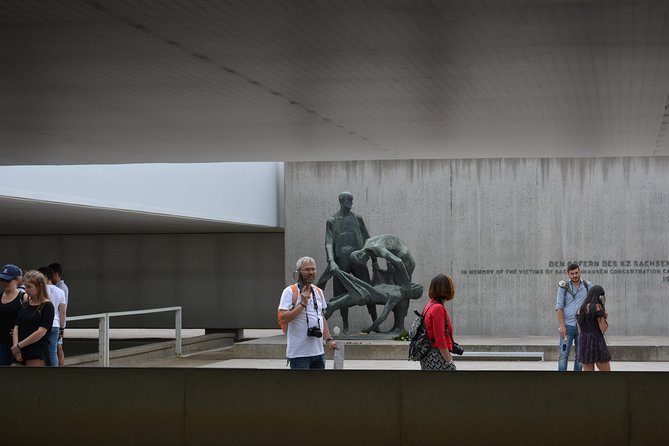
A private tour means only your group participates, with a maximum of five people. That is a major advantage if you want to ask detailed questions or adjust the focus of the visit.
The guides connected with this experience include Aaron, Paul, and Julian. Aaron is praised for setting out a clear timeline of German politics and the camp’s development. Paul is described as an easygoing graduate student with strong knowledge of the site, and Julian is praised for detailed explanations and flexibility.
The guide assignment may vary, so you should not assume you will receive a specific person. Still, the repeated emphasis on clear teaching, adaptability, and personal care gives you a good idea of the style to expect.
The private setting also helps with pacing. You may want to spend more time at an exhibition, ask about a particular nationality, or have a quiet moment alone. The schedule is still a tour, not unlimited independent access, but the format is more responsive than a large group.
One guide even helped a family find the best way back to its hotel. That is not listed as a formal service, but it shows the practical value of having someone familiar with Berlin’s transport system beside you.
Is $390.50 good value for up to five people?
The price is $390.50 per group, with up to five people included. If you fill all five places, that works out to about $78.10 per person for roughly six hours, including a licensed guide and admission to the memorial.
For a couple, the per-person cost is much higher. The tour becomes easier to justify if you are a family or small group of friends who want a private guide rather than a standard group outing.
Admission to Sachsenhausen is included, but transport is not. That means the price covers the guide and the guided memorial visit, not a private vehicle or a door-to-door transfer. You should compare it with your alternatives based on what matters most: privacy, guide support, and depth of explanation.
I consider the price fair for a full day with a trained memorial guide, especially for five people. The value is less clear if you are alone, on a tight budget, or happy to explore the memorial without guided help.
Who will get the most from this experience?
This tour suits you if you want more than basic facts. It is a good choice for anyone interested in German history, the Nazi dictatorship, the Second World War, or the history of concentration camps.
It also works well for families with older children and teenagers who can handle difficult material. The private format lets the guide adjust explanations and answer questions without a large audience.
You may prefer another option if you want a short, light excursion, a private car, or a highly structured transfer with every transport detail included. You should also think carefully about the emotional weight. Sachsenhausen is a place for attention and respect, not a quick photo stop.
The experience is offered in English. It includes a mobile ticket, and confirmation is provided when you book. Service animals are allowed, and the site is near public transportation. The information provided says most people can participate, but it does not give detailed accessibility information for every building or path.
Booking advice and cancellation terms
This experience is often reserved well ahead of time, with an average booking lead of about 32 days. That suggests you should plan early if Sachsenhausen is an important part of your Berlin visit.
You can cancel for a full refund up to 24 hours before the start time. Cancellations or changes made less than 24 hours before the tour are not accepted for a refund, and the cut-off uses local time.
Since the tour is in demand and private groups are limited to five, confirm your group size before booking. Also make sure everyone understands that the meeting point is in central Berlin and that you will need public transport to reach the memorial.
Should you book the private Sachsenhausen tour?
Book it if you want a serious, carefully explained visit and value having a guide for your own small group. The strongest reasons are the licensed memorial guide, the wide range of important camp buildings, and the freedom to ask questions or pause when you need to.
I would especially recommend it for a group of four or five. At that size, the cost becomes reasonable, and the private setting can make a difficult day feel more personal and manageable.
Skip it if you want private transportation, a shorter outing, or the lowest possible price. But if your goal is to understand how Sachsenhausen developed within Nazi Germany and the war, this six-hour experience gives you the time and guidance that the site deserves.
FAQ
Where does the Sachsenhausen tour start?
The tour starts at the Academy of Arts, Pariser Platz 4, 10117 Berlin, Germany.
Where does the tour end?
The activity ends back at the stated meeting point in central Berlin.
How long does the experience last?
The full experience lasts about six hours. About three hours are allocated to the Sachsenhausen Memorial and Museum itself.
How many people can join the private tour?
The private activity is for your group only, with up to five people included.
Is the tour offered in English?
Yes. The tour is offered in English.
Is admission to Sachsenhausen included?
Yes. Admission to the memorial is included in the tour.
Are public transport tickets included?
No. Public transport tickets are not included.
Is private transportation provided?
No. Private transportation is not included. The meeting point is near public transportation.
Can I cancel for a full refund?
Yes. You can cancel at least 24 hours before the local start time for a full refund. Cancellations or changes made less than 24 hours in advance are not accepted for a refund.
Just added around Berlin
- Berlin Highlights in One Day★ 5.0 · 3 reviews
- Private Berlin One Day Tour with a Local: See the City Unscripted★ 3.5 · 3 reviews
- Individual city tour Berlin for max. 8 persons★ 5.0 · 3 reviews
- Transfer from Berlin Schönefeld Airport (SXF) to Berlin city Hotels – ROUND TRIP★ 4.0 · 3 reviews
- Berlin: Museum Island Tour★ 5.0 · 3 reviews
- Private Analogue Photography Experience in Berlin★ 5.0 · 3 reviews
- Berlin: Local Food Tour in Secrets Hidden Gems★ 4.0 · 3 reviews
- Berlin & The Third Reich Private Guided Tour★ 5.0 · 3 reviews
Sachsenhausen Memorial Tours, compared.
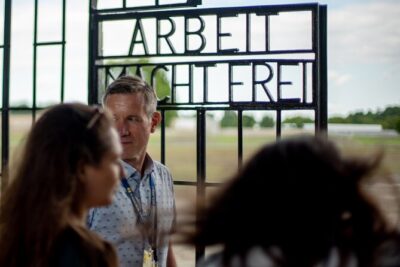
Sachsenhausen Concentration Camp Tour in English
Read our review →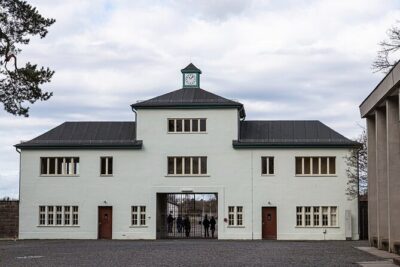
Sachsenhausen Concentration Camp Memorial Tour
Read our review →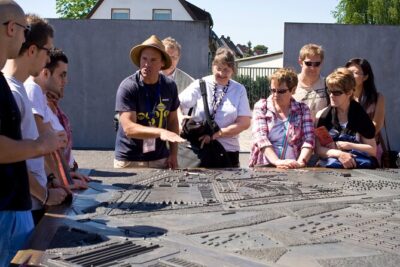
Sachsenhausen Concentration Camp Bus Tour in English from Berlin
Read our review →Sachsenhausen Concentration Camp Tour in English
Read our review →
Sachsenhausen Concentration Camp Memorial Tour (Max. 15 Guests)
Read our review →
Sachsenhausen Concentration Camp and Potsdam Tour
Read our review →
Visita en español al campo de concentración Sachsenhausen
Read our review →Browse the lists this tour appears in