

Review · JEWISH BERLIN & HOLOCAUST MEMORIALS
“The Jewish Berlin”
Berlin’s Jewish story is told most powerfully through places that still carry physical traces of what happened. This private tour connects the golden dome of the New Synagogue with the stark field of the Holocaust Memorial, the book-burning site at Bebelplatz, and Track 17, where deportations left Berlin by train.
I like the private format, which gives you room to ask questions and shape the conversation around family connections or particular periods. I also like the range of stops: this is not just a synagogue visit or a Holocaust memorial walk, but a four-hour route through centuries of Jewish life, persecution, and remembrance.
The main consideration is cost. At $648.86 for up to six people, it is expensive for one or two people, though the price becomes far more reasonable when shared by a full group. Admission to the New Synagogue exhibition is not included, and one poor experience there focused on the building’s condition and restroom facilities.
In This Review
- Key points to know before booking
- Berlin’s Jewish story, told across five places
- The New Synagogue and Centrum Judaicum
- The Holocaust Memorial in the center of Berlin
- Bebelplatz and the book-burning memorial
- The Old Jewish Cemetery and Moses Mendelssohn
- Track 17 at Grunewald Station
- What the private format adds
- Is $648.86 a fair price?
- Timing, pickup, and practical planning
- Who should book The Jewish Berlin?
- Should you book The Jewish Berlin?
- FAQ
- How long is The Jewish Berlin tour?
- What time does the tour start?
- Is hotel pickup included?
- How many people can join the private tour?
- Which language is offered?
- Is admission to the New Synagogue included?
- Are the memorial sites free to enter?
- Can I cancel for a full refund?
Key points to know before booking
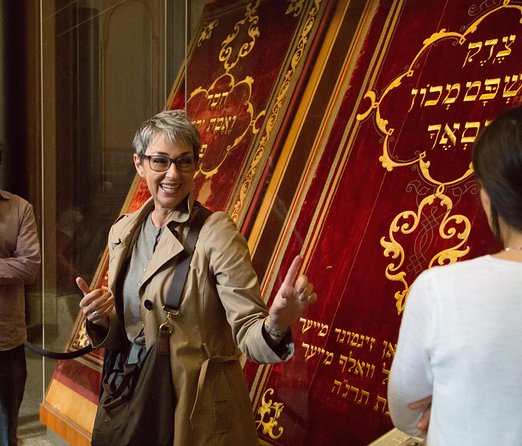
- Five very different historical stops: You’ll see the New Synagogue, the Holocaust Memorial, Bebelplatz, the Old Jewish Cemetery, and Track 17.
- A truly private outing: Only your group participates, so you can ask questions without holding up a larger tour.
- Guide Nirit Ben-Joseph: Her work can also include wider Berlin history and family research when arranged as a tailored tour.
- Hotel pickup is offered: The tour begins at 10:00 am, with pickup from all accommodations.
- Plan for extra synagogue costs: The New Synagogue stop lists admission as not included, and an audio guide may cost more.
- Best value for a group: The flat price covers up to six people, making the per-person cost much lower when shared.
Berlin’s Jewish story, told across five places
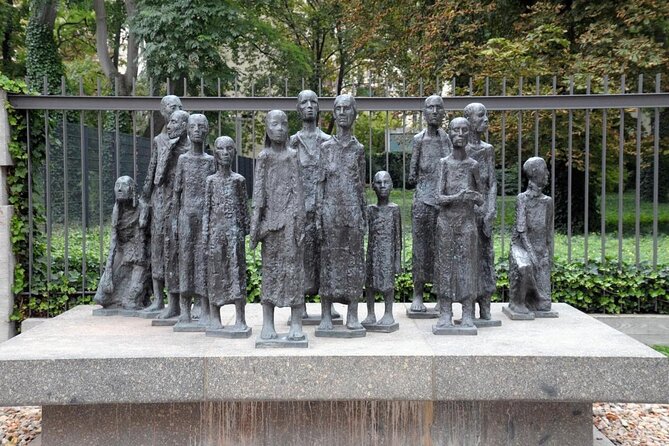
This tour works because it does not treat Jewish Berlin as a single chapter. You move from the community’s religious and civic life to Nazi persecution, then to the city’s efforts to remember those murdered.
The route also shows how Berlin’s geography carries memory. Some stops are in the center, while Track 17 takes you to Grunewald. You are not simply standing in front of monuments. You are connecting places where people worshipped, studied, lived, were buried, and were deported.
You receive roughly four hours with a private guide, which gives the subject room to breathe. A standard group tour often has to keep moving. Here, you can stop to ask about a family name, a historical period, or the meaning of a memorial.
Guide Nirit Ben-Joseph is repeatedly praised for combining Jewish history with the broader story of Berlin. Her background includes more than 20 years as a Berlin guide, and she conducts tours in English, German, and Hebrew. The information provided for this experience does not promise a family-history search on every booking, but her private, tailored approach makes that kind of request worth raising before you reserve.
More Jewish Berlin and memorial walks:
- Berlin: Jewish Museum Berlin Entrance Ticket
★ 4.5 · 8,393 reviews - Nazi Berlin and the Jewish Community Tour
★ 4.8 · 55 reviews - Path of Resistance: Berlin’s Hidden Holocaust Stories
★ 5.0 · 33 reviews
The New Synagogue and Centrum Judaicum
Your first major stop is Stiftung Neue Synagoge Berlin, also known as Centrum Judaicum. The original synagogue had seating for 3,200 people and was described as Germany’s largest and most beautiful synagogue. Today, the exhibition is presented in the surviving remains and focuses on the Jewish community and its tragic destruction.
This is a useful opening because it begins with Jewish life, not only with its destruction. You can learn about the size and importance of Berlin’s Jewish community before confronting the events that ended so much of it.
Allow about 30 minutes here. Admission is not included, so ask about the current entry cost when booking. A separate audio guide fee may also apply. One difficult account of this stop described the site as neglected and criticized the restroom, so you should arrive with realistic expectations. The historical value of the exhibition and the condition of the facilities are separate matters.
The visit may be especially useful if you want to understand how Jewish Berlin functioned as part of the city before the Nazi period. You might also use this time to ask Nirit about religious practice, community institutions, and the lives of ordinary people, rather than focusing only on famous figures.
Because this is a private tour, you can set the pace within the planned schedule. Still, 30 minutes is not enough for a full museum visit. If you want to spend a long time reading every display, you may need a separate return visit.
The Holocaust Memorial in the center of Berlin
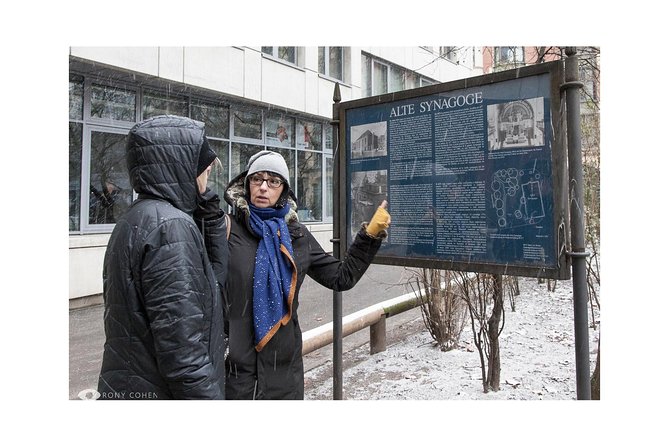
The tour then brings you to the Memorial to the Murdered Jews of Europe, commonly called the Holocaust Memorial. Its huge field of concrete steles sits in the middle of Berlin, close to the city’s major political and historic sights.
You are scheduled for about 20 minutes, with free admission. That makes this a short but serious stop. The memorial is not a traditional statue with a simple explanation. Its repeated blocks create a setting that changes as you walk through it, and the open position in central Berlin forces memory into the city’s everyday life.
A guide adds useful context here. Without explanation, you may focus on the memorial’s design or on how it feels to walk between the steles. Nirit can place it within Berlin’s wider record of Nazi persecution and explain how the memorial fits alongside other sites in the city.
Twenty minutes will let you see the site and discuss its purpose, but it may not allow time for every nearby feature. If you want to visit the underground information center, confirm the available timing before booking, since the stated tour schedule lists the memorial itself and not a separate interior visit.
I like this stop because it keeps the tour from becoming a sequence of museum rooms. You experience a public memorial in the heart of Berlin, where the subject cannot be separated from the modern city around it.
Bebelplatz and the book-burning memorial
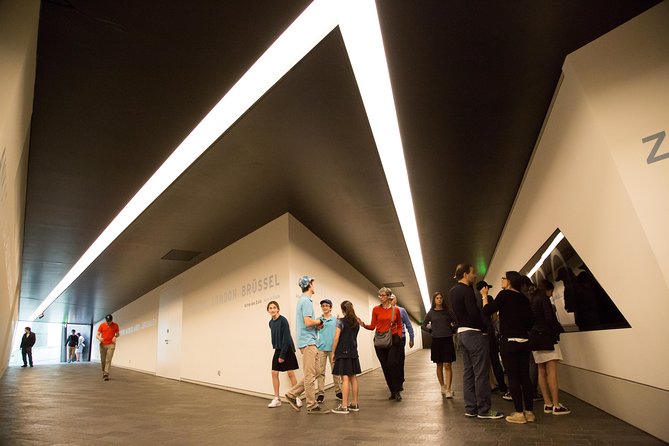
At Bebelplatz, you visit the memorial marking the Nazi book burning of May 10, 1933. This is the authentic location of that event, which gives the site a direct connection to the history being discussed.
The stop lasts about 15 minutes and is free. That may sound brief, but the memorial is compact and the guide’s explanation is the essential part. Bebelplatz also helps show that Nazi persecution did not begin with mass deportations. The attack on books, ideas, universities, and public life was an early warning of the regime’s attempt to control German society.
Ask Nirit to connect the book burning with the Jewish intellectual and cultural life of Berlin. One of the strengths of this tour is its attention to changes over time. The guide can help you see how public hostility and state policy moved from exclusion and censorship toward systematic destruction.
Because the stop is short, you will want to listen closely. This is not a place where you need a long period to walk around. Its value comes from knowing what happened here and understanding why this particular square matters.
A different side of Berlin on the same trip:
- Berlin: Reichstag, Dome and Government District Guided Tour
★ 4.7 · 18,288 reviews - Berlin: 1-Hour City Tour by Boat with Guaranteed Seating
★ 4.3 · 16,993 reviews - Berlin: Boat Tour Along the River Spree
★ 4.4 · 11,252 reviews - Discover Berlin Half-Day Walking Tour
★ 5.0 · 9,624 reviews
The Old Jewish Cemetery and Moses Mendelssohn
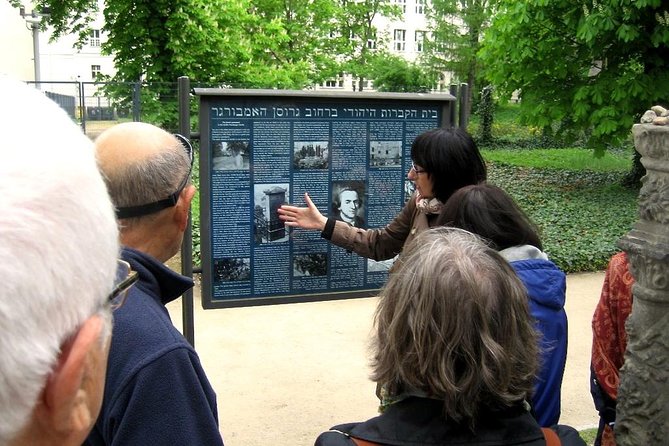
The Alter Jüdischer Friedhof, or Old Jewish Cemetery, adds an earlier period to the route. Members of Berlin’s Jewish community were buried here from 1672. Among them was Moses Mendelssohn, the philosopher associated with the Enlightenment.
The cemetery was destroyed by the Gestapo in 1943. That fact gives the stop a painful double meaning. It is a place of burial, but also a record of how Nazi authorities attacked Jewish memory and physical remains.
The scheduled visit is only 10 minutes, and admission is free. This is best treated as a focused stop rather than a long cemetery walk. You can ask about Mendelssohn, the Jewish community of earlier Berlin, and the effects of the Enlightenment on Jewish life in Germany.
This stop is important because it reaches beyond the 20th century. If every site on a Jewish Berlin tour begins in 1933, you may leave with a distorted picture of the community. Here, the timeline reaches back to the 17th century and includes intellectual, religious, and civic life before the Holocaust.
The listed information does not specify the current physical condition of the cemetery or how much of the original site remains visible. Expect the guide to provide the context that the location itself may not fully explain.
Track 17 at Grunewald Station
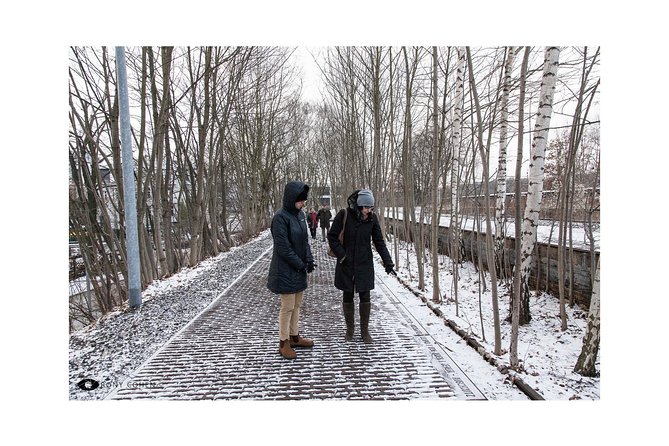
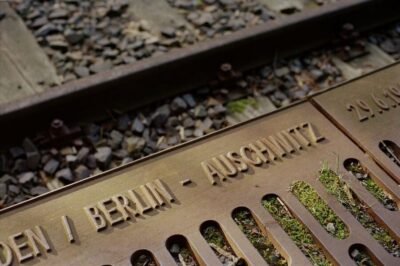
The final listed stop is the Track 17 Memorial at Grunewald Train Station. It commemorates the deportations of Berlin’s Jewish population. The railway setting makes the site different from the city-center memorials because it links persecution to the machinery of transport and removal.
You have about 30 minutes here, with free admission. The train station location also gives the route a change of pace after several central Berlin sites. You see where deportation trains departed rather than only viewing a monument built afterward.
This can be one of the most affecting parts of the tour, but the subject requires care. The point is not dramatic scenery. The point is the ordinary railway infrastructure that became part of a criminal system.
The tour description does not state how you travel between stops. Pickup from all accommodations is offered, and past descriptions of Nirit’s broader private tours say she has driven clients in her own car. You should confirm the vehicle and transport arrangement for this specific booking rather than assume it is included.
Track 17 also shows why a private tour can be practical. The site lies away from the central cluster, and a guide who handles the route can save you the effort of working out the connections yourself. The benefit is less about luxury and more about using a limited morning or afternoon well.
What the private format adds
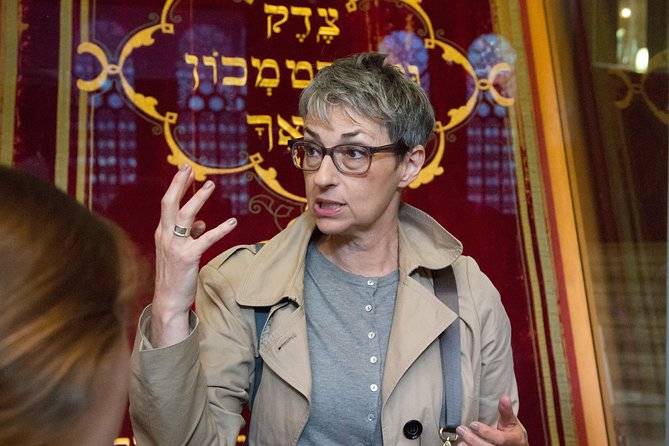
The strongest feature here is the chance to ask questions as the story develops. You are not limited to a fixed speech. If your family came from Berlin, if you are studying the Holocaust, or if you want more background on Jewish life before 1933, you can bring those interests into the conversation.
Past accounts of Nirit’s work describe her as personable, patient, and comfortable explaining both Jewish and general Berlin history. One particularly tailored experience included wider Berlin history, the period before and after the Berlin Wall, and personal connections to Holocaust events. That kind of customization is not guaranteed by the basic four-hour program, so discuss your priorities when arranging the tour.
The guide’s stated language options are English, German, and Hebrew. This is helpful for families or mixed-language groups, though the booking information for this experience lists English as the offered language. Confirm your preferred language in advance.
The group limit is six people. That is small enough for a conversation and large enough for a family or group of friends to share the cost. Most people can participate, service animals are allowed, and the tour is near public transportation.
Is $648.86 a fair price?
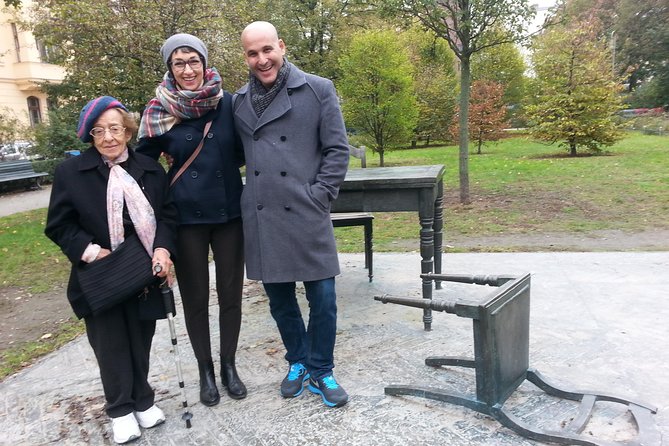
The full price is $648.86 per group, for as many as six people. For six people, that works out to about $108 per person. For three people, it is about $216 each. For one or two people, the cost is much harder to justify unless private guiding is a high priority.
You are paying for a private guide, hotel pickup, route planning, and focused historical interpretation, not just entry to five locations. The free memorials do not make the tour cheap, because the real product is the guide’s time and the ability to ask questions.
The value is strongest for:
- A family or group of friends sharing the flat rate
- People with Jewish family connections in Berlin
- Visitors who want a guide rather than a self-guided memorial route
- History-focused visitors who want Jewish and general Berlin history together
- Anyone with limited time who prefers a planned route
The value is weaker if you are comfortable using public transport, reading background material yourself, and visiting memorials without a guide. You will also need to add the New Synagogue admission cost, and possibly an audio guide fee.
Timing, pickup, and practical planning
The tour begins at 10:00 am and lasts approximately four hours. Pickup is offered from all accommodations, which removes one common morning problem: finding a central meeting point and reaching it on time.
Because the route includes both central Berlin and Grunewald, pickup can matter. Confirm how transportation between stops works, especially if you have mobility concerns or want to leave the tour at a particular location.
The stops have different lengths:
- New Synagogue: 30 minutes, admission not included
- Holocaust Memorial: 20 minutes, free
- Bebelplatz: 15 minutes, free
- Old Jewish Cemetery: 10 minutes, free
- Track 17: 30 minutes, free
The remaining time covers introductions, explanations, and movement between locations. Do not read the stop times as five separate museum visits. This is a guided overview with selected stops, not a full-day research program.
The experience requires a minimum number of participants. If that minimum is not met and the tour is canceled, you are offered another date or experience, or a full refund. You can cancel for a full refund up to 24 hours before the start time. Changes or cancellations inside that window are not accepted for a refund.
Who should book The Jewish Berlin?
I would choose this tour if you want historical interpretation more than a checklist of sights. It is particularly suitable for people who want to ask questions, connect Berlin’s Jewish past with wider German history, or explore family roots.
It also fits a group that prefers a quiet, serious experience. The schedule is not built around entertainment, shopping, or food. The focus is memorials, religious history, cemeteries, deportation, and the long destruction of Jewish life under Nazism.
Families should think about the age and attention span of children before booking. The subject is heavy, and the itinerary leaves little room for a lighter break. The private format does at least allow you to ask for explanations suited to your group.
I would hesitate if your main goal is a detailed museum visit inside the New Synagogue. Thirty minutes is short, and admission is extra. In that case, use this tour for orientation, then return independently for more time.
Should you book The Jewish Berlin?
Book it if you want a private, guide-led introduction to Jewish Berlin that moves from the 1600s through the Nazi era and into modern remembrance. The combination of the New Synagogue, Bebelplatz, the Old Jewish Cemetery, the Holocaust Memorial, and Track 17 gives you a broad framework in four hours.
The decision comes down to price and depth. A full group of six gets a fairer deal, while solo visitors pay heavily for privacy. If you have family history to explore, ask Nirit about it before booking. If you mainly want to see monuments at your own pace, a self-guided day will cost less.
For a group that values context, conversation, and a carefully planned route, this is a worthwhile way to approach one of Berlin’s most difficult subjects.
FAQ
How long is The Jewish Berlin tour?
The tour lasts approximately four hours.
What time does the tour start?
The stated start time is 10:00 am.
Is hotel pickup included?
Pickup is offered from all accommodations.
How many people can join the private tour?
The price covers a private group of up to six people.
Which language is offered?
The experience is offered in English. The guide, Nirit Ben-Joseph, also conducts tours in German and Hebrew.
Is admission to the New Synagogue included?
No. Admission to Stiftung Neue Synagoge Berlin, also called Centrum Judaicum, is not included.
Are the memorial sites free to enter?
The Holocaust Memorial, Bebelplatz book-burning memorial, Old Jewish Cemetery, and Track 17 Memorial are listed with free admission.
Can I cancel for a full refund?
Yes. You can cancel at least 24 hours before the experience start time for a full refund. Cancellations or changes made less than 24 hours before the start time are not accepted for a refund.
Just added around Berlin
- Berlin Highlights in One Day★ 5.0 · 3 reviews
- Private Berlin One Day Tour with a Local: See the City Unscripted★ 3.5 · 3 reviews
- Individual city tour Berlin for max. 8 persons★ 5.0 · 3 reviews
- Transfer from Berlin Schönefeld Airport (SXF) to Berlin city Hotels – ROUND TRIP★ 4.0 · 3 reviews
- Berlin: Museum Island Tour★ 5.0 · 3 reviews
- Private Analogue Photography Experience in Berlin★ 5.0 · 3 reviews
- Berlin: Local Food Tour in Secrets Hidden Gems★ 4.0 · 3 reviews
- Berlin & The Third Reich Private Guided Tour★ 5.0 · 3 reviews
Jewish Berlin & Holocaust Memorials, compared.

Path of Resistance: Berlin’s Hidden Holocaust Stories
Read our review →
Private Tour: Jewish Heritage Walking Tour of Berlin
Read our review →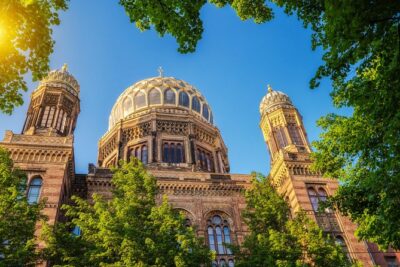
Jewish Berlin: Walking tour The Old Jewish Quarter (private 3 Hours tour)
Read our review →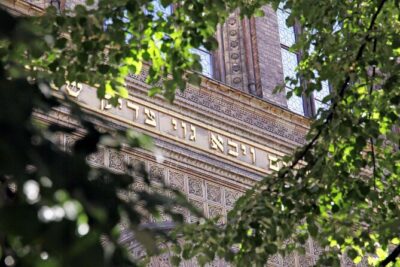
Path of Resistance: Berlin’s Hidden Holocaust Stories
Read our review →
Browse the lists this tour appears in