
Review · WALKING TOURS
An Introduction to Berlin Walking Tour
Berlin’s story is unusually concentrated. In three hours, this tour connects Prussian ambition, Napoleon’s march through the Brandenburg Gate, Nazi dictatorship, the Berlin Wall, and reunification. I like the big historical sweep and the way the route uses real places rather than a classroom lecture.
I also like the serious academic guides, including Dr. Martin Sauter, and the thoughtful look at how modern Germany faces its past. The drawback is simple: $135 per person is a serious price for a three-hour walk, and you’ll need to pay separately for one or two public transport rides.
In This Review
- Key points to know before you book
- Why this Berlin walk works as an introduction
- Starting at Potsdamer Platz and the vanished Wall
- The Holocaust Memorial and the Reichstag
- Napoleon, Brandenburg Gate, and Prussian power
- Bebelplatz and the road to dictatorship
- Museum Island and Berlin’s 19th-century ambition
- Hackescher Markt and the surviving pre-war city
- Alexanderplatz and East Berlin’s communist showpiece
- Ending at Checkpoint Charlie
- The walking pace, transit, and practical cost
- Who will get the most from this tour
- Should you book An Introduction to Berlin Walking Tour?
- FAQ
- How long is the Berlin walking tour?
- What is the price?
- Where does the tour meet?
- Is the tour conducted in English?
- Will I need public transportation?
- Is public transportation included?
- Can I cancel the booking?
Key points to know before you book
- Berlin’s story runs from Prussia to the present: You’ll connect Frederick the Great, German nationalism, Nazi rule, division, and reunification in one clear route.
- The former Berlin Wall route is part of the walk: Potsdamer Platz and Checkpoint Charlie help you picture the old border and the former East German Death Strip.
- The Reichstag visit is exterior-focused: You’ll discuss the 1933 fire and Norman Foster’s 1992 glass dome, but no interior admission is listed.
- Bebelplatz brings Nazi history into the city center: The 1933 book burning is tied directly to Hitler’s rise and the loss of civil rights.
- You’ll see contrasting parts of Berlin: Royal Unter den Linden, Museum Island, pre-war courtyards near Hackescher Markt, and communist Alexanderplatz all appear.
- The tour uses public transport: Plan for one or two rides and budget €2.80 for a regular Berlin AB single ticket or €7 for a day ticket.
Why this Berlin walk works as an introduction
I like tours that explain how separate events fit together. Berlin can otherwise feel like a pile of monuments: a gate here, a wall fragment there, a Soviet-era tower across town. This route gives those sights a political thread.
The central idea is that modern Berlin did not appear from nowhere. The tour reaches back to 18th-century Prussia, when a relatively small state developed into a major military power. From there, your guide links German nationalism, the 19th-century empire, the First World War era, Nazism, and the Cold War.
That is a lot for three hours. You will not receive a full university course, and the pace may feel brisk at times. Still, the route makes good use of Berlin’s streets. You are not only hearing about decisions made by kings, dictators, and governments. You are standing where those decisions left visible marks.
The guides come from academic and cultural fields, including professors, doctoral students, historians, journalists, art critics, and published authors. Dr. Martin Sauter is specifically associated with the tour, and the available feedback praises his individual approach, clear expertise, and pleasant manner. The small-group or private format matters here. Berlin’s history raises difficult questions, and a smaller group gives you more room to ask them.
More walking tours in Berlin:
- Discover Berlin Half-Day Walking Tour
★ 5.0 · 9,624 reviews - Berlin: Third Reich and Cold War 2 Hour Walking Tour
★ 4.9 · 6,830 reviews - Berlin: Discover Berlin Walking Tour
★ 4.9 · 5,998 reviews
Starting at Potsdamer Platz and the vanished Wall
The meeting point is Cafe Einstein at Unter den Linden 42, but the tour begins at Potsdamer Platz. Confirm your exact starting instructions when booking, since the supplied information names both locations.
Potsdamer Platz is a useful place to begin because it shows Berlin’s physical rebirth. The area was once cut through by the Wall and bordered the East German Death Strip. Today it is a business center, a sharp contrast to the empty zone that divided the city.
Your guide follows the former Wall route toward Tiergarten. The value here is visual. Berlin’s Wall was not just a slab of concrete; it was a controlled border made up of fences, patrol zones, watch points, and open ground. Walking along its former path helps you understand how division shaped everyday movement through the city.
Do not expect a single preserved stretch of Wall to tell the whole story. This part of Berlin is largely rebuilt, which is precisely the point. The tour asks you to compare the modern city with the wasteland that once occupied this ground.
The Holocaust Memorial and the Reichstag
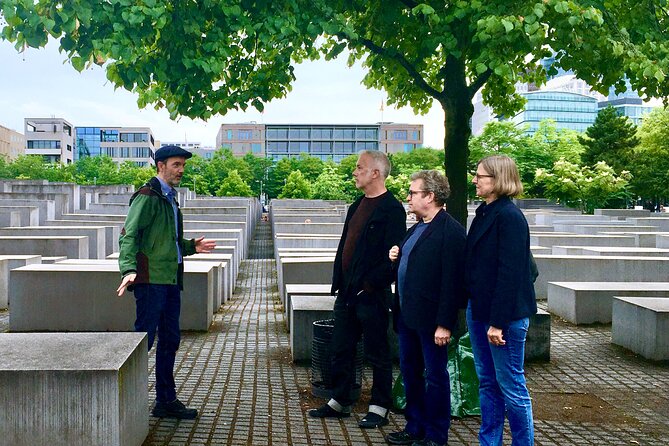
The Holocaust Memorial is one of Berlin’s most striking modern sites. Its field of concrete slabs creates a place that feels ordered at first, then increasingly unsettling as the ground changes and the blocks rise around you.
A good guide can help you resist the urge to treat it as a quick photo stop. The memorial is abstract, and its meaning is not handed to you in one neat sentence. The tour places it within Berlin’s effort to confront the murder of Europe’s Jews in the center of the capital.
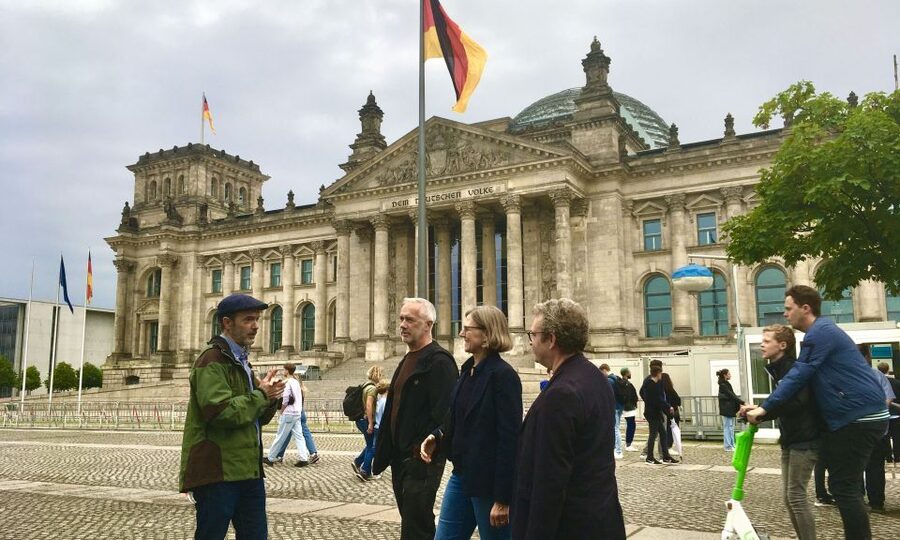
Nearby, the Reichstag offers another lesson in how Germany handles its past. The building’s 1933 fire became a pretext for the Nazi government to suspend civil liberties and arrest political opponents. Your guide explains how an event at this building helped open the way to dictatorship.
The modern glass dome, designed by Norman Foster in 1992, changes the building’s message. Its walkways look down into the parliamentary chamber, and the tour uses that design to discuss reunification, government transparency, and democracy.
This is an important distinction: the tour discusses the Reichstag and its dome, but the experience does not list entry to the building or dome. You should not book this walk expecting an interior visit.
Napoleon, Brandenburg Gate, and Prussian power
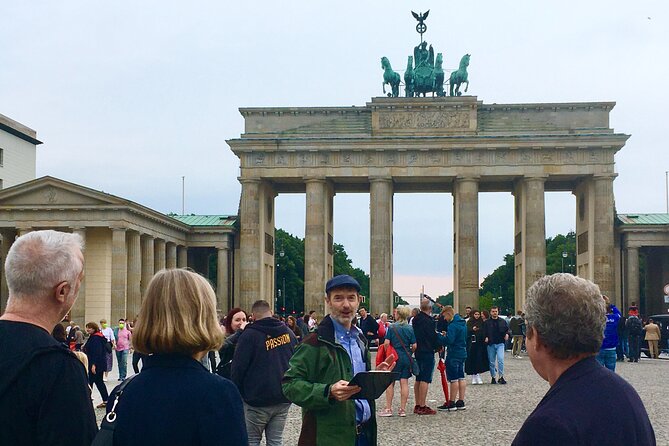
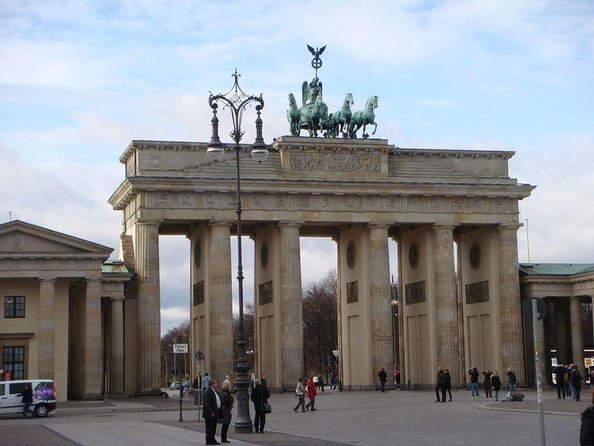
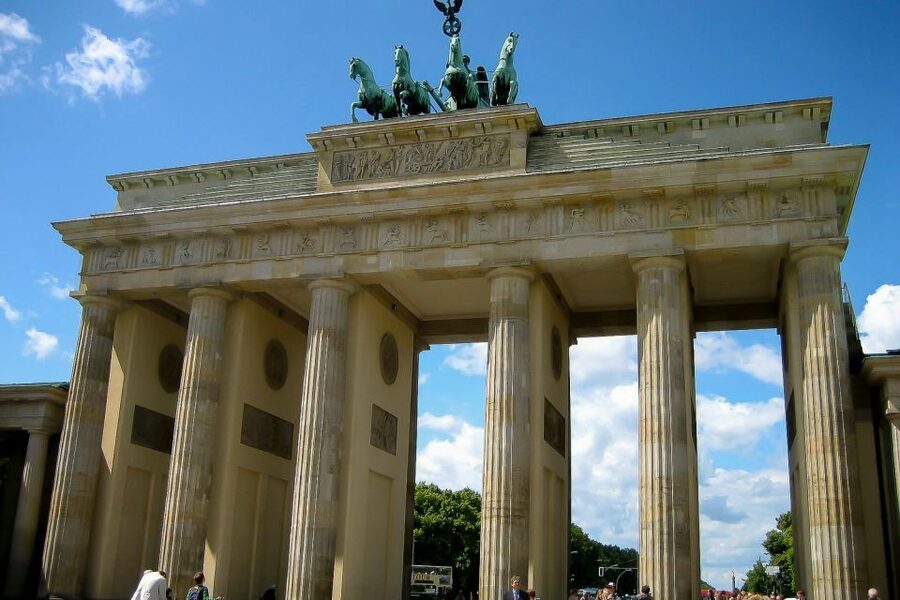
The Brandenburg Gate is often treated as Berlin’s postcard entrance. This tour gives it a more complicated role. You follow Napoleon’s path through the gate and consider how the French Revolution helped stir German nationalism.
That connection is worth your attention. Napoleon’s victories exposed the weakness of the old German states and helped encourage a stronger sense of German identity. The result was not simply admiration for France or rejection of it. German nationalism developed partly in response to French power.
From the gate, you continue along Unter den Linden, Berlin’s royal boulevard. Palaces, museums, and theaters line this grand route, making it one of the best places to see Berlin’s former role as a royal and cultural capital.
At the equestrian statue of Frederick the Great, the conversation turns to the Prussian king sometimes known as the Poet King. His interests in literature and the arts sit beside Prussia’s military discipline and expansion. That combination helps explain why Berlin became both a cultural center and a symbol of state power.
I like this part because it keeps the tour from treating Nazism as an isolated accident. The guide does not need to claim that Prussia directly caused every later crime. Instead, you get a chance to consider how military traditions, state power, nationalism, and culture developed over several centuries.
A different side of Berlin on the same trip:
- Berlin: Reichstag, Dome and Government District Guided Tour
★ 4.7 · 18,288 reviews - Berlin: 1-Hour City Tour by Boat with Guaranteed Seating
★ 4.3 · 16,993 reviews - Berlin: Boat Tour Along the River Spree
★ 4.4 · 11,252 reviews - Berlin: Hop-on Hop-off Bus Tour with Live Commentary
★ 4.3 · 8,579 reviews
Bebelplatz and the road to dictatorship
Bebelplatz is a quiet square surrounded by impressive buildings. In 1933, it became the site of a Nazi book burning, an event that showed how the new regime attacked ideas as well as political opponents.
The stop is especially effective because it sits in the middle of the old royal and cultural district. The square’s beauty does not soften the subject. It makes the contrast sharper.
Here, the guide explains Adolf Hitler’s rise and the consequences of Nazi rule. The discussion connects the book burning to censorship, propaganda, and the wider destruction of civil rights. That link is useful for anyone who knows the headline events but wants to understand how dictatorship took hold through a series of actions and public signals.
This can be a heavy section of the walk. Berlin’s central sights are not neutral scenery. You will repeatedly move from a palace, boulevard, or museum to a place tied to persecution or war. The tour’s strength is its willingness to keep those connections in view.
Museum Island and Berlin’s 19th-century ambition
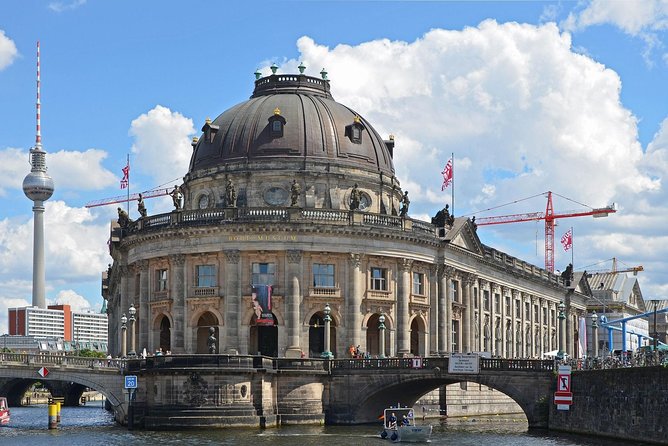
Crossing Museum Island shifts the focus from political power to cultural ambition. Berlin developed into a major cultural center in the 19th century, and the island became the city’s answer to the great museum districts of Europe.
The route does not promise extended museum visits. Instead, you receive an outdoor explanation of how the institutions, buildings, and royal collections helped shape Berlin’s public identity.
That makes the stop useful for a first visit. You can later return to the museums with a better sense of why they were built and what the city wanted to say about itself. If you are hoping to see the collections during this tour, adjust your expectations. The three-hour format is about connections between places, not long indoor visits.
Hackescher Markt and the surviving pre-war city
Hackescher Markt offers a change of mood. The area includes a pocket of pre-war Berlin, with a network of courtyards that gives you a more intimate sense of the city.
These courtyards are valuable because Berlin’s story is not only about monumental buildings and government decisions. Smaller passages show how urban life once worked around apartments, shops, workshops, and shared spaces.
The route gives you time to ramble through this network, though the overall schedule remains focused. I would pay attention to the contrast between the formal Unter den Linden and the more enclosed, everyday spaces around Hackescher Markt.
This is also a point where the tour’s broad range can feel demanding. You are moving through several eras and neighborhoods in one morning or afternoon. If you prefer slow photography, shopping, or long café breaks, you may want to return to Hackescher Markt after the tour.
Alexanderplatz and East Berlin’s communist showpiece
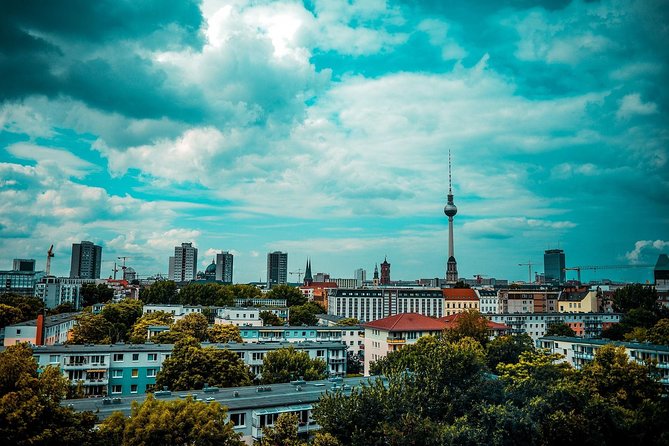
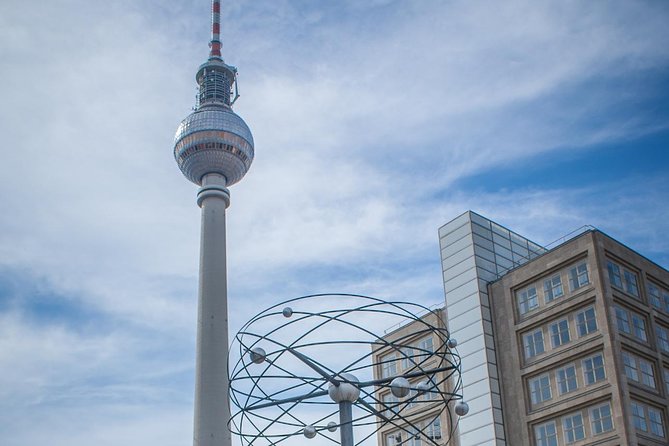
Alexanderplatz presents a strong visual counterpoint to the royal boulevard and pre-war courtyards. East Germany rebuilt the square in the 1960s as a communist showplace, filling it with futuristic government buildings, apartment blocks, and the famous TV Tower.
The design was meant to project confidence in the socialist state. The scale and open space can feel stark compared with older parts of Berlin, but that difference is the lesson. The square shows how East German leaders used architecture to present a new political order.
The TV Tower is one of the city’s most recognizable sights, yet this tour treats it as more than a skyline marker. You discuss the planning ideas and political goals behind the rebuilt square.
I find this section helpful because it prevents a common mistake: seeing the former East only as a collection of ruins or Wall memorials. Alexanderplatz was an active attempt to create a modern socialist capital. The result is still visible in the buildings, scale, and layout.
Ending at Checkpoint Charlie
The tour finishes at Checkpoint Charlie, the best-known crossing point between West Berlin and East Berlin. In 1989, thousands of East Germans crossed the border here as the Cold War came to an end.
Checkpoint Charlie is one of Berlin’s most commercialized historical sites, so context is essential. The crossing point itself can be crowded with photo opportunities and symbolic displays. The guide helps put it back into the larger story of restricted movement, divided families, competing political systems, and the sudden collapse of the border.
Ending here makes sense. You have followed Berlin from royal power to dictatorship, from physical division to reunification. The guide also discusses how East and West still influence the city’s identity as Berlin develops new ideas about tolerance, multiculturalism, and creative life.
The experience does not pretend that reunification erased every difference. That balanced ending is one of its better features. Berlin is united politically, but its past remains visible in neighborhoods, architecture, public memory, and social outlook.
The walking pace, transit, and practical cost
The advertised price is $135 per person for three hours. That is expensive compared with a basic group city walk, but the value depends on what you want from a guide.
You are paying for a historian-led explanation of difficult material, not just a route between famous sights. The private or small-group option can make the price more reasonable if you want to ask questions or tailor the discussion. It is harder to justify if you only want quick introductions and photographs.
You will need to use public transport once or twice because some sites are too far apart to walk comfortably within the allotted time. A regular Berlin AB single ticket costs €2.80, with a listed senior fare of €1.70. A day ticket costs €7, with a listed senior fare of €4.70.
The guide can help you buy a ticket at the first station if you do not already have a Berlin transit pass. Still, buy or confirm your ticket before boarding and allow a little time for the transfer. The need for transit is not a flaw, but it means this is not a continuous walking route from start to finish.
Wear comfortable shoes, and expect a mix of broad avenues, memorial grounds, plazas, and city streets. The tour lasts three hours, so there is no built-in museum session or long meal break.
Who will get the most from this tour
I would choose this experience for a first or second visit to Berlin if you want the city’s major political eras explained in one sitting. It suits people who like context and are comfortable discussing war, genocide, dictatorship, and the consequences of ideology.
It is also a good fit for students, history-minded families, and anyone who wants a strong orientation before exploring Berlin alone. The guide’s academic background can be a real advantage when you want more than dates and names.
You may want a different activity if your main goal is museum interiors, a relaxed neighborhood stroll, or a narrow focus on the Berlin Wall. The route covers a great deal, so some stops receive a concise explanation rather than a long visit.
The subject matter also requires attention. This is not a light sightseeing loop. The Holocaust Memorial, Bebelplatz, the Reichstag fire, and the Wall all demand a respectful frame of mind.
Should you book An Introduction to Berlin Walking Tour?
Book it if you want a serious three-hour framework for understanding Berlin and value a guide with academic or professional experience. The strongest features are the historical sweep, the contrast between East and West, and the use of actual sites to explain how power changed the city.
I would be cautious if $135 feels high for a short tour or if you expect entry to the Reichstag dome and museums. Transit costs extra, and the pace covers a lot of ground.
For a focused introduction, especially in a private or small group, I think the tour earns consideration. Dr. Martin Sauter’s individual approach received particularly strong praise, and the available ratings give the experience five stars, including feedback from June 2020 and January 2019. Check guide availability when booking, since confirmation is subject to availability within 48 hours.
FAQ
How long is the Berlin walking tour?
The tour lasts three hours.
What is the price?
The listed price is $135 per person.
Where does the tour meet?
The meeting point is Cafe Einstein, Unter den Linden 42, 10117 Berlin, Germany. The route begins at Potsdamer Platz, so confirm the precise meeting instructions after booking.
Is the tour conducted in English?
Yes. The listed live tour language is English.
Will I need public transportation?
Yes. You will need to use public transport once or twice because some key sites are too far apart to walk within the tour time.
Is public transportation included?
No. A Berlin AB single ticket is listed at €2.80, or €1.70 for seniors. A day ticket is listed at €7, or €4.70 for seniors.
Can I cancel the booking?
Yes. You can cancel up to 24 hours in advance for a full refund. You can also reserve now and pay later.
Just added around Berlin
- Berlin Highlights in One Day★ 5.0 · 3 reviews
- Private Berlin One Day Tour with a Local: See the City Unscripted★ 3.5 · 3 reviews
- Individual city tour Berlin for max. 8 persons★ 5.0 · 3 reviews
- Transfer from Berlin Schönefeld Airport (SXF) to Berlin city Hotels – ROUND TRIP★ 4.0 · 3 reviews
- Berlin: Museum Island Tour★ 5.0 · 3 reviews
- Private Analogue Photography Experience in Berlin★ 5.0 · 3 reviews
- Berlin: Local Food Tour in Secrets Hidden Gems★ 4.0 · 3 reviews
- Berlin & The Third Reich Private Guided Tour★ 5.0 · 3 reviews
Walking Tours, compared.



Berlin’s Best: 2 Hour Walking Tour Third Reich and the Cold War
Read our review →

Third Reich Berlin: Hitler and WWII Walking Tour
Read our review →

Browse the lists this tour appears in