
Review · WALKING TOURS
Berlin: Hidden gems around the Gendarmenmarkt – Guided walking tour
Gendarmenmarkt looks polished at first glance, but this tour turns the square into a stage for Berlin’s political, artistic, and commercial past. In two hours, you move from grand churches and concert halls to the streets where fashion houses, bankers, writers, and campaigners shaped the city.
I like the way the walk reaches beyond the famous square into Hausvogteiplatz, once the center of Berlin’s clothing trade, and Jägerstraße, tied to the Mendelssohn bank and Berlin’s intellectual life. I also like the clear historical thread, from past royal glory to the 1989 proclamation of freedom to travel.
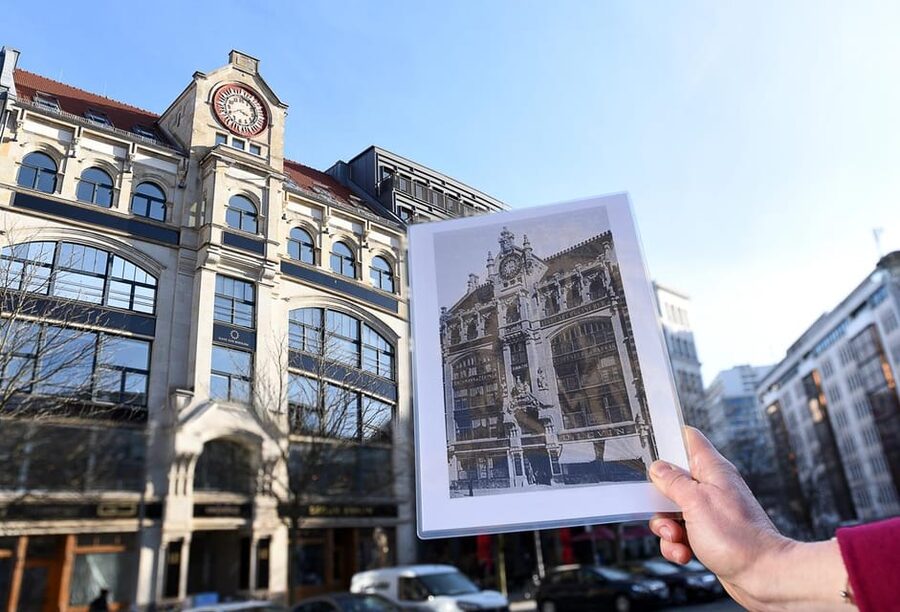
The main consideration is language: this is a German-language tour, and the walk is not designed for people with visual or hearing impairments. The square has also been a major construction site since 2023, so the setting may not look exactly as it does in older photographs.
In This Review
- Key points to know before booking
- Starting at Gendarmenmarkt’s grand trio
- From royal spectacle to a changing Berlin
- Finding the 1989 place where travel became freedom
- Hausvogteiplatz and Berlin’s former fashion center
- Jägerstraße’s banks, salons, and thinkers
- The people who give the route its character
- What two hours and $20 actually buy you
- Who will get the most from this walk
- A practical way to fit it into your Berlin day
- Should you book the Gendarmenmarkt walk?
- FAQ
- Where does the Gendarmenmarkt walking tour begin?
- Where does the tour end?
- How long does the walking tour last?
- What language is the tour conducted in?
- How large is the tour group?
- Is the tour wheelchair accessible?
Key points to know before booking
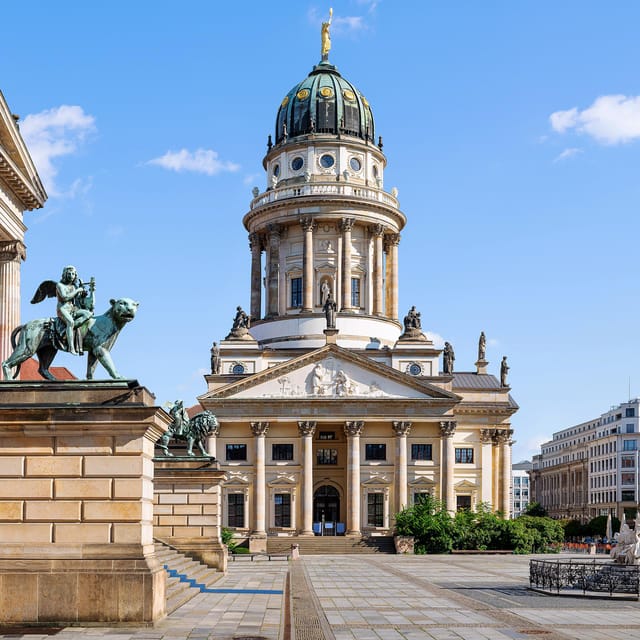
- Three major landmarks in one opening view: See the German Cathedral, French Cathedral, and Konzerthaus explained together rather than as isolated monuments.
- A direct connection to 1989: Visit the place where freedom to travel was proclaimed during a turning point in German history.
- Berlin fashion history: Learn why Hausvogteiplatz once mattered to the city’s clothing industry.
- A surprising cast of characters: Hear about E.T.A. Hoffmann, Josephine Baker, Marlene Dietrich, Claire Waldoff, and the Mendelssohn family.
- Small group, modest price: The tour costs $20 per person and is limited to 15 people.
- German only: You need to follow the tour in German, and the activity is not suitable for visually or hearing-impaired participants.
Starting at Gendarmenmarkt’s grand trio
The walk begins at Gendarmenmarkt, opposite Französische Straße 44, and ends back at the same meeting point. That simple arrangement is useful in Berlin Mitte, where it is easy to wander off course among broad avenues, courtyards, and imposing government buildings.
The first focus is the square’s famous architectural trio: the German Cathedral, the French Cathedral, and the Konzerthaus. You will not simply get a quick introduction to three pretty facades. The guide explains their architectural features, their role in Berlin, and the way the square changed over time.
The French Cathedral and German Cathedral give the square its distinctive balance, while the Konzerthaus completes the composition from the center. Together, they show how Berlin used architecture to project power, religion, culture, and civic importance.
This is a good opening for first-time visitors because Gendarmenmarkt can otherwise feel like a place to photograph and leave. The tour gives you reasons to pause. Look closely at the buildings as the guide points out details and explains why the square is often called Berlin’s most beautiful.
There is one practical wrinkle. Gendarmenmarkt has been a major construction site since 2023. Conditions can affect what you see, where you walk, and how much of the square is open. That does not erase the architecture, but it can reduce the clean, postcard-like view you may expect.
More walking tours in Berlin:
- Discover Berlin Half-Day Walking Tour
★ 5.0 · 9,624 reviews - Berlin: Third Reich and Cold War 2 Hour Walking Tour
★ 4.9 · 6,830 reviews - Berlin: Discover Berlin Walking Tour
★ 4.9 · 5,998 reviews
From royal spectacle to a changing Berlin
The square’s appeal comes partly from its changes. This is not presented as a frozen historical set, but as a place shaped by different periods and public events. The guide connects past glories with more eventful chapters in Berlin’s development.
That approach matters because Gendarmenmarkt can seem too formal at first. Its grand scale suggests ceremony, but the surrounding streets reveal people and businesses that made the area work. The walk asks you to look behind the facades, where cultural life, finance, fashion, and political change met.
You will also hear about the people associated with this part of the city. E.T.A. Hoffmann brings literature and music into the story. The Mendelssohn family adds finance, culture, and Jewish Berlin to the picture. Marlene Dietrich, Josephine Baker, and Claire Waldoff bring performance, nightlife, and changing ideas about modern womanhood and public life.
The value here is the range. You are not getting only kings, churches, and official buildings. You are also meeting artists, entertainers, bankers, and intellectuals. That wider cast makes the square feel less like a monument and more like part of a living city.
The exact balance between architecture and biography will depend on the guide. One guide connected with the experience is Susanne, whose warm and capable approach has been singled out for making people and places feel connected across centuries. If Susanne leads your walk, expect a strong focus on stories and personalities rather than a list of dates.
Finding the 1989 place where travel became freedom
One of the tour’s strongest historical stops is the place where freedom to travel was proclaimed in 1989. This connects the walk directly to the final period of divided Berlin and the political changes that reshaped Germany.
The subject can be easy to flatten into a few familiar images of the Berlin Wall. A stop at the actual location gives the event a physical setting. You can better understand that major political words were spoken in ordinary urban spaces, not only at famous gates and border crossings.
The guide sets this moment within the surrounding streets and explains why it mattered. You are encouraged to consider the atmosphere of a city in transition, when a restriction that had shaped everyday life was being challenged in public.
For anyone interested in twentieth-century Berlin, this may be the most memorable part of the tour. It adds a human scale to a huge national story. You are not being taken to a museum display or handed a timeline. You are standing in the district where a key message about movement and freedom was made public.
The tour does not appear to promise a full account of the Wall, reunification, or every event of 1989. If you want that level of detail, you will need a dedicated Cold War tour. Here, the 1989 stop works as one important chapter in a broader story about Gendarmenmarkt and its neighboring streets.
Hausvogteiplatz and Berlin’s former fashion center
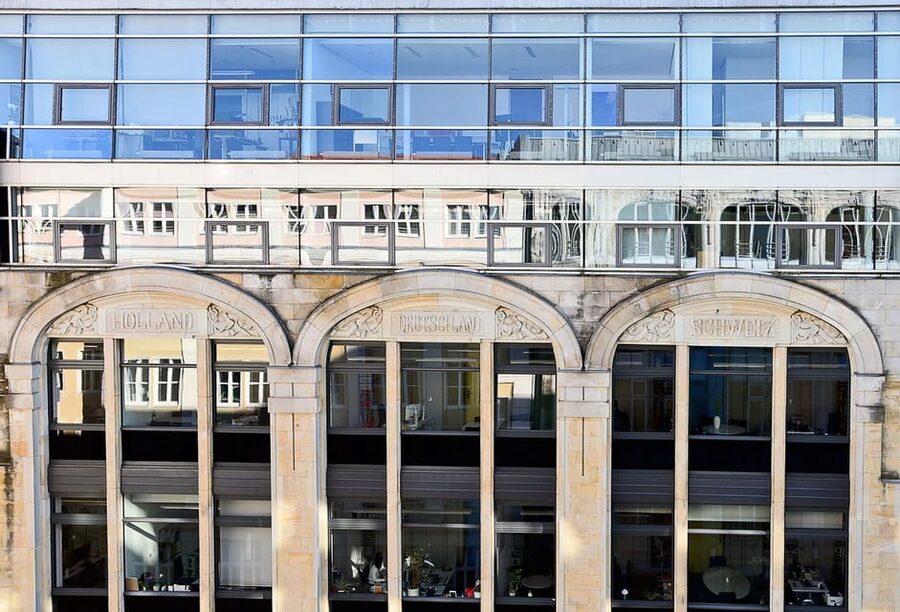
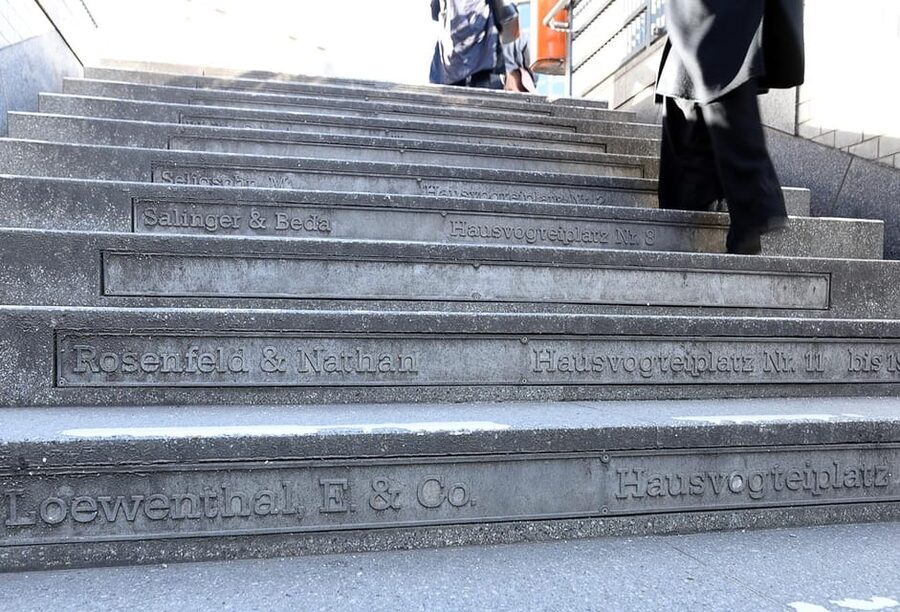
A short walk takes you toward Hausvogteiplatz, an area with a past many people miss when they focus only on Berlin’s museums and political landmarks. This was once the center of the city’s fashion industry.
The guide explains how Berlin developed into a fashion metropolis and identifies the creative forces that influenced the trade. The point is not just that clothes were made or sold here. The area reflects the business networks, design work, and urban culture that helped Berlin build a reputation for style.
This stop broadens your view of the city. Berlin is often presented through government buildings, war memorials, grand museums, and nightlife. Hausvogteiplatz offers another Berlin, one shaped by clothing, commerce, and creative work.
It is also a useful reminder that neighborhoods change purpose. A place that once drew fashion professionals may now look quite different. The tour helps you read the street as a record of vanished industries rather than judging it only by what is visible today.
Do not expect a fashion show or a visit inside a working design studio. The appeal is historical interpretation. You are learning how an industry fit into the city and how the people behind it influenced Berlin’s public image.
A few more Berlin tours worth weighing up
- Berlin: Reichstag, Dome and Government District Guided Tour
★ 4.7 · 18,288 reviews - Berlin: Government District around the Reichstag Guided Tour
★ 4.7 · 8,447 reviews - Berlin: Hidden Backyards Guided Walking Tour
★ 4.8 · 5,360 reviews - Berlin: 1-Hour Boat Tour with Bilingual Live Guide
★ 4.7 · 3,629 reviews
Jägerstraße’s banks, salons, and thinkers
Jägerstraße adds another turn to the route. The street was once central to Berlin’s financial world and was home to the influential Mendelssohn Bank.
That financial story could easily become dry, but the tour links banking with intellectual life. Jägerstraße was also associated with figures such as Alexander von Humboldt, Rahel Varnhagen van Ense, and Moses Mendelssohn. Their presence shows that money, science, philosophy, literature, and social discussion shared the same urban ground.
Moses Mendelssohn is especially important to the wider story of Berlin’s Jewish intellectual life. Alexander von Humboldt brings scientific curiosity and exploration into the picture. Rahel Varnhagen van Ense represents the salons and conversations that helped shape cultural life.
You will not be visiting a preserved bank interior or an operating salon. Much of the interest comes from understanding what happened here and who used these streets. That makes the guide’s storytelling important. Without context, Jägerstraße may look like simply another central Berlin street.
I like this section because it avoids treating history as a series of separate subjects. Finance is connected to culture. Culture is connected to social networks. Those networks help explain how Berlin grew into a city where new ideas, businesses, and styles could find an audience.
The people who give the route its character
A good city walk needs more than buildings, and this one has an unusually broad group of personalities. E.T.A. Hoffmann, Josephine Baker, Marlene Dietrich, Claire Waldoff, and the Mendelssohn family each open a different door into Berlin’s past.
E.T.A. Hoffmann links the area with writing and composition. His presence suits a route that moves between music, performance, and imagination. The Konzerthaus makes the connection to Berlin’s musical life especially natural.
Josephine Baker and Marlene Dietrich point toward international performance and changing social attitudes. Their careers help show Berlin as a place influenced by people who crossed borders and challenged narrow expectations.
Claire Waldoff adds the world of cabaret. Her inclusion suggests that the tour is interested in Berlin’s sharp, lively performance culture, not only its official institutions.
The Mendelssohn family returns you to the themes of banking, music, and civic influence. Their story gives the route continuity as it moves between Jägerstraße and Gendarmenmarkt.
You should not expect an extended biography of each person. Two hours is enough for memorable connections, not full life stories. The strength is in seeing how these figures relate to the streets around the square.
What two hours and $20 actually buy you
At $20 per person, this is a reasonably priced way to add meaning to one of Berlin’s best-known central areas. You are paying for a two-hour guided walk in a small group of no more than 15 people, not for entry to a museum or a concert.
That distinction matters. If you want indoor attractions, seats, or a long list of included admissions, this is not the right purchase. If you want a guide to make sense of architecture and street names that you could otherwise pass without noticing, the price is easier to justify.
The small group limit is a real advantage. A maximum of 15 people is large enough to keep the tour social but small enough for the guide to remain audible and focused. It also suits a route built around stories, where a guide may need to point out a detail or pause beside a particular facade.
The tour lasts two hours, so it fits well into a day of sightseeing. It begins and ends at Gendarmenmarkt, making it easy to continue exploring Berlin Mitte afterward. You can also use it as an orientation walk early in your stay, then return to the places that caught your attention.
Tips are not included. The activity allows cancellation up to 24 hours before the start for a full refund, and you can reserve now and pay later. Those policies are helpful if your Berlin plans are still shifting, though the key decision remains whether a German-language walk suits you.
Who will get the most from this walk
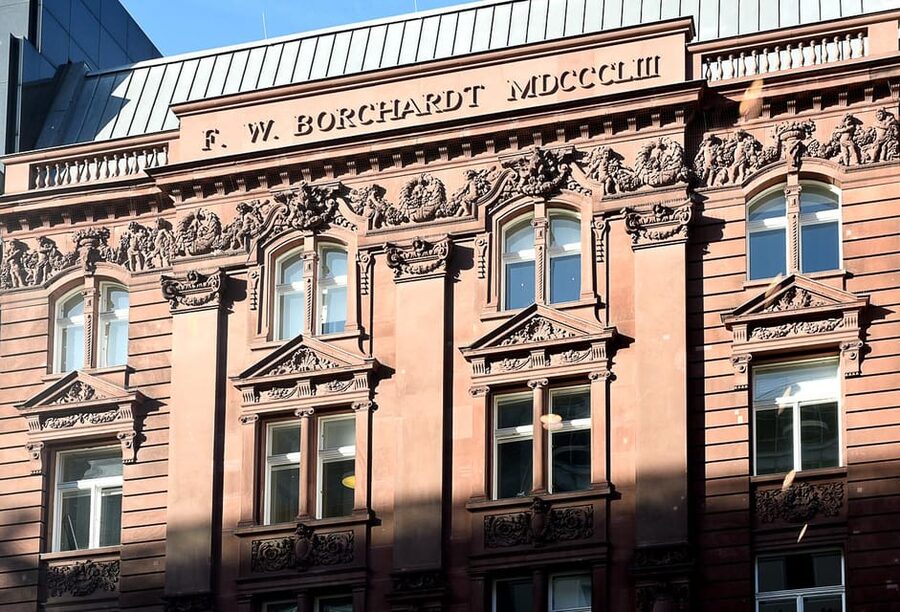
I would choose this tour if you have already seen Berlin’s headline sights and want a closer look at the streets between them. It is also a good first introduction to Gendarmenmarkt if you prefer local stories and urban detail to a fast trip through major monuments.
The tour should suit you particularly well if you enjoy:
- Architecture explained through political and cultural context
- Berlin’s fashion, banking, music, literature, and cabaret
- Small-group walks with a clear two-hour limit
- The events of 1989 and the final years of divided Berlin
- Stories about specific people rather than only dates and rulers
The German-only format is the biggest filter. You need a solid enough command of German to follow explanations about architecture, historical events, and several personalities. The tour is described as wheelchair accessible, but the setting includes city streets and a square affected by construction, so it is sensible to confirm current conditions if you have particular mobility needs.
The activity is not suitable for visually impaired or hearing-impaired people. That is important to know before booking, since the tour depends on spoken explanation and visual attention to buildings, streets, and architectural details.
A practical way to fit it into your Berlin day
Meet opposite Französische Straße 44 at Gendarmenmarkt. Give yourself enough time to reach the square without rushing, since the start is identified by a street address rather than a major museum entrance.
Wear shoes suitable for two hours of city walking. No special equipment is included or required, but weather can affect how comfortable it is to stop outdoors while listening. One outing associated with Susanne remained enjoyable despite rain, which suggests that the storytelling can carry the walk through less-than-perfect conditions, but you should still dress sensibly.
Because the route returns to the starting point, you do not need to plan transport from a distant final stop. The walk also leaves you in a useful part of Mitte for further sightseeing, dining, or independent exploration.
The construction at Gendarmenmarkt may change the visual experience. If you are hoping for uninterrupted photographs of the whole square, check current conditions before you go. If you are mainly interested in the stories behind the buildings and nearby streets, the work is less likely to spoil the experience.
Should you book the Gendarmenmarkt walk?
Book it if you want Berlin explained through people, places, and change, rather than through a quick checklist of monuments. The route makes a familiar square more readable and adds worthwhile stops at Hausvogteiplatz, Jägerstraße, and the 1989 travel-freedom site.
At $20, the small group and focused two-hour route offer solid value, especially if you enjoy history told through streets and personalities. I would be more cautious if you need English, want extensive Cold War coverage, or prefer indoor sightseeing.
For a German-speaking visitor who likes architecture, cultural history, and lesser-noticed corners of central Berlin, this is a smart short walk. It will not replace Berlin’s major museums or a full city history tour, but it can make your next stroll through Mitte far more rewarding.
FAQ
Where does the Gendarmenmarkt walking tour begin?
The meeting point is at Gendarmenmarkt, opposite the house at Französische Straße 44.
Where does the tour end?
The activity ends back at the starting meeting point at Gendarmenmarkt.
How long does the walking tour last?
The tour lasts two hours. Starting times vary, so check availability when booking.
What language is the tour conducted in?
The live tour guide speaks German. No other tour language is specified.
How large is the tour group?
The guided walk takes place in a small group with a maximum of 15 people.
Is the tour wheelchair accessible?
The activity is listed as wheelchair accessible. It is not suitable for people with visual or hearing impairments.
Just added around Berlin
- Berlin Highlights in One Day★ 5.0 · 3 reviews
- Private Berlin One Day Tour with a Local: See the City Unscripted★ 3.5 · 3 reviews
- Individual city tour Berlin for max. 8 persons★ 5.0 · 3 reviews
- Transfer from Berlin Schönefeld Airport (SXF) to Berlin city Hotels – ROUND TRIP★ 4.0 · 3 reviews
- Berlin: Museum Island Tour★ 5.0 · 3 reviews
- Private Analogue Photography Experience in Berlin★ 5.0 · 3 reviews
- Berlin: Local Food Tour in Secrets Hidden Gems★ 4.0 · 3 reviews
- Berlin & The Third Reich Private Guided Tour★ 5.0 · 3 reviews
Walking Tours, compared.



Berlin’s Best: 2 Hour Walking Tour Third Reich and the Cold War
Read our review →

Third Reich Berlin: Hitler and WWII Walking Tour
Read our review →

Browse the lists this tour appears in