
Review · WALKING TOURS
Berlin: walking tour about Charité
Berlin’s Charité is more than a hospital. It is a place where 300 years of medicine, science, politics, and human suffering meet. This two-hour walk follows that story from an 18th-century plague house to one of Europe’s major university hospitals, with stops tied to Rudolf Virchow, Robert Koch, Emil von Behring, and Ferdinand Sauerbruch.
I like the mix of famous medical breakthroughs and less polished chapters, including the Charité’s cooperation with the Nazi regime. I also like the unusual final stop, the Animal Anatomical Theatre, a rare surviving teaching building tucked behind the city streets. The main limitation is clear: you see the Charité Bed House from outside, and group tours cannot enter the hospital grounds.
In This Review
- Key points about the Charité walk
- Why the Charité tells Berlin’s medical story so well
- Starting at the Charité Tower and Bed House
- Luisenstraße, university medicine, and famous doctors
- Crossing the campus without entering it
- Inside Berlin’s Animal Anatomical Theatre
- The balance of achievement and ethical failure
- What $27 buys you in two hours
- Who will enjoy this walk most
- Practical advice before you book
- Should you book the Charité walking tour?
- FAQ
- Where does the Charité walking tour start?
- Where does the tour end?
- How long does the tour last?
- What language is the tour conducted in?
- Can the tour enter the Charité Bed House?
- Can group tours enter the Charité Campus Mitte hospital grounds?
- What interior building does the tour visit?
- Is the Animal Anatomical Theatre always open?
Key points about the Charité walk

- Three centuries of medicine: Follow Berlin’s medical story from a plague house in the 18th century to a modern university hospital.
- Famous names: Learn about Virchow, Koch, Behring, Sauerbruch, and several Nobel Prize winners connected with Berlin medicine.
- A difficult past: The tour addresses the Charité’s cooperation with the Nazi regime rather than presenting only a heroic scientific story.
- The Animal Anatomical Theatre: Go inside Berlin’s oldest surviving teaching building, known as a mysterious medicine temple.
- Outdoor hospital view: See the Charité Bed House from outside, but do not expect access to the hospital or its grounds.
- German language only: The live guide conducts the two-hour tour in German.
Why the Charité tells Berlin’s medical story so well

Many city tours treat medicine as a list of old buildings and famous names. This one has a more focused subject: the Charité and the people who shaped Berlin’s medical world. That gives the walk a useful thread, even when the stories move from scientific discovery to grim institutional history.
The Charité began in the 18th century as a plague house. Over time, it grew into a major center for teaching, research, and treatment. That long change is the heart of the experience. You are not simply looking at an old hospital. You are tracing how a place built to isolate disease became part of a large university medical system.
I especially like this approach for visitors who want history with a human edge. The tour deals with life and death, scientific ambition, public health, and the power doctors held over patients. It also makes room for Berlin’s less obvious stories, including obscure details about the city’s relationship with medicine.
The tone should appeal to you if you prefer a serious walking tour with a clear subject. This is not a general introduction to Berlin, and it is not a chance to enter working hospital wards. It is a compact history lesson told outdoors, with one important interior visit at the end.
More walking tours in Berlin:
- Discover Berlin Half-Day Walking Tour
★ 5.0 · 9,624 reviews - Berlin: Third Reich and Cold War 2 Hour Walking Tour
★ 4.9 · 6,830 reviews - Berlin: Discover Berlin Walking Tour
★ 4.9 · 5,998 reviews
Starting at the Charité Tower and Bed House
The meeting point is in front of the Charité Tower, at the crossroads of Schumannstraße, Charitéplatz, and Charitéstraße. Arrive early enough to find the exact spot, since the tour starts on time and does not begin with a long waiting period.
The first major sight is the Charité Bed House. You view it from outside. That detail matters because the building remains a functioning hospital facility, with the protection and hygiene rules you would expect in a medical setting.
The Bed House gives the tour an immediate sense of scale. From the street, you can connect the institution’s present-day role with the older stories your guide will tell. You will not wander through patient areas, see hospital rooms, or enter medical departments. That may disappoint anyone hoping for a behind-the-scenes hospital visit, but it also keeps the tour respectful of an active healthcare site.
From here, the group continues along Luisenstraße and across the university campus area. The walk helps place the Charité within Berlin’s academic center, rather than treating it as an isolated building.
Luisenstraße, university medicine, and famous doctors

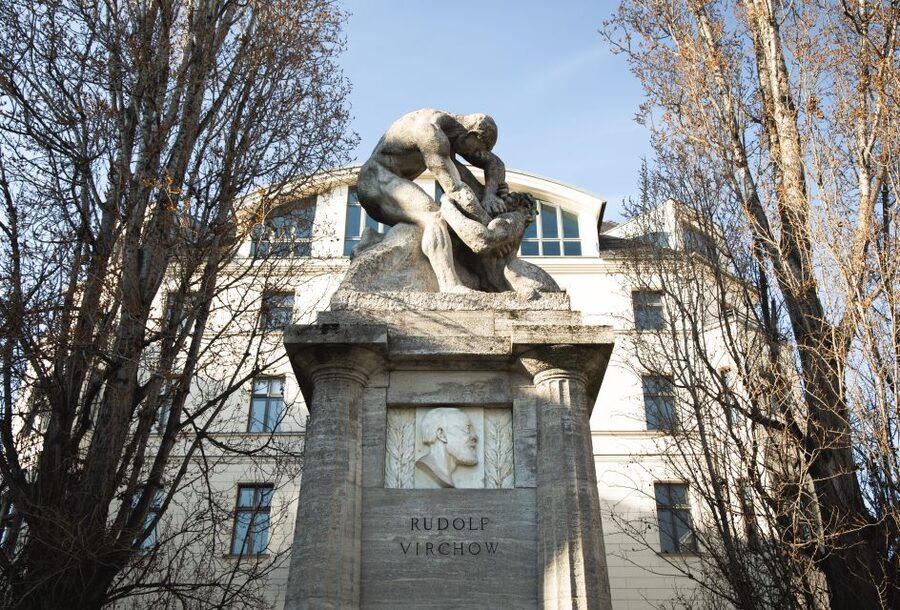
As you walk, the guide introduces some of the doctors and scientists linked with Berlin’s medical past. Rudolf Virchow is one of the key figures. Emil von Behring and Robert Koch are also part of the story, along with Ferdinand Sauerbruch.
These names matter because the Charité’s history is tied not only to patient care, but also to research and teaching. The tour explains the people behind that work and the way their ideas affected medicine. You also hear about Nobel Prize winners connected with Berlin’s scientific world.
The value here is the connection between people and place. It is one thing to recognize Robert Koch’s name from a textbook. It is another to hear how his work fits into the setting where Berlin medicine developed. The same applies to Virchow, Behring, and Sauerbruch. The streets and institutions give the names a physical context.
You should expect stories rather than technical medical instruction. The experience is designed around historical explanation, so you do not need a background in medicine to follow it. At the same time, the subject is specific enough to give history-minded visitors more substance than a standard city walk.
The guide also brings attention to the dark periods of institutional history. Doctors and the Charité collaborated with the Nazi regime, and the tour does not skip that fact. This part may feel heavy, but it is necessary. A medical institution cannot be understood only through discoveries and Nobel Prizes. Its ethical failures and political choices are part of the record too.
Crossing the campus without entering it
The route passes across the university campus, but the hospital grounds at Charité Campus Mitte are not open to group tours. You should think of this section as an exterior walk around the institution, not a campus tour in the usual sense.
That restriction shapes the experience. You get the setting, the streets, and the outside view, while the guide supplies the historical links. For some people, this will be enough. The story is the main attraction, and the walk lets you see where the institution operates today.
If you are specifically hoping to inspect medical buildings from the inside, adjust your expectations before booking. The Bed House is not open to the tour, and the hospital grounds are off limits for groups. The interior portion comes later, at the Animal Anatomical Theatre.
This is also why the two-hour length works well. The route has enough time for explanations and movement, but it does not pretend to offer access that a functioning hospital cannot provide.
A different side of Berlin on the same trip:
- Berlin: Reichstag, Dome and Government District Guided Tour
★ 4.7 · 18,288 reviews - Berlin: 1-Hour City Tour by Boat with Guaranteed Seating
★ 4.3 · 16,993 reviews - Berlin: Boat Tour Along the River Spree
★ 4.4 · 11,252 reviews - Berlin: Hop-on Hop-off Bus Tour with Live Commentary
★ 4.3 · 8,579 reviews
Inside Berlin’s Animal Anatomical Theatre
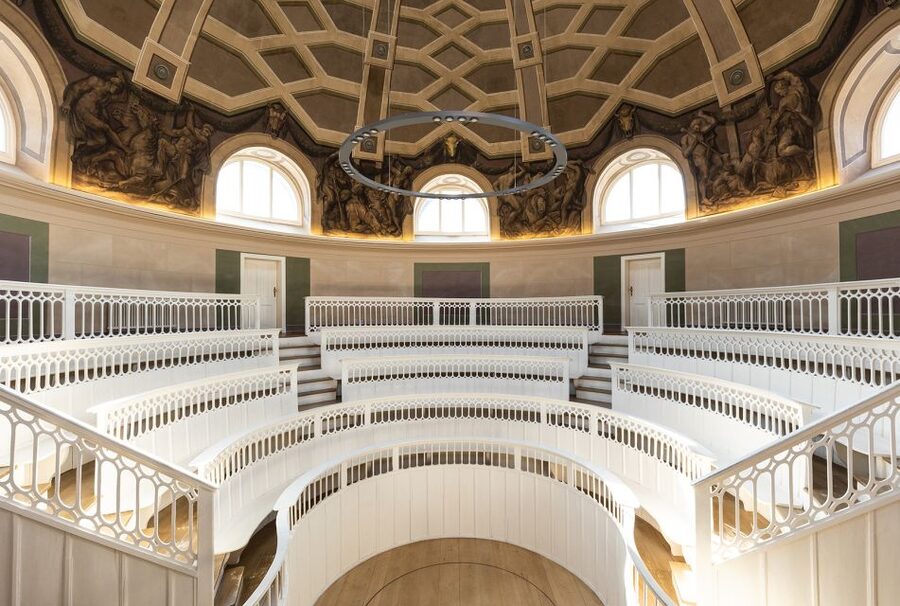
The most unusual stop is the Animal Anatomical Theatre, often described as a mysterious medicine temple. It is Berlin’s oldest surviving teaching building, and you visit it from the inside.
This building gives the tour a change of pace. Most of the walk takes place on public streets or outside hospital facilities. Here, you enter a historic teaching space tied to medical education. The setting helps explain how anatomy was taught and how students once learned through observation and dissection.
The name can sound grand, but that is part of the appeal. It points to a time when medical education took place in specially designed rooms that could feel formal, theatrical, and even secretive. The building’s survival is important because it provides a direct link to the teaching side of Berlin medicine.
The Animal Anatomical Theatre is also the part of the tour most likely to stay with you after the walk. It is not simply another stop on a list. It shows how medicine was taught, not just how doctors treated patients or made discoveries.
Opening hours can change at short notice because of closed events. The building is also closed on public holidays. Check the date carefully before booking, especially if this interior visit is the main reason you want the tour. If the theatre is unavailable, the experience would lose its most distinctive physical stop.
The balance of achievement and ethical failure
The Charité story has plenty of impressive figures. Virchow, Koch, Behring, and Sauerbruch represent different parts of Berlin’s scientific and medical tradition. Nobel Prize connections add another layer of prestige.
Still, the best part of the tour is not simply hearing a roll call of celebrated doctors. It is seeing the contrast between medical progress and the responsibilities that come with it. The Charité’s cooperation with the Nazi regime gives the walk a serious moral dimension.
I appreciate that the experience includes this material instead of offering a spotless portrait of Berlin medicine. Medical institutions can produce major discoveries and still fail badly in matters of ethics, power, and human rights. You should be ready for a thoughtful discussion, not just stories of clever scientists.
This balance also makes the tour useful for repeat visitors to Berlin. If you have already seen the city’s major sights, the Charité offers a different way to understand Berlin. It connects the city’s academic life, political history, and public health concerns in one compact route.
What $27 buys you in two hours
At $27 per person, the tour is reasonably priced for a guided, specialist walk with an interior visit. You are paying for a live German-speaking guide, a carefully focused subject, and access to the Animal Anatomical Theatre when it is open.
The value depends on your interests. If you enjoy medical history, Berlin science, or the story of institutions, the price is easy to justify. You get more than a view of a hospital façade. The guide provides the context that turns streets and buildings into a connected story.
If you want a broad Berlin overview, the money may be better spent elsewhere. This tour does not cover the Brandenburg Gate, the Berlin Wall, Museum Island, or the city’s general political history. Its subject is narrow by design.
The two-hour duration is another strength. You can fit it into a morning or afternoon without giving up an entire day. The walk ends back at the original meeting point, which makes it easier to plan the rest of your Berlin schedule.
Free cancellation up to 24 hours before the start gives you some flexibility. You can also reserve the place and pay later, useful when you are arranging several activities in advance.
Who will enjoy this walk most
I would recommend this tour to you if you have any of these interests:
- Berlin’s scientific and university history
- The history of hospitals and medical teaching
- Famous doctors and Nobel Prize winners
- The ethical problems surrounding medicine and state power
- Unusual historic interiors
- Focused walking tours rather than broad sightseeing tours
It is also a good choice for visitors who have already covered Berlin’s major landmarks. The Charité gives you a more specialized subject and a different part of the city’s story.
The German-only format is the most important qualification. The live guide speaks German, and no other language is listed. If you do not understand German well, you may miss the very details that make the tour worthwhile.
You should also be comfortable with a serious subject. Stories about illness, death, medical authority, and Nazi-era cooperation are central to the experience. This is not a light stroll built around pretty streets.
Practical advice before you book
Wear comfortable shoes. The experience lasts two hours and includes walking along Luisenstraße and across the university area. The exact starting time depends on availability, so check the schedule before building your day around it.
Find the meeting point at the Charité Tower crossroads of Schumannstraße, Charitéplatz, and Charitéstraße. The guide starts on time, and the activity returns to that same location.
Keep the access limits in mind:
- The Charité Bed House is viewed from outside only.
- The hospital grounds at Charité Campus Mitte are not accessible to group tours.
- The Animal Anatomical Theatre is the interior visit.
- The theatre may close for private events and is closed on public holidays.
- The tour is conducted in German.
The experience currently carries a 4.4 rating from 537 ratings, a useful sign that the focused format works for many people. Still, the subject and language make it a poor fit if you want a casual English-language overview or a tour inside the hospital itself.
Should you book the Charité walking tour?
Book it if you want a compact, serious look at Berlin through medicine. The combination of famous scientists, institutional wrongdoing, and the Animal Anatomical Theatre gives the walk more substance than its two-hour length might suggest.
Skip it if you need an English-language tour, broad city sightseeing, or access to hospital interiors. For the right audience, $27 is fair value, especially because the tour ends with one of Berlin’s rare medical teaching spaces. Check the theatre’s opening conditions and confirm that German suits you, then this is a smart specialist addition to a Berlin itinerary.
FAQ
Where does the Charité walking tour start?
It starts in front of the Charité Tower, at the crossroads of Schumannstraße, Charitéplatz, and Charitéstraße.
Where does the tour end?
The activity ends back at the original meeting point.
How long does the tour last?
The tour lasts two hours.
What language is the tour conducted in?
The live tour guide conducts the experience in German.
Can the tour enter the Charité Bed House?
No. The Charité Bed House is viewed from outside because it remains a functioning hospital facility.
Can group tours enter the Charité Campus Mitte hospital grounds?
No. The hospital grounds are not accessible for group tours.
What interior building does the tour visit?
The tour visits the Animal Anatomical Theatre, Berlin’s oldest surviving teaching building.
Is the Animal Anatomical Theatre always open?
No. It may adjust its opening hours for closed events, and it is closed on public holidays.
Just added around Berlin
- Berlin Highlights in One Day★ 5.0 · 3 reviews
- Transfer from Berlin Schönefeld Airport (SXF) to Berlin city Hotels – ROUND TRIP★ 4.0 · 3 reviews
- Private Berlin One Day Tour with a Local: See the City Unscripted★ 3.5 · 3 reviews
- Individual city tour Berlin for max. 8 persons★ 5.0 · 3 reviews
- Berlin: Museum Island Tour★ 5.0 · 3 reviews
- Private Analogue Photography Experience in Berlin★ 5.0 · 3 reviews
- Berlin: Local Food Tour in Secrets Hidden Gems★ 4.0 · 3 reviews
- Berlin & The Third Reich Private Guided Tour★ 5.0 · 3 reviews
Walking Tours, compared.




Berlin’s Best: 2 Hour Walking Tour Third Reich and the Cold War
Read our review →

Third Reich Berlin: Hitler and WWII Walking Tour
Read our review →

Browse the lists this tour appears in