
Review · WALKING TOURS
Berlin Walking Tour
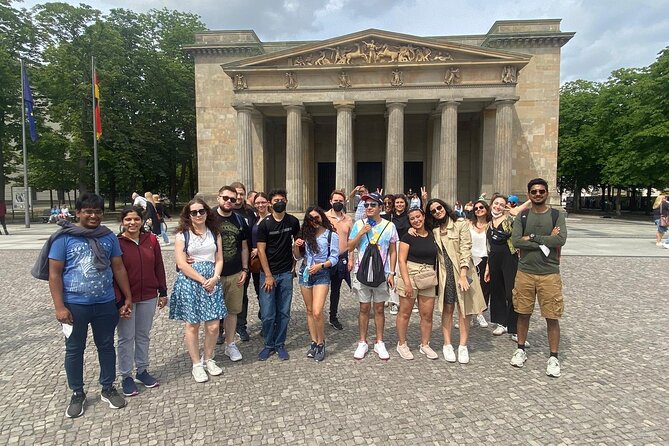
Berlin’s past is spread across its streets, squares, and empty spaces, and this three-hour walking tour gives you a fast way to connect the pieces. You move from the Reichstag and Brandenburg Gate to Checkpoint Charlie, the Berlin Wall Memorial, the Holocaust Memorial, and reminders of Soviet Berlin.
I like the very low price and the broad sweep of the route. I also like the range of guides, with names such as Ana, Miguel, Katia, Evan, Nora, and Rosanna receiving praise for clear storytelling, humor, and thoughtful answers. The main concern is reliability: some bookings have been affected by no-shows, changed meeting points, or confusion over tipping.
In This Review
- Key points to know before you book
- Berlin’s story told one street at a time
- Starting at the Reichstag and Brandenburg Gate
- The Berliner Dom and Berlin’s older center
- Checkpoint Charlie and the limits of a quick tour
- The Berlin Wall Memorial and the marks of division
- The Holocaust Memorial and Berlin’s hardest subject
- Soviet-era traces and the city’s overlooked details
- How much the guide shapes the experience
- Walking pace, weather, and practical comfort
- Is $2.90 really the full cost?
- Reliability is the main risk
- Who will get the most from this walk?
- Should you book the Berlin Walking Tour?
- FAQ
- How long does the Berlin Walking Tour last?
- Where does the tour begin?
- Where does the tour end?
- Which sights are covered?
- Is public transportation included?
- Can I cancel for a full refund?
Key points to know before you book
- A broad central Berlin route: See major Prussian, Nazi-era, Cold War, and modern German sites in one outing.
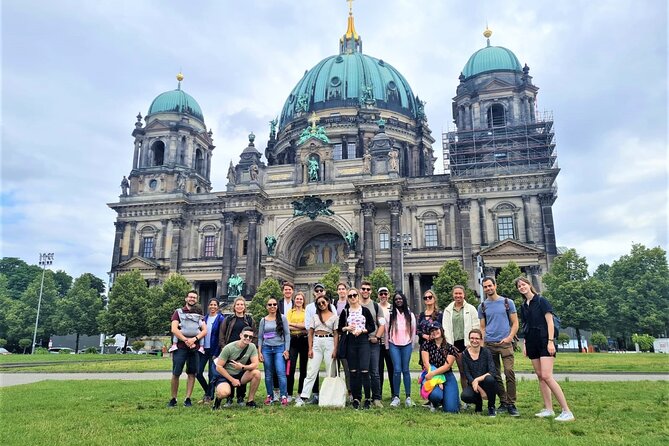
- Strong guides can make the difference: Ana, Miguel, Katia, Evan, Nora, Rosanna, and others are praised for humor, detail, and clear English.
- The tour begins at Alexanderplatz: Meet outside Generator Berlin Alexanderplatz at Otto-Braun-Straße 65.
- Expect plenty of walking: A moderate fitness level is advised, and some outings run three and a half to four hours.
- The price needs clarification: The advertised cost is $2.90 per person, but some participants understood this as a free walking tour with an expected tip.
- Leave room for schedule problems: A few bookings have involved guide no-shows, cancellations, or meeting-point changes.
Berlin’s story told one street at a time
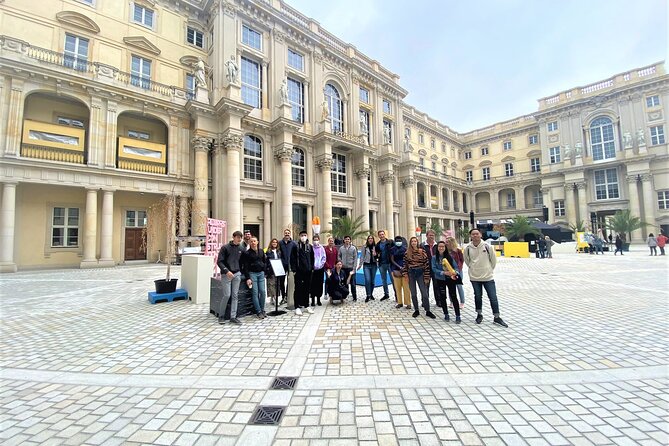
Berlin is not a city where the main sights sit neatly in one historic center. Its story is scattered across grand government buildings, former border crossings, memorials, surviving wall structures, and ordinary streets where major events once unfolded.
That makes a walking tour useful. You are not only looking at monuments. You are moving between different periods of German history and seeing how close they sit to one another. The route links the Prussian capital, the Nazi dictatorship, the divided Cold War city, and present-day Berlin.
The experience is offered in English and usually lasts about three hours. That is enough time to get your bearings and see many major sights, but not enough for long interior visits. Admission is free at the listed stops, and the focus is on outdoor explanation rather than museum entry.
The tour begins at Generator Berlin Alexanderplatz and ends back at the same meeting point. That return matters because you can plan the rest of your day from a familiar location. Public transportation may be used if needed, but it is not included in the price.
More walking tours in Berlin:
- Discover Berlin Half-Day Walking Tour
★ 5.0 · 9,624 reviews - Berlin: Third Reich and Cold War 2 Hour Walking Tour
★ 4.9 · 6,830 reviews - Berlin: Discover Berlin Walking Tour
★ 4.9 · 5,998 reviews
Starting at the Reichstag and Brandenburg Gate
The Reichstag Building is one of the strongest opening subjects. It houses the Bundestag, Germany’s lower house of parliament, and its changing role mirrors Berlin’s own political upheavals.
Your guide can use the building to explain the shift from the Prussian and imperial eras through the troubled years of the twentieth century and into modern parliamentary Germany. The stop is scheduled for about 20 minutes, so expect an outside account and a chance to take in the building rather than a full parliamentary visit.
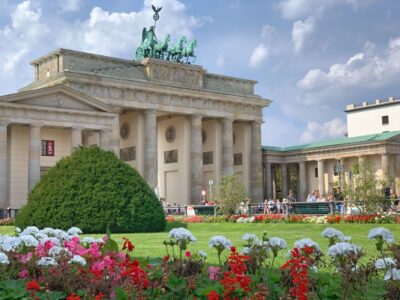
The Brandenburg Gate follows as another essential Berlin sight. Built in the eighteenth century on the orders of Prussian king Frederick William II, it began as a neoclassical monument tied to Prussian power. Later, it became a symbol of division during the Cold War and reunification after the Berlin Wall fell.
This is where a good guide adds value. The Gate itself is easy to photograph, but its meaning changed repeatedly. A strong explanation helps you see why the same structure can represent royal authority, political division, and national unity at different moments.
The Berliner Dom and Berlin’s older center
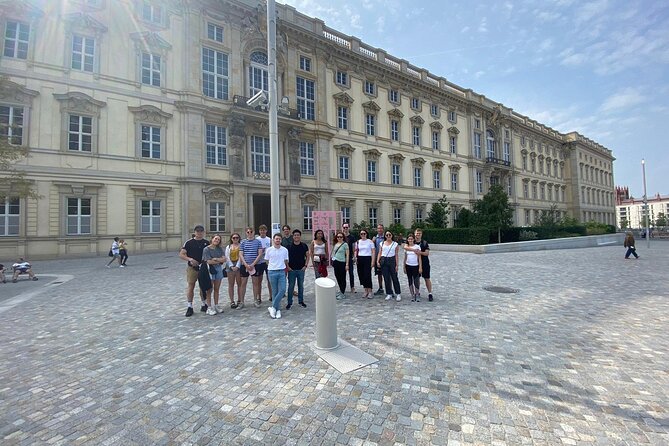
The Berliner Dom gives the tour a different tone. Its setting helps place you in Berlin’s historic center and offers a way to discuss the capital before the twentieth-century disasters that often dominate first-time visits.
The stop is listed at about 20 minutes. You should expect historical context from outside, not a detailed interior tour. The guide’s role here is to connect the cathedral to the broader story of the German capital and its political and religious past.
This part of the walk can be especially useful early in your visit. One praised guide, Caroline, was singled out for helping newcomers understand the city and notice details they might otherwise miss. That is a fair way to judge this experience: it is less about spending a long time at one monument and more about building a mental map.
Checkpoint Charlie and the limits of a quick tour
Checkpoint Charlie was the best-known crossing point between East and West Berlin during the Cold War. Its name came from the Western Allies, and it remains one of the city’s most recognizable Cold War locations.
It is also one of the tour’s weaker points if you want time for reflection. One account describes spending only about two minutes there before moving on. That fits the nature of the route: the tour aims to cover many sights, so some stops receive a short explanation rather than a full discussion.
I would treat Checkpoint Charlie as an introduction, not a complete visit. If the history of the Berlin Wall is a major reason for your trip, return later with more time. The walking tour can show you where the crossing was and explain why it mattered, but you may want a museum or a longer wall-focused experience afterward.
A different side of Berlin on the same trip:
- Berlin: Reichstag, Dome and Government District Guided Tour
★ 4.7 · 18,288 reviews - Berlin: 1-Hour City Tour by Boat with Guaranteed Seating
★ 4.3 · 16,993 reviews - Berlin: Boat Tour Along the River Spree
★ 4.4 · 11,252 reviews - Berlin: Hop-on Hop-off Bus Tour with Live Commentary
★ 4.3 · 8,579 reviews
The Berlin Wall Memorial and the marks of division
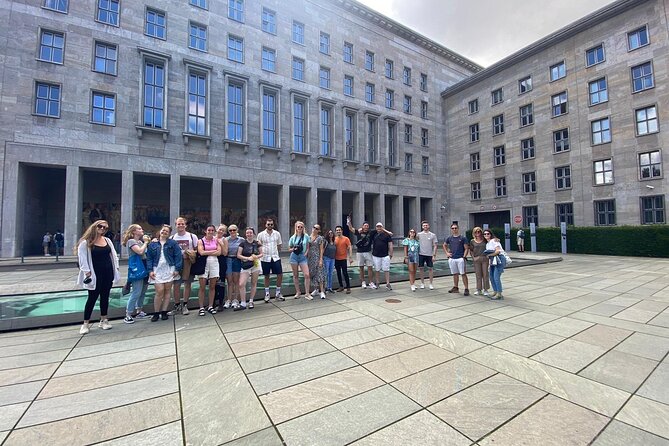
The Berlin Wall Memorial brings the Cold War story into clearer focus. The tour presents the wall as a structure that divided the city and restricted the freedom of millions under Soviet rule.
This is more than a photo stop. Berlin’s wall history can be hard to grasp from a few painted sections or souvenir displays. A guide can explain how the division affected daily movement, neighborhoods, families, and political life.
The route also includes guard towers, memorial markers, and streetlights connected with the Soviet period. These are the sorts of details you can pass without noticing when exploring alone. The tour’s value here is partly visual: you learn to look for traces of the old system in the present city.
The route is not limited to one political period. Along the way, the guide may discuss past wars, urban legends, and the city’s successes and tragedies. That mix suits you if you want more than a list of dates, although the quality depends heavily on the individual guide’s delivery.
The Holocaust Memorial and Berlin’s hardest subject
The Memorial to the Murdered Jews of Europe is one of Berlin’s most serious sites. Its field of concrete slabs creates a changing sense of space as you walk through it, though the tour’s supplied details do not promise an interior museum visit or extended time inside the memorial.
The guide places the memorial within the story of Nazi Germany and the Holocaust. This is a subject that needs care. A good explanation should be direct and respectful, not reduced to a quick photo opportunity.
The tour also frames Nazi history within a longer account of Berlin, from its early beginnings as a small fishing village to the rise of Prussian power and the crimes of the Third Reich. That long view can help you understand that Berlin was not created by the twentieth century alone, even though the Nazi period and the war left an enormous mark.
Some guides are praised for adding small stories and less familiar details. Katia, for example, is described as bringing intricate and unexpected stories to the walk. Ana is praised for mixing history, architecture, social history, and amusing bits of city gossip. Those additions can make a difficult subject easier to follow without making it lighter than it should be.
Soviet-era traces and the city’s overlooked details
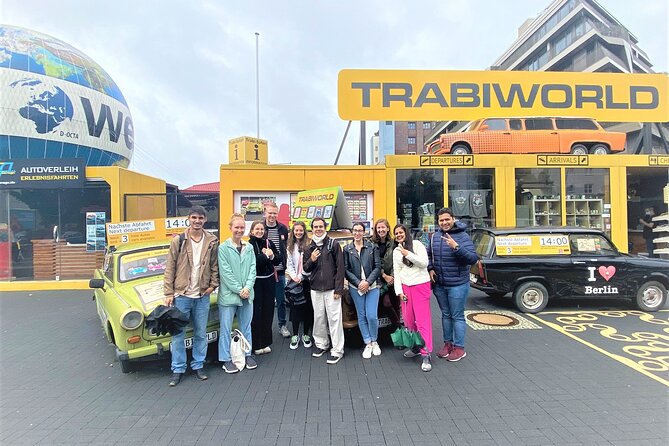
The stop named Ausstellung Objektschutzregiment der Luftwaffe Friesland is less immediately familiar than the Brandenburg Gate or Checkpoint Charlie. The route uses it as a point for discussing guard towers, memorials, streetlights, and other remains associated with Stalin’s Soviet empire.
This is the kind of stop that gives a walking tour its purpose. You might not choose it on a short independent sightseeing list, and you might not know why a particular tower or street feature matters. The guide provides the link between what you see and the political system that shaped it.
The stop is listed at about 20 minutes, but the whole route may run longer than the advertised three hours. One outing was described as three and a half hours, and another as at least four hours. That can be a bonus if you enjoy a full history lesson, but it matters if you have a timed museum entry, dinner booking, or train to catch.
How much the guide shapes the experience
The biggest strength of this tour is its better guides. Miguel is praised for his passion for German history, careful route planning, attention to the group, and willingness to help with photographs. Evan is praised for balancing detail with anecdotes. Ronja is described as clear, friendly, and ready to answer questions.
Other well-regarded guides include Francesca, Philippe, Richard, Ester, Nora, Rosanna, and Adolfo. The praise is consistent in a few areas: clear English, strong command of Berlin’s past, warmth, punctuality, and the ability to answer questions instead of simply reciting a script.
That last point matters. Berlin’s history raises difficult questions, and a guide who can explain context is far more useful than one who only points at buildings. The best version of this tour feels like a lively conversation while walking through the city.
But the experience is not uniform. One outing was described as a lecture, with a dry delivery and too little time at some stops. Another began with a large group that became much smaller by the end because the guide did not keep everyone engaged.
The group limit is 50 people. That is a sizeable maximum for a walking tour, so your experience may depend on attendance and on whether the guide uses a microphone or keeps the group tightly together. Make sure you can hear before the walk moves away from each stop.
Walking pace, weather, and practical comfort
You need a moderate level of fitness. The tour covers a substantial distance across central Berlin, and some accounts describe it as a long walk. Snow, ice, rain, and cold weather have all been part of past outings, so sensible clothing matters.
Wear comfortable shoes and bring a warm layer if the forecast is poor. One participant specifically wished they had dressed more warmly. Another completed the walk in bad weather with an umbrella, which suggests the tour generally continues rather than waiting for perfect conditions.
The start at Alexanderplatz is convenient for public transportation. Since the activity ends at the same meeting point, you can leave bags or plan your next stop around that area, though you should not assume transport costs are covered. If a metro ride is used during the walk, public transportation is listed as an extra expense.
Allow more than the stated three hours if your schedule is tight. Several accounts describe a longer outing, and the route may include pauses for questions, photographs, or extra stories. The longer length will please you if you want a history-heavy orientation. It will frustrate you if you planned this as a strict three-hour appointment.
Is $2.90 really the full cost?
At $2.90 per person, this is an extraordinary price for a guided introduction to central Berlin. You are paying very little for several hours of interpretation, and the stops themselves have no admission charge.
There is an important catch in how the price is understood. Some people booked it as a free walking tour and were then told that a substantial tip was expected, including one account of an upfront request for 20 euros per person. Another account says the guide pressured the group to tip. The operator’s response says the tour is free to join and tipping is optional.
That leaves a communication problem for you. Before booking, check exactly what the $2.90 charge represents and what, if anything, the guide expects at the end. Do not assume that a low booking price means there will be no tipping discussion.
The value remains strong if the booking and meeting arrangements work as stated. You see major sights, gain a useful overview, and can decide which places deserve a return visit. It is less good value if a no-show costs you half a day or if a meeting-point change reaches you too late.
Reliability is the main risk
The most serious weakness is not the history content. It is tour management.
Some bookings have involved a guide failing to appear at the stated meeting point. In one case, the group waited 30 minutes in the cold. Another situation involved a changed meeting point that did not reach the people who had booked, leaving them unable to find the tour.
There have also been cancellations because too few people were booked, including a morning departure moved to a later time. Since many people use this walk on their first day in Berlin, a last-minute change can disrupt museum reservations and other plans.
I would confirm the meeting point and departure time shortly before you go. Arrive early at Generator Berlin Alexanderplatz, Otto-Braun-Straße 65, 10178 Berlin, and keep the confirmation available on your phone. If the guide does not appear, record the time and contact the operator promptly.
Free cancellation is available up to 24 hours before the start time for a full refund. Changes or cancellations within 24 hours are not refundable. That policy is simple, but the reports of refund difficulty after a no-show mean you should keep all messages and booking details.
Who will get the most from this walk?
I would choose this tour for a first morning in Berlin, especially if you have only a day or two. It gives you a useful framework for the city and may help you choose which sights to revisit at greater length.
It also suits you if you like history delivered outdoors, enjoy meeting other people, and want a guide who can mix political events with architecture, social history, local stories, and urban legends. Families may find the route workable, since one outing included a child and a park walk, though the distance still calls for reasonable stamina.
I would be more cautious if you want long visits inside buildings, a small private group, a tightly timed schedule, or a specialist treatment of the Holocaust or Berlin Wall. The route is broad and quick. It introduces many places but cannot give each one the attention of a dedicated museum tour.
Should you book the Berlin Walking Tour?
Book it if you want a low-cost introduction to Berlin’s major sights and can tolerate a little uncertainty about pace, guide style, and timing. The best guides, including Miguel, Ana, Katia, Evan, and Philippe, turn the walk into a memorable history lesson with humor and useful detail.
Before you commit, clarify the tipping arrangement and verify the meeting point close to departure. I would also avoid scheduling anything nonrefundable immediately afterward.
The tour is worth considering for its range: Reichstag, Berliner Dom, Brandenburg Gate, Checkpoint Charlie, the Berlin Wall Memorial, the Holocaust Memorial, and Soviet-era traces all appear in one route. Just remember that this is an orientation walk, not a series of full site visits. If you want to get your bearings fast, it can be an excellent start. If reliability and specialist depth matter most, choose with care.
FAQ
How long does the Berlin Walking Tour last?
The advertised duration is approximately three hours. Some outings have lasted three and a half to four hours, so allow extra time if your schedule is tight.
Where does the tour begin?
The meeting point is Generator Berlin Alexanderplatz, Otto-Braun-Straße 65, 10178 Berlin, Germany.
Where does the tour end?
The activity ends back at the meeting point at Generator Berlin Alexanderplatz.
Which sights are covered?
The route includes the Reichstag Building, Berliner Dom, Brandenburg Gate, Checkpoint Charlie, the Berlin Wall Memorial, the Holocaust Memorial, and Soviet-era guard towers, memorials, and streetlights.
Is public transportation included?
No. Public transportation is not included if it is needed during the experience.
Can I cancel for a full refund?
Yes. You can cancel at least 24 hours before the start time for a full refund. Cancellations or changes made within 24 hours are not refundable.
Just added around Berlin
- Berlin Highlights in One Day★ 5.0 · 3 reviews
- Private Berlin One Day Tour with a Local: See the City Unscripted★ 3.5 · 3 reviews
- Individual city tour Berlin for max. 8 persons★ 5.0 · 3 reviews
- Transfer from Berlin Schönefeld Airport (SXF) to Berlin city Hotels – ROUND TRIP★ 4.0 · 3 reviews
- Berlin: Museum Island Tour★ 5.0 · 3 reviews
- Private Analogue Photography Experience in Berlin★ 5.0 · 3 reviews
- Berlin: Local Food Tour in Secrets Hidden Gems★ 4.0 · 3 reviews
- Berlin & The Third Reich Private Guided Tour★ 5.0 · 3 reviews
Walking Tours, compared.



Berlin’s Best: 2 Hour Walking Tour Third Reich and the Cold War
Read our review →

Third Reich Berlin: Hitler and WWII Walking Tour
Read our review →

Browse the lists this tour appears in