

Review · DDR & EAST BERLIN TOURS
East Berlin: City of Shadows Walking Tour
The most striking part of this tour is the way it links ordinary city streets to the machinery of Communist power. At the Brandenburg Gate, you begin with Cold War speeches and Soviet ambition, then follow the story through border controls, surveillance, escape attempts, and the public protests that brought East Germany down.
I like the small maximum group of eight, which should make it easier to ask questions and hear the guide in busy parts of Berlin. I also like the route’s broad sweep: the Palace of Tears shows the human cost of division, while Karl-Marx-Allee and Alexanderplatz show how the regime tried to shape daily life and public space. The main drawback is that this is primarily an outdoor orientation tour. You do not receive museum admission, and you will need public transit several times.
In This Review
- Key points to know before booking
- Berlin’s divided past begins at the Brandenburg Gate
- Friedrichstrasse and the painful Palace of Tears
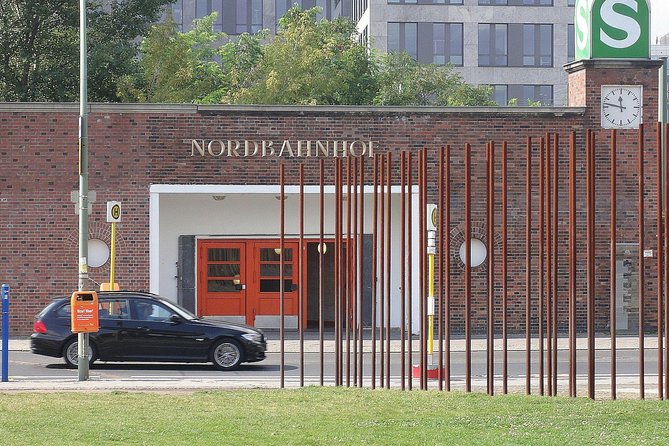
- Nordbahnhof explains Berlin’s ghost stations
- Karl-Marx-Allee shows Communism in monumental form
- The Berlin Wall Memorial makes escape personal
- The former Stasi headquarters reveals a system of suspicion
- Alexanderplatz connects Communist power to public protest
- What the three-hour format really gives you
- Is $156.53 a fair price?
- Who should book the City of Shadows tour?
- Should you book it?
- FAQ
- How long is the East Berlin: City of Shadows Walking Tour?
- What language is the tour offered in?
- What sites are included?
- Is a local guide included?
- Are museum admissions included?
- Do I need to use public transportation?
- How much does Berlin public transportation cost?
- How large is the tour group?
- Can I cancel for a full refund?
Key points to know before booking
- Brandenburg Gate sets the political stage: Start with Berlin’s division, Reagan’s 1987 speech, and the former Soviet Embassy.
- The Palace of Tears adds a personal human story: Friedrichstrasse was a painful crossing point for families separated by East German border rules.
- Ghost stations reveal the strange geography of divided Berlin: At Nordbahnhof, you learn how West Berlin subway lines passed through East German territory.
- The tour visits major Communist-era landmarks: Karl-Marx-Allee, the Berlin Wall Memorial, the former Stasi headquarters, and Alexanderplatz are all part of the route.
- Public transit is part of the experience: Plan for a Berlin day pass if you do not already have one.
- The price pays for interpretation, not admissions: At $156.53 per person, this suits visitors who want a focused historical guide, not simply a quick walk past monuments.
Berlin’s divided past begins at the Brandenburg Gate
The tour starts at Unter den Linden 42, near one of Berlin’s most famous landmarks. The Brandenburg Gate is often treated as a symbol of reunified Germany, but here it becomes the opening page in a much darker story.
Your local historian explains how the Allied division of Germany after World War II split Berlin into four sectors and created decades of tension. The nearby former Soviet Embassy adds a useful visual clue. Built in 1945 among the ruins of the war, its grand scale reflected Stalin’s plan to control the whole city.
You also hear about President Ronald Reagan’s 1987 speech, delivered close to the Wall, and his famous appeal to Soviet leader Mikhail Gorbachev. The point is not just to repeat a famous line. It is to place that speech in the tense final years of the Cold War, when Berlin remained a divided city and the Wall still seemed permanent.
Allow about 20 minutes here. That is enough for a clear introduction, but not enough for a long architectural study of the gate or the surrounding buildings. I see this as a strength if you want to get your bearings quickly. If you want detailed architecture or wartime history, you will need another visit.
More East Berlin and DDR history:
- Berlin: DDR Museum Tickets
★ 4.3 · 3,443 reviews - Berlin: 75-minute Trabi Safari
★ 4.8 · 2,854 reviews - Berlin: East and West Hop-On Hop-Off Bus Tour
★ 4.2 · 2,195 reviews
Friedrichstrasse and the painful Palace of Tears
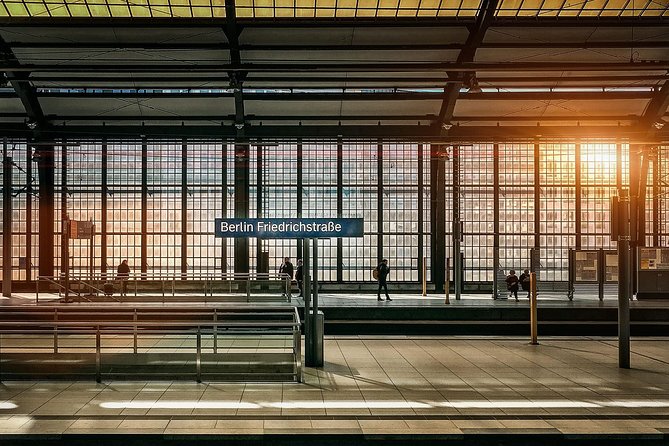
The next stop is Friedrichstrasse train station, once one of the few crossing points between East and West Berlin. This was not a normal railway station for families living under different political systems. Departures could mean a long separation, and East Germany’s strict border rules made casual visits difficult or impossible.
The station’s border office became known as the Palace of Tears because of the farewells that took place there. The name captures the emotional force of the site better than a list of dates ever could. You are asked to picture division at a family level: parents, children, friends, and partners forced to say goodbye under official watch.
The stop lasts about 15 minutes. That makes it a concise visit rather than a full museum session. The tour gives you the setting and the story, but the supplied information does not include admission to an interior exhibition. If this subject matters to you, ask the guide what can be entered during your visit, then allow extra time on your own if needed.
Nordbahnhof explains Berlin’s ghost stations
At Park am Nordbahnhof, the tour turns to one of the oddest results of the city’s division. Some West Berlin subway lines ran through areas controlled by East Germany. The stations in those sections were closed, guarded, and left unused. Trains passed through without stopping, creating the famous ghost stations.
This is a good example of why a guide adds value here. A modern station or a patch of parkland will not automatically tell you that it once sat inside a tightly controlled border zone. The story helps you read the city as a place shaped by checkpoints, political suspicion, and sudden changes in movement.
The scheduled visit is about 10 minutes. That is brief, but the stop works well as part of the larger route. You get one memorable image of divided Berlin without spending half the morning in a single museum.
Karl-Marx-Allee shows Communism in monumental form
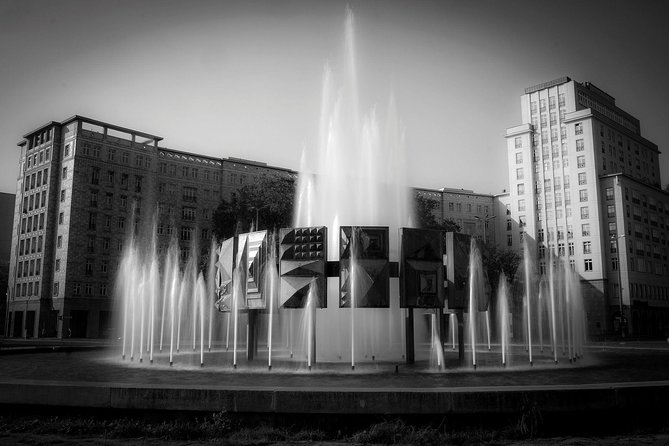
Karl-Marx-Allee presents a different side of East Germany. Instead of fences and surveillance, you see a grand housing project built to express confidence in the Socialist future. The mile-long complex was designed to show that the state could provide modern homes and create a new kind of city.
The guide places those buildings against the daily realities of East German life. Ideals of equality and abundance were undercut by shortages, repression, and fear. That contrast is the point of the stop. Architecture here was not simply decoration. It was political messaging in brick, tile, and monumental scale.
You spend about 10 minutes at Karl-Marx-Allee. That will give you an introduction, not a full study of the buildings or their design details. I would pay attention to the relationship between the grand avenue and the promise it was meant to represent. You can return later if you want to walk more of the mile-long complex at your own pace.
More walking tours in Berlin:
- Discover Berlin Half-Day Walking Tour
★ 5.0 · 9,624 reviews - Berlin: Third Reich and Cold War 2 Hour Walking Tour
★ 4.9 · 6,830 reviews - Berlin: Discover Berlin Walking Tour
★ 4.9 · 5,998 reviews - Berlin’s Best: 2 Hour Walking Tour Third Reich and the Cold War
★ 5.0 · 5,486 reviews
The Berlin Wall Memorial makes escape personal
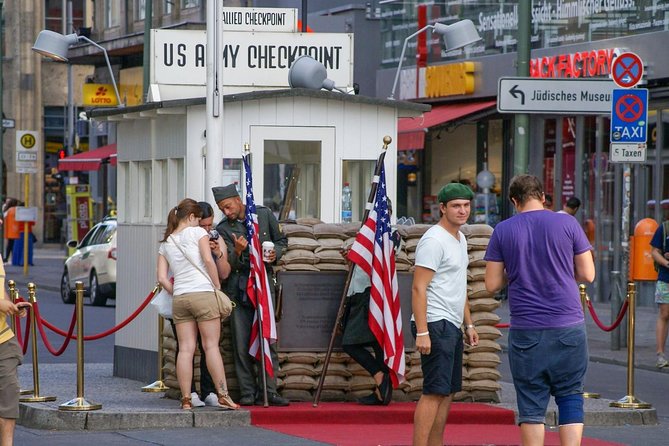
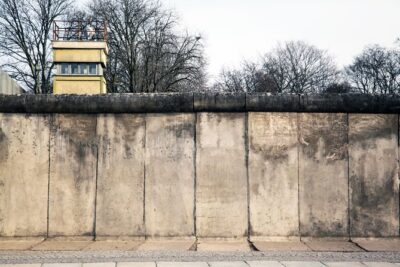
At the Berlin Wall Memorial, the tour reaches the physical border itself. You learn how the Wall, the Death Strip, and guard systems made escape attempts so dangerous. The focus is on the people who tried to leave East Berlin and died doing so.
This stop helps prevent the Wall from becoming just a strip of preserved concrete. Its real meaning lies in the choices forced upon people who wanted to cross. Some attempted tunnels, jumps, or other routes. The tour’s stated focus is on the tragic consequences of those attempts, so expect a serious discussion rather than a light sightseeing stop.
The visit lasts around 15 minutes. Again, the timing is enough for an explanation and orientation, but not for every memorial feature. If you want to examine the site fully, including its documentation and preserved sections, plan a separate visit. The tour gives you the historical framework that can make that later visit more understandable.
The former Stasi headquarters reveals a system of suspicion
The Stasi was East Germany’s secret police, and the former headquarters offers the tour’s clearest look at state surveillance. You learn how the organization pressured neighbors, friends, and family members to report on one another. Its leader, Erich Mielke, built a huge network of informants and encouraged methods designed to monitor private life.
The important idea here is scale. Surveillance did not depend only on agents in official offices. It worked through ordinary relationships, creating fear inside homes, workplaces, and neighborhoods. That gives the Stasi story a different weight from a simple account of police headquarters.
The itinerary allows about 10 minutes at the Stasimuseum stop. That is not enough for a proper museum visit, and admission is not included. One past booking experience specifically noted that visitors who want to enter museums such as the Stasi Museum should return on their own later. Take that advice seriously. Treat this portion as an introduction, then come back when you have time to see the exhibits.
Alexanderplatz connects Communist power to public protest
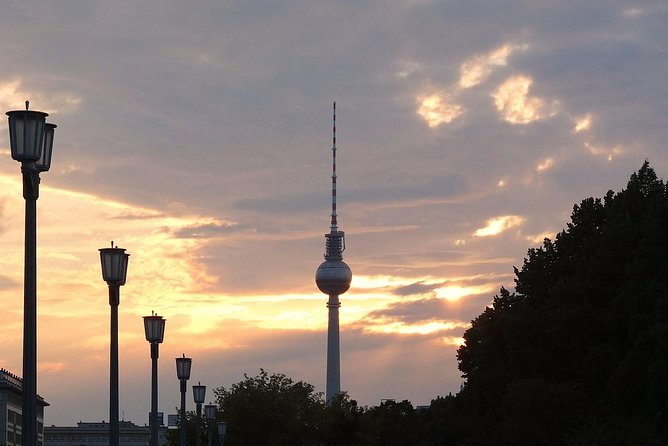
The final major stop is Alexanderplatz, the center of public life in East Berlin. The area was rebuilt in the 1960s with bold symbols of the East German state, including the TV Tower and a futuristic parliament building.
The TV Tower was meant to project modernity and confidence. Yet Alexanderplatz became the setting for enormous demonstrations in 1989. The same public space that displayed East German pride became a stage for opposition to the regime. Within months, Communist rule ended after four decades.
This is a strong place to finish because it brings the tour’s themes together. You have seen official grandeur at Karl-Marx-Allee, border control at Friedrichstrasse, surveillance at the Stasi headquarters, and death at the Wall. At Alexanderplatz, public pressure finally turned those long-running tensions into political change.
The scheduled time is about 10 minutes. You will get the essential story and a useful view of the square, but you will not explore every nearby landmark in depth. The tour ends in Berlin, with no precise final address supplied, so confirm the day’s ending point with the guide if you have a tight schedule afterward.
What the three-hour format really gives you
This is a fast-moving history tour. The listed stops total about 90 minutes of guided visits, with the remaining time used for explanation, walking, and public transit between locations. Since the sites are spread across Berlin, transportation is not an optional detail.
The route is designed as an overview, not a slow walking tour confined to one neighborhood. You move from central Berlin toward former East Berlin sites, using public transit when distances make walking impractical. That lets you see more ground in three hours, but it also means you should not expect long periods at each landmark.
I like this format for a first or second day in Berlin. It gives you a clear map of the city’s Cold War story and helps you decide where to spend more time later. It is less suitable if you prefer to linger, take many photographs, or read every museum panel during the same outing.
A Berlin public transit day ticket is listed at 7 euros for one person, with a senior price of 4.70 euros. A single Berlin AB ticket is listed at 2.80 euros, with a senior fare of 1.70 euros. If you already have a visitor transit pass, bring it. If not, the guide can help you purchase a ticket at the first metro station.
Wear comfortable shoes and be ready for a moderate level of physical activity. The tour is not described as accessible for every mobility level, so contact the provider before booking if you have concerns.
Is $156.53 a fair price?
At $156.53 per person, this is not a cheap city walk. You are paying mainly for the local historian’s explanation, the small group size, and the time saved organizing a route across several parts of Berlin. Food, drinks, museum admission, and public transportation are extra.
For me, the value depends on your interest in twentieth-century German history. If you already know Berlin well and can easily plan public transit between these sites, the price may feel high for a three-hour overview. The short visits to the Stasi Museum and Wall Memorial also mean you will not receive a full museum experience.
If you are new to Berlin, the calculation looks better. A good guide can connect places that otherwise seem unrelated, explain what disappeared during reunification, and help you understand why certain squares and buildings mattered. The group limit of eight is another useful feature. It should provide a more personal setting than a large coach tour, though the final experience will still depend on the individual guide.
The tour has a 4.8 rating from 11 reviews, and 91 percent of bookers recommend it. Those numbers suggest strong satisfaction, but the sample is small. The most useful caution is clear: this is a brief overview of several Communist-era sites, not a substitute for entering the museums.
Who should book the City of Shadows tour?
I would choose this tour if you want a strong introduction to East Berlin, especially if the Cold War, the Berlin Wall, or the end of Communist rule is a main reason for your visit. It suits history-minded visitors who prefer stories and context to a simple list of landmarks.
Families with older children may also find the route useful, though the subject includes repression, deaths during escape attempts, and state spying. The guide’s role is especially valuable for anyone who does not know the difference between the Soviet occupation zone, East Berlin, West Berlin, and the later reunited city.
You should think twice if you want extensive museum time, a purely leisurely walk, or a route with no transit. You may get more from booking this early in your Berlin stay, then returning to the Stasi Museum, the Wall Memorial, or Karl-Marx-Allee after you know what to look for.
Pickup information needs a quick check before you commit. The experience details say pickup is offered from any hotel or accommodation in Berlin, while the inclusions state that hotel pickup and drop-off are not included. Confirm the exact arrangement with Insight Cities so you know where to meet and what is covered.
Free cancellation is available when you cancel at least 24 hours before the start time. Changes or cancellations made less than 24 hours in advance are not accepted for a refund.
Should you book it?
Book this tour if you want the big picture of East Berlin in three hours, with a historian tying together the Wall, Stasi, Communist architecture, and the protests of 1989. The small group and well-chosen route are its strongest features.
Skip it if you want full museum visits or feel comfortable building your own public transit itinerary. For most first-time visitors with a serious interest in Berlin’s divided past, I think it works best as an orientation: take the tour, note the places that catch your attention, and return later for the interiors and longer exhibits.
FAQ
How long is the East Berlin: City of Shadows Walking Tour?
The experience lasts approximately three hours.
What language is the tour offered in?
The tour is offered in English.
What sites are included?
The route includes the Brandenburg Gate, Friedrichstrasse and the Palace of Tears, Park am Nordbahnhof, Karl-Marx-Allee, the Berlin Wall Memorial, the Stasimuseum, and Alexanderplatz.
Is a local guide included?
Yes. A local guide is included, described as a local historian.
Are museum admissions included?
No museum admission is included. Food, drinks, and transportation to and from the attractions are also not included.
Do I need to use public transportation?
Yes. Public transportation is needed several times because some of the sites are too far apart to walk during the tour.
How much does Berlin public transportation cost?
The listed price for a Berlin AB one-way ticket is 2.80 euros, or 1.70 euros for seniors. A one-person Berlin transit day ticket is listed at 7 euros, or 4.70 euros for seniors.
How large is the tour group?
The tour has a maximum of eight travelers.
Can I cancel for a full refund?
Yes, if you cancel at least 24 hours before the experience start time. Cancellations made less than 24 hours before the start time are not refunded.
Just added around Berlin
- Berlin Highlights in One Day★ 5.0 · 3 reviews
- Private Berlin One Day Tour with a Local: See the City Unscripted★ 3.5 · 3 reviews
- Individual city tour Berlin for max. 8 persons★ 5.0 · 3 reviews
- Transfer from Berlin Schönefeld Airport (SXF) to Berlin city Hotels – ROUND TRIP★ 4.0 · 3 reviews
- Berlin: Museum Island Tour★ 5.0 · 3 reviews
- Private Analogue Photography Experience in Berlin★ 5.0 · 3 reviews
- Berlin: Local Food Tour in Secrets Hidden Gems★ 4.0 · 3 reviews
- Potsdam Highlights – Private sightseeing tour by minibus★ 5.0 · 3 reviews
DDR & East Berlin Tours, compared.





East Berlin and the Berlin Wall 2-Hour Walking Tour
Read our review →
East Berlin Food & History Tour with Eating Europe
Read our review →Browse the lists this tour appears in