
Review · THIRD REICH & WWII SITES
Hitler to Stalin – WWII & Cold War Tour (Small Group)
Berlin’s past is written into ordinary streets, government buildings, empty spaces, and fragments of wall. This 2.5-hour walking tour links the Nazi era to the Cold War, taking you from Brandenburg Gate and the Reichstag to Hitler’s bunker, the Holocaust Memorial, and Checkpoint Charlie.
I like the broad sweep of the route, and I like that Then & Now photographs and maps help you see how Berlin changed. The tour’s small-group format also gives the guide room to explain difficult subjects clearly. The trade-off is simple: you cover a lot on foot in a short time, so this is an introduction rather than a full study of every site.
In This Review
- Key points to know before you book
- Berlin’s story begins at Brandenburg Gate
- The Reichstag and the politics behind the city
- Hitler’s bunker and the difficult spaces of Nazi Berlin
- The Holocaust Memorial and the cost of remembrance
- From wartime ruin to the Berlin Wall
- Checkpoint Charlie and a city divided
- Why the small-group format matters
- What $34 buys you in Berlin
- Walking conditions, weather, and accessibility
- Who will get the most from this walk
- My booking advice
- FAQ
- How long does the Hitler to Stalin tour last?
- Where does the tour begin?
- Where does the tour end?
- What language is the tour conducted in?
- Is the tour wheelchair accessible?
- What landmarks are included?
- What should I bring?
- Can I cancel for a full refund?
Key points to know before you book
- A full 20th-century route: Connect World War II, the Nazi government, the Berlin Wall, and German reunification in one walk.
- Major sights with serious context: See Brandenburg Gate, the Reichstag, Hitler’s bunker site, the Holocaust Memorial, and Checkpoint Charlie.
- Small-group setting: The guide can keep the walk more personal than a large city tour.
- Guide-led in English: Tom is one of the named guides, praised for clear explanations and strong engagement with the group.
- Practical outdoor tour: Wear comfortable shoes and prepare for rain, since the walk goes ahead in all weather.
- Good booking flexibility: You can cancel up to 24 hours ahead for a full refund and reserve now while paying later.
Berlin’s story begins at Brandenburg Gate
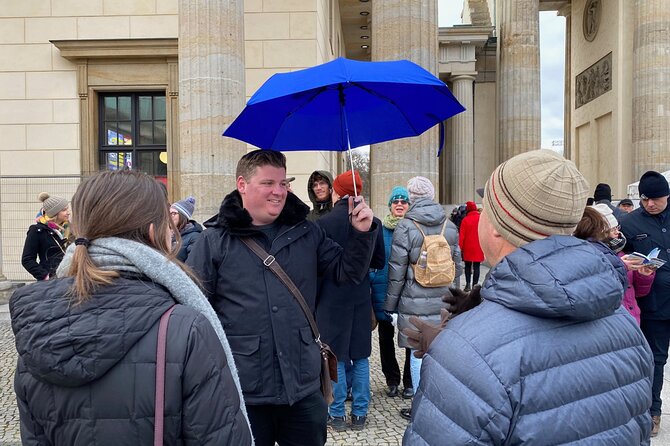
Meet at the Tourist Center by Brandenburg Gate, looking for the blue umbrella. This is a sensible starting point because the gate connects several chapters of Berlin’s story: imperial power, Nazi spectacle, wartime destruction, Cold War separation, and reunification.
Your guide uses the area to explain how Berlin moved from a divided city to a symbol of German unity. The gate itself is visually impressive, but the value here comes from seeing how its meaning changed over time.
I find this opening useful because it gives you a mental map before the walk gets denser. You are not just ticking off a famous photo stop. You are beginning to understand why Berlin’s central spaces were repeatedly used, damaged, controlled, and reinterpreted.
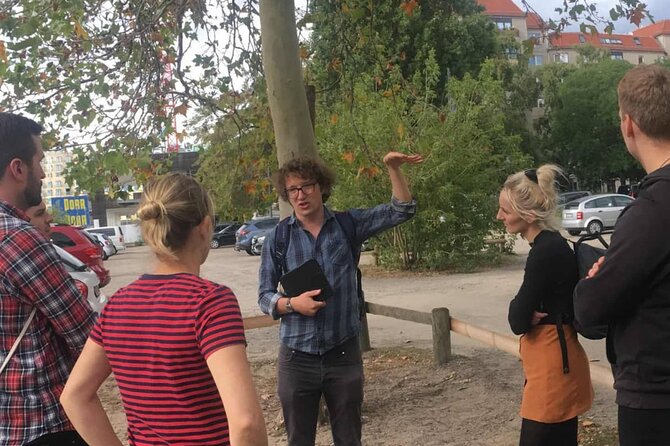
The tour is led in English by a live guide. Tom is specifically identified as one of the guides, and his approach is described as interesting, appropriate, and well engaged with the whole group. That matters on a topic like this. A good guide must handle Nazi crimes, war, dictatorship, and division without turning the subject into either a lecture or a spectacle.
More Cold War Berlin:
- Berlin: Third Reich and Cold War 2 Hour Walking Tour
★ 4.9 · 6,830 reviews - Berlin’s Best: 2 Hour Walking Tour Third Reich and the Cold War
★ 5.0 · 5,486 reviews - Cold War, Berlin Wall, Spies and the East Side Gallery
★ 5.0 · 1,024 reviews
The Reichstag and the politics behind the city
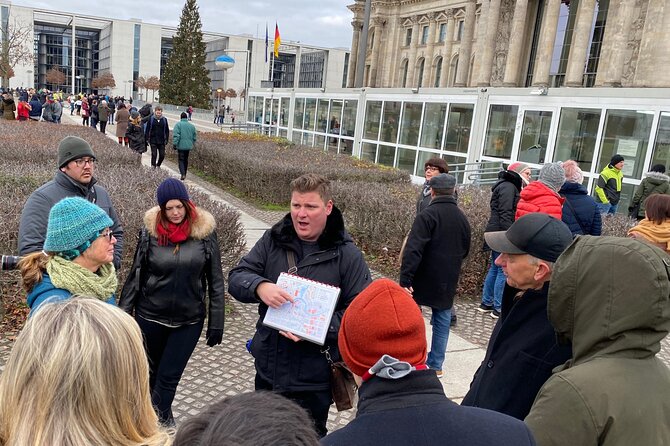
The Reichstag brings politics into the story. Here, the guide explains the role of government and the political forces that shaped Berlin before and during World War II.
You should think of this as an exterior history stop rather than a promise of an interior visit. The supplied details identify the Reichstag as part of the walking route, but they do not include entry inside the building. That distinction is useful when you set expectations.
The stop also helps connect national decisions with the streets you are walking. Berlin was not simply a backdrop to major events. It was the seat of power, a target during the war, and later a city divided by competing political systems.
I like this part of the route because it places the human stories in a wider frame. The tour is designed to explain not only what happened at each site, but also how those events led to Berlin’s partition and eventual unification.
Hitler’s bunker and the difficult spaces of Nazi Berlin
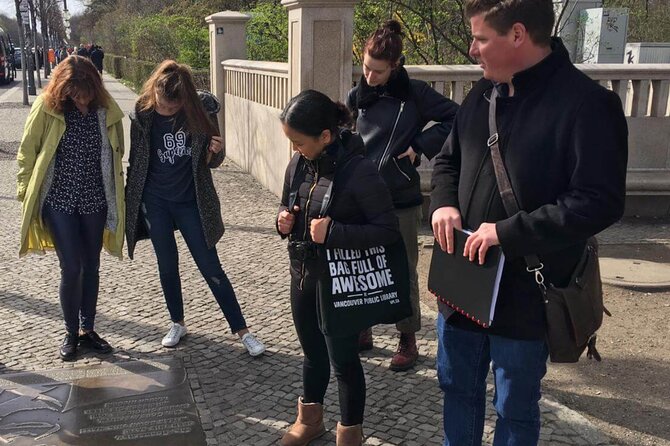
The former location of Hitler’s bunker is one of the most charged stops. The bunker itself is not presented as a preserved attraction, and you should not expect an underground visit. The point is to understand what happened at this site and how Berlin deals with places linked to the Nazi regime.
That restraint is important. A serious tour does not turn the bunker into a curiosity. Instead, the guide can help you place the final days of the Nazi government within the wider destruction of the city and the collapse of the regime.
The tour also includes the former Gestapo headquarters area. Again, this is a historical location within the city rather than a guaranteed museum entry. Its inclusion gives the walk a sharper focus on state terror, policing, and the machinery of dictatorship.
These stops are likely to feel heavier than Brandenburg Gate or the Reichstag. Give yourself room to listen. The information is not just about military events. It concerns persecution, fear, government violence, and the human cost of political extremism.
The Holocaust Memorial and the cost of remembrance
The Memorial to the Murdered Jews of Europe, commonly called the Holocaust Memorial, provides a pause from the surrounding streets. The tour uses it to consider the enormous loss caused by the Nazi era and the lessons Berlin tries to preserve.
The memorial is not a place for a quick photo and a dash to the next stop. Its open field of concrete blocks invites a slower response, and your guide can help place it within Berlin’s modern effort to confront the past.
You may find this section especially valuable if you want more than a military timeline. The tour’s learning goals include honoring the endurance of Berliners and relating to important historical places, but the subject also reaches far beyond Berlin. The Holocaust was a European crime with consequences that cannot be reduced to one city.
A walking tour cannot explain every detail of Nazi persecution in 2.5 hours. What it can do is establish the setting, clarify the major events, and point you toward a more thoughtful understanding of what you see around you.
More Third Reich sites in Berlin:
- Berlin: Berlin Story Bunker Entry Ticket
★ 4.6 · 6,759 reviews - Third Reich Berlin: Hitler and WWII Walking Tour
★ 5.0 · 3,301 reviews - Berlin: Third Reich, Hitler, and WWII Walking Tour
★ 4.9 · 1,133 reviews - Berlin Third Reich Sites: Half-Day Walking Tour
★ 5.0 · 835 reviews
From wartime ruin to the Berlin Wall
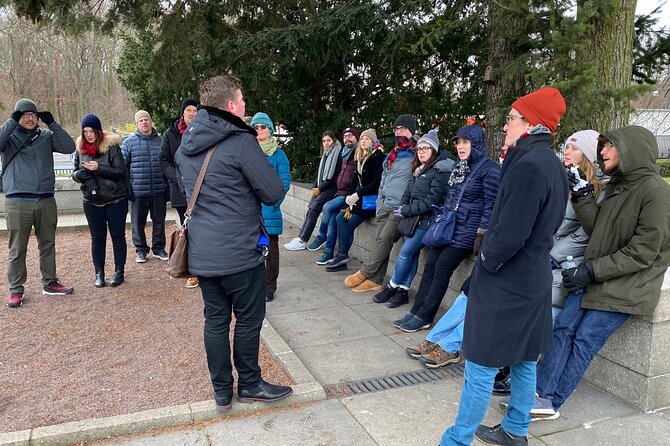
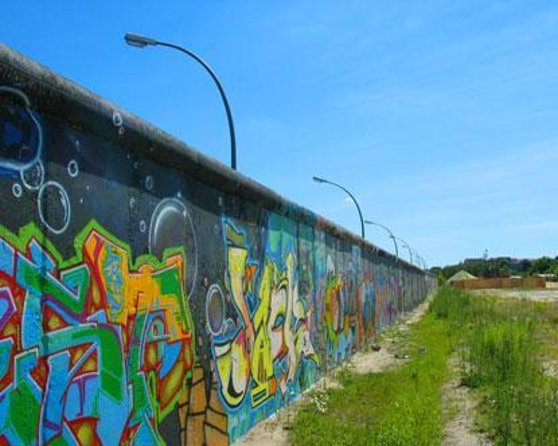
The Berlin Wall section shifts the mood from Nazi dictatorship to postwar division. Here, you learn how the end of World War II led to a divided Germany and a divided Berlin, with rival powers shaping daily life on opposite sides of the city.
The tour identifies the Wall as the actual Iron Curtain, a phrase that captures its wider meaning. This was not simply a barrier between neighborhoods. It became one of the clearest physical symbols of the Cold War.
The route helps you see how Berlin was reshaped by these events. Streets, checkpoints, borders, and political boundaries changed how people lived and moved. The division was global in its meaning, but it was also intensely local for Berliners.
I like that this part is tied back to the earlier stops. You are not being given two unrelated history lessons. The tour explains how the destruction and political collapse of World War II created the conditions for the Cold War struggle that followed.
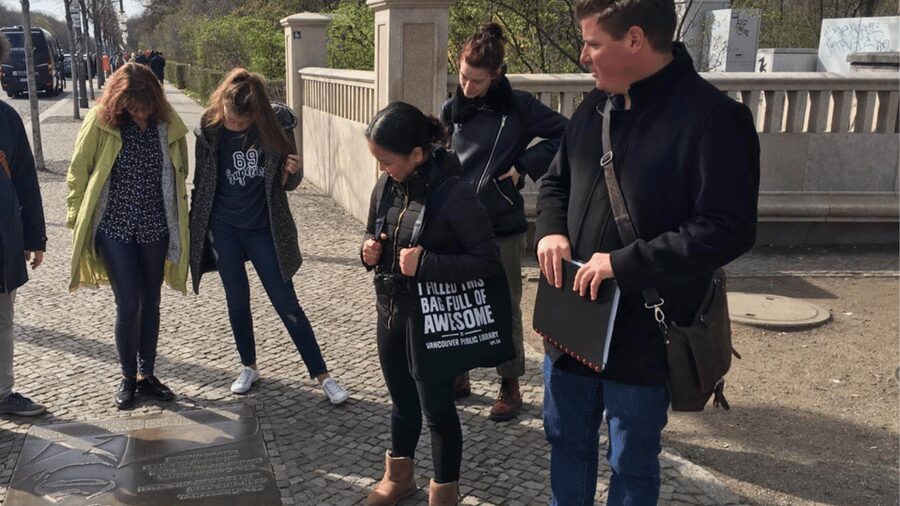
The Wall is also where maps and Then & Now images can make a real difference. Old photographs show a city that looked and functioned very differently. Comparing those images with the present view helps you notice what has disappeared, what remains, and how quickly a city can be remade.
Checkpoint Charlie and a city divided
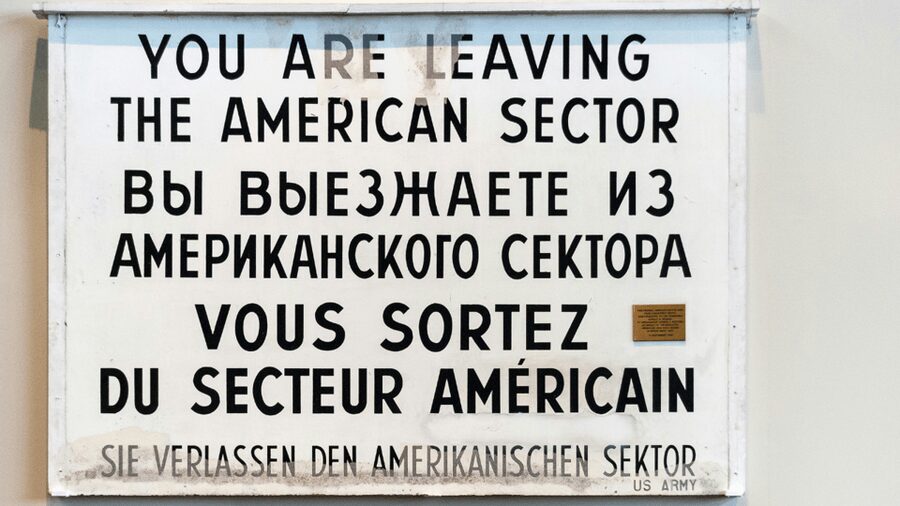
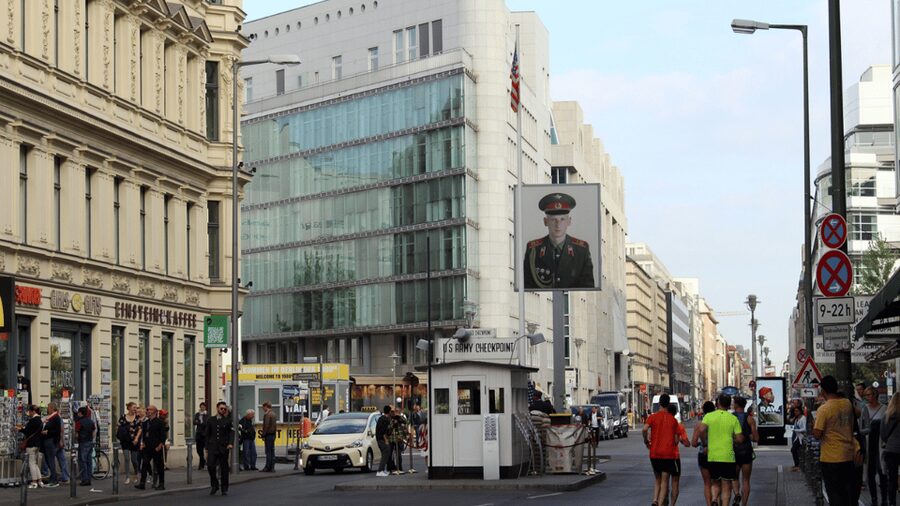
Checkpoint Charlie is one of Berlin’s best-known Cold War sights, and it can also be one of the most commercialized. The value of visiting with a guide is the chance to move beyond the guardhouse image and learn what the checkpoint represented.
Here, the tour focuses on a city split between East and West. You learn about the events that led to division, the wider significance of Berlin’s border, and the process that eventually brought the city back together.
Checkpoint Charlie is not a quiet or untouched historical site. It is busy with visitors, shops, and photo opportunities. That can make it feel less solemn than the Holocaust Memorial or the former Gestapo area. Still, its fame is justified, and the guide’s explanation gives the place more meaning than a quick photograph can provide.
If you have already visited Checkpoint Charlie on your own, you may still gain something from the historical framing. If this is your first Berlin history tour, the stop works well as the final major piece in the story of division and reunification.
Why the small-group format matters
The tour is advertised as an exclusive small-group experience, though no maximum group size is provided. That means you should expect a more focused setting than a large public walk, but you should check the booking details for the exact number on your date.
Small groups are useful here because the subject often raises questions. You may want to ask about how Berlin changed, why a site looks different from old photographs, or how the Nazi and Cold War periods connect. A guide can usually handle those questions more easily when the group is limited.
Tom’s strong feedback is a useful sign for people who care about presentation. He is described as clear, interesting, appropriate, and attentive to all members of the group. Those qualities matter more than theatrical storytelling on a tour dealing with mass violence and political oppression.
The tour is not designed as a private lesson, though. If you want to stop for long periods at every memorial or examine detailed military history, two and a half hours will feel short. It works best as a structured overview that helps you decide which museums or memorials deserve more of your time later.
What $34 buys you in Berlin
At $34 per person, this is a reasonable price for a guided walk covering several of Berlin’s most important 20th-century sites. You are paying for an expert English-speaking guide, a small-group format, and the use of historical photographs and maps, not for museum tickets or transportation.
That distinction makes the value easy to judge. If you only want to locate the Brandenburg Gate, Reichstag, Wall, and Checkpoint Charlie, you can walk to many of them yourself. The fee becomes worthwhile if you want the links between those places explained in a clear order.
The tour also saves you from treating each site as an isolated stop. Berlin’s historical center can feel scattered, especially when you are trying to connect the Nazi period with the Cold War. A guide provides the sequence and the background, which can save you time and prevent major gaps in your understanding.
I would not choose this walk solely for its number of sights. I would choose it for the way the route connects political decisions with visible places. At this price, that structure is the main benefit.
Walking conditions, weather, and accessibility
The activity lasts 2.5 hours and takes place outdoors, so comfortable shoes are essential. Bring water and light snacks, especially if you are not used to extended city walks.
The tour runs rain or shine. Check the forecast and bring an umbrella or raincoat when the weather looks doubtful. Berlin’s weather can change quickly, and a wet walk is less enjoyable when you are unprepared.
The tour is listed as wheelchair accessible. If you use a wheelchair or have particular mobility needs, it is still sensible to confirm current route details before booking, since the supplied information does not describe every surface or crossing.
The end point is back at the Brandenburg Gate meeting point. That makes the tour easy to fit into a day of sightseeing, since you are not left in an unfamiliar part of the city.
Who will get the most from this walk
This tour suits first-time visitors who want a clear introduction to Berlin’s Nazi and Cold War history. It is also useful for anyone who has seen the major sights but feels they are missing the connections between them.
You will get the most from it if you are willing to listen closely and think about difficult subjects. The focus is educational and historical, with attention to both human suffering and Berlin’s ability to rebuild and reunite.
Families with older children may find the route helpful, though the Nazi and Holocaust sections require care and maturity. The tour is not a light sightseeing stroll, and its themes may not suit very young children.
History specialists may want more detail than this format can offer. You can still use the walk as a starting point, then visit museums or memorials on your own. The tour’s role is to give you a strong framework, not to cover every event, date, or personal story.
My booking advice
I would book this tour if you want to understand Berlin as a city shaped by two connected periods of dictatorship, war, division, and reunification. The route is broad, the price is fair, and the small-group format should make it easier to ask questions and follow the story.
I would skip it only if you dislike walking in all weather or already have a detailed plan for studying these sites independently. For most visitors, the combination of Hitler’s bunker site, the Gestapo headquarters area, the Holocaust Memorial, the Berlin Wall, and Checkpoint Charlie gives you a useful first layer of understanding.
The strongest reason to book is the guide-led context. Berlin’s memorials can be powerful, but they do not always explain themselves. With an English-speaking specialist such as Tom, you get a clearer sense of how the city moved from Nazi rule to Cold War division and, finally, reunification.
FAQ
How long does the Hitler to Stalin tour last?
The tour lasts 2.5 hours.
Where does the tour begin?
Meet at the Tourist Center at Brandenburg Gate. Look for the blue umbrella.
Where does the tour end?
The tour ends back at the Brandenburg Gate meeting point.
What language is the tour conducted in?
The live tour guide speaks English.
Is the tour wheelchair accessible?
Yes, the activity is listed as wheelchair accessible.
What landmarks are included?
The route includes Brandenburg Gate, the Reichstag, Hitler’s bunker site, the former Gestapo headquarters area, the Holocaust Memorial, the Berlin Wall, and Checkpoint Charlie.
What should I bring?
Bring comfortable walking shoes, water, and light snacks. An umbrella or raincoat is useful in poor weather.
Can I cancel for a full refund?
Yes. You can cancel up to 24 hours in advance for a full refund. You can also reserve now and pay later.
Just added around Berlin
- Berlin Highlights in One Day★ 5.0 · 3 reviews
- Private Berlin One Day Tour with a Local: See the City Unscripted★ 3.5 · 3 reviews
- Individual city tour Berlin for max. 8 persons★ 5.0 · 3 reviews
- Transfer from Berlin Schönefeld Airport (SXF) to Berlin city Hotels – ROUND TRIP★ 4.0 · 3 reviews
- Berlin: Museum Island Tour★ 5.0 · 3 reviews
- Private Analogue Photography Experience in Berlin★ 5.0 · 3 reviews
- Berlin: Local Food Tour in Secrets Hidden Gems★ 4.0 · 3 reviews
- Berlin & The Third Reich Private Guided Tour★ 5.0 · 3 reviews
Third Reich & WWII Sites, compared.



Berlin’s Best: 2 Hour Walking Tour Third Reich and the Cold War
Read our review →
Third Reich Berlin: Hitler and WWII Walking Tour
Read our review →

Berlin Third Reich Sites: Half-Day Walking Tour
Read our review →
Guided Bike Tour of the Berlin Wall and Third Reich
Read our review →
Hitler’s Germany: Berlin During the Third Reich & WWII
Read our review →Browse the lists this tour appears in