
Review · KREUZBERG TOURS
Private Photo Tour in Kreuzberg
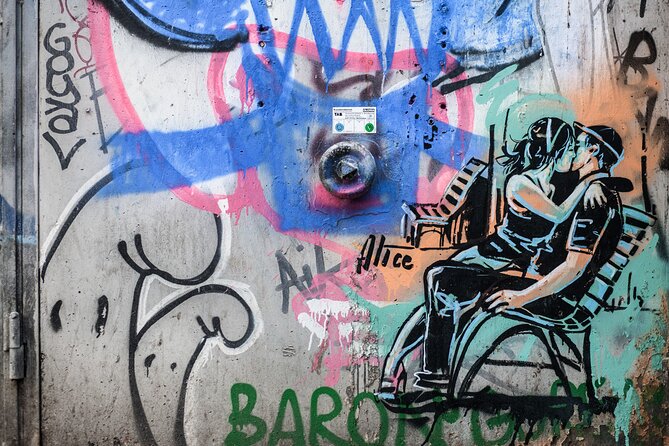
Berlin’s Kreuzberg is best understood one courtyard, housing block, and contested square at a time. This private photo walk pairs local history with practical image-design ideas, so you are not simply collecting pictures of Berlin. You are learning why a place looks the way it does and how to frame it.
I especially like the private format for up to five people and the chance to enter courtyards that are both accessible and worth photographing. I also like the personal planning: guide Sascha discussed one participant’s wishes in advance and adjusted the route, even changing it beyond Kreuzberg when that suited the request.
The main consideration is pace. Two and a half hours covers six locations, so the tour gives you a strong introduction rather than unlimited time at every stop. The route also ends somewhere different from its starting point, and the supplied details do not state the final address, so confirm that before you set out.
In This Review
- Key points at a glance
- Why this Kreuzberg photo walk is different
- Starting at Kottbusser Tor and Adalbertstraße
- Oranienplatz and the hand of Lenné
- One hour among Oranienstraße’s courtyards
- Rio-Reiser-Platz and Kreuzberg’s battles over housing
- Mariannenplatz, Marianne, and the Kunsthaus
- Engelbecken and a different side of Kreuzberg
- What the photography instruction may offer
- The value of a $206.10 private booking
- Who should book this walk
- Practical planning before you go
- Should you book the Kreuzberg photo tour?
- FAQ
- How long does the private photo tour last?
- How many people can join the private tour?
- Where does the tour start?
- Where does the tour end?
- What places does the route visit?
- Is the tour suitable for most participants?
- Can I cancel the booking?
Key points at a glance
- Private route for up to five: Your group gets the guide’s attention instead of sharing a set commentary with strangers.
- Kreuzberg seen through old photographs: Kottbusser Tor and Engelbecken come with visual clues to major changes in Berlin.
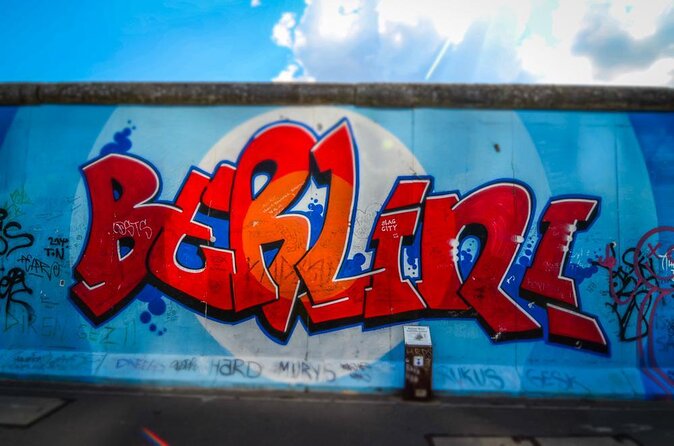
- One full hour for Oranienstraße courtyards: This is the photography heart of the walk, with access to selected, photogenic inner spaces.
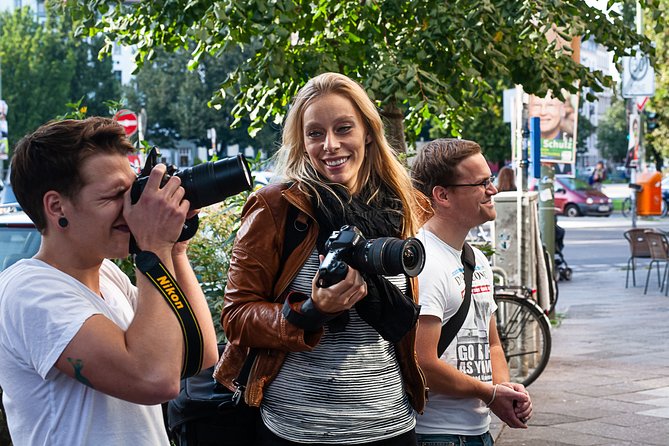
- Local photographers lead the way: Guides bring both city knowledge and instruction in image design.
- A route shaped around your interests: Sascha has adjusted a tour after discussing a participant’s goals beforehand.
- Useful for mixed-interest groups: You can combine sightseeing, urban history, and photography without booking separate activities.
Why this Kreuzberg photo walk is different
Many city photo walks amount to a list of good viewpoints. This one takes a more thoughtful route. You look at the physical city, then ask what caused it to appear this way.
At Kottbusser Tor, for example, the subject is not just a busy Berlin square. You examine how it changed over roughly 150 years, what the large residential towers belong to, and why the railway runs above the street. That gives your photographs a reason and a setting.
The same approach continues through the walk. A square shaped by a nineteenth-century planner, a courtyard with an architectural purpose, and a place saved from demolition all become part of the picture. I like this because it helps you avoid the standard postcard view. You leave with images tied to stories.
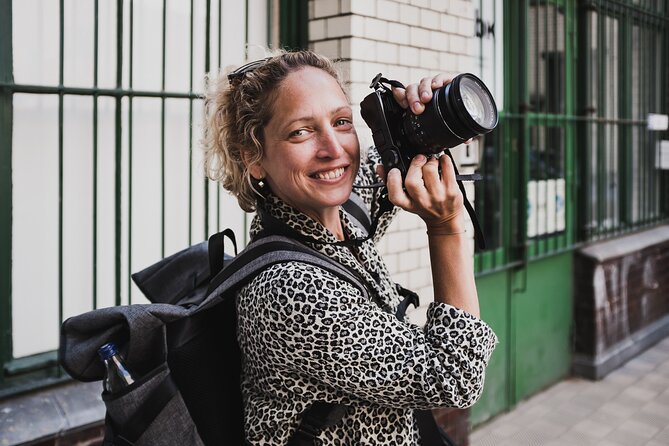
The guides are local photographers, and the tour has been running since 2009. That long focus on photography matters most if you want more than a casual stroll. The stated aim includes extensive instruction in image design, although the exact balance between technical coaching and historical explanation will depend on your group.
More Kreuzberg on foot and by bike:
- Kreuzberg: Culinary Food Tour
★ 4.5 · 770 reviews - Berlin: Kreuzberg Guided Walking Evening Tour
★ 4.7 · 555 reviews - Berlin: Alternative Bike Tour of Kreuzberg & Friedrichshain
★ 4.7 · 548 reviews
Starting at Kottbusser Tor and Adalbertstraße
The meeting information gives the start as the FHXB Friedrichshain-Kreuzberg Museum at Adalbertstraße 95A, while the route description says the photo walk starts at Kottbusser Tor. Those places are close within the same part of Kreuzberg, but you should check the precise meeting instructions after booking.
Kottbusser Tor is an excellent opening subject because it shows how quickly Berlin can change. Historical images help you compare the current square with earlier versions, rather than treating the present-day buildings as if they appeared all at once.
Your guide explains the large residential towers and the building plan behind them. You also learn why the subway here is an overhead railway. These details are useful for photography because they direct your attention upward and across the full space, not only toward street-level signs and traffic.
The stop lasts about 15 minutes. That is enough for an introduction and a few carefully chosen pictures, but not enough for a slow technical workshop. If you enjoy taking many versions of the same scene, you may need to keep moving.
Oranienplatz and the hand of Lenné
The next stop, Oranienplatz, also lasts about 15 minutes. Its design connects the square to Peter Joseph Lenné, the planner associated with Sanssouci and Pfaueninsel as well as major changes to Berlin’s city spaces.
That connection gives you a useful way to read the square. Instead of seeing only a patch of open ground, you consider the original plan and the later changes. Historic photographs again help you compare different moments.
For a photographer, this is a short lesson in visual change. Streets, open areas, and buildings can keep their names while losing much of their original form. Your guide helps you look for those traces.
The stop may suit you if you like urban design and before-and-after comparisons. If your main aim is portrait photography or technical camera practice, this section may feel more like a history briefing than a hands-on lesson.
One hour among Oranienstraße’s courtyards
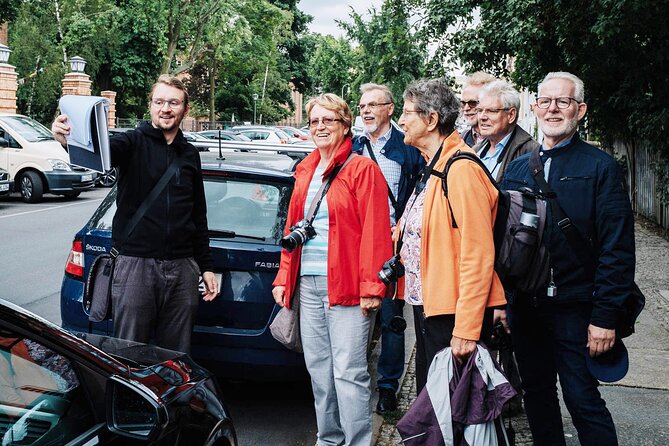
Oranienstraße receives the longest portion of the tour, about one hour, and that is a sensible choice. Berlin’s inner courtyards often tell a different story from the main road, but access is not always obvious. Your guide takes you to courtyards that are available to enter and offer something worth photographing.
You learn when the courtyards were built and what architectural ideas shaped them. That context can change the way you compose a picture. Rather than pointing your camera at a decorative doorway and moving on, you can consider how the courtyard relates to the surrounding building and why it was designed in that form.
This is likely the most rewarding section for people who enjoy details: stairs, walls, balconies, passageways, patterns, and the contrast between public street and shared interior space. The private format helps here because your guide can respond to your interests. A group focused on framing may spend more time discussing image design, while a history-minded group can ask about the buildings.
There is also a practical limit. Courtyard access is included as part of the guided route, but the supplied details do not promise entry to every courtyard or explain the rules for photography inside them. You should follow the guide’s lead and respect residents and private spaces.
A few more Berlin tours worth weighing up
- Berlin: Fotografiska Photography Exhibition Ticket
★ 4.6 · 168 reviews - Berlin Museum of Photography Entry Ticket
★ 4.5 · 88 reviews - 5hours: Guide, Chauffeur & Photographer in Berlin private Tour
★ 5.0 · 66 reviews - BERLIN PHOTO TOUR with a professional Photographer from Berlin
★ 5.0 · 44 reviews
Rio-Reiser-Platz and Kreuzberg’s battles over housing
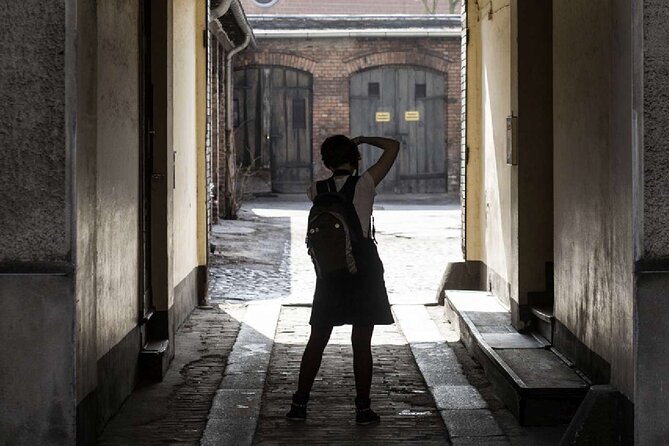
The walk then turns to Rio-Reiser-Platz for about 20 minutes. The place is named after Heinrich, and the guide explains how its name came about. You also hear how a planned complete demolition of the houses here was prevented and what squatters had to do with that struggle.
This stop gives the tour a clear social and political edge. Kreuzberg is not presented as a fixed collection of colorful walls and old buildings. You learn that the shape of the neighborhood has been argued over, threatened, and defended.
That background adds weight to photographs of the buildings. A facade can show more than style. It can point to housing policy, protest, and local action. You do not need to be deeply interested in Berlin politics to find this useful, since the story explains why the area looks as it does today.
Twenty minutes is enough for the central story and a few photographs. It is not a long stop for detailed architectural study, so keep your camera ready and listen for the visual features your guide points out.
Mariannenplatz, Marianne, and the Kunsthaus
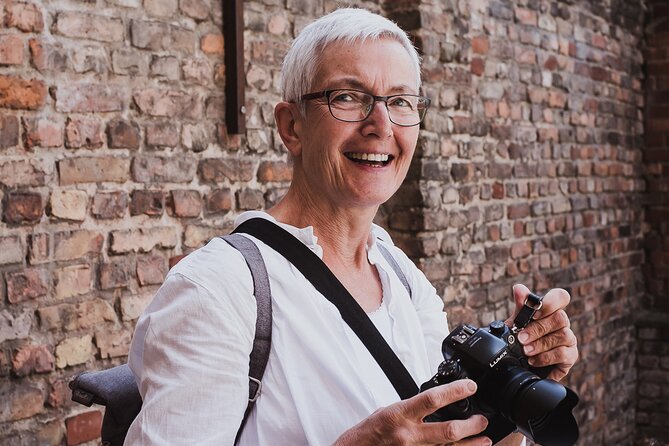
Mariannenplatz receives another 20 minutes. The first question is simple: who was Marianne? From there, the guide connects the square to changes over recent decades and to the large Kunsthaus located there.
This stop broadens the tour beyond street photography. You get a look at naming, public space, art, and neighborhood change in one place. The Kunsthaus adds a cultural layer, though the details provided do not promise an interior visit or exhibition admission.
I would treat Mariannenplatz as a place to make a few strong environmental photographs rather than expecting a full museum visit. Look at how the square, its buildings, and the art space relate to each other. The guide’s explanation should help you decide what deserves the frame.
The timing keeps the overall route moving. If you want to linger at the Kunsthaus or explore its current program, plan a separate visit.
Engelbecken and a different side of Kreuzberg
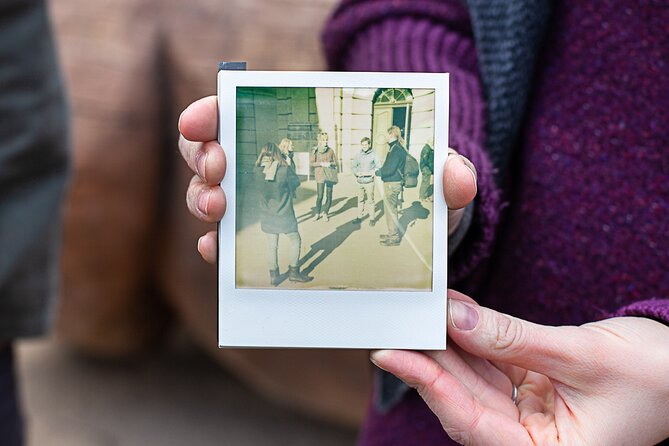
The final stop is Engelbecken, scheduled for about 20 minutes. Administratively, it is in Mitte, yet the tour treats it as part of Kreuzberg for several good reasons, including its close connection to local history and resident involvement.
This is another place where historical photographs matter. You compare earlier views with the present setting and hear about the determined role of local residents. The story shows how a place can belong to a neighborhood through memory and action, not only through a district boundary.
Engelbecken also gives the walk a change of mood from dense streets and courtyards. You can work with open space, water, and surrounding buildings, while still keeping the focus on how the area has changed.
The final stop lasts 20 minutes, and the activity ends at a different location from where it begins. That is convenient if you want to continue exploring the area, but the final address is not supplied. Ask for it so you can plan your next move.
What the photography instruction may offer

The tour combines city knowledge with photography knowledge. Its stated focus includes new photographic perspectives and image design, not just camera settings. That distinction matters.
If you are new to photography, you can ask how to see structure, lines, layers, and changing light in an ordinary city scene. If you already take photographs, you may appreciate prompts that help you move beyond familiar compositions.
The exact teaching style will depend on the guide and your needs. The strongest evidence of flexibility comes from Sascha’s advance conversation with one participant, followed by a route adjusted to match those wishes. That suggests you should explain your goals before the tour rather than waiting until the first stop.
Tell the provider if you want:
- More attention to composition and framing
- More local history at each stop
- A route shaped around particular photographic interests
- A balance between walking and taking pictures
Do not expect a full technical course based on the supplied details. The tour is a city walk with photography guidance, not a multi-day camera class.
The value of a $206.10 private booking
The price is $206.10 per group of up to five people. For one person, that is a costly two-and-a-half-hour activity. For five, it works out to about $41.22 each, which changes the value considerably.
A private booking makes the most sense for a family, a small group of friends, or photographers with similar interests. You are paying for a dedicated route and guide rather than a seat on a large shared walk. The guide can respond to your questions and, when arranged in advance, adapt the experience.
The price is harder to justify if you mainly want a quick introduction to Kreuzberg or a list of famous sights. Much of the value comes from interpretation, access to selected courtyards, and the combination of history with image design. If those elements do not matter to you, a regular self-guided walk will cost less.
The booking pattern, with reservations made on average about 50 days ahead, suggests you should not leave this until the last minute if your Berlin dates are fixed. It does not guarantee that every date will sell out, but early planning is sensible.
Who should book this walk
I would recommend it most strongly to photographers who want a local view of Berlin rather than a standard monument tour. It also suits visitors who like architecture, urban planning, housing stories, and the way neighborhoods change over time.
The private setup works well for groups with a shared interest. A couple can ask detailed questions without holding up strangers. A family can keep the pace manageable. A small group of photographers can discuss composition together and make the route feel personal.
It may be less suitable if you want a fast list of major Berlin sights, an indoor museum visit, or a tour centered on famous landmarks. The route is about Kreuzberg’s streets and spaces, and its appeal lies in the stories behind them.
Most people can participate, and the tour is near public transportation. Service animals are allowed. The provider also states that its guides are LGBTQI-friendly and that the company works climate-neutral, useful points for travelers making choices about comfort and values.
Practical planning before you go
You receive confirmation at booking, and the activity uses a mobile ticket. Keep the ticket available on your phone, while also checking the meeting details because the starting information refers to both the museum address and Kottbusser Tor.
Wear shoes suitable for two and a half hours of city walking. That is practical advice based on the route length, though the supplied details do not give a precise distance or terrain description.
Bring the camera or phone you actually want to use. The tour is built around making images, but it does not require a particular camera. Before the day, decide what you want from the guide and share those wishes.
The activity is private, so only your group participates. You can cancel up to 24 hours before the experience for a full refund, a useful safeguard if your Berlin schedule changes.
Should you book the Kreuzberg photo tour?
Book it if you want Kreuzberg explained through its courtyards, changing squares, housing struggles, and local memories, with a photographer helping you see better. The strongest reasons are the private group format, the unusually long Oranienstraße courtyard visit, and the ability to shape the route around your interests.
I would hesitate only if you are traveling alone on a tight budget or want a conventional sightseeing tour with fixed landmark highlights. For a group of up to five, the price becomes more reasonable, and the personal attention gives this walk a clear advantage over a large group outing.
Give the provider your photographic goals in advance, confirm the exact starting point and final location, and allow the stories to guide your pictures. That is when this Kreuzberg walk offers its best value.
FAQ
How long does the private photo tour last?
The tour lasts approximately 2 hours and 30 minutes.
How many people can join the private tour?
The price covers one private group of up to five people. Only your group participates.
Where does the tour start?
The meeting point is given as the FHXB Friedrichshain-Kreuzberg Museum at Adalbertstraße 95A, 10999 Berlin. The route description also refers to Kottbusser Tor as the start, so confirm the exact meeting instructions after booking.
Where does the tour end?
The activity ends at a different location from the starting point. The supplied details do not provide the final address, so ask the provider for it when planning your day.
What places does the route visit?
The route includes Adalbertstraße and Kottbusser Tor, Oranienplatz, Oranienstraße, Rio-Reiser-Platz, Mariannenplatz, and Engelbecken.
Is the tour suitable for most participants?
Yes. Most travelers can participate, and the activity is near public transportation. Service animals are allowed.
Can I cancel the booking?
You can cancel up to 24 hours before the experience for a full refund.
Just added around Berlin
- Berlin Highlights in One Day★ 5.0 · 3 reviews
- Private Berlin One Day Tour with a Local: See the City Unscripted★ 3.5 · 3 reviews
- Individual city tour Berlin for max. 8 persons★ 5.0 · 3 reviews
- Transfer from Berlin Schönefeld Airport (SXF) to Berlin city Hotels – ROUND TRIP★ 4.0 · 3 reviews
- Berlin: Museum Island Tour★ 5.0 · 3 reviews
- Private Analogue Photography Experience in Berlin★ 5.0 · 3 reviews
- Berlin: Local Food Tour in Secrets Hidden Gems★ 4.0 · 3 reviews
- Berlin & The Third Reich Private Guided Tour★ 5.0 · 3 reviews
Kreuzberg Tours, compared.


Alternative Bike Tour of Kreuzberg & Friedrichshain
Read our review →
Berlin Off-the-Beaten-Path Walking Tour: Kreuzberg, Mitte and Friedrichshain
Read our review →
Kreuzberg Berlin: Off the Beaten Track PRIVATE Walking Tour
Read our review →
Experience the Alternative Kreuzberg on a Bike Tour
Read our review →Browse the lists this tour appears in