
Review · WALKING TOURS
Queer Berlin Walking Tour
Berlin’s queer story is not tucked away in a museum. It unfolds on ordinary streets, in former bars, parks, memorials, and neighborhoods where artists, activists, politicians, and nightlife figures helped shape modern Berlin. This 3.5-hour walking tour links Schöneberg with the Tiergarten, giving you both landmark sites and the social history behind them.
I like the focus on Magnus Hirschfeld’s Institute for Sexual Science, a bold early effort to support queer and transgender people, and the tour’s mix of famous names with lesser-known lives. I also like that it treats queer history as part of Berlin’s wider story, not as a separate footnote. The main drawback is the amount of walking, plus the fact that the meeting point can change depending on the option you book.
In This Review
- Key points at a glance
- Why Schöneberg is the right place to start
- The former Eldorado and Berlin’s nightlife
- Magnus Hirschfeld and the Institute for Sexual Science
- The memorial to people persecuted by the Nazis
- From Frederick the Great to an openly gay mayor
- Walking into the Tiergarten
- Women’s stories and a wider view of queer Berlin
- What the $23 price includes
- Timing, weather, and meeting-point details
- Who should book this walk
- Should you book the Queer Berlin Walking Tour?
- FAQ
- Where does the Queer Berlin Walking Tour take place?
- How long does the tour last?
- What languages are available?
- What is included in the price?
- Are public transport and entrance fees included?
- Does the tour run in bad weather?
- How can I identify the guide?
- Can I cancel or pay later?
Key points at a glance
- Schöneberg’s queer streets: See the district linked with Marlene Dietrich, Christopher Isherwood, Otto Dix, cabaret, and nightlife.
- The former Eldorado: Learn about one of Berlin’s oldest queer and trans bars and the social world around it.
- Magnus Hirschfeld’s work: Understand why his Institute for Sexual Science mattered and how the Nazis destroyed its library in 1933.
- Hard history, plainly told: Discuss Section 175, Nazi persecution, concentration camps, and the memorial to those targeted.
- Tiergarten’s meeting places: Walk through Berlin’s best-known gay meeting area, once close to the Berlin Wall.
- Practical value: The tour costs $23, runs in English or German, and allows free cancellation up to 24 hours before departure.
Why Schöneberg is the right place to start
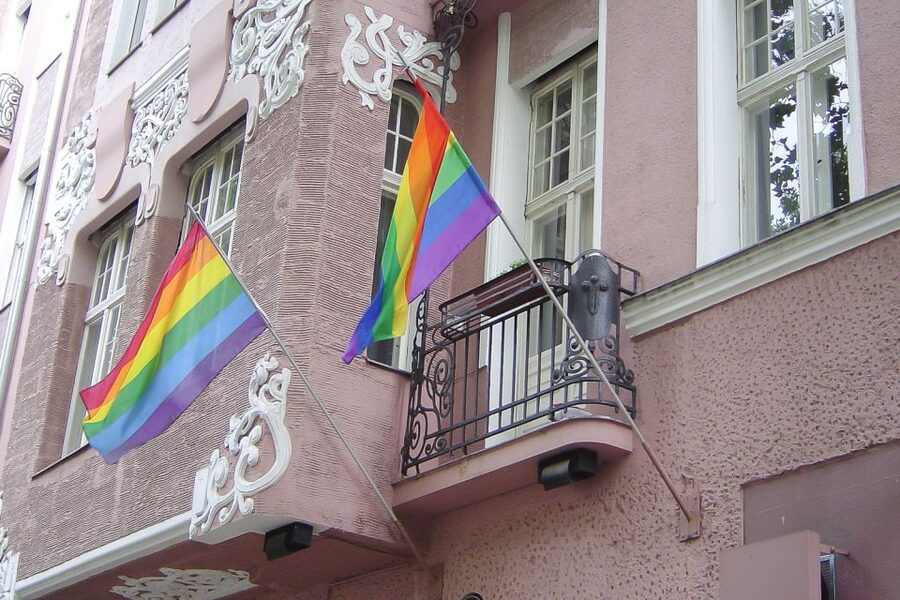
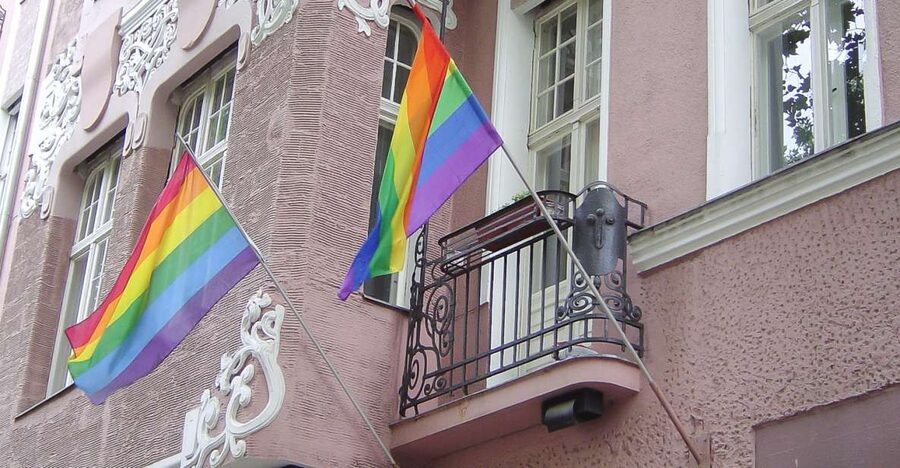
Schöneberg is the natural setting for this walk. Berlin’s queer identity is spread across the city, but Schöneberg has long been its most recognizable gay neighborhood, with streets tied to bars, cabarets, artists, activists, and political change.
You will not simply pass from one address to another. The guide uses the streets to explain how queer life developed in public, how it was policed, and how people built networks of support despite legal danger.
The neighborhood also helps put familiar Berlin names into a new frame. Marlene Dietrich lived and worked here. Christopher Isherwood wrote about the city’s nightlife, while Otto Dix captured its sharp-edged cabaret culture in art.
That combination is useful for first-time visitors. If you already know Berlin through museums, memorials, and Cold War sites, this tour adds the people and communities that official history often leaves out.
More walking tours in Berlin:
- Discover Berlin Half-Day Walking Tour
★ 5.0 · 9,624 reviews - Berlin: Third Reich and Cold War 2 Hour Walking Tour
★ 4.9 · 6,830 reviews - Berlin: Discover Berlin Walking Tour
★ 4.9 · 5,998 reviews
The former Eldorado and Berlin’s nightlife
One of the memorable stops is the site of the former Eldorado, an early queer and trans bar. The address matters because it shows that Berlin’s reputation for sexual freedom did not begin with present-day clubs.
Places such as Eldorado offered more than drinks. They gave people a chance to meet, perform, flirt, dress outside social rules, and find others who understood their lives. The setting also raises an important question: how public could queer life be when the law still threatened many people?
Expect the guide to connect the bar with Berlin’s cabaret era and the wider nightlife scene. The anecdotes help keep the subject human. You hear about real people making room for themselves in a city that could be thrillingly open one night and sharply hostile the next.
Do not expect the interior of the former bar to survive as a visitor attraction. You are seeing a site and hearing its story, which means the guide’s explanation does most of the work.
Magnus Hirschfeld and the Institute for Sexual Science
The section on Magnus Hirschfeld is one of the strongest reasons to take this walk. Hirschfeld was a doctor and sexologist who created the Institute for Sexual Science, an unusual center offering research, advice, and practical support for queer and transgender people.
His work challenged the idea that same-sex desire and gender variance should be treated simply as crime or moral failure. The institute also gathered books, records, and research at a time when few institutions were willing to address these subjects openly.
That progress was fragile. In 1933, the Nazis shut down the institute, and its library was destroyed during the notorious book burnings. The story gives you a clear look at how quickly public rights and private safety can collapse when an authoritarian government targets a minority.
I appreciate that this part is not presented as a simple story of Berlin once being free and then becoming oppressive. The city held both openness and repression at the same time. Section 175 of the German penal code criminalized male homosexuality, and that legal shadow continued for decades after World War II.
This is also where the tour gains value beyond sightseeing. You are not only hearing names and dates. You are learning how law, medicine, politics, nightlife, and community support affected daily life.
The memorial to people persecuted by the Nazis
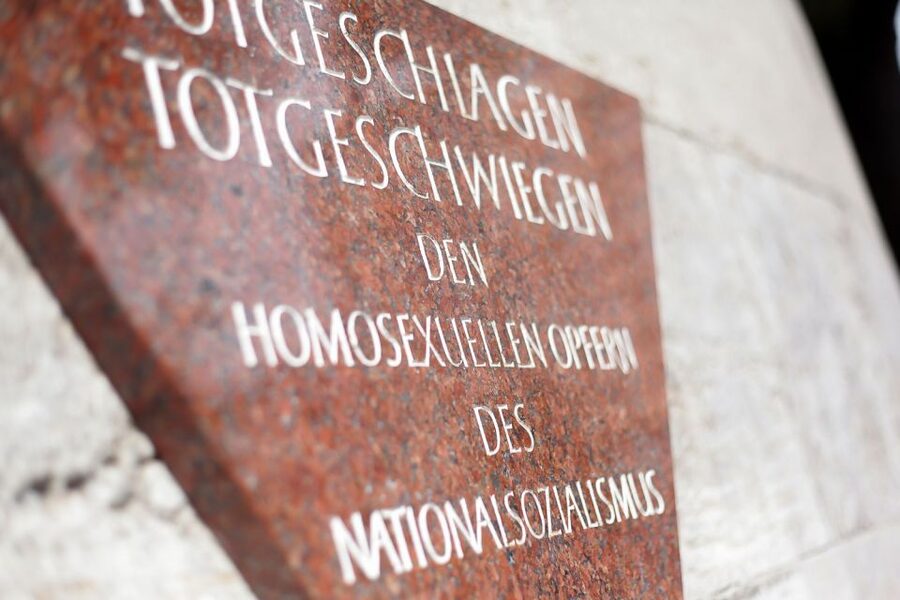
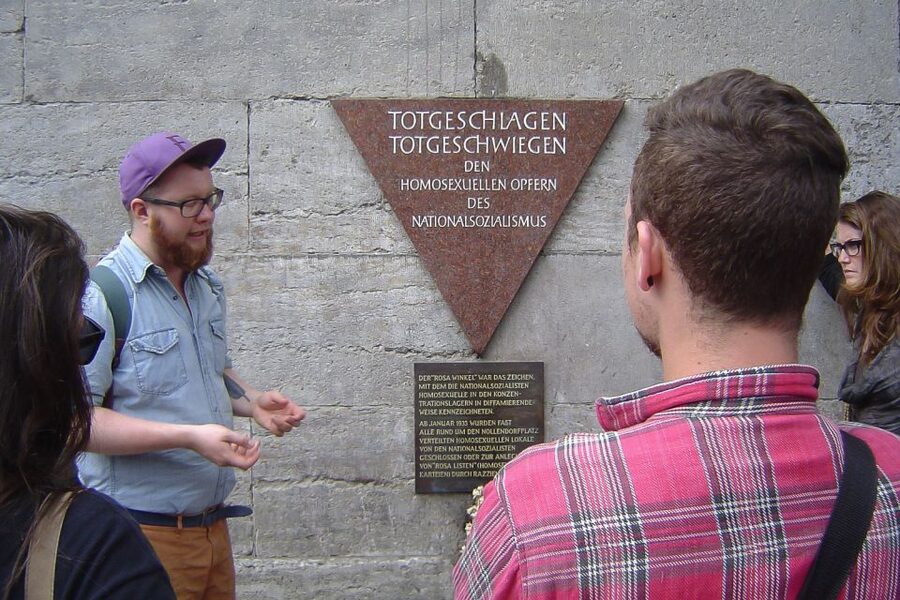
The walk includes a poignant memorial to homosexual people persecuted by the Nazis and sent to concentration camps. It is a quieter part of the route, and the subject deserves that change in tone.
The memorial helps correct a common gap in Berlin history. The Nazi persecution of queer people is often mentioned briefly, if at all, beside larger memorial sites. Here, it becomes a central part of the story without being separated from the city where those lives unfolded.
This stop may feel heavy, especially after the livelier stories about cabaret and bars. That contrast is deliberate and important. Berlin’s queer past includes creativity and courage, but also surveillance, imprisonment, violence, and loss.
The tour’s broader value comes from holding those parts together. It does not turn queer history into a nightlife-only story, and it does not reduce it to suffering.
A different side of Berlin on the same trip:
- Berlin: Reichstag, Dome and Government District Guided Tour
★ 4.7 · 18,288 reviews - Berlin: 1-Hour City Tour by Boat with Guaranteed Seating
★ 4.3 · 16,993 reviews - Berlin: Boat Tour Along the River Spree
★ 4.4 · 11,252 reviews - Berlin: Hop-on Hop-off Bus Tour with Live Commentary
★ 4.3 · 8,579 reviews
From Frederick the Great to an openly gay mayor
The historical range is wide. You hear about queer figures and queer life from the time of Frederick the Great through the modern era, including Klaus Wowereit, Berlin’s openly gay mayor.
That long timeline helps you see change as uneven. Berlin’s rulers, artists, scientists, activists, and politicians did not all share the same views, and public tolerance did not move in a straight line.
Frederick the Great is especially useful as an early reference point because he reminds you that private behavior, public reputation, law, and political power did not always line up neatly. Much later, Wowereit represented a different kind of visibility, with an openly gay mayor helping shape the city’s modern public image.
The guide also connects the political story to ordinary places. This keeps the discussion from feeling like a list of famous men. The strongest moments are likely to be the links between public figures and the streets where people lived, worked, met, or took risks.
Walking into the Tiergarten
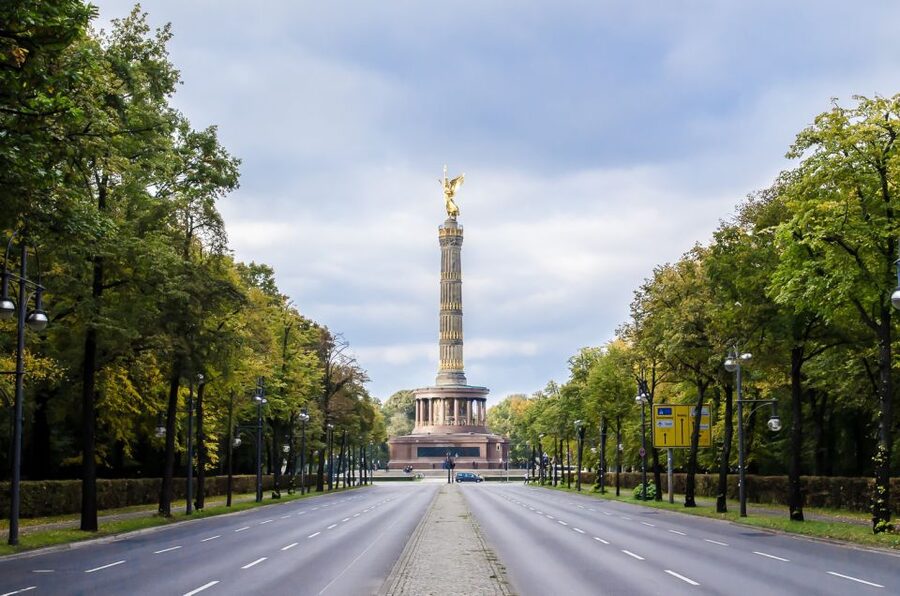
The route continues into the Tiergarten, Berlin’s best-known gay meeting place. The park’s history adds a different mood from Schöneberg’s streets and former nightlife venues.
You will walk through open public space while hearing how queer people used the area to meet, find company, and build connections. Its location in the shadow of the Berlin Wall adds another layer, tying queer life to the city’s divided past.
This portion makes the tour feel like more than a neighborhood walk. Schöneberg shows the public and commercial side of queer Berlin, while the Tiergarten points to informal meeting places and the ways people created community outside official institutions.
Bring shoes you can walk in. The route lasts three and a half hours, and one past participant specifically advised packing light, with a snack and a cool drink. The tour runs in all weather, so a rain layer is sensible if the forecast looks uncertain.
Women’s stories and a wider view of queer Berlin
A useful feature is the attention to lesbian history. The route includes former lesbian bars, and the guide discusses women’s experiences rather than allowing the story to focus only on gay men.
That balance matters because public accounts of Berlin’s queer past often center on male writers, male artists, male politicians, and male nightlife. The inclusion of lesbian venues and women’s resistance gives you a fuller picture of how different communities shared the city while facing different pressures.
You might also hear about changes in East Berlin’s former queer neighborhood and later gentrification. This brings the story closer to the present and shows that queer districts do not remain fixed. Neighborhoods change as rents, businesses, politics, and public attitudes shift.
The guide’s approach appears to leave room for questions. Past guides named Tobi, Tom, Finn, Jared or Jarred, Beth, and Kyle have been singled out for warmth, humor, clear explanations, and personal touches. Guide assignments can change, so book for the subject and format rather than expecting one particular person.
What the $23 price includes
At $23 per person, this is a good-value history walk if you want more than a quick introduction. The price includes a live English- or German-speaking guide, and the three-and-a-half-hour length gives the subject room to breathe.
You are paying for interpretation rather than admission to a building. Public transport, if needed, is not included, and entrance fees are not included. The supplied details do not point to a required museum visit, so the main cost is the guided walk itself.
For comparison, you could visit individual sites on your own, but you would need to research the addresses, connect them into a sensible route, and supply the historical context. At this price, the guide saves you that work and helps explain why each stop matters.
The tour is especially good value early in your Berlin stay. It can give you neighborhood bearings, names to look up later, and ideas for an evening out. One past participant used the guide for nightlife suggestions, so you can ask about current queer culture as well as the past.
Timing, weather, and meeting-point details
The tour lasts 3.5 hours, and you need to check the available starting times when booking. The meeting point may vary with the option selected, so read the confirmation carefully rather than assuming every departure begins in the same place.
Your guide will wear a blue Original Berlin Walks name badge. That small detail is useful in a busy street or outside a meeting place.
The walk runs in all weather. Wear comfortable shoes, bring water, and carry weather protection. Since public transport is not included, allow extra time if you need to reach the starting point or continue to another part of Berlin afterward.
Free cancellation is available up to 24 hours before the start for a full refund. You can also reserve now and pay later, which helps if your schedule is still moving around.
Who should book this walk
I would recommend it to anyone interested in LGBTQIA+ history, social history, Berlin nightlife, or the way cities change over time. It also suits visitors who have already seen the main Berlin monuments and want a more focused story.
You do not need specialist background knowledge. The tour covers major figures and basic political context, then adds anecdotes and local detail. If you know Christopher Isherwood or Magnus Hirschfeld already, you will likely get more from the connections between their work and the places on the route.
It is less suitable if you dislike long walks, want a museum-based experience, or expect to enter every historic venue. The former Eldorado is a site to interpret, not a preserved bar you can tour inside.
The tone also shifts. Expect funny stories and lively nightlife history alongside Nazi persecution, concentration camps, AIDS-related memorials, and legal discrimination. That balance is necessary, but it may not suit someone looking only for light entertainment.
Should you book the Queer Berlin Walking Tour?
Book it if you want Berlin explained through the lives of people who challenged its laws, shaped its culture, and built community in difficult conditions. The combination of Schöneberg, the former Eldorado, Hirschfeld’s institute, the Nazi memorial, lesbian venues, and the Tiergarten gives you a broad route for $23.
I would make it an early-trip activity, wear good shoes, and keep the rest of the day flexible. Choose another experience if you need guaranteed indoor stops or cannot manage three and a half hours on foot.
For a focused, human account of Berlin’s queer past, this is a strong choice. The best reason to go is not simply to see a gay neighborhood. It is to understand how courage, art, politics, law, and everyday meeting places helped shape the city you see today.
FAQ
Where does the Queer Berlin Walking Tour take place?
The tour explores Schöneberg and the Tiergarten in Berlin. The meeting point can vary depending on the option booked.
How long does the tour last?
The walking tour lasts 3.5 hours.
What languages are available?
The live guide can lead the tour in English or German.
What is included in the price?
The price includes an English- or German-speaking live guide.
Are public transport and entrance fees included?
No. Public transport, if needed, and entrance fees are not included.
Does the tour run in bad weather?
Yes. The tour runs in all weather.
How can I identify the guide?
The guide will be wearing a blue Original Berlin Walks name badge.
Can I cancel or pay later?
You can cancel up to 24 hours in advance for a full refund. The reserve-now, pay-later option lets you book without paying immediately.
Just added around Berlin
- Berlin Highlights in One Day★ 5.0 · 3 reviews
- Private Berlin One Day Tour with a Local: See the City Unscripted★ 3.5 · 3 reviews
- Individual city tour Berlin for max. 8 persons★ 5.0 · 3 reviews
- Transfer from Berlin Schönefeld Airport (SXF) to Berlin city Hotels – ROUND TRIP★ 4.0 · 3 reviews
- Berlin: Museum Island Tour★ 5.0 · 3 reviews
- Private Analogue Photography Experience in Berlin★ 5.0 · 3 reviews
- Berlin: Local Food Tour in Secrets Hidden Gems★ 4.0 · 3 reviews
- Berlin & The Third Reich Private Guided Tour★ 5.0 · 3 reviews
Walking Tours, compared.



Berlin’s Best: 2 Hour Walking Tour Third Reich and the Cold War
Read our review →

Third Reich Berlin: Hitler and WWII Walking Tour
Read our review →

Browse the lists this tour appears in