
Review · THIRD REICH & WWII SITES
Berlin: Guided Bike tour of the Berlin Wall and Third Reich
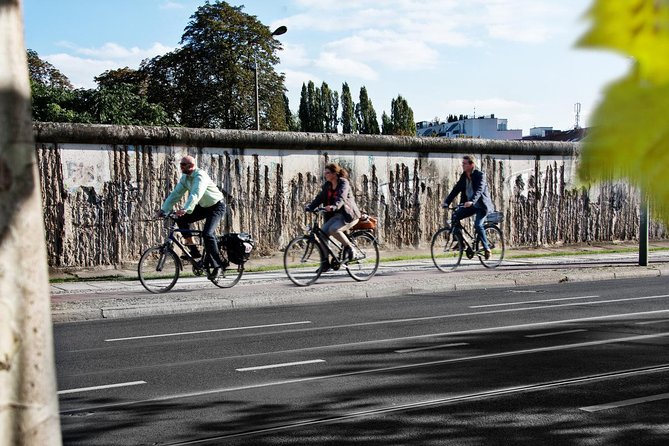
Berlin’s past is easier to grasp from a bicycle than from a coach window. This three-hour ride links the Wall, Nazi-era sites, Holocaust memorials, and the modern government quarter, while giving you a feel for how close Berlin’s major chapters sit to one another. The bike turns history into geography.
I like the mix of local stories and lesser-seen places, including the Günter Litfin memorial and the old flak tower at Humboldthain. I also like the easy pace, with frequent stops, baskets for small bags, and bikes suited to Berlin’s mostly flat streets. The main caution is that the Free Berlin format lets each guide shape the route, so you may not visit every advertised stop. Tell your guide your must-sees at the start.
In This Review
- Key points
- Why Berlin’s history works so well on two wheels
- Starting in Nikolaiviertel, Berlin’s reconstructed old town
- Civil courage at the Neue Synagogue
- The Wall at Bernauer Straße and Mauerpark
- Humboldthain’s flak tower and the Nazi city
- Günter Litfin and the edge of escape
- Invalidenfriedhof and the divided cemetery
- Spreebogenpark and the Reichstag from outside
- Holocaust memorials and the Fuhrerbunker
- Checkpoint Charlie and Cold War tension
- The guide makes the difference
- Bikes, safety, weather, and family fit
- Is $42.34 a fair price?
- Who should book this Berlin bike tour?
- FAQ
- How long is the Berlin bike tour?
- What is included in the price?
- Is Checkpoint Charlie included on every tour?
- Can children join the tour?
- How many people can join the tour?
- What happens if I need to cancel?
Key points
- A three-hour history ride: Cover roughly 13 kilometers at an easy pace, with regular breaks for discussion.
- More than the famous sights: Visit places such as Invalidenfriedhof, Humboldthain, and the Günter Litfin memorial.
- Route choice matters: Guides design their own version of the ride, so stops can vary.
- Strong local storytelling: Guides including Paul, Simon, Simone, Theo, Juliette, Yonis, Constantine, Peter, and Jacob bring different personal styles and Berlin perspectives.
- Good for families: Children can join, and infant seats are available on request.
- Simple value: For about $42.34, you get a bike, helmet, and guide without paying admission fees at the stops.
Why Berlin’s history works so well on two wheels
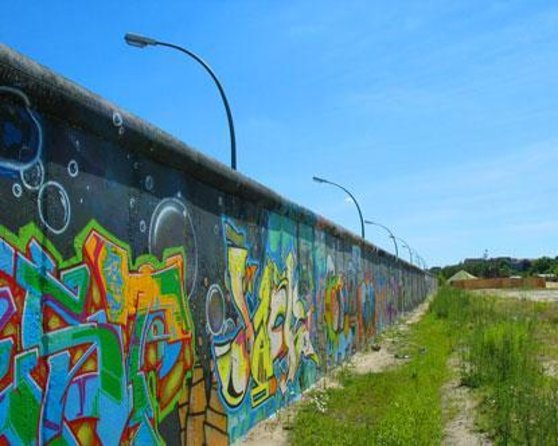
Berlin is broad, flat, and spread out. That makes walking between the Wall memorial, Reichstag, Holocaust Memorial, and Checkpoint Charlie tiring, especially if you want to fit them into one morning or afternoon. On a bike, you cover ground quickly without losing the street-level view.
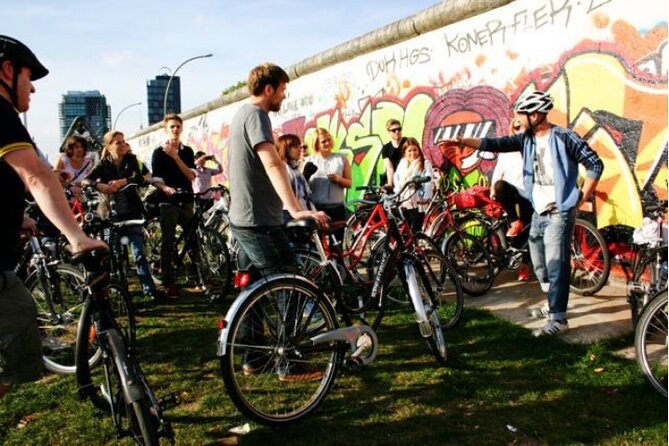
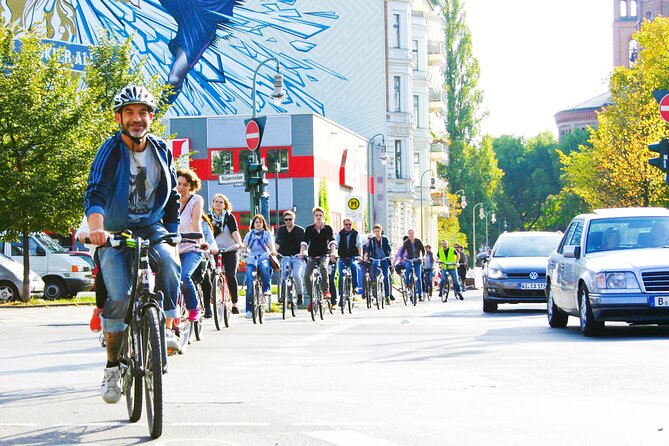
You ride through parks, cycle lanes, and city streets, with your guide keeping the group together. One guide waited at red lights so nobody was left behind. Another chose several park routes when the group felt nervous about busy roads. That matters in Berlin, where riding beside traffic can feel daunting at first.
The pace is not a race. One family covered about 13 kilometers with plenty of stops, and children aged 10, 14, and 17 managed it comfortably. You should still be happy riding a bicycle for three hours, but you do not need a high level of fitness.
The group limit is 15 people, with a minimum of four. A smaller group makes it easier to hear the guide and cross streets together. If a large booking comes in, the company may split it into smaller groups, as happened with one group of 22.
More of the Berlin Wall, end to end:
- Skip-the-Line: Berlin Wall Museum at Checkpoint Charlie
★ 4.1 · 2,041 reviews - Berlin: East Side Gallery Spree Cruise in a Solar Catamaran
★ 4.0 · 1,039 reviews - Cold War, Berlin Wall, Spies and the East Side Gallery
★ 5.0 · 1,024 reviews
Starting in Nikolaiviertel, Berlin’s reconstructed old town
The ride begins at Poststraße 11 in Nikolaiviertel, near public transportation. This small quarter is presented as Berlin’s only real old town, though its current appearance raises an important question: how much of what you see is old, and how much was rebuilt after wartime destruction?
That is a useful opening idea for Berlin. The city was heavily damaged in World War II, then divided and reshaped by decades of political conflict. Your guide uses Nikolaiviertel to set up that theme before the ride moves into more direct stories of persecution, war, division, and reunification.
You stop only briefly here, around 10 minutes. Think of it as a history primer, not a neighborhood visit. If you want photographs or a meal in the quarter, return later.
Civil courage at the Neue Synagogue
The next short stop is the Neue Synagogue and its Centrum Judaicum. Here, the guide explains how a police officer helped protect the building during Kristallnacht, the night of anti-Jewish violence in November 1938.
The stop lasts about five minutes, so expect a focused story rather than a tour of the interior. Its value comes from the contrast between official persecution and an individual act of courage. That human scale helps prevent the period from becoming a string of dates and political names.
The tour later returns to the persecution of Jewish people and other groups through Berlin’s memorials. I appreciate this thread because the ride does not treat the Nazi period as a separate museum subject. It shows how the city remembers it in streets, squares, buildings, and empty spaces.
The Wall at Bernauer Straße and Mauerpark
The Berlin Wall section is the heart of the ride. At the Berlin Wall Memorial, your guide explains the border system, the death strip, and the way the Wall cut through ordinary neighborhoods. This is one of the few parts of Berlin where the physical arrangement still lets you understand how the border worked.
A ten-minute stop cannot replace a full visit to the memorial. That is the most important planning point here. If you have never been to the Wall Memorial and want time to study its exhibits, watchtower remains, and documentation, return on your own. The bike tour gives you orientation and explanation, but it keeps moving.
From there, the ride continues to Mauerpark. Today it is known for its Sunday flea market and open-air atmosphere, but its meaning comes from the former border zone beneath that public life. The stop shows how a place once tied to fear and separation became a space for music, markets, and free expression.
The shift is striking. You are not only learning where the Wall ran. You are seeing how Berlin reused the scars of division. The stop lasts about 10 minutes, enough for context and a look around, not enough for the full Sunday market experience.
More Third Reich sites in Berlin:
- Berlin: Third Reich and Cold War 2 Hour Walking Tour
★ 4.9 · 6,830 reviews - Berlin: Berlin Story Bunker Entry Ticket
★ 4.6 · 6,759 reviews - Berlin’s Best: 2 Hour Walking Tour Third Reich and the Cold War
★ 5.0 · 5,486 reviews - Third Reich Berlin: Hitler and WWII Walking Tour
★ 5.0 · 3,301 reviews
Humboldthain’s flak tower and the Nazi city
At Humboldthain, a huge concrete flak tower recalls the scale of Nazi military construction. It served as an air-raid shelter and defensive position, and its remains provide a direct look at the physical weight of the regime.
The guide discusses Nazi architecture here, including the desire to build on a scale that would overwhelm ordinary human proportions. The tower is a good place to connect military planning, propaganda, and architecture without needing a museum room.
You spend about 10 minutes at the stop. The site is more rugged and atmospheric than a polished central monument, which is part of its appeal. It also shows why this is not just a standard highlights ride. You reach a place many first-time visitors would not find on their own.
Günter Litfin and the edge of escape
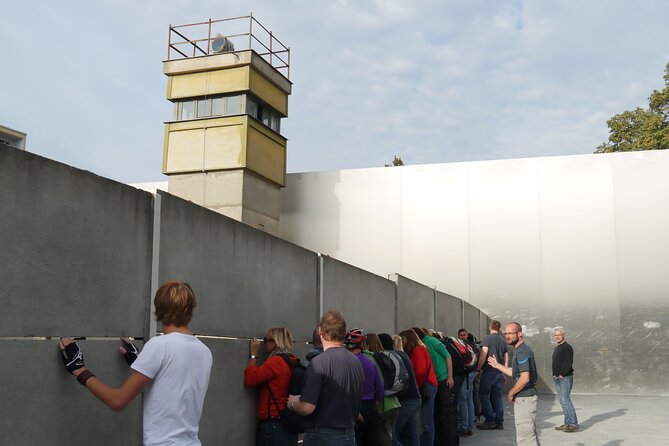
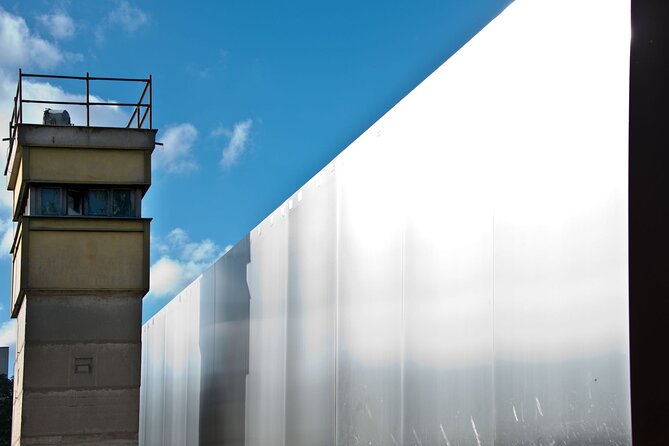
The Günter Litfin Memorial preserves an original Wall watchtower. It commemorates Günter Litfin, identified here as the first person shot at the Wall. This brief five-minute stop brings the Wall’s human cost into sharp focus.
The preserved tower is not a grand monument. Its power comes from its original function and the personal story attached to it. Your guide may connect it with escape attempts, border patrols, and the risks people took to move between East and West Berlin.
This is the kind of stop that benefits from a guide. Without explanation, an old watchtower can look like another piece of Cold War infrastructure. With context, it becomes evidence of a system that shaped daily decisions and ended lives.
Invalidenfriedhof and the divided cemetery
Invalidenfriedhof was a burial place for Prussian military figures, but the Wall cut through the cemetery. The result is a site where German military history and Cold War geography meet.
The guide focuses on escape stories, helped by the cemetery’s position near former checkpoints and a canal that formed part of the border. The stop is short, about five minutes, yet it adds an important layer to the ride. The Wall did not only divide streets and apartment blocks. It split parks, transport routes, cemeteries, and families.
Do not expect a long cemetery visit. The point is the location and the stories attached to it. If you prefer a clear chronological lecture, the route can feel a little scattered here. If you enjoy seeing how different eras overlap in one place, it is one of the ride’s more memorable sections.
Spreebogenpark and the Reichstag from outside
Spreebogenpark gives you a broad view toward Germany’s government quarter. From here, the guide discusses Albert Speer’s plans for Hitler’s proposed Great Hall, which was intended to hold 180,000 people.
That idea is useful because it shows how architecture served political ambition. Speer’s plans were not simply about offices or public buildings. They aimed to create a monumental center for dictatorship, far removed from the democratic government buildings that now occupy this part of Berlin.
The Reichstag stop follows, with a discussion of Hitler’s rise to power and Germany’s democratic development. You see the building from outside, but you do not go in. That distinction matters if you are hoping to visit the glass dome. This tour does not include Reichstag admission, and you should arrange a separate visit if the interior is a priority.
The stop itself lasts around five minutes. It is best understood as a connecting lesson about power, government, and the symbolic reuse of central Berlin.
Holocaust memorials and the Fuhrerbunker
The ride pauses at several memorials connected with the Holocaust and Nazi persecution, including the Memorial to the Murdered Jews of Europe. The large field of concrete blocks near Brandenburg Gate is difficult to absorb quickly. Your guide gives you time to walk among them and discuss how the design affects your sense of direction, scale, and uncertainty.
One stop also refers to a memorial for deportation victims designed during the GDR period. Its visual language differs sharply from the better-known memorial in central Berlin. Seeing both approaches helps you understand that memory in Berlin has changed over time, and that the city has not always agreed on how to mark its crimes.
The tour also passes one of the memorials for major victim groups of the Holocaust. The exact amount of time at each memorial depends on the guide’s route. Take the names and locations as a framework, not a guarantee that every site will receive equal attention.
At the Fuhrerbunker, there is no dramatic entrance to visit. The site is now a parking area, and the guide explains why. That plain setting is the point. The place where Hitler spent his final weeks and died is not preserved as a shrine or museum room. You stand in an ordinary urban setting while considering how the city chose to handle a location loaded with difficult meaning.
Checkpoint Charlie and Cold War tension
Checkpoint Charlie appears on the English version of the tour. It was the best-known crossing point associated with the American and Soviet sectors, and the guide explains the confrontation that brought the superpowers close to a wider war in the center of Berlin.
This is a 10-minute stop. The modern checkpoint display is not the original border station, so the guide’s explanation is especially important. You get the location, the political background, and the reason the crossing became such a powerful Cold War symbol.
If Checkpoint Charlie is essential to you, confirm that you have selected the English version and tell your guide at the start. The route can change under the Free Berlin concept, and one disappointed rider reported missing several listed locations. The company’s own explanation is that guides design a route around the theme rather than follow every point in a fixed order.
That flexibility can work well when road closures, weather, or city events affect the route. It also means you should speak up about must-see stops. A guide may be able to adjust the ride, as one did during the Berlin Marathon.
The guide makes the difference
The subject is serious, but the best guides keep the ride human and clear. Paul, a native of West Berlin, has shared personal memories of the city before the Wall fell and the differences between East and West Berlin. Peter has also used personal stories to put faces and names to the period.
Simon is described as warm, engaging, and careful about safety. Simone brings a strong interest in history and memory, while Theo has handled questions confidently and given clear riding instructions. Juliette has adjusted a route to include Brandenburg Gate, and Constantine has used park routes and interactive questions to keep a cautious group comfortable.
The guide you receive will vary. That is part of the appeal and part of the uncertainty. Each person shapes the route and presentation, so one ride may lean more toward the Wall, while another gives more attention to World War II and the Third Reich.
One criticism is worth taking seriously: a group found the information disjointed and felt that 12 people made riding less easy. If you want a strictly chronological lesson with long talks at each site, a museum tour may suit you better. This is a moving overview, with short stops and a guide speaking outdoors.
Bikes, safety, weather, and family fit
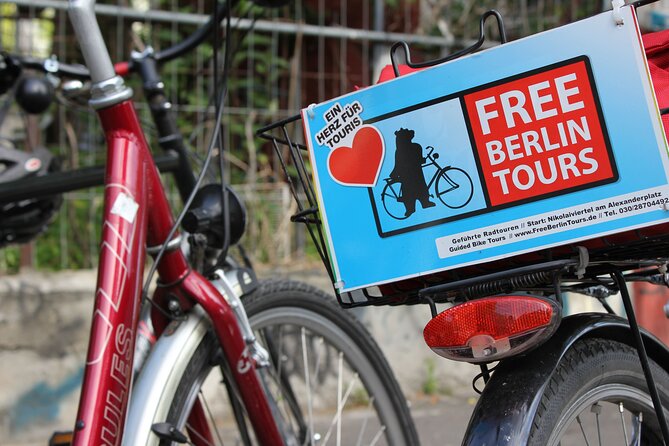
The price includes a city bike and helmet. The bikes have rear basket carriers, useful for a water bottle, jacket, or small bag. Food and drinks are not included, so bring water, especially on a warm day.
Berlin’s flat streets make the physical side manageable, but you still ride in an urban setting. The guide gives instructions, waits at lights, and works to keep the group together. You should be comfortable following directions and stopping in public spaces.
Children are welcome, and infant seats can be requested. Children must be accompanied by an adult. The tour runs in all weather, so bring clothing suited to the forecast. Rain did not stop one group from enjoying the ride, but wet streets and cold wind can change how pleasant three hours on a bicycle feels.
The tour is offered in English or German, depending on the option selected. The English version includes Checkpoint Charlie. Confirmation arrives at booking, and free cancellation is available up to 24 hours before the start time. If the minimum group size is not reached, the operator offers another date or experience, or a full refund.
Is $42.34 a fair price?
At about $42.34 per person, this is a good value if you want orientation, transportation between sites, and live interpretation in one package. You are not paying separate entrance fees because the stops are viewed from outside, but the bike and helmet are included.
The real value lies in the distance covered and the stories attached to otherwise easy-to-miss places. A three-hour ride can give you a useful map of Berlin’s twentieth-century past, then show you where to return for longer visits.
The price is less compelling if you only want to see the main monuments quickly. You may spend just five or 10 minutes at a site, and the route may not include every advertised location. In that case, rent a bike independently or choose a fixed-route sightseeing tour.
Who should book this Berlin bike tour?
I would choose this ride if you want history explained outdoors, enjoy moving through a city, and prefer a local guide to a recorded commentary. It suits families with older children, first-time visitors who need a clear sense of Berlin’s layout, and anyone who wants the Wall to feel like a real border rather than a strip of preserved concrete.
I would also book it early in a Berlin stay. The route can help you decide which museums and memorials deserve a longer visit. Since the experience is booked around 17 days ahead on average, advance planning is sensible.
I would hesitate if you need guaranteed stops, a fully linear account of the Third Reich, or extensive time inside the Reichstag and memorial sites. Before setting out, ask which places your guide plans to include. If the Wall is your main interest, request enough time at the Berlin Wall Memorial. If Nazi-era Berlin is your priority, confirm how much of the ride will focus on those locations rather than the Cold War.
For most people who want an active introduction to Berlin’s difficult past, I think the ride earns its price. Book it for the connections between places, not for a slow visit to any single monument.
FAQ
How long is the Berlin bike tour?
The tour lasts approximately three hours.
What is included in the price?
Use of a city bicycle, a helmet, and a professional guide are included. Food and drinks are not included unless specified.
Is Checkpoint Charlie included on every tour?
Checkpoint Charlie is included only on the English version of the tour. Because guides design their own routes, stops can also vary.
Can children join the tour?
Yes. Children are welcome, but they must be accompanied by an adult. Infant seats can be provided on request.
How many people can join the tour?
The stated group size is a minimum of four and a maximum of 15 participants.
What happens if I need to cancel?
You can cancel at least 24 hours before the start time for a full refund. Cancellations or changes made less than 24 hours before the start time are not refunded or accepted.
More Bike Days Around Berlin
- Berlin: Sights and Highlights Bike Tour with a Local Guide
★ 4.8 · 2,698 reviews - Berlin Highlights 3-Hour Bike Tour
★ 5.0 · 948 reviews - Berlin City Bike Tour with Beer Garden Stop
★ 5.0 · 917 reviews - Berlin Highlights: 3-Hour Bike Tour
★ 4.9 · 809 reviews
Just added around Berlin
- Berlin Highlights in One Day★ 5.0 · 3 reviews
- Private Berlin One Day Tour with a Local: See the City Unscripted★ 3.5 · 3 reviews
- Individual city tour Berlin for max. 8 persons★ 5.0 · 3 reviews
- Transfer from Berlin Schönefeld Airport (SXF) to Berlin city Hotels – ROUND TRIP★ 4.0 · 3 reviews
- Berlin: Museum Island Tour★ 5.0 · 3 reviews
- Private Analogue Photography Experience in Berlin★ 5.0 · 3 reviews
- Berlin: Local Food Tour in Secrets Hidden Gems★ 4.0 · 3 reviews
- Berlin & The Third Reich Private Guided Tour★ 5.0 · 3 reviews
Third Reich & WWII Sites, compared.



Berlin’s Best: 2 Hour Walking Tour Third Reich and the Cold War
Read our review →
Third Reich Berlin: Hitler and WWII Walking Tour
Read our review →

Berlin Third Reich Sites: Half-Day Walking Tour
Read our review →
Guided Bike Tour of the Berlin Wall and Third Reich
Read our review →
Hitler’s Germany: Berlin During the Third Reich & WWII
Read our review →Browse the lists this tour appears in