
Review · THIRD REICH & WWII SITES
Berlin: Hitler’s Berlin The Rise & Fall Guided Walking Tour
Berlin’s Nazi past is not tucked away in one museum. It is spread across grand boulevards, government buildings, memorials, and ordinary city streets. This 150-minute walking tour links those places into one clear story, from Hitler’s rise in 1933 to the ruins of 1945.
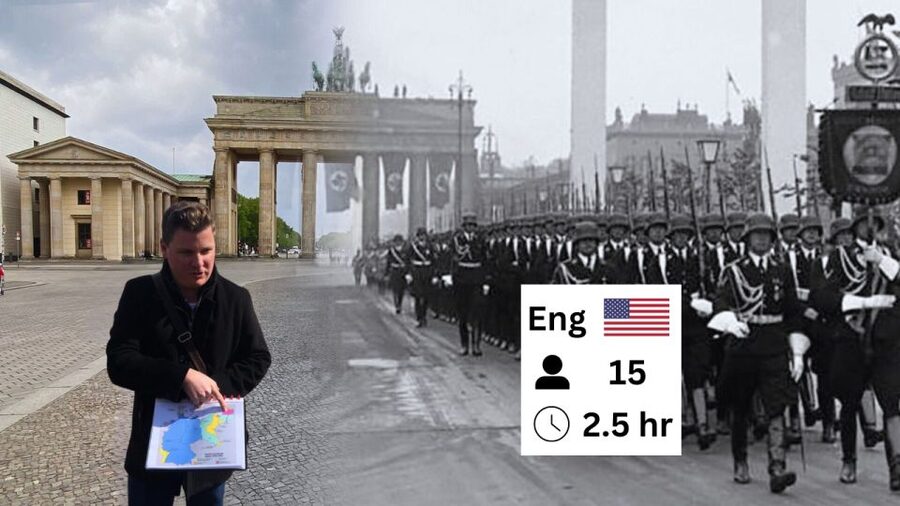
I like the way the tour connects politics, terror, military events, and daily life instead of treating each sight as an isolated stop. I also like the use of historic maps and Then & Now photographs, which help you picture buildings and streets that have changed or vanished. The main drawback is simple: you walk a considerable distance outdoors, and the subject is emotionally heavy, so good shoes and weatherproof clothing matter.
In This Review
- Key points to know before you book
- Why this walking tour makes sense in Berlin
- Brandenburg Gate and the end of democracy
- The Sinti and Roma memorial
- The Reichstag and the symbols of power
- The Soviet War Memorial in Tiergarten
- The Holocaust Memorial and the human cost
- Hitler’s bunker site without the theatrics
- Johann Georg Elser and the courage to resist
- The German Finance Ministry and the machinery of rule
- Topography of Terror and the nerve center of repression
- What the $47 price buys you
- Walking conditions, weather, and accessibility
- Who will get the most from this tour
- Should you book Hitler’s Berlin?
- FAQ
- How long does the tour last?
- Where does the tour begin?
- Where does the tour finish?
- What language is the tour conducted in?
- Does the tour include indoor museum admission?
- Is the tour wheelchair accessible?
- What should I bring?
Key points to know before you book
- A full Nazi-era timeline: Follow the story from the dismantling of democracy to total defeat in 1945.
- Hitler’s bunker site: See the unmarked location where the war in Europe ended for Hitler, now presented without theatrical treatment.
- Berlin’s major memorials: Visit the Holocaust Memorial, the Sinti and Roma memorial, and the Soviet War Memorial in one route.
- Strong guide-led interpretation: Guides including Scott, Hannah, Matt, and Mark are praised for clear explanations and patient answers.
- Outdoor history lesson: Indoor museum exhibitions are not included, so the value comes from the guide, the sites, maps, and photographs.
- Good value for serious history fans: At $47 per person, the tour can replace several hours of independent research and help you understand the city before visiting museums on your own.
Why this walking tour makes sense in Berlin
Berlin can be confusing for anyone trying to understand the Nazi period alone. A plain-looking government building may have played a major role in repression. A modern memorial may sit over a site whose meaning is not obvious. The tour gives you the political and physical map at the same time.
The route begins near Brandenburg Gate and finishes at the Topography of Terror. That direction works well because it moves from the public symbols of power to the machinery of terror, then ends beside one of Berlin’s most useful outdoor documentation centers.
The guide’s role is central. This is not designed as a quick photo walk. The stated aim is to explain how the Nazis seized power, targeted Jewish people, used fear and propaganda, ran repression, and led Germany into war and destruction.
Guides are trained in Second World War history, and the strongest praise consistently focuses on their ability to make difficult material easy to follow. Scott is often singled out for his clear delivery and broad command of the subject. Hannah is praised for bringing events to life with personal stories and for offering more than one angle on complicated issues. Matt is described as approachable, precise, and happy to spend time on questions.
That range matters. You do not need a university background in German history to follow the tour, but you also will not be limited to a shallow set of facts. Several comments indicate that people already familiar with the Second World War still picked up useful details.
More Third Reich sites in Berlin:
- Berlin: Third Reich and Cold War 2 Hour Walking Tour
★ 4.9 · 6,830 reviews - Berlin: Berlin Story Bunker Entry Ticket
★ 4.6 · 6,759 reviews - Berlin’s Best: 2 Hour Walking Tour Third Reich and the Cold War
★ 5.0 · 5,486 reviews
Brandenburg Gate and the end of democracy
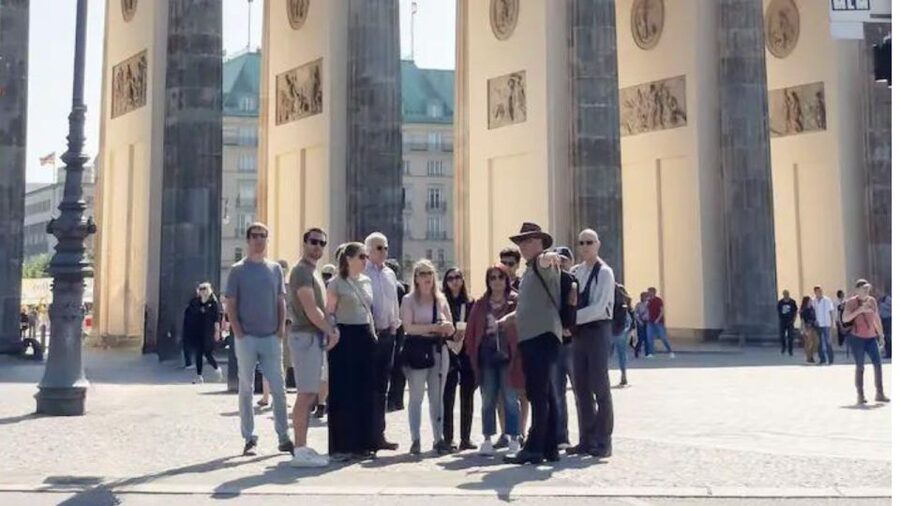
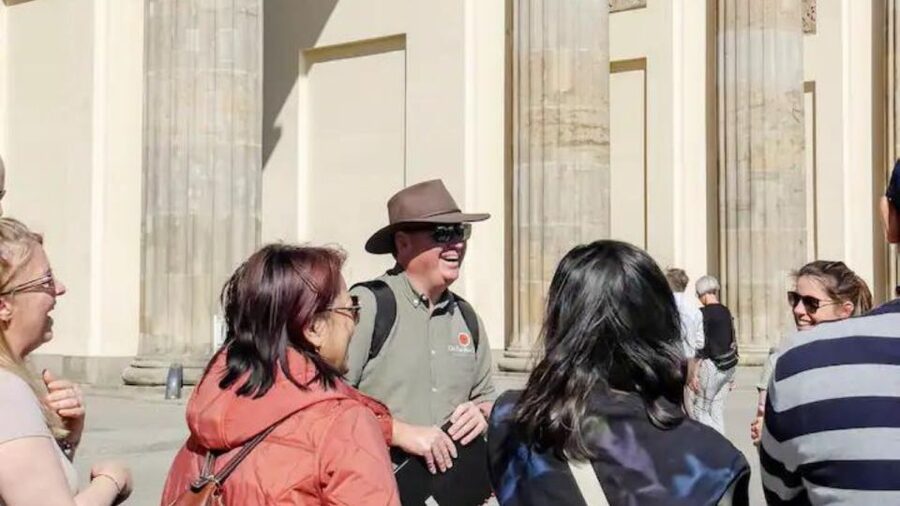
Meet your guide at the Tourist Office at Brandenburg Gate and look for the blue umbrella. This is a practical meeting point, but allow time to find the correct spot, especially if the square is busy.
Brandenburg Gate is an effective opening because it represents changing ideas of Germany: monarchy, democracy, dictatorship, division, and reunification. Here, the guide sets the political scene and explains how the Nazis moved from electoral success to dictatorship.
The important point is that Hitler did not simply seize Germany through a single dramatic coup. The tour places his appointment and political rise within the legal and political process that allowed democracy to be dismantled from inside. That makes the stop more useful than a standard photograph in front of a famous monument.
Expect around 10 minutes here. It is enough for orientation and context, not a full architectural lecture. Bring your attention back to the guide rather than treating the gate as a quick backdrop for pictures.
The Sinti and Roma memorial
The next stop is the Memorial to the Sinti and Roma Victims of National Socialism. This is a quieter point on the route and helps widen the story beyond the persecution of Jewish people.
The memorial gives the guide a chance to explain how Nazi racial policies targeted several groups. Its position near the government center also reinforces a key idea: persecution was not random street violence. It was organized through state policy, official categories, administration, and force.
The stop lasts about 10 minutes. I value its inclusion because a tour focused only on Hitler, military battles, and famous buildings can leave out victims whose stories are less familiar to many visitors. Keep the pace reflective here. It is not a grand monument designed for spectacle.
The Reichstag and the symbols of power
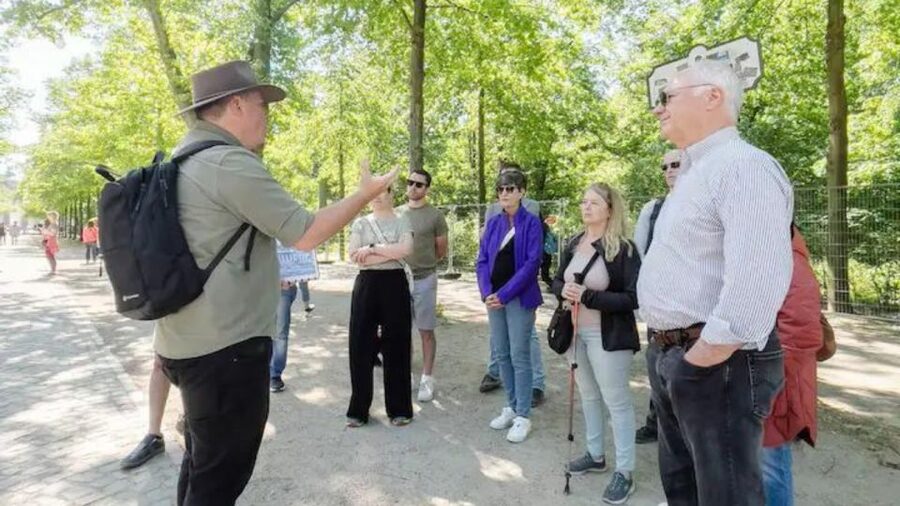
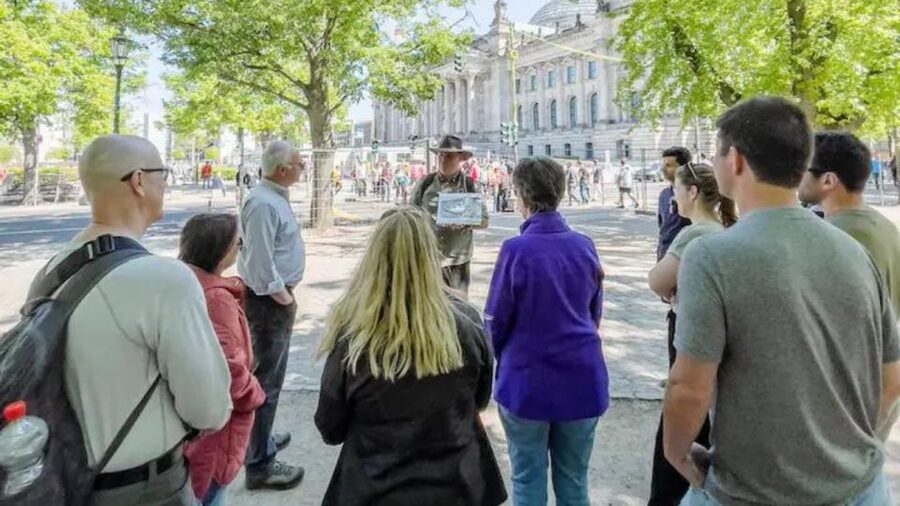
The Reichstag receives about 20 minutes. You visit and discuss the building from outside, rather than entering the parliamentary interior. That distinction matters because indoor museum access is not included.
The Reichstag helps explain the relationship between democracy and dictatorship. It is a symbol of the German state, yet its history also points to the destruction of parliamentary government and the consolidation of Nazi power.
The guide uses this stop to connect institutions with the events taking place around them. You are not only looking at a historic façade. You are considering how a political system can be weakened, restricted, and replaced while official buildings remain in place.
The building also helps you understand the contrast between prewar Germany and the later ruins of Berlin. The tour repeatedly returns to the gap between the city’s monumental ambitions and the destruction brought by the regime’s decisions.
More walking tours in Berlin:
- Discover Berlin Half-Day Walking Tour
★ 5.0 · 9,624 reviews - Berlin: Discover Berlin Walking Tour
★ 4.9 · 5,998 reviews - Berlin: Hidden Backyards Guided Walking Tour
★ 4.8 · 5,360 reviews - Third Reich Berlin: Hitler and WWII Walking Tour
★ 5.0 · 3,301 reviews
The Soviet War Memorial in Tiergarten
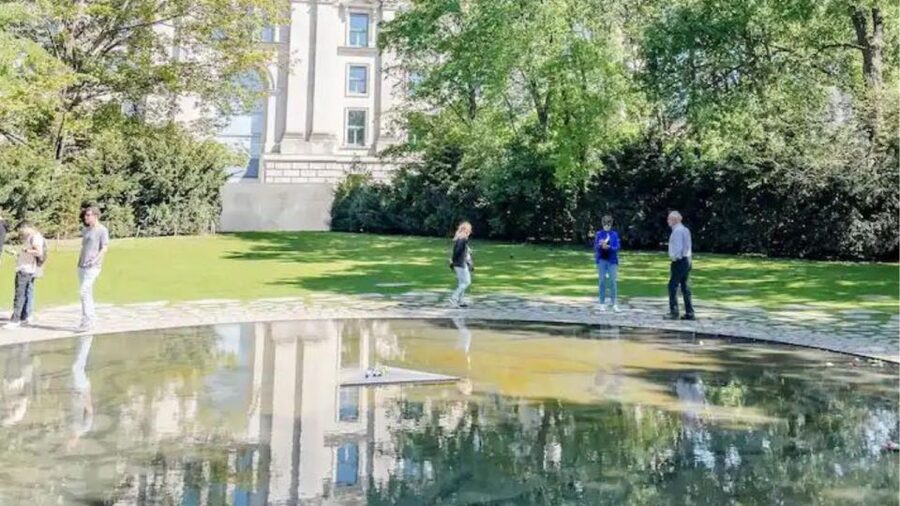
The Soviet War Memorial in Tiergarten takes about 20 minutes and adds a military dimension to the walk. It commemorates Soviet forces who fought in the Battle of Berlin, the final major battle in Europe.
This stop is especially useful because the tour does not treat the war as a distant sequence of arrows on a map. Berlin became a battlefield, and the Soviet advance brought the conflict directly into the capital. The memorial also raises questions about how victory, mourning, occupation, and political memory can share the same place.
You will have time for photographs, but the guide’s explanation is the real reason to stop. The memorial is a reminder that the regime’s collapse was not just a political event inside government offices. It came through military defeat and terrible fighting in the city.
The site adds some walking time and may feel less immediately familiar than Brandenburg Gate or the Holocaust Memorial. That is a benefit for anyone wanting the full arc of the war rather than only the best-known Nazi locations.
The Holocaust Memorial and the human cost
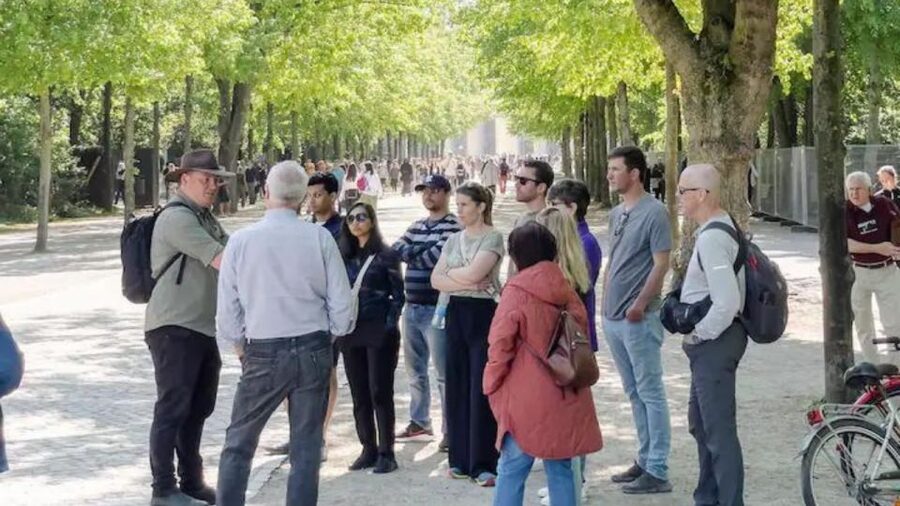
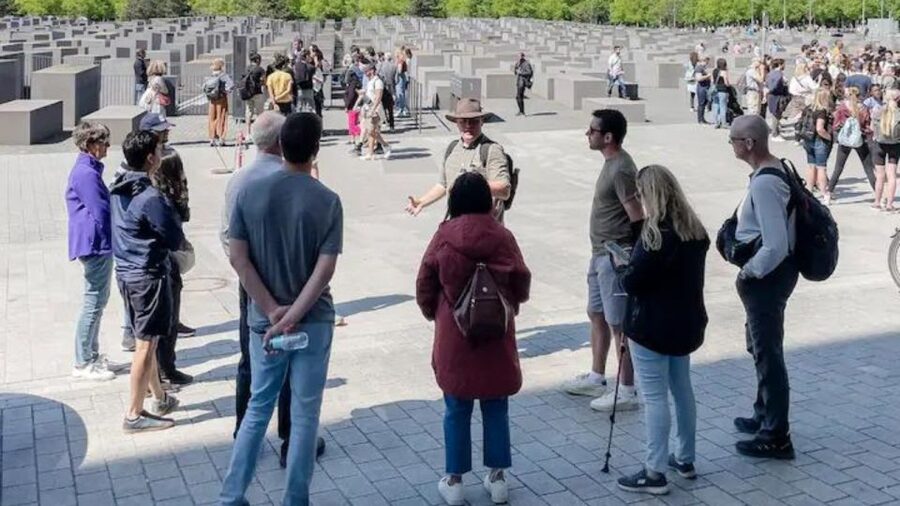
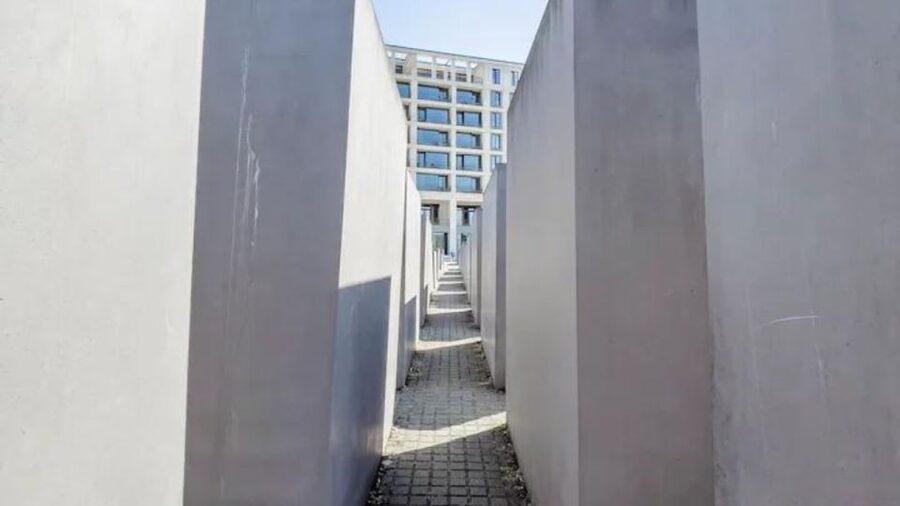
The Memorial to the Murdered Jews of Europe is given around 20 minutes. Its field of concrete stelae is one of Berlin’s most recognized memorial spaces, but the tour helps you approach it with context rather than using it as a quick stop for photographs.
The guide explains the systematic persecution and murder of Europe’s Jewish population, connecting ideology to government action and the wider war. This is where the political story becomes intensely human.
You have space to walk among the blocks and reflect, but the guide-led explanation keeps the memorial tied to the period being studied. The experience is solemn. You should not expect light entertainment or a casual sightseeing mood at this point.
I also appreciate that the tour includes the Sinti and Roma memorial earlier in the route. Together, the two memorials make the Nazi system of racial persecution easier to understand without reducing everything to one monument or one slogan.
If you plan to visit the memorial’s underground information center separately, check your schedule and energy. This walking experience does not include indoor exhibitions, so you will need another visit for museum material.
Hitler’s bunker site without the theatrics
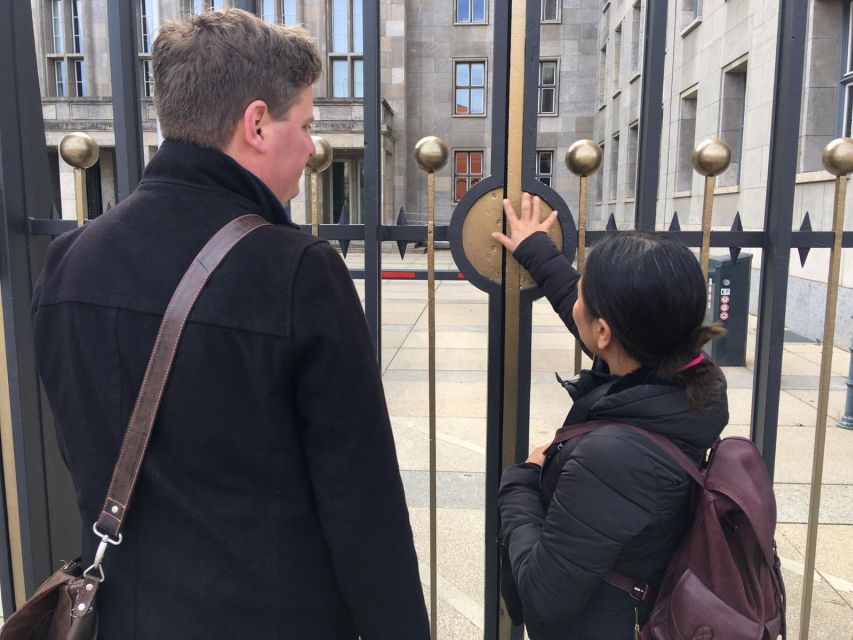
The stop at Hitler’s bunker site lasts about 15 minutes. The location is presented as a place where the war in Europe came to its final days for Hitler, but it is not a preserved underground attraction. You see the modern site and hear what happened there.
That lack of spectacle is appropriate. There is no reconstructed bunker interior to wander through and no theatrical staging. Instead, the guide explains the final collapse of the regime, the fighting in Berlin, and the circumstances surrounding the end of Hitler’s rule.
This is one of the places where maps and Then & Now photographs are especially helpful. Much of the visible city has changed, and the site does not explain itself. Without a guide, you could easily walk past with little sense of what happened.
The stop also helps separate fact from popular myth. A good guide can place the bunker within the larger collapse rather than letting it become a shrine to Hitler. The emphasis stays on defeat, destruction, and the human cost of the war.
Johann Georg Elser and the courage to resist
The Johann Georg Elser Memorial takes about 10 minutes. Elser attempted to kill Hitler in 1939, before the war had reached its later scale, and the memorial introduces a different part of the story: opposition to the regime.
This stop matters because it prevents the history from becoming a simple story of one dictator controlling every German without challenge. The guide can show that resistance existed, though it faced severe danger and often failed.
For you, this is a valuable pause after the concentration on state power and mass violence. It brings an individual act of resistance into the route and reminds you that the period included difficult choices, fear, courage, and moral conflict.
The memorial is not as instantly recognizable as the Reichstag or Brandenburg Gate. That is precisely why guide interpretation helps. You are unlikely to understand its importance from the site alone.
The German Finance Ministry and the machinery of rule
The German Finance Ministry is a brief five-minute photo and explanation stop. It may seem less dramatic than a memorial, but government offices are part of the story of dictatorship.
A building connected to finance and administration gives the guide a chance to explain how power relies on paperwork, institutions, and ordinary systems as well as speeches and violence. Nazi rule required more than propaganda. It depended on officials, laws, money, records, and enforcement.
Do not expect a long visit here. The value is in the connection the guide makes between grand political decisions and the administrative work needed to carry them out.
Topography of Terror and the nerve center of repression
The final stop is the Topography of Terror, where the tour spends about 15 minutes. The site is associated with the former Gestapo and SS headquarters, the institutions at the center of Nazi terror and repression.
Ending here gives the walk a strong structure. You begin with the visible symbols of government and finish with the agencies that enforced fear, persecution, and control. The site also makes clear that terror was organized through offices and chains of command, not only through battlefield violence.
The outdoor portion of the Topography of Terror is included, but entry to indoor museum exhibitions is not. I recommend treating the walking tour as an introduction, then returning on your own if you want to spend more time with documents, photographs, and detailed displays.
The finish is also practical. Since the tour ends here, you can continue your Berlin sightseeing in the surrounding area or plan a separate museum visit without trying to squeeze it into the walk.
What the $47 price buys you
At $47 per person, this is not the cheapest way to see central Berlin. You can walk between many of these places without paying for a guide. The real question is whether you would understand the connections as well on your own.
For a first visit, I think the price is fair if Nazi Germany and the Second World War are important reasons for your trip. You receive two and a half hours with an English-speaking specialist guide, a small-group setting, historic maps, Then & Now photographs, and guided interpretation at several major sites.
The tour does not include transport, food, drinks, hotel pickup, or indoor museum admission. That keeps the cost focused on the walking experience, but you should budget extra if you want to visit exhibitions afterward.
The small group format should make it easier to ask questions and hear the guide. Several guides are praised for taking detailed questions and, at times, allowing the tour to run beyond the scheduled finish. Do not count on extra time, though. Treat 150 minutes as the working length.
Free cancellation up to 24 hours before the start and the option to reserve now and pay later make the booking less rigid. Those features are useful in Berlin, where weather can change quickly.
Walking conditions, weather, and accessibility
This is an outdoor tour with considerable walking. Wear comfortable shoes, carry water, and dress for the forecast. Rain can affect the experience, and an unexpected downpour has tested even enthusiastic groups.
Bring your own umbrella or walking stick if you need one. These items are not supplied as standard, though one guide has helped with umbrellas in wet conditions. The tour is listed as wheelchair accessible, but the amount of walking and outdoor conditions are still worth considering when planning your day.
English is the only stated tour language. You should be comfortable listening to a detailed historical explanation while walking between stops.
The route includes pauses at memorials and sites, but it is not a leisurely café-style stroll. Plan a break and a drink afterward, especially in warm weather or if you are traveling with older family members.
Who will get the most from this tour
I would choose this for you if you want a clear overview before visiting Berlin’s museums. It suits first-time visitors, history students, families with older teenagers, and people who already know the basic story but want to connect it to the actual city.
It also works well for couples or small groups who prefer questions and conversation over a large scripted tour. The guides are repeatedly described as friendly, engaging, and able to explain complicated subjects in plain language.
This may not be the right pick if you want extensive indoor museum time, a short route with little walking, or a tour focused mainly on military hardware and battlefield tactics. The emphasis is broader: political change, ideology, persecution, repression, daily life, resistance, and collapse.
Should you book Hitler’s Berlin?
Book it if you want Berlin’s Nazi history explained as one connected story rather than a string of famous addresses. The strongest reasons are the specialist guides, the thoughtful route, the use of historic images, and the mix of major sites with less obvious stops such as the Sinti and Roma memorial and the Elser memorial.
The $47 cost is easiest to justify early in your Berlin stay, when the tour can give shape to later museum visits. Just bring good shoes, water, and protection from rain, and remember that the indoor exhibitions require a separate visit.
FAQ
How long does the tour last?
The tour lasts 150 minutes, or two and a half hours.
Where does the tour begin?
Meet at the Tourist Office at Brandenburg Gate. Look for the blue umbrella.
Where does the tour finish?
The tour finishes at the Topography of Terror.
What language is the tour conducted in?
The live tour guide speaks English.
Does the tour include indoor museum admission?
No. The experience is outdoors, and access to indoor museum exhibitions is not included.
Is the tour wheelchair accessible?
Yes, the activity is listed as wheelchair accessible. It also involves a considerable amount of outdoor walking.
What should I bring?
Wear comfortable shoes and dress for the weather. Bring water, and bring your own umbrella or walking stick if you need one.
Just added around Berlin
- Berlin Highlights in One Day★ 5.0 · 3 reviews
- Private Berlin One Day Tour with a Local: See the City Unscripted★ 3.5 · 3 reviews
- Individual city tour Berlin for max. 8 persons★ 5.0 · 3 reviews
- Transfer from Berlin Schönefeld Airport (SXF) to Berlin city Hotels – ROUND TRIP★ 4.0 · 3 reviews
- Berlin: Museum Island Tour★ 5.0 · 3 reviews
- Private Analogue Photography Experience in Berlin★ 5.0 · 3 reviews
- Berlin: Local Food Tour in Secrets Hidden Gems★ 4.0 · 3 reviews
- Berlin & The Third Reich Private Guided Tour★ 5.0 · 3 reviews
Third Reich & WWII Sites, compared.



Berlin’s Best: 2 Hour Walking Tour Third Reich and the Cold War
Read our review →
Third Reich Berlin: Hitler and WWII Walking Tour
Read our review →

Berlin Third Reich Sites: Half-Day Walking Tour
Read our review →
Guided Bike Tour of the Berlin Wall and Third Reich
Read our review →
Hitler’s Germany: Berlin During the Third Reich & WWII
Read our review →Browse the lists this tour appears in