
Review · THIRD REICH & WWII SITES
Berlin: The Time of National Socialism Walking Tour
Berlin’s Nazi past is not confined to a museum. It is written into the streets around the Brandenburg Gate, the government quarter, the Holocaust Memorial, and the empty ground where Hitler’s bunker once stood. This two-hour walk connects those places into one sober, useful story.
I like the small group of up to 10, which gives you a better chance to ask questions than on a big city tour. I also like the focus on physical traces, from Soviet T-34 tanks to wartime buildings and memorials. The main drawback is pace: two hours covers a lot of ground, so some stops receive explanation rather than a long visit.
In This Review
- Key points to know before you book
- Why this walk gives Berlin’s Nazi era a clear shape
- Brandenburg Gate and Pariser Platz: propaganda in a famous setting
- The Reichstag and the road to power in 1933
- Tiergarten and the Soviet T-34 tanks
- The Holocaust Memorial and the cost of abstraction
- Hitler’s bunker site and the missing buildings
- The government quarter and the memorial to Johann Georg Elser
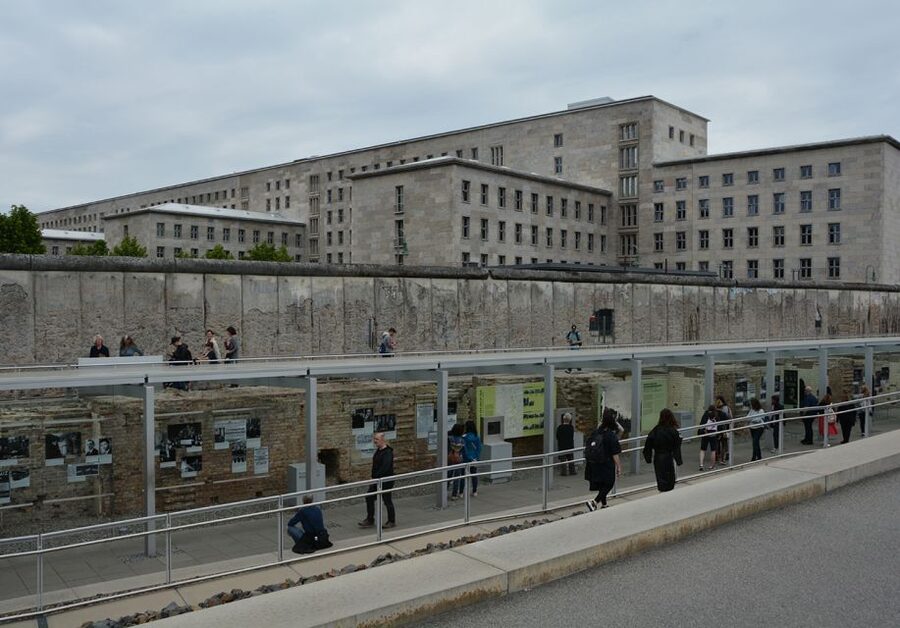
- Detlev-Rohwedder-Haus and the Topography of Terror
- What the guide adds to the experience
- Pace, weather, and practical comfort
- Is $43 a fair price for two hours?
- Who should book this Berlin history walk?
- Should you book it?
- FAQ
- Where does the tour begin?
- Where does the tour finish?
- How long does the tour last?
- What language is the tour in?
- Is the tour wheelchair accessible?
- How large is the group?
- Does the tour run in bad weather?
- What is included in the price?
Key points to know before you book
- Hitler’s bunker site: See where the bunker and New Reich Chancellery once stood, with no surviving grand structure to distract from the story.
- Soviet T-34 tanks: View actual World War II armor at the Soviet War Memorial in Tiergarten.
- Power at the Reichstag: Learn how the NSDAP and Adolf Hitler came to power in 1933.
- Resistance stories: Hear about German opposition to the dictatorship, including the memorial to Johann Georg Elser.
- German-language walk: The listed live tour language is German, led by a certified guide such as Carlo or Carlos.
- Useful format: The tour begins near the Brandenburg Gate and ends at the Topography of Terror, a convenient route through central Berlin.
Why this walk gives Berlin’s Nazi era a clear shape
I find this tour most useful as a first pass through Nazi Berlin. It does not ask you to study a map before arriving. Instead, it links the major political, military, and memorial sites in an order that makes the city easier to understand.
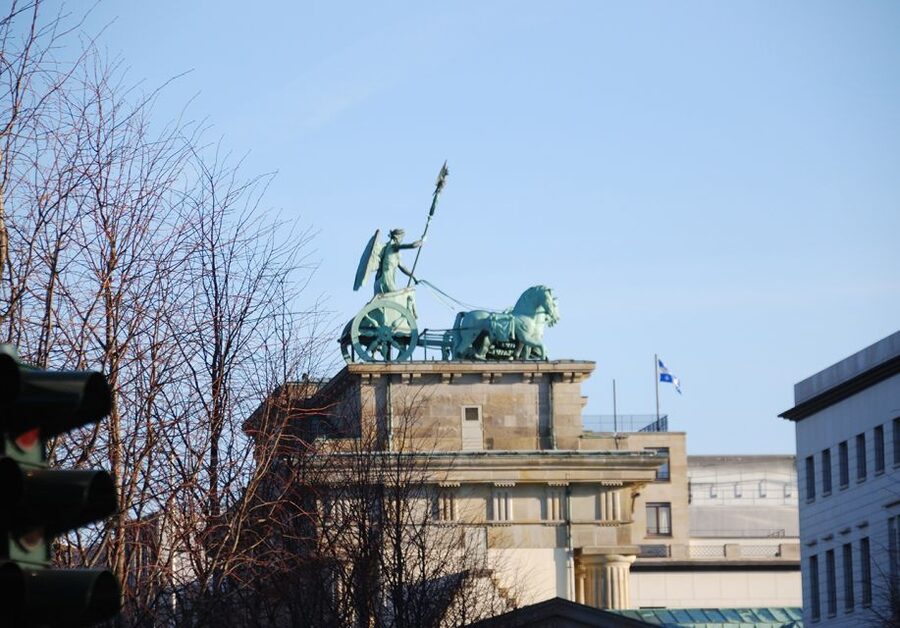
You begin at the Brandenburg Gate, one of Berlin’s most recognizable sights. During the Nazi period, it served as a setting for propaganda marches. That detail changes the way you see the monument. It was not simply a handsome neoclassical gate or a symbol of later German reunification. It was also used to stage power in public.
From there, the route moves through the center toward places tied to the government and the war. The story stays rooted in location. You are not only hearing dates and names. You are learning what stood here, who controlled it, and what remains visible now.
The tour is especially strong for anyone who wants context before visiting museums. Berlin has many excellent historical institutions, but the city itself can feel scattered. This walk gives you a framework for later visits to the Topography of Terror, the German Resistance Memorial Center, or other sites, though those museums are not included in the tour.
More Third Reich sites in Berlin:
- Berlin: Third Reich and Cold War 2 Hour Walking Tour
★ 4.9 · 6,830 reviews - Berlin: Berlin Story Bunker Entry Ticket
★ 4.6 · 6,759 reviews - Berlin’s Best: 2 Hour Walking Tour Third Reich and the Cold War
★ 5.0 · 5,486 reviews
Brandenburg Gate and Pariser Platz: propaganda in a famous setting
The meeting point is at the exit of S+U Brandenburger Tor station, exit B, toward Pariser Platz and Straße des 17. Juni. Look for the guide carrying the Get Your Guide, You in Berlin flag. This is a practical meeting place, but allow time to find the correct exit in the busy station area.
Pariser Platz provides the first orientation. The Brandenburg Gate is close by, and the guide explains how the Nazis used this familiar Berlin landmark during propaganda marches. You will likely have time to take in the architecture, but this is a walking tour rather than a photo stop with a long pause.
That distinction matters. The gate is one of Berlin’s busiest public spaces, and the experience can feel exposed, especially in bad weather. The guide’s job here is to connect the monument to the political theater around it, not to give a full architectural lecture.
The Reichstag and the road to power in 1933
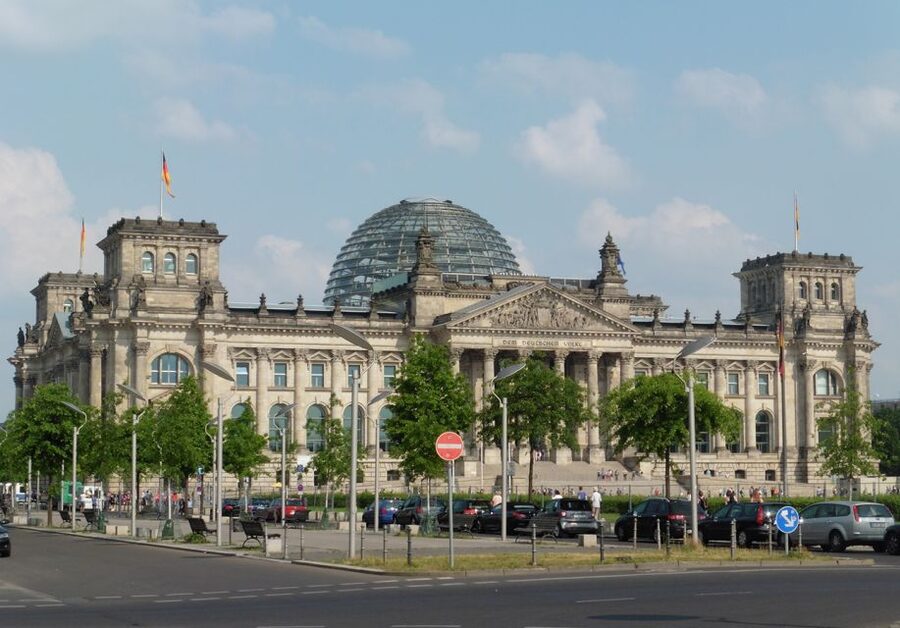
The next important stop is the Reichstag, now the seat of Germany’s Parliament. The building links present-day democracy with the political crisis that allowed the Nazi Party, or NSDAP, and Adolf Hitler to come to power in 1933.
You see the building from outside on this route. The value comes from the explanation of its role in the period, not from entry to the dome or a tour of the parliamentary interior. If you want to visit the Reichstag dome, you will need to arrange that separately.
I like this part because it prevents a common mistake: treating Nazi rule as something that appeared from nowhere. The Reichstag helps place the dictatorship within Berlin’s political center and shows why government buildings matter in the story.
Tiergarten and the Soviet T-34 tanks
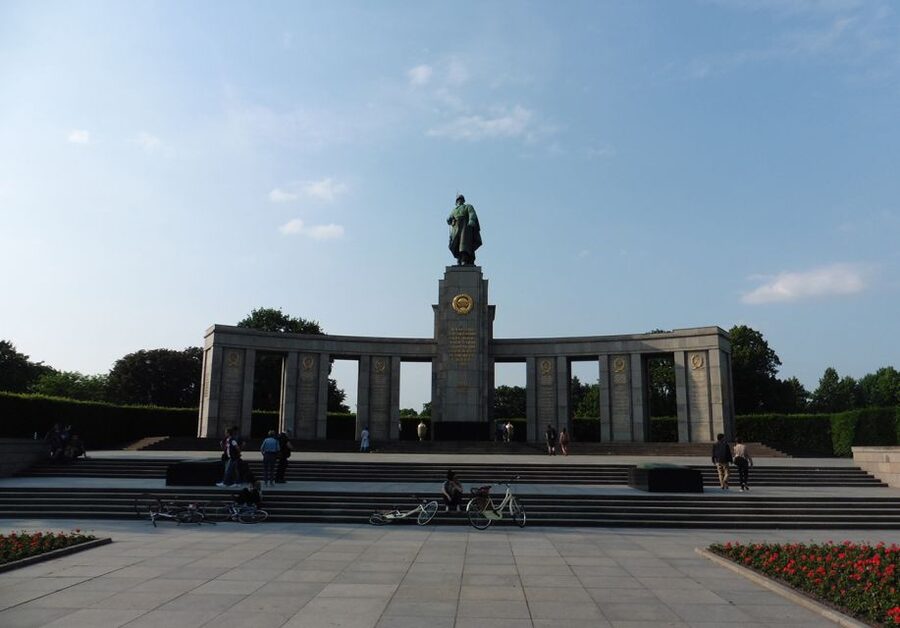
The walk continues into Tiergarten, Berlin’s large central park, to the Soviet War Memorial. Here you can see Soviet T-34 tanks and artillery from World War II. These are tangible wartime objects, and they give the tour a different feel from the earlier government sites.
The tanks are not just military decoration. They help mark the defeat of Nazi Germany and the Soviet role in the battle for Berlin. Their presence in the city makes the end of the war visible in a way that a timeline on a wall cannot.
This is also one of the better places to notice how much walking is involved. You are outdoors throughout, and the tour runs in rain, cold, and on public holidays. Wear shoes suited to city walking and dress for the forecast. One January group faced icy streets and very cold weather, and guide Carlo took care to help everyone manage the conditions. That is useful reassurance, but it does not replace a warm coat and sensible footwear.
More walking tours in Berlin:
- Discover Berlin Half-Day Walking Tour
★ 5.0 · 9,624 reviews - Berlin: Discover Berlin Walking Tour
★ 4.9 · 5,998 reviews - Berlin: Hidden Backyards Guided Walking Tour
★ 4.8 · 5,360 reviews - Third Reich Berlin: Hitler and WWII Walking Tour
★ 5.0 · 3,301 reviews
The Holocaust Memorial and the cost of abstraction
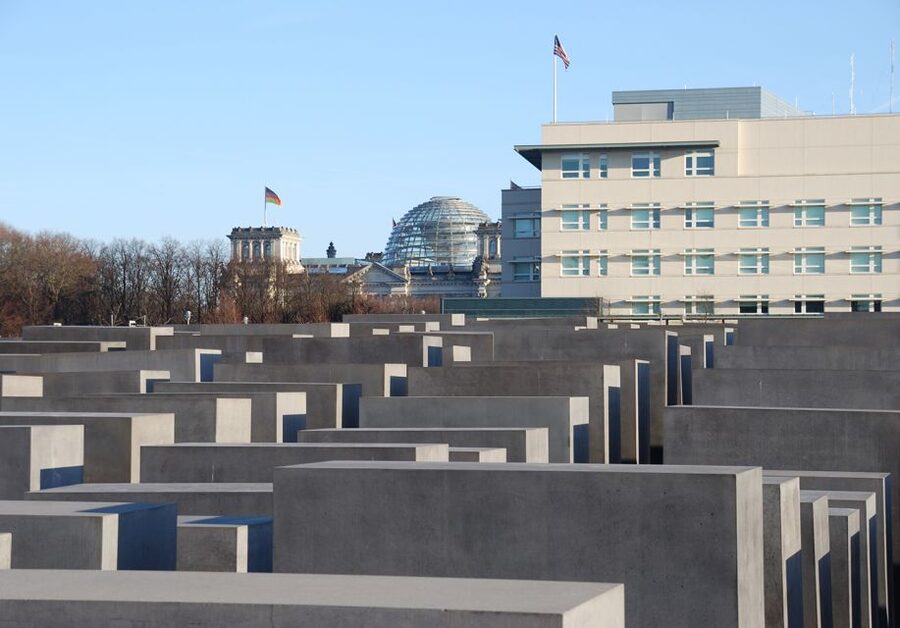
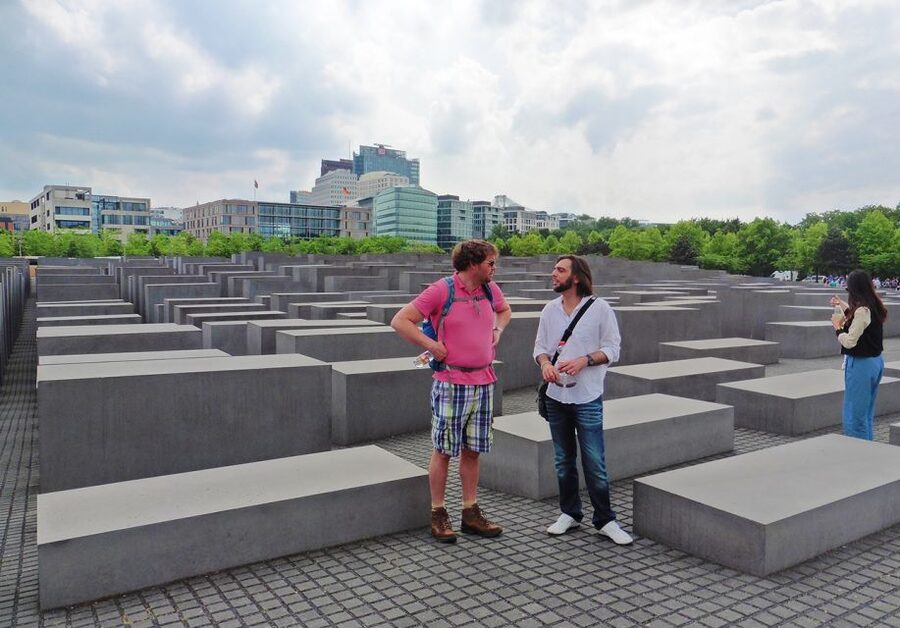
The Memorial to the Murdered Jews of Europe is one of Berlin’s most important memorial sites. The field of concrete stelae is close to the Brandenburg Gate and the former government quarter, but its scale and layout can make the city feel suddenly quieter and less certain.
On this tour, the memorial is treated as part of the broader story of Nazi rule and mass murder. You should expect an explanation and a guided stop, not a full visit to the underground Information Centre. If you want to read the names and family stories presented there, plan another visit.
I appreciate the place in the route. After the political and military locations, the memorial keeps the human cost at the center. It also gives you time to think about the difference between a site used to project power and one created to remember people destroyed by that power.
Hitler’s bunker site and the missing buildings
The walk then reaches the area where Hitler’s bunker and the New Reich Chancellery were located. This is a striking stop partly because so little is visible. There is no grand bunker entrance or preserved chancellery façade waiting for photographs.
That absence is the point. The guide helps you picture the government district as it existed during the final phase of the war, then separates surviving facts from later myths. One useful theme of the walk is the contrast between myth and reality, especially around famous Nazi buildings and the places where they once stood.
Do not come expecting a dramatic ruin. The stop works as a lesson in how cities handle difficult sites. You stand in an ordinary part of modern Berlin while hearing about the headquarters of a dictatorship that tried to reshape Europe.
The government quarter and the memorial to Johann Georg Elser
The route also includes the government district of Nazi-era Berlin and the Johann Georg Elser Memorial. Elser attempted to kill Hitler with a bomb in 1939, an act that makes his memorial an important reminder that opposition existed inside Germany before the war ended.
This part adds needed balance to a tour that could otherwise become a sequence of Nazi institutions. You hear about resistance against the dictatorship, not only about the people who directed it. The focus does not soften the crimes of the regime. It shows that obedience was not the only possible response.
The memorial also suits visitors who want to understand individual choices. Large political history can become impersonal. A single person’s decision to act against Hitler brings the issue closer to the level of courage, risk, and consequence.
Detlev-Rohwedder-Haus and the Topography of Terror
The final section brings you to Detlev-Rohwedder-Haus and the Topography of Terror Documentation Center. Detlev-Rohwedder-Haus is tied to the wartime government district and offers another look at surviving Nazi-era architecture.
The Topography of Terror is the endpoint and one of the strongest parts of the route. The documentation center occupies the former area of the SS, the Secret State Police, the Reich Security Main Office, and the Reich Aviation Ministry. Those agencies formed a core of Nazi terror and administration.
The tour ends here rather than taking you through the center as a museum visit. That is both a strength and a limit. You finish with the right place in mind for further study, but you should set aside extra time if you want to examine the exhibitions and documents at your own pace.
The end point is convenient for continuing your day in central Berlin, though it is not the same station area where you began. The route therefore works best if you are comfortable walking onward or checking your next connection after the tour.
What the guide adds to the experience
The guide is described as a certified, multilingual city guide, but the specific live language listed for this departure is German. Check the language carefully when booking if you need an English-language tour. The supplied information names Carlo and Carlos in different places, likely referring to the same guide, so you may see either version attached to the experience.
The strongest guide qualities are clear explanation, enthusiasm, and attention to questions. Carlo is described as giving lively explanations and offering useful Berlin tips beyond the formal route. Several bookings became nearly private tours because only one or two people attended. You cannot count on that, but a maximum of 10 already keeps the group manageable.
A small group does not turn the walk into a private tour. The guide still needs to keep the route moving, and two hours is a fixed window. Still, a compact group makes it easier to hear in city streets and ask about details that catch your attention.
This tour is listed as German-language, so it is particularly suitable for German speakers, families, and local visitors who want a focused subject rather than a general introduction to Berlin. Teenagers and young adults may also respond well to the mix of buildings, resistance stories, memorials, and visible military remains.
Pace, weather, and practical comfort
Two hours sounds short, but this is a concentrated walk. You move between Pariser Platz, the Reichstag, Tiergarten, the memorial district, the former bunker area, and the Topography of Terror. The tour does not include a meal, transport between stops, or entry to an indoor museum.
Wear comfortable shoes and clothing for all weather. The tour runs in rain, cold, and public holidays. There may be little chance to escape the weather because the main format is outdoors, so this is not an ideal choice if you want a warm indoor activity.
The route is wheelchair accessible according to the activity details. Conditions can still vary on city streets, especially in winter, but the stated accessibility is a useful point for visitors planning around mobility needs.
The meeting point is easy to reach by S-Bahn and U-Bahn at Brandenburger Tor station. Confirm the exit direction before you leave the station, and look for the marked flag rather than waiting at the gate itself.
Is $43 a fair price for two hours?
At $43 per person, the value depends on how much structure you want. You are paying for a guided route through a difficult subject, not for museum admission or a full-day historical program.
I think the price is reasonable if you want a focused introduction and would otherwise spend time piecing the sites together yourself. The route covers several major locations, and a guide can explain why they matter in relation to one another. The small group also makes the cost more appealing than a large coach tour with little chance for questions.
It is less convincing if you already know Nazi Berlin well or plan to spend the day inside the Topography of Terror and other museums. In that case, the tour may repeat material you already understand, and the two-hour format may feel too brief.
The reserve-now, pay-later option and free cancellation up to 24 hours before the start reduce the risk of booking early. Those policies are useful when Berlin plans are still shifting, though they do not change the tour’s basic limitations: German language, outdoor walking, and no included museum entry.
Who should book this Berlin history walk?
I would choose this tour if you want a clear route through central Berlin’s Nazi-era sites without committing to a full day. It is a good match for first-time visitors who need orientation, German-speaking families, history students, and anyone interested in how ordinary streets carry difficult memories.
It also works well early in a Berlin visit. You can use the route to decide which places deserve a longer return visit. The Topography of Terror is the obvious follow-up, while the memorials and former government sites will make more sense after you have heard the basic sequence.
I would hesitate if you dislike walking outdoors, need an English-language explanation, or want extended time at each memorial. The route is compact and serious, but it cannot provide a long museum visit, detailed architectural study, or a slow period of reflection at every stop.
Should you book it?
Book this walk if you want Nazi Berlin explained through real locations rather than presented as disconnected facts. The combination of propaganda sites, government buildings, Soviet armor, memorials, resistance stories, and the former bunker area gives you a strong two-hour introduction.
Choose another format if your priority is indoor shelter, English commentary, or detailed museum research. For everyone else, especially visitors willing to dress for the weather and keep moving, this is a thoughtful way to understand why central Berlin looks the way it does today.
FAQ
Where does the tour begin?
Meet at the exit of S+U Bhf. Brandenburger Tor station, exit B, in the direction of Pariser Platz and Straße des 17. Juni. Look for the guide with the Get Your Guide, You in Berlin flag.
Where does the tour finish?
The tour finishes at the Topography of Terror Documentation Center.
How long does the tour last?
The walking tour lasts two hours.
What language is the tour in?
The listed live tour language is German. The activity details also describe the guide as multilingual, but you should confirm the available language when booking.
Is the tour wheelchair accessible?
Yes. The activity information lists the tour as wheelchair accessible.
How large is the group?
The group is limited to 10 participants.
Does the tour run in bad weather?
Yes. The tour takes place in all weather conditions and on public holidays, so wear suitable clothing and walking shoes.
What is included in the price?
A professional city tour guide is included. Museum admission, food, and transport are not listed as included.
Just added around Berlin
- Berlin Highlights in One Day★ 5.0 · 3 reviews
- Private Berlin One Day Tour with a Local: See the City Unscripted★ 3.5 · 3 reviews
- Individual city tour Berlin for max. 8 persons★ 5.0 · 3 reviews
- Transfer from Berlin Schönefeld Airport (SXF) to Berlin city Hotels – ROUND TRIP★ 4.0 · 3 reviews
- Berlin: Museum Island Tour★ 5.0 · 3 reviews
- Private Analogue Photography Experience in Berlin★ 5.0 · 3 reviews
- Berlin: Local Food Tour in Secrets Hidden Gems★ 4.0 · 3 reviews
- Berlin & The Third Reich Private Guided Tour★ 5.0 · 3 reviews
Third Reich & WWII Sites, compared.



Berlin’s Best: 2 Hour Walking Tour Third Reich and the Cold War
Read our review →
Third Reich Berlin: Hitler and WWII Walking Tour
Read our review →

Berlin Third Reich Sites: Half-Day Walking Tour
Read our review →
Guided Bike Tour of the Berlin Wall and Third Reich
Read our review →
Hitler’s Germany: Berlin During the Third Reich & WWII
Read our review →Browse the lists this tour appears in